
A contemporary coastal living room combines the relaxed character of seaside interiors with the refined simplicity of modern design. Instead of relying on obvious nautical decorations, today’s coastal spaces use organic textures, sun-washed colors, comfortable furniture, natural wood, linen upholstery, woven materials, and abundant daylight. The result feels sophisticated and airy while maintaining the welcoming atmosphere associated with a beach house.
Whether you live beside the ocean or miles from the coast, modern coastal interior design can bring a sense of openness and tranquility into your home. From soft blue and warm white color palettes to natural oak furniture, jute rugs, limewash walls, and sculptural lighting, these contemporary coastal living room ideas offer practical inspiration for creating a space that feels timeless rather than themed.
1. Neutral Contemporary Coastal Living Room
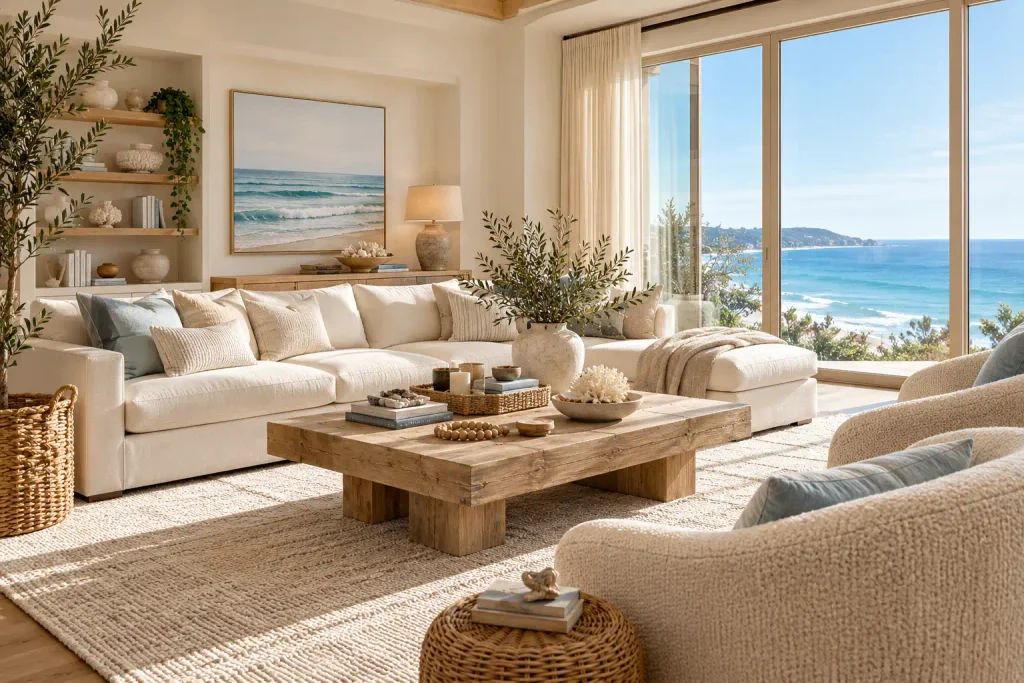
A neutral contemporary coastal living room creates a peaceful foundation using warm white, ivory, sand, oatmeal, taupe, and pale beige. Rather than filling the room with blue accessories, allow subtle variations in neutral tones to establish the coastal atmosphere. A cream linen sofa can anchor the seating area while boucle chairs, an ivory wool rug, and light oak furniture introduce warmth. Large windows and sheer curtains maximize natural daylight, making the interior feel open and connected to the bright character of coastal landscapes.
Texture becomes especially important when working with a restrained color palette. Combine woven baskets, linen cushions, natural timber, ceramic vessels, jute, stone, and softly textured plaster to prevent the room from appearing flat. A substantial oak coffee table can provide an organic focal point without overwhelming the space. Keep accessories curated and architectural lines clean so the overall room maintains its contemporary identity. This sophisticated interpretation works particularly well for homeowners who appreciate coastal style but want an elegant, understated living environment.
2. Blue and White Contemporary Coastal Living Room
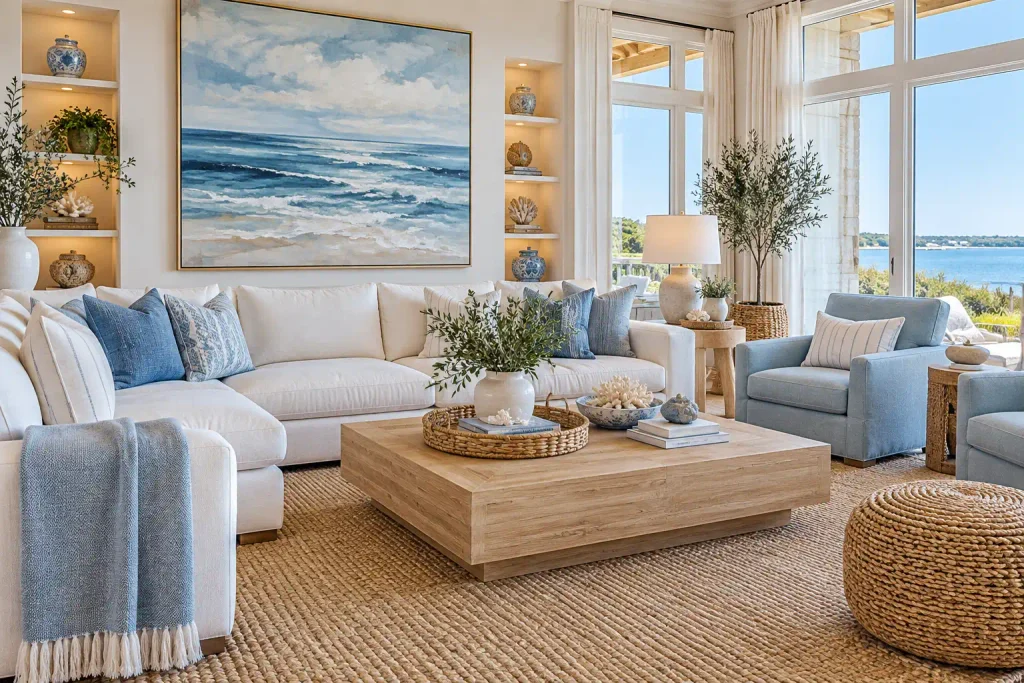
Blue and white remain classic coastal colors, but a contemporary approach uses them with greater restraint. Start with warm white walls and a large cream or off-white sofa, then introduce muted ocean blue through cushions, artwork, ceramics, or a single upholstered chair. Dusty blue, slate, faded denim, and soft sea-glass shades tend to feel more sophisticated than bright nautical blue. Natural oak and woven fibers can soften the contrast, preventing the color scheme from becoming overly crisp or traditionally nautical.
Consider using blue as an accent rather than the dominant color throughout the room. An abstract ocean-inspired painting above the sofa can establish the palette, while pale blue pillows and a patterned rug subtly repeat the hue. Add travertine, light timber, linen, and handmade pottery for visual depth. Black or aged brass lighting can provide a contemporary counterpoint to the soft coastal palette. The finished room references the sea without depending on anchors, shells, signs, or other literal beach-themed decorations.
3. Contemporary Coastal Living Room With Ocean View
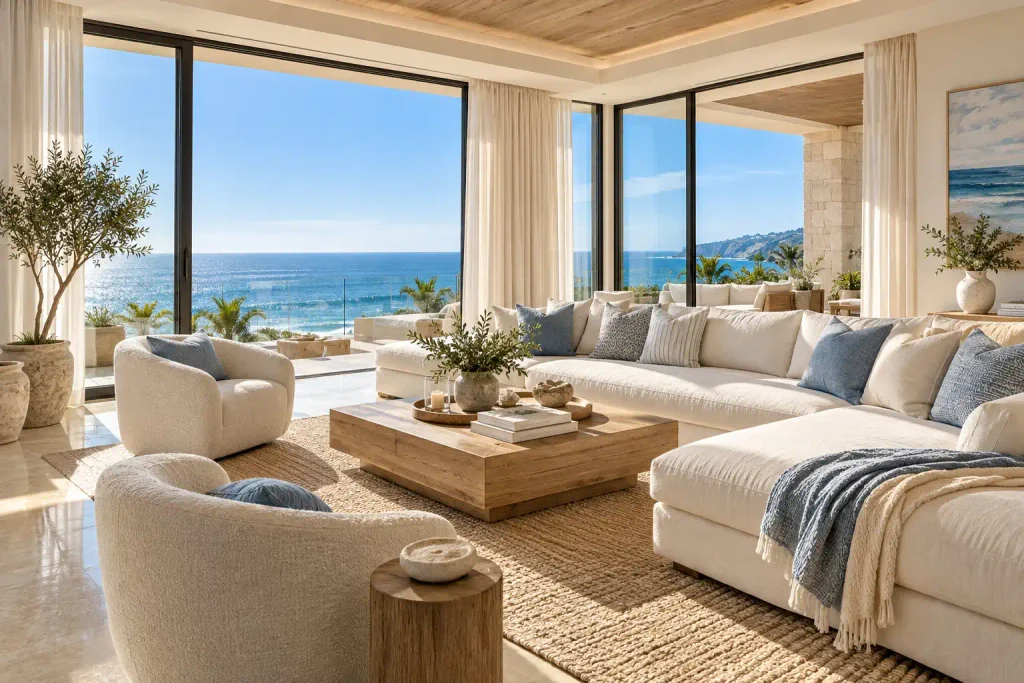
An ocean view should become the primary design feature in a contemporary coastal living room rather than competing with elaborate decoration. Position sofas and lounge chairs so occupants can comfortably appreciate the scenery while maintaining natural conversation areas. Low-profile furniture is particularly effective because it preserves sightlines toward large windows or sliding glass doors. Choose soft neutral upholstery, light wood furniture, and understated accessories that complement rather than distract from the colors visible outside.
Floor-to-ceiling glazing can strengthen the connection between indoor and outdoor environments. Linen curtains provide privacy and soften the architecture without blocking valuable natural light. Inside, limestone, oak, wool, rattan, and textured ceramics echo the organic qualities of sand, cliffs, and coastal vegetation. Instead of matching every interior color to the ocean, introduce warm beige and earthy brown to balance the cooler view. This approach produces a luxurious coastal living room that feels integrated with its surroundings rather than decorated around a theme.
4. Small Contemporary Coastal Living Room
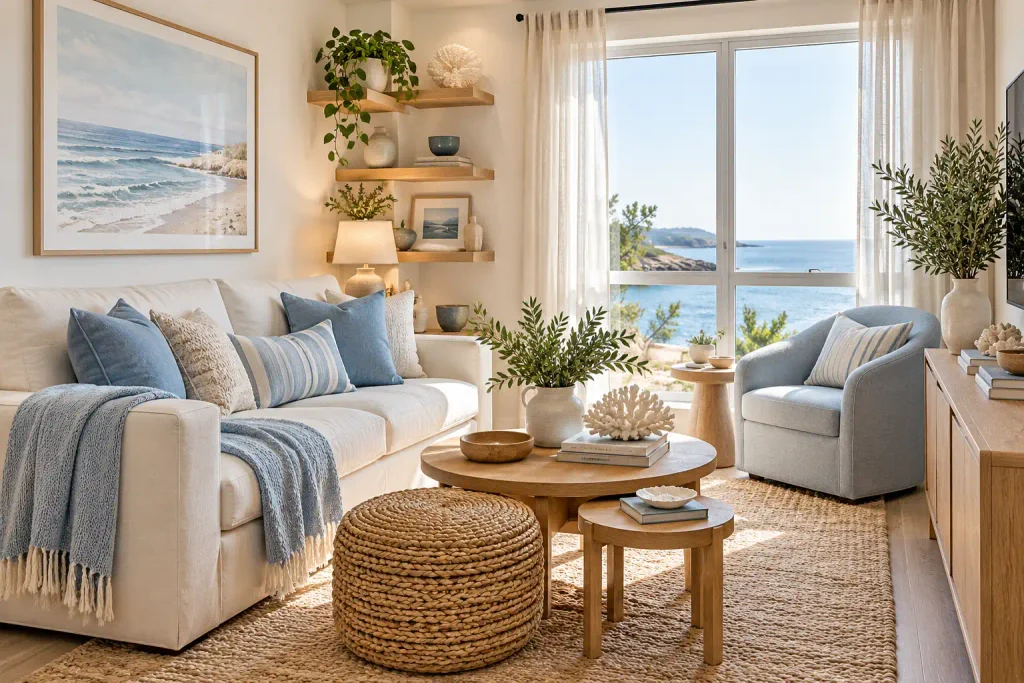
A small contemporary coastal living room benefits from the same qualities that make coastal interiors attractive: bright colors, lightweight furniture, natural light, and an uncluttered layout. Choose a compact cream sofa with raised legs rather than a bulky sectional, then pair it with a slim oak coffee table or nesting tables. Pale walls visually expand the space, while one carefully positioned mirror can distribute daylight. Keep pathways clear and avoid filling every wall or corner with decorative accessories.
Multifunctional furniture can make a compact coastal room significantly more practical. An upholstered storage ottoman can serve as a coffee table, additional seat, and hidden storage, while floating shelves provide display space without occupying the floor. Use a few blue, sage, or sandy accents to add coastal character against the neutral foundation. A striped or subtly patterned rug can create movement, but avoid excessive nautical motifs. With controlled proportions and thoughtful styling, even an apartment living room can achieve an airy modern beach-house appearance.
5. Contemporary Coastal Living Room With Fireplace
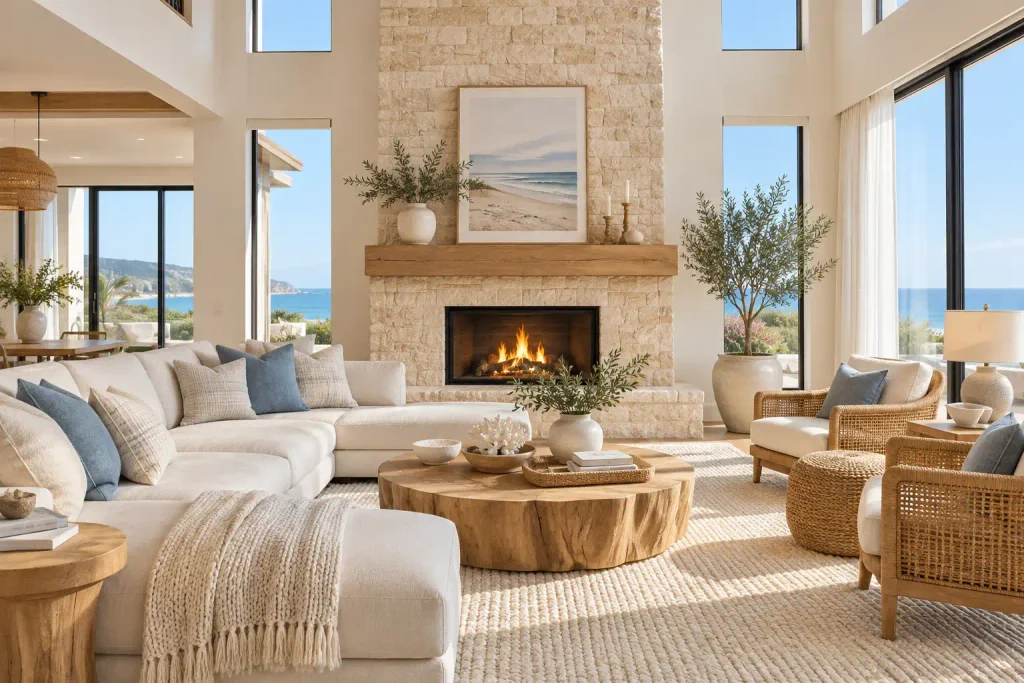
A fireplace introduces warmth and architectural presence into a contemporary coastal living room. For a modern interpretation, consider pale limestone, honed travertine, smooth plaster, or lightly textured concrete instead of a heavily decorated traditional surround. A simple wood mantel can add warmth while maintaining clean lines. Position comfortable neutral seating around the fireplace and use woven textiles, natural timber, and understated ceramics to create a balanced relationship between contemporary architecture and relaxed coastal materials.
Keep mantel styling intentionally restrained. A large abstract artwork, sculptural vase, or simple collection of handmade pottery can provide sufficient visual interest without cluttering the fireplace. If the room has windows overlooking a garden or ocean, design the furniture layout so both the fireplace and exterior view remain important focal points. Warm lighting and natural textures prevent stone surfaces from feeling cold. The result is a sophisticated coastal gathering space that works beautifully throughout every season, not only during summer.
6. Organic Modern Coastal Living Room
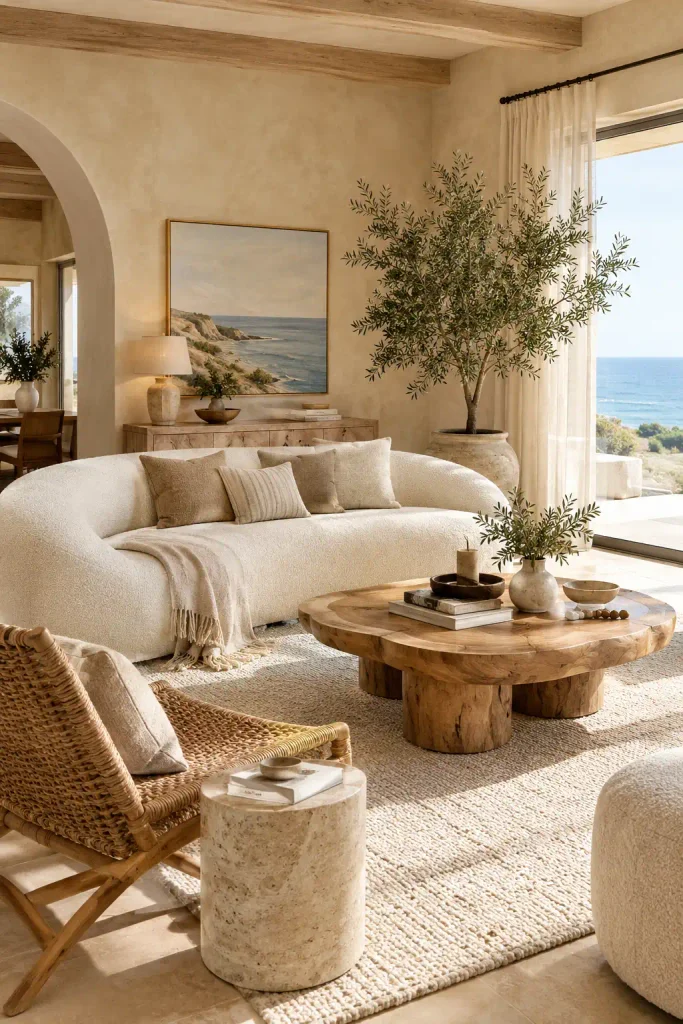
Organic modern design naturally complements contemporary coastal style because both prioritize natural materials, simplicity, and comfortable spaces. Build the room around an ivory or oatmeal sofa with softly rounded edges, then incorporate sculptural wood tables, woven chairs, stone accessories, and tactile textiles. Rather than relying heavily on blue, draw inspiration from sand, driftwood, limestone, sea grass, and weathered timber. These earthy colors establish coastal character in a quieter and more sophisticated manner.
Curved furniture can make the room feel especially relaxed. A rounded sofa, irregular wood coffee table, or softly shaped lounge chair introduces movement without decorative clutter. Add olive branches, oversized indoor plants, linen curtains, and handmade ceramics for organic character. Walls finished in warm white plaster or limewash contribute subtle depth as daylight changes throughout the day. By combining contemporary forms with imperfect natural surfaces, an organic coastal living room feels luxurious while maintaining the informal comfort expected from a seaside-inspired home.
7. Contemporary Coastal Living Room With Natural Wood
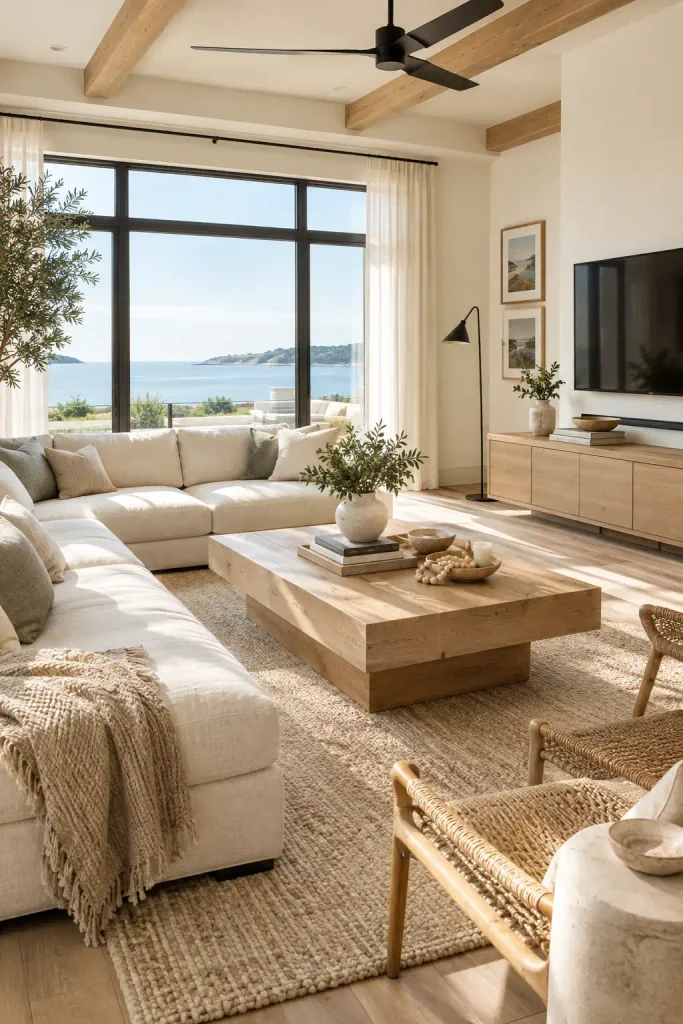
Natural wood brings essential warmth to contemporary coastal interiors. White oak, ash, maple, and lightly weathered timber work particularly well because their soft coloration complements warm white walls and sandy textiles. Introduce timber through a substantial coffee table, media console, shelving, ceiling beams, or occasional chairs. Allow the natural grain to remain visible rather than choosing glossy finishes, as tactile surfaces reinforce the casual, organic quality associated with modern coastal design.
Balance wood with lighter materials so the room remains airy. A cream linen sectional, pale wool rug, white walls, and sheer curtains can surround a warm oak coffee table without making the space feel heavy. Black hardware or sculptural metal lighting can introduce subtle definition and prevent the design from appearing overly rustic. Instead of matching every wooden element precisely, combine complementary tones to achieve the layered appearance of a thoughtfully collected home. The final space feels contemporary, welcoming, and naturally connected to the outdoors.
8. Contemporary Coastal Living Room With Rattan Furniture
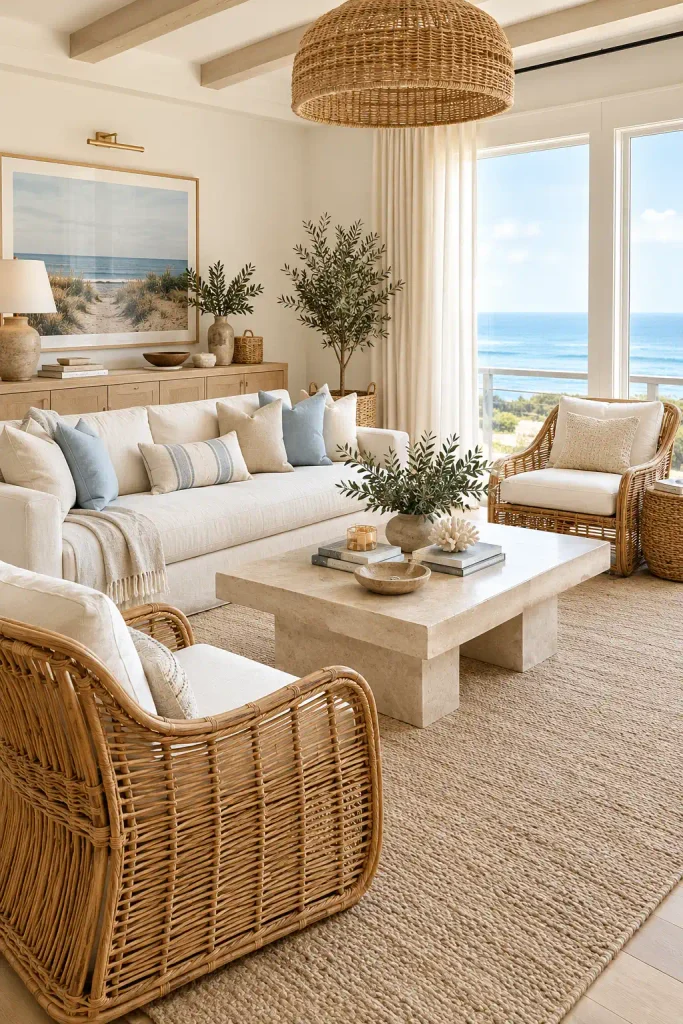
Rattan furniture immediately introduces natural coastal texture, but contemporary interiors require careful restraint. Instead of filling the entire room with wicker pieces, select one or two beautifully crafted rattan lounge chairs to complement a clean-lined sofa. Their woven structure creates visual contrast against smooth upholstery while keeping the overall atmosphere light. Natural cane, rush, and woven seagrass can also appear through cabinet doors, baskets, or small accessories without turning the room into a traditional tropical interior.
Pair rattan with refined finishes such as limestone, plaster, oak, and linen to elevate its appearance. A streamlined stone coffee table beside woven chairs creates an effective balance between polished and organic materials. Choose neutral upholstery for rattan seating and avoid excessively colorful tropical patterns if contemporary sophistication is the goal. Large windows, indoor greenery, and lightweight curtains further reinforce the relaxed atmosphere. Used thoughtfully, rattan connects the interior with beach-house traditions while still looking current and architecturally refined.
9. Contemporary Coastal Living Room With Jute Rug
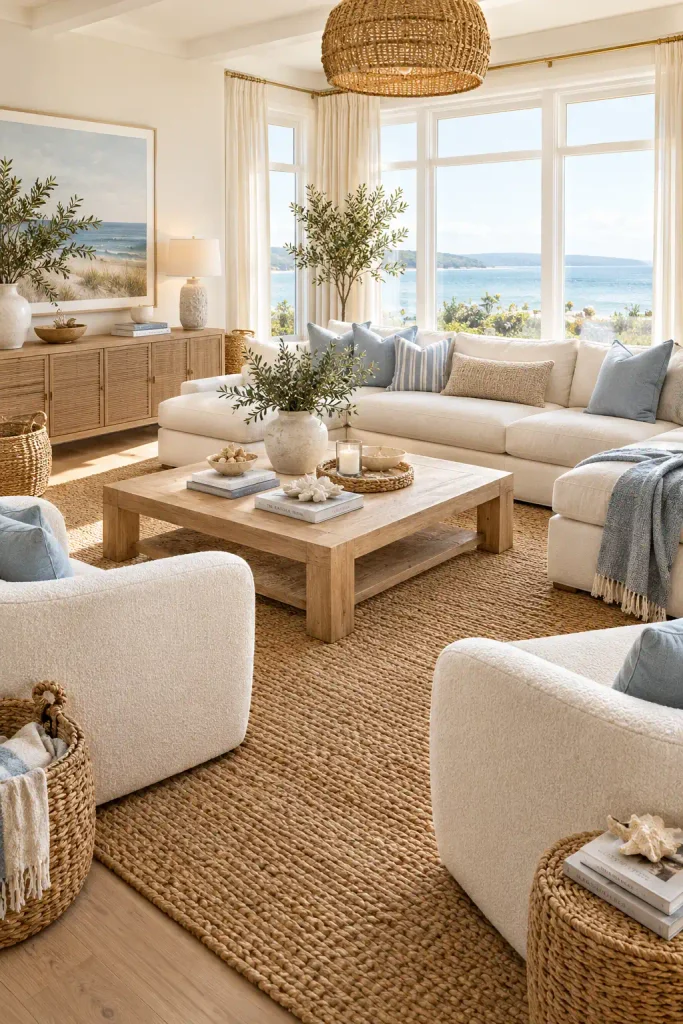
A jute rug offers natural texture and subtle warmth that works beautifully beneath contemporary coastal furniture. Its sandy coloring references the beach without requiring literal seaside imagery, while the woven fibers establish a relaxed foundation. Choose an oversized rug that comfortably extends beneath the primary seating pieces to visually unite the room. A cream sofa, oak coffee table, and linen armchairs look especially cohesive against a generously proportioned natural jute floor covering.
Because jute has a distinctive coarse texture, balance it with softer materials such as boucle, cotton, wool, and washed linen. Layering a smaller wool rug over a large jute base can increase comfort while creating additional visual depth. Consider the room’s traffic level and choose a durable weave appropriate for daily living. Continue the natural palette with woven baskets and handmade ceramics, but introduce smooth stone or glass to keep the interior contemporary. This combination creates an inviting coastal room with sophisticated material contrast.
10. Contemporary Coastal Living Room With Limewash Walls
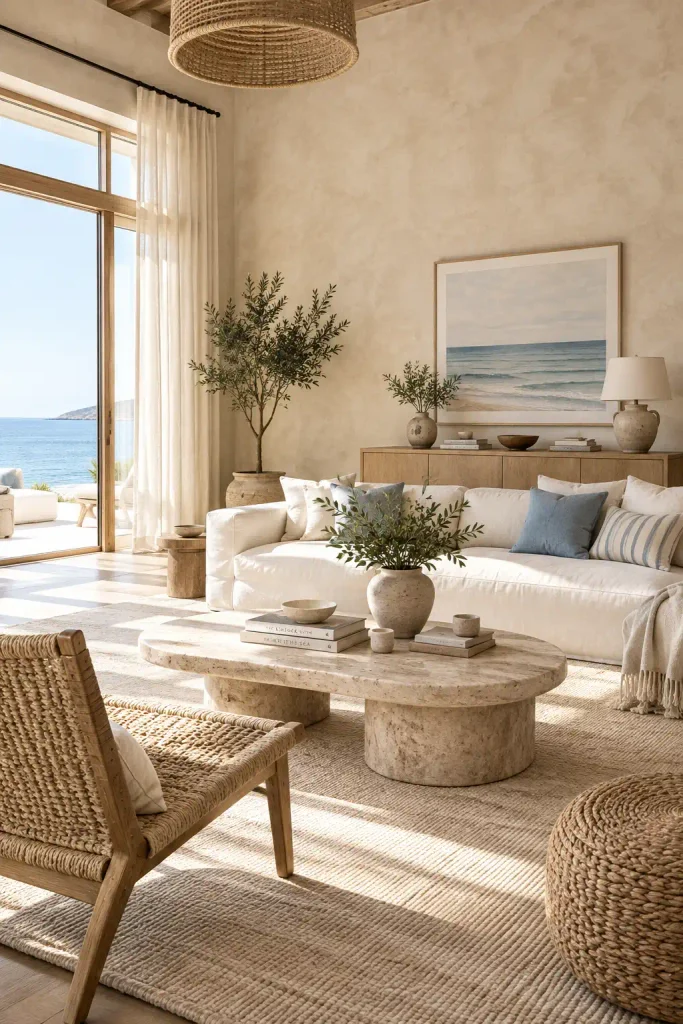
Limewash walls add subtle movement and mineral texture to a contemporary coastal living room. Warm white, chalk, pale sand, and muted beige finishes capture daylight differently throughout the day, creating visual richness without relying on patterned wallpaper or bold paint. Their softly imperfect appearance complements linen, wood, stone, and woven materials beautifully. Choose a gentle neutral shade that reflects natural light while providing enough depth to distinguish architectural details.
Against limewashed walls, simple contemporary furniture becomes more expressive. Place a low cream sofa beside a sculptural oak or travertine table, then introduce woven lounge chairs and understated ceramic objects. Keep artwork limited so the wall finish itself can contribute to the room’s visual identity. Natural linen curtains and warm ambient lighting enhance the tactile character after sunset. This material-focused approach creates a coastal space that feels serene, handcrafted, and sophisticated rather than conventionally beach themed.
11. Luxury Contemporary Coastal Living Room
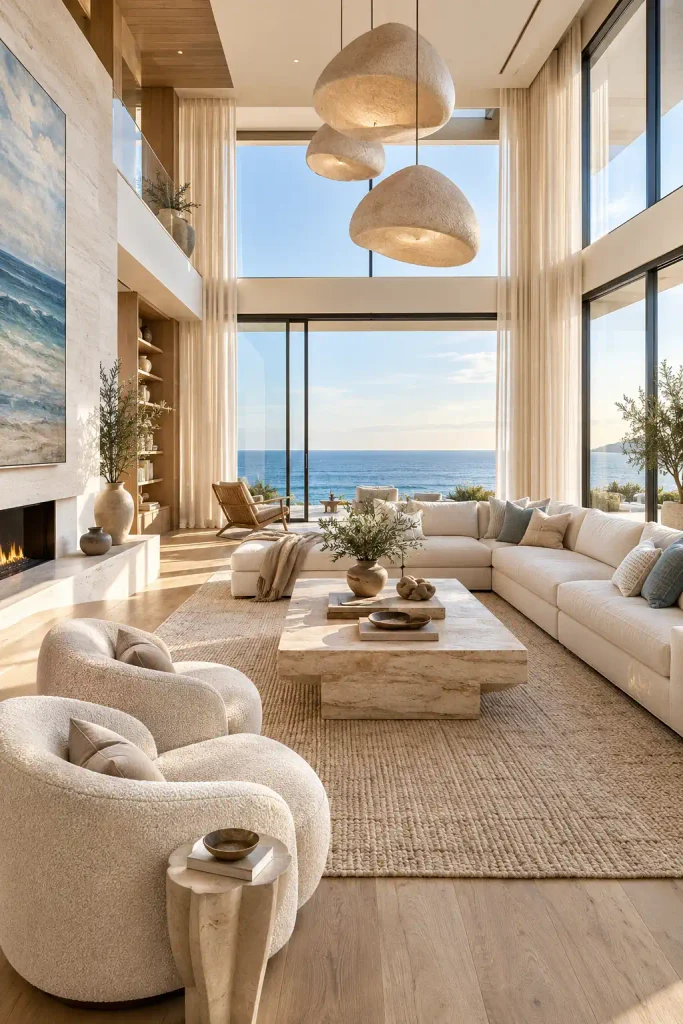
Luxury coastal design depends more on material quality, scale, and craftsmanship than excessive decoration. Begin with an expansive linen sectional or pair of tailored sofas and surround them with statement furniture crafted from oak, travertine, marble, or handwoven fibers. Oversized windows, architectural lighting, custom cabinetry, and substantial rugs give the room a sense of permanence. Maintain a restrained palette of ivory, sand, pale blue, warm gray, and natural timber to keep the environment relaxed despite its elevated finishes.
Thoughtful spacing is equally important in a luxurious living room. Avoid crowding furniture together simply to fill a large floor plan. Instead, allow breathing room around sculptural chairs, substantial tables, and carefully chosen artwork. Use floor-to-ceiling curtains to emphasize ceiling height and layer ambient, accent, and architectural lighting for evenings. Handmade ceramics and artisan objects can replace generic decorative accessories. The resulting contemporary coastal living room communicates refinement through proportions, natural materials, and craftsmanship rather than obvious displays of luxury.
12. Contemporary Coastal Farmhouse Living Room
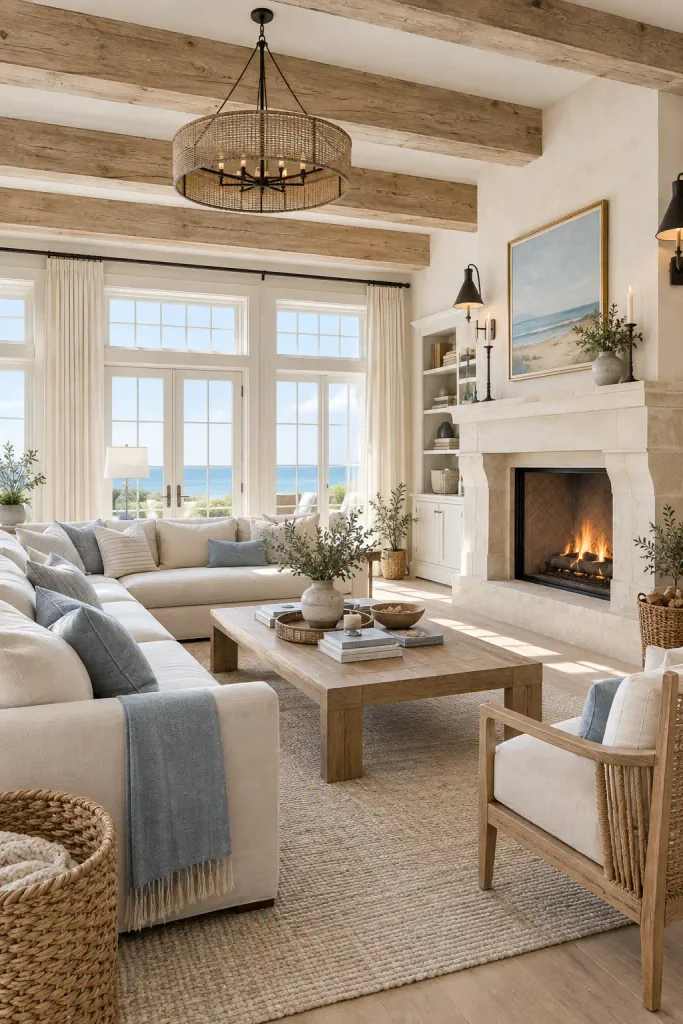
A contemporary coastal farmhouse living room combines relaxed beach-house colors with the warmth of modern farmhouse materials. White oak ceiling beams, a pale stone fireplace, linen upholstery, woven baskets, and comfortable furniture establish rustic character without appearing old-fashioned. Keep architectural lines simple and avoid distressed signs or excessive vintage decorations. Warm white walls and large windows provide the lightness associated with coastal homes, while timber details make the room feel grounded and welcoming.
Use farmhouse influences selectively. A reclaimed oak coffee table can sit comfortably beside a streamlined cream sectional, while black metal sconces add definition against white walls. Introduce muted blue or sage through cushions and artwork rather than using predictable nautical motifs. A thick wool or jute rug creates softness underfoot, and handmade pottery contributes an artisanal quality. Combining contemporary proportions with honest natural materials creates a coastal farmhouse room that feels updated, comfortable, and suitable for everyday family living.
13. Minimalist Contemporary Coastal Living Room
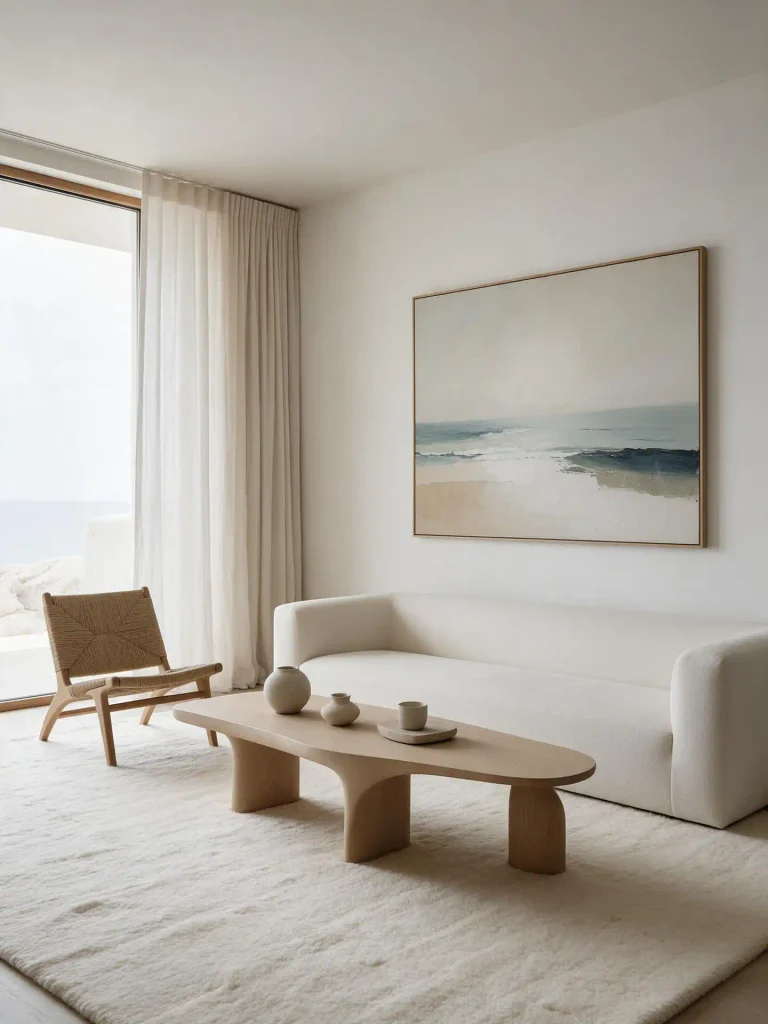
Minimalist coastal design removes visual clutter while preserving warmth and comfort. Instead of decorating every surface, choose a few substantial pieces with beautiful forms and natural materials. A low ivory sofa, sculptural oak coffee table, woven lounge chair, and large neutral rug may provide everything needed to establish the room. White or softly plastered walls create visual quiet, allowing sunlight, shadows, and architectural proportions to become part of the decoration.
Minimalism should not make a coastal room feel sterile. Incorporate tactile linen, wool, timber, and stone to introduce warmth without adding unnecessary objects. One large piece of abstract coastal artwork often works better than several small framed prints. Concealed storage can keep everyday belongings organized while preserving clean sightlines. Add a single oversized plant or sculptural ceramic vessel for organic interest. The objective is an intentionally edited environment that captures the calm spaciousness of the coast through light, texture, and proportion.
14. Contemporary Coastal Living Room With Sectional Sofa
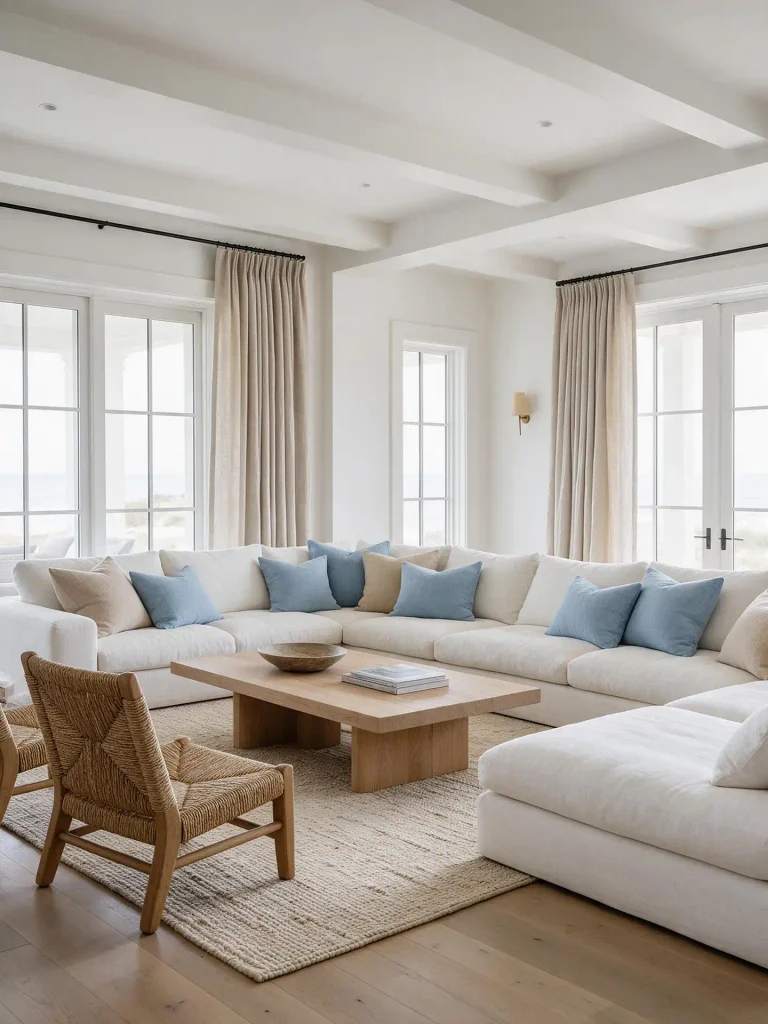
A large sectional sofa can make a contemporary coastal living room exceptionally comfortable while creating a clear anchor for an open floor plan. Choose upholstery in ivory, warm white, oatmeal, or pale gray linen-look fabric to maintain an airy appearance. Modular or low-profile silhouettes feel particularly contemporary. Arrange the sectional to preserve circulation toward windows, patios, or adjacent dining spaces rather than allowing its size to block important architectural features.
Balance the substantial sofa with appropriately scaled furniture. An oversized oak or stone coffee table prevents the seating arrangement from feeling visually unbalanced, while one or two woven accent chairs can add contrasting texture. Use large cushions in sandy neutrals, muted blue, or sage rather than covering the sectional with numerous small pillows. A generous rug defines the entire seating area. This practical arrangement provides plenty of seating for families and entertaining while preserving the relaxed elegance associated with modern coastal homes.
15. Contemporary Coastal Living Room With Stone Coffee Table
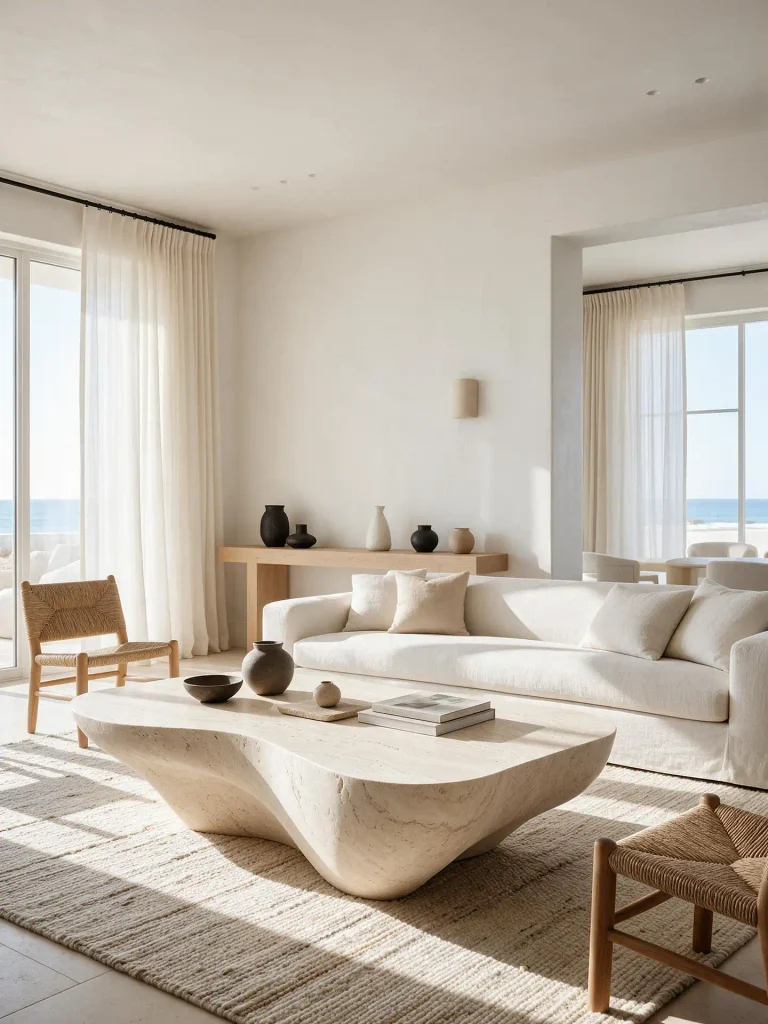
Stone furniture adds permanence and sophisticated texture to a coastal interior. A travertine, limestone, marble, or honed stone coffee table can become a striking centerpiece against soft linen seating and woven textiles. Choose a table with simple geometry or gently rounded edges so the natural variations in the material remain visually prominent. Cream and beige stones integrate particularly well with sandy coastal palettes while introducing a refined architectural quality.
Because stone can appear visually heavy, surround it with lighter materials and generous negative space. An ivory sofa, slim woven chairs, linen curtains, and pale timber cabinetry balance the weight of the coffee table. Keep tabletop styling simple with perhaps one ceramic bowl, a few books, and a natural branch. The contrast between cool mineral surfaces and warm woven fibers creates the layered material palette characteristic of sophisticated contemporary coastal interiors. This approach feels luxurious without becoming formal or overly decorative.
16. Contemporary Coastal Living Room With Vaulted Ceiling
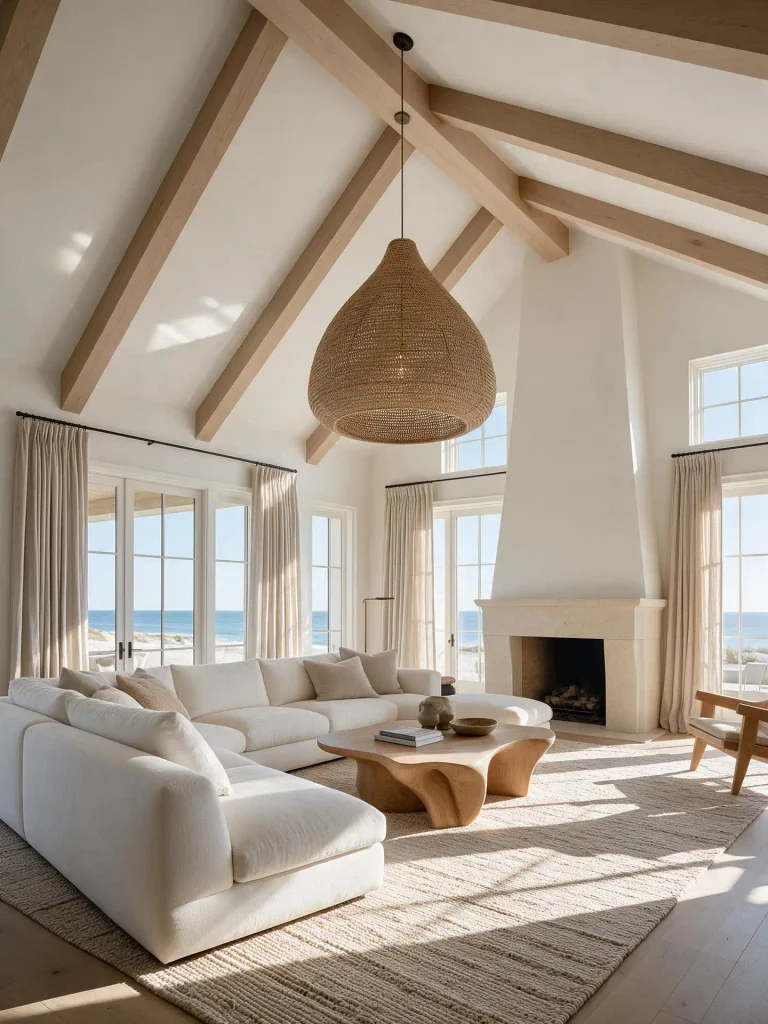
A vaulted ceiling enhances the openness that defines contemporary coastal interiors. Highlight the architecture with warm white paint or pale timber paneling and consider exposed oak beams for additional character. Large windows positioned beneath the roofline can flood the living room with daylight, emphasizing vertical space. Keep furniture relatively low to strengthen the perception of height while ensuring that large pieces are substantial enough to suit the room’s generous proportions.
Lighting deserves particular attention in a high-ceiling coastal room. An oversized woven pendant, sculptural chandelier, or contemporary fixture can visually connect the ceiling to the seating area below. Use a large sectional, broad coffee table, and generously sized rug to establish intimacy within the expansive architecture. Natural timber, linen, stone, and woven fibers help soften the scale. The resulting room feels dramatic and luxurious while maintaining the relaxed, sun-filled personality of modern coastal living.
17. Contemporary Coastal Living Room With Wood Ceiling
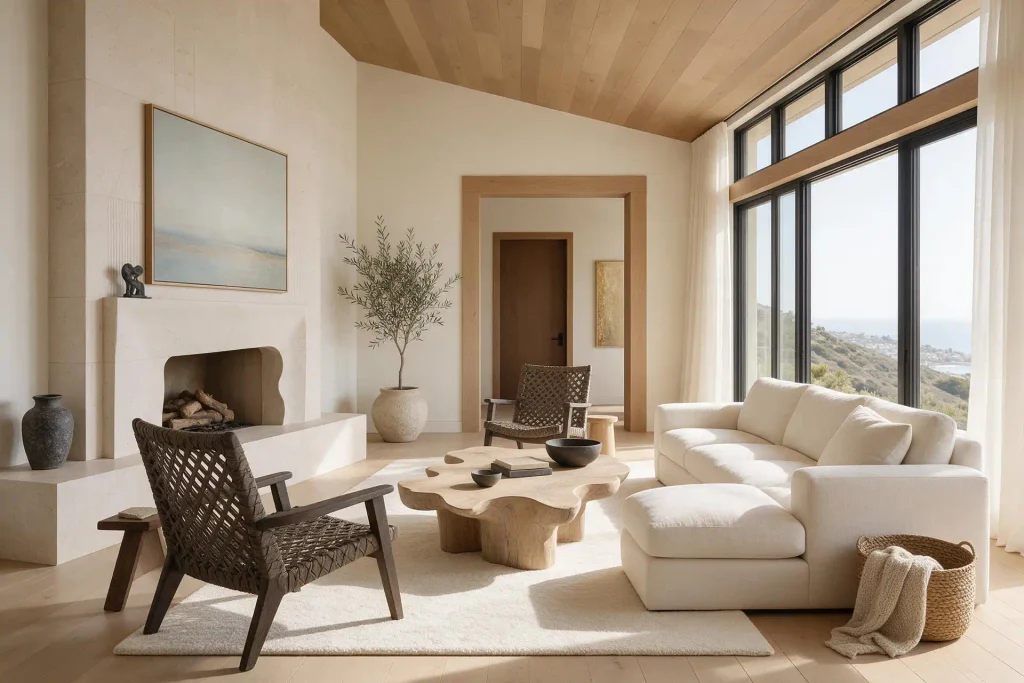
A timber ceiling can transform a contemporary coastal room by introducing warmth above an otherwise light and neutral interior. Pale oak, cedar, or whitewashed wood planks work particularly well because they retain a natural appearance without making the room feel dark. Keep surrounding walls warm white and use large windows to maintain brightness. The ceiling then becomes an architectural focal point that subtly references traditional beach cottages while remaining appropriate for contemporary homes.
Repeat the wood tone selectively throughout the room to create visual continuity. An oak coffee table, slim console, or exposed shelving can echo the ceiling without overwhelming the design. Pair these elements with cream linen seating, limestone accents, and an understated rug. Black-framed windows or modern lighting can add crisp definition. This balance between natural warmth and contemporary lines creates a sophisticated coastal living room that feels architectural, comfortable, and connected to the organic materials found in seaside environments.
18. Black and White Contemporary Coastal Living Room
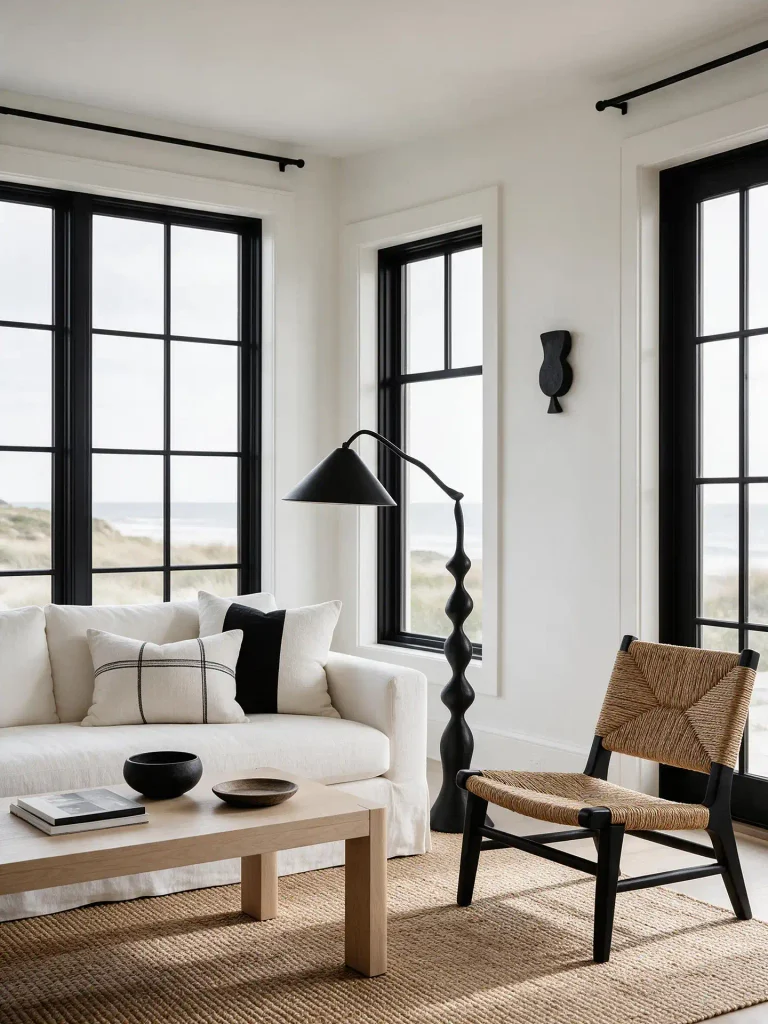
Black accents can give coastal interiors a sharper contemporary edge. Begin with warm white walls, an ivory sofa, and pale wood furniture, then introduce black through window frames, floor lamps, sconces, side tables, or thin picture frames. The darker details create structure and visual contrast without eliminating the relaxed coastal atmosphere. Avoid allowing black to dominate the palette; its role should be to define architectural features and provide punctuation among softer neutral surfaces.
Natural materials are essential for preventing a black-and-white scheme from feeling stark. Layer jute, linen, rattan, oak, and textured ceramics throughout the room. Muted blue or warm tan accessories can introduce subtle color if desired. A large black-framed window overlooking greenery or water becomes especially effective because it visually frames the landscape like artwork. Combining graphic contemporary details with warm organic materials creates a polished coastal living room that feels sophisticated, modern, and distinctly different from traditional blue-and-white beach decor.
19. Sage Green Contemporary Coastal Living Room
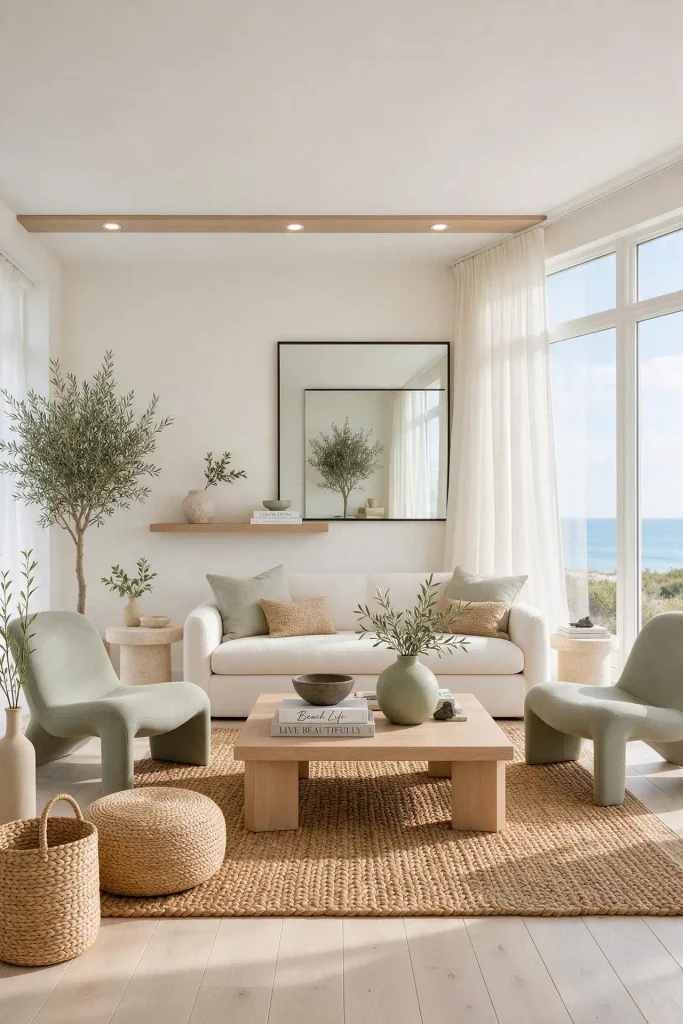
Sage green provides an alternative to traditional ocean blue while maintaining a connection to coastal landscapes. The color references dune grass, coastal vegetation, eucalyptus, and weathered foliage, making it particularly suitable for contemporary organic interiors. Use sage through an accent chair, cushions, artwork, or muted cabinetry while keeping the larger surfaces cream, warm white, and natural wood. This creates a subtle color story that feels calm rather than overtly themed.
Combine sage with sandy beige, pale oak, woven fibers, and limestone for a sophisticated earth-inspired palette. A large indoor olive tree or arrangement of natural branches can reinforce the botanical connection. Linen upholstery and curtains preserve the casual character expected from coastal interiors, while contemporary lighting and clean furniture silhouettes keep the room current. This palette works especially well in homes surrounded by greenery or dunes, where the interior can visually connect with the landscape beyond the windows.
20. Contemporary Coastal Living Room With Built-In Shelves
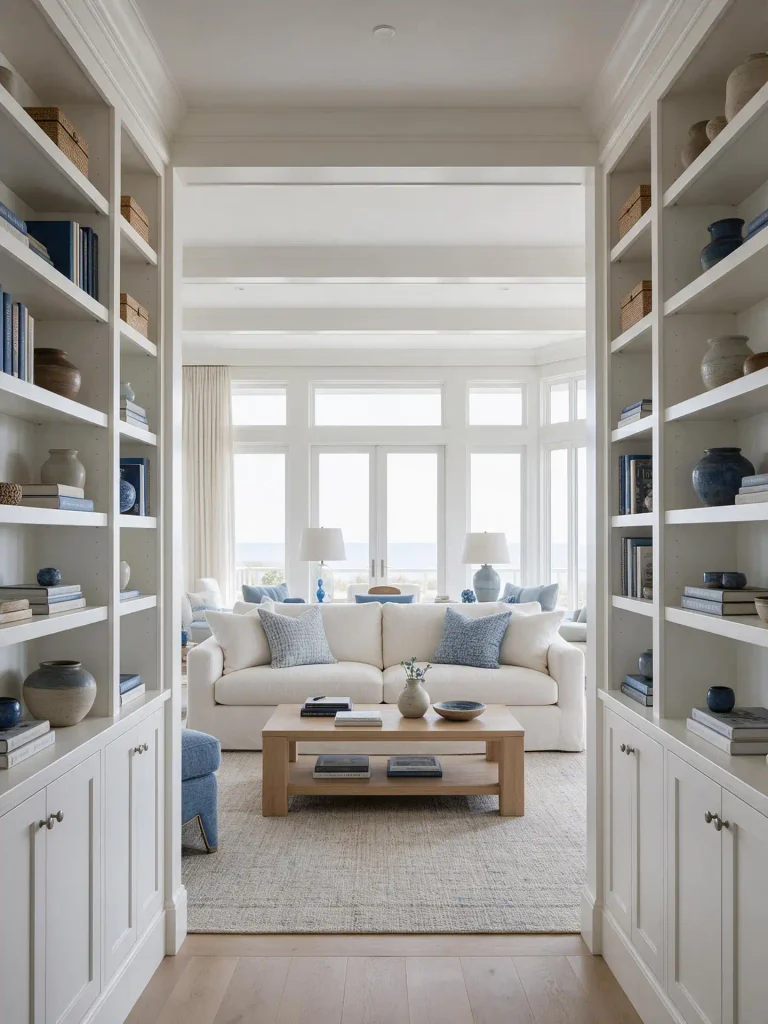
Built-in shelving provides storage and architectural character while giving homeowners an opportunity to display coastal influences subtly. Paint shelves warm white to blend them into the walls or use natural oak for additional warmth. Instead of filling every opening, leave generous negative space around books, handmade ceramics, sculptural objects, woven boxes, and a few framed artworks. An intentionally edited display looks significantly more contemporary than shelves packed with conventional beach decorations.
Built-ins can also incorporate concealed cabinetry at the bottom, keeping electronics, games, and everyday objects out of sight. If the living room includes a television, surrounding it with balanced shelving can integrate the screen more successfully into the architecture. Repeat colors from the seating area through selected books and ceramics to create cohesion. Avoid filling the shelves with seashells and miniature boats; natural materials and abstract references to the coast produce a more timeless, sophisticated result.
21. Contemporary Coastal Living Room With Large Windows
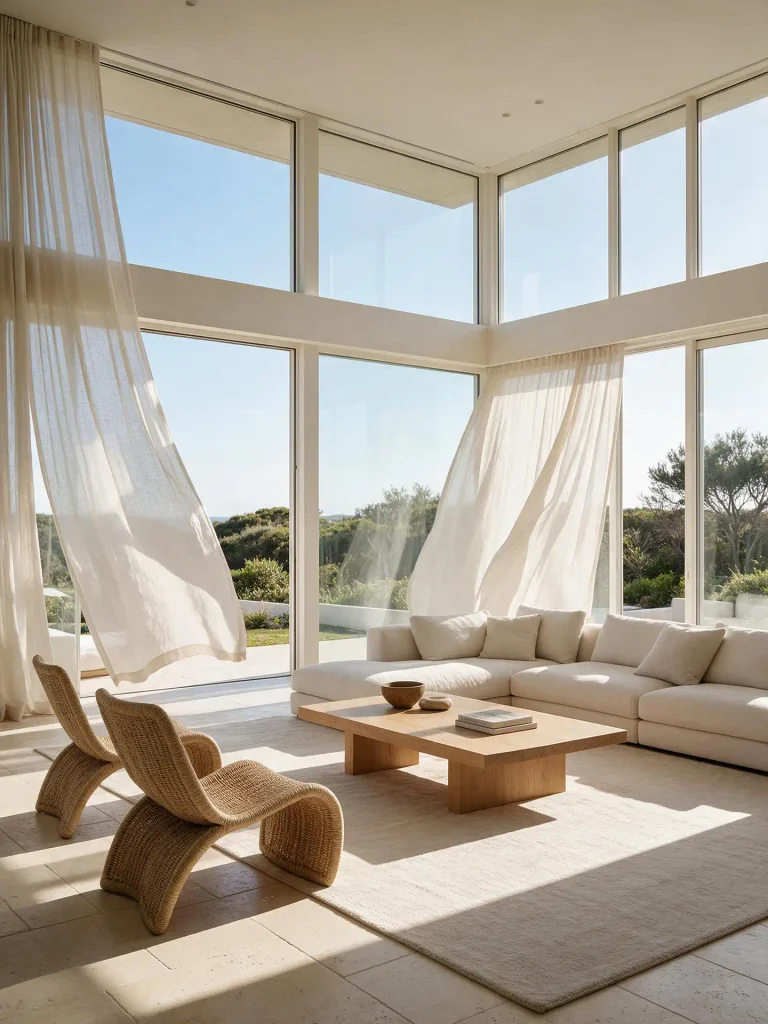
Natural light is one of the most important elements of contemporary coastal design. Large windows can make even a neutral interior visually dynamic by introducing changing daylight, exterior greenery, sky, and water views. Keep window treatments lightweight using sheer linen or cotton curtains that soften direct sunlight without making the room feel enclosed. Where privacy permits, leaving portions of the glazing uncovered creates an especially clean architectural appearance.
Arrange furniture to respect the windows rather than blocking them with oversized cabinets or tall-backed pieces. Low sofas and lounge chairs maintain uninterrupted views and allow daylight to travel deeper into the room. Pale walls, limestone surfaces, light timber, and neutral rugs help reflect natural illumination. During the evening, warm lamps and discreet architectural lighting can replace sunlight without changing the relaxed atmosphere. Designing around windows produces a coastal living room that feels connected to its environment throughout the day.
22. Contemporary Coastal Living Room With Indoor Plants
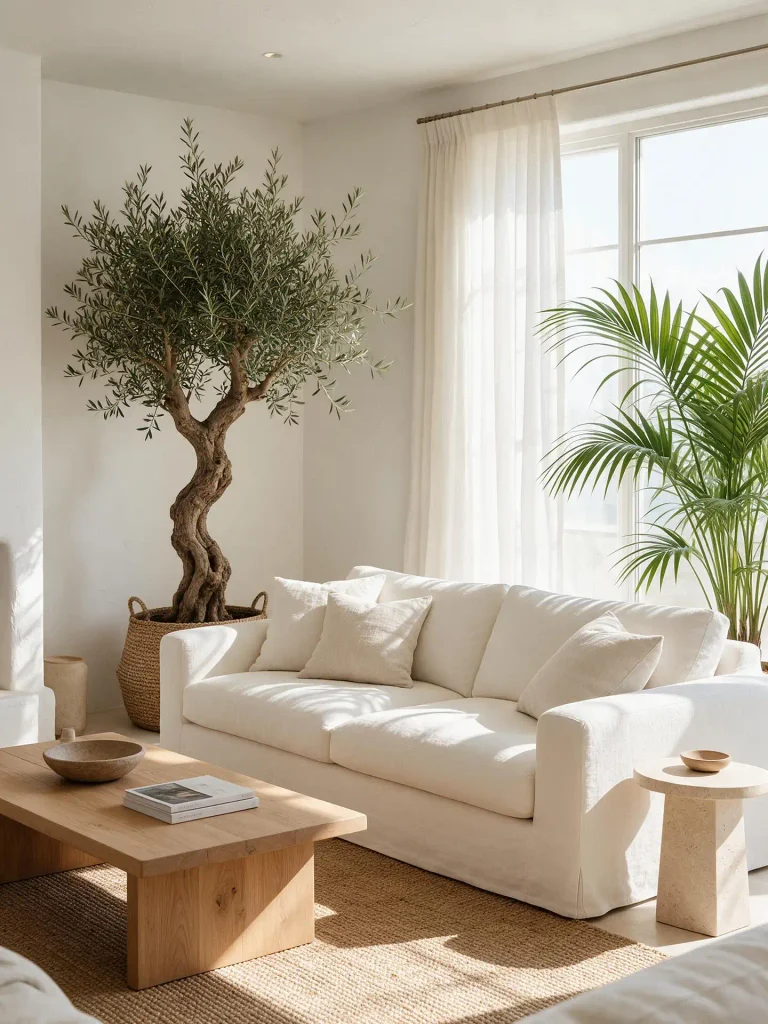
Indoor plants can strengthen the connection between contemporary coastal interiors and the natural landscape. Instead of creating a dense tropical environment, select several sculptural plants that complement the architecture. An olive tree, ficus, kentia palm, or other suitable indoor greenery can fill an empty corner and introduce height. Place plants in simple stone, ceramic, or woven planters that coordinate with the neutral materials throughout the room.
Green foliage looks particularly striking against warm white plaster walls and pale wood furniture. Pair plants with a cream sofa, natural rug, linen curtains, and stone coffee table to build an organic material palette. Consider plant placement carefully so foliage receives appropriate light and does not interrupt pathways. Botanical elements provide color without relying on conventional coastal blue, making them ideal for homeowners seeking a modern interpretation of seaside style. The finished room feels fresh, relaxed, and naturally layered.
23. Contemporary Coastal Living Room With Linen Sofa
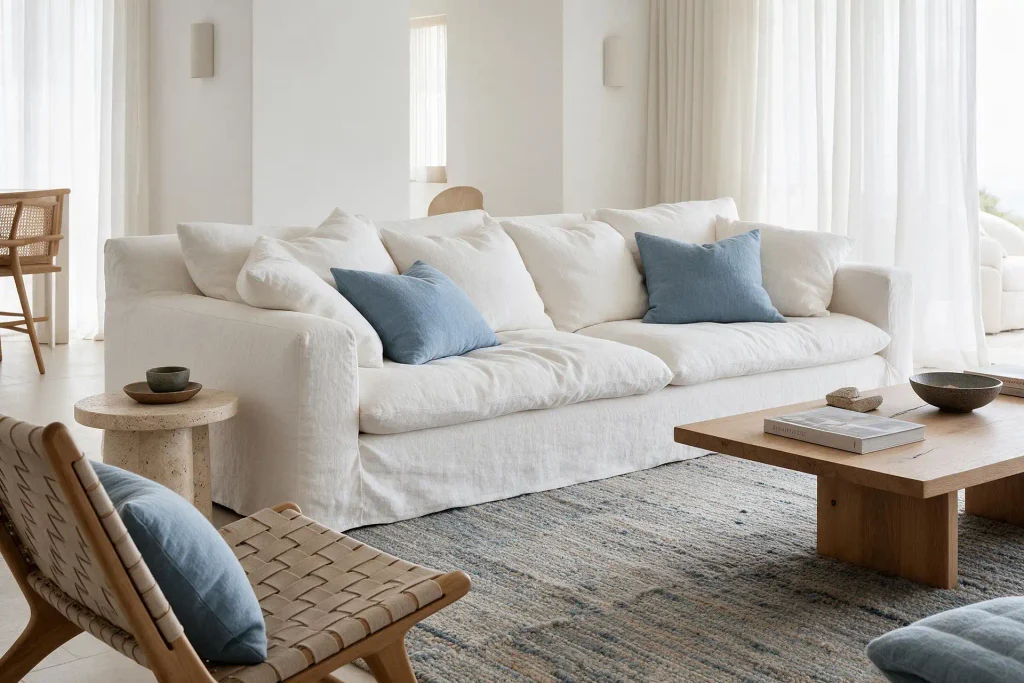
A linen sofa is particularly well suited to coastal living because its natural texture looks relaxed without appearing careless. Choose ivory, oatmeal, warm white, or pale stone upholstery to create a versatile foundation for seasonal accessories. Deep seating and generous cushions reinforce the comfortable character of a beach house, while a clean-lined frame maintains a contemporary silhouette. Performance fabrics with a linen-like appearance can be a practical alternative for households concerned about durability and maintenance.
Build the surrounding design with materials that complement linen’s subtle texture. Natural oak, woven fibers, travertine, ceramic, and wool create a layered yet cohesive environment. Add only a few cushions in muted ocean blue, sage, stripe, or sandy beige rather than covering the sofa completely. A lightweight throw introduces additional softness. With its combination of elegance and informality, a neutral linen sofa can anchor virtually any contemporary coastal color palette and remain adaptable as trends evolve.
24. Contemporary Coastal Living Room With Boucle Chairs
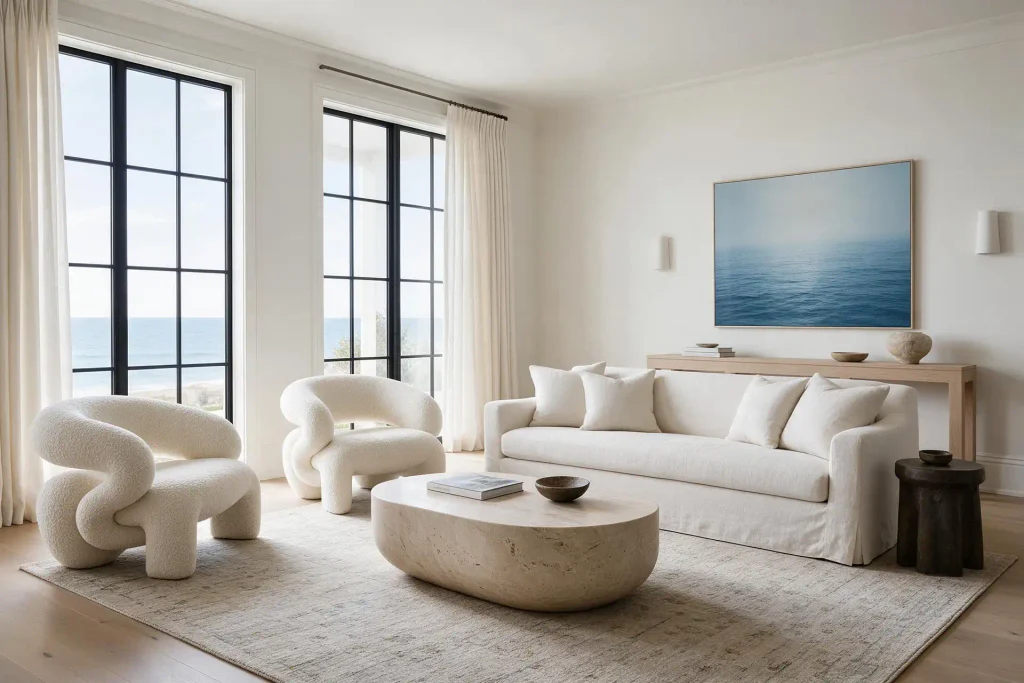
Boucle chairs introduce softness and sculptural character to a modern coastal seating arrangement. Their tactile surface contrasts beautifully with smooth stone, woven fibers, and natural timber. Choose cream, ivory, oatmeal, or pale beige upholstery and consider rounded silhouettes that soften the straight architectural lines often found in contemporary homes. Position two matching chairs opposite a sofa to create a balanced conversation area, or use one statement chair in a smaller room.
Because boucle already provides substantial texture, surrounding materials can remain relatively simple. Pair the chairs with a linen sofa, travertine coffee table, pale oak console, and understated rug. Natural daylight highlights the fabric’s dimensional surface, making the room feel warmer and more layered. Add muted coastal colors through artwork or small accessories rather than competing patterns. This combination brings current furniture design into the coastal aesthetic while preserving the serene, comfortable qualities that make seaside-inspired living rooms appealing.
25. Contemporary Coastal Living Room With Statement Lighting
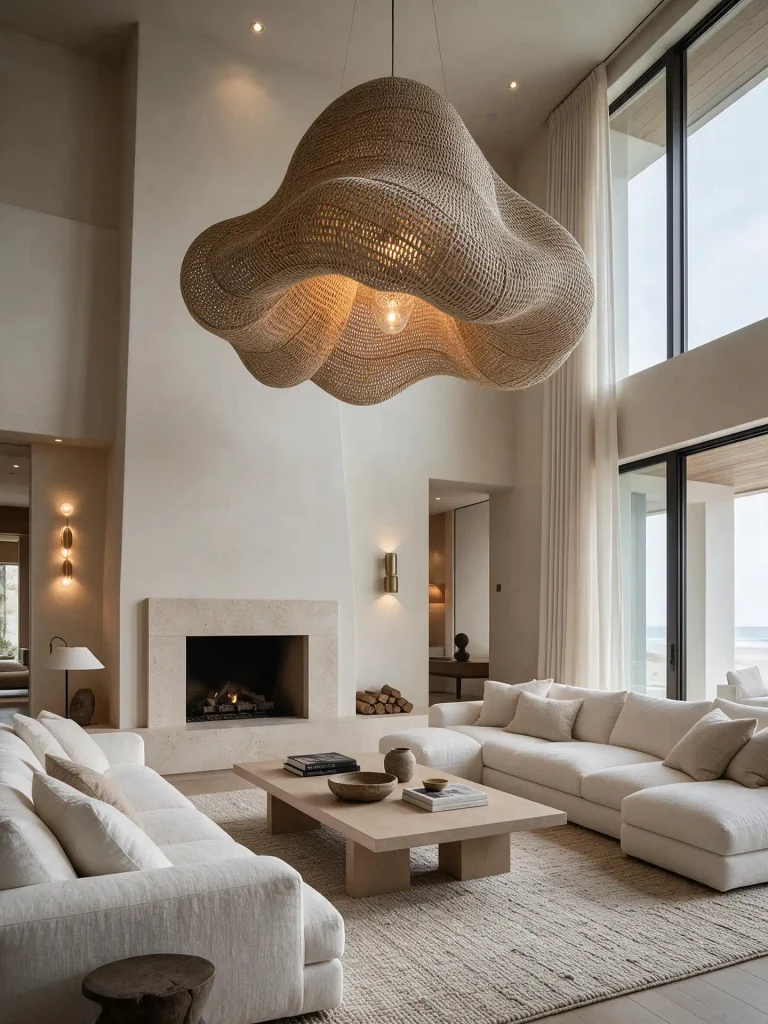
Statement lighting can add personality to a restrained contemporary coastal interior without introducing unnecessary decorative clutter. Oversized woven pendants, sculptural plaster fixtures, linen shades, and modern chandeliers made from natural materials can create a strong focal point. Scale is important: in a spacious living room with high ceilings, a fixture that appears large when viewed independently may feel perfectly proportioned within the architecture.
Coordinate statement lighting with smaller sources throughout the room. Floor lamps beside reading chairs, table lamps on consoles, and discreet wall sconces create layers of illumination for evenings. Warm light temperatures generally complement natural wood, linen, and sandy color palettes more successfully than harsh cool lighting. Keep the furniture relatively understated when the overhead fixture is dramatic. This approach allows lighting to function as both practical illumination and sculptural art while maintaining the relaxed sophistication of contemporary coastal design.
26. Contemporary Coastal Living Room With Coastal Artwork
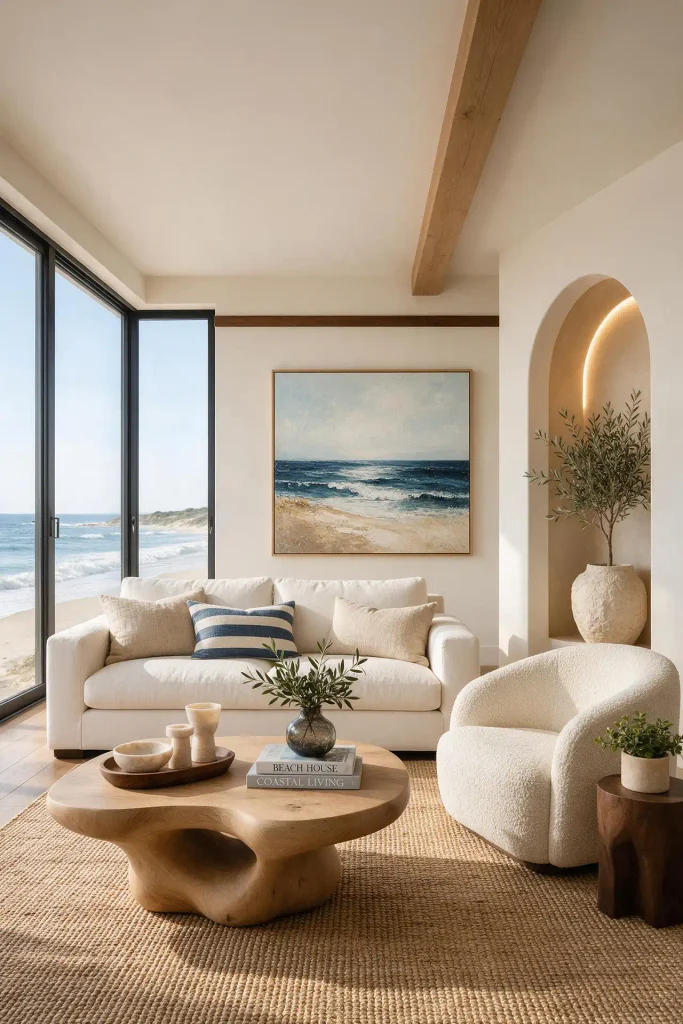
Artwork offers an opportunity to reference the coast without turning the room into a themed environment. Choose oversized abstract pieces inspired by water, sky, dunes, or shoreline colors rather than literal signs and predictable nautical imagery. Soft blue, gray, beige, white, and muted green artwork can establish the room’s palette while adding personality above a neutral sofa. One substantial artwork generally creates a more contemporary statement than numerous small pieces.
Frames should complement the architecture and furniture. Pale oak, white, or thin black frames work well depending on the room’s overall palette. Consider textured paintings, minimalist photography, or abstract landscape compositions that evoke rather than explicitly illustrate the coast. Repeat one or two colors from the artwork through cushions or ceramics for subtle cohesion. By treating coastal artwork as a sophisticated visual reference rather than thematic decoration, the room remains timeless and appropriate even if other furnishings change later.
27. Open-Concept Contemporary Coastal Living Room
An open-concept coastal living room should feel visually connected to adjacent dining and kitchen areas while still functioning as a distinct zone. Use a large rug to define the seating area and orient the sofa strategically to establish boundaries without constructing walls. Repeating natural oak, warm white, stone, and muted blue throughout neighboring spaces creates continuity. Keep furniture heights relatively low so sightlines remain open across the broader interior.
Consistency does not require every element to match. For example, oak kitchen cabinetry can relate to a living room coffee table while dining chairs introduce woven texture seen elsewhere in the seating area. Pendant lights can share similar organic materials without being identical. Maintain generous circulation routes between zones, particularly toward exterior doors and terraces. An integrated approach allows a contemporary coastal home to feel expansive, social, and filled with light while each functional area retains its own visual identity.
Image Prompt: Expansive open-concept contemporary coastal living room, ivory sectional defining seating zone, natural oak coffee table, woven chairs, adjacent modern coastal dining area and pale oak kitchen, warm white architecture, limestone surfaces, large neutral rug, enormous sliding glass doors, bright airy beach house floor plan, sophisticated photorealistic interior photography, no people, 1024 × 683 pixels, vertical composition.
28. Contemporary Coastal Living Room With Sliding Glass Doors
Large sliding glass doors can create a seamless transition between a coastal living room and an outdoor terrace, patio, or garden. Choose slim frames where architecture permits to maximize the visual connection with the exterior. Inside, arrange furniture so circulation toward the doors remains unobstructed. A low sectional, streamlined chairs, and an appropriately scaled coffee table maintain an open feeling while providing comfortable everyday seating.
Repeating similar colors and materials outdoors can strengthen indoor-outdoor continuity. Pale stone flooring, natural timber, woven furniture, and cream upholstery can appear on both sides of the glazing while remaining suitable for their respective environments. Lightweight curtains soften the glass when necessary without permanently hiding the view. When doors are opened, the living room effectively expands into the outdoor space, creating the effortless relationship with nature that sits at the heart of contemporary coastal architecture.
Image Prompt: Airy contemporary coastal living room with sliding glass doors, enormous open glass doors connecting interior to coastal terrace, low ivory linen sectional, natural oak coffee table, woven lounge chairs, pale limestone flooring continuing outdoors, neutral rug, linen curtains, ocean vegetation and sunlight, luxurious indoor-outdoor modern beach house, photorealistic, no people, 1024 × 683 pixels, vertical composition.
29. Moody Contemporary Coastal Living Room
Contemporary coastal rooms do not always need to be bright white. A moodier palette can create a sophisticated interpretation using slate blue, charcoal, deep ocean green, weathered gray, and dark timber balanced by lighter upholstery. Consider painting one architectural wall a muted blue-gray or selecting darker built-in cabinetry. Cream sofas and warm beige textiles provide contrast, preventing the space from becoming excessively dark.
Lighting becomes especially important with deeper colors. Large windows can create dramatic contrast during daylight, while warm sconces and lamps establish intimacy at night. Introduce aged brass, walnut, dark oak, and textured stone for additional richness. Coastal artwork can reference stormy seas or atmospheric horizons rather than sunny beaches. This design direction is particularly effective for contemporary homes where owners want the tranquility of coastal style combined with a more dramatic, grown-up visual identity.
Image Prompt: Dramatic moody contemporary coastal living room, deep slate blue textured walls, luxurious cream linen sofa, dark walnut coffee table, aged brass wall lights, charcoal and sand cushions, textured neutral rug, large window overlooking atmospheric ocean, sophisticated modern coastal decor, warm cinematic lighting, premium photorealistic interior photography, no people, 1024 × 683 pixels, vertical composition.
30. Warm Contemporary Coastal Living Room
A warm contemporary coastal living room replaces cool whites with cream, ivory, camel, sand, honey oak, and sun-baked beige. This palette works especially well for homeowners who love coastal interiors but want a welcoming atmosphere throughout the year. Start with creamy walls and a light neutral sofa, then introduce warm timber furniture and caramel or tan accents. Soft natural daylight enhances these colors without sacrificing the airy character associated with beach houses.
Texture helps distinguish the various warm neutrals. Combine linen upholstery, a wool rug, woven rattan, rough ceramics, honed stone, and visible timber grain to produce depth. Muted terracotta can appear sparingly through cushions or decorative pottery, referencing sun-warmed coastal landscapes. Avoid overly yellow lighting or excessive brown furniture; the room should remain fresh and luminous. The result is a comfortable contemporary coastal environment that feels equally appropriate during summer evenings and cooler seasons.
Image Prompt: Cozy warm contemporary coastal living room, creamy linen sofa, honey-toned oak coffee table, camel accent chair, warm beige plaster walls, ivory wool rug, woven rattan details, subtle terracotta ceramics, linen curtains, golden natural sunlight, sophisticated inviting modern beach house interior, photorealistic editorial photography, no people, 1024 × 683 pixels, vertical composition.
31. Contemporary Coastal Living Room With TV
A television can coexist with sophisticated coastal design when it is integrated thoughtfully. Instead of allowing a large black screen to dominate the room, incorporate it into pale oak cabinetry, warm white built-ins, or a restrained media wall. Keep cables and electronics concealed wherever practical. A low-profile console creates storage while maintaining the horizontal lines commonly associated with contemporary interiors.
Arrange seating for comfortable television viewing without sacrificing conversation or exterior views. A sectional may face the media wall while movable lounge chairs angle toward both the sofa and windows. Natural timber cabinetry, linen upholstery, woven accessories, and a textured rug soften the technology. Decorative objects around the television should remain minimal so the wall does not become visually busy. A carefully integrated media area allows the coastal living room to remain beautiful while accommodating the practical requirements of everyday family life.
Image Prompt: Functional luxury contemporary coastal living room with TV, large television seamlessly integrated into pale natural oak media wall, low cabinetry, oversized ivory linen sectional, sculptural wood coffee table, woven lounge chair, neutral wool rug, warm white walls, large coastal windows, concealed electronics, sophisticated modern beach house family room, photorealistic, no people, 1024 × 683 pixels, vertical composition.
32. High-End Contemporary Coastal Living Room
A high-end contemporary coastal living room brings together architecture, craftsmanship, comfort, and natural materials in a cohesive composition. Start with a carefully considered layout that prioritizes natural light, exterior views, and comfortable conversation. Large custom sofas, sculptural lounge chairs, oversized rugs, and artisan furniture establish scale. Use limestone, travertine, oak, linen, wool, and handwoven fibers to build a sophisticated material palette rooted in the colors and textures of the coastline.
Luxury should appear through details rather than unnecessary ornament. Floor-to-ceiling glazing, custom millwork, concealed storage, carefully integrated lighting, and beautifully finished natural surfaces can make the room feel exceptional without becoming ostentatious. Choose artwork and decorative objects individually rather than filling surfaces simply for decoration. Warm neutral colors provide longevity while muted ocean shades can introduce restrained coastal identity. The final room should feel effortless: refined enough for an architectural magazine yet comfortable enough for relaxed everyday living.
Image Prompt: Spectacular high-end contemporary coastal living room, custom oversized ivory linen sofas, sculptural cream boucle chairs, monumental natural travertine coffee table, white oak architectural millwork, limestone flooring, enormous floor-to-ceiling ocean windows, sheer linen curtains, handcrafted ceramics, luxury statement lighting, layered neutral textiles, sophisticated modern beach residence, ultra-photorealistic editorial interior photography, no people, 1024 × 683 pixels, vertical composition.
Final Thoughts
The best contemporary coastal living room ideas are defined by atmosphere rather than obvious seaside decorations. Natural daylight, comfortable furniture, linen and woven textiles, pale timber, stone, organic shapes, and a calm color palette can communicate coastal living more effectively than anchors, shells, or heavily themed accessories. Combining these natural elements with clean architectural lines creates a room that feels modern while preserving the warmth and relaxation people associate with coastal homes.
When designing your own modern coastal living room, focus first on light, layout, material quality, and comfortable furniture. Then introduce subtle references to the landscape through sandy neutrals, ocean-inspired blues, sage greens, natural oak, rattan, jute, limestone, travertine, and organic artwork. Whether your home is a compact apartment, contemporary beach house, coastal farmhouse, or luxury residence, this balanced approach can create a timeless interior that remains fresh well beyond short-lived decorating trends.
Leave a Reply