Feng Shui Bedroom Ideas: 36 Balanced Spaces
Your bedroom should be the calmest room in your home — a place where you can rest deeply, recharge,…

Your bedroom should be the calmest room in your home — a place where you can rest deeply, recharge, and wake up feeling balanced. Feng shui, the ancient Chinese art of arranging space to support the flow of energy, or chi, offers simple, practical guidance for creating a bedroom that truly nurtures you. From where you place your bed to the colours on your walls, every choice shapes how the room feels and how well you sleep.
In this guide you will find 36 feng shui bedroom ideas that bring balance, harmony, and calm into your sleep space. Covering bed placement and the commanding position, the five elements, colour, symmetry, clutter-free energy flow, mirrors, lighting, plants, and art, each idea is easy to apply in any bedroom — no renovation required. Small changes, made with intention, can transform how your bedroom feels.
1. The Commanding Position
The single most important feng shui bedroom idea is placing your bed in the commanding position. This means your bed sits diagonally across from the door, so you can see anyone entering the room while you are lying down, without being directly in line with the doorway. From this spot you feel safe and in control, which helps your body relax fully into sleep.
If your room layout makes the ideal diagonal placement impossible, get as close as you can — the key is a clear view of the door from the bed. Avoid placing the bed directly opposite the door, a position feng shui calls the “coffin position,” because energy rushes straight at you all night. A small mirror angled to reflect the door can help when the bed must face away from it.
2. A Solid Headboard Behind You
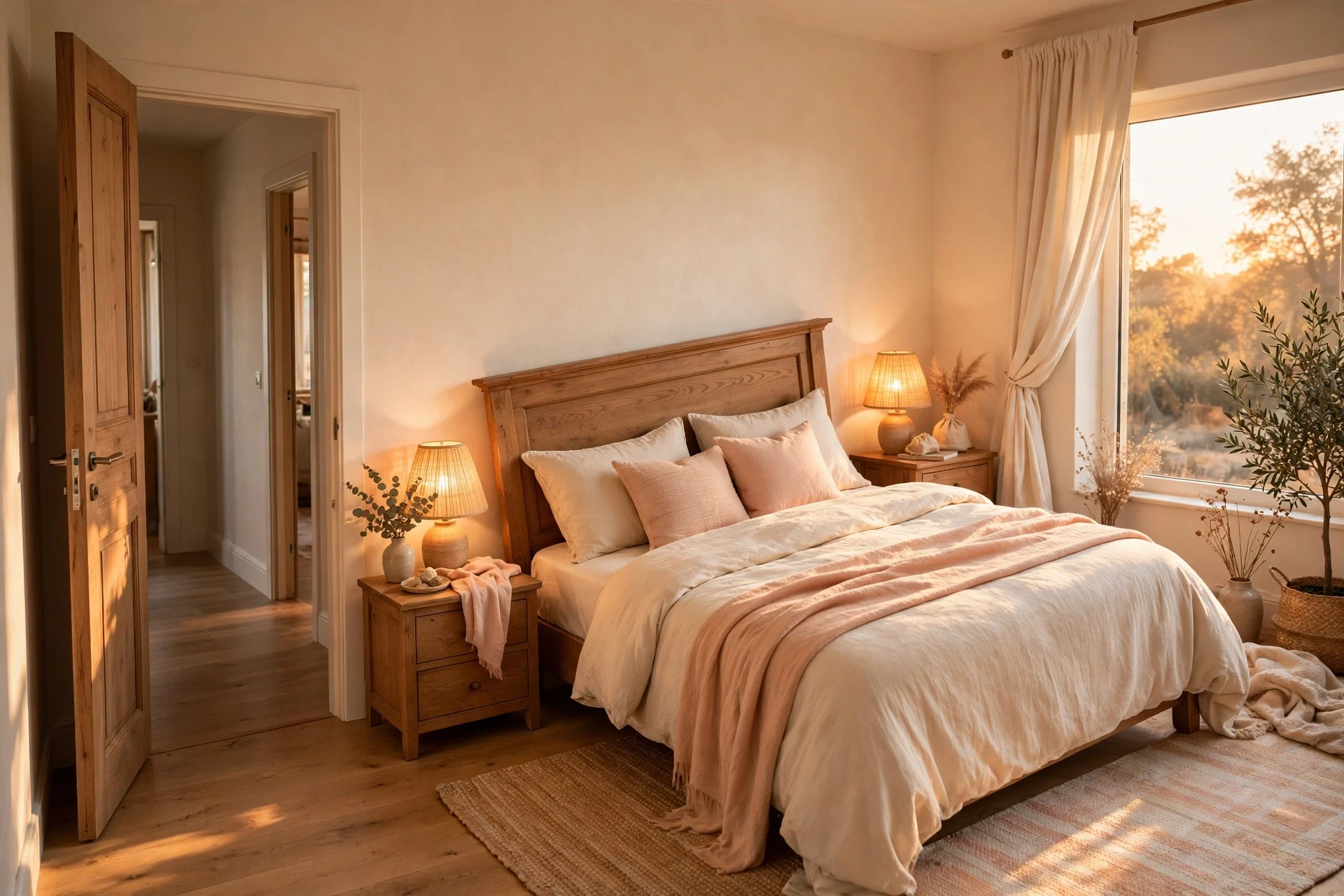
A solid, sturdy headboard gives your bed the support and stability that feng shui associates with strong relationships and steady energy. Choose a headboard made from solid wood or upholstered in a soft fabric, firmly attached to the bed frame, and tall enough to feel substantial. It anchors the bed and gives you a sense of being held and protected while you sleep.
Avoid headboards made from metal bars or open slats, which let energy slip through and can feel unsettled, and skip headboards with storage compartments that create clutter behind your head. A wooden headboard with softly rounded corners is ideal, bringing the grounding wood element into the room. If your bed has no headboard at all, adding one is the fastest feng shui upgrade you can make.
3. Keep the Bed Out of the Door’s Direct Line
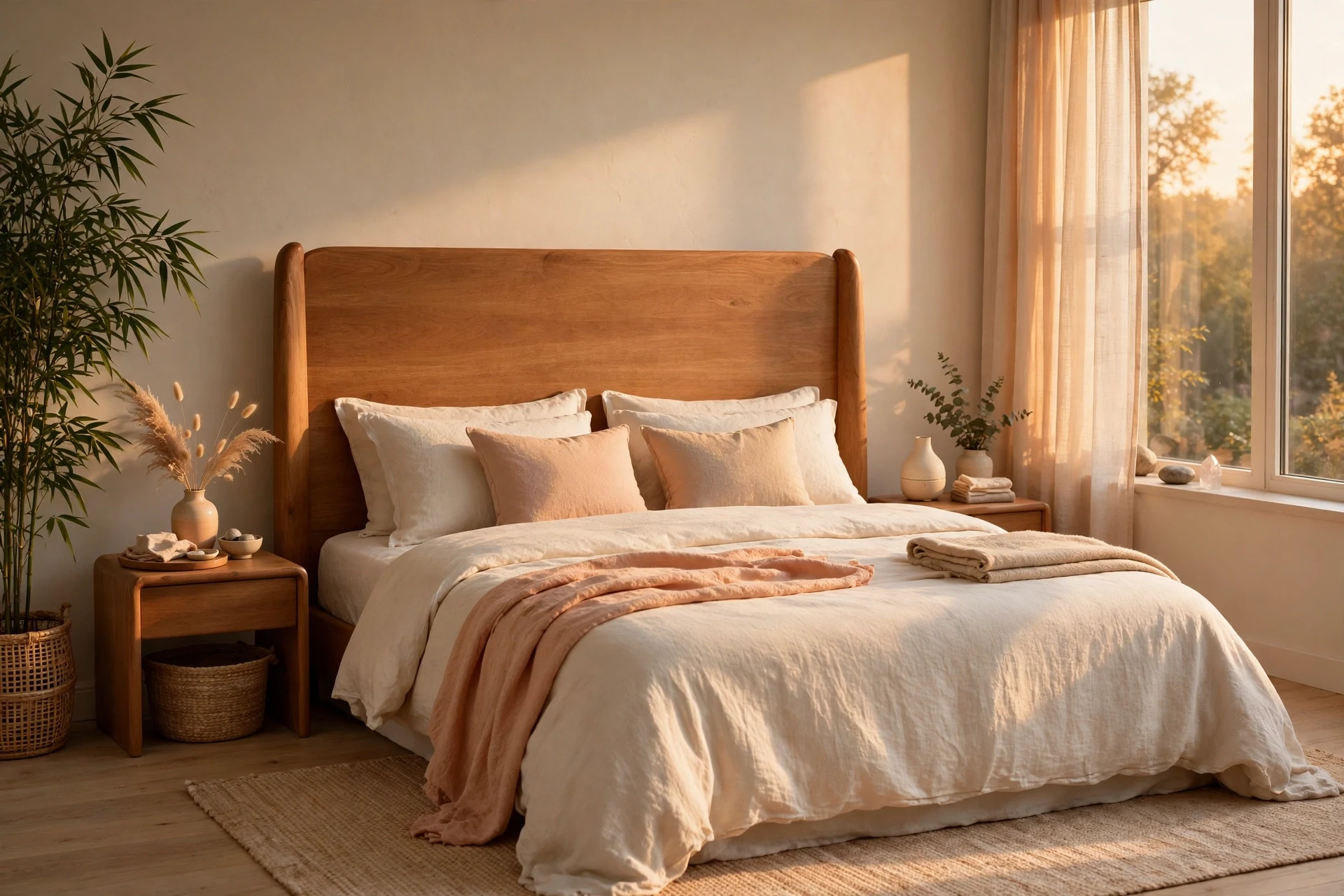
When your bed sits directly in line with the bedroom door, the rush of chi entering the room flows straight onto you while you sleep, which feng shui teaches can disturb rest and drain energy. The fix is simple: shift the bed to one side so the door’s path passes beside it rather than through it. Even a small shift makes a noticeable difference to how calm the room feels.
If the room is too small to move the bed, a folding screen, a tall plant, or a room divider between the bed and the door will slow and soften the incoming energy. A footboard can also act as a gentle buffer. The goal is never to block the door, just to give the energy a graceful curve around the bed instead of a straight line into it.
4. Balance with Matching Nightstands
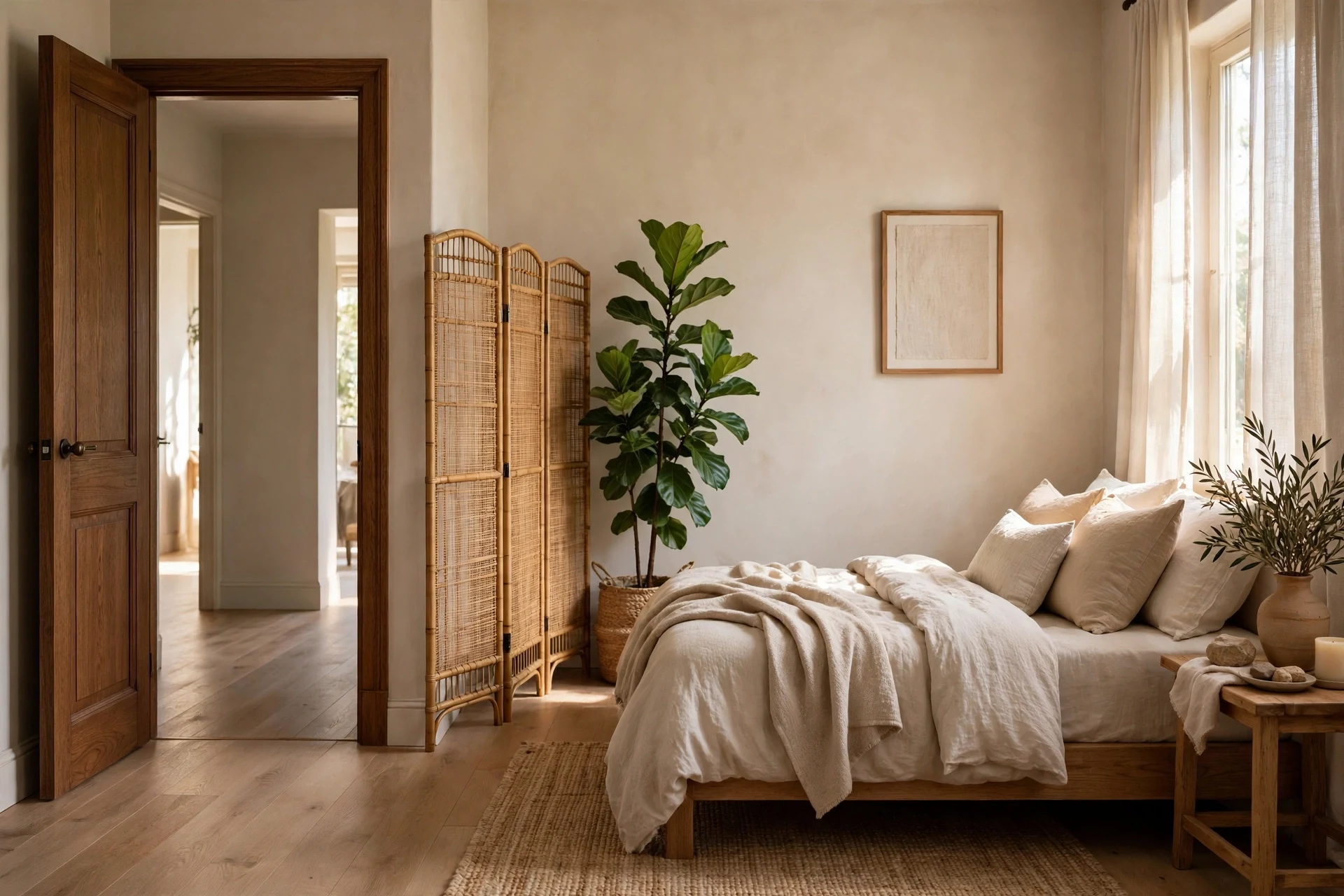
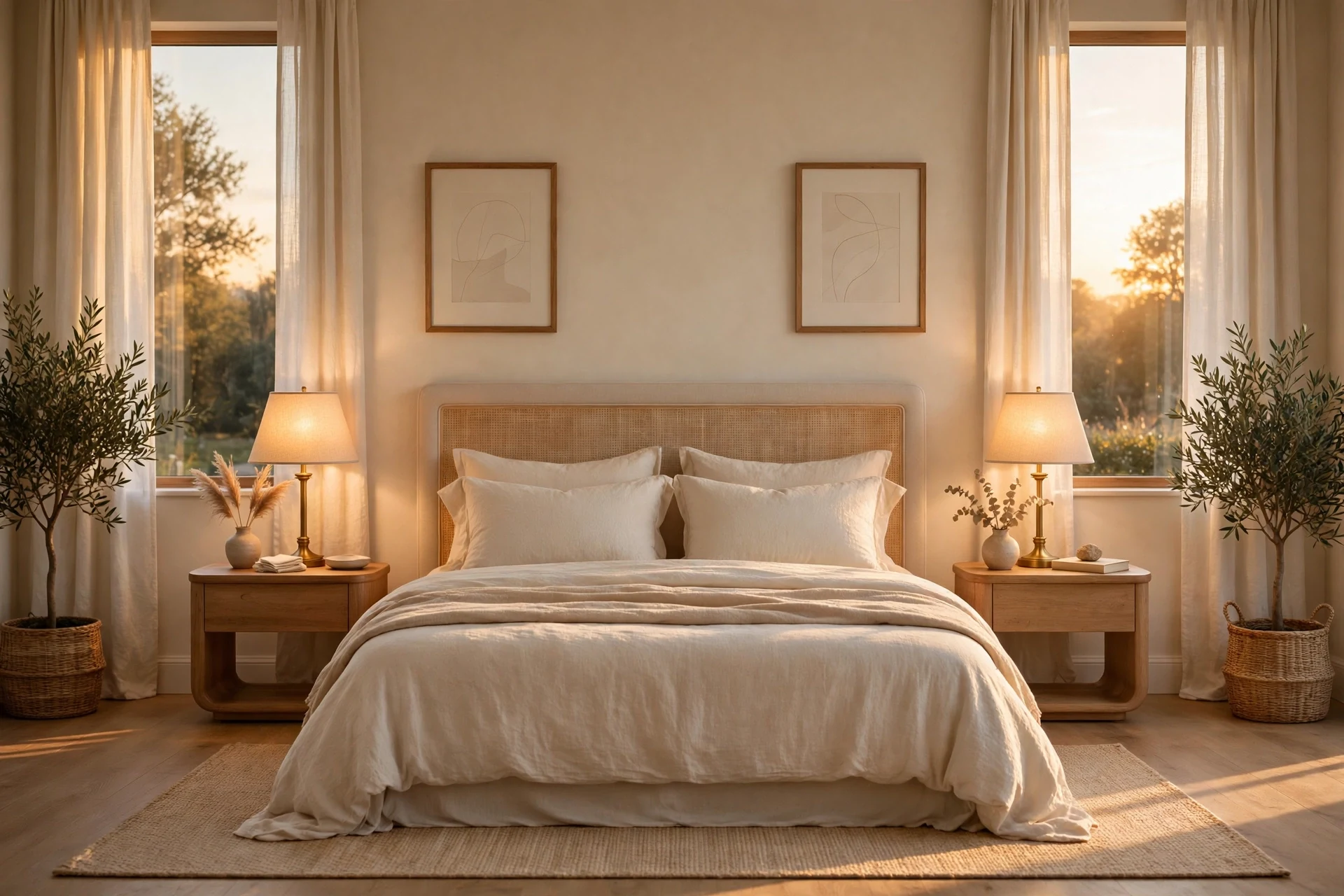
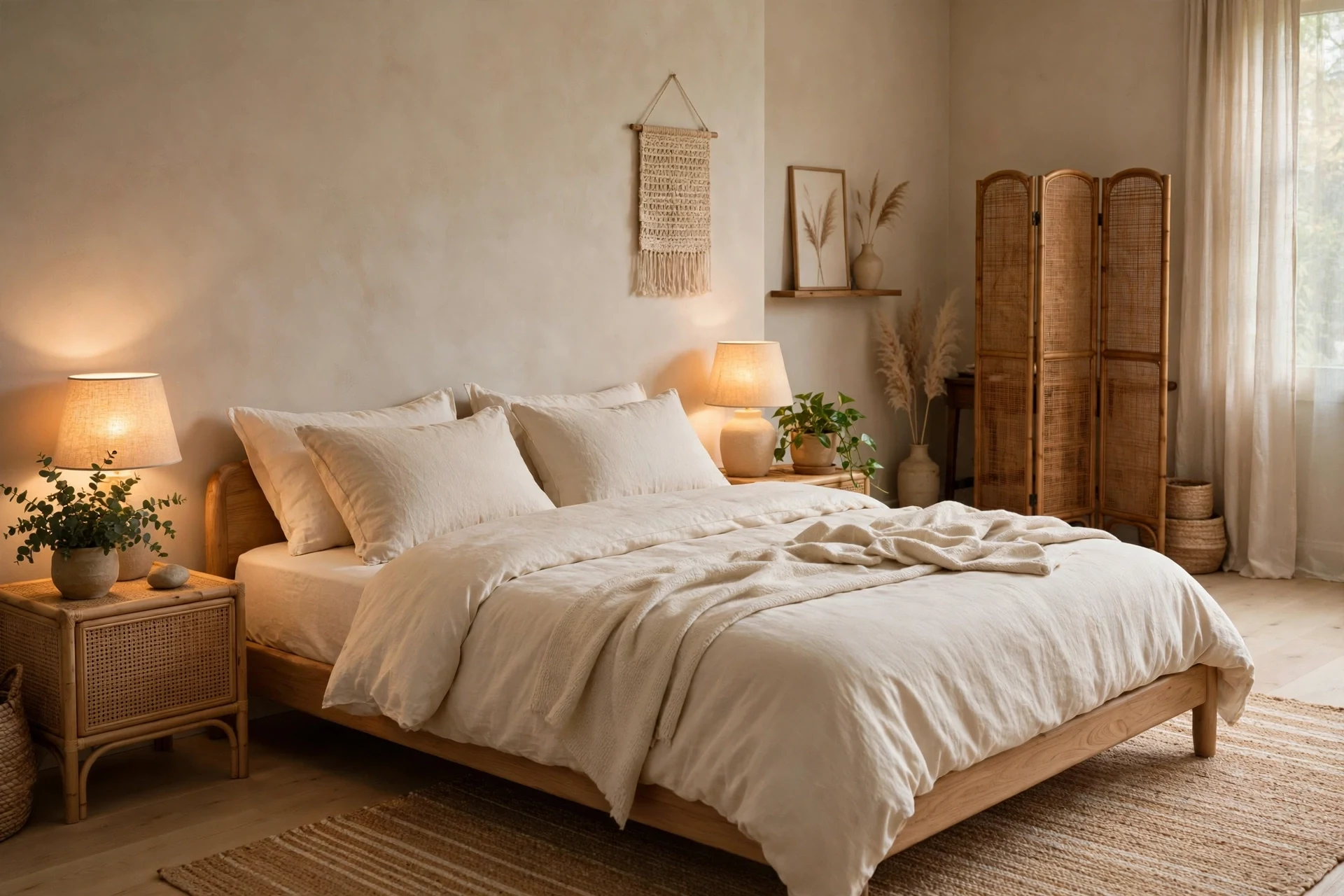
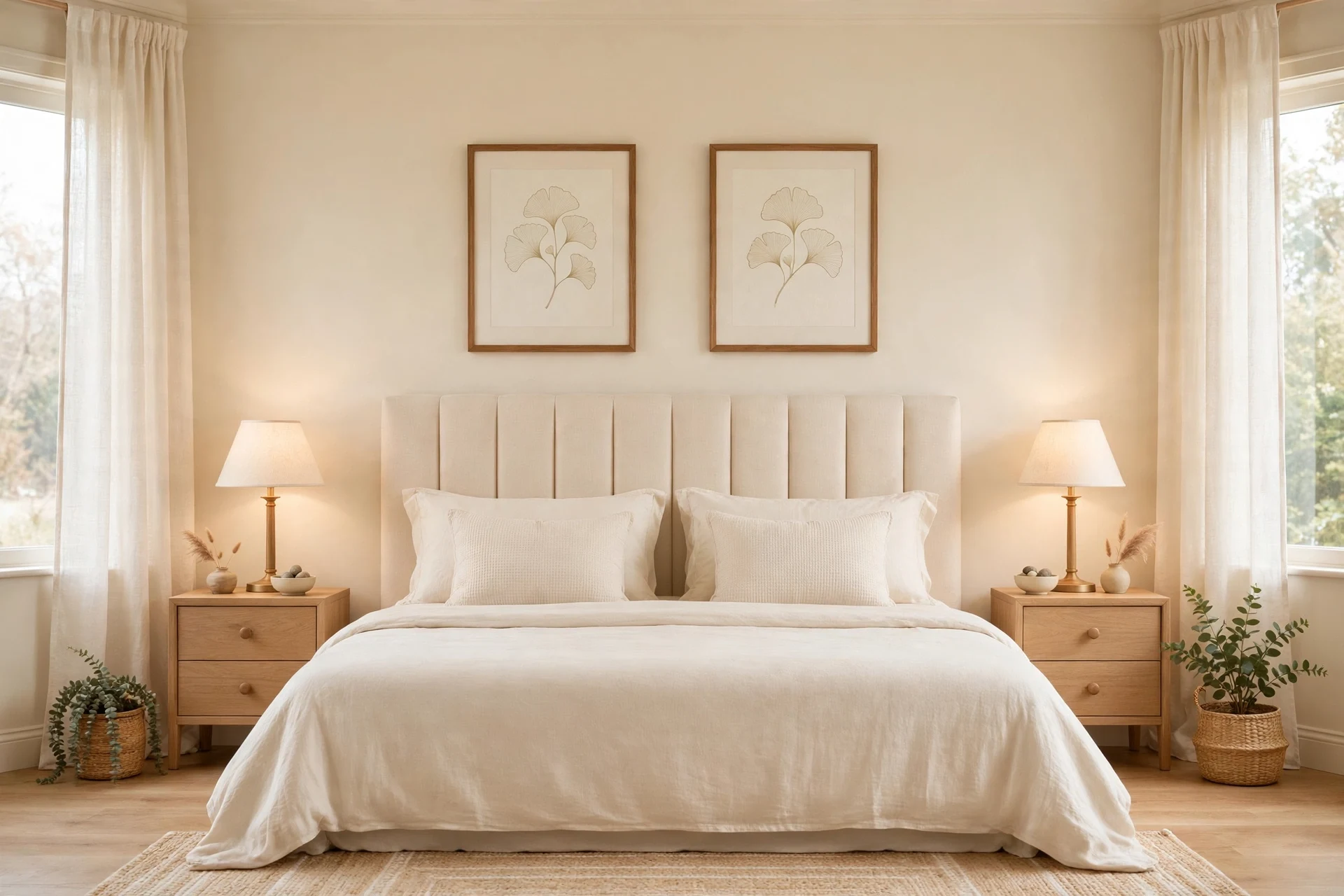
Matching nightstands on both sides of the bed are a classic feng shui symbol of balance and equality, especially for couples. Two identical tables, each with its own lamp, create a sense of harmony and partnership, giving both people equal space and equal importance in the room. It is one of the simplest ways to bring symmetry into the bedroom.
Choose nightstands with rounded corners and drawers, which keep small clutter out of sight, and keep the styling similar on both sides without making it rigidly identical. A small plant on one side and a book on the other still works, as long as the overall weight and height feel balanced. If you sleep alone, matching nightstands still signal openness to partnership and balance in your life.
5. Clear the Clutter Under the Bed
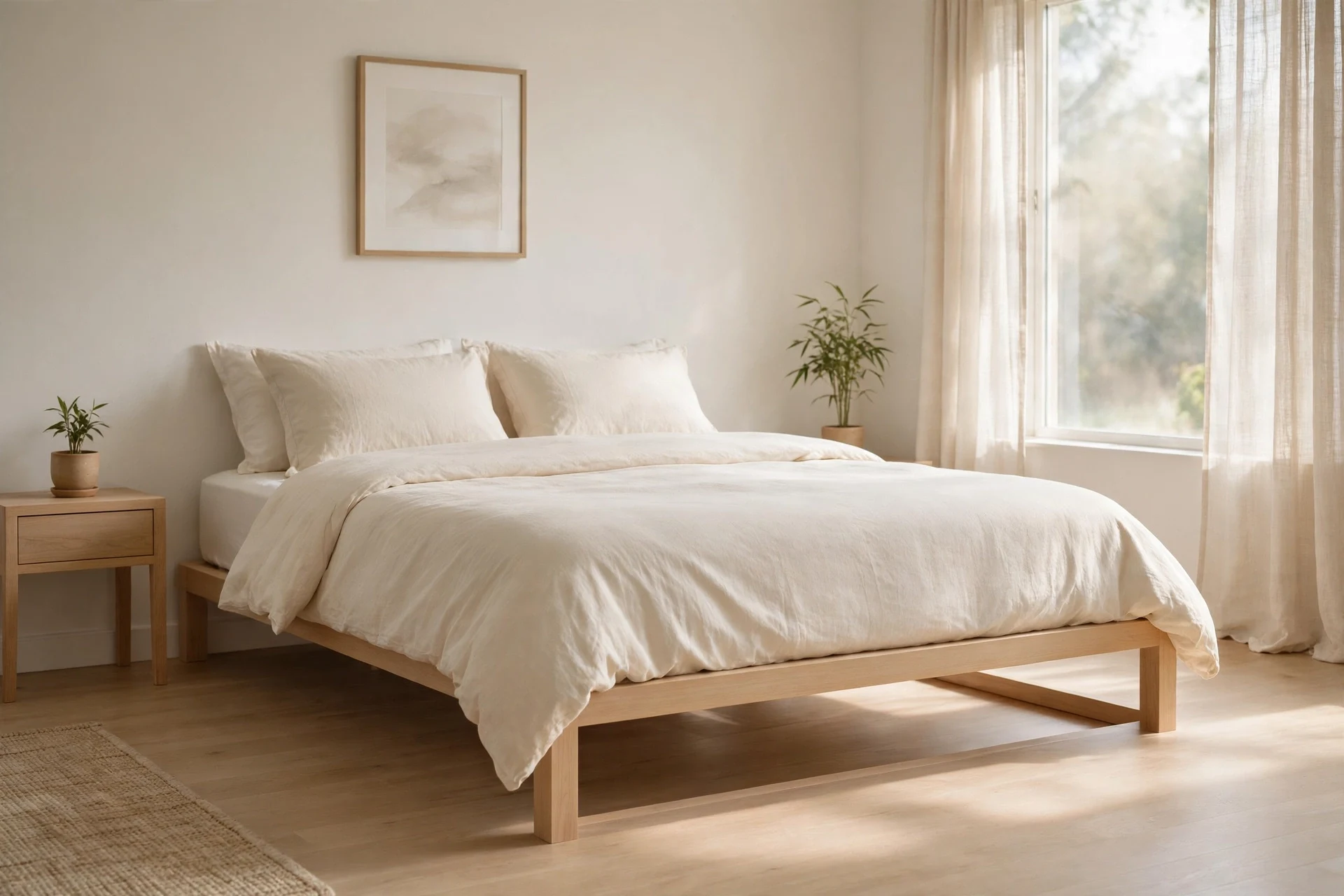
Energy needs to flow freely all around you while you sleep, and that includes underneath the bed. Storing boxes, old clothes, or forgotten items beneath the bed blocks chi and fills your sleep space with stagnant energy from things you no longer use. Feng shui teaches that what sits under your bed influences your subconscious rest, so keep the space completely clear if you can.
If storage space is tight, limit under-bed storage to soft, sleep-related items only — spare bedding, extra pillows, or a clean blanket in a fabric container. Never store shoes, luggage, old paperwork, or broken items under the bed. Clearing this one hidden space often makes the whole room feel lighter, and many people notice they sleep more deeply afterward.
6. A Soft, Earthy Colour Palette
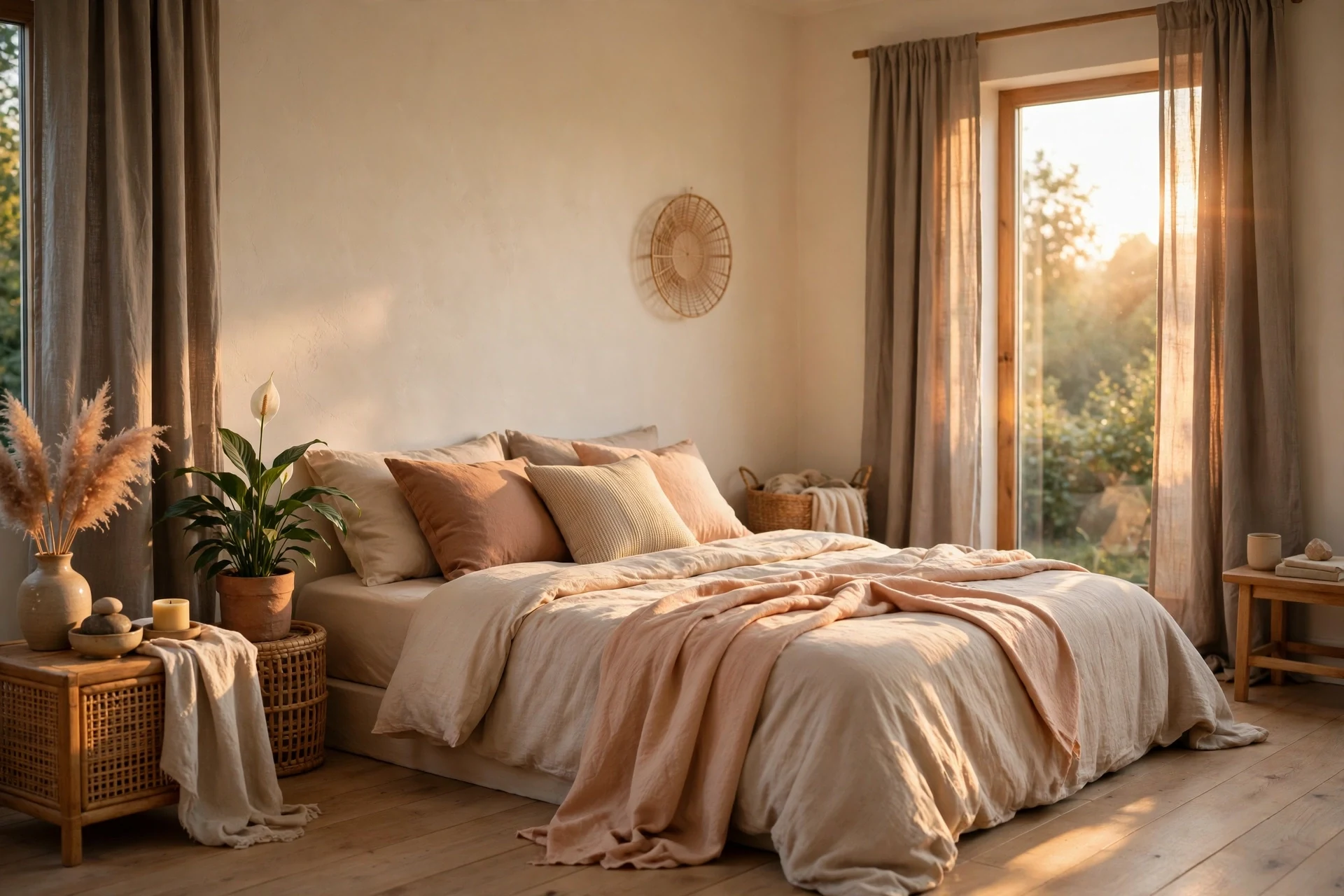
Feng shui favours soft, skin-tone colours in the bedroom — warm creams, gentle peach, soft beige, pale terracotta, and muted taupe — because these earthy shades feel nurturing and restful. They support the earth element, which grounds energy and promotes deep, stable sleep. Walls, bedding, and curtains in these tones create a cocoon-like calm that bright or stark colours simply cannot match.
You do not need to repaint the whole room to shift the palette: warm-toned bedding, a soft rug, and linen curtains can warm up white walls beautifully. Avoid large areas of bright red, stark black, or cold grey in the bedroom, as these can overstimulate or drain energy. Add colour through small accents instead, keeping the dominant tones soft, warm, and close to nature.
7. Bring In the Five Elements
A balanced bedroom holds all five feng shui elements — wood, fire, earth, metal, and water — in gentle proportion. Wood appears in plants and wooden furniture, fire in candles and warm lighting, earth in ceramics and natural fibres, metal in round shapes and metallic finishes, and water in flowing forms, mirrors, or deep blue accents. When all five are present, the room’s energy feels complete and harmonious.
The trick is moderation: no single element should dominate. A room full of metal and glass feels cold, while too much fire — bright reds and harsh light — feels restless. Walk around your bedroom and count which elements you can see; if one is missing, add a small touch, like a ceramic vase for earth or a round brass tray for metal. Balance, not perfection, is the goal.

8. The Wood Element with Living Plants
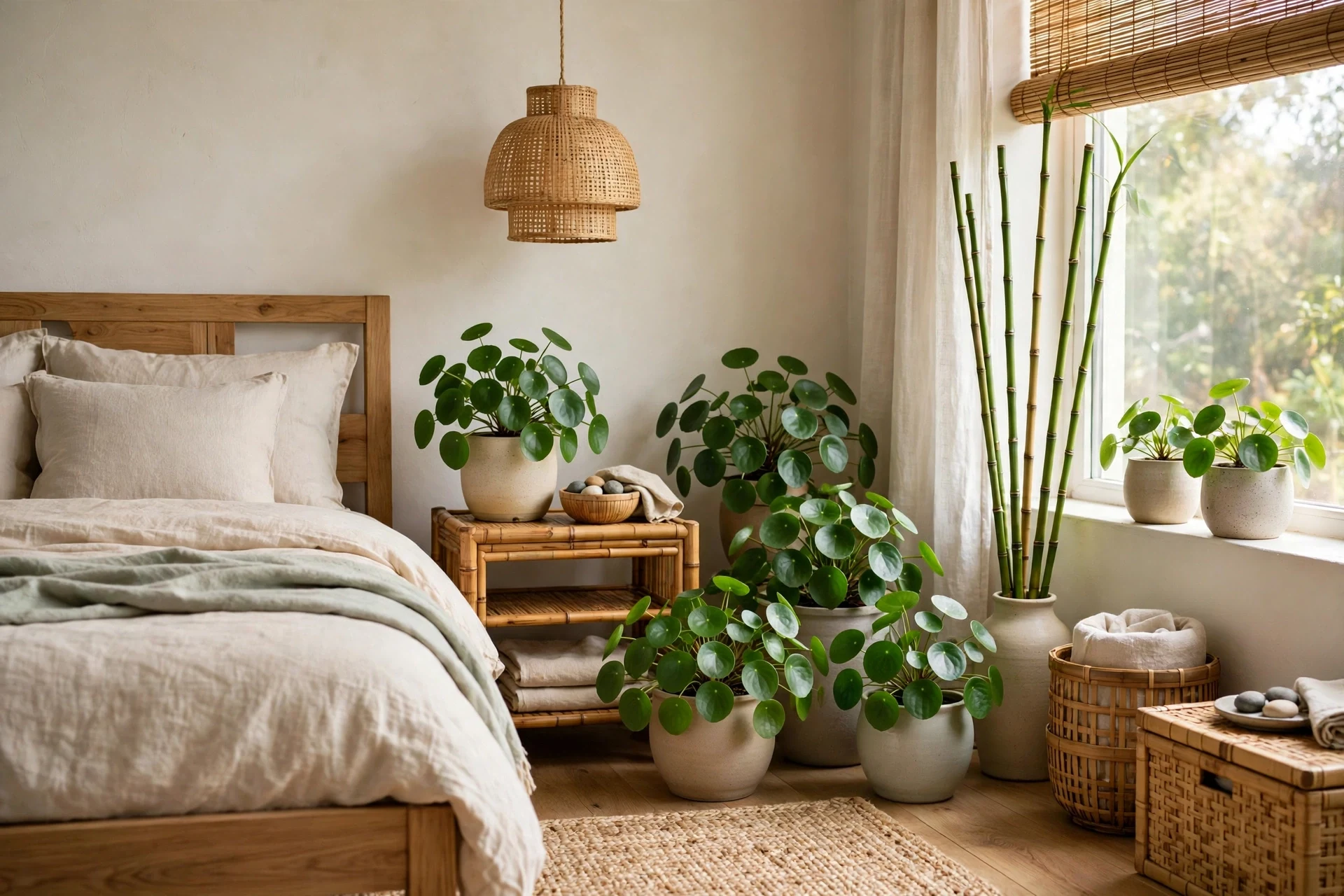
Wood is the element of growth, vitality, and new beginnings, and living plants are the easiest way to bring it into the bedroom. A healthy green plant adds fresh, upward-moving energy and softens hard corners, making the room feel alive. Wooden furniture, bamboo accessories, and tall, vertical shapes also carry wood energy, so a wooden bed frame or dresser already gives you a head start.
Choose plants with soft, rounded leaves rather than sharp spikes, and keep them healthy — a dying plant drains energy instead of adding it. One or two medium plants are plenty; a jungle of greenery can overwhelm a sleep space. Place plants in the corners of the room, where they soften angles and encourage energy to circulate gently around the bed.
9. The Fire Element with Warm Light
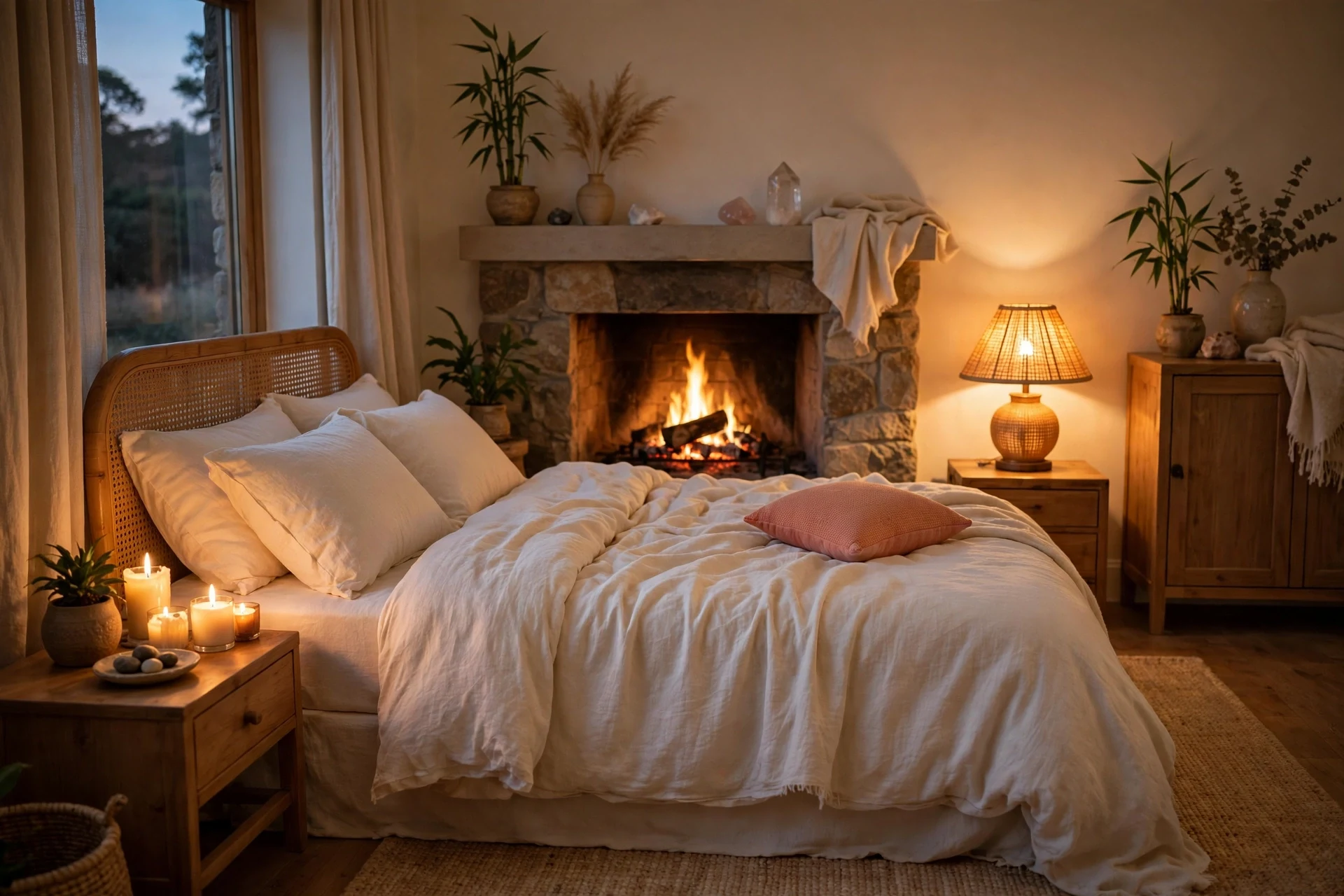
Fire brings passion, warmth, and lively energy into the bedroom, and it is best expressed through light rather than bold colour. Warm-toned lamps, candles, and soft golden lighting add a gentle glow that makes the room feel intimate and inviting. A pair of candles on the nightstand or a warm-glow lamp creates the kind of atmosphere that helps couples connect and unwind.
Keep fire energy soft and contained: a few candles, a warm bulb, or a small touch of red or coral in a cushion or throw. Too much fire — bright red walls, harsh overhead lighting, or lots of triangular shapes — can make sleep restless. Candles should always be used safely and never left burning unattended; battery-operated flameless candles give the same warm glow with complete peace of mind.
10. The Earth Element with Natural Textures
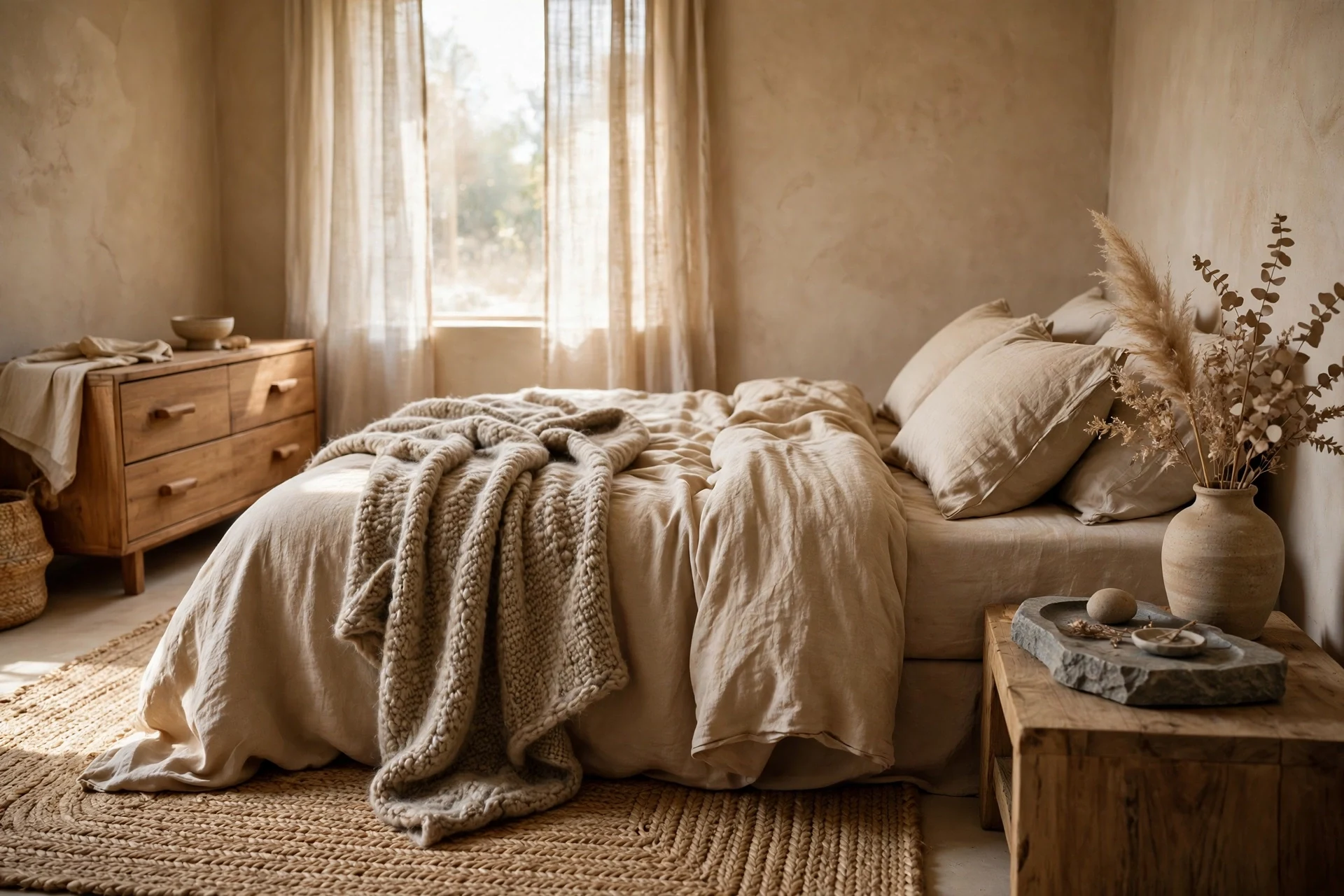
Earth is the grounding element, and it makes the bedroom feel stable, calm, and safe. Bring it in with natural textures: a ceramic vase, a stone tray, a clay pot, linen bedding, a wool throw, or a jute rug. Square and flat shapes also carry earth energy, so a low, rectangular dresser or a square cushion adds grounding without you even noticing.
Earth tones — warm beige, sandy yellow, soft terracotta — pair naturally with these textures and deepen the sense of calm. If your bedroom feels restless or you struggle to switch off at night, adding more earth is often the answer: a heavier rug underfoot, a ceramic lamp base, or a stack of natural-stone coasters on the nightstand can anchor the room’s energy beautifully.
11. The Metal Element with Round Accents
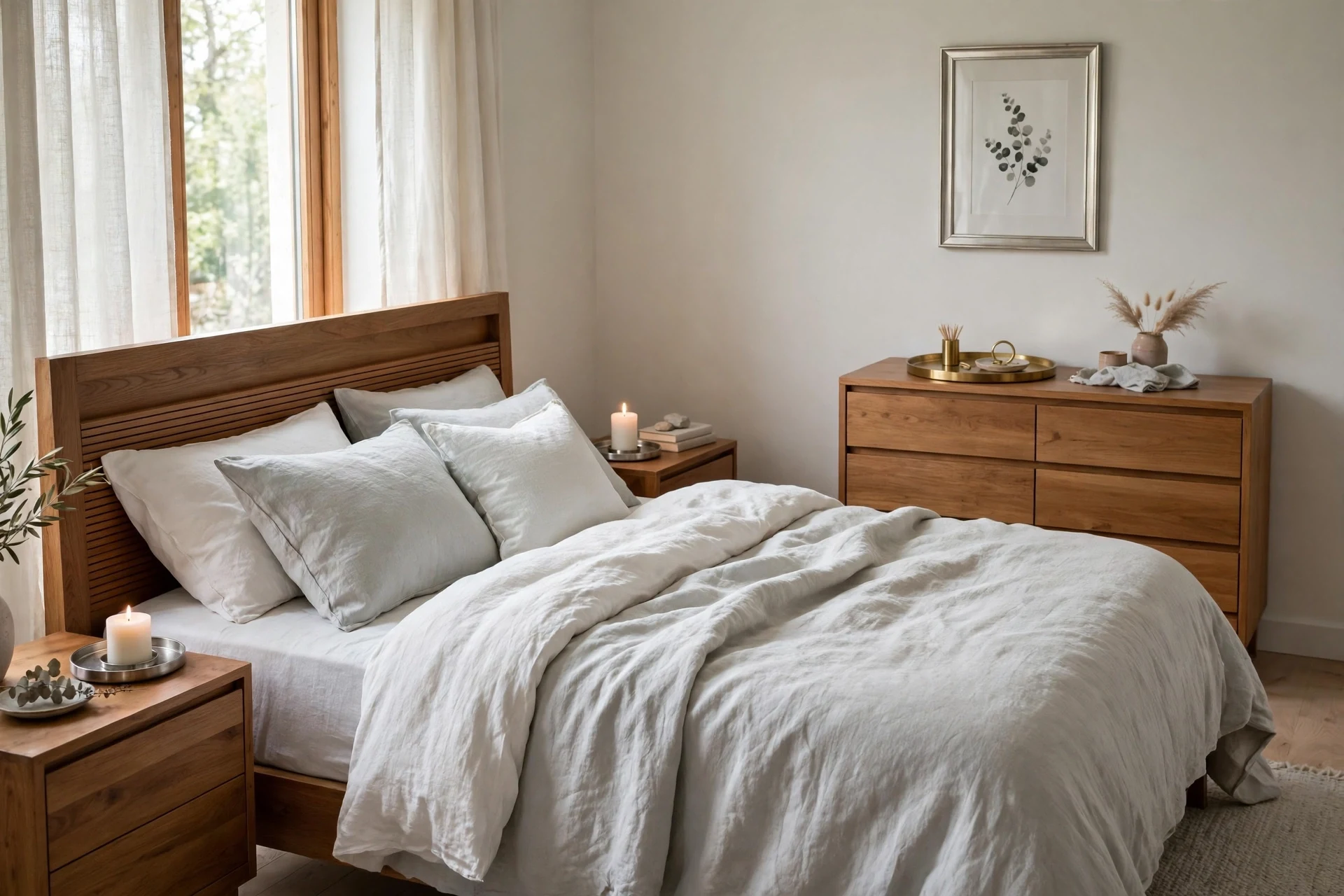
Metal brings clarity, precision, and calm focus into the bedroom, and it shows up in round shapes, metallic finishes, and cool, light tones. A round brass tray, a silver-framed picture, a metal lamp base, or circular mirrors all add metal energy in a gentle way. White, grey, and pale metallic colours also belong to metal, so light bedding and pale walls already contribute.
Use metal sparingly and warm it up: polished brass, brushed gold, and copper feel far more bedroom-friendly than cold chrome or steel. A pair of round metal candle holders on matching nightstands doubles as a symmetry symbol and a metal accent in one. Too much metal can make a room feel sharp and cold, so balance it with soft fabrics and warm wood.
12. The Water Element with Flowing Forms
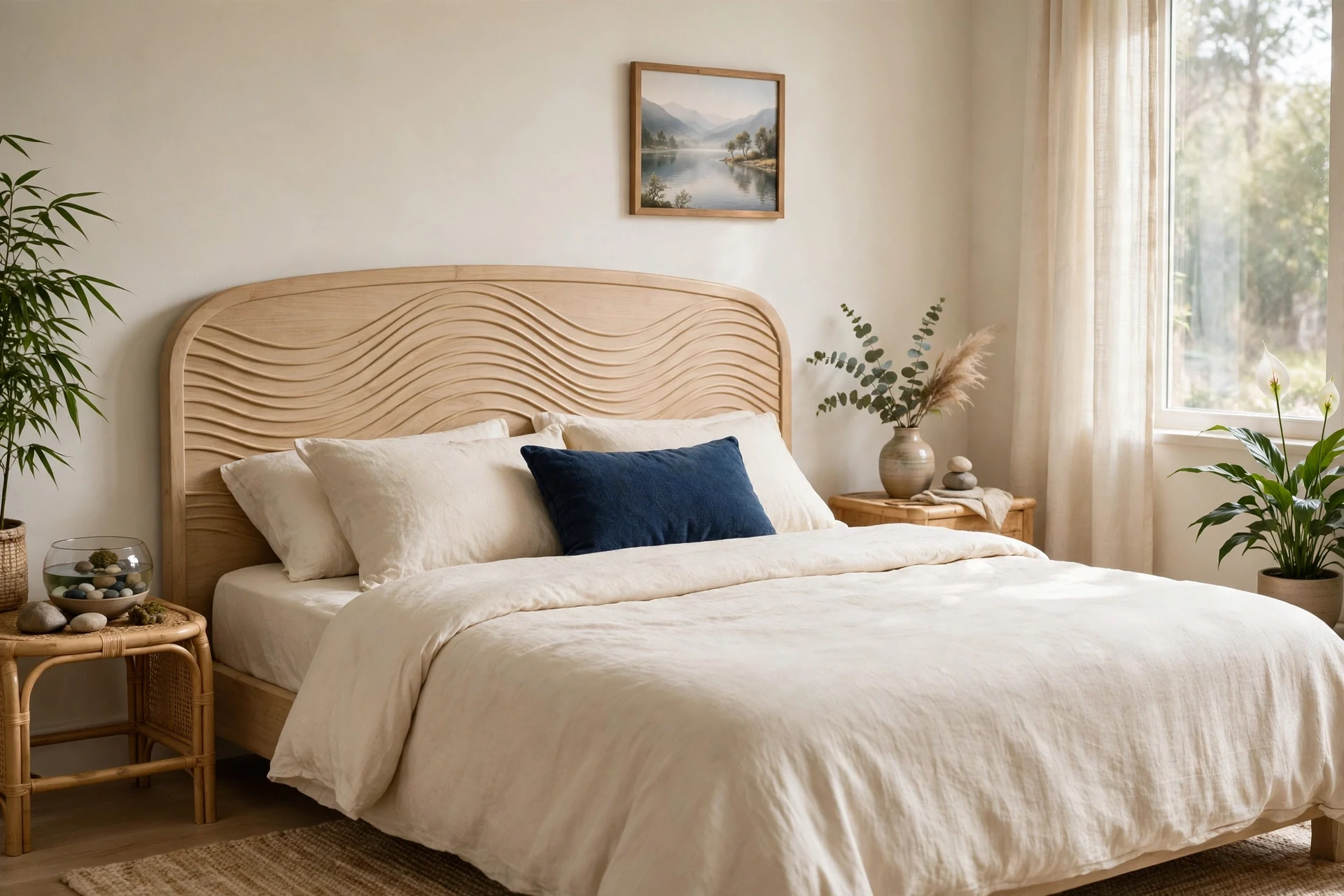
Water is the element of flow, wisdom, and abundance, and in the bedroom it should appear in small, calming doses. Flowing, wavy shapes — a curved headboard, a wave-patterned cushion, a dark blue throw — carry water energy without overwhelming the room. Deep blues and blacks are water colours, so a single navy accent pillow or a piece of dark blue art can complete the five-element balance.
Be careful with literal water in the bedroom: feng shui advises against water features, fountains, or large pictures of water here, because too much water energy can disturb sleep and dampen the room’s warmth. A small, still image of a calm lake or a gentle stream is fine, but keep it modest. The goal is a whisper of water, not a flood.
13. Keep Mirrors Out of the Bed’s Reflection
In feng shui, mirrors are powerful: they double whatever they reflect and bounce energy around the room. A mirror facing the bed is believed to bounce your energy back at you all night, disturbing sleep and, in traditional teaching, inviting a third party into a relationship. The simplest rule is to never place a mirror where you can see your reflection from the bed.
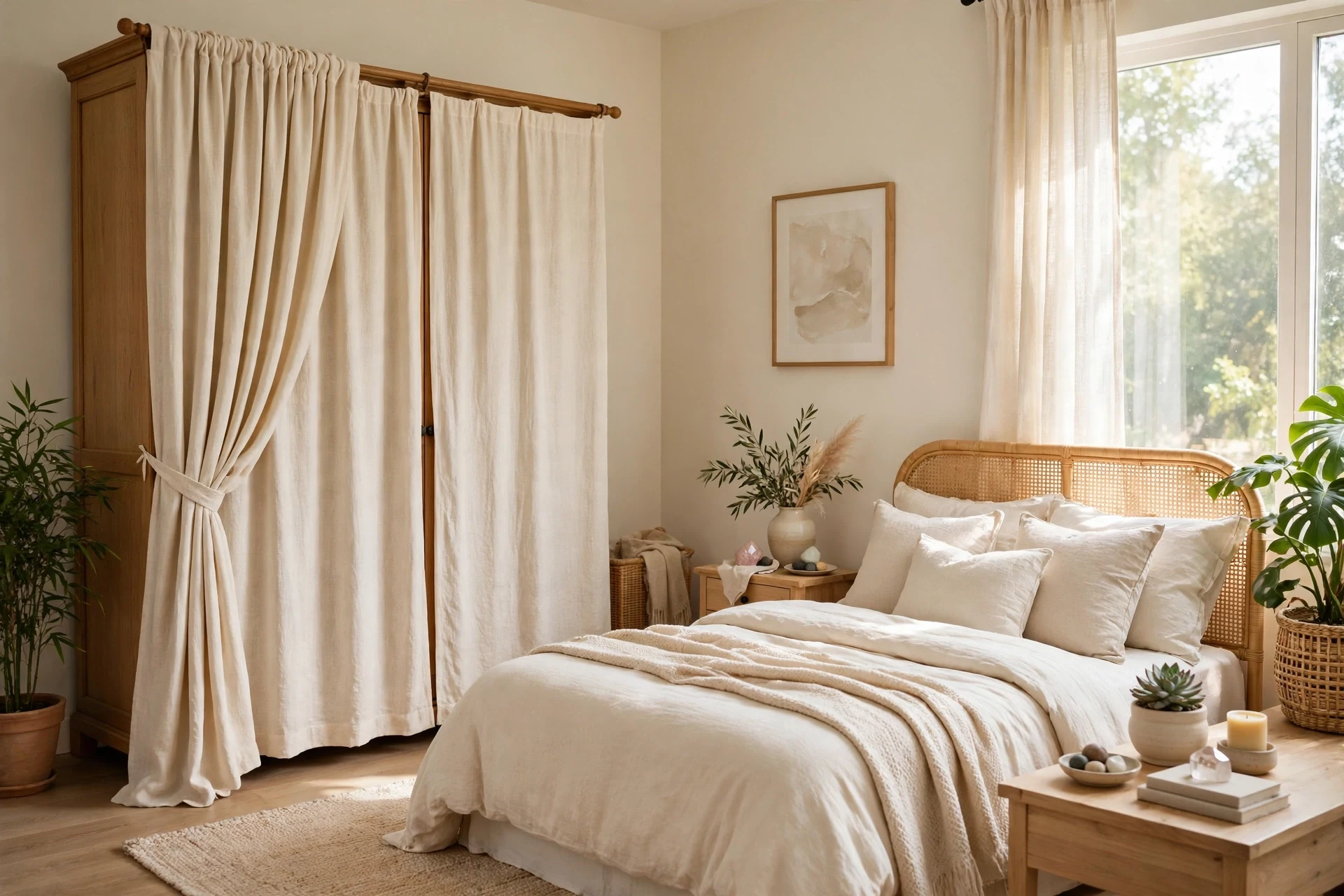
If your wardrobe has mirrored doors facing the bed, cover them at night with a curtain or a decorative fabric panel, or reposition the bed so the mirror no longer faces it. A mirror on the inside of a wardrobe door gives you the practical benefit without the feng shui drawback. When in doubt, lie on the bed and look around — if you can see yourself in a mirror, it needs to move.
14. A Mirror That Reflects Something Beautiful
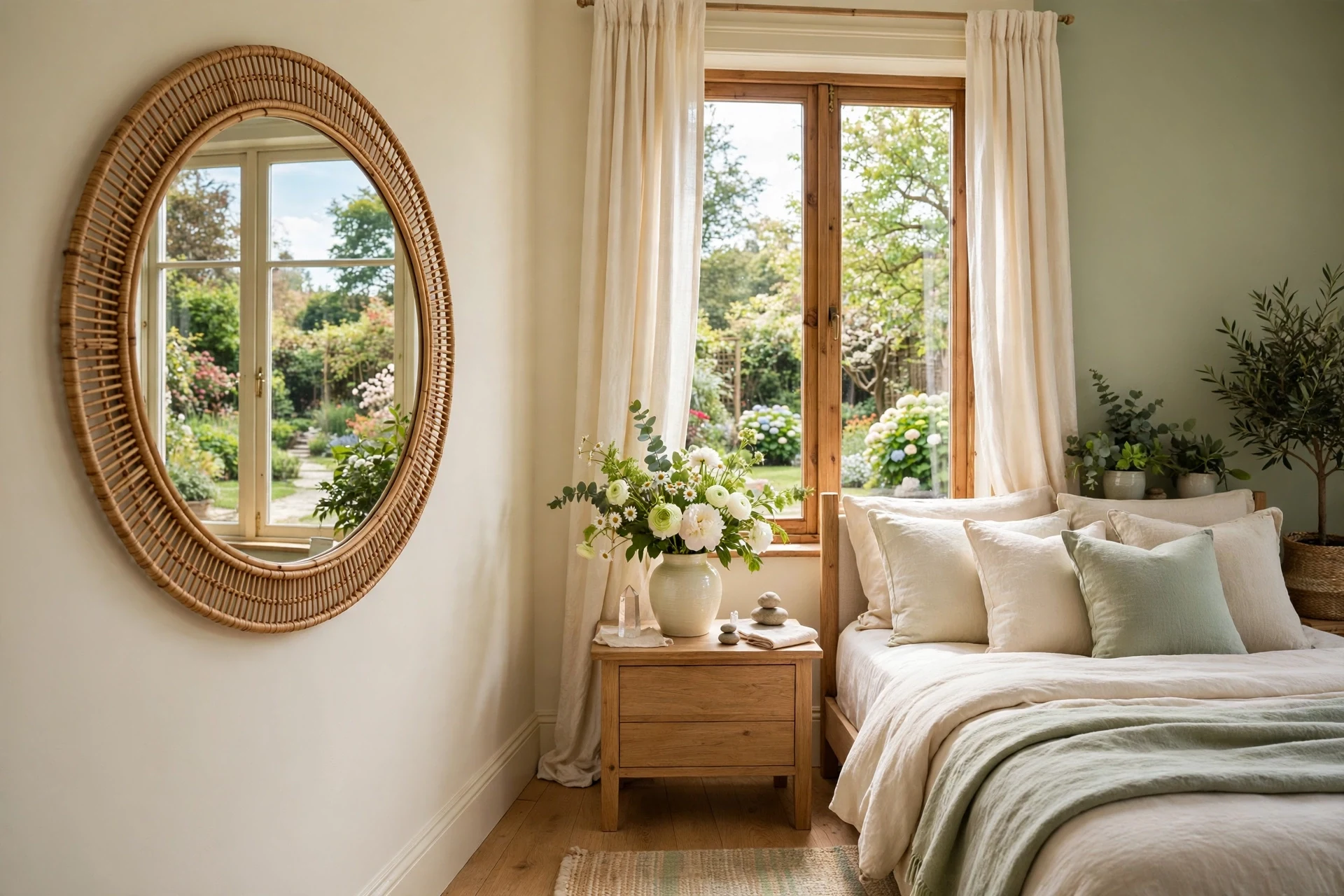
Mirrors are not banned from the bedroom in feng shui — they simply need to reflect something lovely. A mirror placed to reflect a beautiful view, a piece of art, or a vase of fresh flowers doubles that beauty and brightens the room’s energy. A round mirror on a side wall, angled toward a window with a garden view, is one of the most uplifting placements you can choose.
Keep bedroom mirrors clean and in good condition, since a cloudy or cracked mirror reflects cloudy energy. Round or oval mirrors are preferred over sharp-cornered ones, because their soft curves encourage gentle energy flow. Never place a mirror so it reflects clutter, a messy desk, or the bathroom door — whatever the mirror sees, the room receives twice.
15. Soft, Layered Lighting
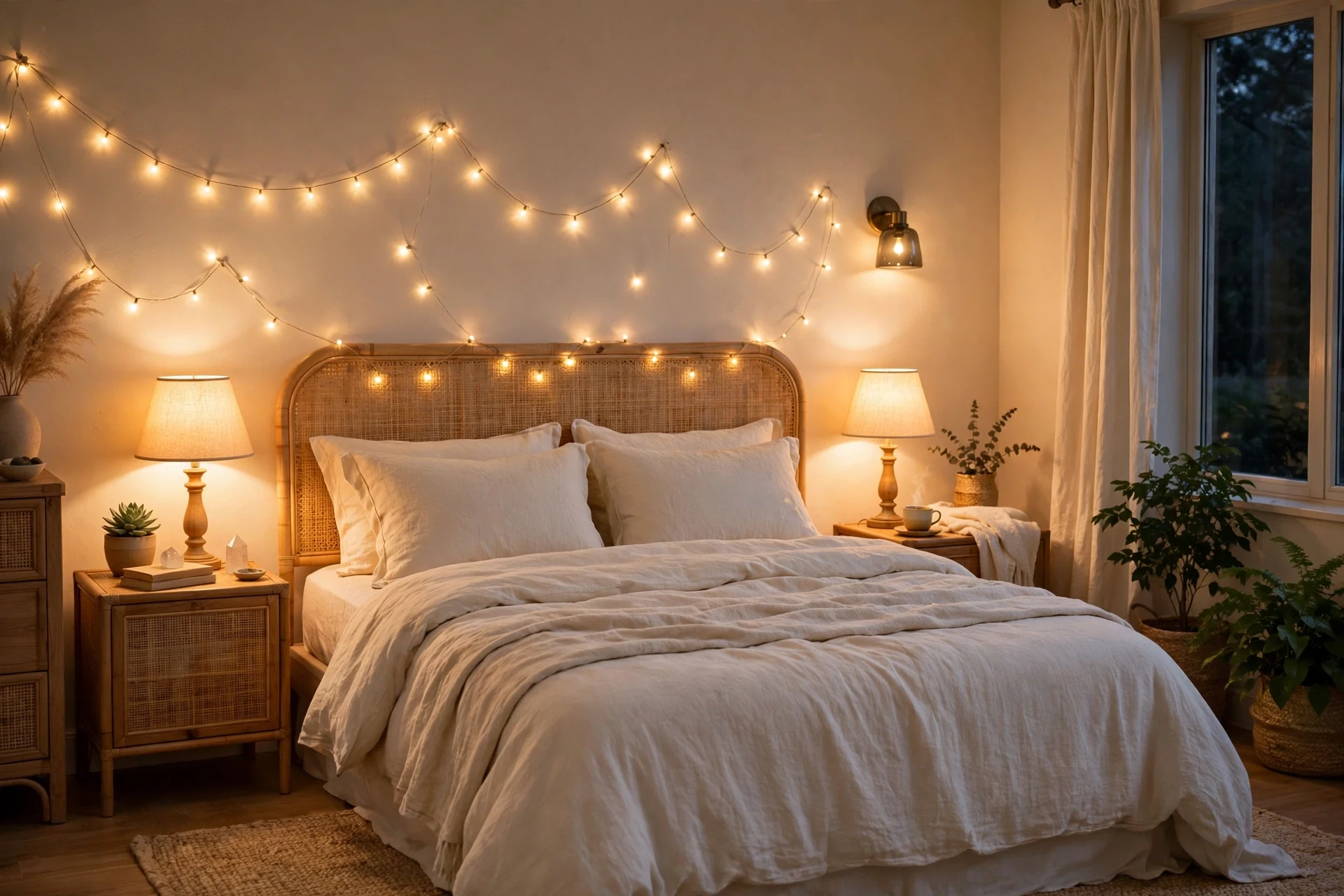
Harsh overhead lighting is one of the biggest energy disruptors in a bedroom, and feng shui favours soft, layered light instead. Combine a warm bedside lamp, a dimmable wall sconce, and a few candles or fairy lights so you can shift the mood from bright morning to gentle evening. Warm white bulbs, around 2700K, create a golden glow that tells your body it is time to relax.
Lamps in pairs reinforce the bedroom’s balance, so matching bedside lamps on both nightstands are ideal. A dimmer switch on the main light lets you soften it in the evening, and salt lamps add a warm amber glow that many people find deeply calming. Good bedroom lighting is not about brightness — it is about warmth, softness, and control.
16. Ditch the Harsh Overhead Light
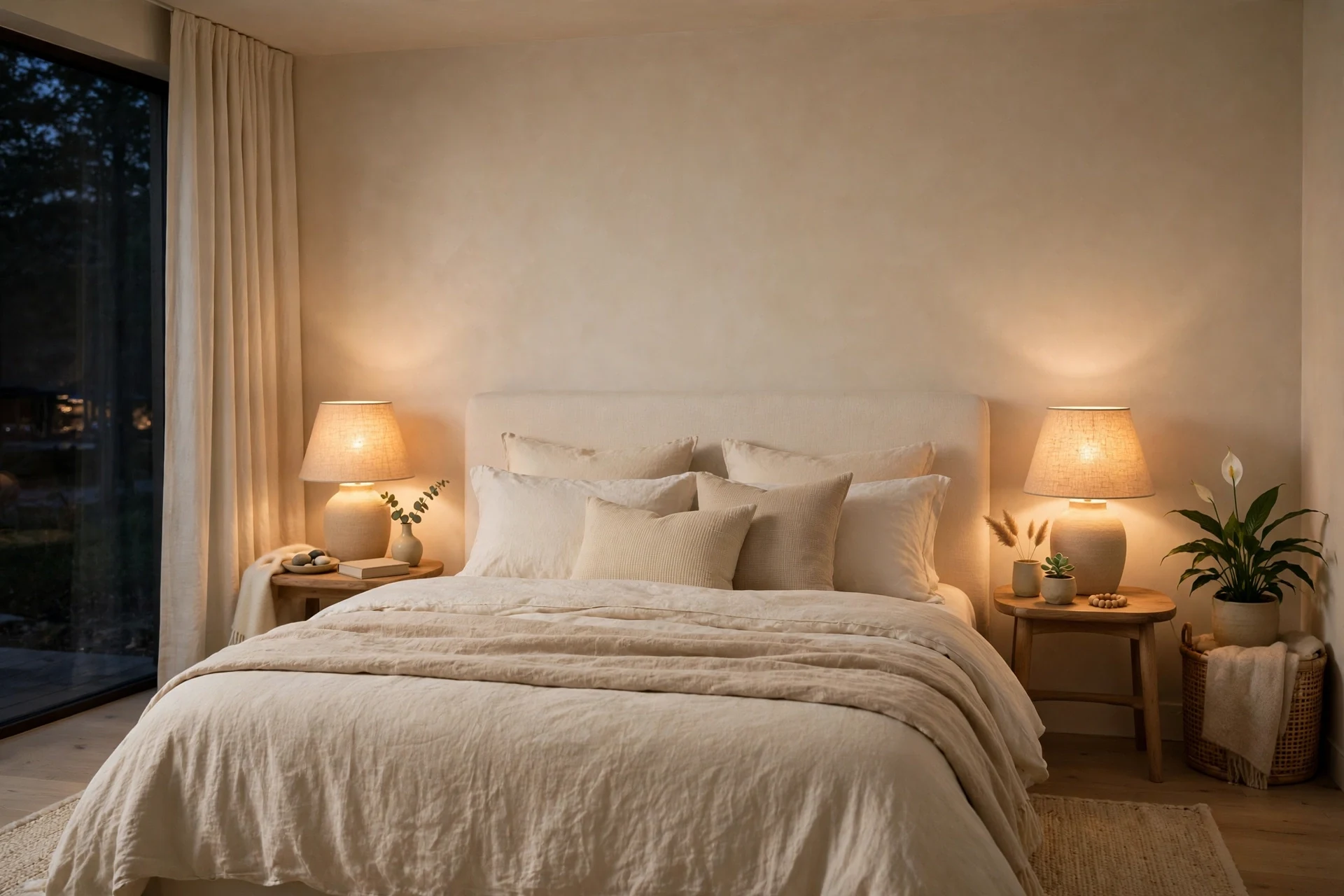
A bright ceiling light shining directly over the bed is considered pressing, heavy energy in feng shui — like a weight hanging above you while you sleep. If your bedroom has a single harsh overhead fixture, try leaving it off in the evening and relying on lamps instead. You will notice the room feels instantly softer and more restful.
Heavy ceiling fans and large chandeliers directly above the bed are also best avoided, as their downward energy can feel oppressive. If a fan is unavoidable, choose a sleek, lightweight design and keep it balanced and clean. A fabric shade over the ceiling light diffuses the glare, and a dimmer gives you full control — small changes that make the whole room breathe easier.
17. Fresh Air and Good Ventilation
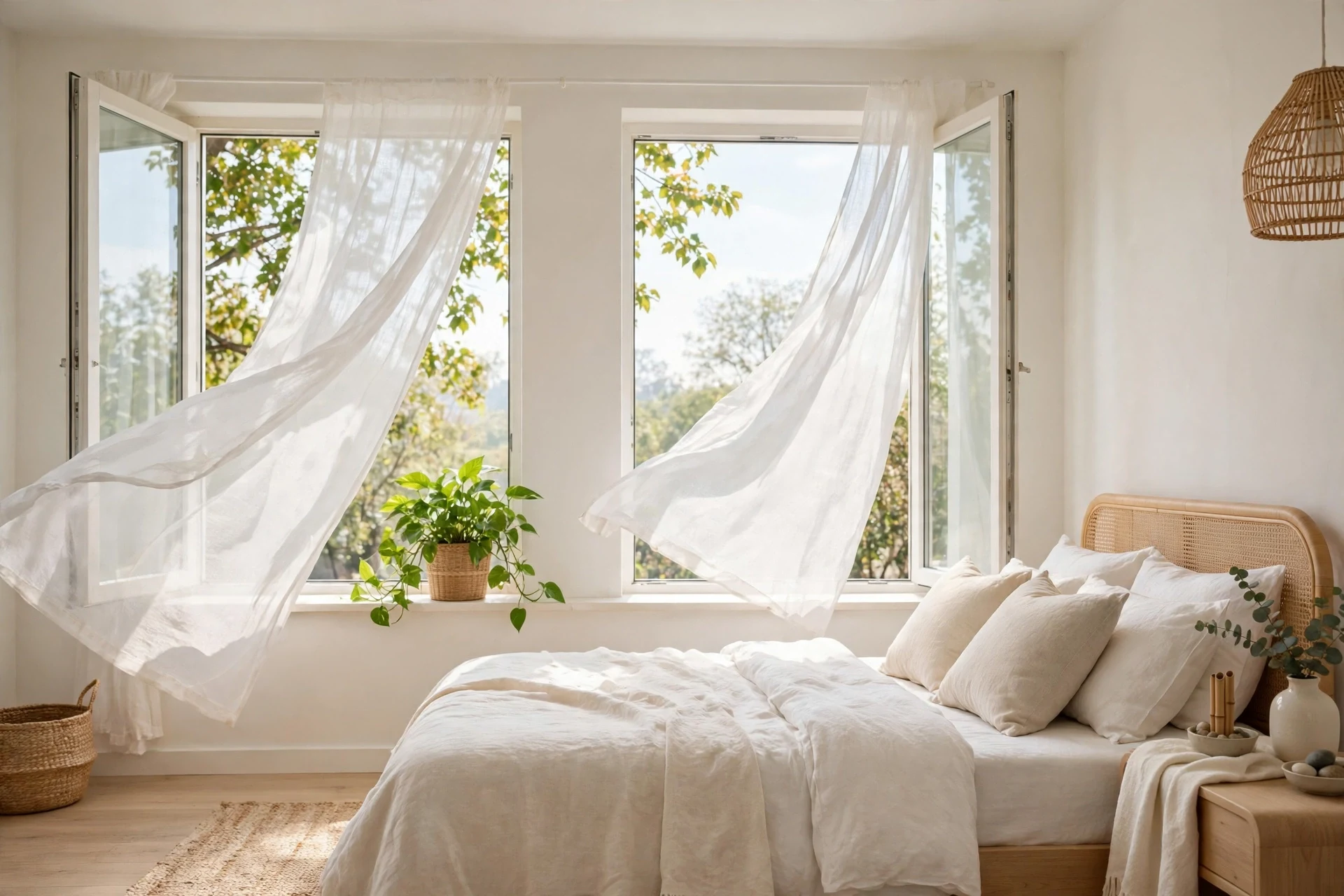
Fresh, moving air is fresh chi, and a bedroom that never gets fresh air quickly feels stale and heavy. Open the windows every day, even briefly, to let old energy out and new energy in. Good ventilation supports deep sleep, clear thinking, and a sense of lightness in the room that no amount of decor can fake.
If opening windows is not always possible, an air purifier or a quiet fan keeps the air circulating, and plants help freshen the atmosphere naturally. Avoid blocking windows with heavy furniture or thick blackout curtains that never open — light and air should be able to enter freely during the day. A bedroom that breathes is a bedroom that restores you.
18. A Calm, Clutter-Free Entry
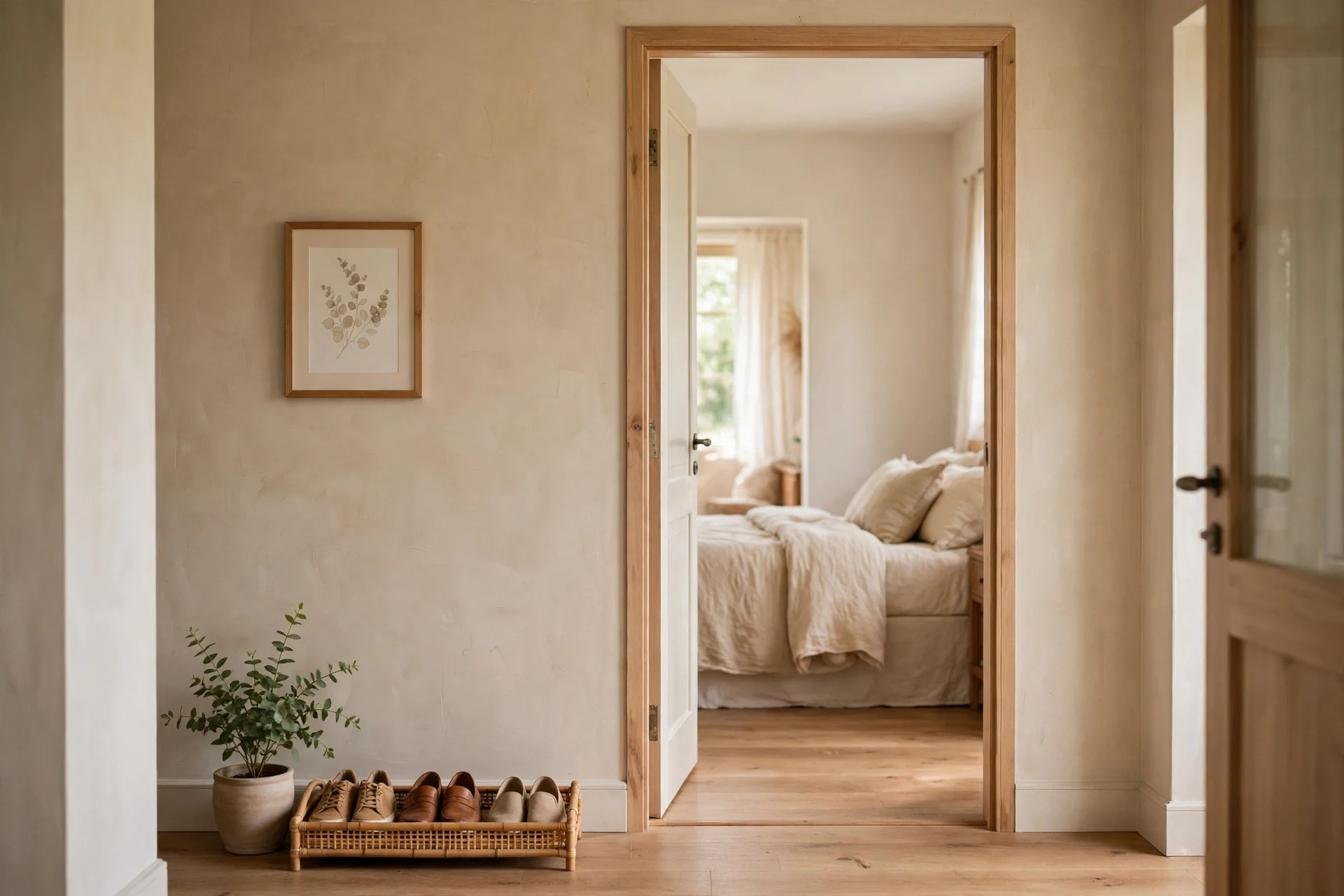
The energy entering your bedroom passes through the door first, so the area just inside should be open, clear, and welcoming. Shoes piled behind the door, bags dumped on the floor, and laundry heaped on a chair all block chi at the threshold and set a chaotic tone for the whole room. Keep the entry clear so energy flows in smoothly and calmly.
A small hook for a robe, a tidy shoe tray, or a single beautiful object near the door — a plant, a framed print, a scented candle — makes the entrance feel intentional. The first thing you see when you walk in sets the mood for the room, so make it something peaceful. When the entry is calm, the whole bedroom follows.
19. No Work Desk in the Bedroom
Feng shui teaches that the bedroom is for rest and connection, not for work — and a desk full of deadlines brings active, stressful energy into your sleep space. Laptops, paperwork, and to-do lists keep your mind in work mode long after you have climbed into bed, making it harder to fall asleep and stay asleep. If you can, move your workspace to another room entirely.
If space forces a desk into the bedroom, separate it clearly: place it as far from the bed as possible, face it away from the bed, and close the laptop and tidy the surface every evening. A folding screen or a curtain can hide the desk at night, signalling to your brain that work is finished. The boundary matters more than the distance — your bed should never feel like part of the office.
20. Electronics Out of Sight
Electronics generate active, stimulating energy that conflicts with the bedroom’s purpose of rest. Televisions, computers, tablets, and phones all emit light and electromagnetic fields that feng shui considers disruptive to sleep, and their screens invite endless scrolling just when your mind should be winding down. Keep as many devices out of the bedroom as you can.
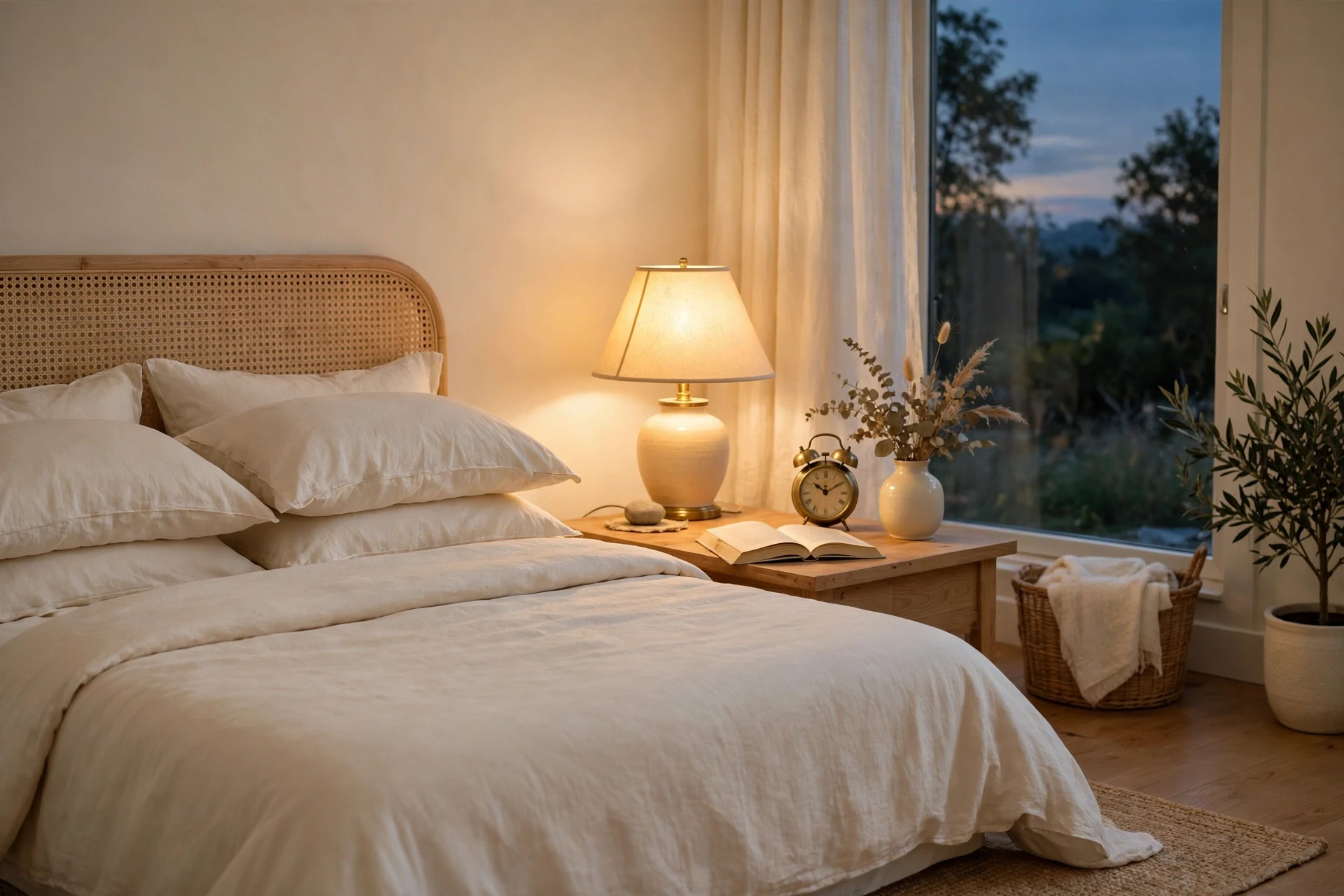
At minimum, charge your phone outside the bedroom or across the room, and use a traditional alarm clock instead of your phone to wake up. If a television must stay, cover it with a beautiful cloth or place it inside a cabinet with doors that close at night. The fewer glowing screens in the room, the deeper and more restorative your sleep will be.
21. A Calm, TV-Free Sleep Zone
A television in the bedroom is one of the most common feng shui problems, because it brings noise, bright light, and restless energy directly into your sleep space. Falling asleep to the television trains your brain to associate the bed with stimulation rather than rest, and the screen’s dark, reflective surface acts like a mirror facing the bed — a double concern in feng shui.
If removing the television feels too drastic, try a one-week experiment: move it out or keep it covered, and notice how your sleep changes. Most people report falling asleep faster and waking more refreshed. Replace the evening television habit with reading, gentle stretching, or quiet conversation — activities that belong to the bedroom’s true purpose of rest and closeness.
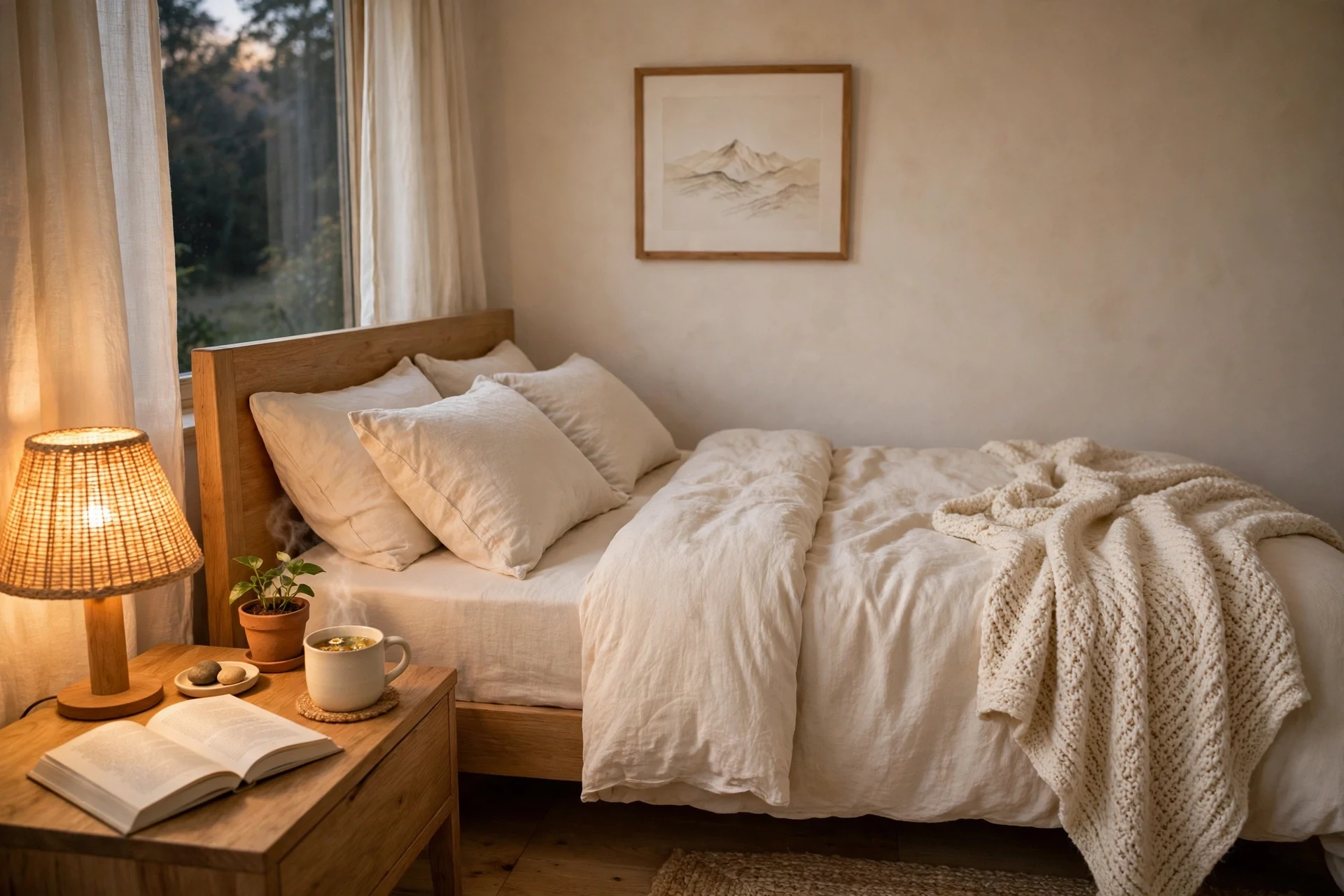
22. Choose Bedding in Soothing Tones
Your bedding is the largest surface in the bedroom and the closest thing to your body while you sleep, so its colour matters enormously in feng shui. Soft whites, warm creams, gentle peach, dusty rose, and pale sage all promote calm and restful energy, while deep, restful tones like muted terracotta or soft chocolate can feel warm and grounding. Choose colours that make you feel peaceful the moment you see them.
Avoid bedding with busy, aggressive patterns or jarring colour clashes, which create visual noise and restless energy. Solid colours or soft, gentle patterns — subtle stripes, delicate florals, quiet geometric shapes — keep the energy smooth and even. Layer a throw in a slightly deeper tone for warmth, and let the bedding set the calm, unhurried mood of the whole room.

23. Natural Fibres for Bedding and Textiles
Natural fibres — cotton, linen, wool, silk, and bamboo — carry living, breathing energy that synthetic fabrics cannot match. In feng shui, materials from nature support healthy chi and help your body regulate temperature through the night, so you sleep more comfortably. Linen sheets, a cotton duvet cover, and a wool throw feel soft, honest, and grounding against the skin.
Extend natural fibres beyond the bed: linen curtains, a cotton rug, and a wool cushion all add to the room’s natural energy. Choose undyed or gently dyed fabrics where possible, and wash bedding regularly so the fibres stay fresh and the energy stays clean. Synthetic fabrics trap heat and static, which can subtly disturb sleep — nature’s materials simply let the room breathe.
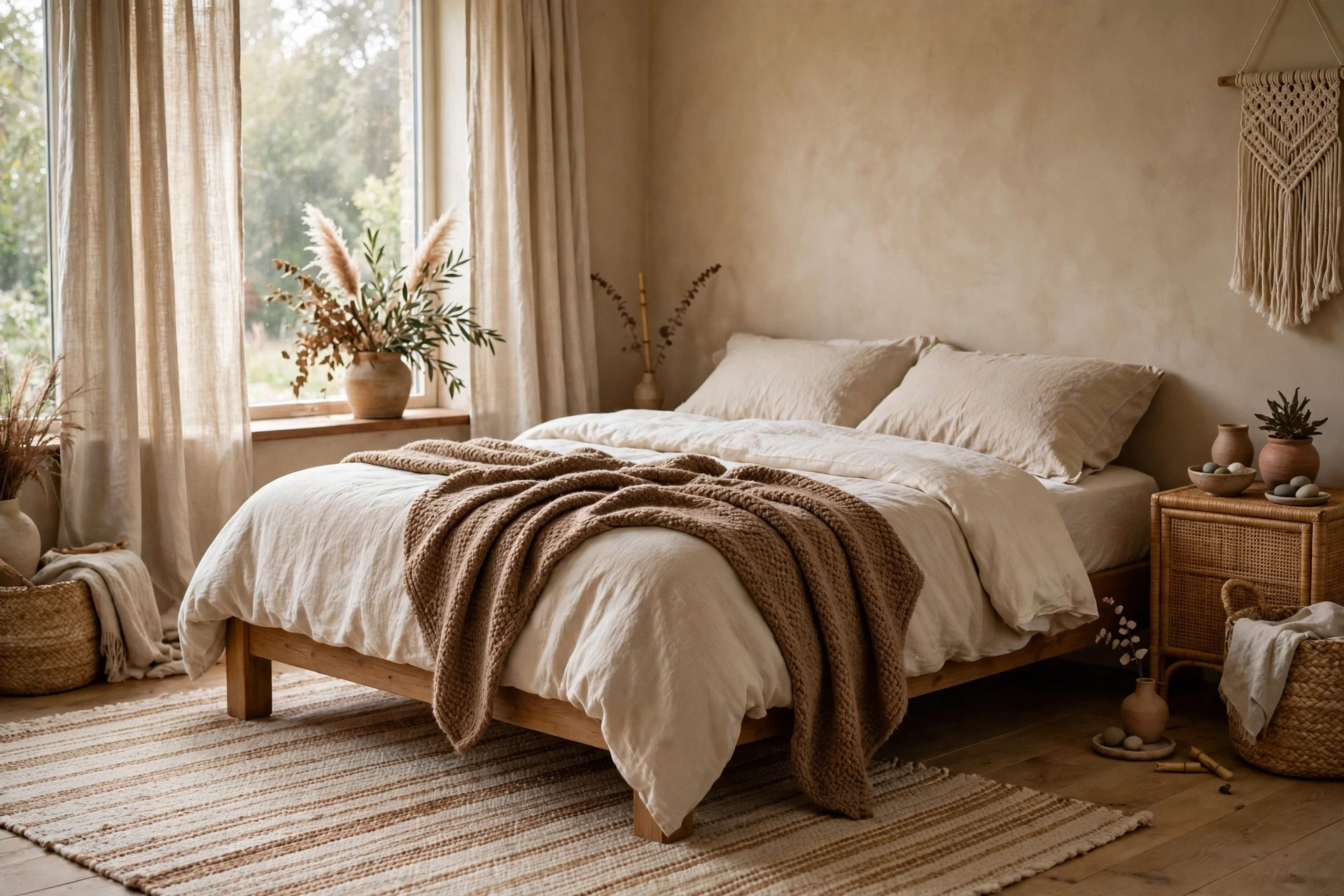
24. Art That Inspires Calm and Love
The art on your bedroom walls shapes the energy you absorb every morning and night, so choose images that inspire calm, love, and happiness. Peaceful landscapes, gentle abstracts, soft florals, and images of couples or pairs all support the bedroom’s purpose. Hang art you genuinely love at eye level, where you can see it from the bed, and let it set the emotional tone of the room.
Avoid art that feels sad, lonely, or aggressive in the bedroom — a single figure walking away, a stormy sea, or a stark, cold image can quietly colour your mood. Family photos are best kept in the living room; the bedroom is for you and your partner, so art here should celebrate your relationship and your peace. One beautiful piece you love is worth more than a wall of art that leaves you cold.
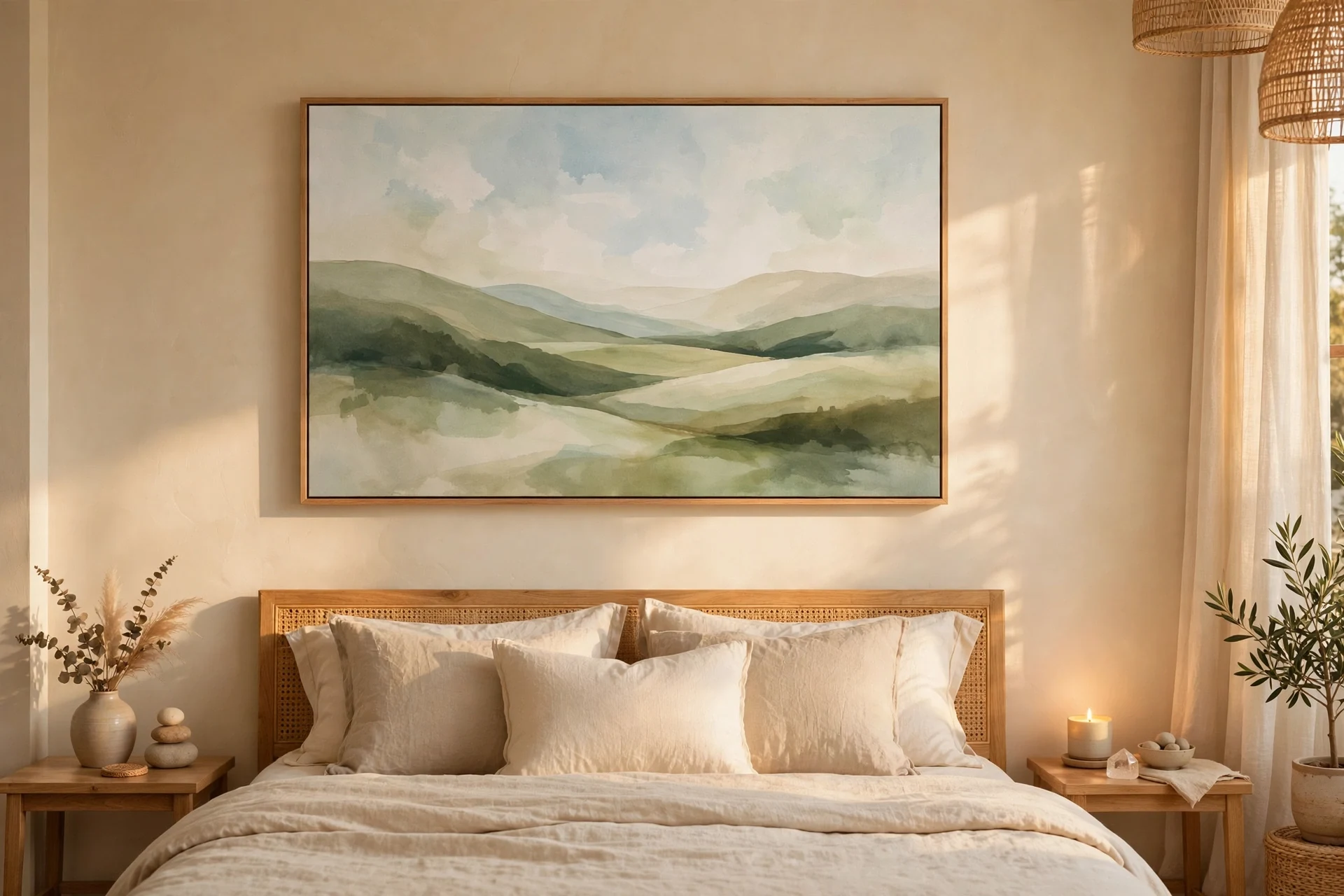
25. A Pair of Everything
In feng shui, pairs symbolize love, partnership, and harmony, and the bedroom is the room where pairs matter most. Two matching lamps, two pillows, two candles, two chairs — these doubles quietly reinforce the energy of togetherness and balance. Even if you sleep alone, pairs signal openness to partnership and create a sense of completeness in the room.
Look around your bedroom for lonely singles: one nightstand, one lamp, one chair. Adding a partner to each creates symmetry and balance almost instantly. The pairs do not need to be identical, just similar in size, weight, and style so they feel like a matched set. This simple principle is one of the easiest feng shui bedroom ideas to apply, and one of the most powerful.
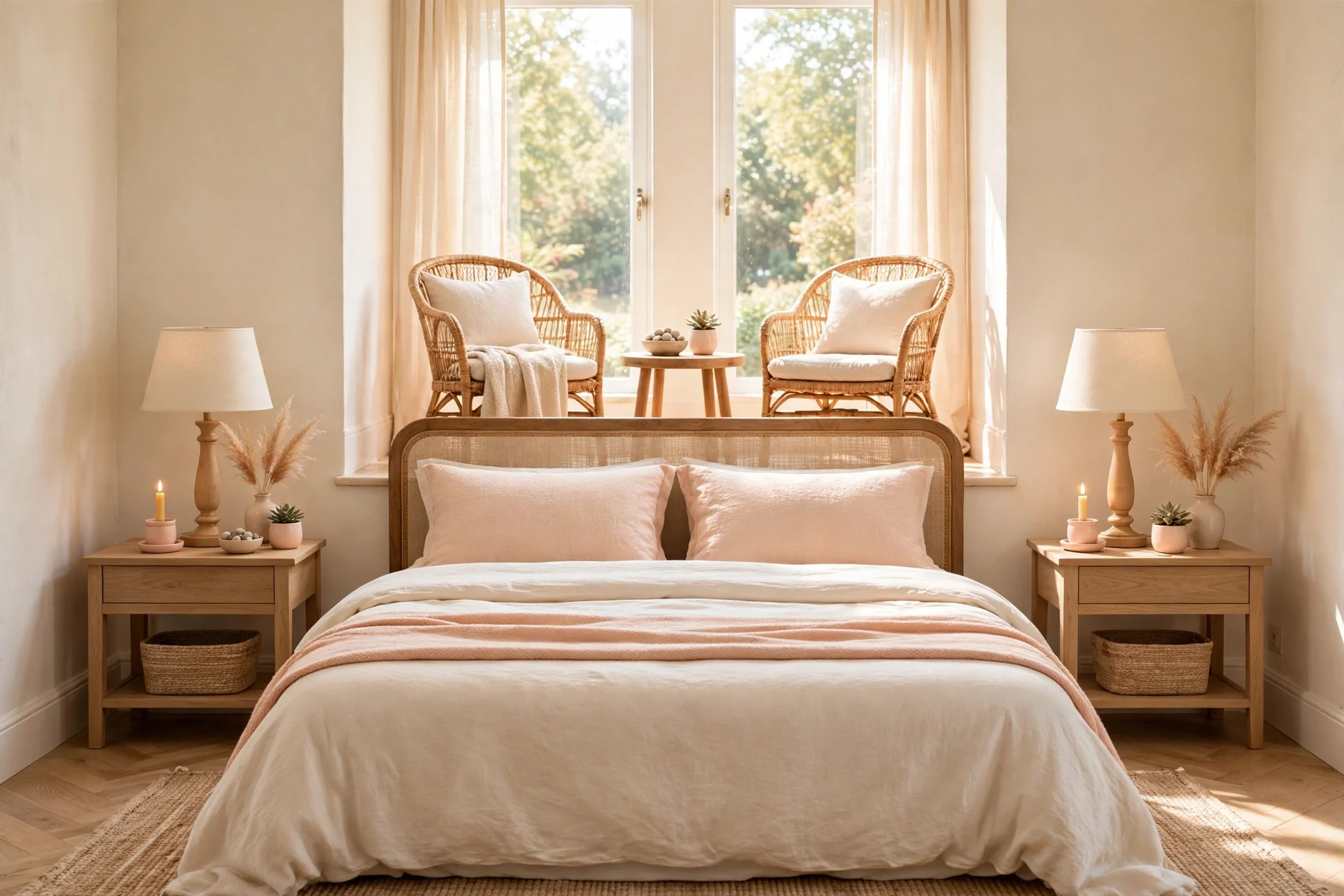
26. Symmetry in Artwork and Decor
Symmetry creates a feeling of order and calm that the eye reads instantly, and feng shui uses it to balance the bedroom’s energy. A pair of matching framed prints above the bed, identical lamps flanking the headboard, or two matching cushions arranged evenly all give the room a settled, harmonious feel. When both sides of the bed carry equal visual weight, the energy on both sides of the relationship feels equal too.
Start with the wall above the bed, the room’s focal point: a single large piece of art centred above the headboard, or two identical frames hung at the same height, anchors the whole space. Keep the symmetry gentle rather than rigid — matching shapes and heights matter more than perfect duplication. A balanced room helps a balanced mind rest.
27. Plants That Purify and Calm
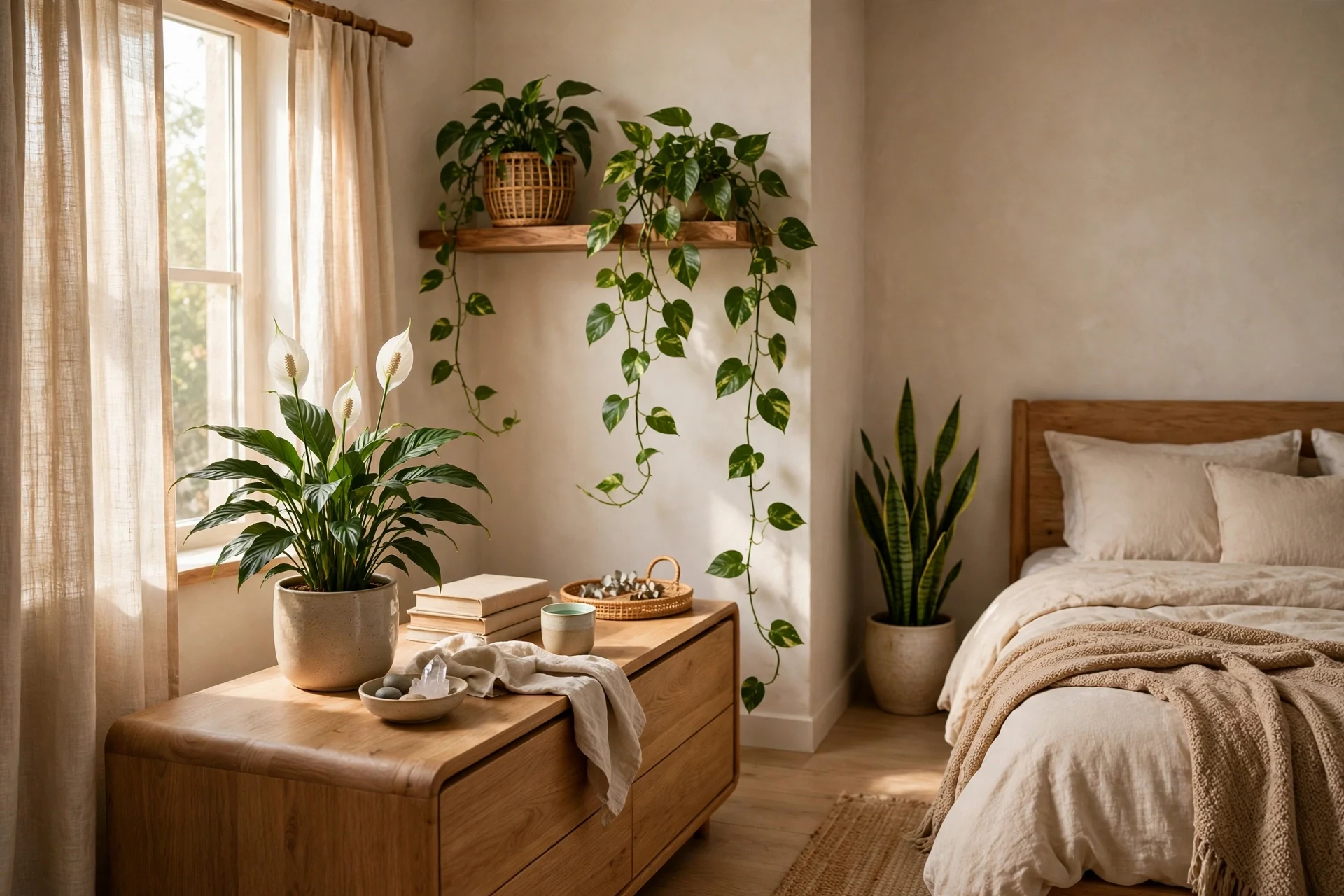
The right plants do more than decorate — they clean the air, soften the room, and bring living, growing energy into the bedroom. A snake plant, a peace lily, a pothos, or a lavender plant all suit the bedroom beautifully, with soft, rounded leaves that encourage gentle chi. Place them in corners or on a dresser, where they fill empty space with life without crowding the bed.
Keep bedroom plants modest in number — one to three is ideal — and always healthy and well cared for. A thriving plant adds vibrant energy, while a neglected one does the opposite. Choose low-maintenance varieties that suit your light, water them on a simple schedule, and enjoy the calm, fresh feeling they bring to your sleep space every night.
28. Avoid Spiky or Thorny Plants
Not every plant belongs in the bedroom. Spiky, thorny, or sharply pointed plants like cacti create what feng shui calls “poison arrows” — sharp energy that points at you while you sleep and can feel aggressive or unsettling. The same goes for dried flowers, which carry the energy of something no longer living and are best kept out of the bedroom entirely.
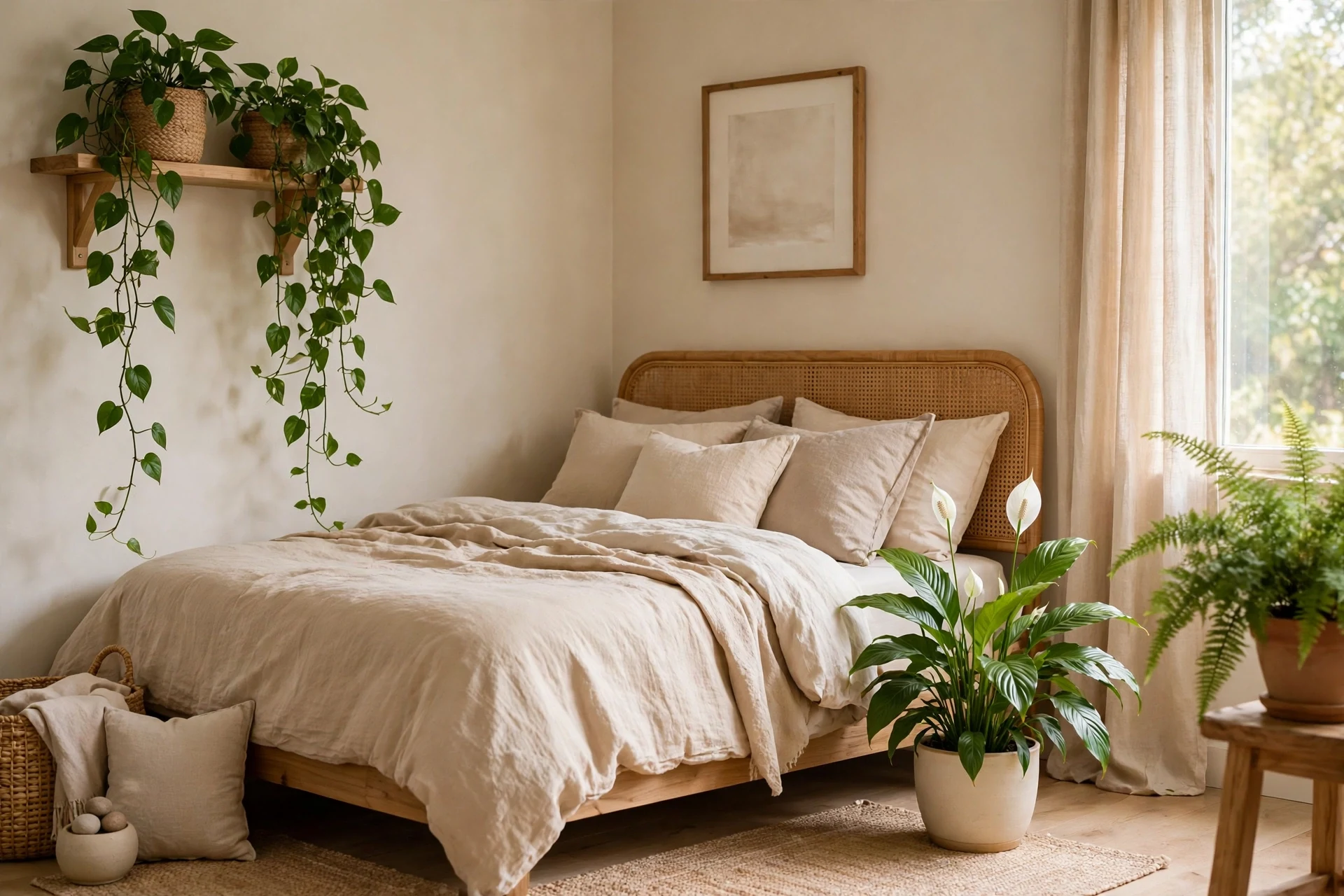
Choose plants with soft, rounded, or trailing leaves instead: a pothos spilling gently from a shelf, a peace lily with its smooth leaves, or a fern with its soft fronds. If you love cacti, enjoy them in the living room or on a sunny windowsill elsewhere in the house. The bedroom deserves only gentle, welcoming greenery that supports rest.
29. Let Energy Flow Around the Bed
Your bed should have breathing room on all sides so chi can circulate freely around you while you sleep. Pushing the bed hard against a wall on one side blocks energy flow and leaves one partner climbing over the other, which feng shui reads as an imbalance in the relationship. Aim for space on both sides of the bed, even if it is just enough to walk past comfortably.
In a small bedroom, this might mean choosing a slightly smaller bed or moving a dresser to another wall to free up the sides. The headboard wall is the one exception — the bed should rest firmly against a solid wall behind the headboard for support. Everywhere else, give the bed room to breathe, and the energy around your sleep will flow smoothly all night.
30. A Rug That Grounds the Bed
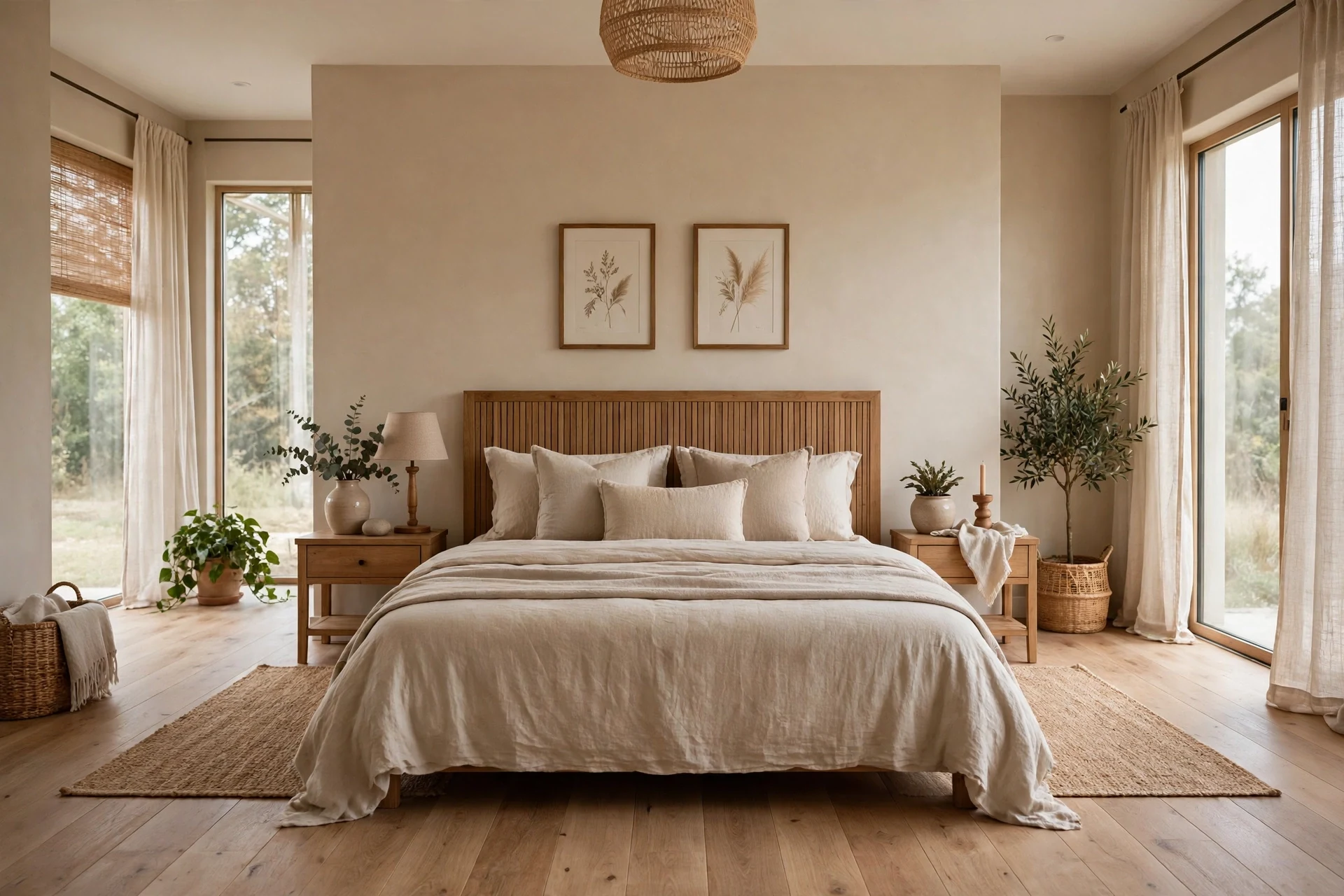
A soft rug beneath and beside the bed grounds the room’s energy and gives your feet a warm, gentle landing each morning. In feng shui, the rug anchors the bed — the room’s largest piece of furniture — to the floor, adding earth energy and stability. Choose a rug large enough to extend beyond the sides and foot of the bed, so the whole sleeping area feels held and defined.
Natural fibres like wool, cotton, or jute work best, in soft, warm tones that match the room’s palette. A round rug softens the room’s angles, while a rectangular rug in a calm pattern adds structure. Avoid rugs with sharp, aggressive patterns or harsh colours under the bed — the rug should feel like a soft foundation, not a visual shout.
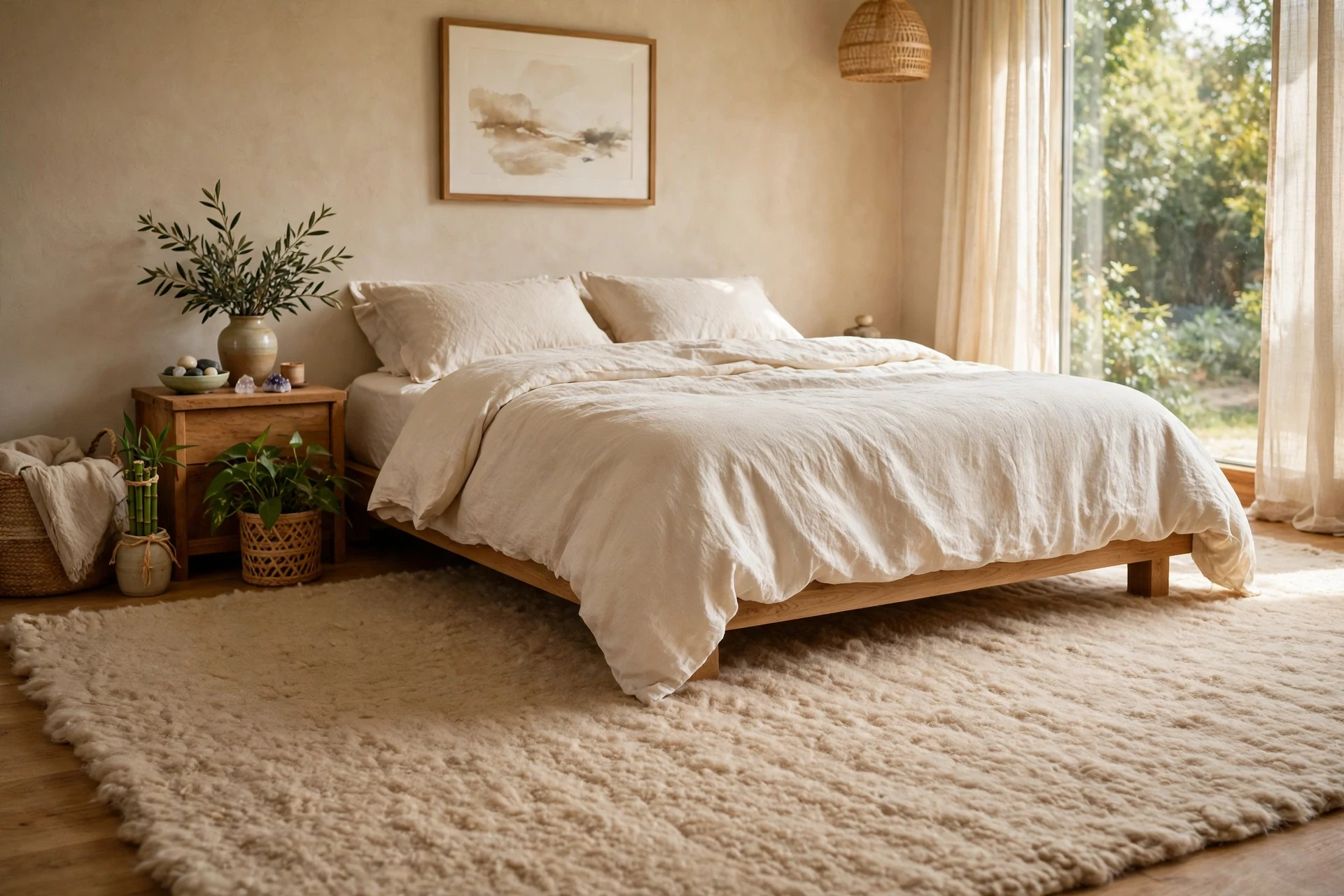
31. Soft Curves Over Sharp Corners
Sharp corners and pointed edges create fast, cutting energy in feng shui, while soft curves slow energy down and let it flow gently. In the bedroom, choose furniture with rounded corners where you can — a curved headboard, a round nightstand, an oval mirror — and soften the corners you cannot change with a plant, a draped fabric, or a rounded lamp placed in front of them.
Pay special attention to corners that point directly at the bed, such as a dresser edge or a sharp shelf corner aimed at your sleeping body. Moving the furniture a few inches, or placing a soft object in front of the corner, deflects the sharp energy. A bedroom full of gentle curves feels like a calm embrace, and that is exactly how a sleep space should feel.
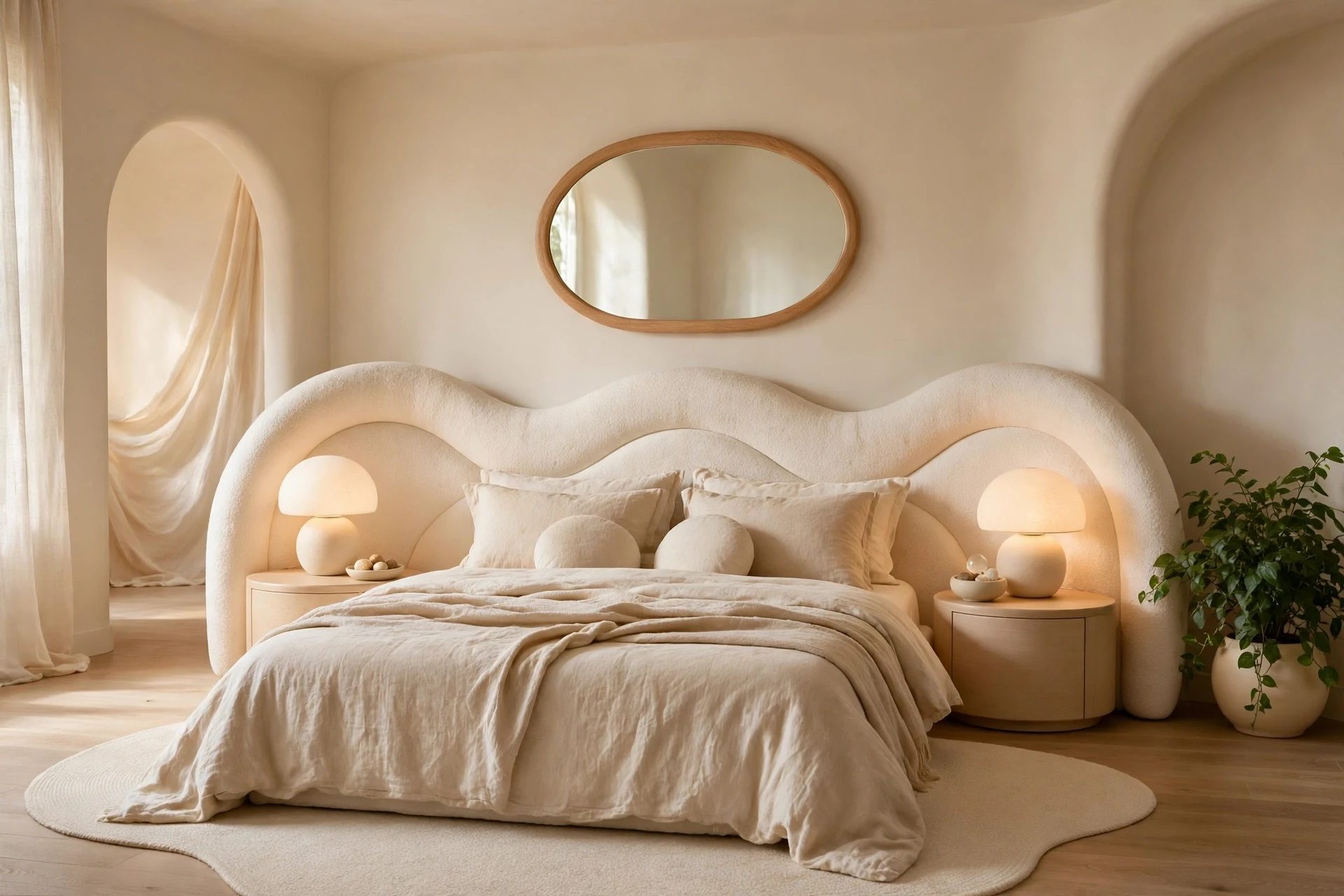
32. Close the Bathroom Door
If your bedroom has an en-suite bathroom, keep its door closed — especially at night. In feng shui, bathrooms carry draining, downward energy because of the water leaving the home, and an open bathroom door lets that energy spill into the bedroom and disturb your rest. A closed door, plus a closed toilet lid, keeps the bedroom’s energy clean and contained.
If the bathroom door faces the bed directly, the effect is stronger, so closing it becomes even more important. A full-length mirror on the outside of the bathroom door can also help by reflecting energy back, but the closed door is the essential step. Make it a nightly habit, like locking the front door, and your bedroom will hold its calm far better.
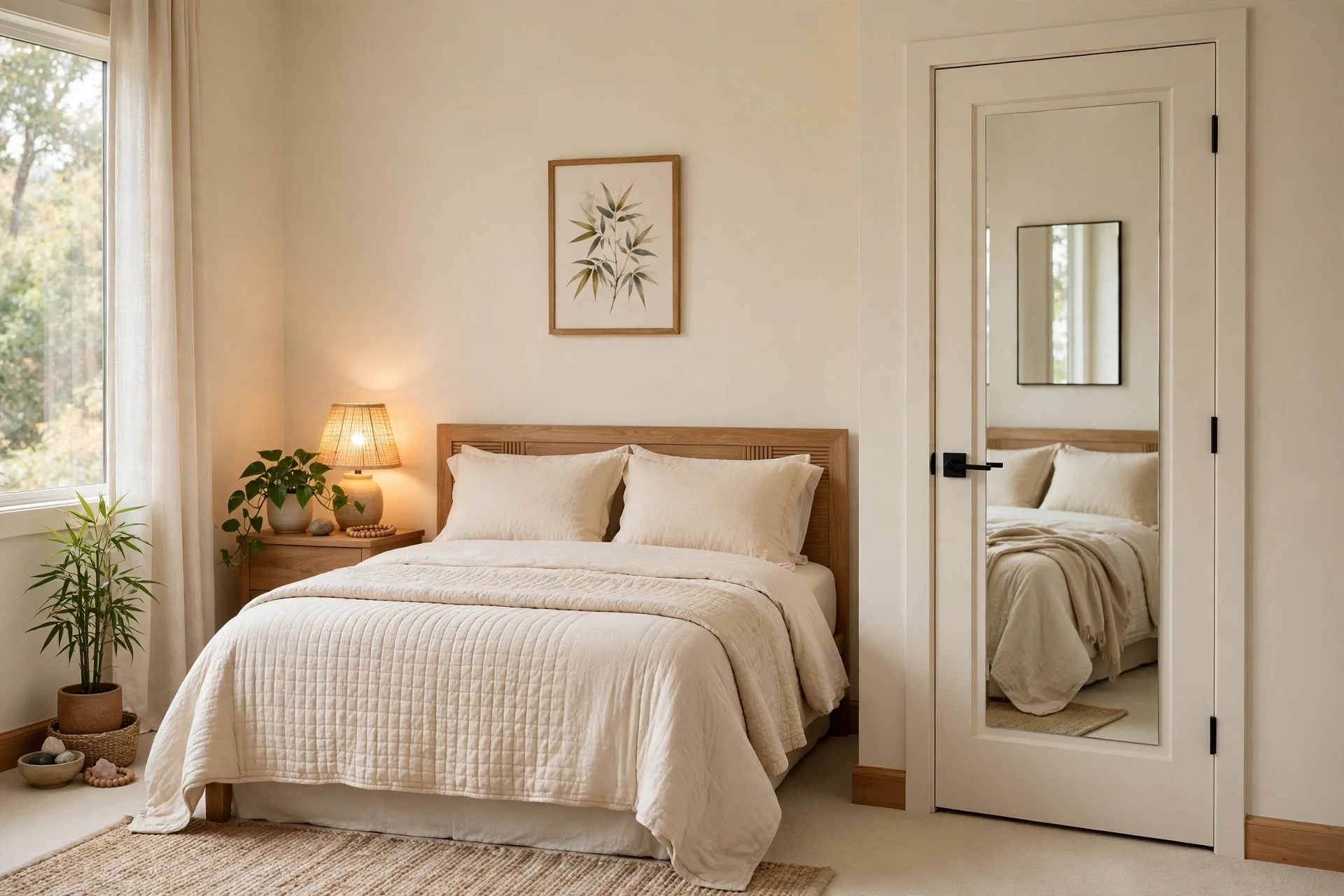
33. Keep the Bedroom Door Closed at Night
Sleeping with the bedroom door closed helps the room hold its energy through the night, creating a protected, cocoon-like space where chi circulates gently instead of leaking away down the hallway. In feng shui, a closed door at night also gives a sense of privacy and safety that helps the body relax into deep sleep. It is a small habit with a surprisingly large effect.
If you prefer fresh air at night, open a window slightly instead of the door — the window brings in fresh chi without breaking the room’s sense of enclosure. A door that closes properly, without sticking or squeaking, also matters: a door in good repair symbolizes smooth, easy energy. Fix a squeaky hinge or a sticking latch, and the whole room will feel more peaceful.
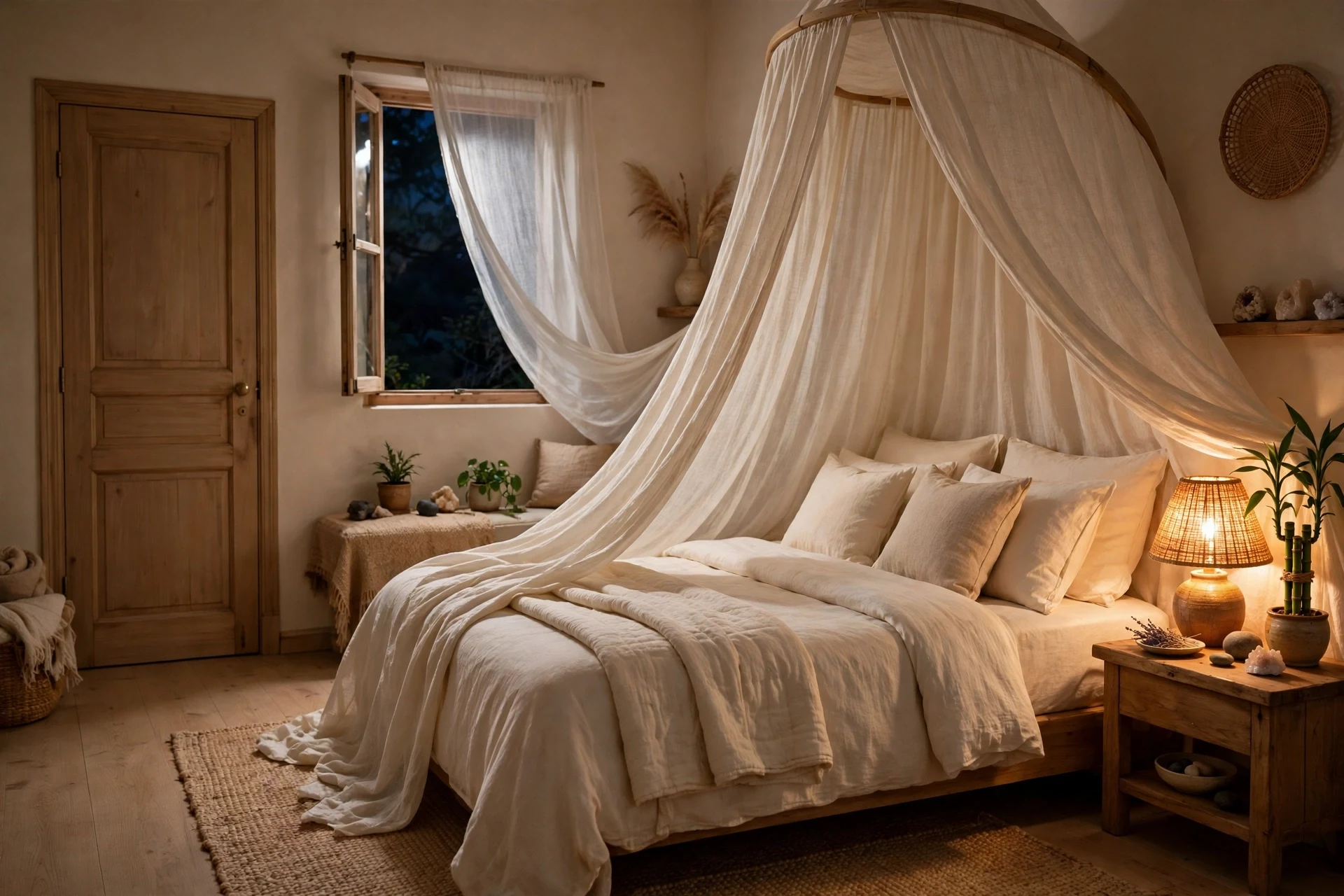
34. A Peaceful Scent with Natural Fragrance
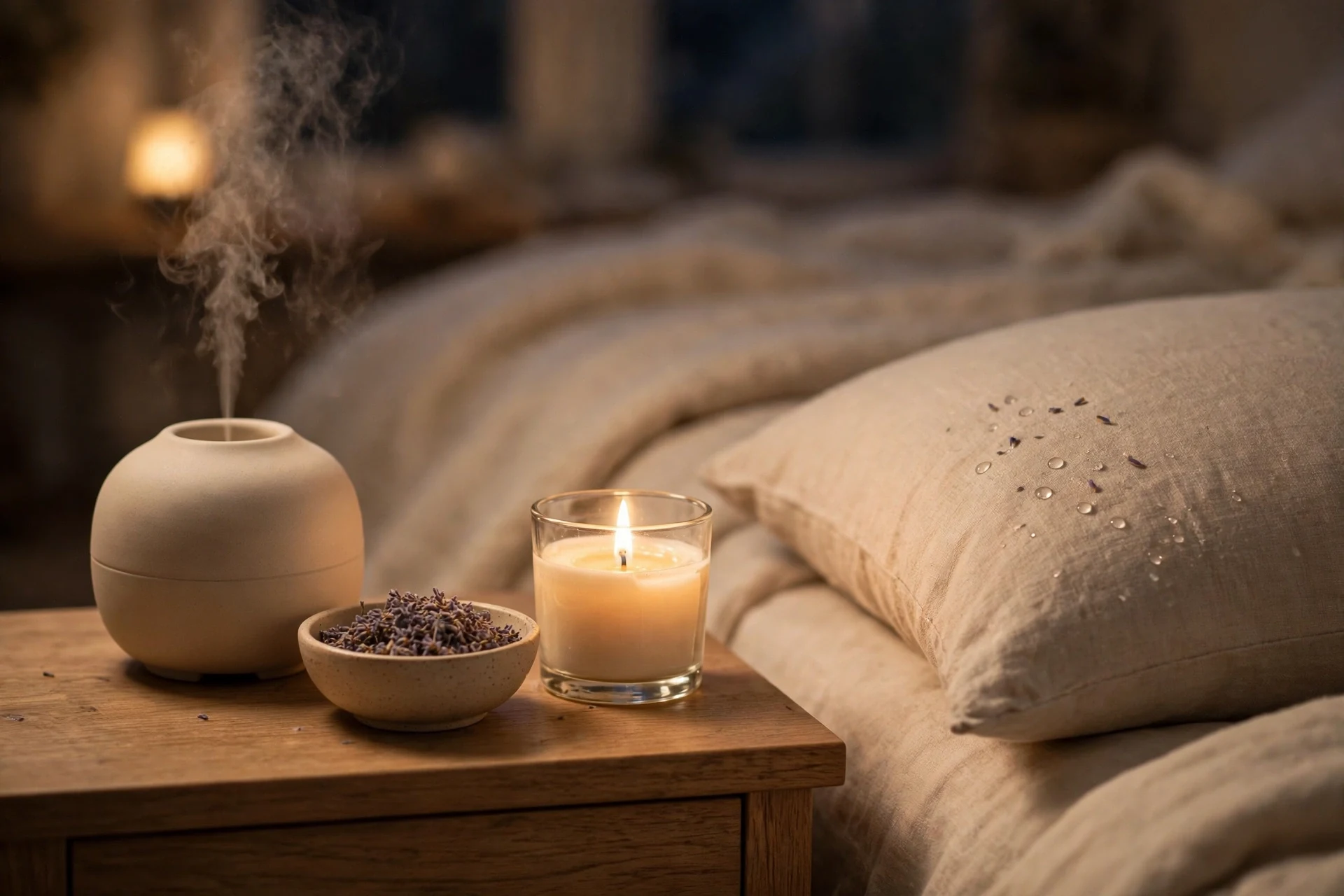
Scent is one of the fastest ways to shift a room’s energy, and feng shui favours natural fragrances that calm the mind and body. Lavender, sandalwood, cedar, and chamomile all promote relaxation and deep sleep, whether from a diffuser, a linen spray, a scented candle, or a small bowl of dried lavender on the nightstand. A gentle, natural scent turns the bedroom into a sanctuary the moment you walk in.
Avoid harsh synthetic air fresheners and overpowering plug-ins, which can irritate the senses and add chemical energy to the room. Choose essential oils or natural soy candles, and keep the scent subtle — it should be a soft background note, not a wall of fragrance. A few drops of lavender oil on your pillow is a simple nightly ritual that signals to your body that it is time to rest.
35. Declutter the Wardrobe and Closets
Closets hold more than clothes — in feng shui, they hold the energy of everything you own but no longer use, and that stagnant energy seeps into the bedroom. A wardrobe stuffed with clothes you never wear, broken hangers, and forgotten boxes quietly weighs on the room. Clearing it out is one of the most liberating feng shui bedroom ideas, and it costs nothing at all.
Go through your wardrobe with fresh eyes: keep what you love and wear, donate what no longer fits your life, and repair or discard what is broken. Organize what remains neatly, with space between hangers so energy can move. A tidy, breathing wardrobe makes the whole bedroom feel lighter, and many people find they sleep better once the hidden clutter is gone.

36. A Small Meditation or Reading Corner
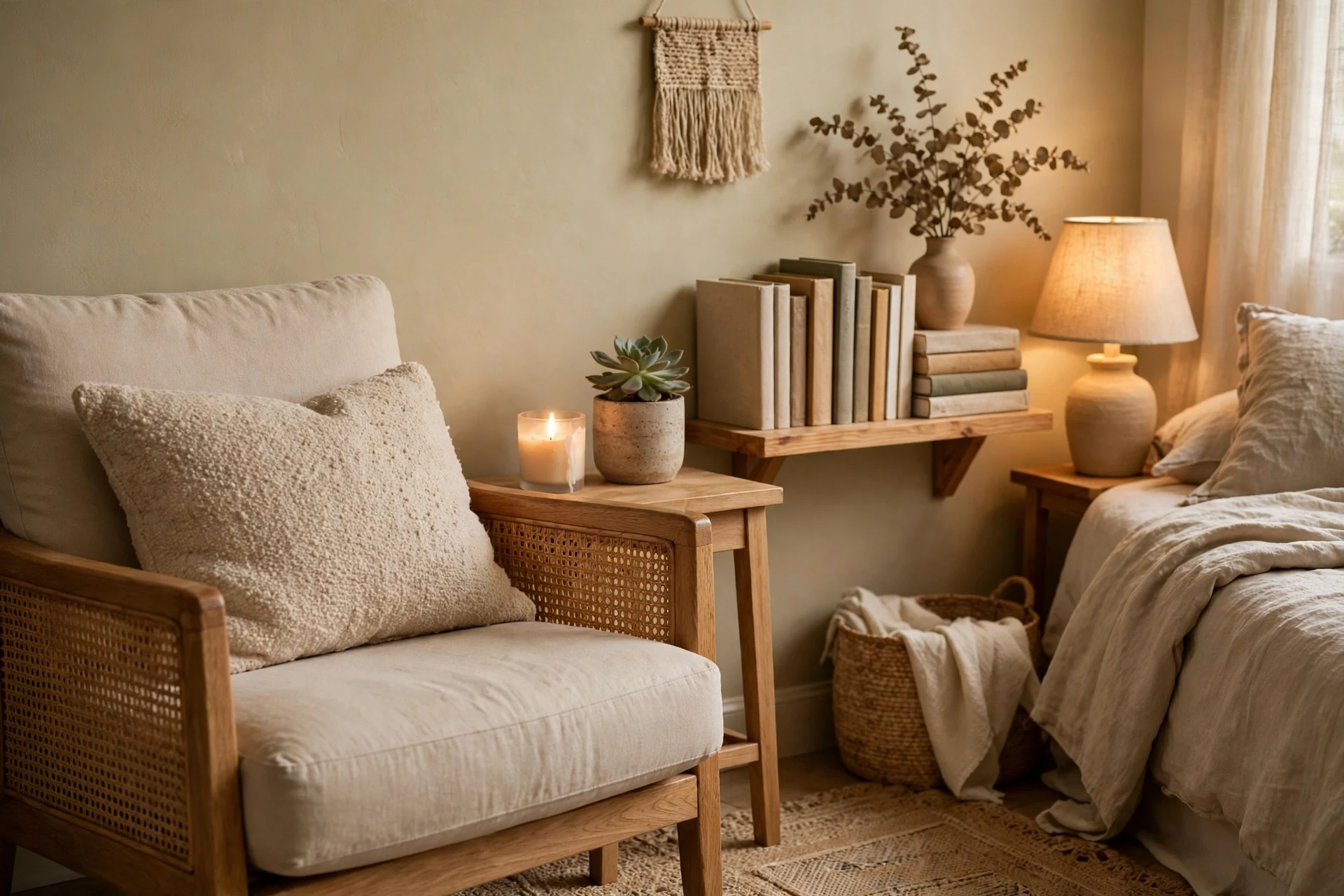
A tiny corner dedicated to quiet time gives the bedroom a second purpose that supports rest rather than competing with it. A comfortable chair, a soft cushion, a small shelf of books, and a warm lamp create a spot for morning meditation, evening reading, or a few minutes of stillness before bed. This corner becomes the room’s calm heart, a place where you slow down on purpose.
Keep the corner simple and screen-free: no phone, no laptop, just a book, a journal, or a meditation cushion. A small plant and a candle complete the feeling of a personal retreat. Even five quiet minutes in this corner each evening helps your mind shift from the busyness of the day into the restful energy the bedroom is made for.
Final Thoughts
Feng shui is not about following rigid rules — it is about creating a bedroom that feels calm, balanced, and deeply restful to you. Start with the biggest changes, like the commanding position and clearing clutter, then add the smaller touches one at a time: a pair of lamps, a plant, a softer light. Each change shifts the room’s energy a little, and together they transform how you sleep and how you feel when you wake. Your bedroom is your sanctuary — treat it like one, and it will take care of you in return.