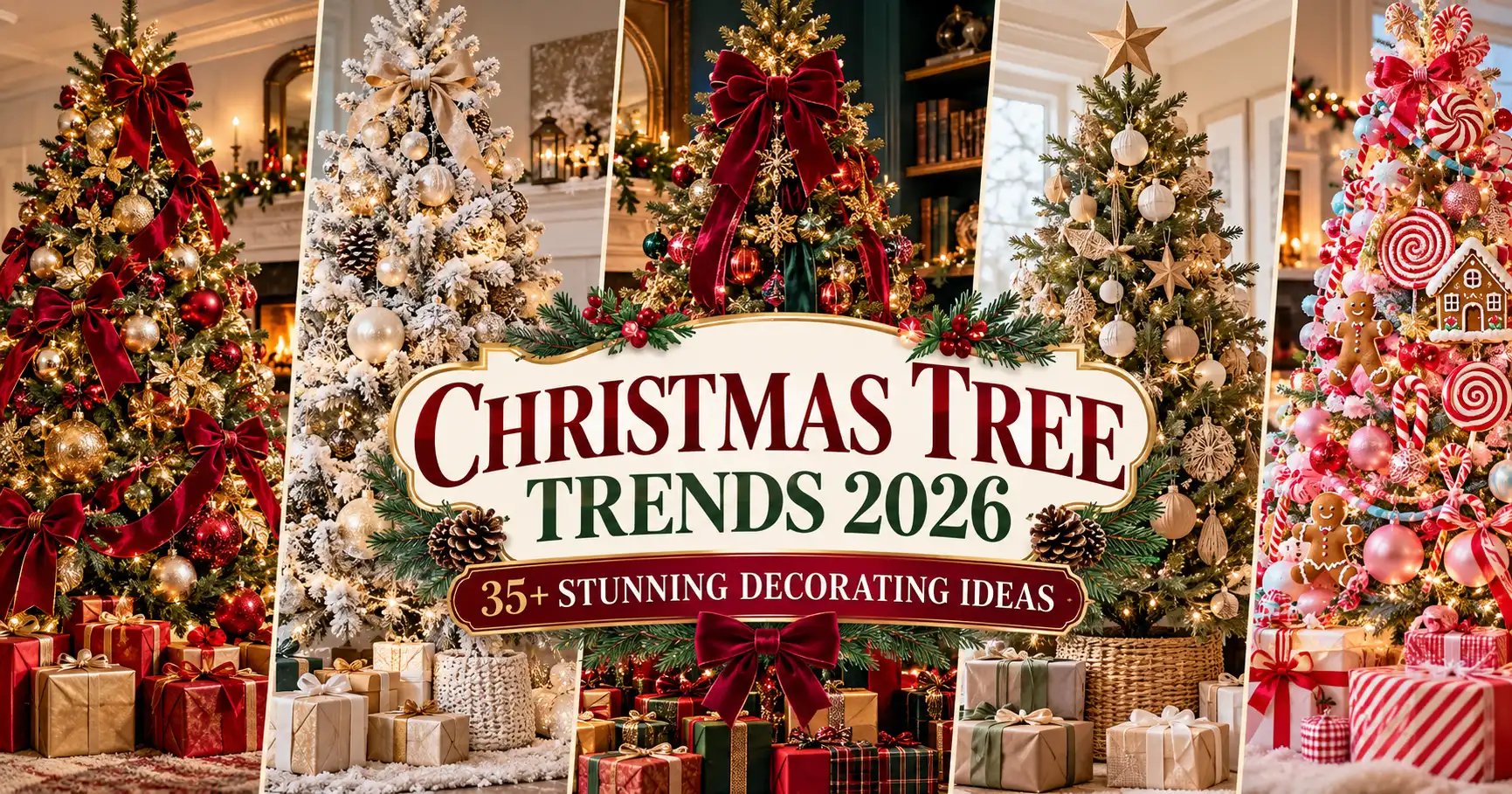
Christmas tree trends 2026 are bringing warmth, personality, nostalgia, and expressive color back into holiday decorating. Instead of following one rigid Christmas aesthetic, homeowners are creating trees that tell stories through meaningful ornaments, layered ribbons, rich colors, natural materials, vintage details, and statement decorations. Traditional red and green remain important, but deeper burgundy, chocolate brown, jewel tones, champagne gold, forest green, and unexpected playful colors are expanding the Christmas palette.
Another defining feature of 2026 Christmas decor is the balance between old and new. Vintage-inspired ornaments can sit beside sculptural modern baubles, while classic plaid ribbon can be combined with metallic finishes and contemporary lighting. Woodland Christmas themes, oversized bows, nostalgic ornaments, warm metallics, dramatic dark trees, natural decorations, and maximalist styling are all influencing the season.
1. Nostalgic Christmas Trees
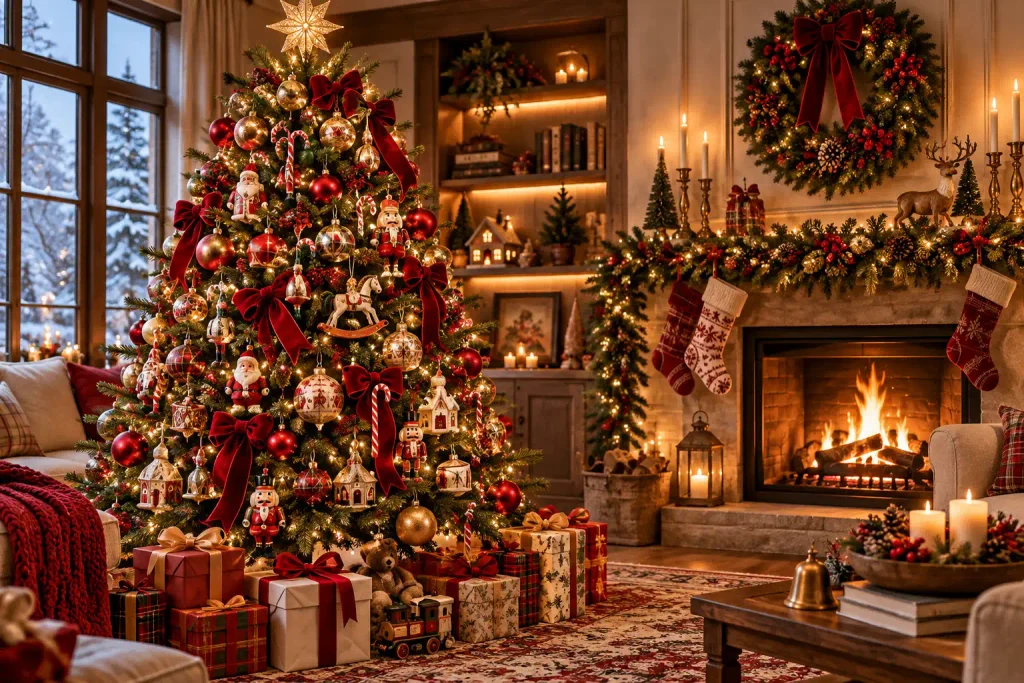
Nostalgia is one of the most important Christmas tree trends for 2026, bringing back the comforting appearance of holiday celebrations from decades past. Rather than decorating every branch with identical ornaments, this style combines vintage glass baubles, traditional Santas, candy canes, bells, miniature houses, wooden decorations, handmade ornaments, and sentimental family pieces. Classic red, evergreen, cream, and warm gold create a familiar Christmas color palette, while softly glowing lights give the tree the cozy character associated with childhood holiday memories.
The beauty of a nostalgic Christmas tree comes from its collected appearance. Decorations do not need to match perfectly because variation creates personality and visual history. Heirloom ornaments can be mixed with newly purchased vintage-inspired pieces, velvet ribbon, strings of beads, traditional stars, and old-fashioned Christmas characters. Instead of looking professionally coordinated, the finished tree should appear as though its decorations were gathered gradually over many Christmas seasons. This approach works especially well in traditional, cottage, farmhouse, rustic, and transitional living rooms.
2. Jewel-Tone Christmas Trees
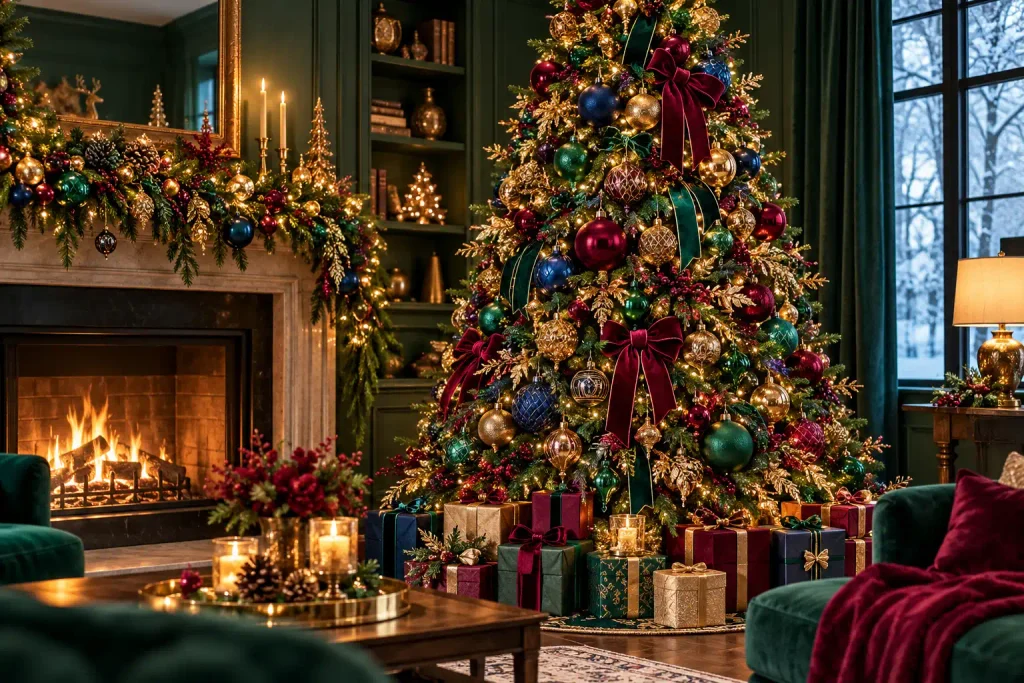
Deep jewel tones bring sophisticated color to Christmas trees in 2026. Emerald green, sapphire blue, ruby red, garnet, amethyst purple, and deep teal can be layered throughout evergreen branches to produce a dramatic yet elegant holiday display. These saturated shades work particularly well with velvet ribbon, reflective glass ornaments, metallic accessories, and warm white Christmas lights. Unlike pale minimalist palettes, jewel tones create depth and make the Christmas tree feel luxurious even when the overall ornament collection remains relatively simple.
For a cohesive jewel-tone Christmas tree, repeat several dominant colors from the top of the tree to its lower branches rather than concentrating each shade in one area. Mix matte ornaments with transparent glass, velvet, metallic finishes, and faceted decorative pieces to prevent the darker palette from appearing flat. Champagne gold, antique brass, or warm bronze can provide highlights between emerald, burgundy, sapphire, and plum ornaments. The result is a richly layered tree suited to elegant living rooms, formal interiors, and sophisticated Christmas decorating schemes.
3. Oversized Bow Christmas Trees
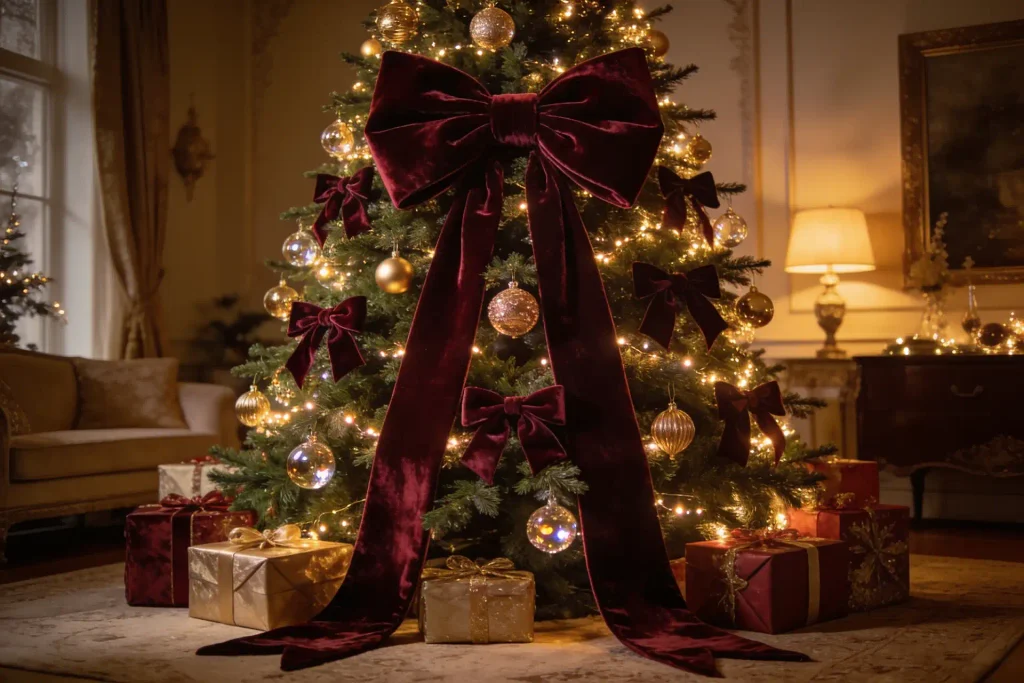
Oversized bows continue to transform Christmas trees into dramatic decorative statements. In 2026, bows can function as tree toppers, branch decorations, or flowing focal points incorporated into ribbon arrangements. Current seasonal coverage is already highlighting large plaid and satin bows as major statement pieces. Instead of relying exclusively on traditional stars or angels, an enormous velvet, satin, plaid, or patterned bow can instantly establish the entire decorating theme.
Smaller coordinating bows can then be distributed throughout the branches to connect the topper with the rest of the Christmas tree. Burgundy velvet creates a sophisticated heritage effect, while red satin feels traditional and playful. Plaid bows complement nostalgic Christmas decorating, and pale blue or champagne ribbon can create a softer contemporary interpretation. Keep some surrounding ornaments understated when using an exceptionally large topper so the bow remains visually dominant. Long ribbon tails cascading through the branches can further emphasize the tree’s height.
4. Woodland Christmas Trees
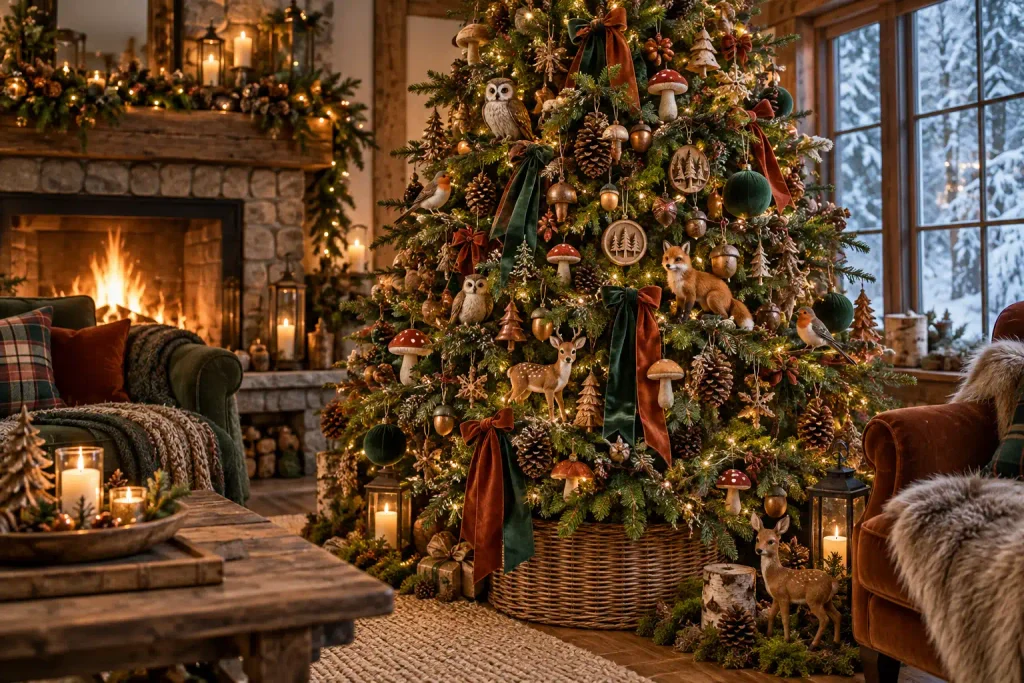
The woodland Christmas tree brings forests, wildlife, and storybook details indoors. Mushrooms, pinecones, acorns, owls, foxes, deer, birds, wooden ornaments, felt animals, and miniature forest decorations are among the motifs associated with the 2026 woodland direction. Forest green naturally provides the foundation, while moss, rust, brown, cream, burgundy, mushroom beige, and subtle gold establish a warm earthy palette.
Texture is essential when creating this look. Combine real or realistic pinecones with wooden ornaments, felt decorations, velvet mushrooms, dried botanicals, berries, twigs, and natural-looking garlands. Woodland animals should appear tucked between branches rather than simply hanging from their tips, creating the illusion of a miniature enchanted forest within the tree. Warm white lights work particularly well because they illuminate natural materials without overpowering their earthy colors. A woven basket or rustic tree collar completes the organic woodland aesthetic.
5. Heritage Tartan Christmas Trees
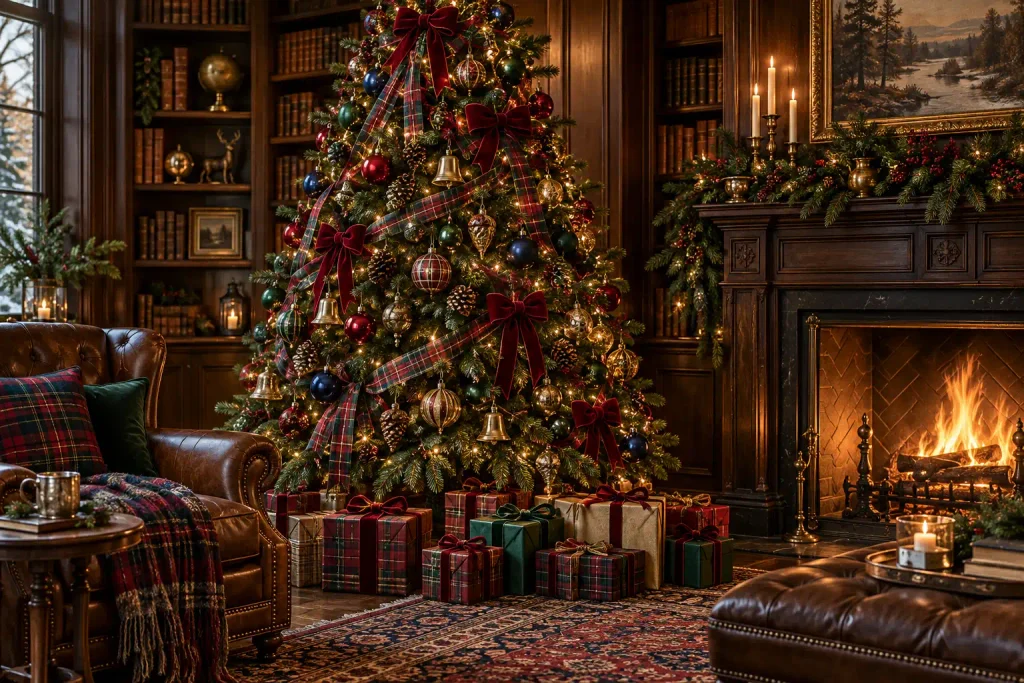
Tartan is returning as part of the broader revival of heritage Christmas decorating. Current 2026 trend coverage highlights traditional patterns and tartan alongside deeper berry and burgundy colors. A tartan Christmas tree typically combines forest green, deep red, navy, burgundy, and warm metallic accents. Plaid ribbon woven between branches immediately introduces pattern while maintaining the familiar character of a traditional Christmas tree.
For a polished heritage tree, layer tartan ribbon with red velvet bows, antique-style bells, brass ornaments, pinecones, wooden decorations, and deep green baubles. Rather than covering every branch in plaid, allow sections of natural greenery to remain visible so the pattern has room to breathe. Leather-look accessories, miniature drums, equestrian-inspired ornaments, and traditional gift wrapping can extend the theme. This rich, tailored approach works beautifully in rooms featuring dark wood furniture, fireplaces, bookshelves, leather seating, or classic architectural details.
6. Gold Metallic Christmas Trees
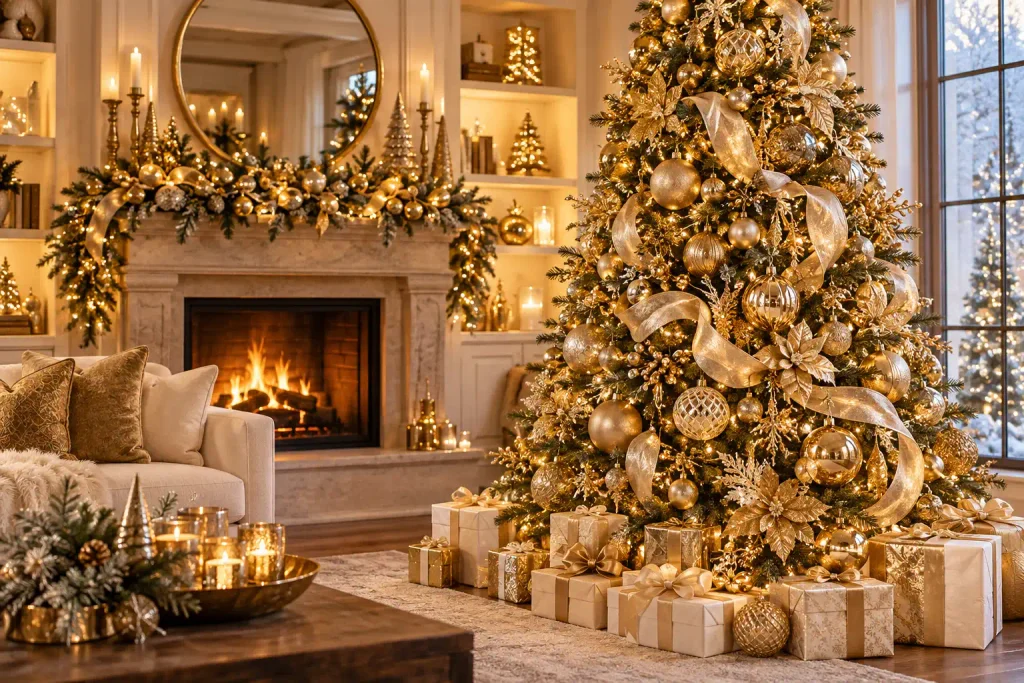
Gold remains an enduring Christmas decorating color, but the 2026 interpretation emphasizes layers of different warm metallic finishes rather than a single uniform shade. Champagne, antique gold, brushed brass, bronze, and soft reflective finishes can coexist across one tree. Current trend reporting also points toward refined metallic palettes and warmer luxury styling. Mixing finishes produces dimension while avoiding an overly coordinated showroom appearance.
Begin with warm white lights and use champagne ribbon or delicate metallic garland to establish movement through the branches. Add matte gold baubles, reflective glass ornaments, antique brass bells, metallic leaves, stars, and sculptural decorations in varying sizes. Transparent ornaments can provide visual breathing space between heavier metallic pieces. A gold Christmas tree does not require gold branches; rich natural evergreen provides the ideal contrast. Neutral gift wrapping in ivory, cream, kraft paper, or champagne tones can complete the sophisticated look.
7. Christmas Maximalism
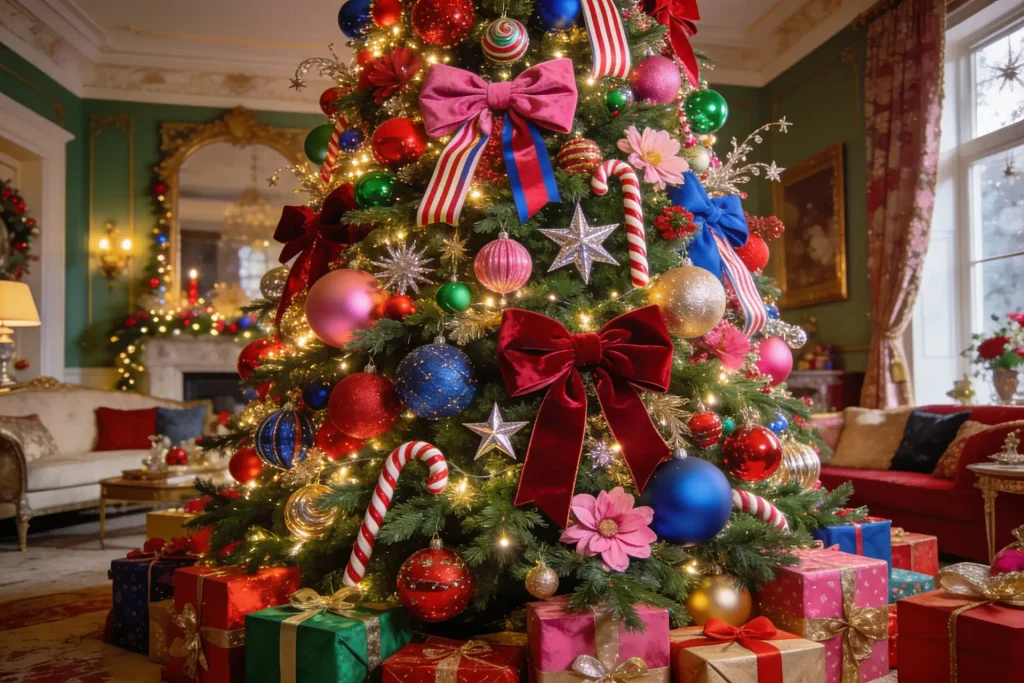
Christmas maximalism celebrates abundance rather than restraint. Colorful ornaments, ribbons, bows, novelty decorations, garlands, lights, oversized baubles, collectible pieces, and unexpected decorative objects can all appear on one tree. The approach reflects the broader 2026 shift toward personality and expressive festive decorating rather than a single prescribed aesthetic. The secret is controlled repetition: repeated colors and materials create enough visual rhythm to prevent the abundance from feeling accidental.
Begin with two or three recurring colors and then introduce contrasting shades in smaller quantities. Use ornaments of different scales, placing oversized pieces deeper inside the tree and smaller decorations toward branch tips. Ribbon, picks, flowers, candy-inspired pieces, metallic stars, novelty characters, and sentimental ornaments can fill gaps. Even maximalist trees benefit from structure, so repeat important elements vertically and around the circumference. The finished Christmas tree should feel exuberant, joyful, personal, and intentionally layered rather than simply overcrowded.
8. Burgundy Christmas Trees
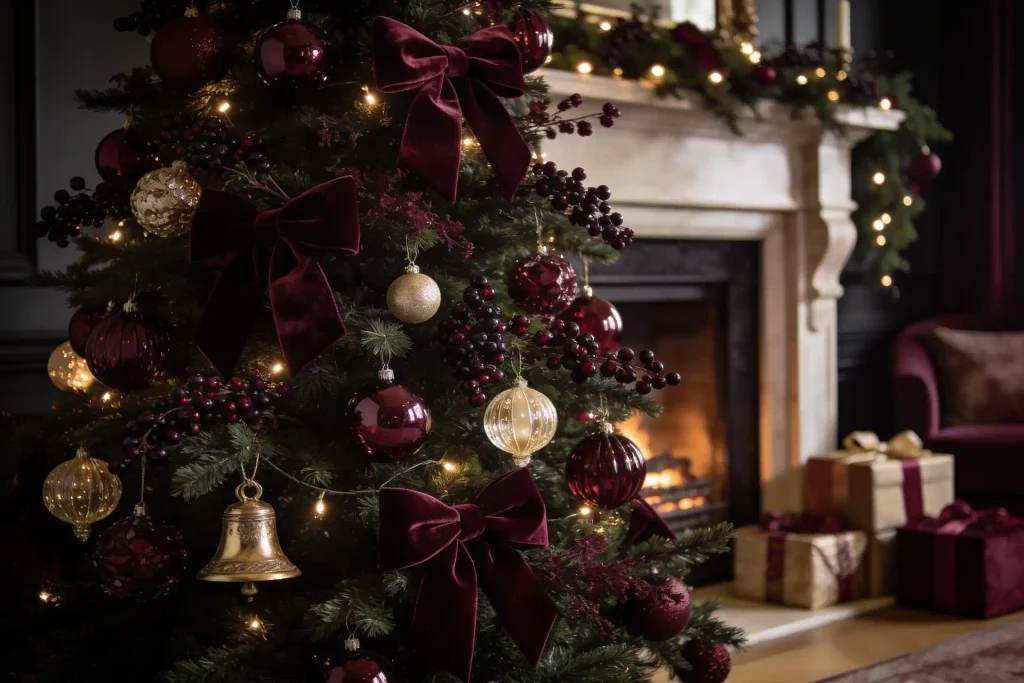
Burgundy and deep berry shades offer a darker, richer alternative to bright traditional Christmas red. Berry and burgundy tones are appearing prominently in current 2026 Christmas trend coverage, particularly alongside nostalgic and heritage decorating. Burgundy velvet ribbon against evergreen branches creates immediate depth, while wine-colored baubles and dark berries provide sophisticated variations within the same color family.
Pair burgundy with antique gold for an elegant traditional tree or with chocolate brown and natural wood for something more organic. Champagne accents soften the palette, while deep forest green strengthens its moody character. Texture is particularly important with dark colors, so combine velvet, glass, matte ornaments, metallic bells, satin ribbon, and berry sprays. Warm white lights should be tucked deep within the branches, allowing their glow to emerge between darker decorations and preventing the tree from feeling visually heavy.
9. Chocolate Brown Christmas Trees
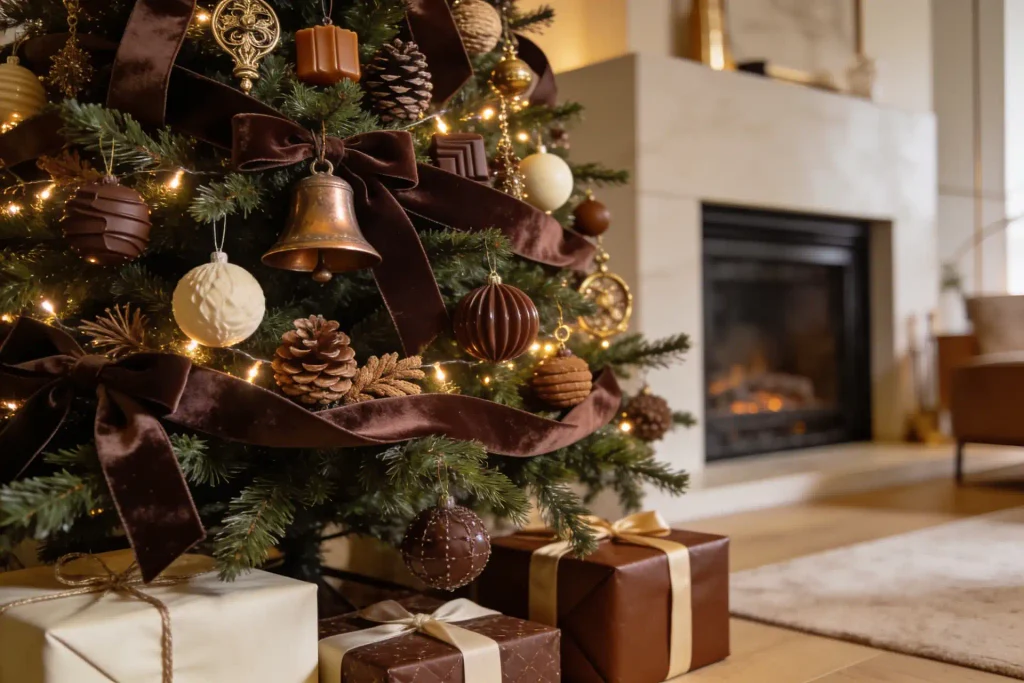
Chocolate brown introduces an earthy, comforting richness to Christmas decorating. Combined with evergreen, caramel, bronze, cream, and warm gold, brown can make a Christmas tree feel cozy without relying heavily on traditional bright red. The color works particularly well with velvet, wood, pinecones, leather-look ornaments, dried botanicals, bronze bells, and natural ribbon. Warm lighting brings out subtle differences between espresso, cocoa, chestnut, cinnamon, and caramel shades.
To keep the tree festive rather than overly neutral, combine brown decorations with reflective glass or metallic accents. Bronze baubles and antique gold bells add sparkle, while ivory ornaments brighten darker sections of greenery. Chocolate velvet ribbon can be layered with narrow cream or plaid ribbon for contrast. Natural pinecones reinforce the earthy direction and can be repeated in surrounding garlands or wreaths. The palette is especially effective in rustic modern, organic modern, lodge, farmhouse, and warm minimalist interiors.
10. Natural and Organic Christmas Trees
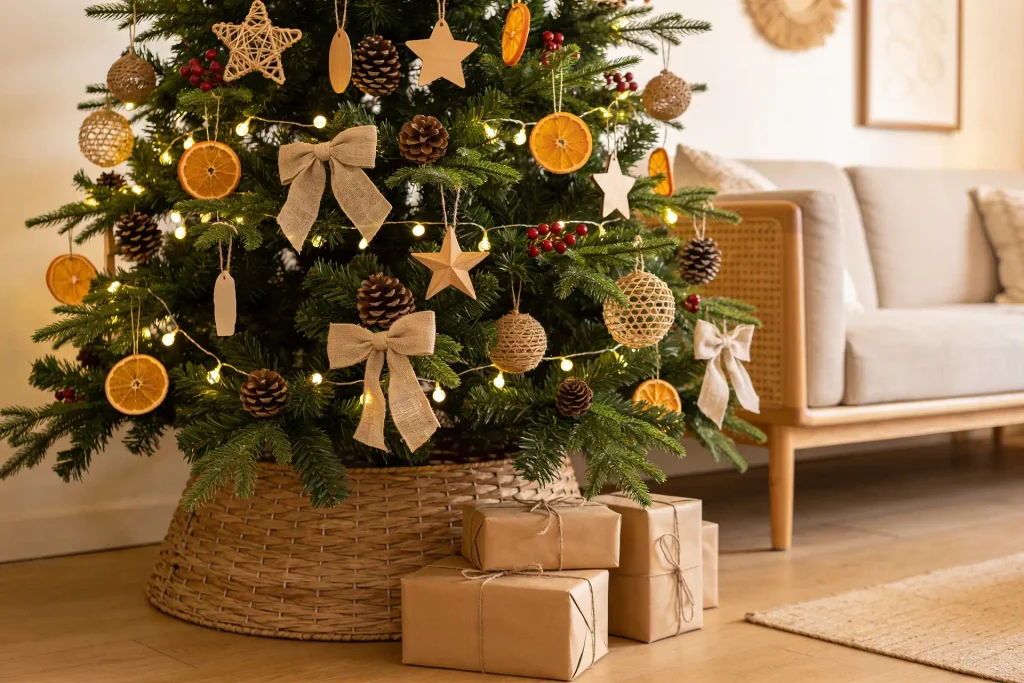
Natural Christmas decorating continues to provide an alternative to heavily glittered holiday interiors. Pinecones, dried orange slices, wooden stars, paper ornaments, berries, seed pods, twigs, woven decorations, raffia bows, and natural fibers can transform an evergreen tree into a warm organic centerpiece. Contemporary holiday coverage continues to feature natural materials as an important way to create warmth and texture.
The strongest natural Christmas trees combine different textures instead of depending entirely on one material. Smooth wooden ornaments can sit beside rough pinecones, translucent dried citrus, handmade paper stars, linen bows, and softly reflective glass baubles. Warm white lights add enough sparkle to preserve the festive mood without overwhelming the organic palette. A woven tree collar, kraft-paper presents, linen ribbon, and fresh greenery can extend the theme around the base. The result feels relaxed, tactile, timeless, and closely connected to winter nature.
11. Scandi Chic Christmas Trees
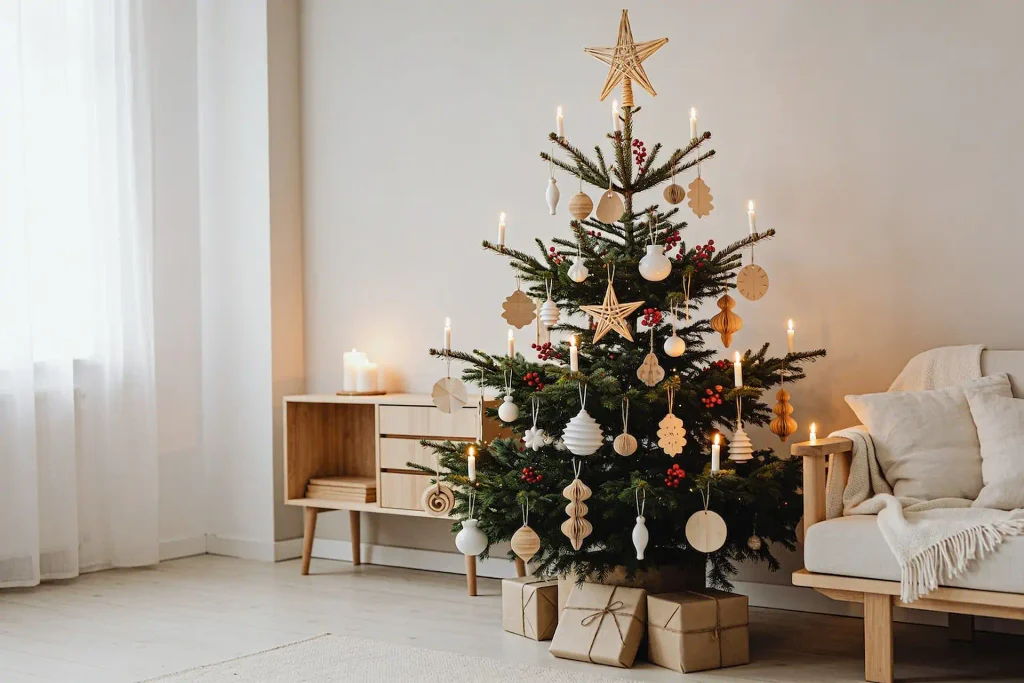
Scandinavian Christmas decorating remains appealing because it prioritizes natural greenery, craftsmanship, calm colors, and visual simplicity. For 2026, the Scandi tree can feel warmer and more personal through handmade ornaments, wooden decorations, paper stars, woven pieces, red accents, and softly glowing lights. Current 2026 trend coverage includes understated Nordic styling among the season’s notable directions.
Choose an airy evergreen tree with enough spacing between branches to display individual ornaments clearly. Decorate with pale wood, white ceramic pieces, straw stars, small red baubles, paper ornaments, miniature houses, and restrained ribbon. Instead of covering every branch, create intentional spaces where the natural tree remains visible. Candle-like LED lights or delicate warm fairy lights provide the ideal glow. A simple woven basket, wooden tree stand, or neutral fabric skirt maintains the uncluttered Scandinavian aesthetic while wrapped gifts in plain paper reinforce its handmade character.
12. Dramatic Black Christmas Trees
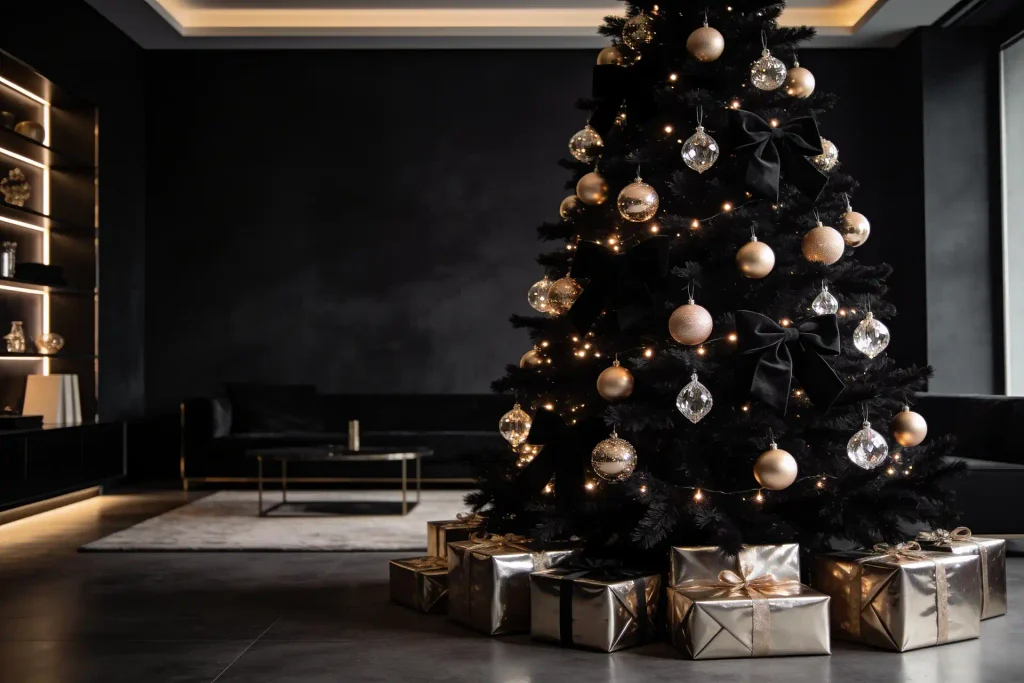
Black Christmas trees offer one of the season’s most dramatic alternatives to conventional evergreen. The dark branches create a graphic background that makes metallic, glass, pearl, white, jewel-tone, or brightly colored decorations stand out. Black trees also appear in current 2026 trend coverage as part of a broader appetite for distinctive and theatrical Christmas decorating.
A black Christmas tree can move in several directions depending on the ornaments. Champagne and gold create glamorous sophistication; silver and crystal produce a cool contemporary look; while jewel tones generate dramatic maximalism. Warm white lights soften black branches and keep the overall display welcoming. For a modern monochrome interpretation, combine matte black ornaments with clear glass, white ribbon, and silver accents. Because the tree itself makes such a strong statement, a relatively controlled ornament palette can still produce significant visual impact.
13. Sculptural Ornament Christmas Trees
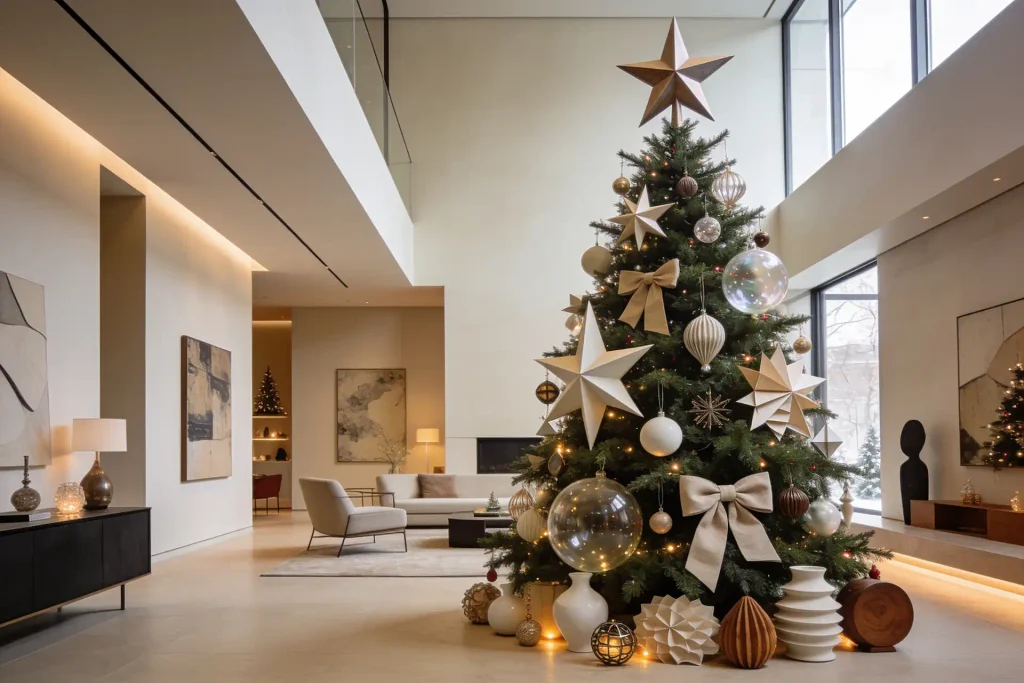
Christmas ornaments are becoming decorative objects in their own right. Sculptural stars, geometric forms, unusual glass shapes, ceramics, fabric ornaments, dimensional paper decorations, oversized bows, and handcrafted pieces can turn the tree into a curated display. Current 2026 trend coverage specifically highlights unusual shapes, interesting materials, and statement decorations as part of this sculptural direction.
Rather than buying dozens of identical baubles, choose a smaller collection of distinctive decorations and combine them with understated filler ornaments. Scale is important: oversized sculptural pieces establish focal points, medium decorations connect those focal points, and small ornaments fill visual gaps. Mixing ceramic, glass, paper, fabric, wood, and metal creates tactile richness. Keep the lighting relatively delicate so it illuminates the ornament collection instead of competing with it. This approach works particularly well in contemporary, architectural, and design-focused homes.
14. Colorful Playful Christmas Trees
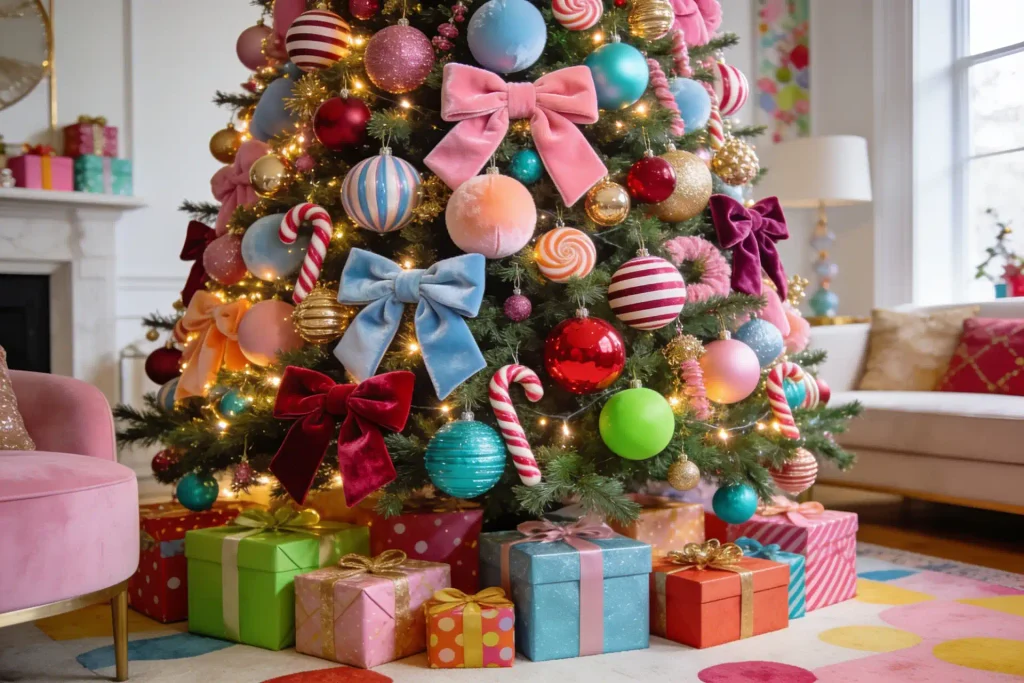
Christmas 2026 is giving decorators more freedom to move beyond strict red-and-green schemes. Pink, sky blue, peach, orange, lavender, cherry red, lime, turquoise, and gold can combine in playful trees filled with cheerful decorations. Current trend reporting describes colorful, personality-driven decorating as part of the broader move toward more expressive Christmas trees.
To make a multicolor Christmas tree look intentional, repeat each major color several times throughout the branches. Candy-inspired ornaments, striped baubles, glass fruits, colorful bows, stars, novelty shapes, and oversized decorations can build the playful theme. White or warm fairy lights provide a neutral base that allows brighter shades to dominate. A colorful tree is particularly effective in neutral rooms because the surrounding space gives its palette room to shine. Coordinated gift wrapping can carry the same cheerful colors around the base.
15. Ribbon-Layered Christmas Trees
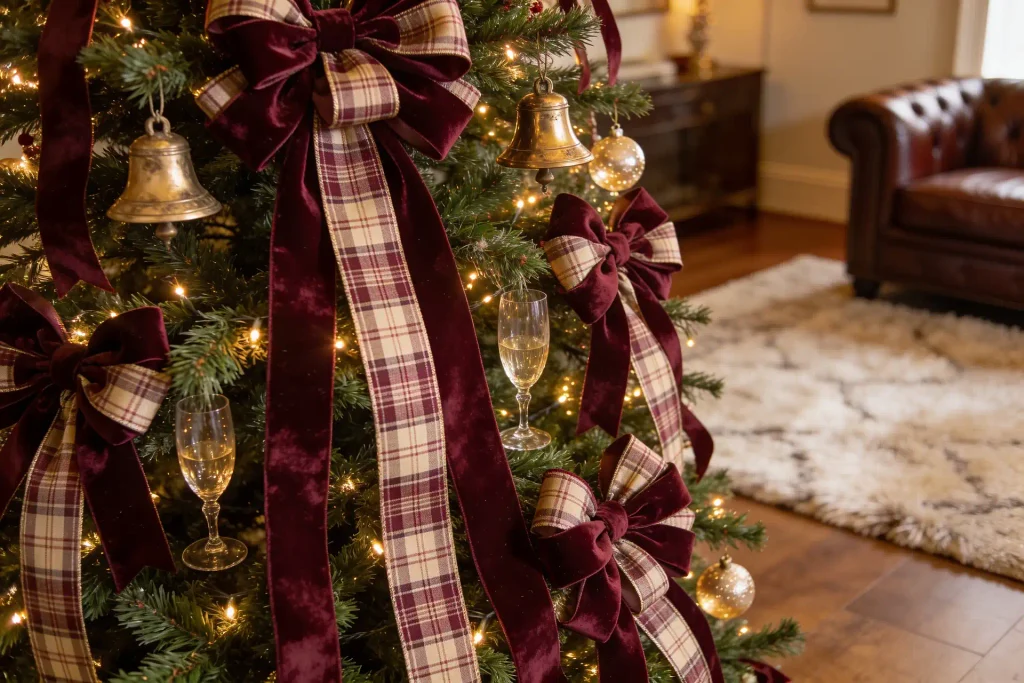
Ribbon is becoming more than a finishing accessory; it can provide the structure of the entire Christmas tree design. Wide wired ribbon can cascade vertically, disappear into branches, reappear lower down, and establish movement from the topper to the tree skirt. Oversized bows and dramatic ribbon treatments are prominent across current 2026 seasonal coverage.
Mixing ribbon widths and textures produces a particularly luxurious result. Velvet can be combined with satin, plaid, embroidered ribbon, sheer fabric, or metallic-edged styles. Instead of wrapping ribbon tightly around the outside of the tree, tuck sections deep into the branches to create soft loops and dimensional folds. Repeat the ribbon at balanced intervals before adding baubles and smaller ornaments. This technique visually connects separate decorations and can make even a relatively modest ornament collection appear fuller and professionally styled.
16. Vintage Glass Ornament Trees
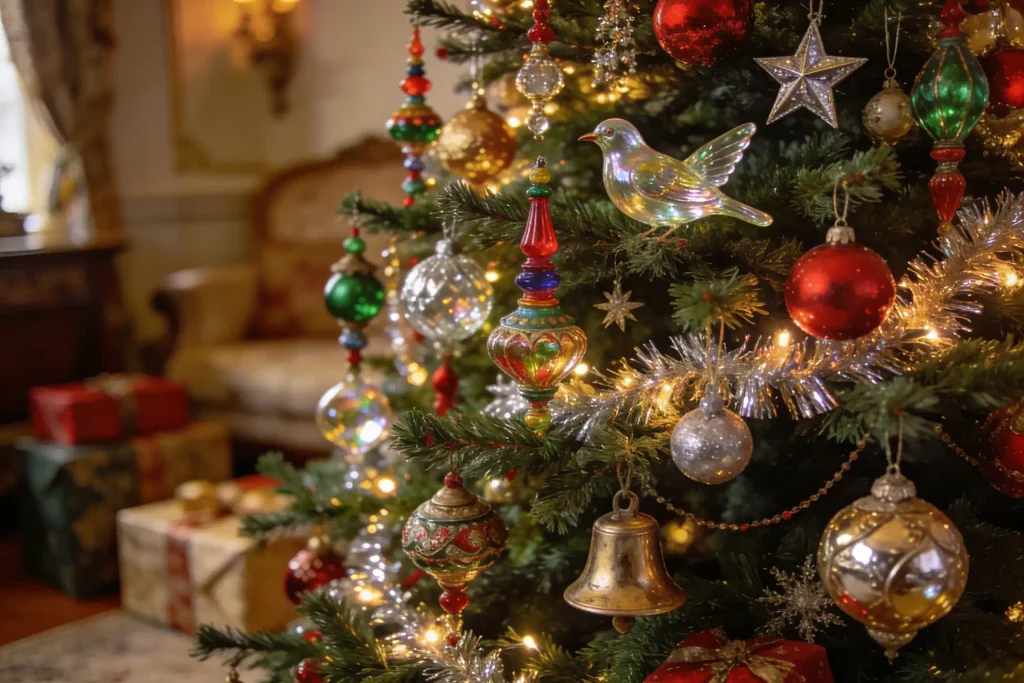
Vintage-inspired glass ornaments are ideal for creating a Christmas tree that feels collected rather than newly purchased as a complete matching set. Reflective baubles, mercury-style glass, finials, teardrops, bells, birds, stars, and hand-painted shapes introduce subtle irregularity and old-fashioned sparkle. Nostalgic decorating and vintage character are recurring themes in current seasonal coverage.
Combine vintage-style ornaments in multiple shapes rather than purchasing only round baubles. Deep red, emerald, silver, champagne, pink, cobalt, and antique gold can coexist when their aged glass finishes provide a common visual language. Tinsel or delicate bead garlands can reinforce the retro character, while warm lights reflect beautifully through transparent and mirrored surfaces. Add sentimental family ornaments wherever possible. Their imperfections and personal stories help create the layered, emotionally meaningful Christmas aesthetic that makes vintage decorating so distinctive.
17. Oversized Ornament Christmas Trees
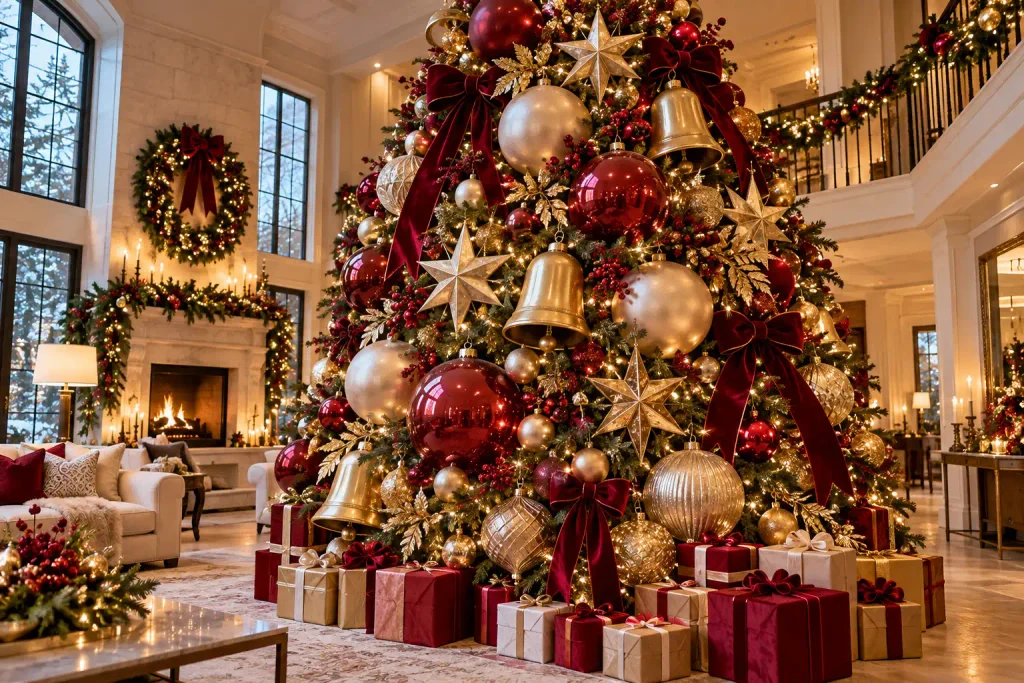
Oversized ornaments create immediate impact and make a Christmas tree appear professionally layered. Large baubles can occupy deeper spaces between branches where small decorations would disappear, helping the tree look fuller while establishing strong focal points. Oversized decorations are also part of the broader 2026 preference for statement pieces and expressive tree styling.
Begin with the largest ornaments before adding ribbon or smaller baubles. Place them around the tree at varying heights and depths rather than hanging all of them from outer branch tips. Medium-sized ornaments can then bridge the visual gaps between the oversized pieces and smaller decorations. Giant stars, bells, bows, flowers, or decorative spheres can be mixed with classic baubles for additional variety. The technique works with almost any palette, from traditional red and gold to contemporary jewel tones or playful multicolor schemes.
18. Blue Christmas Trees
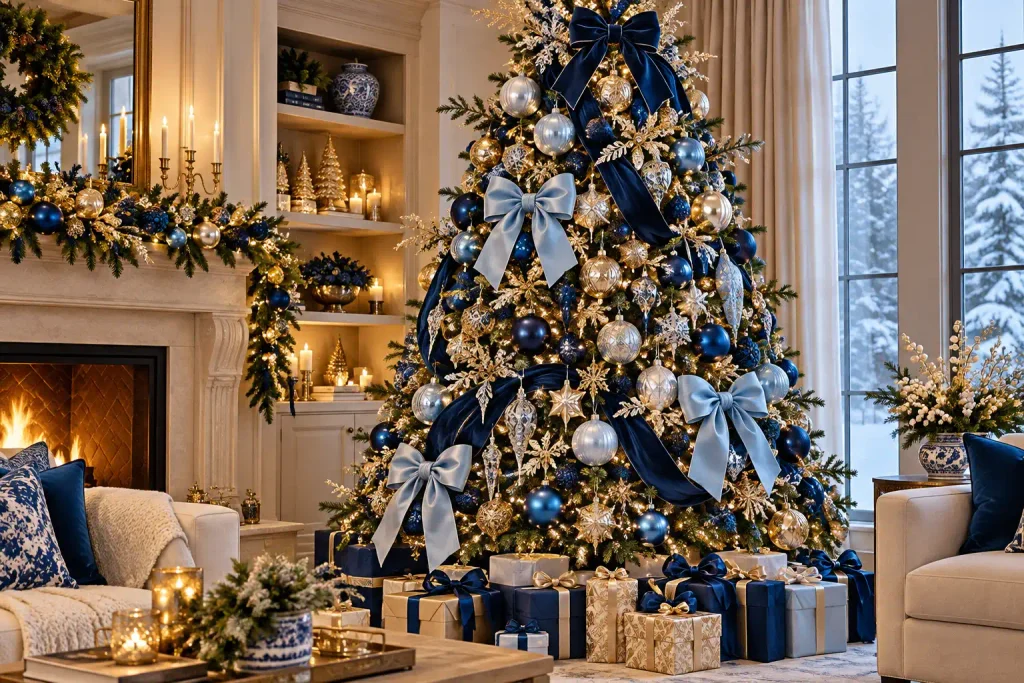
Blue is becoming increasingly versatile in contemporary Christmas decorating. Deep navy creates a sophisticated backdrop for silver and champagne, while powder blue produces an airy winter aesthetic. Sapphire fits naturally into jewel-tone schemes, and unexpected pale blue can introduce a playful twist to traditional red, green, and cream. Current 2026 holiday coverage is already exploring blue as an unexpected seasonal color, including statement tree accessories.
For an elegant blue Christmas tree, keep the evergreen branches natural and layer several shades rather than relying on one exact blue. Navy velvet ribbon, sapphire glass ornaments, pale blue satin bows, transparent icicle decorations, and champagne metallics create tonal complexity. Silver can make the palette cooler and more wintry, while antique gold creates warmth. A blue scheme works especially well against warm neutral walls, allowing the unusual Christmas color to become the focal point without making the room feel cold.
19. Mixed Metallic Christmas Trees
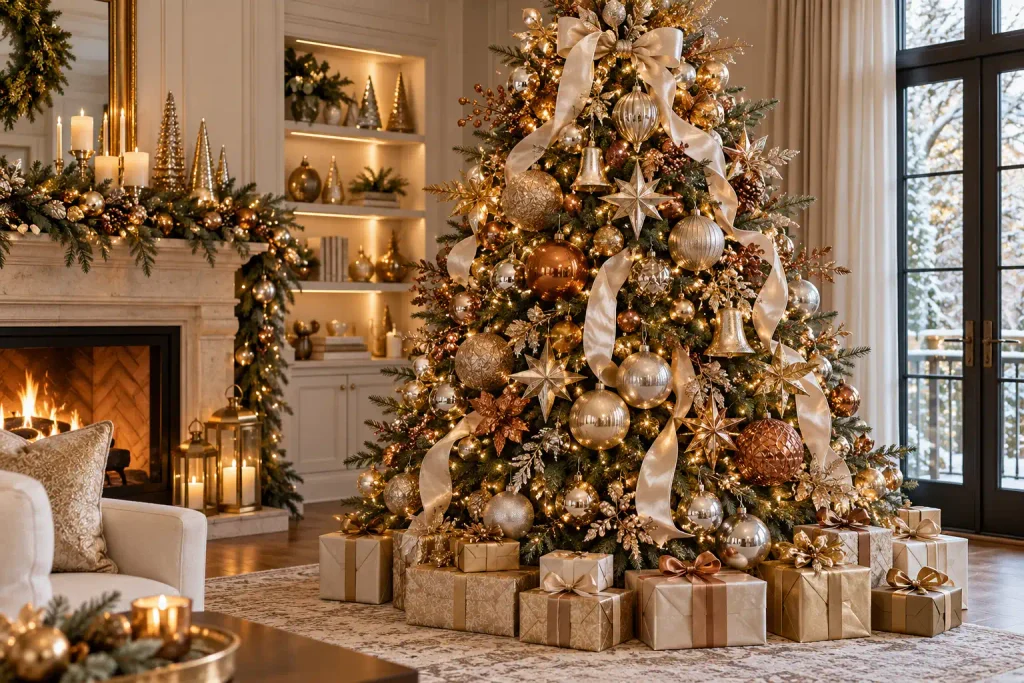
Mixed metallics allow decorators to combine gold, silver, bronze, champagne, copper, and antique brass rather than committing to one finish. The variation creates more visual depth because each material reflects Christmas lights differently. Current 2026 coverage points toward layered metallic finishes and refined luminous palettes rather than flat, uniform sparkle.
Use one dominant metallic shade and introduce the others as supporting accents. Champagne gold can establish the foundation, for example, while antique silver adds contrast and bronze provides warmth. Combine glossy baubles with brushed metal, glittered stars, bells, reflective glass, metallic leaves, and beaded garlands. Warm lights help connect gold and bronze to cooler silver accents. Neutral velvet ribbon in ivory, taupe, or deep brown can prevent the metallic surfaces from becoming visually overwhelming and give the tree a sophisticated, balanced finish.
20. Personalized Storytelling Christmas Trees
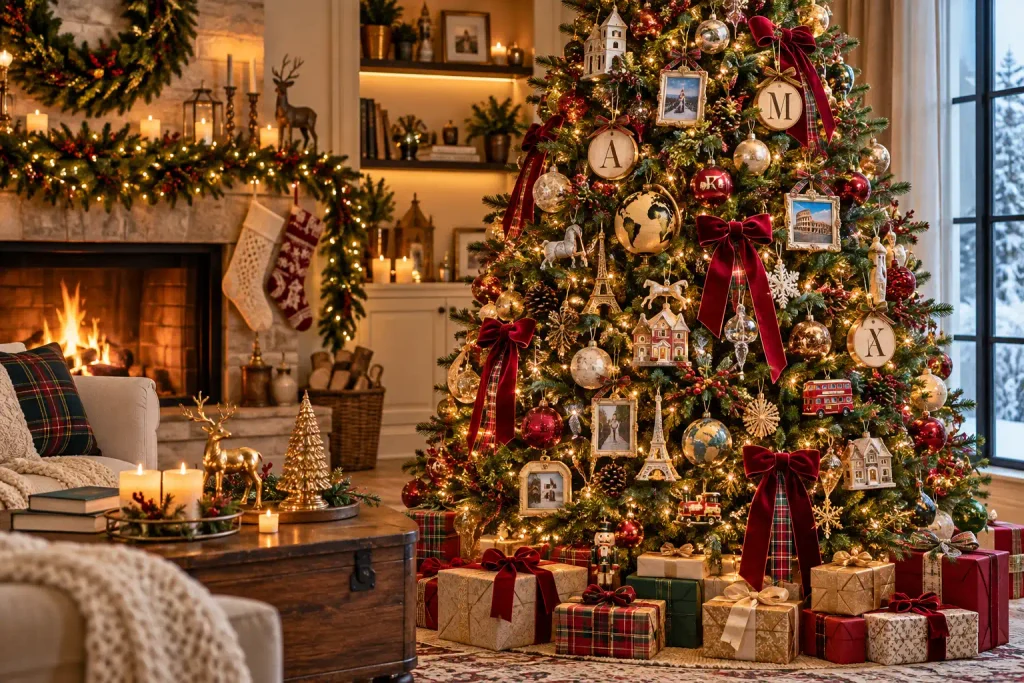
Perhaps the most meaningful direction within Christmas tree trends 2026 is decorating around personal stories instead of following a perfectly matched retail theme. Travel souvenirs, handmade children’s ornaments, family heirlooms, photographs, initials, meaningful objects, vintage pieces, and decorations collected over many years can share the same branches. This approach reflects the broader shift toward personality, nostalgia, and trees that feel individually curated rather than universally prescribed.
A storytelling Christmas tree still benefits from visual structure. Use consistent lighting, ribbon, or a repeated color to connect ornaments that otherwise have very different appearances. Neutral glass baubles can fill empty areas without competing with meaningful decorations. Position important ornaments where they can be easily seen and leave enough breathing room around especially detailed pieces. Instead of replacing an entire ornament collection whenever trends change, this approach allows families to add a few contemporary decorations each year while preserving the pieces that make Christmas personal.
21. Red and Gold Christmas Tree
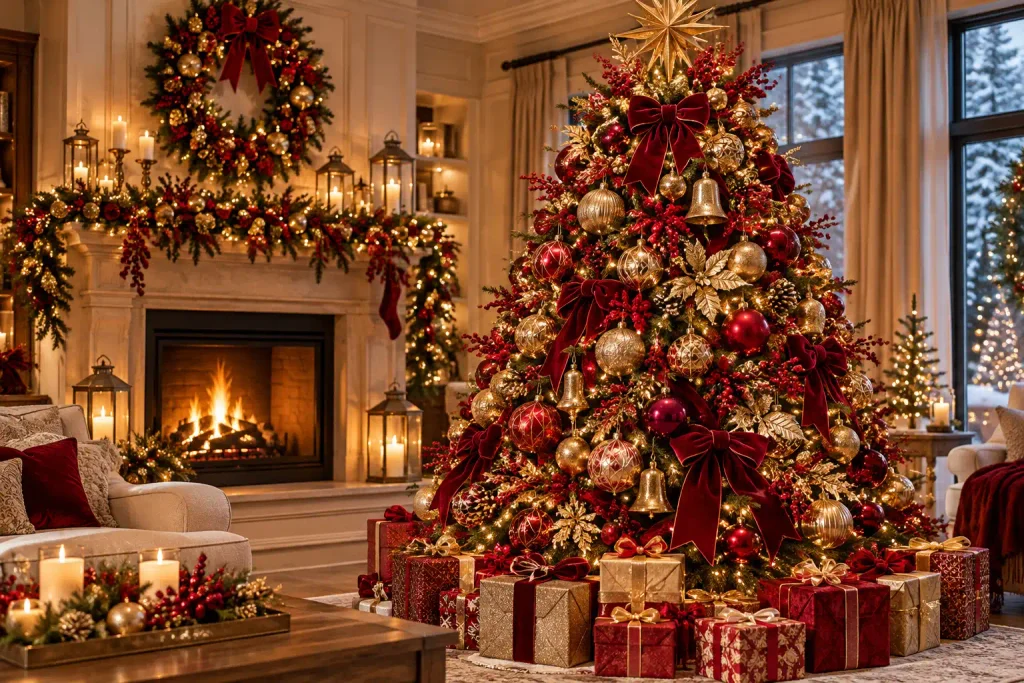
The red and gold Christmas tree remains a timeless holiday favorite, but Christmas tree trends 2026 give this traditional combination a richer and more luxurious appearance. Instead of relying on bright primary red, decorators can layer ruby, cranberry, burgundy, and classic Christmas red across the branches. Champagne gold, antique brass, and softly reflective metallic ornaments introduce warmth and dimension. Wide velvet ribbon, oversized baubles, gold bells, berries, and traditional ornaments can create a full, sophisticated tree while preserving the familiar festive character associated with Christmas.
To achieve a professionally decorated appearance, begin with warm white lights positioned deep inside the tree before adding wide red or burgundy ribbon. Distribute large gold and red ornaments throughout the interior branches and gradually introduce smaller decorations toward the outer edges. Gold leaves, metallic stars, bells, berry sprays, and velvet bows can fill remaining spaces. A coordinated gold star or oversized red bow works beautifully as a topper, while presents wrapped in red, cream, green, and metallic paper complete this elegant Christmas tree trend.
22. Velvet Christmas Tree
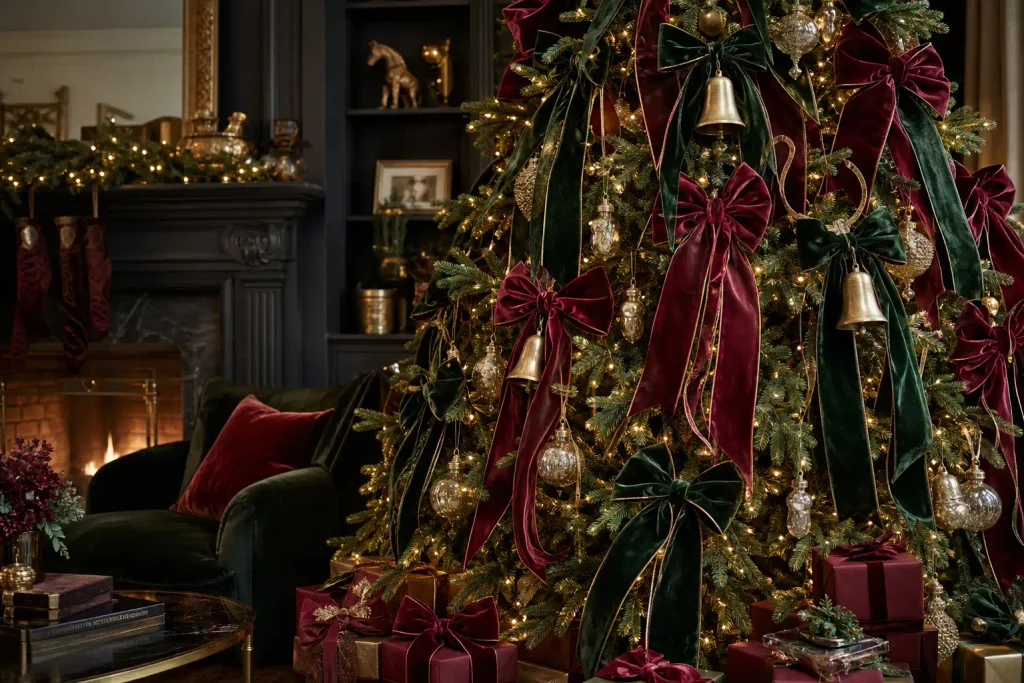
Velvet is becoming one of the defining materials for sophisticated Christmas decorating because its soft surface introduces depth without requiring excessive glitter. A velvet-focused Christmas tree can incorporate burgundy, forest green, chocolate brown, navy, dusty rose, or champagne ribbons alongside matching bows and fabric ornaments. The texture absorbs and reflects light differently from glass baubles, helping create a layered visual experience. Against natural evergreen branches, velvet also provides a luxurious contrast that works particularly well with traditional, heritage, organic modern, and upscale contemporary Christmas interiors.
Instead of wrapping one continuous ribbon tightly around the tree, use sections of wired velvet ribbon to form loose vertical folds between branches. Large velvet bows can establish focal points, while smaller bows provide repetition throughout the tree. Combine these soft elements with reflective glass ornaments, antique brass bells, metallic stars, and warm fairy lights to create contrast. Burgundy velvet produces a dramatic traditional aesthetic, whereas cream or taupe velvet creates a softer neutral Christmas tree. Deep green velvet can deliver an elegant tonal appearance against natural evergreen foliage.
23. Snowy Flocked Christmas Tree
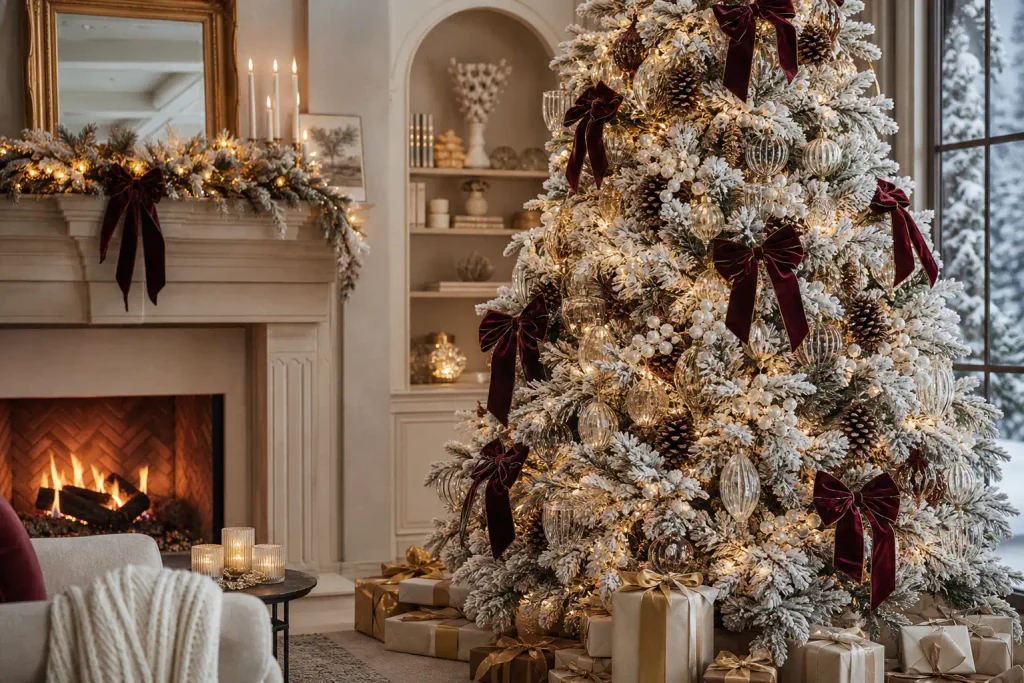
Flocked Christmas trees remain popular for homeowners who want to recreate the peaceful appearance of snow-covered winter forests indoors. For Christmas 2026, flocked trees can move beyond the familiar all-white decorating scheme by incorporating burgundy, champagne, chocolate brown, blue, woodland ornaments, or vintage glass decorations. Artificial snow already creates significant texture, so even a relatively simple collection of ornaments can appear luxurious. Warm white lights glowing behind snow-covered branches produce a particularly atmospheric effect during evenings and make the tree feel naturally illuminated.
For a refined snowy Christmas tree, avoid completely covering the flocking with decorations. Allow visible sections of white branches to provide breathing space between ornaments. Champagne and transparent glass decorations create an elegant winter theme, while red berries and burgundy bows offer traditional contrast. Wooden ornaments and pinecones can turn a flocked tree into a snowy woodland display. A white, cream, or woven tree skirt maintains the winter aesthetic around the base, while gift wrapping in kraft paper, velvet ribbon, or neutral colors completes the sophisticated seasonal arrangement.
24. White and Champagne Christmas Tree
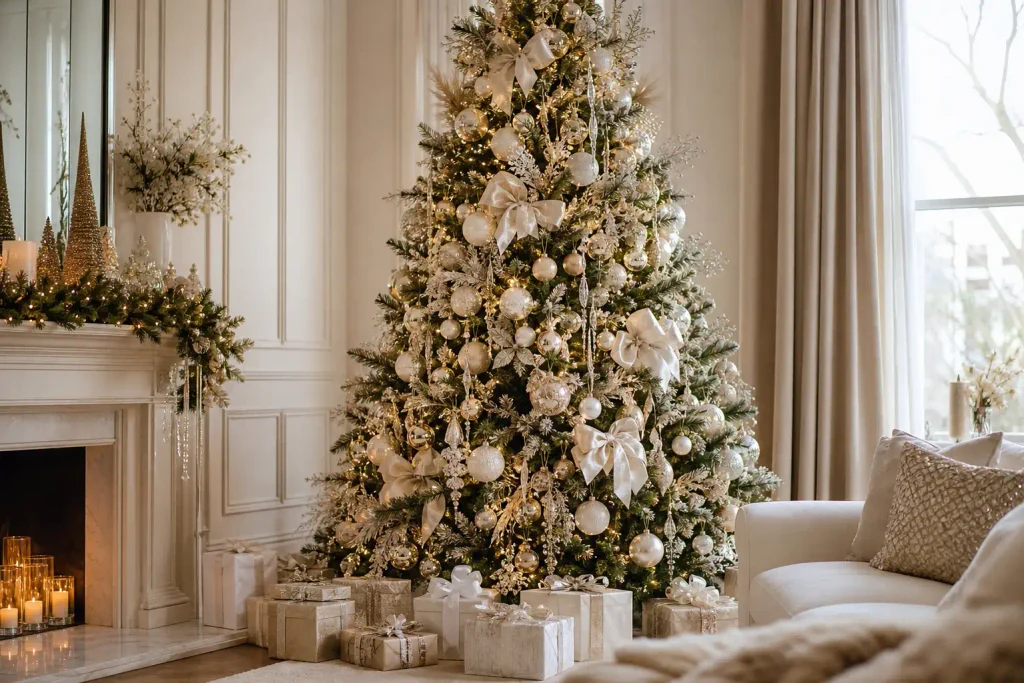
A white and champagne Christmas tree creates an elegant holiday atmosphere without depending on bold traditional colors. Champagne sits between gold, beige, and silver, making it especially versatile for sophisticated neutral interiors. Combine pearl-white ornaments, champagne baubles, frosted glass, satin ribbon, metallic leaves, and translucent decorations to create subtle variation. The palette works beautifully on both traditional green trees and snowy flocked trees, while warm white lights enhance its softness and keep the finished display from feeling cold or overly formal.
Texture is essential when decorating with a restricted neutral palette. Use matte white baubles beside glossy champagne ornaments, translucent glass icicles, pearl garlands, satin bows, metallic leaves, and softly glittered stars. Oversized ornaments can provide depth without introducing additional colors. Ivory velvet ribbon adds another luxurious material while preserving the monochromatic appearance. Beneath the tree, cream gift boxes, champagne ribbon, white wrapping paper, and subtle metallic details extend the palette. This tree works particularly well in contemporary, transitional, modern classic, and luxury interiors.
25. Candy-Inspired Christmas Tree
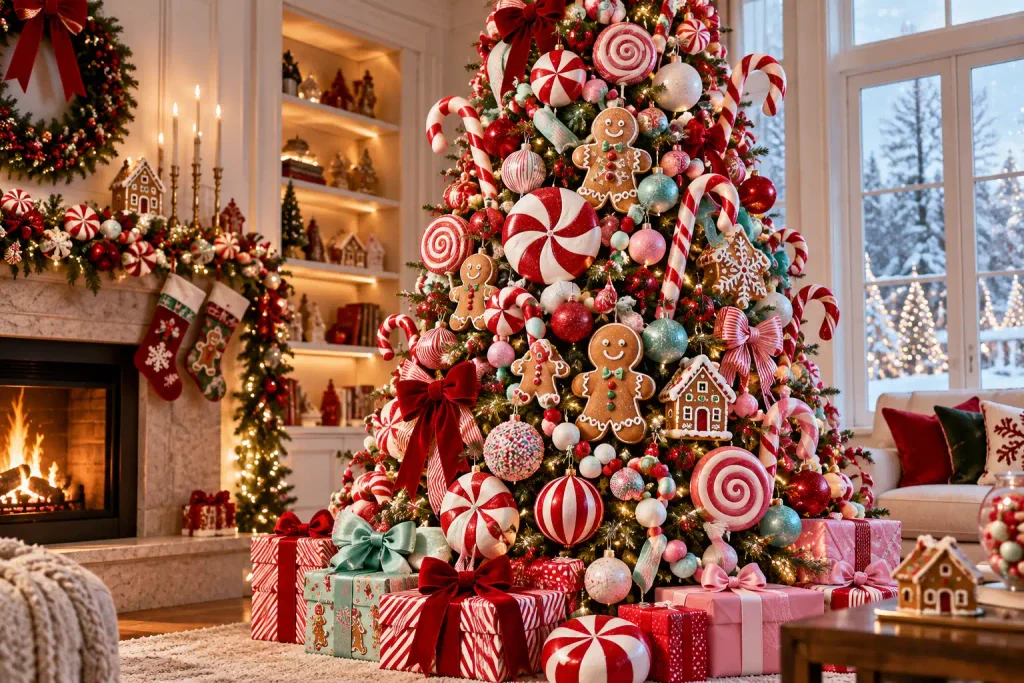
Candy-inspired Christmas trees bring playful color and nostalgic sweetness into holiday decorating. Peppermint swirls, candy canes, striped baubles, gingerbread ornaments, gumdrop colors, lollipops, cookies, cupcakes, and miniature candy houses can transform an ordinary evergreen into a whimsical Christmas centerpiece. Red and white provide the classic foundation, but pink, mint, turquoise, lime, and pastel accents can make the theme feel more contemporary. Oversized candy decorations are particularly effective because their recognizable shapes remain visible even on heavily decorated trees.
A successful candy Christmas tree should look abundant without losing visual structure. Start with striped red-and-white ribbon before adding large peppermint ornaments and oversized candy canes. Smaller gingerbread figures, colorful baubles, sweets, bows, and miniature bakery ornaments can then fill spaces between the larger pieces. Warm white lights create a cozy glow, while colorful lights produce a more playful interpretation. Consider coordinating nearby stockings, gift wrapping, garlands, and decorative gingerbread houses with the tree so the candy theme becomes part of the entire Christmas room.
26. Gingerbread Christmas Tree
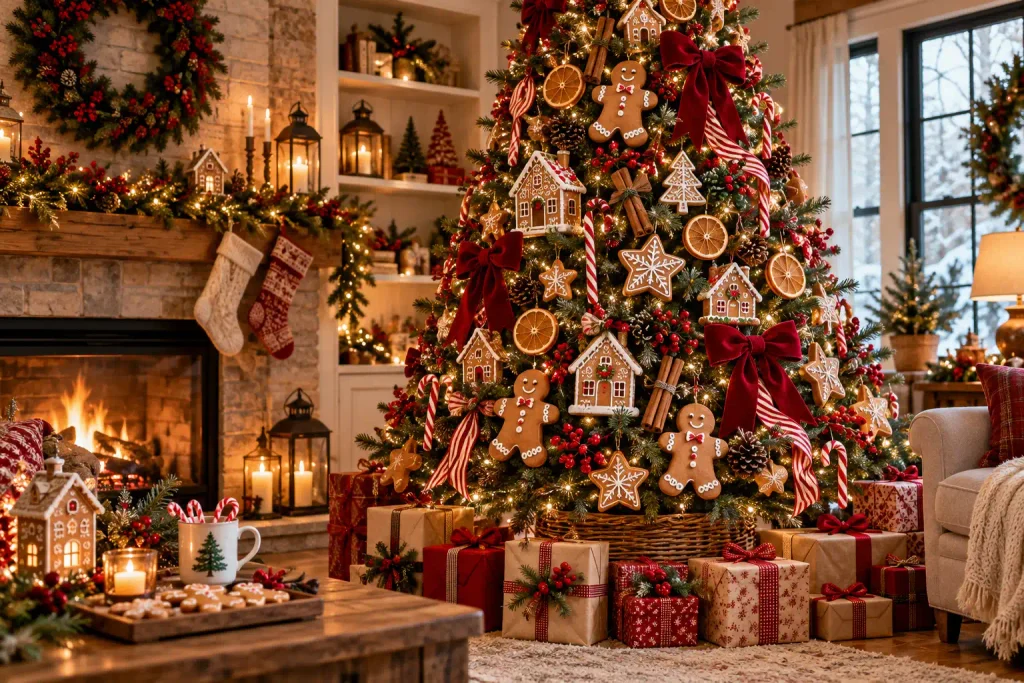
The gingerbread Christmas tree combines nostalgic baking traditions with warm, earthy Christmas colors. Gingerbread people, miniature houses, cookie stars, candy ornaments, cinnamon sticks, wooden decorations, red bows, and dried oranges can create a tree inspired by a traditional holiday kitchen. Brown and caramel tones naturally complement evergreen branches, while cream icing details and red accents prevent the palette from becoming too subdued. The result feels especially inviting in farmhouse, cottage, rustic, traditional, and family-focused Christmas interiors.
For a dimensional gingerbread tree, mix realistic cookie-inspired ornaments with wood, felt, ribbon, and glass. Miniature gingerbread houses can be positioned deeper between branches, while cookie stars and gingerbread characters hang toward the outer edges. Red-and-white striped ribbon introduces a candy-shop element, whereas natural linen ribbon produces a more rustic appearance. Add warm white lights to imitate the glow of a cozy bakery window. Kraft-paper gifts, red twine, cinnamon bundles, and cookie-themed gift tags can extend the gingerbread aesthetic beneath the tree.
27. Old Money Christmas Tree
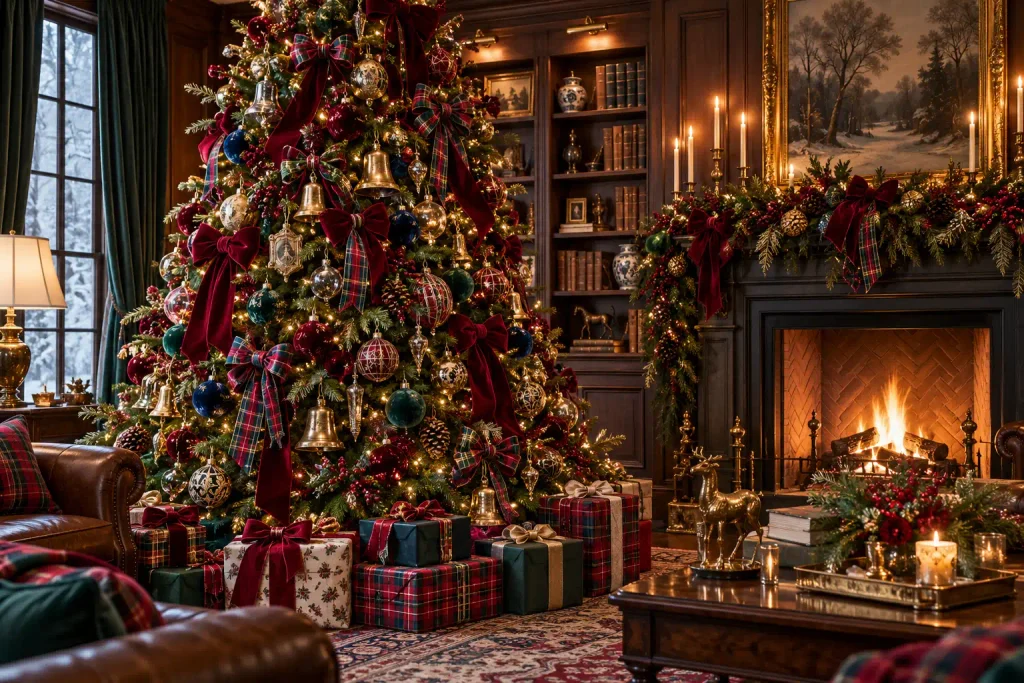
The old money Christmas aesthetic favors heritage details, understated luxury, traditional craftsmanship, and decorations that appear collected over generations. Deep green, burgundy, navy, antique gold, oxblood, cream, and dark wood tones establish the palette. Instead of excessive glitter, an old money Christmas tree can feature velvet ribbon, tartan bows, brass bells, vintage glass ornaments, equestrian details, miniature instruments, traditional stars, and heirloom-style decorations. The finished tree should feel refined and established rather than obviously coordinated around a temporary seasonal trend.
Surroundings play an important role in reinforcing this aesthetic. A tree positioned beside dark wood bookshelves, an antique-style fireplace, leather furniture, framed artwork, or traditional architectural molding immediately feels more convincing. Decorate with restraint but use high-quality-looking materials, repeating burgundy velvet and antique brass throughout the branches. Plaid-wrapped gifts, satin ribbon, leather-look tags, and classic typography can extend the heritage atmosphere beneath the tree. Warm candle-like lighting completes the timeless, sophisticated holiday environment.
28. Coastal Christmas Tree
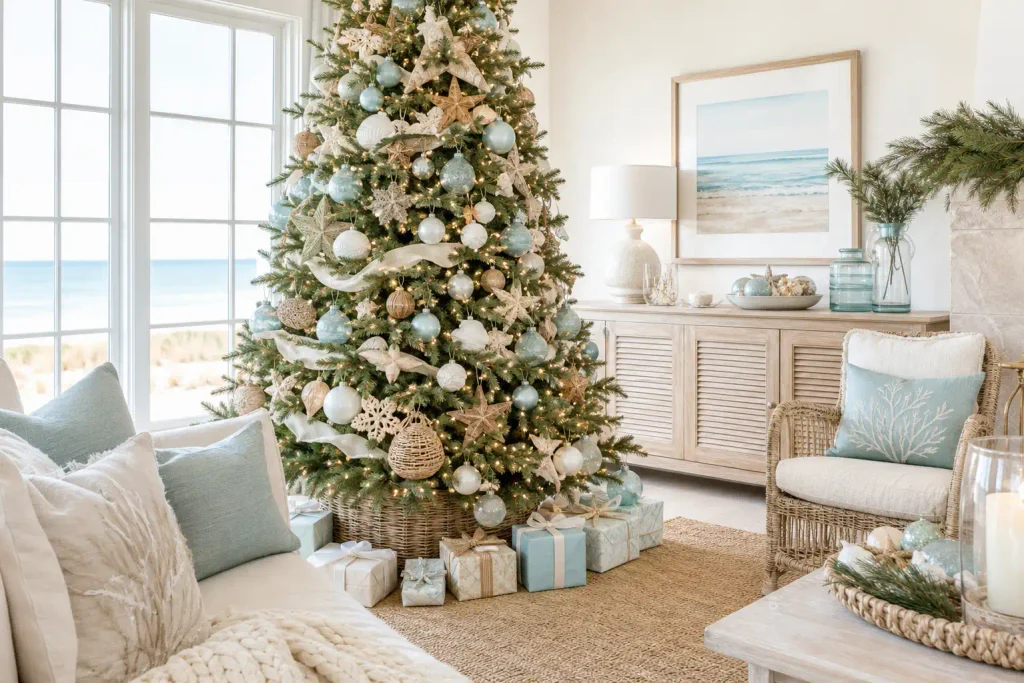
Coastal Christmas decorating introduces relaxed seaside colors and organic materials into the holiday season. Rather than creating an obvious beach-themed novelty tree, a sophisticated coastal Christmas tree uses sandy beige, soft white, muted blue, sea-glass green, pale wood, woven fibers, and subtle nautical references. Glass ornaments resembling sea glass can provide sparkle, while shells, natural rope, driftwood-inspired stars, woven decorations, and linen ribbon establish texture. The result is fresh and bright while still feeling unmistakably festive.
Keep the palette relatively restrained so the coastal theme remains elegant. Start with warm or soft white lights before adding pale blue and frosted glass baubles. Linen ribbon can cascade through the branches while natural wooden stars and woven ornaments create organic contrast. A few carefully selected shell or coastal ornaments can communicate the theme without overwhelming the tree. Use a woven basket tree collar and gifts wrapped in cream, kraft, and dusty blue paper. This approach is particularly suitable for beach houses and light-filled coastal interiors.
29. Celestial Christmas Tree
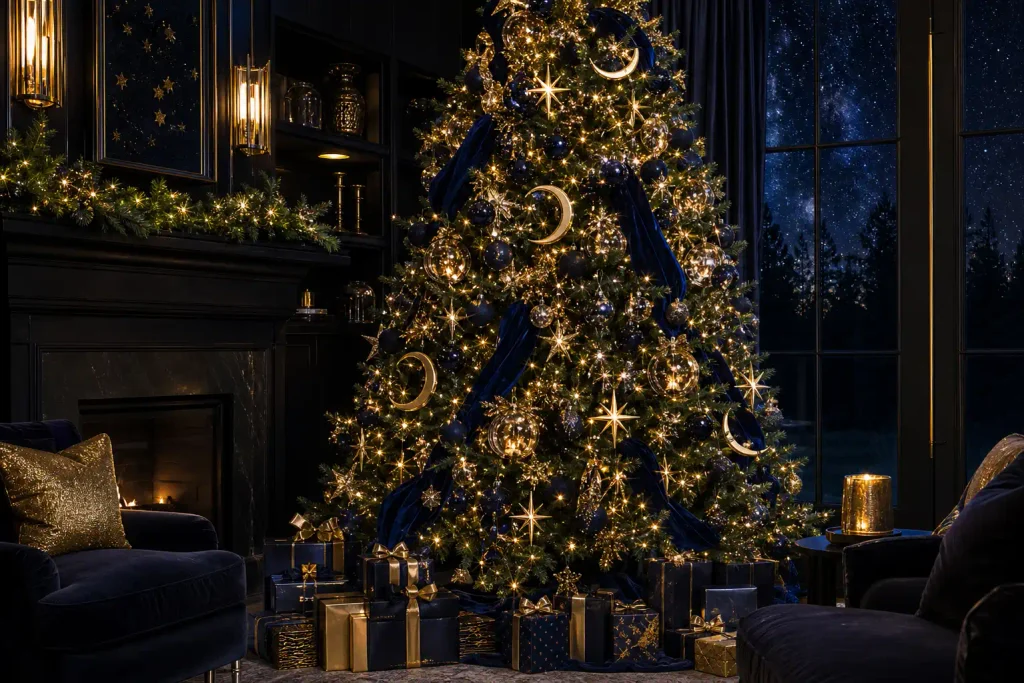
Celestial Christmas trees draw inspiration from stars, moons, constellations, planets, and the night sky. Deep navy, midnight blue, black, silver, champagne, and gold create a dramatic foundation, while star-shaped ornaments and delicate metallic garlands introduce celestial sparkle. Crystal decorations can resemble ice or distant stars, and warm micro lights scattered throughout dark branches or deep-colored ornaments mimic a glowing night sky. The theme feels magical while remaining sophisticated enough for contemporary holiday interiors.
Choose one dominant metallic finish to prevent the celestial theme from becoming overly busy. Gold stars against navy ornaments create warmth, while silver stars and clear crystal decorations produce a cooler winter-night effect. Crescent moons, starbursts, mirrored ornaments, and delicate constellation-inspired decorations can provide variety. A dramatic star topper naturally completes the theme. Consider using deep blue velvet ribbon to connect the darker ornaments, while gift wrapping in navy, black, champagne, and metallic paper extends the night-sky palette around the base.
30. Minimalist Warm Neutral Christmas Tree
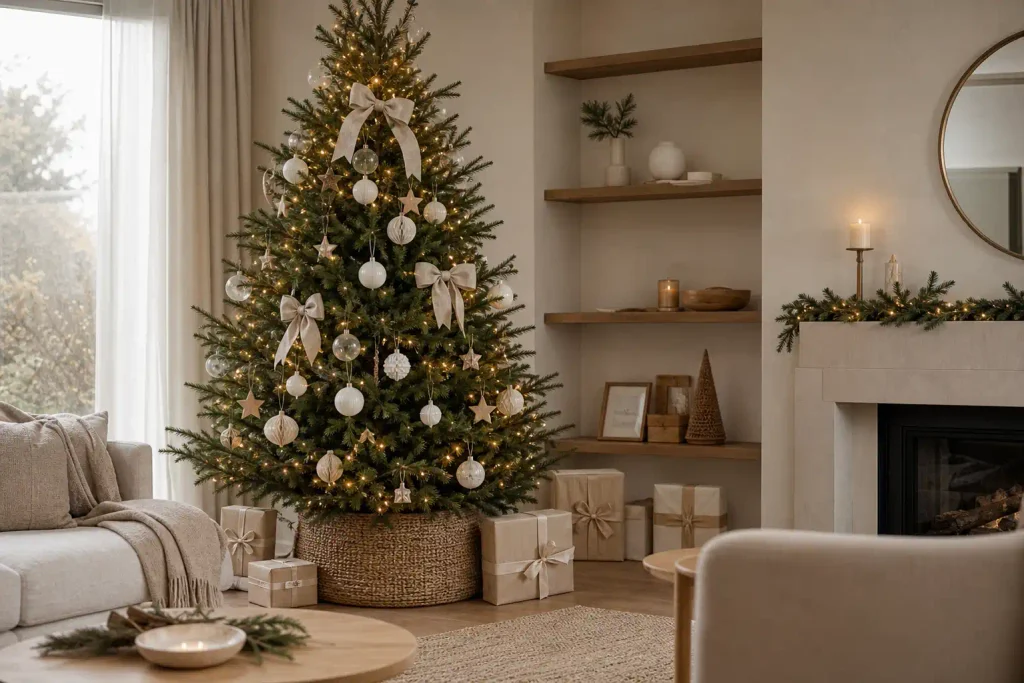
Minimalist Christmas decorating in 2026 does not have to feel stark or empty. A warmer interpretation uses cream, oatmeal, beige, taupe, natural wood, soft brown, and muted champagne to create a calm holiday centerpiece. Rather than eliminating decorations, the goal is thoughtful editing. Handmade ceramic ornaments, wooden stars, linen bows, paper decorations, frosted glass, and a few metallic accents can provide enough variation to make the tree interesting while preserving visual simplicity and plenty of visible evergreen.
Lighting becomes especially important on a minimalist Christmas tree because it provides much of the festive atmosphere. Choose small warm white lights and distribute them evenly from the trunk toward the outer branches. Add ornaments with generous spacing rather than clustering them densely. Natural textures such as linen, wood, wool, and paper can replace glitter-heavy finishes. A woven basket or simple fabric tree skirt completes the restrained look. Neutral gift wrapping with linen ribbon and understated tags keeps the entire arrangement cohesive.
31. Victorian-Inspired Christmas Tree
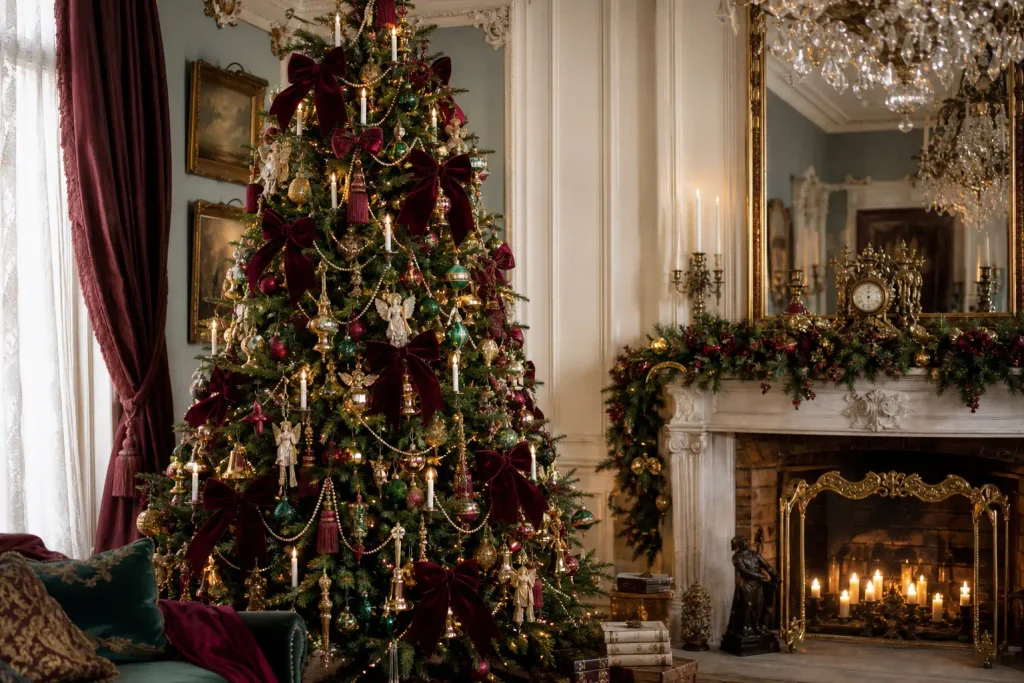
Victorian-inspired Christmas trees bring ornate details, traditional shapes, rich colors, and old-world romance into contemporary holiday interiors. Burgundy, emerald, ruby, antique gold, cream, and deep plum provide a historically inspired palette. Decorative elements can include velvet bows, tassels, glass finials, miniature portraits, angels, bells, beaded garlands, faux candles, flowers, and intricately shaped ornaments. The tree should appear layered and decorative, with each branch revealing another small detail rather than following a modern uniform arrangement.
To reinterpret Victorian Christmas decorating for 2026, combine historical references with contemporary safety and convenience. Battery-powered candle-style lights can imitate traditional candles without open flames, while modern LED fairy lights add additional warmth. Antique-inspired glass ornaments can be mixed with new velvet bows and brass bells. A richly decorated topper, cascading ribbon, and beaded garlands can emphasize vertical movement. Place the tree in a room with architectural molding, traditional furniture, or a fireplace to reinforce its romantic old-world atmosphere.
32. Handmade Craft Christmas Tree
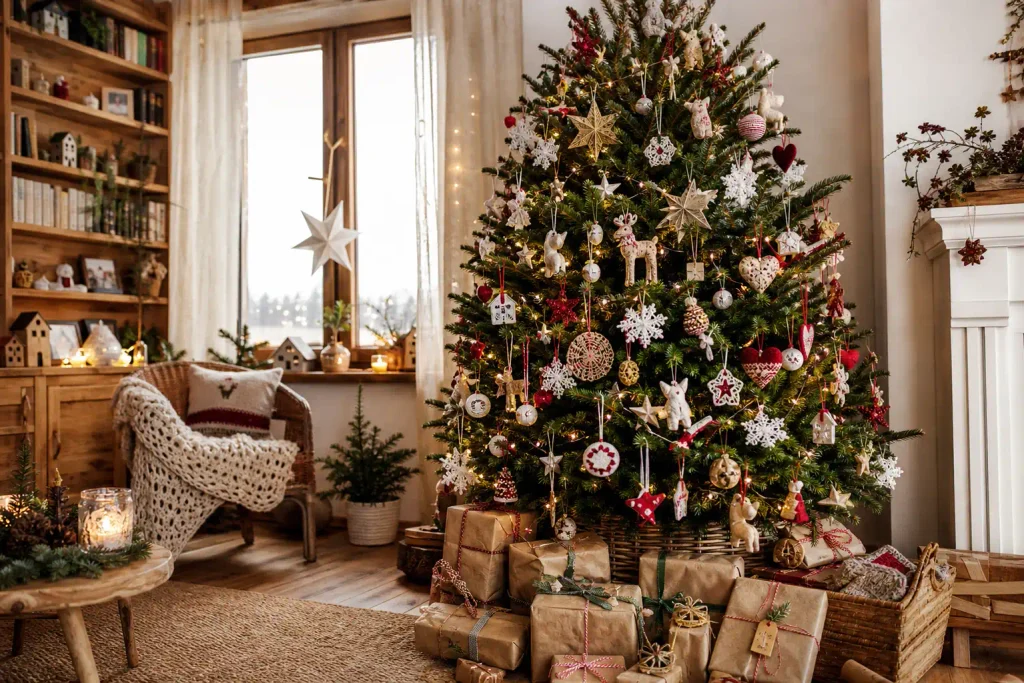
Handmade decorations give Christmas trees character that mass-produced ornament collections cannot completely reproduce. Paper stars, salt-dough ornaments, knitted decorations, embroidered pieces, felt animals, wooden crafts, hand-painted baubles, crochet snowflakes, fabric hearts, and homemade garlands can transform the tree into a celebration of creativity. Small imperfections become part of the appeal because they reveal that individual pieces were made rather than manufactured. This direction naturally complements the wider interest in personalized and nostalgic Christmas decorating.
A handmade tree does not need to look rustic unless that is the intended style. Choose a limited color palette to visually connect crafts made from different materials. Cream, red, green, and natural wood create a traditional appearance, while pastel crafts can produce something more playful. Handmade paper chains and popcorn-style garlands can introduce additional nostalgia. Warm lights enhance the tactile materials, while simple kraft-paper gifts reinforce the handcrafted theme. Families can also add new handmade ornaments annually, allowing the tree to develop its own history.
33. Enchanted Forest Christmas Tree
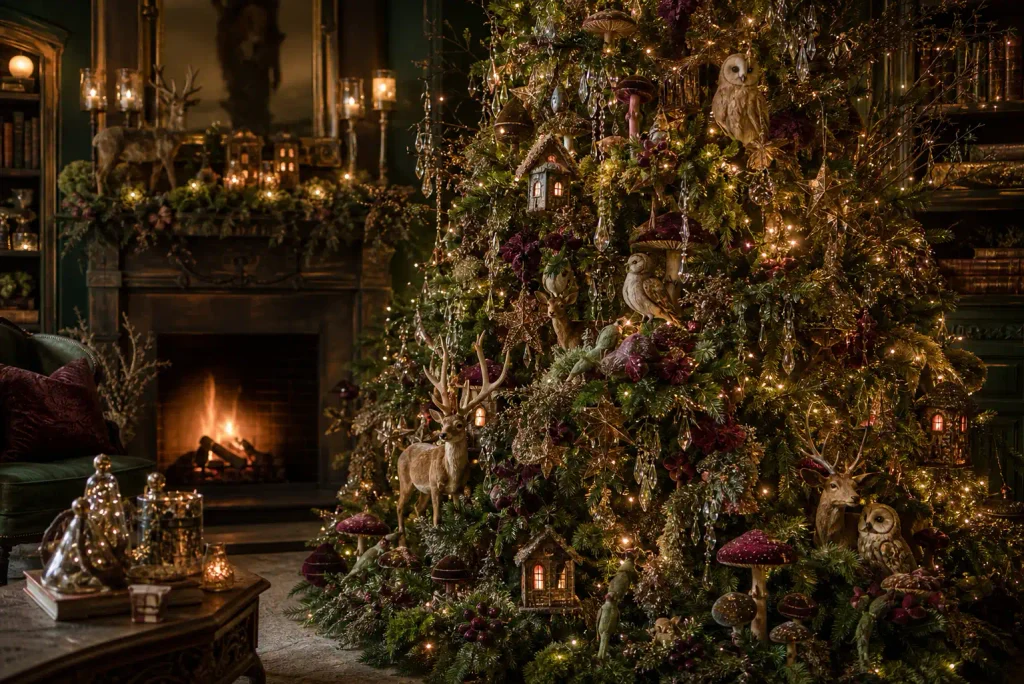
The enchanted forest Christmas tree takes woodland decorating into a more magical direction. Instead of focusing entirely on realistic nature, it combines forest elements with fantasy-inspired details such as glittering mushrooms, miniature fairy houses, sparkling branches, woodland creatures, crystal droplets, stars, butterflies, and tiny lights. Forest green, moss, burgundy, bronze, gold, and muted jewel tones create an immersive palette. The finished tree can resemble a mysterious winter forest illuminated by thousands of miniature points of light.
Depth is crucial for creating the illusion. Position miniature houses, animals, mushrooms, and moss-like decorative pieces deeper inside the branches so viewers discover them gradually. Longer branches, fern-like picks, berries, and botanical sprays can extend beyond the natural tree silhouette. Add delicate micro lights throughout the interior before decorating the outer branches. Crystal droplets and subtle metallic ornaments provide magical reflections without overwhelming the organic elements. A natural tree collar, moss-inspired base, or woodland gift wrapping completes the storybook presentation.
34. Retro 1970s Christmas Tree
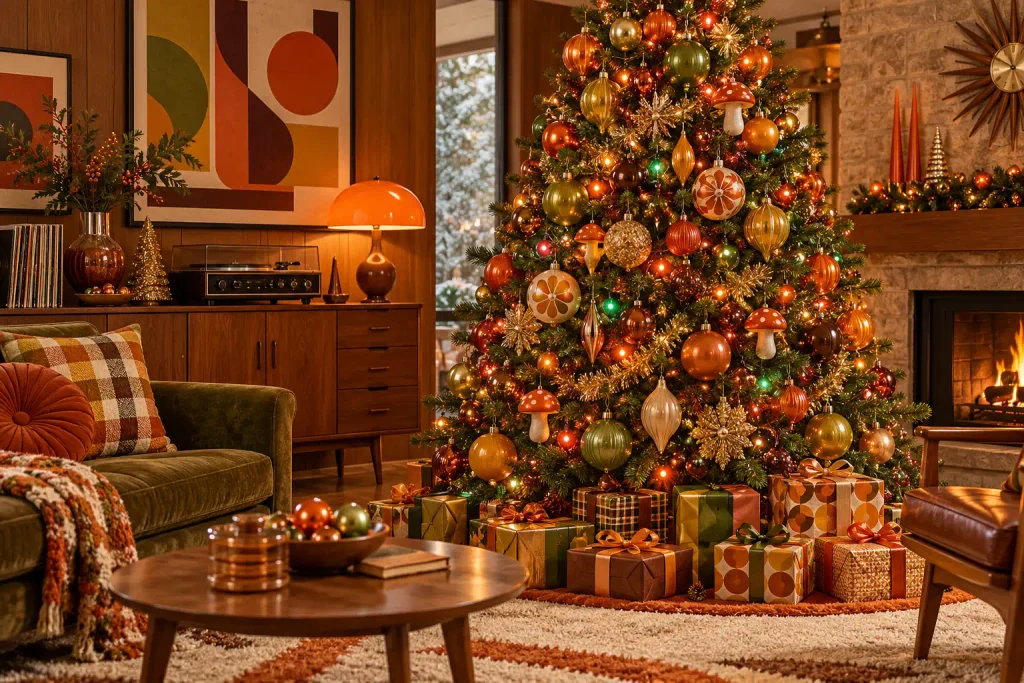
A 1970s-inspired Christmas tree brings warm nostalgic colors and playful vintage shapes back into holiday decorating. Burnt orange, avocado green, mustard, chocolate brown, red, amber, and gold can create a distinctly retro palette. Shiny ornaments, mushroom motifs, vintage-style glass baubles, handmade decorations, wooden pieces, tinsel, and colorful lights can reinforce the period influence. Rather than reproducing a historical tree exactly, the 2026 version can borrow recognizable retro elements and combine them with contemporary styling.
Balance is essential because several strong retro colors can quickly dominate a room. Allow the natural evergreen branches to provide a consistent background and repeat each accent color across multiple sections of the tree. Amber glass, orange velvet ribbon, gold tinsel, wooden ornaments, and avocado-green baubles work particularly well together. Vintage-inspired gift wrap can extend the look beneath the branches. In a mid-century modern interior with walnut furniture and warm lighting, this tree can feel intentionally nostalgic rather than dated.
35. Statement Tree Topper Christmas Tree
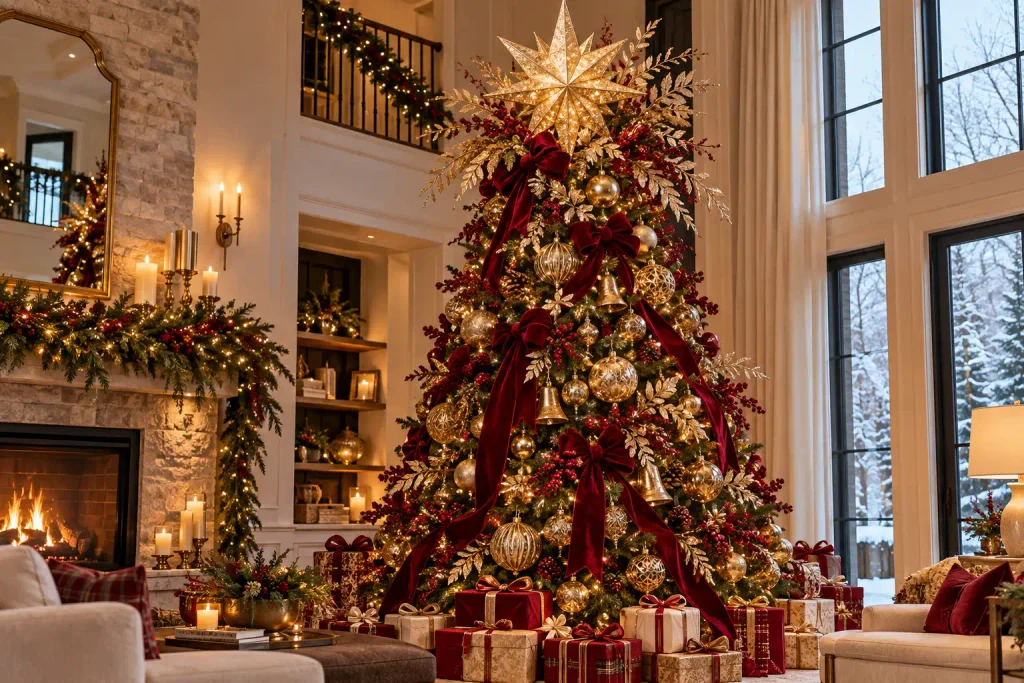
The Christmas tree topper is becoming a major part of the overall design rather than a small decoration added at the end. Oversized bows, dramatic stars, sprays of branches, bells, sculptural ornaments, celestial arrangements, and cascading ribbon can extend beyond the upper branches and establish a strong focal point. A statement topper is particularly useful for tall Christmas trees because it visually completes the tree and draws attention upward, emphasizing ceiling height and creating a more dramatic holiday centerpiece.
Choose the topper early in the decorating process so the rest of the tree can support its scale, color, and material. An enormous burgundy velvet bow can inspire matching ribbon and smaller bows throughout the branches, while a sculptural gold star can lead to metallic ornaments and celestial details. Botanical toppers can incorporate berries, branches, leaves, and flowers that reappear lower down. Keep nearby decorations slightly smaller so they do not compete with the topper. The result should create a clear visual hierarchy from top to bottom.
Christmas Tree Trends 2026: What Is Changing?
Christmas tree decorating in 2026 is becoming increasingly personal, layered, tactile, and expressive. Instead of purchasing one matching ornament collection and repeating it uniformly across every branch, decorators can combine vintage decorations, handmade pieces, luxurious ribbons, natural materials, oversized ornaments, sculptural shapes, and sentimental items. Nostalgic Christmas aesthetics can coexist with contemporary design, while traditional red and green can be expanded through burgundy, chocolate brown, jewel tones, champagne, blue, and playful multicolor combinations.
Texture is equally important. Velvet, glass, wood, paper, ceramic, metal, linen, wool, pinecones, dried botanicals, and woven fibers can all appear within a single Christmas scheme. The result is a tree that feels dimensional when viewed both from across the room and at close range. Whether the chosen direction is maximalist, woodland, old money, Scandinavian, Victorian, neutral, colorful, or vintage-inspired, thoughtful repetition of colors and materials helps turn individual decorations into one cohesive Christmas display.
How to Choose a Christmas Tree Theme for 2026
Start by considering the colors and materials already present in your living room rather than choosing a trend solely because it looks attractive online. Warm neutral rooms naturally complement burgundy, brown, champagne, woodland, and organic Christmas trees. Traditional interiors can support heritage tartan, Victorian, nostalgic, and red-and-gold decorating, while contemporary spaces provide an effective backdrop for sculptural ornaments, black Christmas trees, jewel tones, mixed metallics, or minimalist neutral arrangements.
You can also combine compatible Christmas tree trends rather than following one idea exactly. A woodland tree can incorporate velvet ribbon, a nostalgic tree can include oversized bows, and a Scandinavian tree can contain handmade decorations. Burgundy works naturally with old money and heritage themes, while jewel tones complement maximalism and metallic ornaments. The goal is to identify a consistent visual language—usually through color, material, or motif—and repeat it throughout the branches so different decorations still appear connected.
Final Thoughts
The biggest lesson from Christmas tree trends 2026 is that personality matters more than achieving a perfectly matched showroom tree. Nostalgic ornaments, woodland characters, tartan ribbon, vintage glass, oversized bows, velvet textures, sculptural decorations, warm metallics, handmade crafts, dramatic toppers, jewel tones, and playful colors give homeowners countless ways to reinterpret Christmas decorating. A successful tree can be luxurious, traditional, colorful, organic, minimal, whimsical, or intentionally maximalist while still feeling relevant to the season.
Rather than replacing an entire ornament collection every year, use trends to refresh what you already own. A new ribbon color, several oversized ornaments, a dramatic topper, a handful of vintage-inspired decorations, or a different metallic finish can completely change the appearance of an existing tree. Combining meaningful ornaments with carefully chosen new pieces also creates a Christmas tree that feels both current and personal—an approach that can continue evolving long after the 2026 holiday season.
Leave a Reply