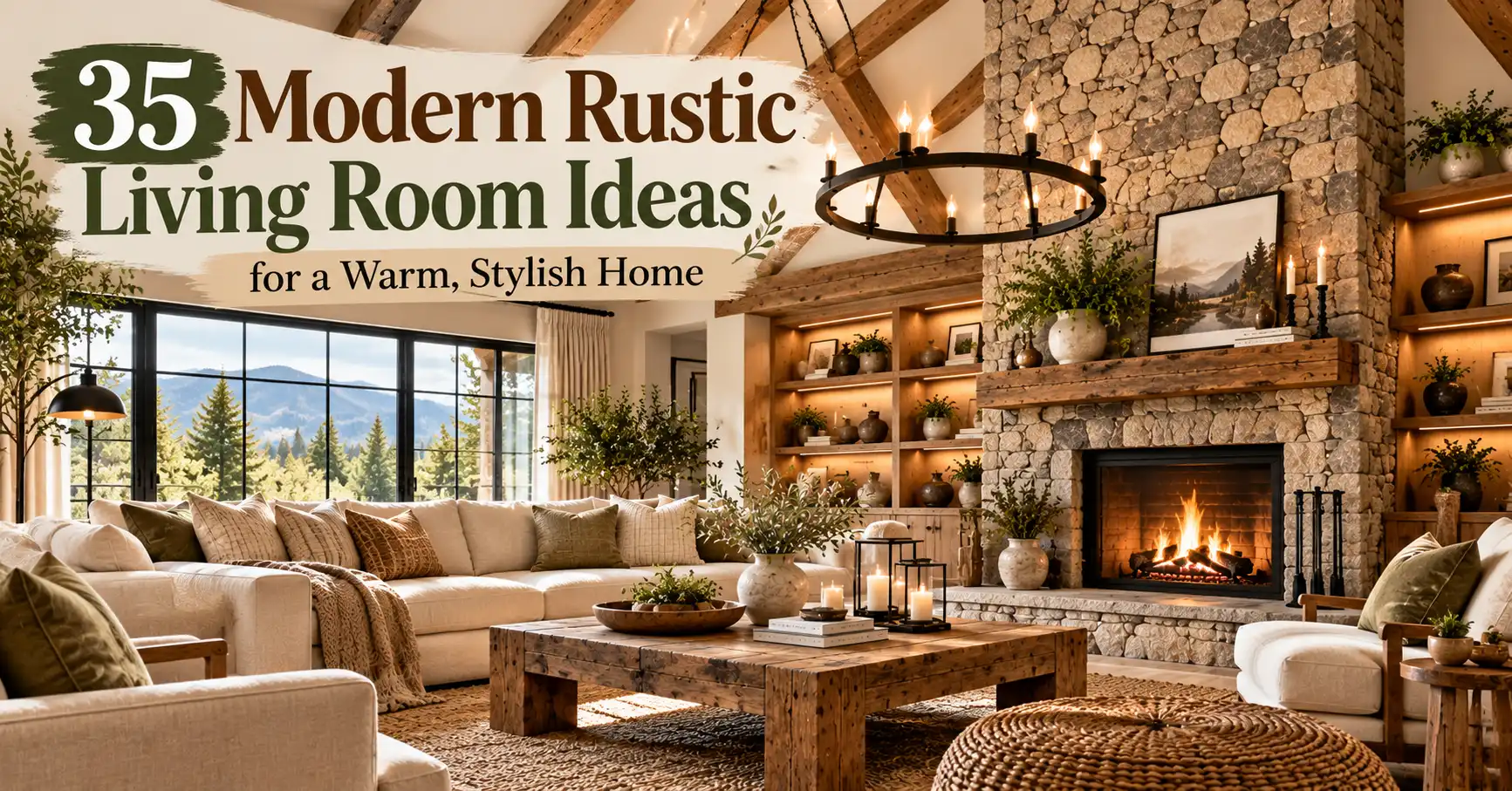
A modern rustic living room combines the warmth and character of rustic interiors with the clean lines, comfortable furniture, and uncluttered appearance of contemporary design. Instead of making a room look like an old-fashioned cabin or traditional farmhouse, modern rustic decorating balances natural materials such as reclaimed wood, stone, linen, wool, leather, and exposed timber with streamlined sofas, subtle lighting, neutral colors, and carefully selected accessories. The result is a living space that feels inviting, sophisticated, organic, and genuinely comfortable.
One of the biggest advantages of modern rustic interior design is its flexibility. You can introduce rustic character through a stone fireplace, exposed ceiling beams, a reclaimed wood coffee table, woven textiles, vintage-inspired decor, or simply a warm earthy color palette. At the same time, modern furniture and minimalist styling prevent those natural materials from overwhelming the room. Whether you are decorating a farmhouse, apartment, suburban house, mountain retreat, or open-concept home, these modern rustic living room ideas offer plenty of inspiration.
1. Modern Rustic Living Room With a Stone Fireplace
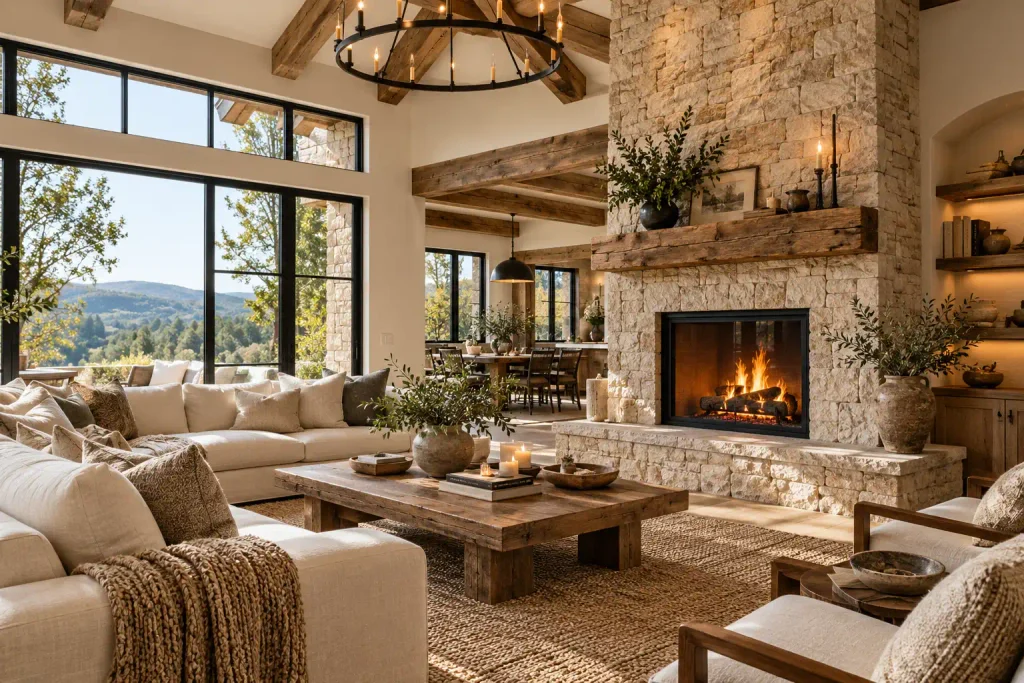
A natural stone fireplace can become the architectural centerpiece of a modern rustic living room, instantly introducing texture, depth, and an organic connection to the outdoors. Choose limestone, fieldstone, stacked stone, or another material with subtle variations rather than an overly uniform manufactured finish. Extending the stone from floor to ceiling creates a dramatic focal point, particularly in a room with vaulted ceilings. Keep the mantel simple with reclaimed timber or a clean floating wood shelf so the natural stone remains the dominant feature without making the room feel excessively traditional.
Surround the fireplace with contemporary seating in warm neutrals such as oatmeal, ivory, taupe, camel, or soft gray. A streamlined linen sofa can provide a sophisticated contrast to rugged masonry, while a solid wood coffee table reinforces the rustic character. Add a wool area rug, ceramic vessels, woven baskets, and understated black or aged-brass lighting. Keeping accessories limited allows the fireplace materials to speak for themselves while preserving the clean, relaxed aesthetic that distinguishes modern rustic design from heavier lodge-style interiors.
2. Modern Rustic Living Room With Exposed Wood Beams
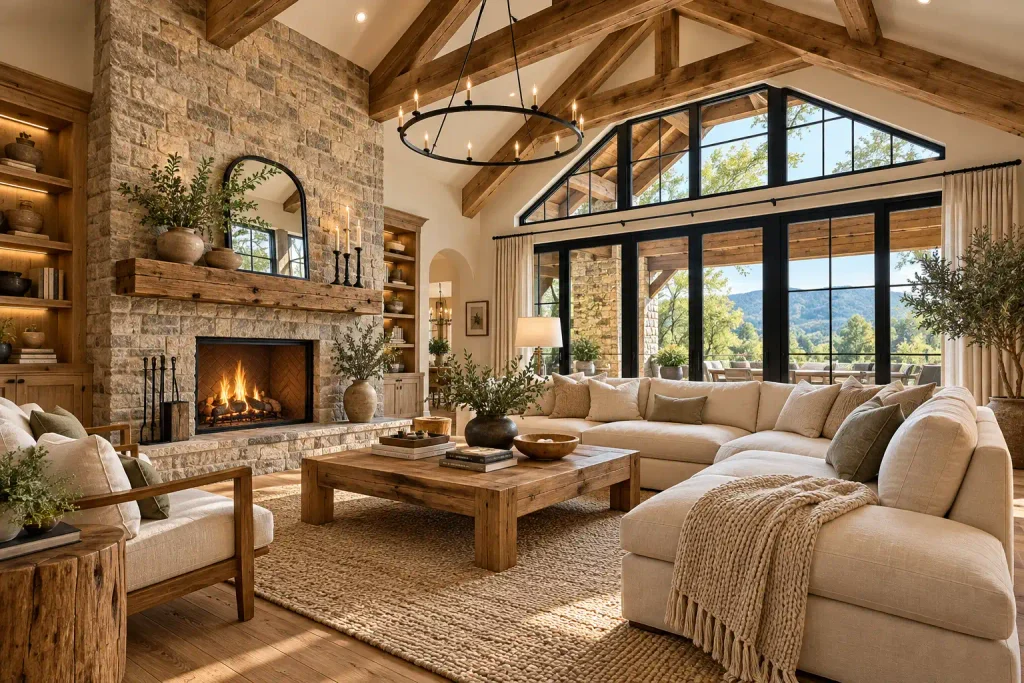
Exposed wooden ceiling beams are one of the most recognizable features of a rustic interior, but they can look remarkably contemporary when paired with restrained furnishings and a light color palette. Natural oak, reclaimed timber, or softly weathered beams introduce architectural character overhead while giving a modern living room warmth that painted drywall alone cannot provide. If your home already has structural beams, consider highlighting rather than concealing them. In newer properties, decorative beams can create a similar visual effect, especially across vaulted or high ceilings where their scale feels appropriately substantial.
Balance dark or richly grained beams with soft white, warm beige, greige, or limewashed walls to keep the room bright. Choose low-profile furniture with uncomplicated silhouettes instead of heavily carved farmhouse pieces. A cream sectional, sculptural lounge chair, natural wood console, and understated coffee table can establish the modern side of the design. Linen curtains, handwoven rugs, ceramic accessories, and subtle greenery soften the composition further. The contrast between architectural timber and streamlined contemporary furniture produces the layered, collected character associated with sophisticated modern rustic homes.
3. Neutral Modern Rustic Living Room
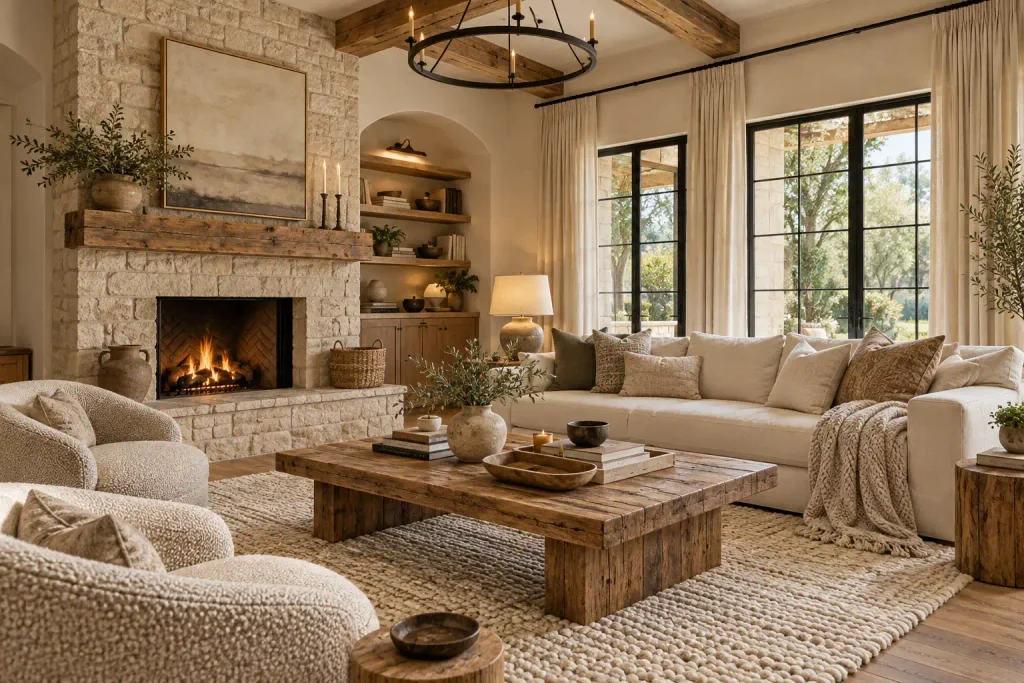
A neutral color palette provides an ideal foundation for a modern rustic living room because it allows natural textures to become the primary source of visual interest. Rather than relying exclusively on stark white, layer warm ivory, oatmeal, mushroom, sand, taupe, camel, and muted brown. These earthy shades complement wood and stone while making a living space feel comfortable and sophisticated. The secret is creating enough tonal variation that the room feels dimensional. Walls, upholstery, rugs, curtains, and decorative objects can remain neutral while still displaying distinctly different textures and finishes.
Start with a comfortable beige or cream sofa and build outward using tactile materials. A chunky wool rug, linen curtains, boucle accent chair, weathered wood coffee table, woven basket, and ceramic table lamp can create considerable richness without introducing bold color. Black metal details may be used sparingly to establish contrast and sharpen the overall composition. Incorporating several wood tones also prevents the room from appearing overly coordinated. This layered neutral approach creates a timeless atmosphere that feels equally appropriate in contemporary houses, renovated farmhouses, and relaxed country-inspired interiors.
4. Modern Rustic Farmhouse Living Room
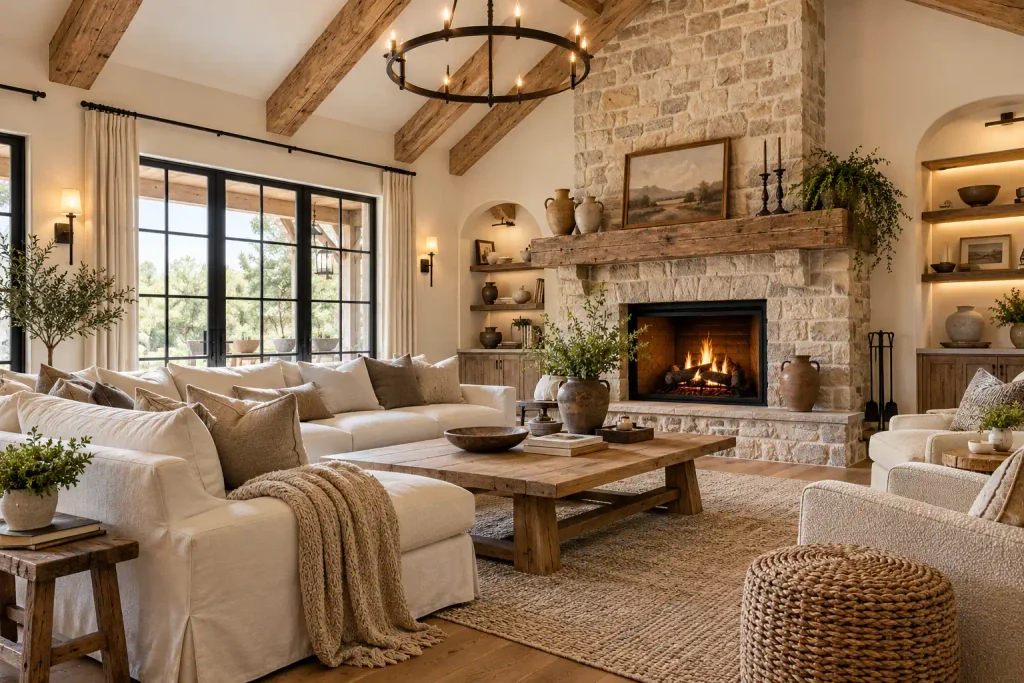
A modern rustic farmhouse living room should reference traditional rural architecture without filling every surface with farmhouse-themed decorations. Focus first on authentic-looking materials: wide-plank oak flooring, exposed timber, painted wall paneling, natural stone, linen, cotton, and aged metal. Architectural details such as a simple fireplace mantel or understated built-in cabinetry can provide farmhouse character while contemporary furniture keeps the space relevant. Avoid excessive distressed finishes and decorative signs; a smaller number of substantial, well-chosen pieces generally creates a more convincing and sophisticated farmhouse aesthetic.
Choose a generous slipcovered sofa, comfortable armchairs, and a substantial wood coffee table to encourage everyday relaxation. Vintage elements can then be introduced selectively through an antique stool, aged pottery, old wooden bowl, framed landscape artwork, or woven basket. Contemporary lighting is particularly useful for updating the look: sculptural pendants or minimal black sconces can sit beautifully beside rustic materials. Combining old and new elements in this restrained manner creates a farmhouse living room that feels established and welcoming rather than overly themed or artificially aged.
5. Small Modern Rustic Living Room
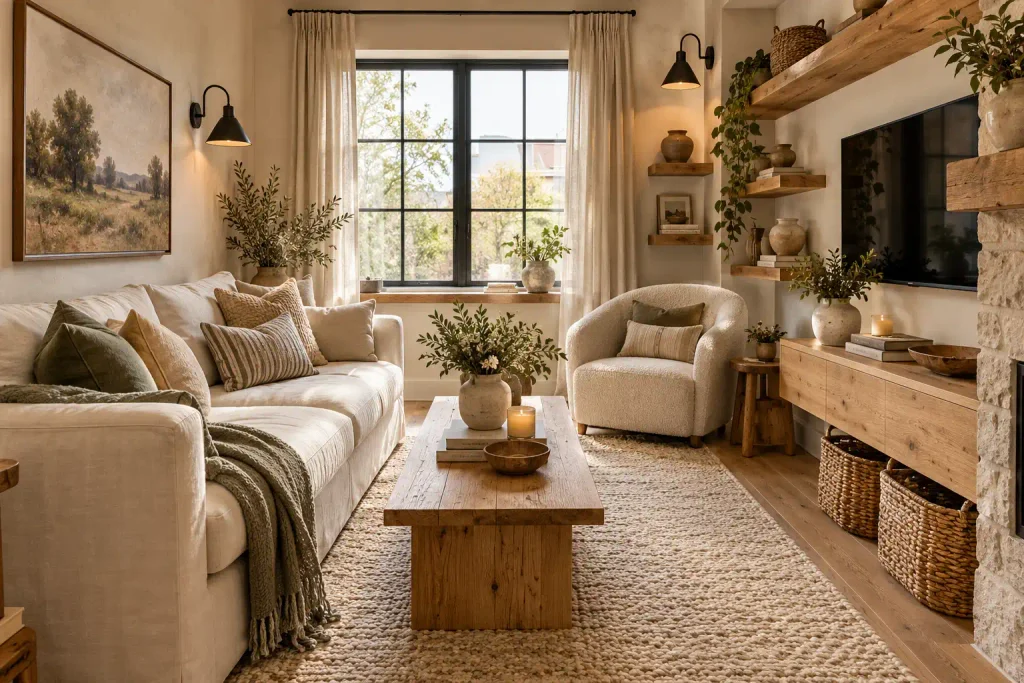
A small modern rustic living room benefits from carefully selected furniture and a restrained material palette. Instead of filling the room with bulky farmhouse furniture, choose compact pieces with visible legs and simple silhouettes. A small linen sofa, narrow reclaimed wood coffee table, and one comfortable accent chair may provide everything required for an intimate seating area. Light walls and natural wood can maintain warmth without visually reducing the space. Using the same flooring throughout adjacent rooms can also improve visual continuity and make a compact living area appear considerably larger.
Vertical surfaces provide additional opportunities for rustic character without consuming valuable floor space. Consider floating wood shelves, a compact stone fireplace surround, textured plaster, framed landscape artwork, or a wall-mounted sconce. Storage baskets can slide beneath consoles while an ottoman may double as extra seating. Keep window treatments light and maximize daylight wherever possible. A few carefully chosen organic materials will usually have more impact than numerous small decorations, allowing a compact modern rustic room to remain comfortable, functional, visually open, and intentionally designed.
6. Modern Rustic Living Room With Reclaimed Wood
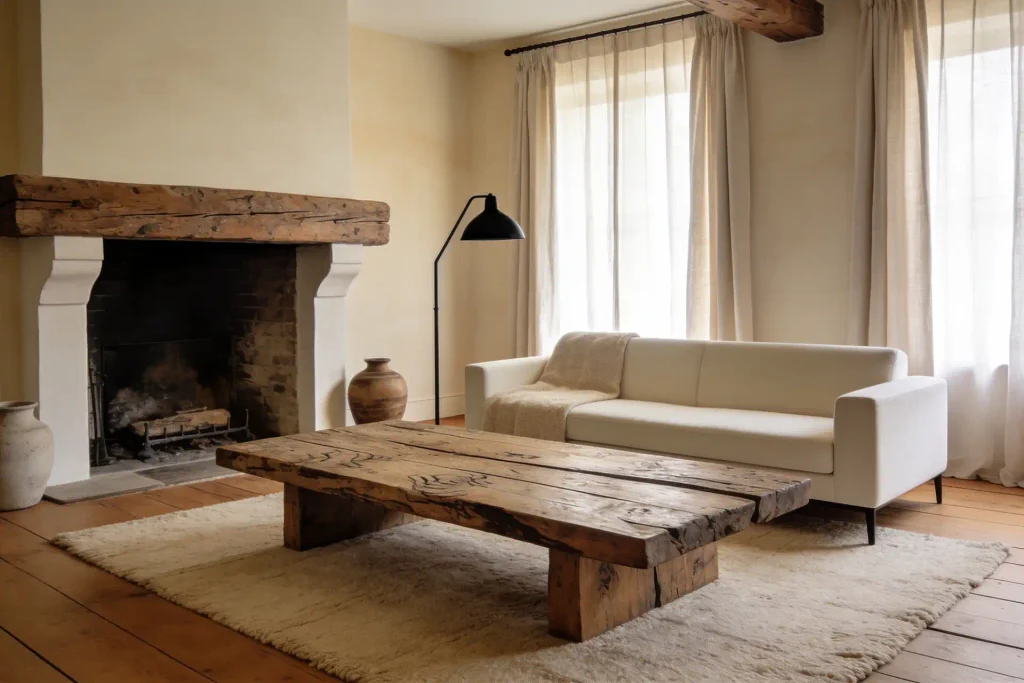
Reclaimed wood brings history and individuality into modern rustic interiors because its knots, saw marks, weathering, and tonal variations are difficult to reproduce perfectly with new materials. Introduce it through a coffee table, fireplace mantel, console, shelving, wall treatment, or ceiling beams. Because reclaimed timber already carries considerable visual texture, it works particularly well beside smooth modern materials such as plaster, glass, linen, steel, and polished concrete. This contrast allows weathered wood to feel deliberate and architectural rather than making the entire living room appear old-fashioned.
Avoid matching every wooden element in the room. Instead, combine reclaimed timber with cleaner oak, walnut, or ash pieces so the interior appears collected gradually. A substantial reclaimed coffee table can sit in front of a streamlined cream sofa, while a contemporary floor lamp adds a crisp vertical line nearby. Natural textiles including wool, linen, jute, and cotton reinforce the organic aesthetic. By giving aged wood enough visual space and limiting unnecessary rustic ornaments, you can make its authentic imperfections one of the strongest design features in the room.
7. Modern Rustic Living Room With a Sectional Sofa
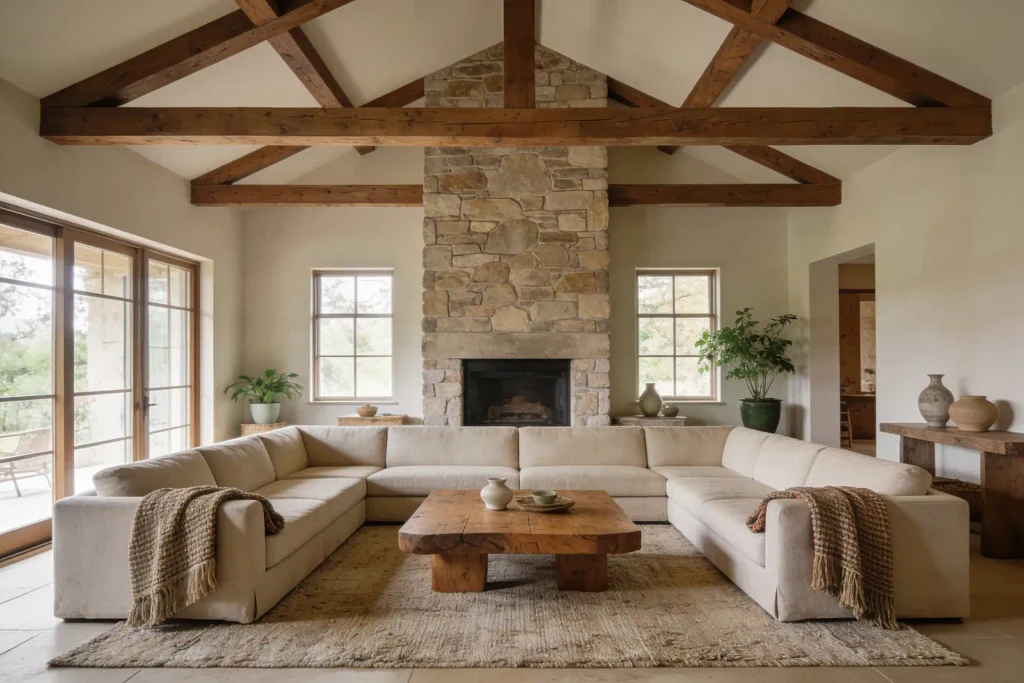
A sectional sofa can make a modern rustic living room exceptionally comfortable, especially in an open-concept home where seating helps define the lounge area. Choose upholstery in warm beige, cream, oatmeal, or muted gray and look for a design with broad cushions and relatively clean lines. Oversized sectionals already have considerable visual weight, so surrounding furniture should remain comparatively simple. A rustic oak coffee table or large upholstered ottoman can anchor the arrangement, while a generously sized rug connects all seating elements into one cohesive conversation zone.
Texture is especially important when a large sofa dominates the room. Break up broad expanses of neutral upholstery with linen cushions, knitted throws, wool blankets, and subtle earth-tone patterns. Place a natural wood console behind the sectional if the sofa floats within an open floor plan. A stone fireplace, exposed beams, or large windows can provide architectural interest beyond the seating itself. Instead of decorating with many small objects, select larger ceramics, baskets, branches, or sculptural lighting that visually correspond to the scale of the sectional.
8. Modern Rustic Living Room With Leather Furniture
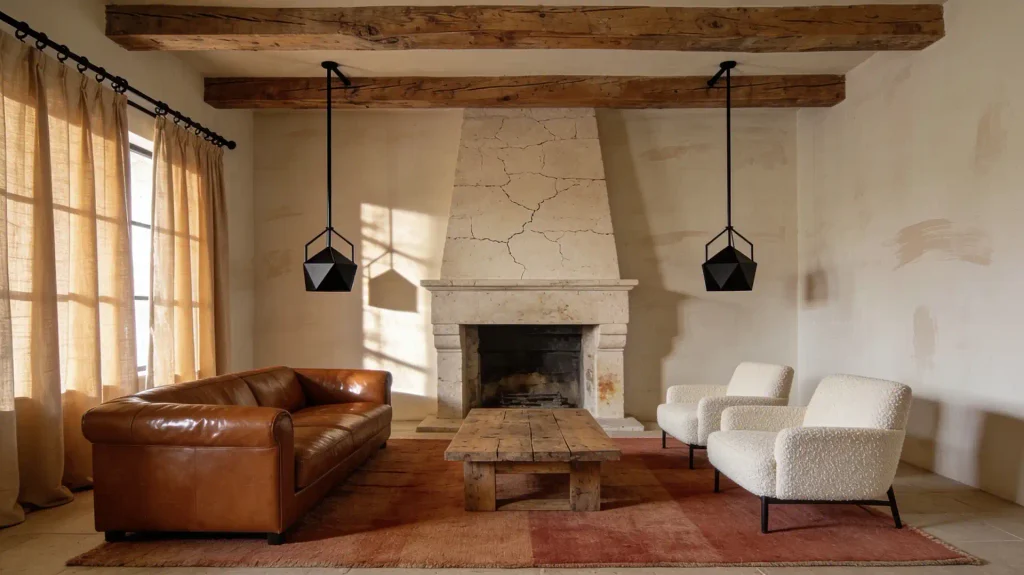
Leather introduces warmth, patina, and an earthy color that works naturally within rustic decorating. A cognac or saddle-brown leather sofa can provide a rich focal point against warm white or soft greige walls. For a subtler interpretation, use leather on one or two lounge chairs instead of the main sofa. Look for matte or gently aged leather rather than highly glossy finishes, as natural-looking surfaces pair more convincingly with timber, stone, wool, and linen. Over time, quality leather develops additional character, making it particularly suitable for relaxed rustic environments.
Balance leather’s visual weight with lighter materials so the room does not become excessively dark. Pair a brown leather sofa with an ivory wool rug, cream linen curtains, pale oak tables, and off-white cushions. Black steel or aged brass lighting can add contemporary definition, while pottery and woven accessories soften harder surfaces. Green plants also work beautifully beside warm brown leather. This material combination creates a room that feels grounded and masculine enough for rustic architecture while remaining bright, refined, and appropriate for modern family living.
9. Black and White Modern Rustic Living Room
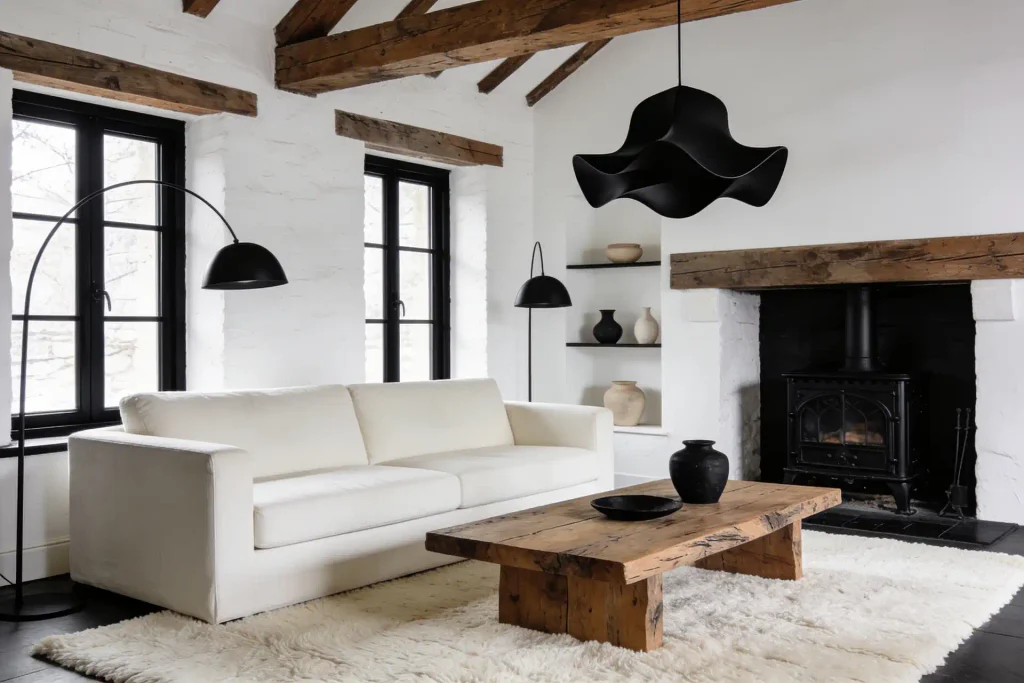
Black and white can give rustic interiors a sharper contemporary identity while natural wood prevents the palette from feeling cold. Begin with warm white walls and introduce matte black through window frames, fireplace doors, lighting, side tables, or hardware. These dark accents establish strong architectural lines without requiring a large amount of color. Natural oak, walnut, reclaimed timber, stone, and woven fibers then bridge the contrast between black and white, producing an interior that feels both graphic and comfortably organic.
Keep the distribution of black controlled rather than using it equally across every surface. A white or cream sofa may sit on a textured beige rug, with black-framed windows and a slim black floor lamp providing definition. A rustic wood coffee table becomes especially noticeable against this restrained palette. Soft textiles, pottery, baskets, and greenery help reduce visual severity. The result is a modern rustic room with contemporary structure, farmhouse warmth, and enough contrast to make architectural details and natural textures stand out clearly.
10. Modern Rustic Living Room With a Wood Accent Wall
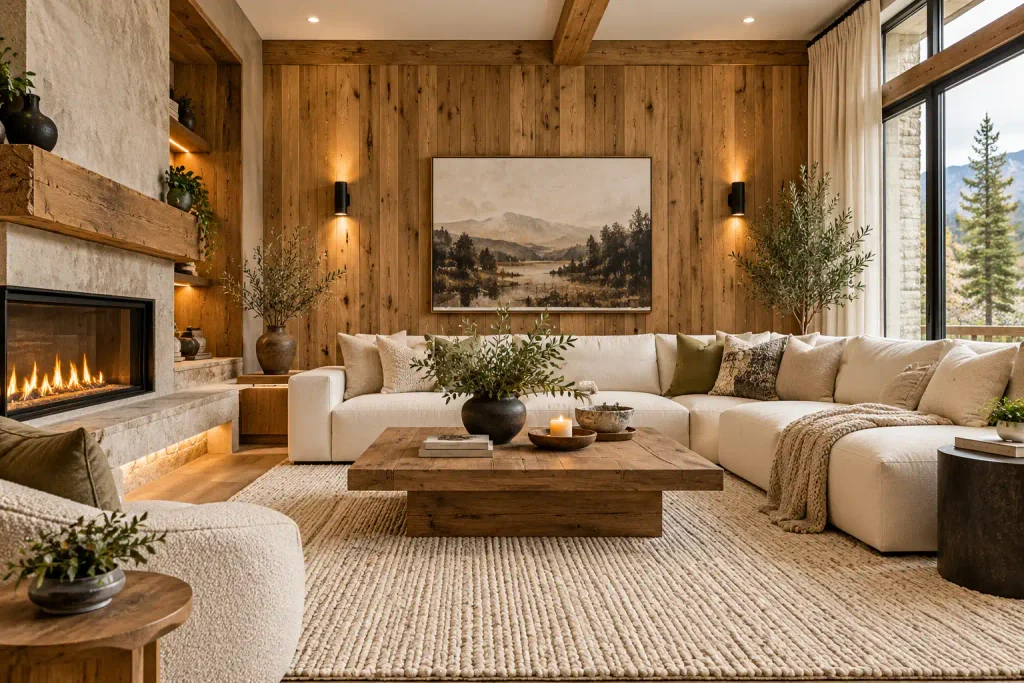
A wood accent wall can add immediate warmth to a living room while creating a natural backdrop for contemporary furniture. Instead of highly distressed boards associated with older rustic trends, consider wide oak planks, vertical timber slats, reclaimed wood with subtle weathering, or clean tongue-and-groove paneling. Maintaining relatively consistent tones makes the installation feel architectural and sophisticated. Position the accent wall behind a sofa, fireplace, television, or built-in storage area where it can establish a clear focal point without surrounding the entire room in wood.
When a feature wall has strong grain and texture, keep neighboring surfaces simple. Warm white plaster, pale stone flooring, cream upholstery, and understated textiles provide visual relief. Consider incorporating concealed lighting or minimal wall sconces to emphasize the wood’s texture during the evening. Furniture does not need to match the wall exactly; mixing walnut, oak, or painted pieces can create greater depth. This approach captures the tactile appeal of a cabin while preserving the clean composition and thoughtful restraint expected from modern interior design.
11. Cozy Modern Rustic Living Room
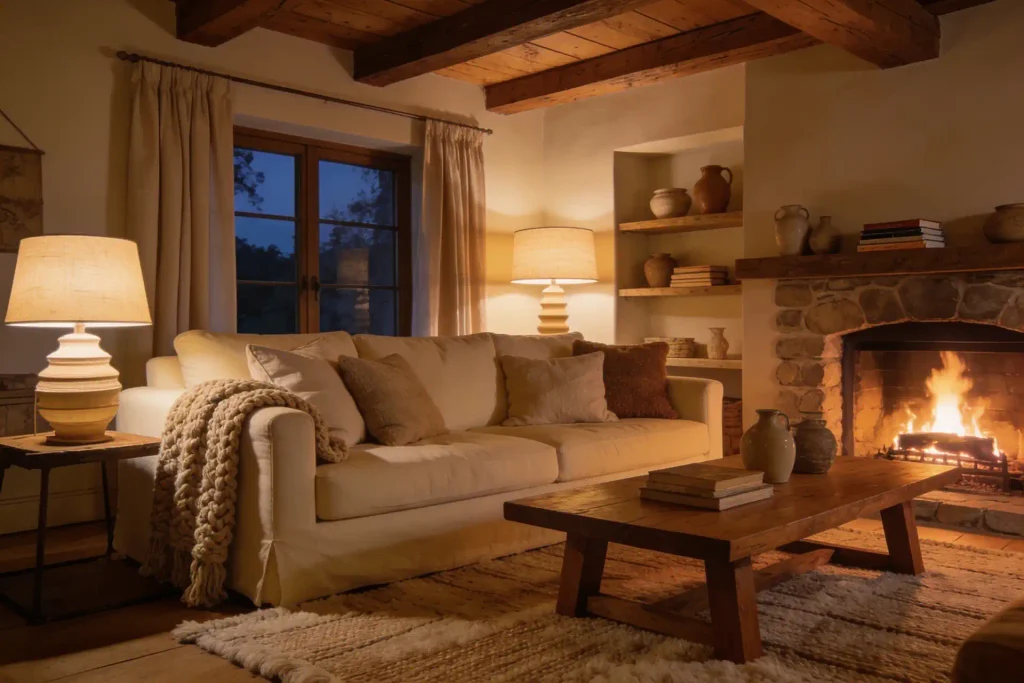
Creating a cozy modern rustic living room depends more on texture, lighting, and furniture arrangement than on filling the room with decorations. Begin with seating that encourages relaxation: a deep sofa, upholstered armchairs, and perhaps an ottoman positioned around a fireplace or central coffee table. Use layered textiles such as wool throws, linen cushions, soft rugs, and natural woven fabrics to introduce tactile comfort. Warm neutral colors create continuity, while natural timber and stone ensure the room retains the organic character associated with rustic interiors.
Lighting should be layered instead of relying solely on bright ceiling fixtures. Combine warm table lamps, floor lamps, sconces, fireplace light, and subtle architectural lighting to create different moods throughout the day. Curtains can soften windows while reducing the visual hardness of walls and glazing. Add personal but restrained decorative elements such as books, handcrafted pottery, baskets, or framed artwork. A cozy modern rustic interior should feel genuinely livable, with enough imperfection and softness to invite daily use while still maintaining an intentional and visually balanced appearance.
12. Luxury Modern Rustic Living Room
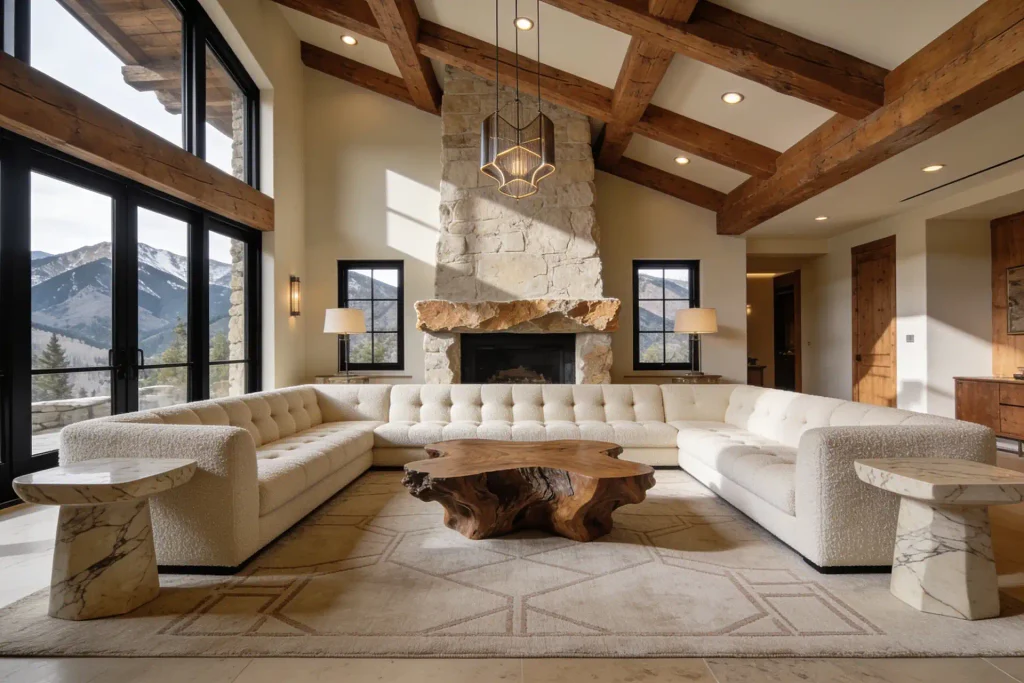
Luxury modern rustic design focuses on craftsmanship, material quality, architectural scale, and thoughtful restraint rather than excessive decoration. A dramatic stone fireplace, wide-plank oak flooring, custom millwork, substantial timber beams, and expansive windows can create a premium foundation. Furniture should feel equally considered, with deep upholstered seating, handcrafted tables, natural stone surfaces, and sculptural lighting. Instead of covering every wall with rustic finishes, allow a few exceptional materials to become focal points while maintaining generous areas of visual calm.
A sophisticated palette of ivory, warm beige, walnut, charcoal, and muted earth tones works particularly well in luxurious rustic interiors. Consider travertine, limestone, boucle, mohair, wool, leather, linen, and solid wood to establish layered tactile richness. Oversized artwork or a large handmade ceramic vessel can provide more impact than numerous small accessories. The most successful luxury rustic rooms combine impressive architecture with genuine comfort, resulting in spaces that feel polished and expensive without sacrificing the warmth, authenticity, and relaxed character of natural materials.
13. Modern Rustic Living Room With Vaulted Ceilings
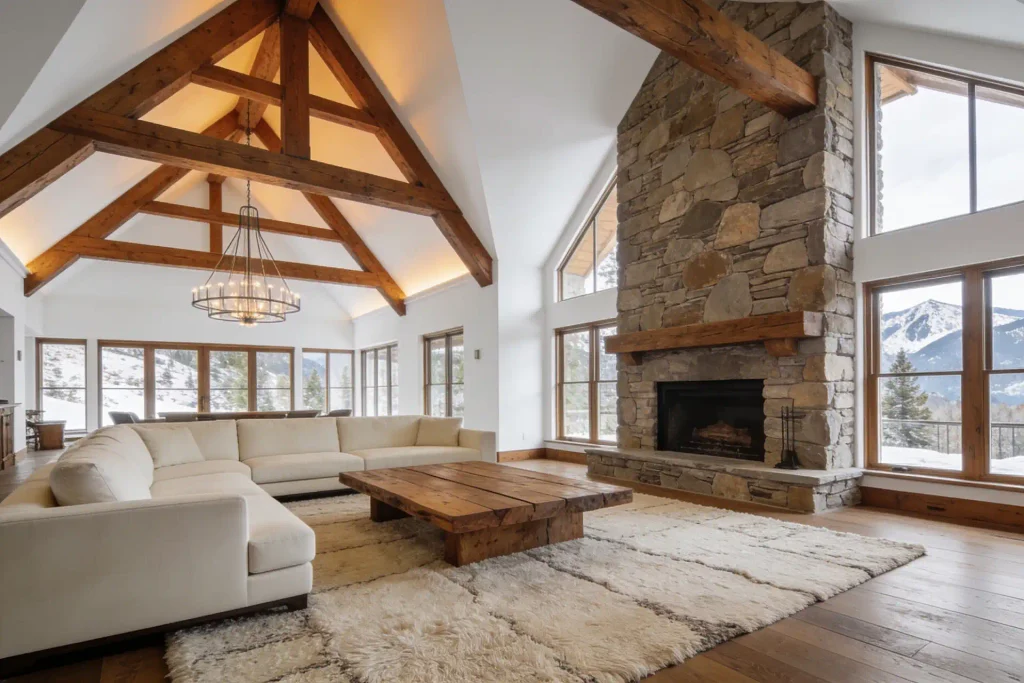
Vaulted ceilings create an opportunity to emphasize scale while showcasing some of the most appealing characteristics of modern rustic architecture. Exposed timber trusses or beams can draw attention upward, particularly when contrasted with warm white ceiling surfaces. A floor-to-ceiling stone fireplace can visually connect the floor with the roofline and provide an appropriate focal point for such a tall room. Large windows are equally valuable because they introduce daylight and outdoor views, reinforcing the connection to nature that sits at the heart of rustic interior design.
Furniture should have sufficient scale to avoid appearing lost beneath a high ceiling. Choose a substantial sectional, broad lounge chairs, an oversized coffee table, and a large area rug rather than numerous small pieces. Pendant lights or chandeliers can occupy some of the vertical volume and make the seating area feel more intimate. Keep accessories relatively restrained and repeat key materials throughout the space. Timber, stone, linen, leather, and wool can create continuity between dramatic architecture and the comfortable human-scale furnishings below.
14. Modern Rustic Living Room With Large Windows
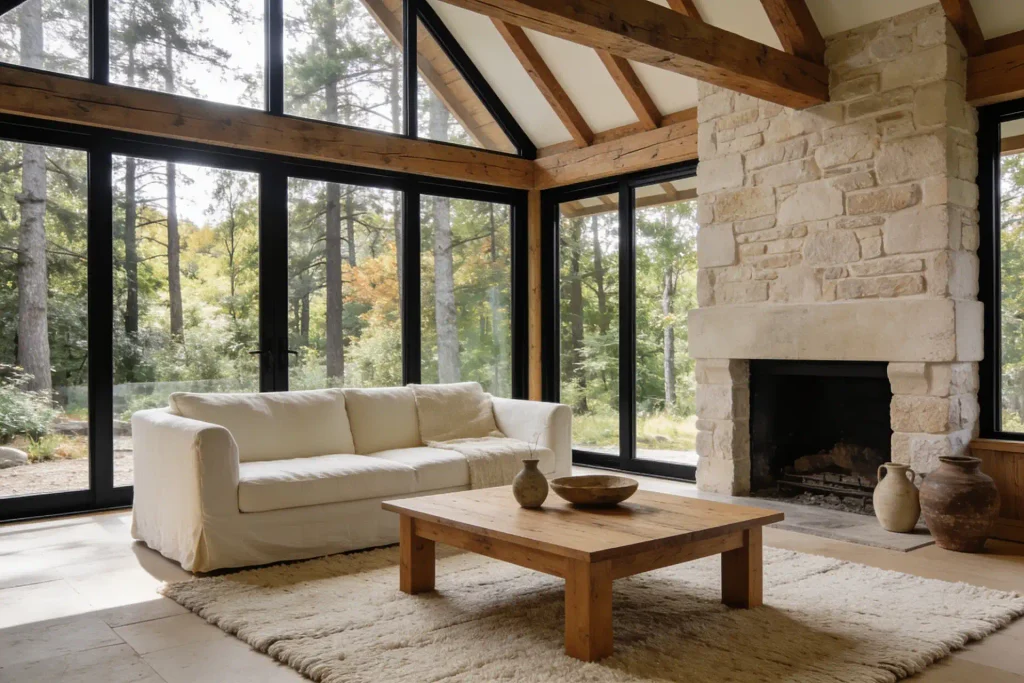
Large windows are particularly effective in modern rustic interiors because outdoor scenery becomes part of the decorative composition. Black-framed glazing can introduce crisp contemporary lines while views of trees, gardens, mountains, or open countryside strengthen the room’s natural character. Keep window treatments understated with linen curtains, woven shades, or completely unobstructed glazing where privacy allows. Position seating so occupants can enjoy both the exterior view and an interior focal point such as a fireplace, creating a comfortable relationship between architecture and landscape.
Echo the outdoor environment through interior materials rather than using literal nature-themed decorations. Oak furniture, natural stone, wool textiles, earthy ceramics, and muted green or brown accents can establish subtle visual continuity. Avoid placing excessively tall furniture directly in front of windows, as preserving daylight and sightlines will make the living room feel more spacious. When sunlight changes throughout the day, textured surfaces such as plaster, timber, and linen gain additional depth, giving the modern rustic room a dynamic yet peaceful atmosphere.
15. Dark Modern Rustic Living Room
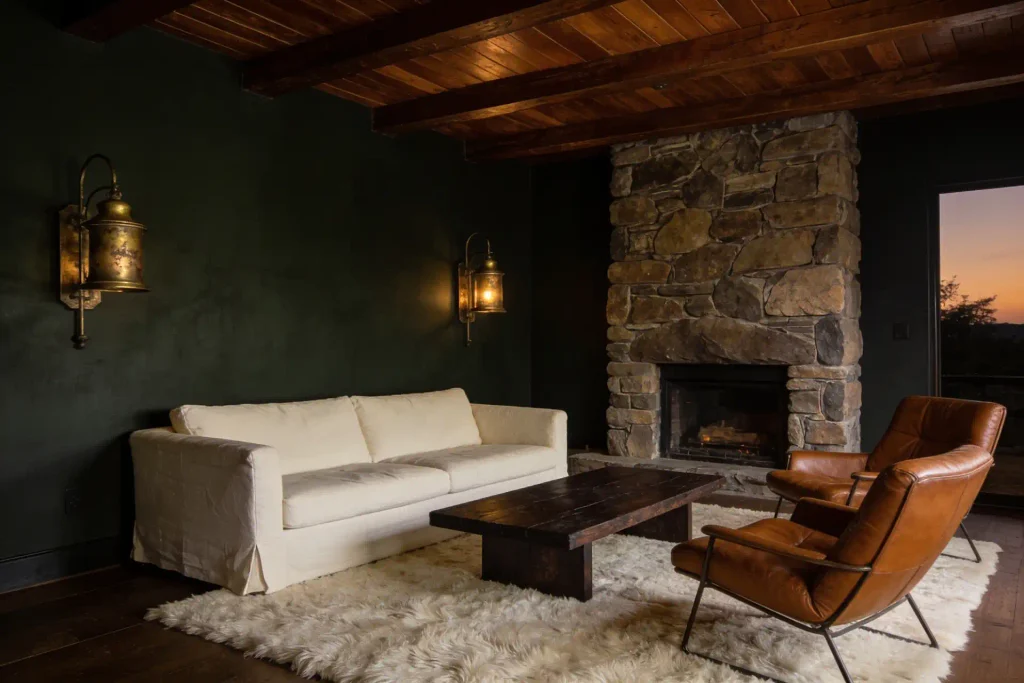
A dark modern rustic living room can feel intimate and sophisticated when deep colors are balanced with natural textures and strategic lighting. Consider charcoal, deep olive, chocolate brown, smoky gray, or nearly black walls instead of relying solely on pale farmhouse neutrals. Dark plaster or painted paneling creates a cocooning backdrop for warm wood, leather, stone, and lighter upholstery. This palette works particularly well in rooms with generous windows or strong architectural lighting, where darker surfaces can create drama without making the space feel confined.
Introduce contrast through an oatmeal sofa, ivory rug, pale cushions, or natural linen curtains. Walnut furniture and cognac leather blend beautifully with charcoal or olive walls, while aged brass lighting adds warmth. A stone fireplace can become especially dramatic against a darker surrounding wall. Use several pools of warm light rather than one harsh overhead fixture. With thoughtful layering, a moody rustic living room feels elegant and atmospheric while maintaining the tactile, comfortable qualities that make rustic spaces appealing in the first place.
16. Modern Rustic Living Room With a TV
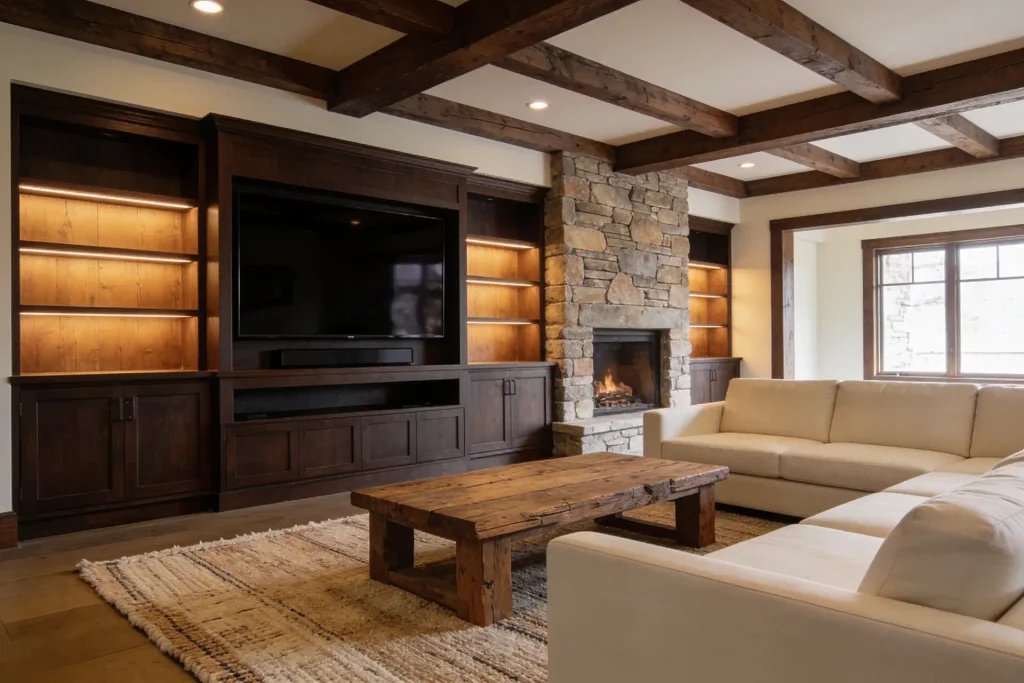
A television can coexist with rustic materials without becoming the dominant feature of the room. Consider integrating the screen into custom wood cabinetry, mounting it against dark paneling, or positioning it beside rather than directly above the fireplace. A dark television visually recedes more successfully when the surrounding wall uses charcoal paint, stone, timber, or another deeper finish. Concealed cables and carefully planned storage are essential because modern rustic design works best when contemporary technology appears intentional rather than creating visual clutter.
Build the seating arrangement around comfortable everyday viewing while maintaining conversation-friendly proportions. A sectional or sofa can face the television, with lounge chairs positioned at an angle and a generous coffee table in the center. Closed cabinets can hide gaming systems, routers, remotes, and other electronics. Introduce rustic character elsewhere through exposed beams, oak furniture, woven baskets, linen upholstery, and stone details. The goal is not to disguise modern technology completely but to integrate it into a warm, architecturally cohesive living environment.
17. Modern Rustic Living Room With Built-In Shelves
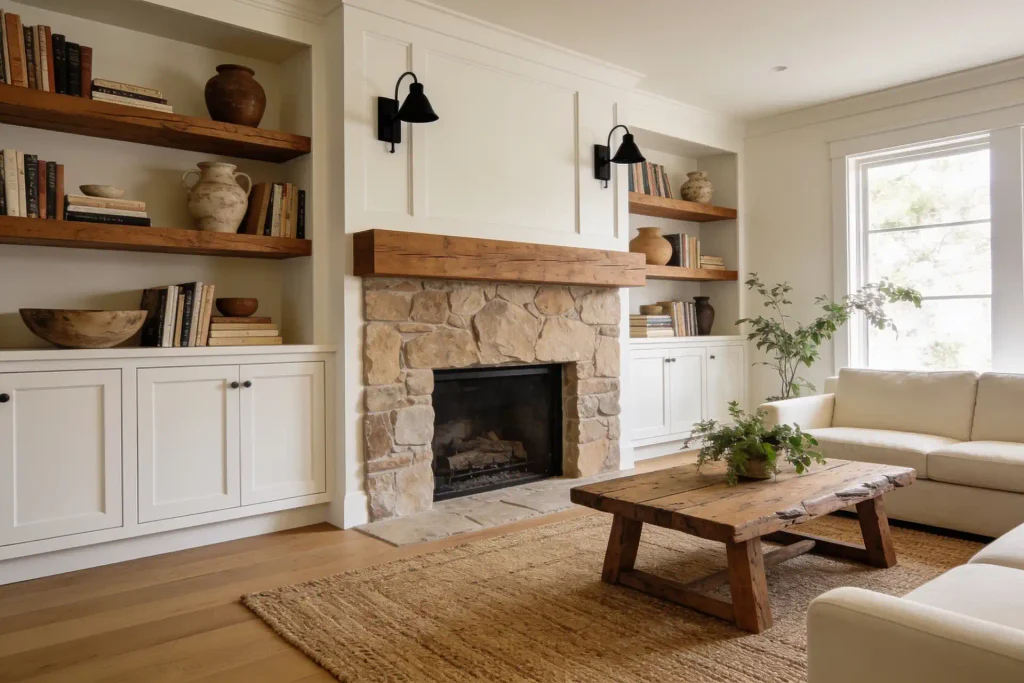
Built-in shelves can provide storage, architectural interest, and an ideal place to display meaningful rustic accessories. Consider warm white cabinetry with natural wood shelving, full timber built-ins, or dark painted units for greater contrast. Shelves placed around a fireplace create a balanced focal wall, while cabinetry along an otherwise unused wall can improve functionality. Keep the design relatively clean, using simple door profiles and minimal hardware so the storage system feels contemporary even when constructed from traditional materials.
Shelf styling should leave plenty of breathing room. Combine books with handmade pottery, wooden objects, framed artwork, small baskets, and occasional greenery rather than filling every available space. Vary object heights and orientations to avoid repetitive arrangements. Closed lower cabinets are valuable for hiding less attractive household items, allowing open shelving to remain visually calm. When styled thoughtfully, built-ins bridge the practical requirements of everyday living with the collected, handcrafted atmosphere that gives a modern rustic living room its warmth and personality.
18. Modern Rustic Living Room With Natural Stone
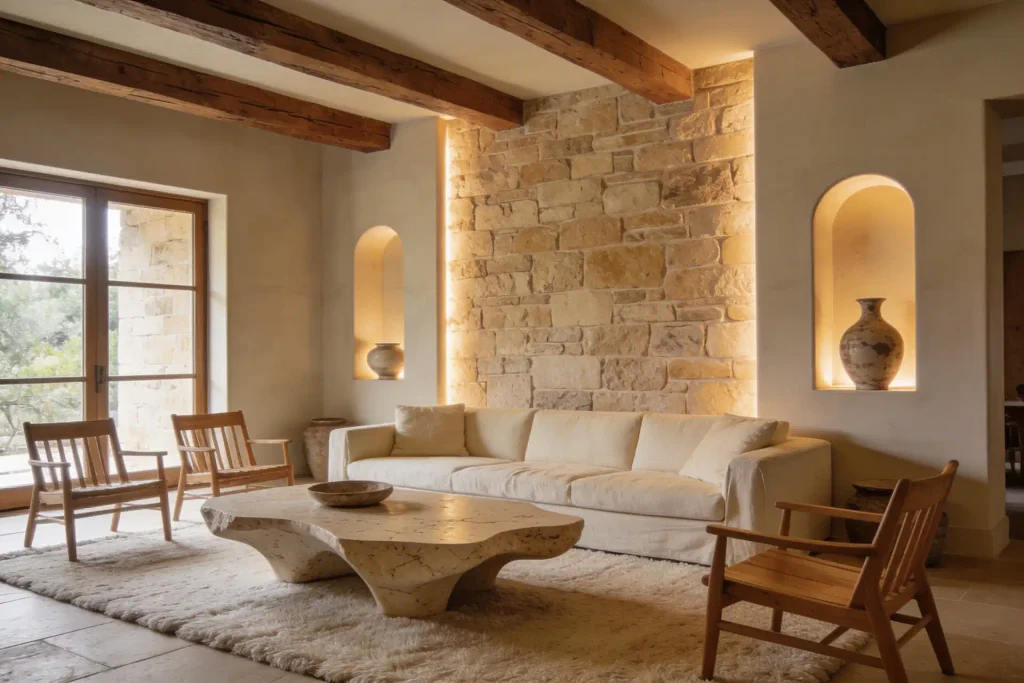
Natural stone can be used beyond the fireplace to bring substantial texture and permanence into a rustic contemporary interior. Limestone walls, travertine tables, slate flooring, stone benches, or masonry columns create a direct connection with the landscape and contrast beautifully with softer upholstery. Choose stone with visible tonal variation and natural imperfections, as these characteristics provide much of its appeal. Using the same or closely related stone in several architectural details can establish continuity without making the room feel excessively decorative.
Because stone is visually and physically hard, balance it with soft materials. Linen sofas, wool rugs, upholstered chairs, curtains, and cushions can make a stone-rich living room feel comfortable. Warm wood is another essential companion, particularly oak or walnut with visible grain. Use subtle lighting to wash across textured masonry and emphasize shadows during the evening. By pairing ancient-feeling stone with clean furniture profiles and modern glazing, you can create a living room that feels timeless, grounded, and distinctly contemporary at the same time.
19. Modern Rustic Living Room With Earthy Colors
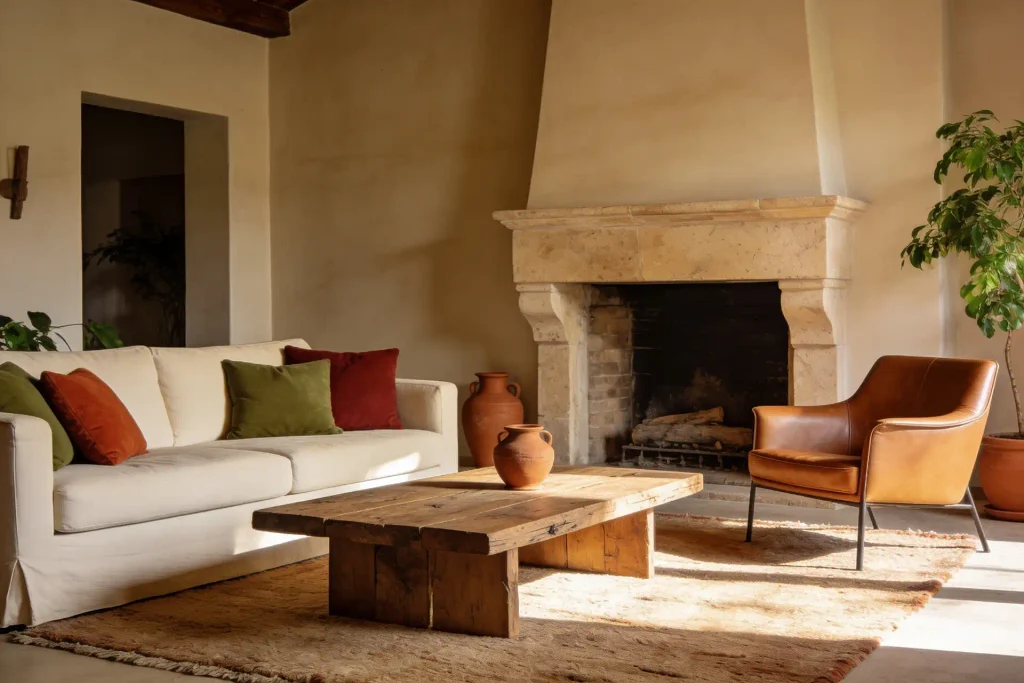
Earthy colors reinforce the natural foundation of modern rustic interiors while introducing more personality than an entirely neutral scheme. Muted olive, terracotta, clay, rust, ochre, camel, moss, and warm brown can all complement timber and stone. Use these shades in controlled amounts through cushions, upholstery, artwork, throws, or an accent wall. Because the colors are inspired by landscapes and natural materials, they generally coordinate easily and feel less trend-dependent than highly saturated synthetic tones.
Begin with a warm neutral foundation and select two or three earthy accents rather than introducing every color at once. A cream sofa can be layered with rust and olive cushions, while a camel leather chair provides a richer mid-tone. Terracotta pottery and landscape artwork can repeat those shades subtly elsewhere. Natural oak, limestone, and woven textiles help unify the palette. The resulting room feels warm, relaxed, and visually interesting without losing the understated sophistication that makes contemporary rustic design so versatile.
20. Modern Rustic Living Room With Green Accents
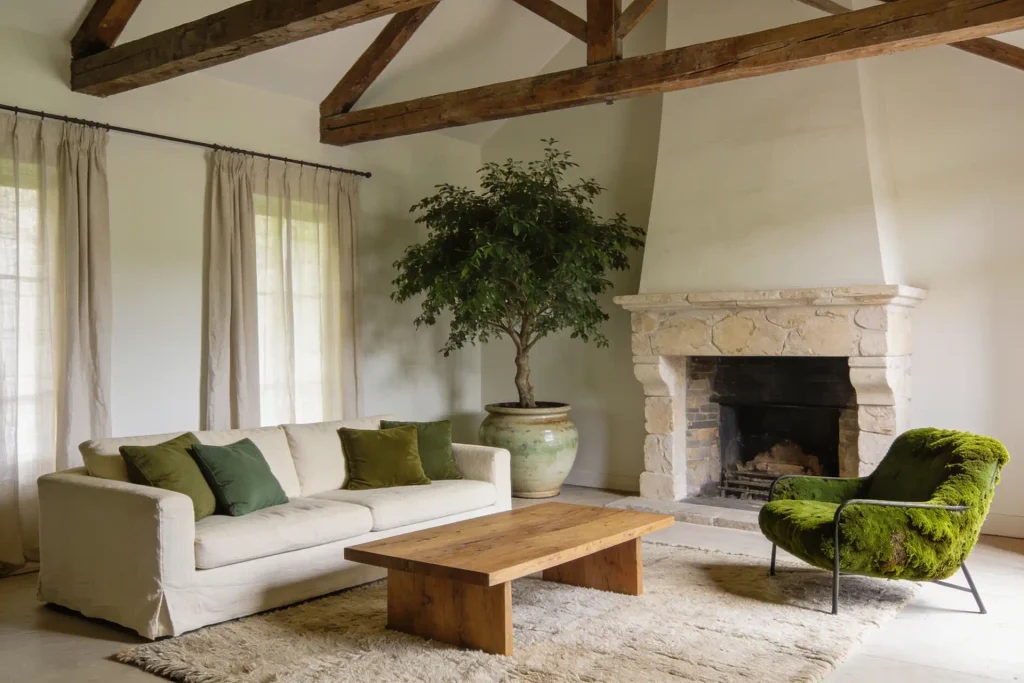
Green is an especially natural choice for rustic living rooms because it echoes foliage and landscapes while pairing effortlessly with brown wood and neutral textiles. Muted shades such as sage, moss, olive, eucalyptus, and forest green tend to work better than very bright greens. Introduce the color through an accent chair, cushions, artwork, curtains, or painted cabinetry. A deeper olive wall can also provide a sophisticated background for pale upholstery and oak furniture, particularly in rooms receiving plenty of natural light.
Indoor plants offer another way to introduce green while strengthening the connection between interior and exterior environments. Choose a few substantial plants or simple branches instead of scattering many tiny pots around the room. Ceramic planters, woven baskets, and stone vessels complement rustic materials particularly well. Keep the rest of the palette grounded in cream, beige, timber, and natural stone. Green accents then appear intentional and refreshing while preserving the calm, organic quality that defines a successful modern rustic living space.
21. Modern Rustic Living Room With a Gallery Wall
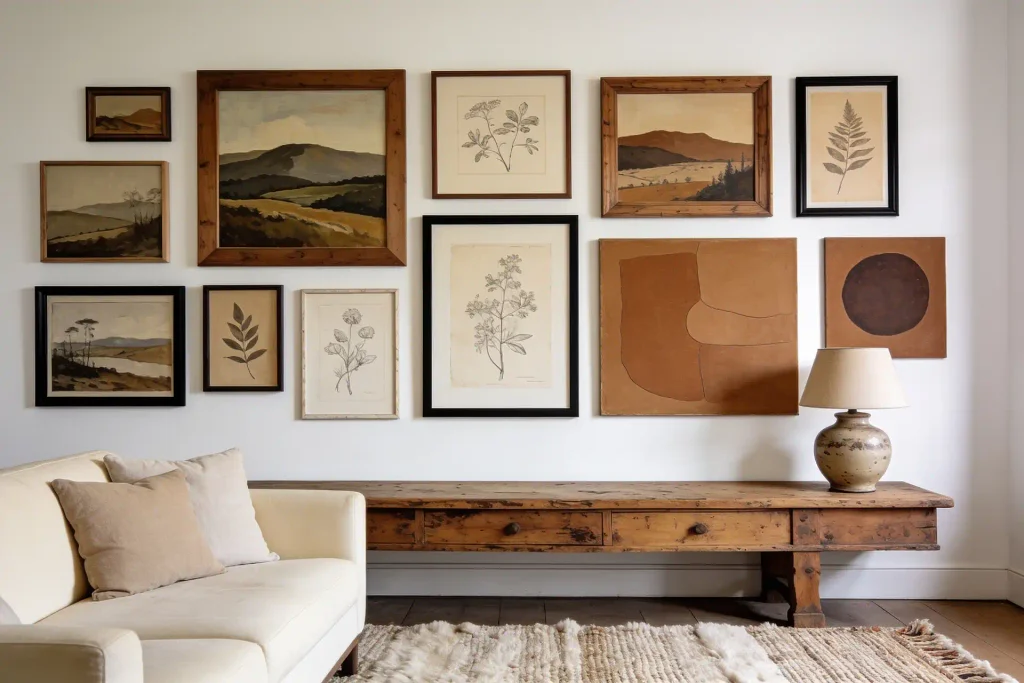
A gallery wall can introduce personality into a modern rustic room while preventing neutral interiors from feeling anonymous. Choose artwork that shares a subtle connection through color, subject, or framing rather than purchasing a perfectly matched set. Landscapes, botanical studies, vintage sketches, abstract earth-tone paintings, and black-and-white photography can all work effectively. Wood, black metal, and antique brass frames provide variation while still coordinating with rustic materials throughout the room.
Arrange the gallery above a sofa or console where it can function as a clear visual feature. For a more contemporary appearance, maintain relatively consistent spacing even when frame sizes differ. A vintage wood console below the artwork can hold a lamp, ceramic vessel, or stack of books without becoming overcrowded. Keep nearby upholstery simple so the wall receives appropriate attention. This blend of curated artwork and natural furnishings makes a modern rustic living room feel personal, collected, and developed over time rather than styled entirely from one collection.
22. Modern Rustic Living Room With Minimalist Decor
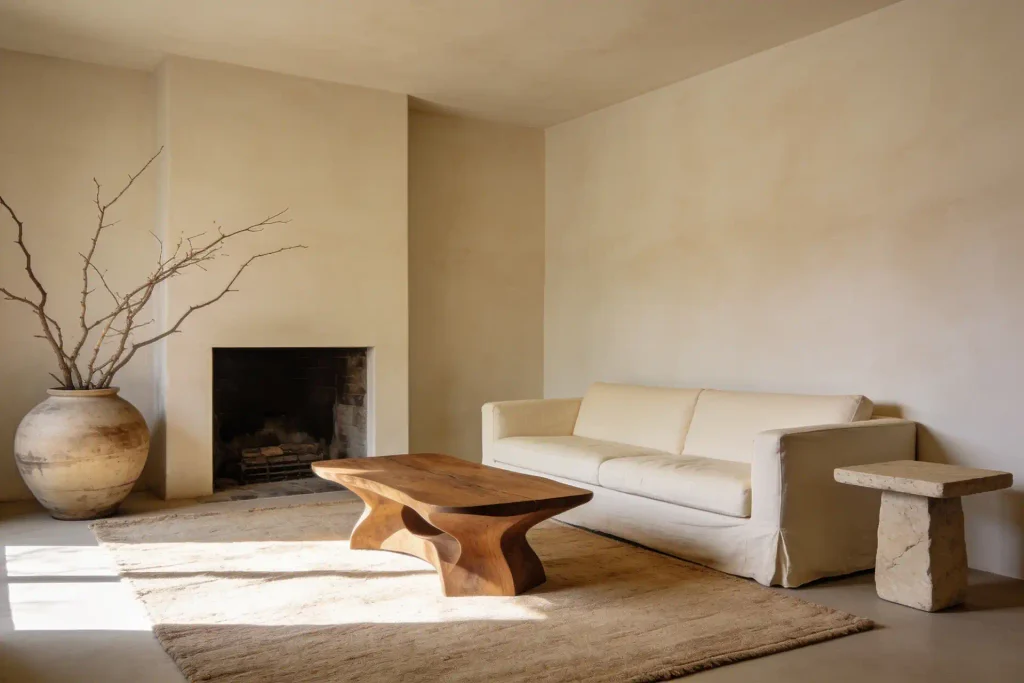
Modern rustic minimalism demonstrates that warmth does not require an abundance of furniture or accessories. Start with a limited number of high-quality pieces made from tactile natural materials. A linen sofa, solid oak coffee table, wool rug, stone side table, and one sculptural floor lamp may be enough to establish a complete seating area. Warm plaster walls and wood flooring can provide additional texture without decorative clutter. Every visible item should contribute either function, craftsmanship, or meaningful visual interest.
Negative space is particularly important in this interpretation of rustic style. Allow sections of wall and floor to remain open rather than filling them automatically. Choose one large ceramic vessel instead of several small ornaments, and consider a single oversized artwork rather than a crowded gallery. Soft neutral colors help maintain visual continuity, while irregular wood grain and handmade surfaces keep minimalism from becoming sterile. The finished living room feels peaceful, architectural, and natural—a refined combination of rustic authenticity and contemporary simplicity.
23. Modern Rustic Living Room With Vintage Decor
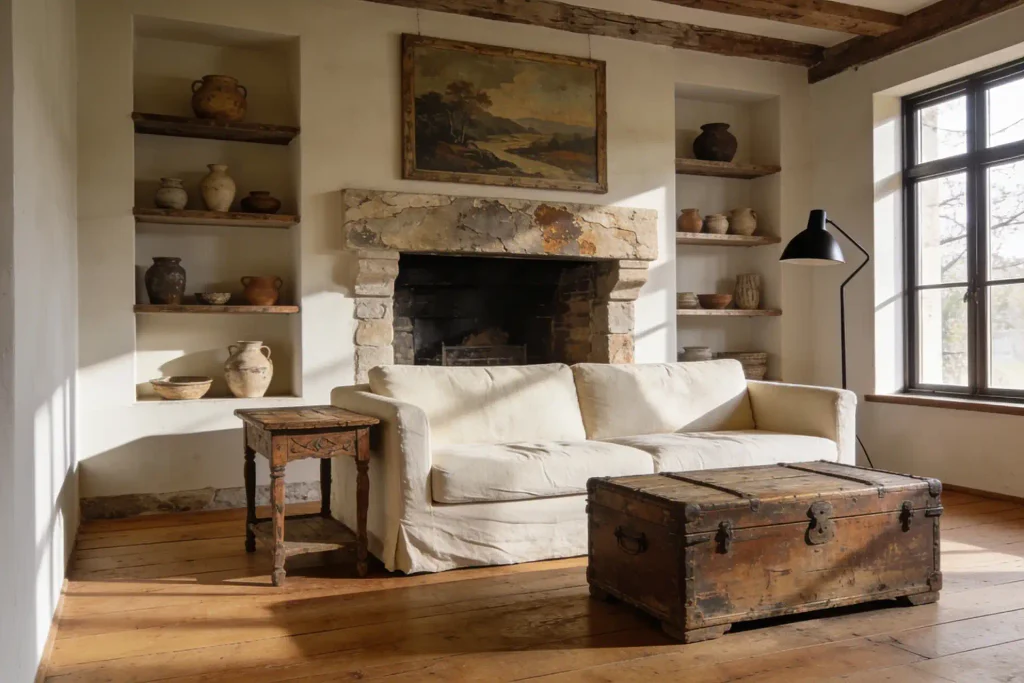
Vintage objects can add authenticity and narrative to a modern rustic living room, especially when they are integrated alongside contemporary furniture. Instead of filling the space with antiques, choose a handful of pieces with distinctive materials or craftsmanship. An aged wood stool, antique chest, vintage landscape painting, old ceramic jug, or timeworn side table can provide enough patina to make a newly decorated room feel established. Signs of wear can be attractive when balanced by clean upholstery and carefully maintained architectural surfaces.
Mixing eras is more compelling than attempting to recreate a historically accurate farmhouse. A contemporary linen sofa might sit beside an antique side table, while modern lighting illuminates an old painting above a simple stone fireplace. Repeating similar tones—such as warm brown, cream, black, and muted green—helps diverse pieces coexist naturally. Vintage accessories should feel useful or meaningful rather than included purely as rustic props. This selective approach creates a living room with depth, personality, and the impression of objects collected gradually over many years.
24. Modern Rustic Living Room With Boho Elements
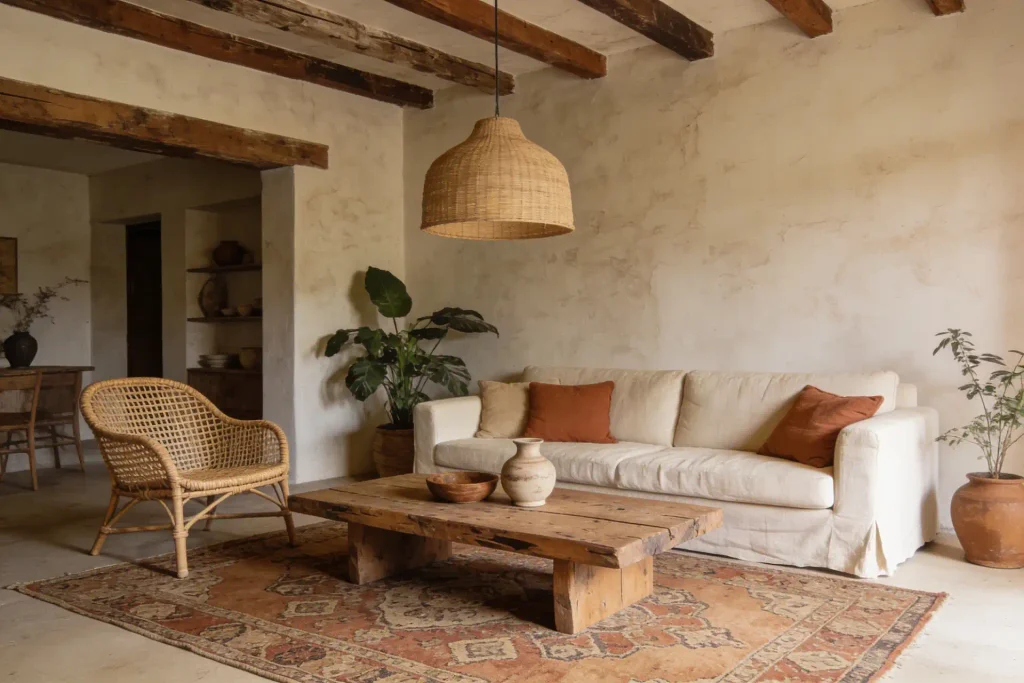
Bohemian influences can make a modern rustic living room feel relaxed and artistic without overwhelming its natural foundation. Incorporate woven textiles, patterned cushions, handmade ceramics, vintage rugs, rattan details, and subtle global-inspired accessories alongside clean-lined furniture. The key is moderation. Rather than layering every surface with patterns, select one expressive rug or a few cushions and allow surrounding materials to remain quiet. Warm wood, plaster, stone, and linen provide a grounded backdrop for these more decorative elements.
Plants work especially well in rustic-boho interiors, as do natural fibers such as jute, wool, cotton, and cane. A low oak coffee table, cream sofa, woven lounge chair, and faded vintage-style rug can establish a comfortable central arrangement. Add a handcrafted pendant or sculptural lamp for personality. Keep the color palette earthy—terracotta, rust, beige, olive, and muted black—to maintain cohesion. This approach delivers the relaxed individuality of bohemian design while retaining the structure and sophistication of a modern rustic living room.
25. Modern Rustic Living Room With Industrial Details
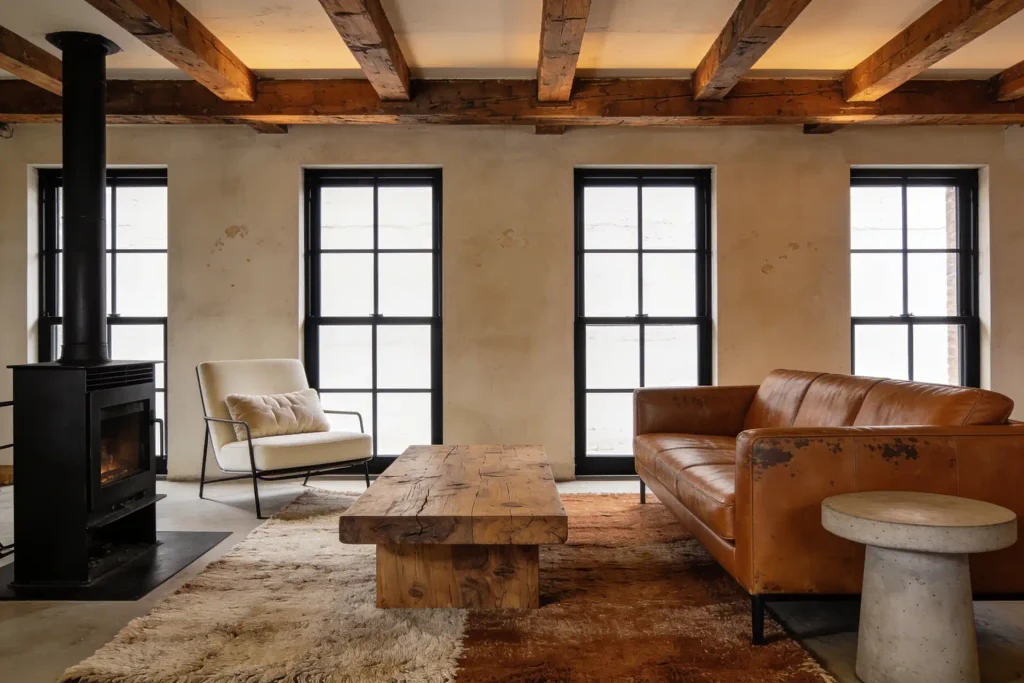
Industrial details provide a striking counterpoint to warm rustic materials. Black steel window frames, metal shelving, iron lighting, concrete surfaces, and exposed structural elements can introduce an urban edge without sacrificing comfort. The most effective rooms use industrial materials selectively rather than recreating a warehouse interior. Pair metal with oak, leather, wool, and natural stone so harder surfaces remain balanced by warmth. A black steel fireplace surround, for example, can look particularly sophisticated against reclaimed timber and creamy plaster walls.
Furniture can reinforce this combination through simple silhouettes and durable materials. A cognac leather sofa, chunky timber coffee table, wool rug, and black metal floor lamp create a strong foundation. Concrete or stone side tables can add another mineral texture. Avoid overly decorative industrial objects such as unnecessary gears or imitation factory signs; authentic material contrast is more convincing. The finished room should feel architectural and robust yet comfortable enough for everyday living, combining contemporary loft influences with the tactile richness of rustic design.
26. Modern Rustic Living Room With Scandinavian Influence
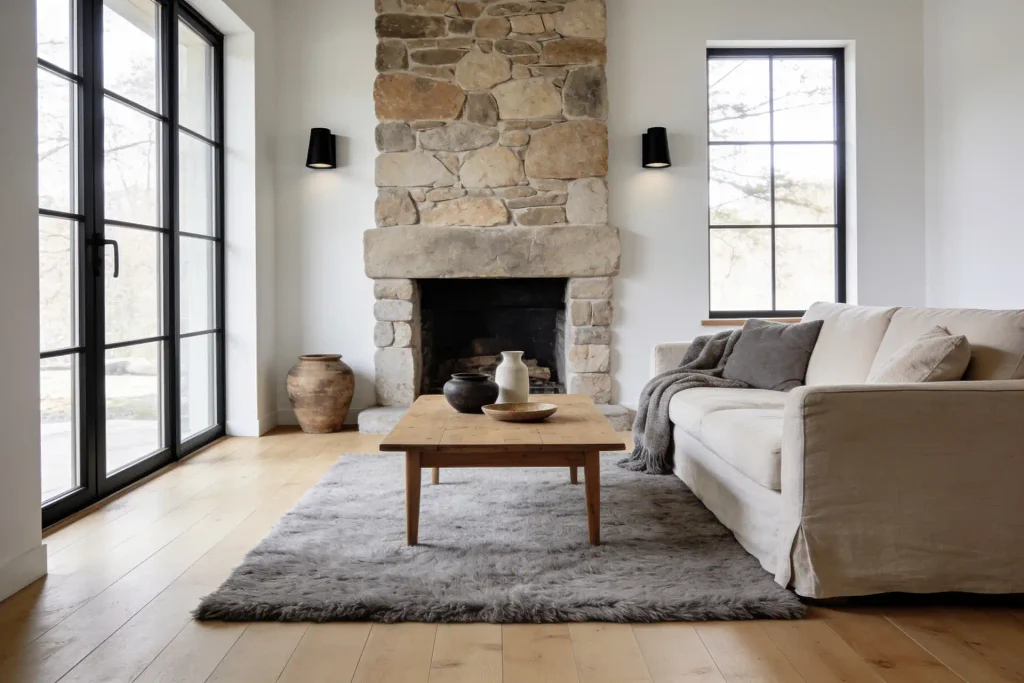
Scandinavian and modern rustic styles share an appreciation for natural materials, comfortable spaces, craftsmanship, and functional simplicity, making them easy to combine. Use pale oak, warm white walls, light neutral upholstery, and clean-lined furniture as the foundation. Rustic character can come from visible timber grain, handmade ceramics, woven wool, a simple stone fireplace, or softly weathered accents. Maintaining abundant natural light helps the room preserve the airy quality associated with Nordic interiors while natural textures prevent it from feeling stark.
Comfort should remain central to the design. Layer a pale sofa with wool cushions and a soft throw, place a substantial rug beneath the seating area, and introduce warm pools of light through simple floor and table lamps. Avoid excessive decorative objects and instead display a few functional or handcrafted pieces. Black accents may be added sparingly for definition. The result is a calm modern rustic living room that combines Scandinavian clarity with the warmth and tactile imperfections of country-inspired materials.
27. Modern Rustic Living Room With Coastal Influence
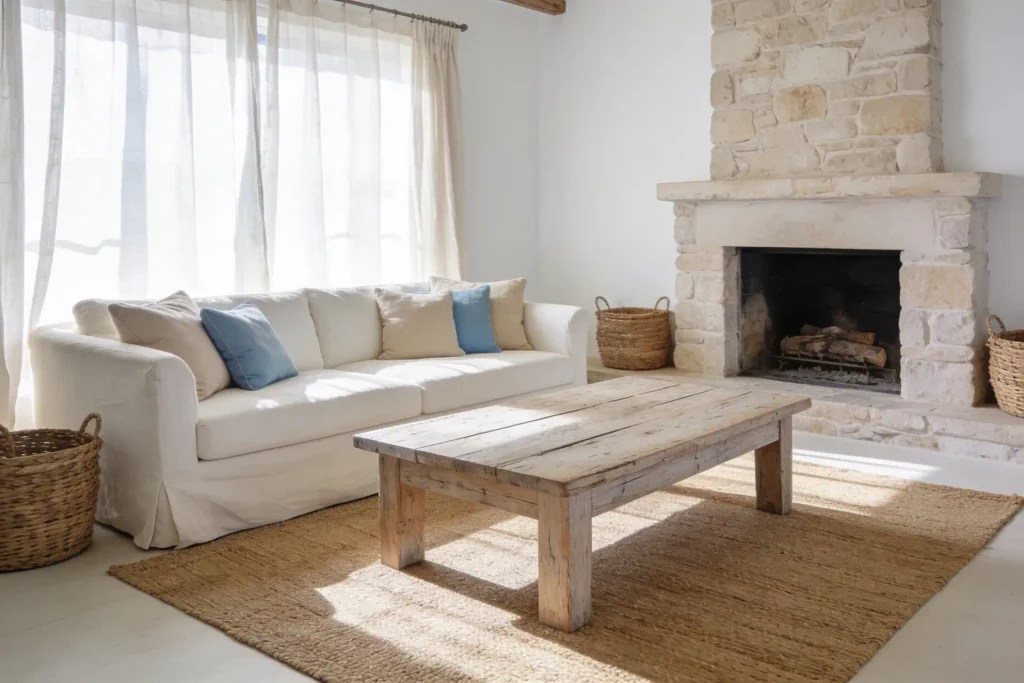
A coastal interpretation of modern rustic style uses lighter natural materials and subtle references to seaside landscapes rather than obvious nautical decorations. Begin with warm white walls, pale oak, sandy beige textiles, woven fibers, and softly textured stone. Muted blue-gray or sea-glass accents can introduce color without dominating the room. Linen curtains and slipcovered furniture reinforce the casual atmosphere, while rustic timber pieces provide enough weight to keep the space from appearing like a conventional beach-themed interior.
Focus on organic textures associated with relaxed coastal environments. Jute rugs, woven baskets, weathered wood, linen upholstery, and handmade pottery all work naturally together. Large windows and abundant daylight are particularly valuable, so avoid heavy window treatments whenever practical. Decorative objects might include abstract coastal artwork or simple branches rather than anchors, shells, and themed signs. Combining restrained coastal colors with rustic materials creates a bright, comfortable living room that feels appropriate for both seaside houses and inland homes seeking a lighter organic aesthetic.
28. Modern Rustic Living Room With Open-Concept Layout
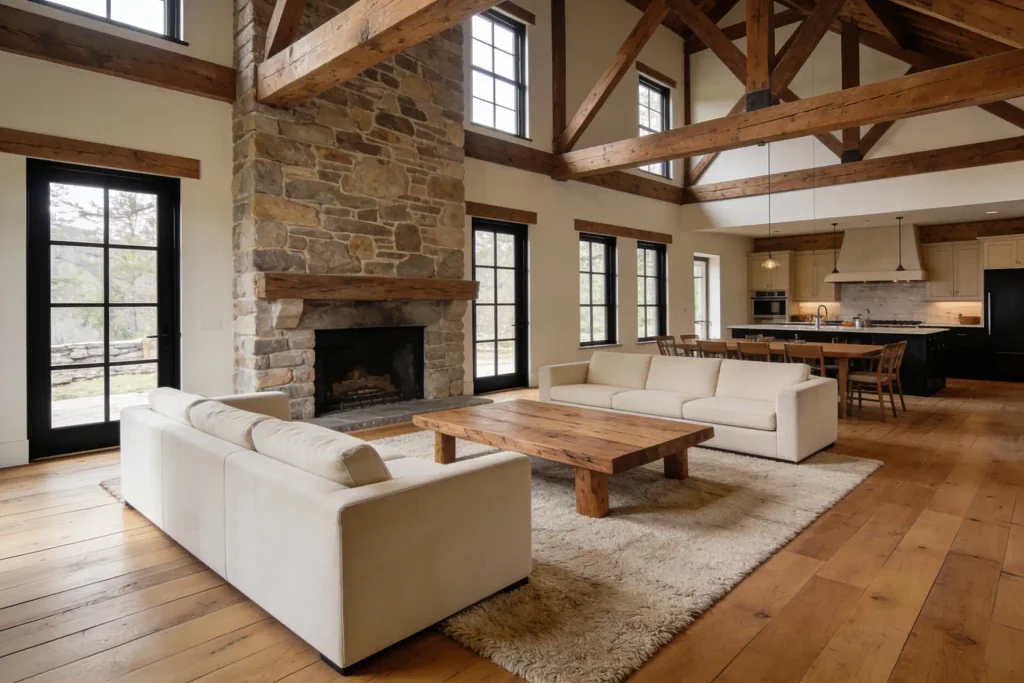
In an open-concept home, modern rustic materials can create continuity between the living room, dining area, and kitchen. Repeating oak, stone, black metal, warm white walls, and related textiles throughout the shared space helps individual zones feel connected. Use furniture placement and area rugs to define the living room rather than relying on walls. A sectional or sofa can establish a visual boundary, while a large coffee table and rug clearly identify the central seating area without interrupting circulation.
Architectural elements can further unify the open plan. Exposed beams may span multiple zones, while the same wide-plank wood flooring can continue from living space into dining and kitchen areas. Keep the color palette consistent but allow each zone to have a distinct focal point. The living room might feature a stone fireplace, for example, while the kitchen emphasizes a timber island. Thoughtful repetition creates cohesion while varied textures prevent the large shared space from becoming monotonous or overly coordinated.
29. Modern Rustic Living Room With Warm Lighting
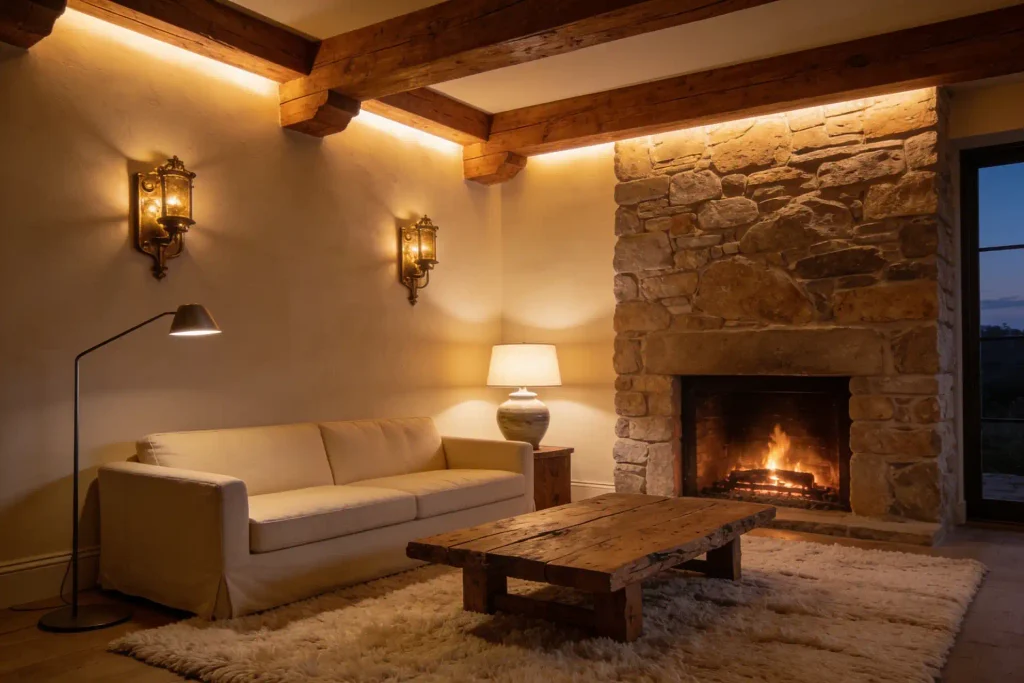
Lighting can dramatically influence whether a modern rustic living room feels genuinely welcoming. Instead of relying on a single overhead fixture, build several layers using ceiling lights, pendants, sconces, floor lamps, table lamps, and fireplace illumination. Warm-toned light enhances the grain of timber, variations in stone, and tactile qualities of linen and wool. Architectural lighting can also highlight ceiling beams, textured plaster, shelving, or masonry, giving natural materials greater depth after daylight disappears.
Fixtures themselves provide another opportunity to balance modern and rustic influences. Simple black metal pendants, aged brass sconces, ceramic lamps, or sculptural contemporary fixtures can work alongside reclaimed timber without becoming overly decorative. Place lighting at different heights to produce a comfortable evening atmosphere and make large rooms feel more intimate. Candles can add another subtle layer when appropriate. Carefully designed illumination ensures that a rustic living room remains visually rich and functional from bright daytime hours through relaxed evenings.
30. Modern Rustic Living Room With Textured Walls
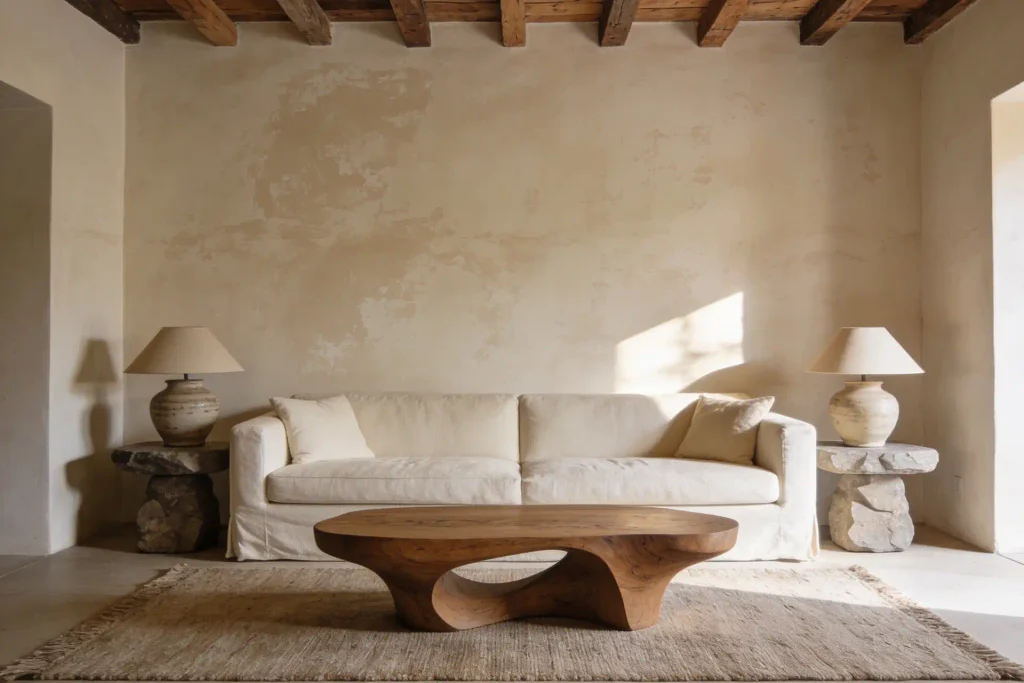
Textured walls can introduce subtle rustic character without relying on obvious decorative features. Limewash, Roman clay, mineral paint, natural plaster, or softly troweled finishes create tonal variation that responds beautifully to changing daylight. Warm beige, ivory, greige, clay, and muted taupe are particularly suitable for modern rustic interiors. Unlike flat painted drywall, these surfaces have gentle movement and imperfections, making even an otherwise minimalist living room feel more tactile, handcrafted, and connected to natural materials.
Pair textured walls with furniture that does not compete for attention. A simple linen sofa, oak coffee table, wool rug, and sculptural lounge chair allow plaster variations to remain visible. Natural stone and timber can add complementary textures, while contemporary lighting emphasizes wall depth in the evening. Keep artwork relatively limited if the finish itself is expressive. This approach is especially effective for homeowners who want rustic warmth without installing reclaimed boards, heavy paneling, or other more visually dominant architectural treatments.
31. Modern Rustic Living Room With a Statement Coffee Table
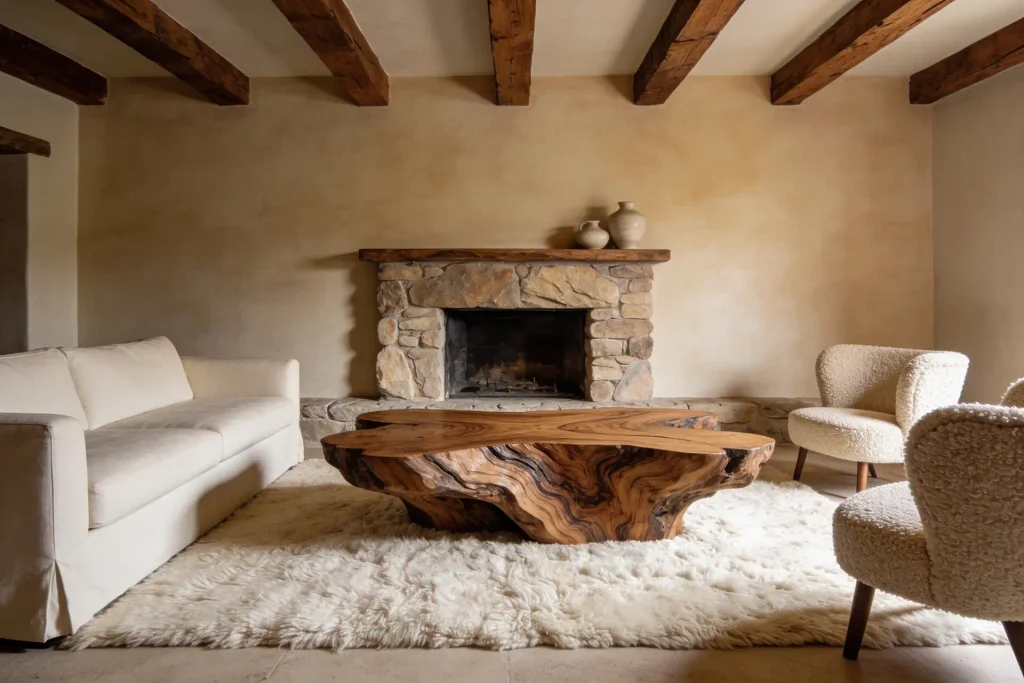
A statement coffee table can become the visual anchor of a modern rustic seating arrangement. Look for solid oak, reclaimed timber, live-edge wood, travertine, limestone, or another natural material with enough texture to stand out. The table should feel substantial but proportionate to the surrounding sofa and chairs. Simple forms generally work best because natural grain, knots, weathering, or stone variation already provide significant detail. In a neutral room, a handcrafted coffee table can function almost like sculpture while remaining completely practical.
Keep tabletop styling restrained so the material remains visible. A small stack of books, ceramic bowl, or low vase with branches may be sufficient. Position the table on a generously sized wool or woven rug and surround it with comfortable seating in quieter fabrics. Repeating the coffee table’s material elsewhere in small amounts—for example through shelving or a mantel—can create subtle cohesion. This strategy gives a modern rustic living room a strong central feature without relying on bold colors or excessive decorative accessories.
32. Modern Rustic Living Room With Layered Natural Textures
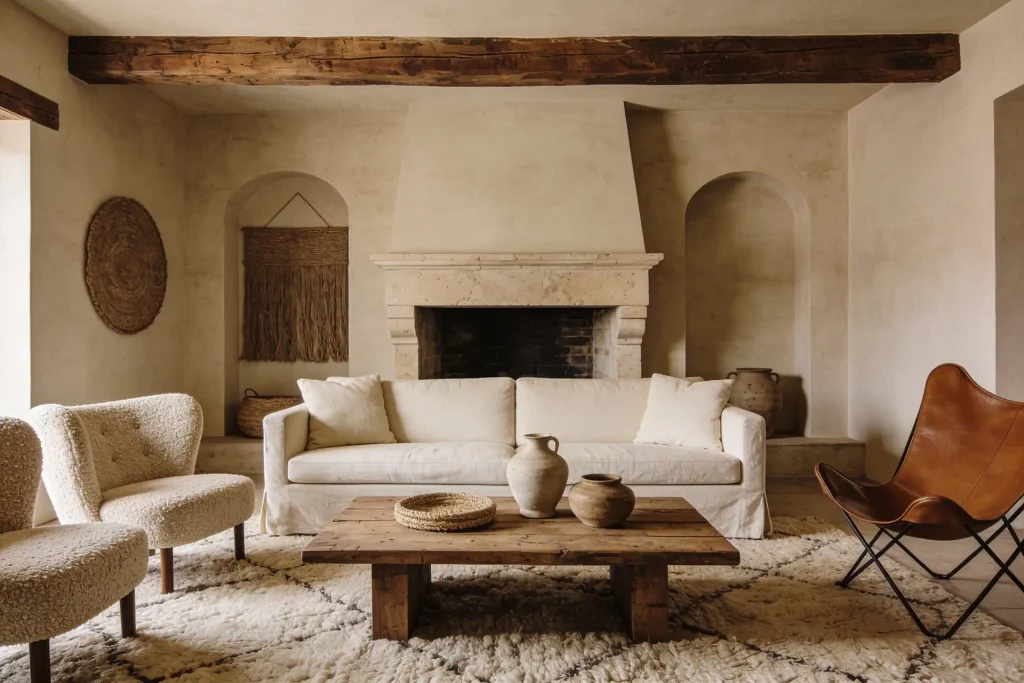
Layering natural textures is one of the most effective ways to create a modern rustic living room that feels rich without becoming visually busy. Combine materials with clearly different tactile qualities: smooth limestone, rough reclaimed timber, soft linen, chunky wool, woven jute, matte ceramics, supple leather, and hand-finished plaster. Keeping these materials within a cohesive earthy palette allows their textures to provide interest rather than relying on bright patterns. This technique is particularly effective in neutral interiors where small variations in surface and tone become much more noticeable.
Start with larger foundational materials and progressively add softer layers. Wood flooring and plaster walls can establish the architectural backdrop, followed by a linen sofa, wool rug, timber table, and upholstered chairs. Finish with woven cushions, a leather accent, ceramic vessels, and natural branches. Avoid making every object heavily textured; smoother elements are necessary to give rougher materials contrast. The finished room should feel comfortable, tactile, organic, and sophisticated—qualities that capture the essence of contemporary modern rustic interior design.
33. Modern Rustic Living Room With Fireplace and TV Wall
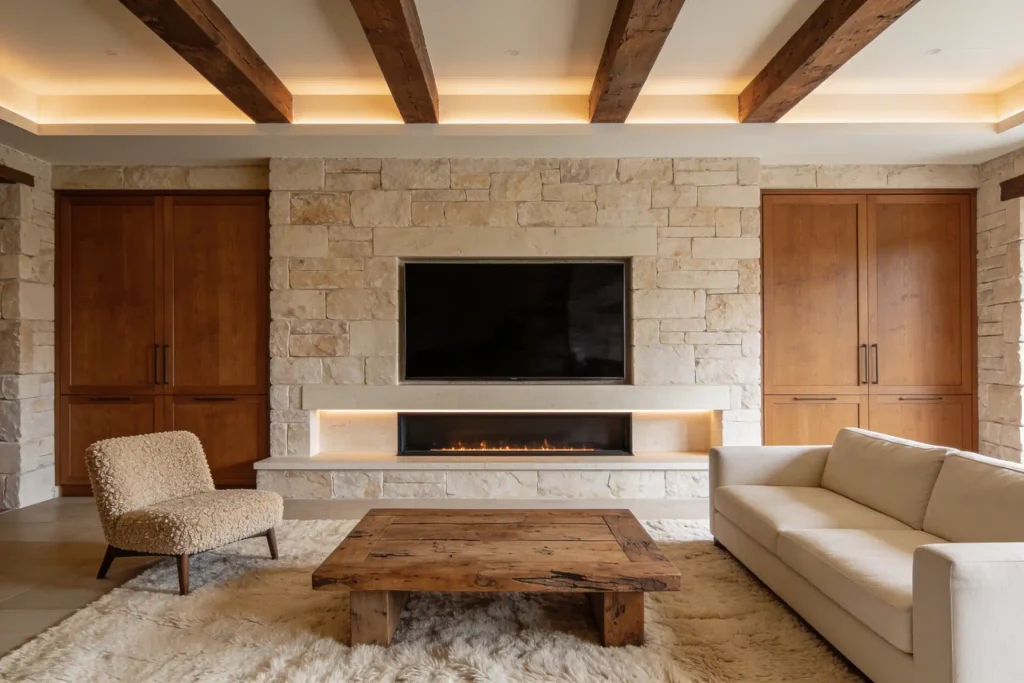
Combining a fireplace and television on one feature wall can create a clean, functional focal point when both elements are carefully integrated. Use natural stone, warm timber, dark plaster, or a combination of these materials to visually connect the fireplace and screen. Instead of placing a small television awkwardly above an oversized mantel, plan the proportions as one architectural composition. Built-in cabinetry can conceal cables and equipment, while open niches provide limited space for firewood, pottery, or books without creating unnecessary clutter.
Balance the technology-heavy wall with comfortable natural furnishings throughout the rest of the room. A large linen sectional, solid wood coffee table, textured wool rug, and leather or boucle chairs can soften the composition. Warm architectural lighting helps highlight stone and timber while reducing the television’s prominence when it is switched off. Maintaining clean lines around the media area is particularly important, allowing modern functionality and rustic materials to coexist naturally within a sophisticated everyday family living room.
34. Modern Rustic Mountain Living Room
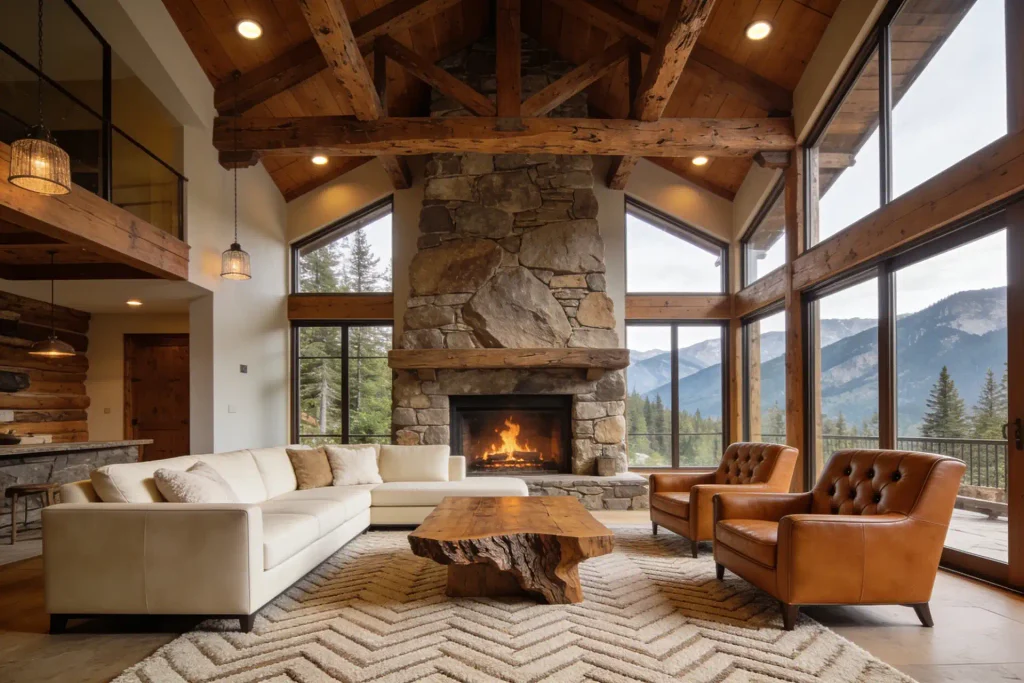
A mountain-inspired modern rustic living room can celebrate dramatic landscapes and substantial natural materials while avoiding the heaviness of a traditional lodge. Large windows should frame outdoor views wherever possible, while timber beams and natural stone reference the surrounding environment. Choose contemporary sofas and lounge chairs in cream, taupe, or warm gray to lighten the architecture. A monumental fireplace can provide an appropriately strong focal point, especially in a double-height room with vaulted ceilings and expansive glazing.
Introduce deeper accents through walnut, aged leather, charcoal metal, and textured wool. Rather than decorating extensively with literal mountain motifs, let authentic materials and views establish the sense of place. A large timber coffee table, handmade ceramics, woven throws, and understated landscape artwork are usually sufficient. Modern lighting and simplified furniture profiles keep the room sophisticated. This balance creates a luxurious mountain living room that feels deeply connected to nature while remaining cleaner and more contemporary than a conventional log-cabin interior.
35. Modern Rustic Living Room With Organic Modern Style
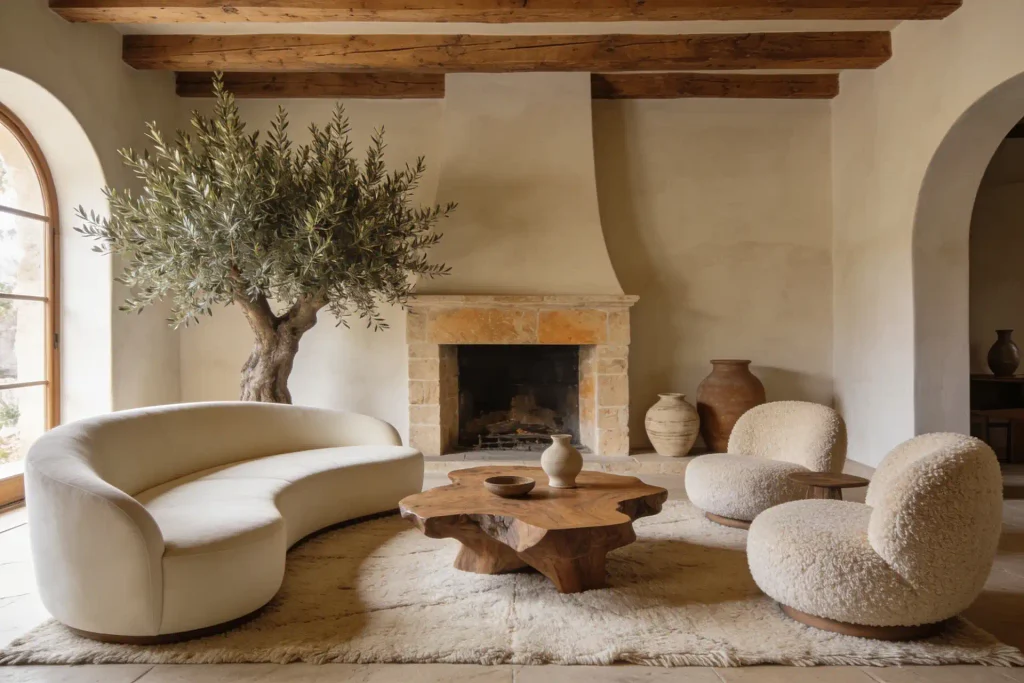
Organic modern design and modern rustic decorating overlap naturally because both prioritize earthy palettes, tactile surfaces, and a strong relationship with nature. To combine them successfully, use rustic architectural materials such as oak, limestone, and plaster while choosing softer, sculptural contemporary furniture. Rounded sofas, curved lounge chairs, irregular stone tables, and handcrafted ceramics can reduce the straight lines commonly associated with farmhouse interiors. The result feels warm and grounded but distinctly current, making it an excellent direction for updated rustic homes.
Keep the color palette calm and nature-inspired with ivory, sand, mushroom, warm brown, and muted green. Instead of adding many decorative pieces, focus on interesting shapes and authentic materials. A large indoor tree can introduce height and organic movement, while simple branches in a ceramic vessel provide understated decoration. Soft daylight, linen curtains, wool rugs, and subtle architectural lighting complete the environment. This approach creates a serene modern rustic living room that feels luxurious through texture, proportion, craftsmanship, and material quality rather than ornamentation.
Conclusion
A successful modern rustic living room is ultimately about balance. Rustic materials such as reclaimed wood, exposed beams, limestone, leather, wool, and handcrafted ceramics provide warmth and character, while contemporary furniture, clean architectural lines, controlled color palettes, and thoughtful lighting prevent the room from feeling dated. You do not need every traditional rustic element in a single space. Choosing two or three strong natural materials and allowing them to become genuine focal points often creates a more sophisticated result.
Whether your ideal space includes a stone fireplace, neutral sectional, vaulted timber ceiling, vintage furniture, textured plaster walls, earthy colors, or expansive windows, the strongest modern rustic living room ideas share a sense of comfort and authenticity. Prioritize natural textures, practical furniture, quality craftsmanship, and a connection to the outdoors. With those principles in place, you can create a warm and timeless living room that combines contemporary elegance with the relaxed appeal of rustic interior design.
Leave a Reply