
A bed without headboard can look just as stylish, comfortable, and complete as a traditional bed with an upholstered, wooden, or metal headboard. In fact, skipping the headboard gives you more freedom to experiment with bedroom wall decor, paint colors, artwork, architectural details, lighting, pillows, and natural materials. This approach is especially useful in minimalist bedrooms, small spaces, rental apartments, modern homes, and rooms where you want the bed to have a lighter visual footprint.
The key to decorating a bed with no headboard is making the space behind the mattress appear intentional. Instead of leaving an awkward blank wall, you can use paint, wall molding, wood panels, wallpaper, oversized artwork, shelves, textiles, pillows, or even carefully placed lighting to establish a focal point. These 35 bed without headboard ideas include minimalist, modern, cozy, bohemian, farmhouse, Scandinavian, contemporary, and luxury solutions for creating a beautiful bedroom without relying on a conventional headboard.
1. Minimalist Bed Without Headboard
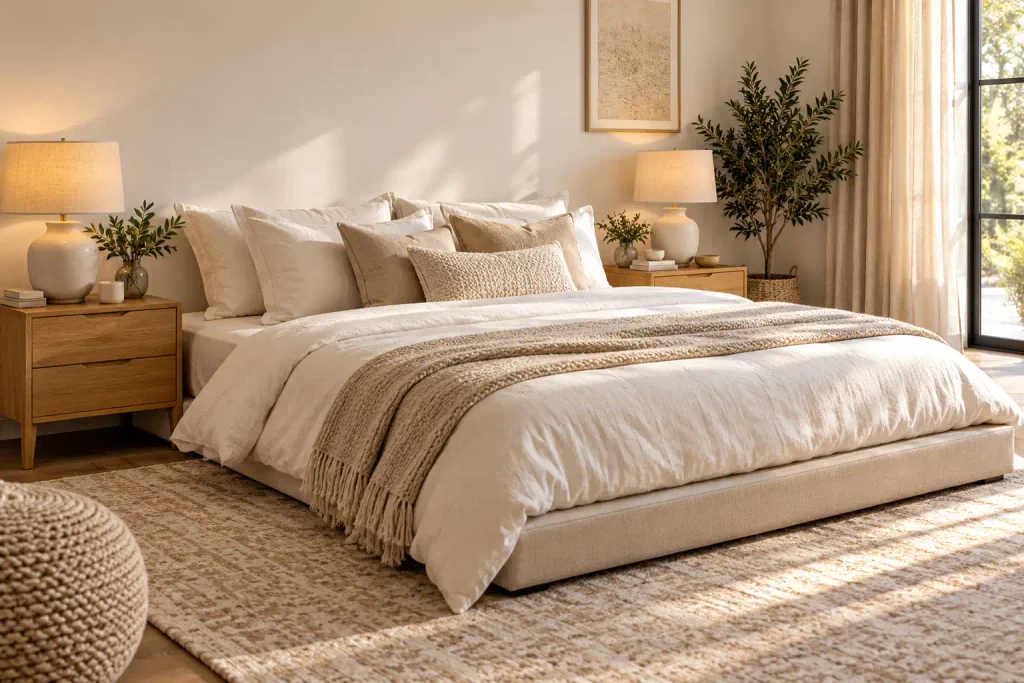
A minimalist bedroom is an ideal place for a bed without headboard because the absence of bulky furniture reinforces the clean, uncluttered aesthetic. Choose a simple low-profile platform bed and position it against a warm white, cream, or soft beige wall. Crisp cotton sheets, a linen duvet, two large sleeping pillows, and a small number of decorative cushions can provide enough visual structure. Leaving some negative space above the mattress also allows the room to feel calmer, brighter, and more spacious.
Keep the furniture surrounding the bed equally restrained. Natural oak nightstands, simple ceramic lamps, linen curtains, and a neutral wool rug can add warmth without introducing unnecessary decoration. Focus on high-quality materials and subtle variations in texture rather than numerous accessories. In a minimalist bedroom without a headboard, the simplicity of the bed becomes part of the design rather than something that needs to be hidden, creating a sophisticated sleeping environment influenced by contemporary and Scandinavian interiors.
2. Large Artwork Above a Bed Without Headboard
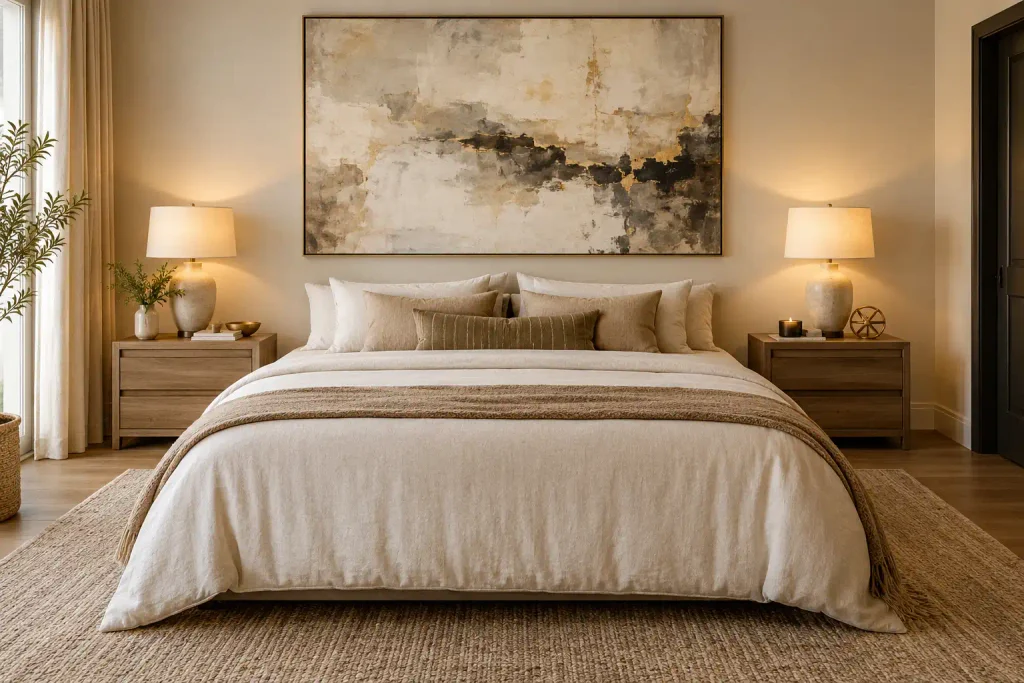
Oversized artwork can visually replace a traditional headboard while giving the bedroom considerably more personality. Select one large framed painting, canvas, photograph, or abstract print and position it centrally above the mattress. The artwork should be substantial enough to relate visually to the width of the bed instead of appearing like a small decoration floating on an empty wall. Neutral abstract paintings, landscapes, botanical artwork, and contemporary textured canvases are particularly versatile choices for a bed with no headboard.
Create a connection between the artwork and the rest of the bedroom by repeating several of its colors through pillows, blankets, rugs, or bedside accessories. For instance, a canvas containing beige, olive, brown, and cream can coordinate beautifully with natural wood furniture and neutral linen bedding. Matching nightstands on either side of the bed can further establish symmetry. The result is a strong focal point that makes the headboard-free arrangement appear completely deliberate rather than unfinished.
3. Accent Wall Behind the Bed
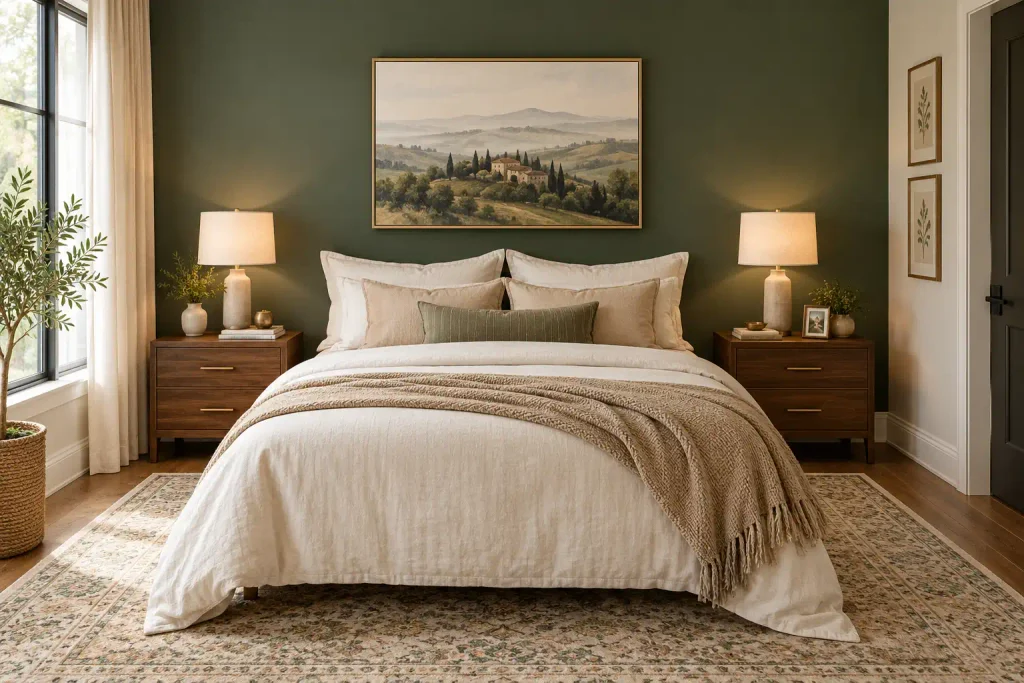
Painting an accent wall is one of the simplest ways to define a bed without a headboard. Choose a shade that contrasts gently with the surrounding walls, such as sage green, dusty blue, muted terracotta, warm taupe, charcoal, or deep navy. The color establishes a clear sleeping zone and makes the wall itself function as a decorative backdrop. Because paint adds virtually no physical depth, this technique is particularly useful for smaller bedrooms where every inch of floor space matters.
Coordinate the bedding with your chosen wall color rather than matching everything exactly. A deep green wall, for example, can look beautiful behind ivory bedding, walnut bedside tables, brass lighting, and olive decorative cushions. Pale walls can instead be complemented by deeper bedding colors for contrast. A carefully selected bedroom accent wall behind a bed with no headboard provides much of the visual impact associated with a large headboard while maintaining an open and streamlined bedroom layout.
4. Wall Molding Behind the Bed
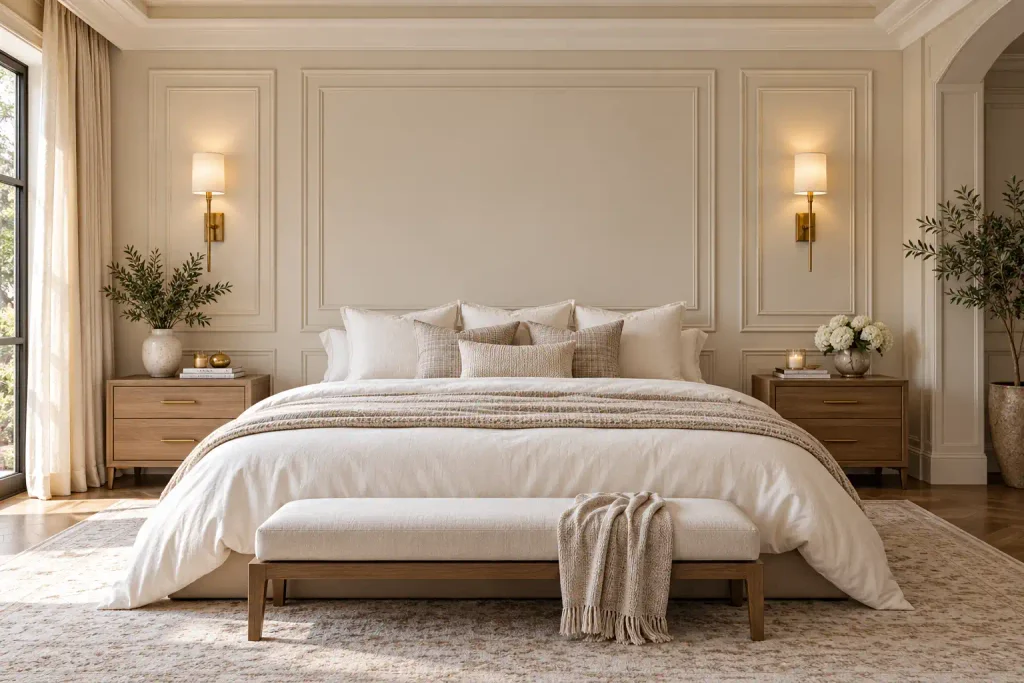
Decorative wall molding provides architectural character that can make a simple bed without headboard look surprisingly luxurious. Picture-frame molding, rectangular panel molding, or classic wall trim creates depth and visual structure without placing additional furniture behind the mattress. Painting both the molding and wall in the same warm neutral shade produces a refined built-in appearance. Greige, cream, dusty green, taupe, and soft gray are especially effective in modern classic and transitional bedrooms.
Center the bed within the wall panels so the molding naturally frames the sleeping area. Symmetrical nightstands and wall sconces can further strengthen the composition, while plush bedding softens the architectural lines. This technique works particularly well for king and queen beds because the molding can extend beyond the mattress and visually enlarge the sleeping zone. The finished bedroom feels polished and carefully designed despite having no traditional headboard attached to the bed.
5. Use Oversized Pillows Instead of a Headboard
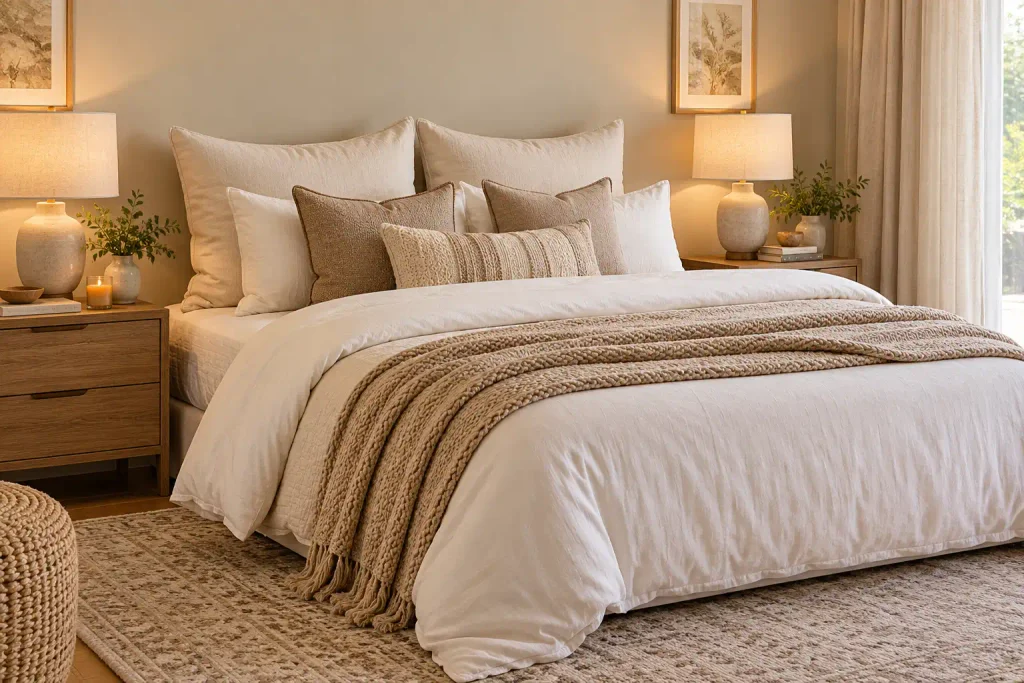
Large pillows offer a comfortable and renter-friendly headboard alternative that requires almost no installation. Start with oversized European square pillows resting against the wall, then layer standard sleeping pillows and smaller decorative cushions in front. The resulting arrangement creates height and softness behind the mattress while making the bed appear inviting. Linen, boucle, cotton, velvet, and knitted fabrics can be mixed carefully to introduce depth without relying on complicated patterns.
This approach is particularly effective with a divan or platform bed without headboard, because the abundance of textiles balances the simplicity of the bed frame. Use approximately the same color family across the pillows while varying their tones and textures. Cream, beige, taupe, caramel, and muted brown create an especially cozy palette. A folded throw at the foot of the bed completes the layered look and makes the bedroom feel comfortable, finished, and intentionally designed.
6. Wood Slat Wall Behind the Bed
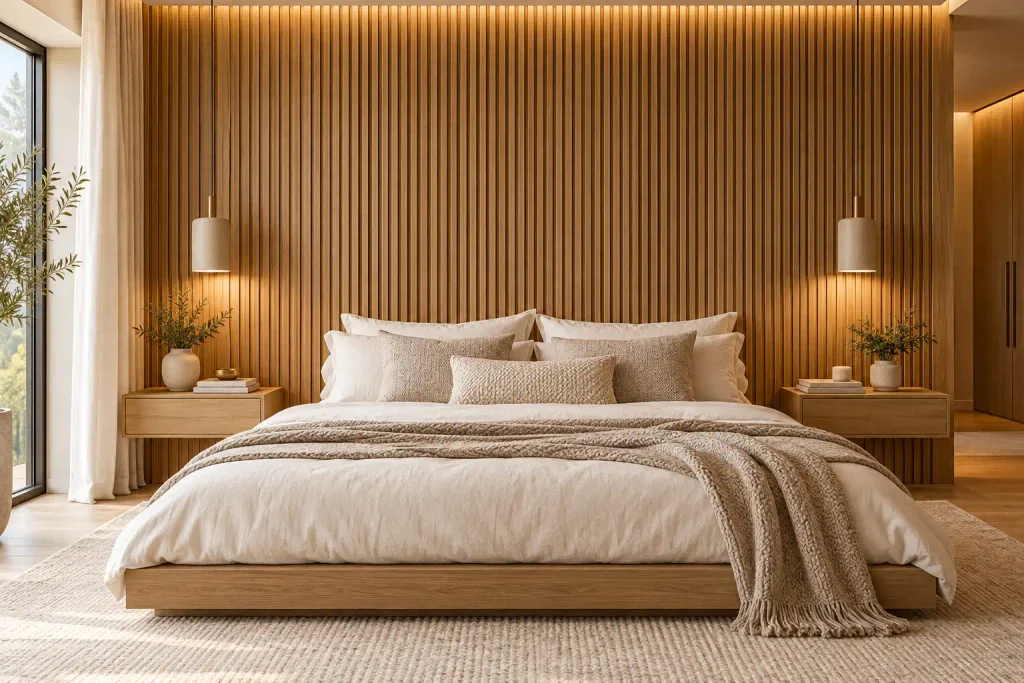
Vertical wood slats provide an architectural backdrop that can visually substitute for a traditional headboard. Natural oak, walnut, or light timber slats introduce warmth and texture while their vertical lines draw attention upward, potentially making the ceiling appear taller. The slats can cover only the width of the mattress or continue across the entire bedroom wall. Either approach creates a strong focal point behind a modern bed without headboard.
Combine the timber wall with understated bedding to prevent competing textures from overwhelming the room. Cream linen, warm white cotton, and muted beige textiles complement natural wood beautifully. Floating nightstands, pendant lights, and subtle integrated LED illumination can further enhance the contemporary atmosphere. Because the decorative treatment belongs to the wall rather than the bed itself, the mattress and frame can remain streamlined while the room still achieves the visual presence normally associated with a substantial headboard.
7. Gallery Wall Above the Bed
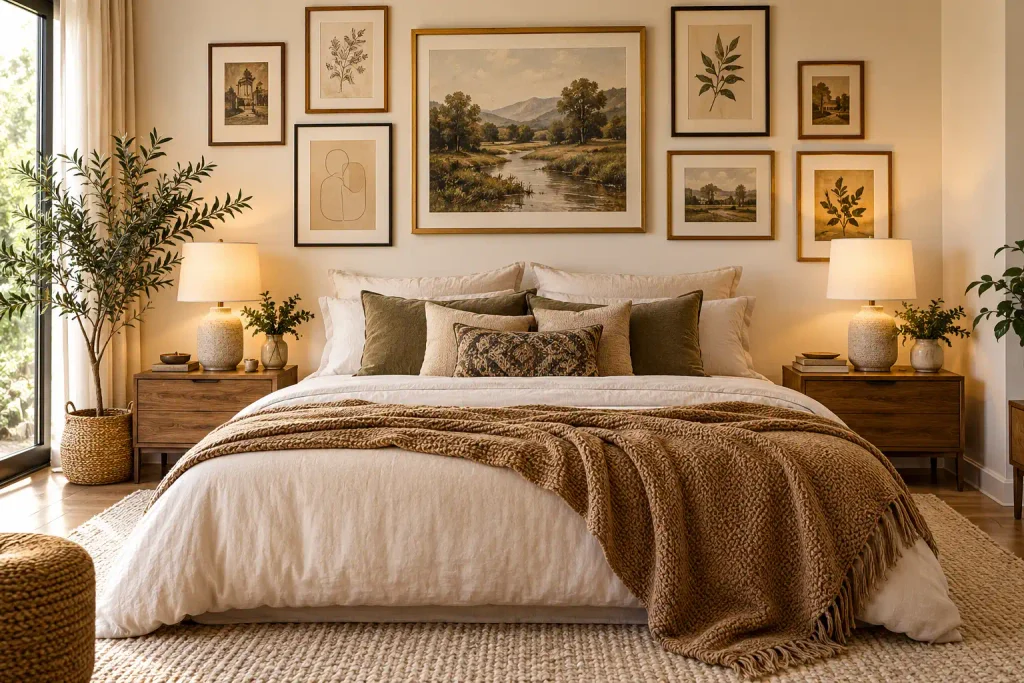
A curated gallery wall transforms the empty space above a bed with no headboard into an expressive bedroom feature. Combine framed photography, abstract prints, illustrations, landscapes, or botanical artwork in a carefully balanced composition. Matching frames can create a clean contemporary appearance, while a thoughtful combination of wooden and metal frames works well in eclectic interiors. Map the arrangement before hanging the pieces so the entire collection remains visually connected to the mattress below.
Colors appearing within the artwork can be repeated through cushions, blankets, lamps, or a bedroom rug to unify the design. Maintain relatively consistent spacing between frames so the display feels curated instead of chaotic. This solution is particularly appealing for homeowners who like changing their decor because individual pieces can easily be replaced over time. A gallery wall therefore creates a flexible and personal alternative to a headboard without changing the actual bed frame.
8. Boho Bed Without Headboard
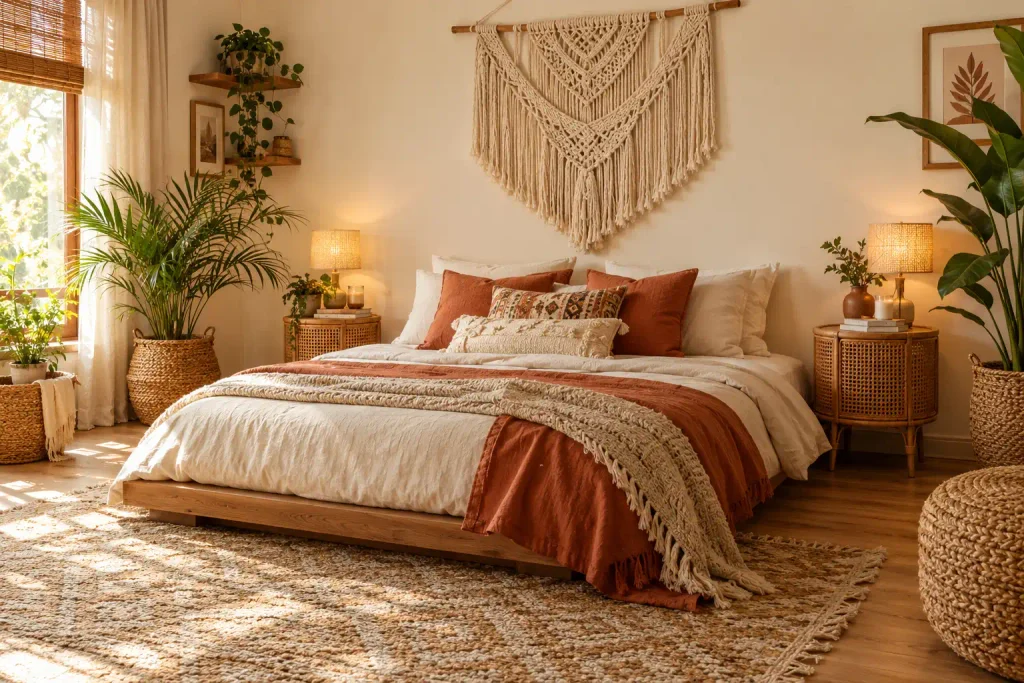
Bohemian bedrooms naturally accommodate beds without headboards because the style depends more on textiles, natural materials, and collected decorations than formal furniture. Position a low wooden bed against a warm neutral wall and introduce woven baskets, indoor plants, textured cushions, chunky blankets, and an earthy rug. Shades of terracotta, rust, cream, tan, olive, and muted mustard create a relaxed palette that brings warmth to the sleeping area.
Decorate the wall with woven baskets, handmade fiber art, or a large macrame hanging rather than a conventional headboard. Rattan bedside furniture and ceramic lighting can add further organic texture. Unlike highly symmetrical traditional bedrooms, a boho bedroom without a headboard can embrace slightly irregular styling while still maintaining visual balance. The combination of tactile materials and earthy colors ensures that the room feels richly decorated even though the bed itself remains simple.
9. Scandinavian Bed Without Headboard
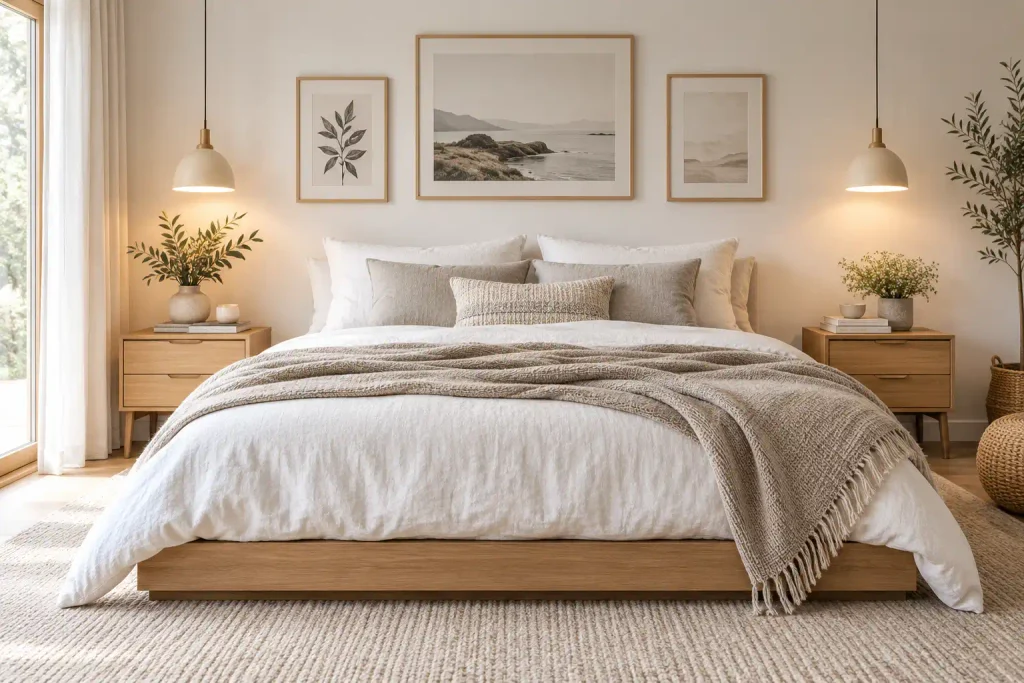
Scandinavian bedroom design emphasizes simplicity, functionality, light colors, and natural materials, making it particularly compatible with a bed without a headboard. Choose a simple pale wood platform frame and layer it with white, oatmeal, light gray, and beige textiles. Instead of decorating every part of the wall, maintain generous negative space around the bed. The uncluttered arrangement creates the peaceful visual atmosphere associated with Nordic interiors.
Introduce warmth through light oak furniture, wool blankets, linen bedding, subtle artwork, and soft ambient lighting. A small framed print or understated wall lamp may be all that is required above or beside the bed. Avoid excessive ornamentation and concentrate on comfortable textures and functional furniture. This approach makes the lack of a headboard appear intentional while creating a calm, bright bedroom suitable for both compact apartments and larger contemporary homes.
10. Wallpaper Behind a Bed Without Headboard
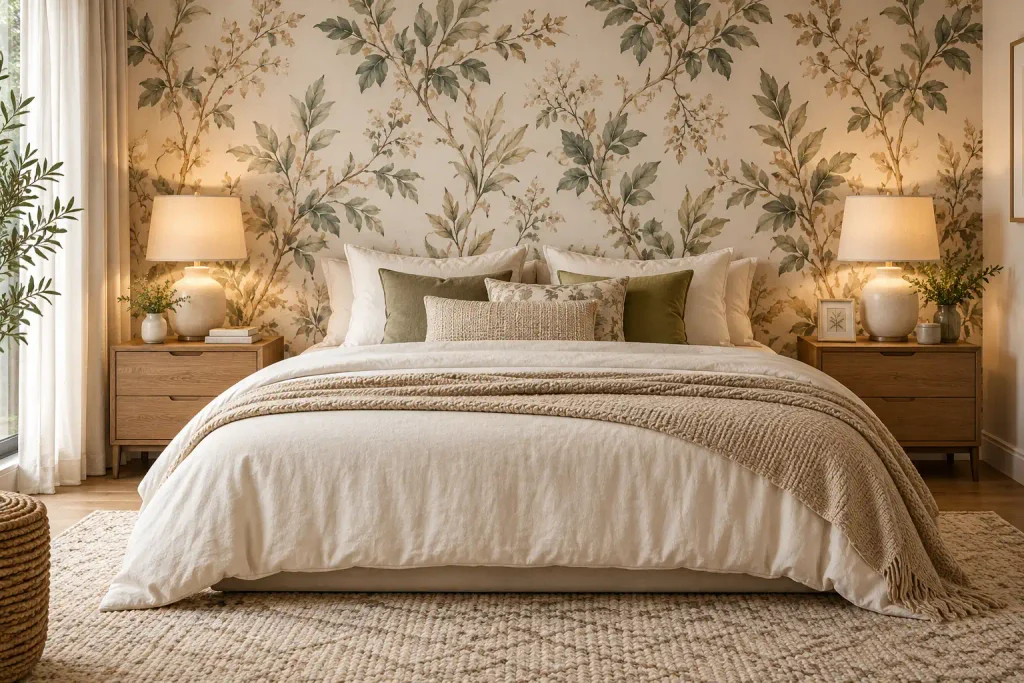
Wallpaper can transform the entire wall behind a bed into a dramatic decorative feature. Botanical prints, subtle geometric patterns, grasscloth textures, watercolor designs, and vintage-inspired motifs can establish a strong visual identity without adding furniture. For a relaxing bedroom, choose patterns with restrained colors and enough negative space to avoid making the room feel busy. The wallpaper effectively creates a large decorative background around a bed with no headboard.
Keep bedding relatively simple when using patterned wallpaper. Solid cream, white, beige, or colors pulled directly from the wallpaper can prevent the room from feeling visually overloaded. Matching bedside tables and understated lamps provide additional structure. In rental properties, removable peel-and-stick wallpaper may offer a less permanent alternative. Whether subtle or dramatic, a wallpaper feature wall can make the absence of a conventional headboard almost unnoticeable.
11. Floating Shelf Above the Bed
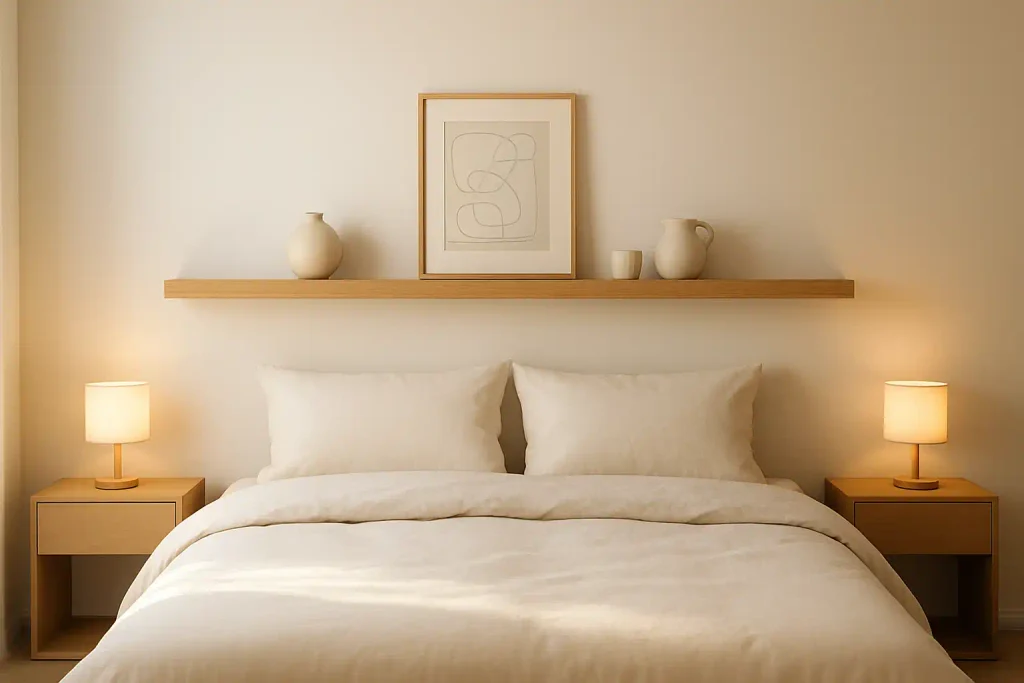
A long floating shelf can establish a horizontal visual line behind a bed without headboard, helping the mattress feel grounded against the wall. Choose a natural wood shelf for warm interiors or a painted shelf that blends with the wall for a more subtle effect. Decorate it sparingly with framed prints, small ceramic pieces, trailing greenery, or other lightweight accessories. The shelf should complement the bed rather than becoming overcrowded with miscellaneous objects.
Repeating materials between the shelf and bedside furniture can help create cohesion. An oak shelf paired with oak nightstands, for example, gives the entire sleeping area a coordinated appearance. Keep decorative objects balanced and leave some empty shelf space to preserve visual calm. When appropriately positioned and securely installed, this treatment can provide both decorative character and useful display space while replacing the visual structure normally supplied by a headboard.
12. Floor-to-Ceiling Curtains Behind the Bed
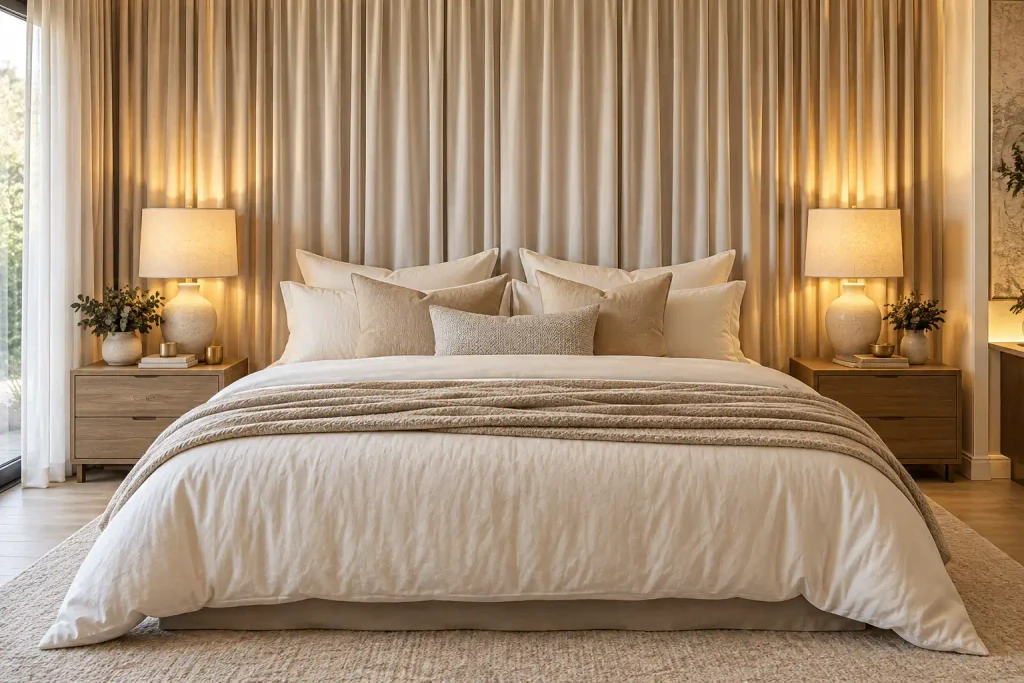
Curtains are not limited to windows. Installing soft floor-to-ceiling fabric behind a bed without headboard can create a luxurious, cocoon-like backdrop. Linen, velvet, or other substantial drapery introduces softness and vertical movement while disguising a plain wall. Neutral colors such as ivory, oatmeal, beige, mushroom, and warm gray maintain a restful atmosphere, while deeper shades can produce a more dramatic hotel-inspired bedroom.
The curtain treatment can span the entire wall or simply frame the width of the sleeping area. Pair it with plush bedding, substantial pillows, and soft bedside lighting to enhance the layered appearance. Because fabric absorbs some visual harshness from hard surfaces, it can make the room feel warmer and more intimate. This unconventional headboard alternative works particularly well in spacious bedrooms where full-height drapery can become a dramatic architectural feature.
13. Painted Arch Behind the Bed
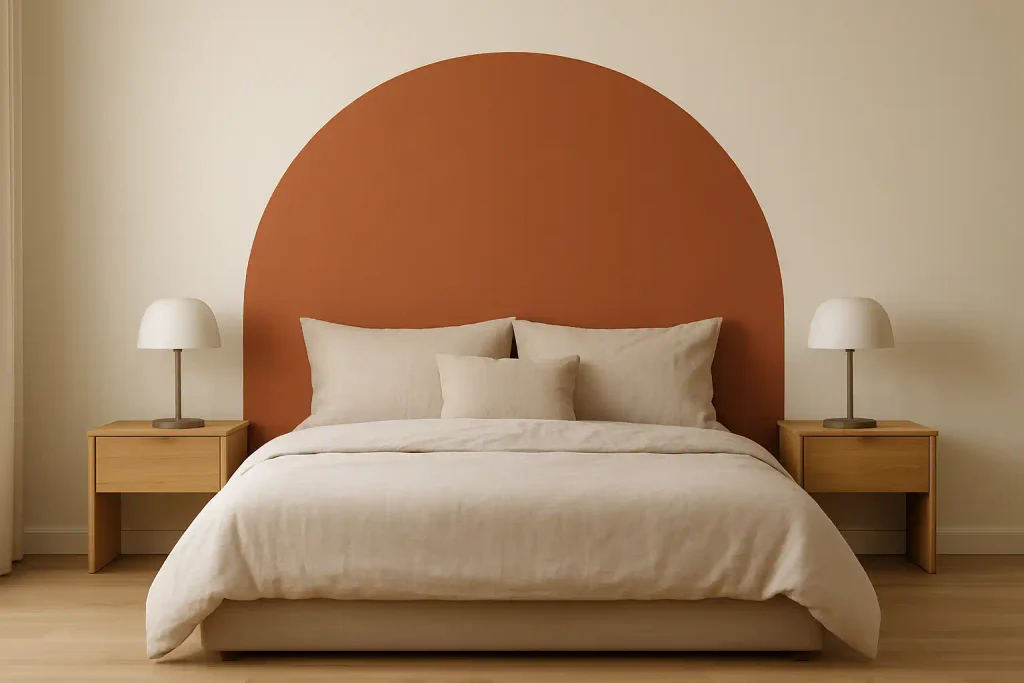
A painted arch provides a creative and affordable way to frame a bed with no headboard. Paint a large rounded shape beginning behind the mattress and extending upward several feet. Earthy terracotta, muted olive, dusty rose, beige, warm brown, or soft blue can work beautifully depending on the bedroom palette. The curved shape visually separates the bed from the surrounding wall while adding character without taking up physical space.
For a cohesive design, keep the rest of the bedroom relatively understated. Simple bedding, compact nightstands, and restrained wall accessories allow the painted arch to remain the focal point. This solution is particularly effective for apartments, guest bedrooms, and budget-friendly bedroom makeovers because it requires relatively little material. The final result looks custom and contemporary even when the actual bed frame is extremely simple.
14. Exposed Brick Wall Behind the Bed
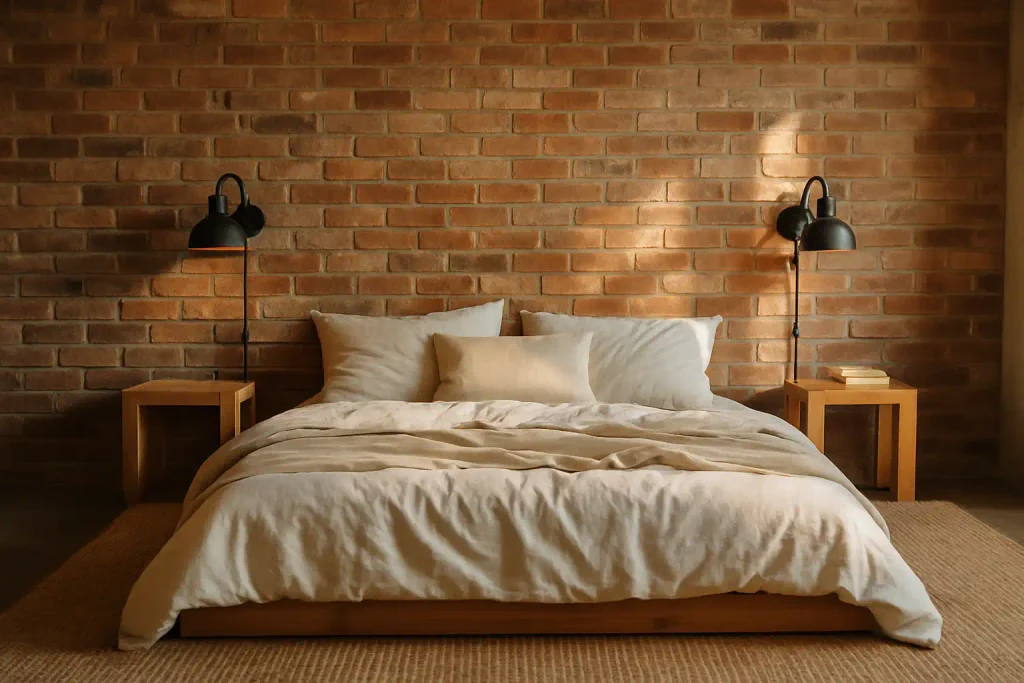
An exposed brick wall offers enough natural texture and architectural character that a headboard can become unnecessary. Positioning a simple platform bed against warm red brick, whitewashed brick, or aged reclaimed masonry creates immediate visual depth. Crisp bedding contrasts particularly well with the irregular texture of brick, allowing the bed without headboard to remain visually distinct while the wall provides the room’s strongest decorative element.
Industrial bedrooms can combine exposed brick with black metal lighting and dark wood furniture, while softer interiors can balance it with linen bedding, woven rugs, and warm wooden nightstands. Keeping other wall decorations minimal allows the masonry to remain prominent. This approach works especially well in loft apartments, renovated older homes, and bedrooms where original architectural features deserve to become part of the design instead of being concealed behind furniture.
15. Farmhouse Bed Without Headboard
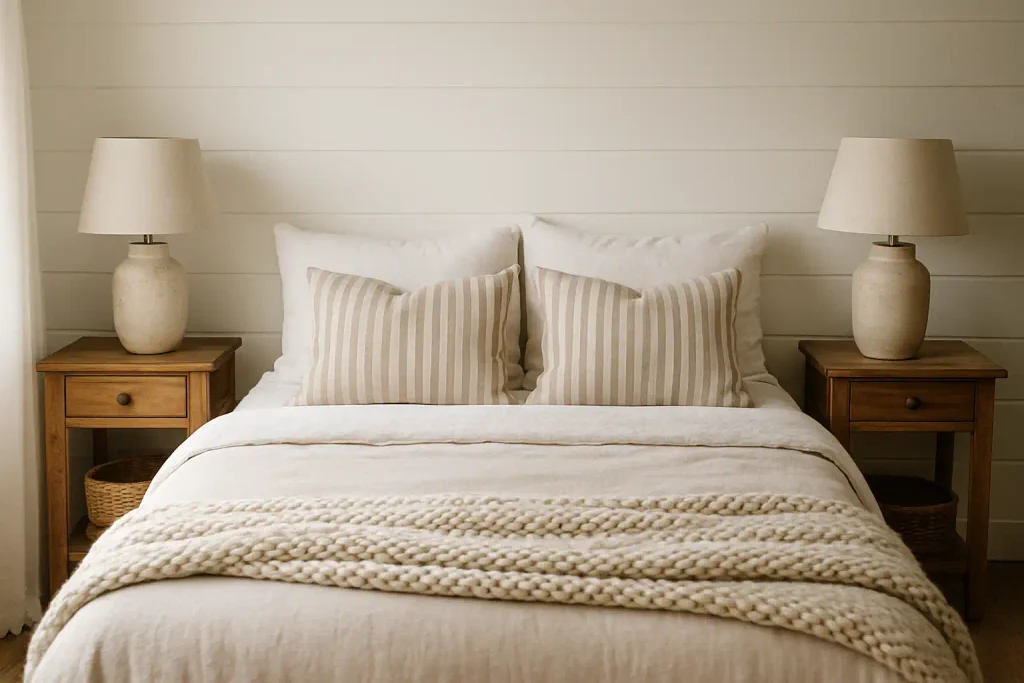
A farmhouse bedroom can feel warm and complete without relying on a conventional headboard. Use a simple wooden platform or divan bed with white cotton bedding, striped or checked pillows, a chunky knitted throw, and warm neutral layers. Behind the mattress, painted shiplap or vertical tongue-and-groove paneling can create enough architectural detail to anchor the bed while reinforcing the relaxed country-inspired aesthetic.
Add vintage-style bedside tables, ceramic lamps, woven baskets, natural greenery, and a textured area rug to establish the farmhouse character. Warm whites, beige, faded gray, and natural timber tones keep the bedroom bright while preventing it from feeling overly rustic. The emphasis should remain on comfortable materials and understated craftsmanship. A farmhouse bed without headboard can therefore feel both traditional and refreshed without requiring an oversized piece of furniture behind the mattress.
16. Modern Luxury Bed Without Headboard
A luxury bedroom does not necessarily require a large upholstered headboard. Instead, create visual richness through premium bedding, architectural wall treatments, sophisticated lighting, and carefully selected furniture. A low king-size platform bed can sit against a textured plaster, stone-look, or paneled feature wall. High-thread-count bedding, layered neutral textiles, and generously sized pillows create the softness normally associated with upholstered furniture.
Add floating nightstands, sculptural pendant lights, concealed LED illumination, and a substantial rug to establish a polished hotel-inspired atmosphere. Maintain a controlled palette of ivory, taupe, beige, walnut, and subtle metallic finishes. In a luxury bedroom without headboard, quality and proportion matter more than decorative excess. The wall and lighting become the primary visual frame for the bed, resulting in an elegant contemporary interior that feels custom designed.
17. Small Bedroom Without a Headboard
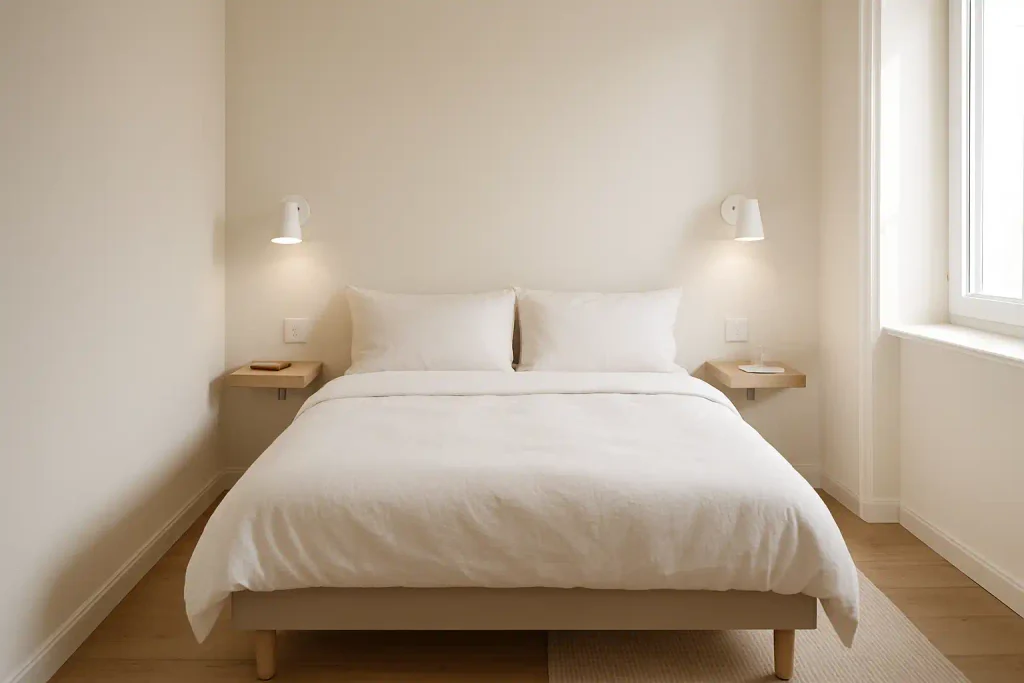
Removing the headboard can be particularly beneficial in a small bedroom because it eliminates additional visual and physical bulk. Choose a slim bed frame and push it neatly against the main wall, preserving as much circulation space as possible. Light bedding and pale wall colors can make the room appear more open, while compact bedside tables provide essential storage without crowding the mattress. Wall-mounted lights are another useful space-saving alternative to large table lamps.
Use vertical wall decor to draw the eye upward rather than filling the room with extra furniture. One framed print, a painted shape, or a narrow section of wallpaper can define the bed without making the wall feel crowded. Under-bed storage can further maximize functionality. A carefully planned small bedroom with no headboard demonstrates that limited square footage does not prevent the room from feeling comfortable, stylish, and intentionally decorated.
18. Textured Plaster Wall Behind the Bed
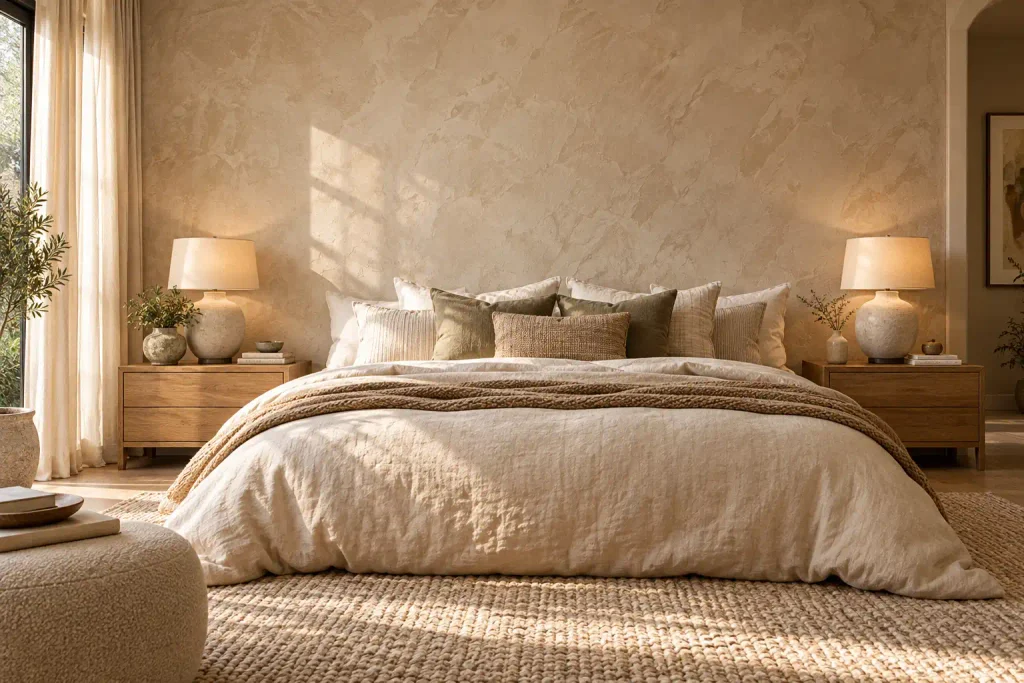
Limewash, Venetian plaster, Roman clay, and other textured wall finishes can create subtle movement behind a bed without headboard. Unlike flat paint, these surfaces contain tonal variation that changes with daylight, giving the wall depth without requiring additional decoration. Warm beige, stone, mushroom, clay, and soft gray finishes are especially effective in organic modern bedrooms where natural textures take priority over elaborate ornamentation.
Pair the textured wall with linen bedding, natural timber furniture, ceramic lighting, and a wool rug. The restrained combination creates a tactile but peaceful sleeping environment. Rather than hanging multiple decorative pieces above the bed, allow the handcrafted appearance of the wall to become the focal point. This approach is particularly effective for homeowners seeking an understated, high-end interior where the absence of a headboard contributes to the architectural simplicity.
19. Tapestry Behind the Bed
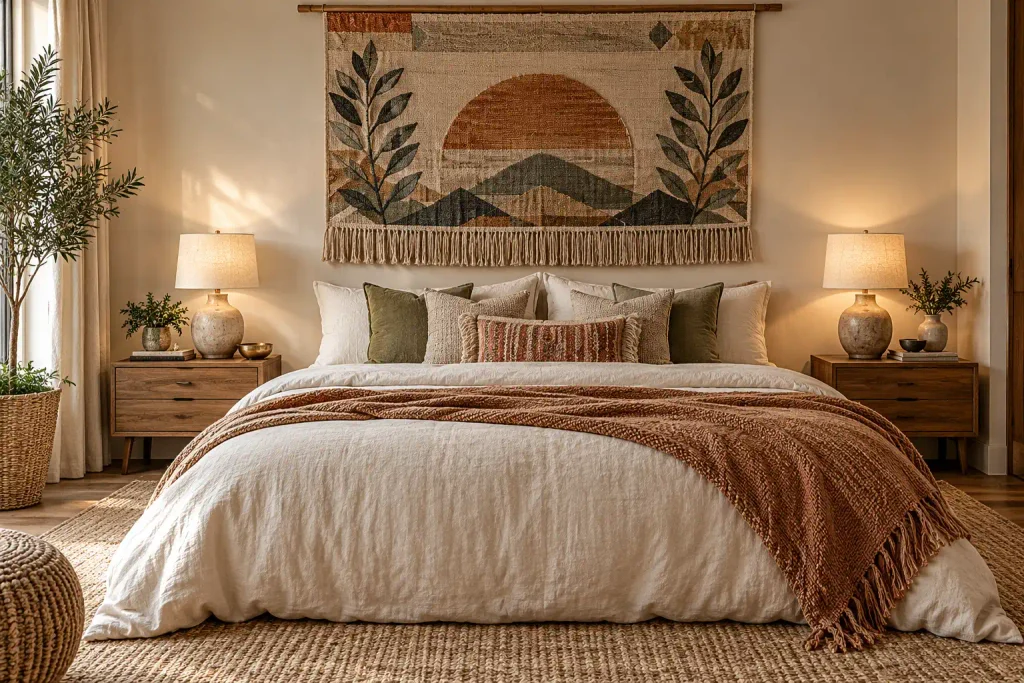
A textile wall hanging can introduce softness, color, and pattern behind a bed with no headboard. Choose a large woven tapestry that relates proportionally to the mattress and hang it centrally above the bed. Vintage textiles, abstract woven designs, botanical motifs, and neutral fiber art can all work depending on the bedroom style. Because fabric naturally creates warmth, this solution is especially effective in rooms that otherwise contain many hard architectural surfaces.
Coordinate the tapestry with bedding without reproducing every color exactly. Pull one or two shades from the textile and repeat them in cushions or a throw blanket. Natural wooden furniture and warm ambient lighting complement woven artwork particularly well. Unlike a heavy conventional headboard, a tapestry provides visual presence without significant depth, making it a useful option for renters and bedrooms where flexible decoration is important.
20. Statement Wall Sconces Around the Bed
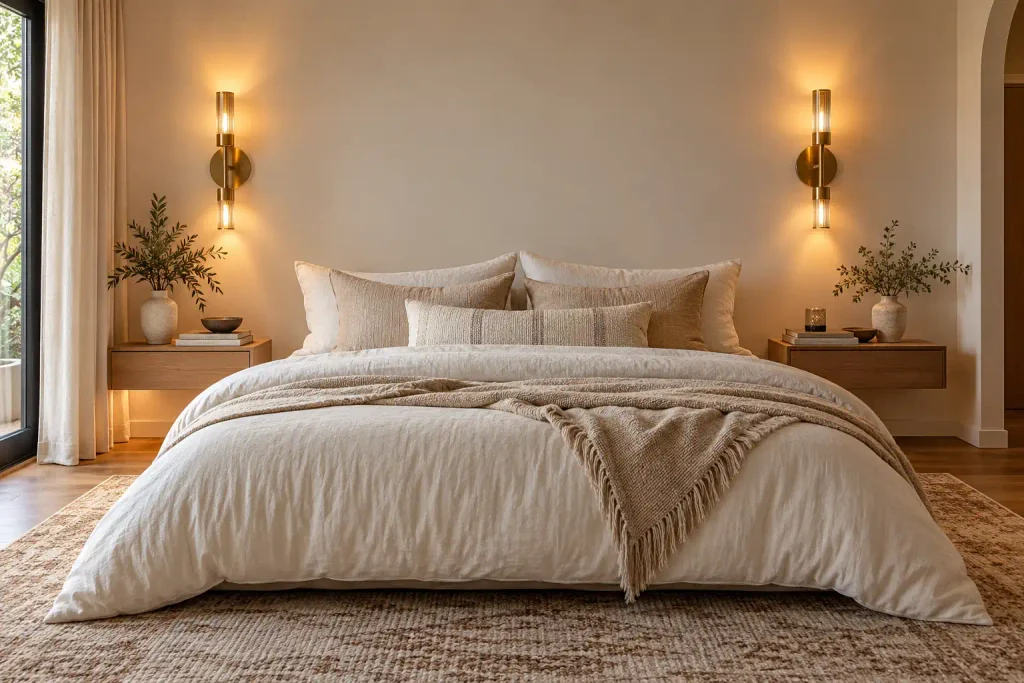
Lighting can become the primary decorative feature surrounding a bed without headboard. Install matching wall sconces on either side of the mattress to create symmetry and frame the sleeping area. Sculptural brass, matte black, ceramic, or glass fixtures can add character while freeing the bedside tables from bulky lamps. Warm light also creates an inviting atmosphere that makes the bed feel more intimate during the evening.
Keep the central wall relatively simple so the lighting arrangement remains prominent. A neutral wall, sophisticated bedding, and streamlined nightstands can provide an elegant backdrop. Adjustable sconces are particularly useful for nighttime reading, combining practical illumination with decoration. When the placement is carefully considered, bedside lighting establishes enough visual structure to make the absence of a headboard appear intentional and contemporary.
21. Coastal Bed Without Headboard
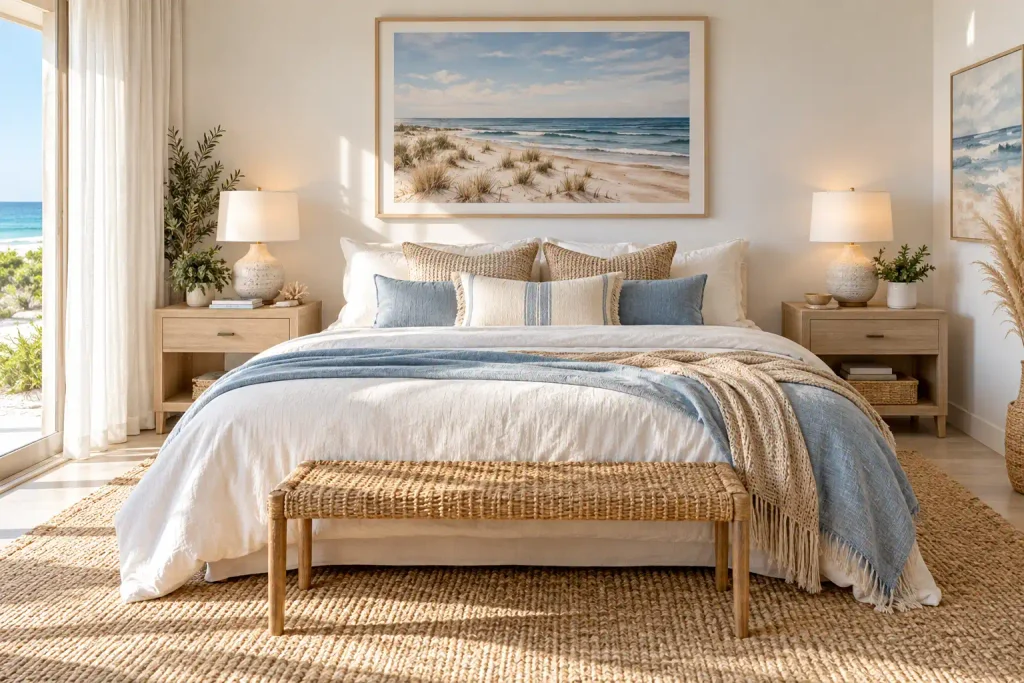
A coastal bedroom can embrace a headboard-free bed by emphasizing light colors, relaxed textiles, and natural textures. Begin with white or sandy beige bedding on a simple wooden frame. Soft blue, sea-glass green, and muted gray accents can introduce subtle coastal color without turning the room into a themed space. A woven rug, linen curtains, and pale timber furniture reinforce the breezy atmosphere.
Instead of a traditional headboard, consider understated coastal artwork or natural wall texture behind the mattress. The goal is to maintain openness and allow sunlight to play a major role in the design. Avoid excessive nautical accessories and focus instead on materials associated with relaxed seaside interiors. A coastal bed without headboard should feel fresh, airy, and comfortable rather than heavily decorated.
22. Japandi Bed Without Headboard
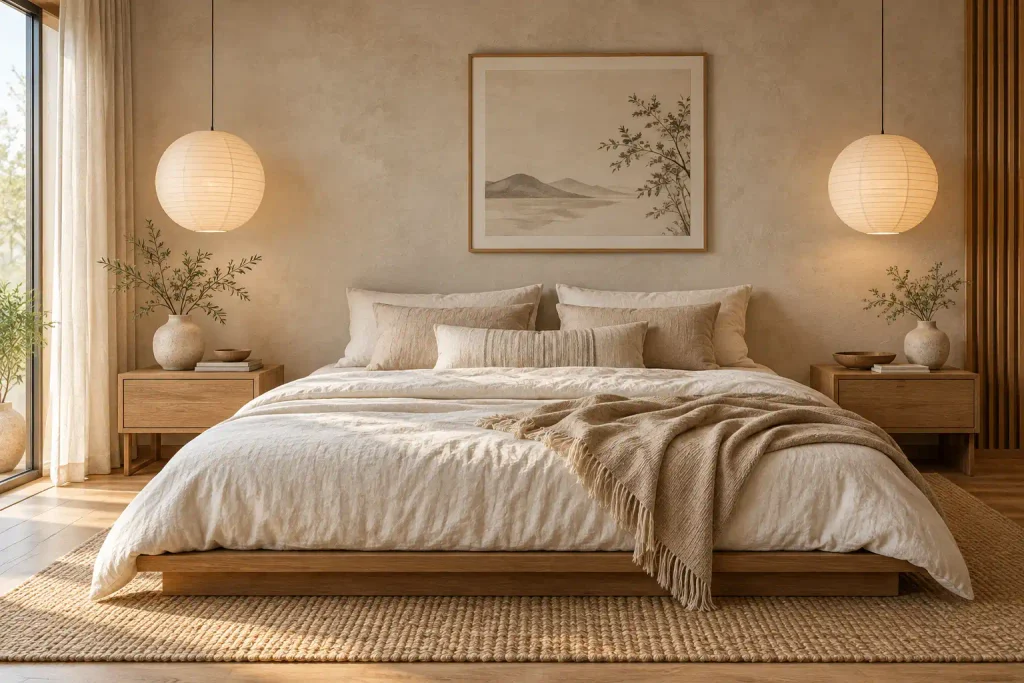
Japandi interiors combine Japanese simplicity with Scandinavian warmth, making a low bed without headboard an excellent choice. Select a low timber platform bed and surround it with warm neutral colors, natural wood, handmade ceramics, and simple textiles. Keep the wall above the mattress largely undecorated or use one restrained piece of artwork. This creates the calm sense of space associated with both Japanese and Nordic design philosophies.
Texture becomes particularly important when the color palette is minimal. Linen bedding, a woven rug, light oak or walnut furniture, and softly textured walls can prevent the bedroom from feeling sterile. Choose furnishings with simple silhouettes and prioritize craftsmanship over decorative complexity. The resulting Japandi bedroom without a headboard feels peaceful, balanced, and deliberately understated, making it especially suitable for anyone seeking a restful bedroom atmosphere.
23. Canopy Bed Without a Headboard
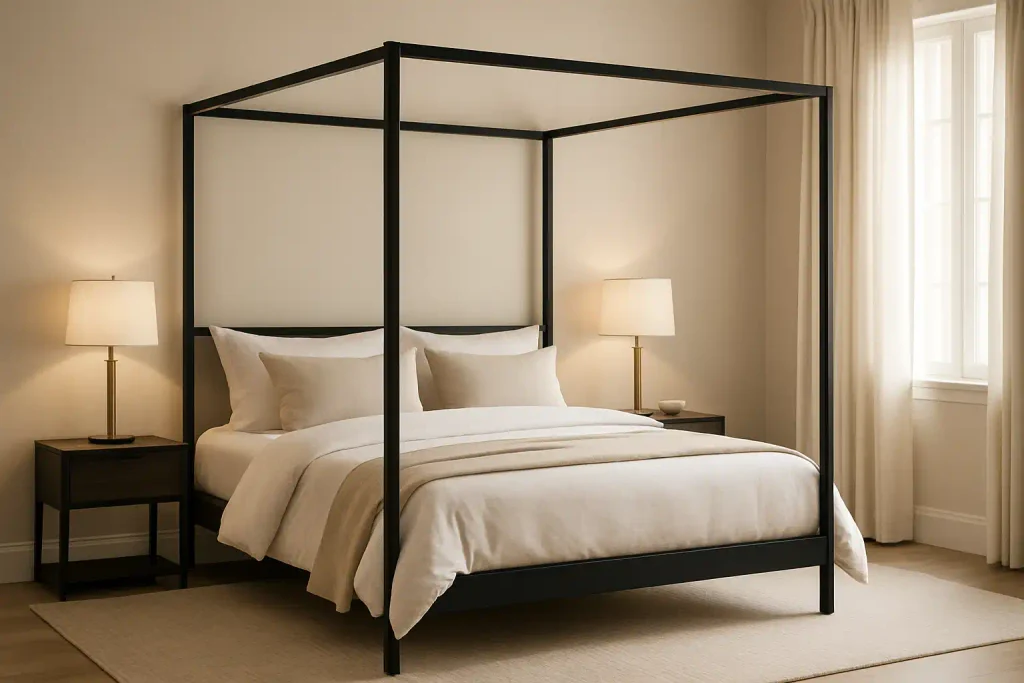
A canopy frame already provides substantial visual architecture around a bed, which means an additional headboard may be unnecessary. Choose a streamlined four-poster or canopy frame and allow its vertical posts and overhead structure to define the sleeping zone. Modern black metal frames create a contemporary appearance, while natural wood versions can feel warmer and more organic. Keeping the back of the bed open also prevents the canopy from appearing excessively heavy.
Layer the mattress with comfortable bedding and allow the canopy structure itself to become the main statement. In softer bedrooms, lightweight fabric can be draped sparingly over the upper frame, while modern interiors may look better with the frame completely exposed. This approach creates height and drama without requiring wall-mounted decoration. A canopy bed without headboard can therefore provide a strong focal point while retaining an open feeling behind the mattress.
24. Bedroom With a Window Behind the Bed
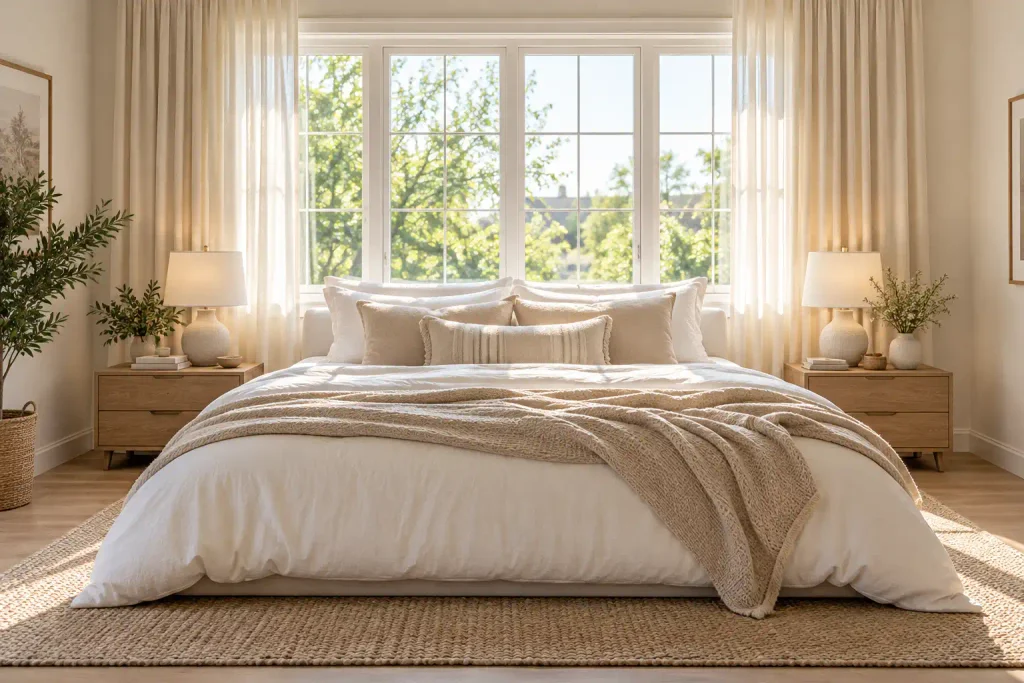
Sometimes architectural constraints make placing the bed beneath a window the most practical layout. In this situation, eliminating the headboard can prevent the bed from blocking natural light or covering part of the window. A low-profile frame allows the glazing to remain visible while creating an attractive connection between the sleeping area and the room’s architecture. Soft curtains can visually frame both the window and bed.
Keep bedding below the windowsill whenever possible and use compact bedside furniture to avoid crowding the arrangement. Roman shades, linen curtains, or other simple window treatments can provide privacy while maintaining brightness. This layout works particularly well in smaller rooms where furniture placement options are limited. A bed under a window without a headboard can look purposeful when symmetry, curtain placement, and bedding proportions are carefully considered.
25. Dark Moody Bedroom Without Headboard
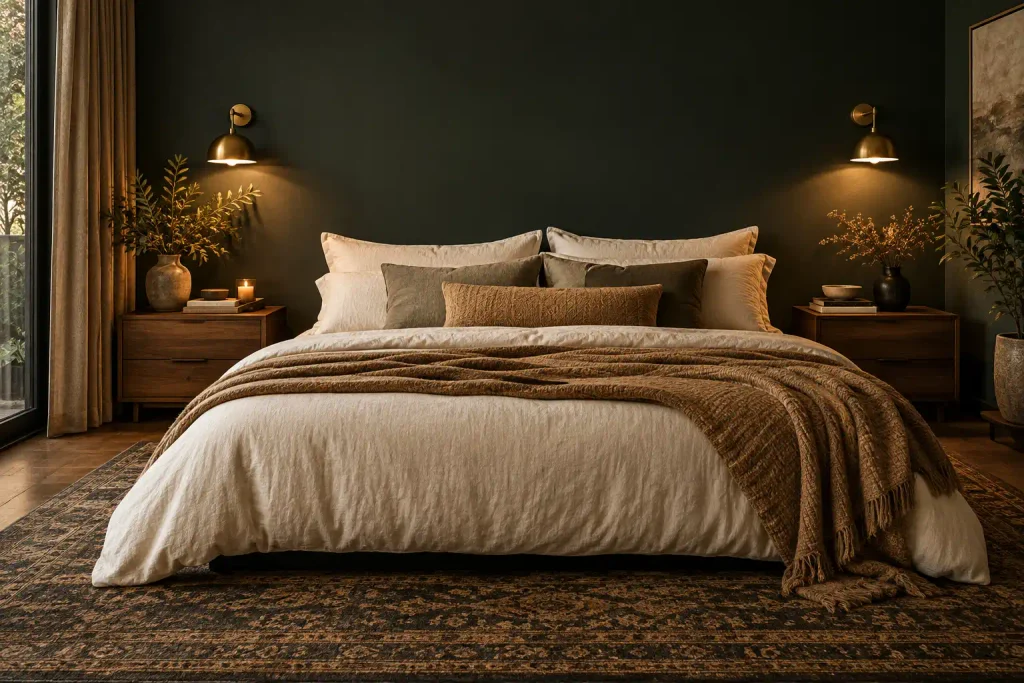
A dramatic bedroom can use deep wall color to create enough visual presence that a headboard becomes unnecessary. Charcoal, forest green, chocolate brown, navy, and near-black walls provide a striking backdrop for lighter bedding. The contrast naturally frames the mattress and establishes a sophisticated focal point. Warm lighting is important because it prevents the darker palette from making the bedroom feel cold or unwelcoming.
Layer cream, camel, taupe, and brown textiles to soften the overall composition. Walnut furniture, aged brass fixtures, and textured rugs can add richness without introducing excessive color. Instead of covering the wall with artwork, allow the deep paint color to remain prominent. A dark bedroom with a bed without headboard can feel intimate and luxurious when contrast, texture, and lighting are balanced carefully.
26. Natural Stone Wall Behind the Bed
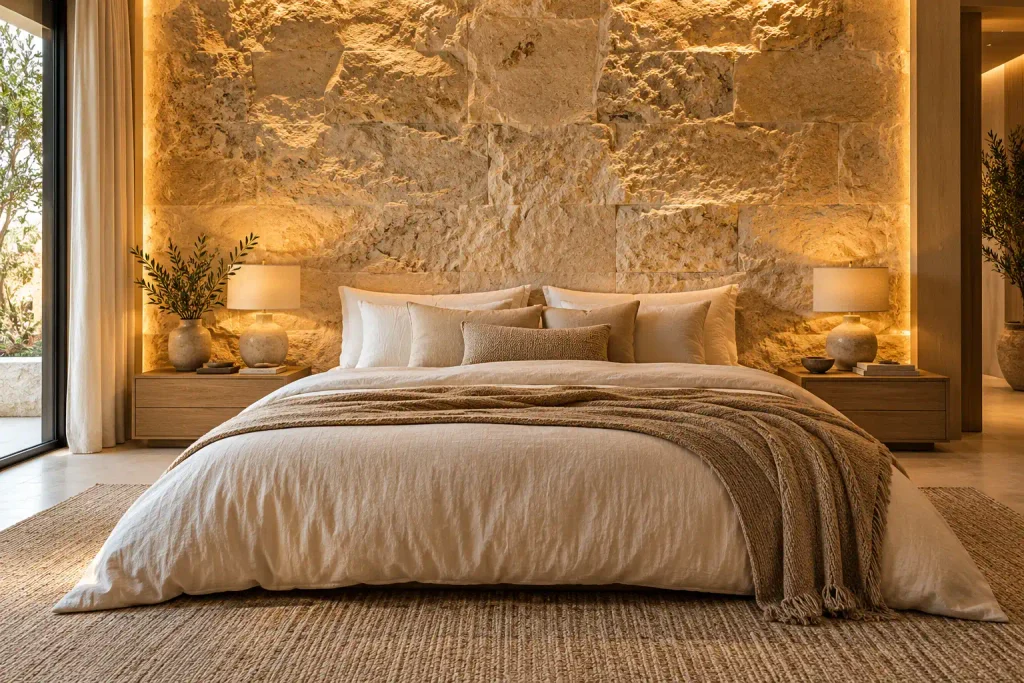
Stone can turn the wall behind a bed into an impressive architectural feature. Limestone, travertine, stacked stone, or realistic stone-look panels introduce natural variation and texture that eliminates the need for a separate headboard. Because stone already has substantial visual weight, use a simple low-profile bed and restrained bedding to prevent the room from becoming overly complicated.
Warm indirect lighting can emphasize the irregular surface and reveal the stone’s natural tonal variation. Pair the wall with timber furniture, linen bedding, and understated accessories to establish an organic luxury aesthetic. This combination works particularly well in modern villas, rustic contemporary homes, and resort-inspired bedrooms. A bed without headboard against a stone wall creates a strong connection to natural materials while maintaining a sophisticated architectural appearance.
27. Color-Blocked Wall Behind the Bed
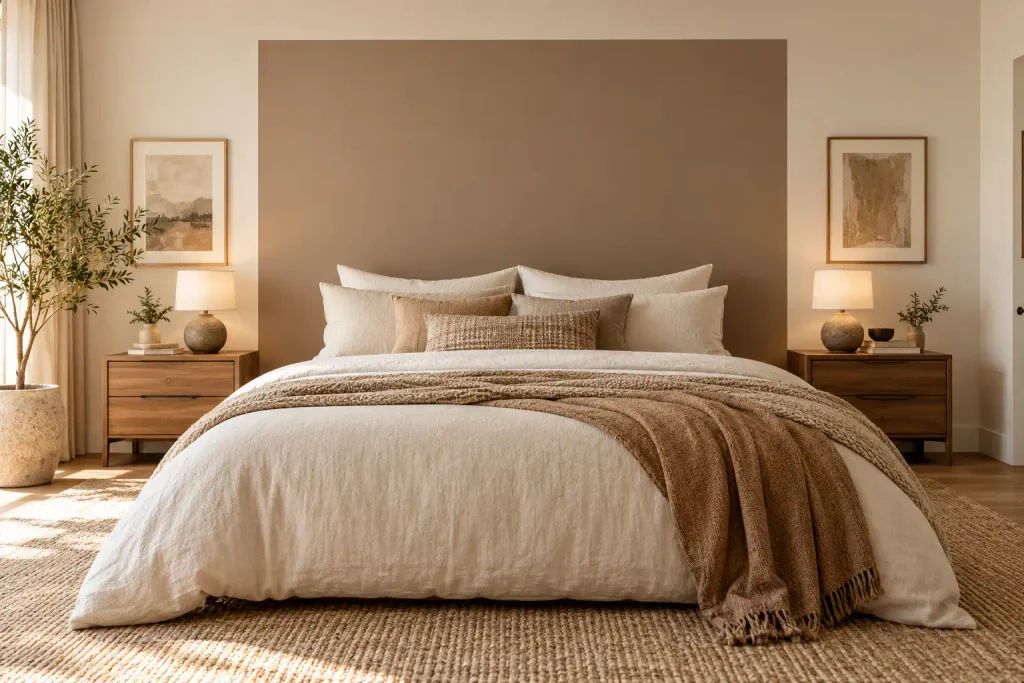
Color blocking provides a graphic alternative to a physical headboard. Paint a large rectangle, horizontal band, or geometric section directly behind the mattress using a contrasting but harmonious color. Extending the painted area slightly beyond the width of the bed can create the impression of a broad headboard while remaining completely flat against the wall. Warm neutrals, dusty pastels, and earthy tones are particularly versatile.
Keep surrounding accessories simple enough for the painted feature to remain clear. Bedding can repeat one of the wall colors or provide subtle contrast through cream and neutral layers. This technique offers considerable flexibility because the painted shape can easily be updated when the bedroom style changes. For renters or budget-conscious decorating projects, a painted headboard effect can deliver significant visual impact using relatively few materials.
28. Rustic Bedroom Without Headboard
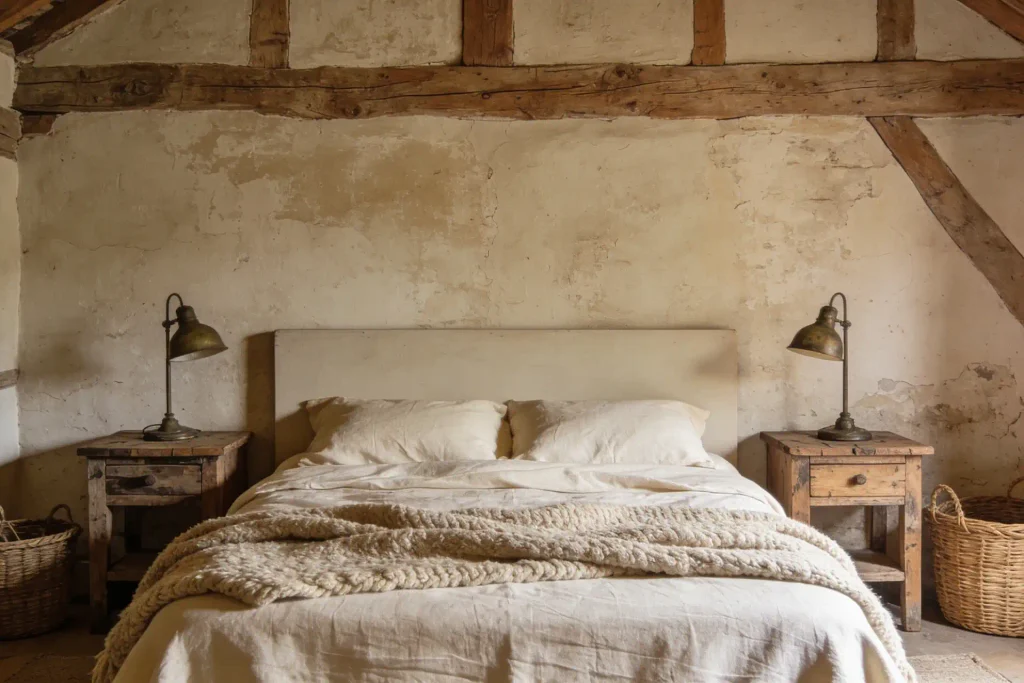
A rustic bedroom can use natural materials and aged surfaces to make a conventional headboard unnecessary. Place a simple bed against a textured plaster, stone, or weathered timber wall and dress it with linen bedding, wool blankets, and earthy cushions. Natural imperfections in the materials provide visual richness, while warm brown, cream, beige, and muted gray colors create a comfortable and grounded atmosphere.
Reclaimed wood nightstands, woven baskets, vintage-style lighting, and handmade pottery can reinforce the rustic character. Avoid filling every surface with accessories; instead, allow material texture to provide most of the decoration. A rustic bed without headboard works particularly well when the wall behind it has enough visual interest to anchor the mattress naturally. The resulting bedroom feels authentic, relaxed, and connected to natural materials.
29. Mid-Century Modern Bed Without Headboard
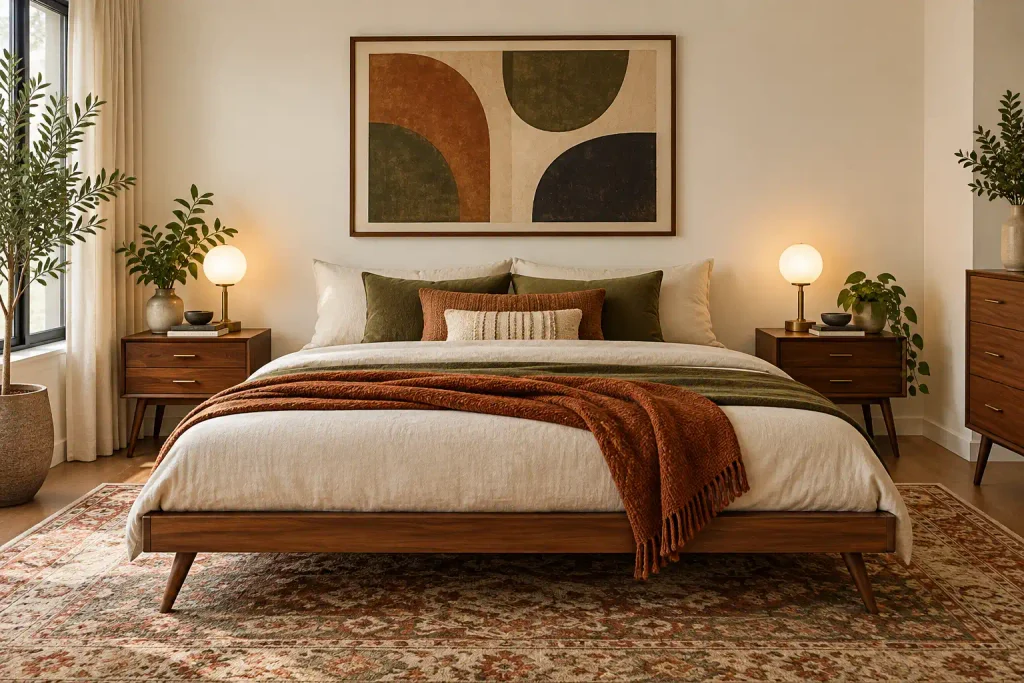
A mid-century modern bedroom can remain visually strong without a traditional headboard by focusing on distinctive furniture shapes and warm timber. Choose a low bed frame with tapered legs and pair it with walnut nightstands or a streamlined dresser. Warm white walls, mustard, olive, rust, and muted orange accents can reference the period without making the room feel like a historical recreation.
Hang a large geometric print or period-inspired abstract artwork above the mattress to establish a focal point. Globe lamps, sculptural lighting, and a textured area rug can complete the composition. Maintaining generous negative space keeps the bedroom contemporary. A mid-century bed without headboard allows recognizable furniture and decorative elements to define the style while keeping the sleeping area visually lighter than a conventional high-backed bed.
30. Industrial Bed Without Headboard
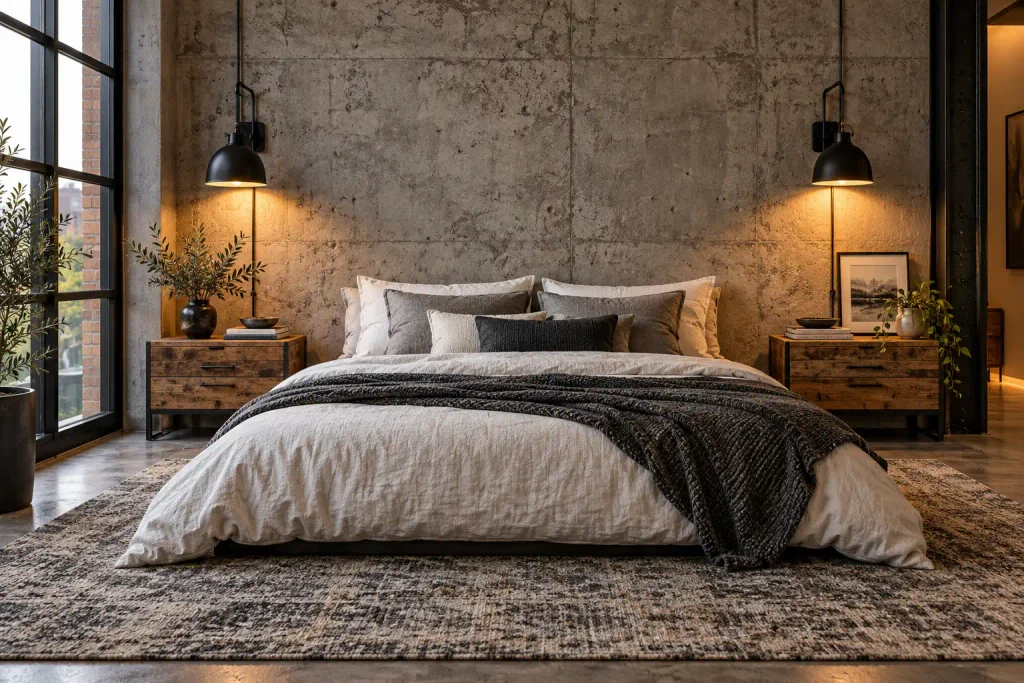
Industrial bedrooms benefit from exposed architectural materials, making a headboard optional rather than essential. Position a simple low bed against concrete, exposed brick, or dark plaster and combine it with black metal furniture and warm wood accents. The contrast between soft bedding and harder architectural surfaces creates visual depth while maintaining the utilitarian character associated with industrial interior design.
Use warm lighting to prevent concrete and metal surfaces from feeling excessively cold. Black wall sconces, Edison-inspired fixtures, timber nightstands, and a substantial rug can create balance. Keep bedding relatively simple in gray, white, charcoal, or beige. A bed without headboard in an industrial bedroom allows raw materials to become the focal point, producing an urban loft atmosphere without adding unnecessary decorative furniture.
31. Romantic Bedroom Without a Headboard
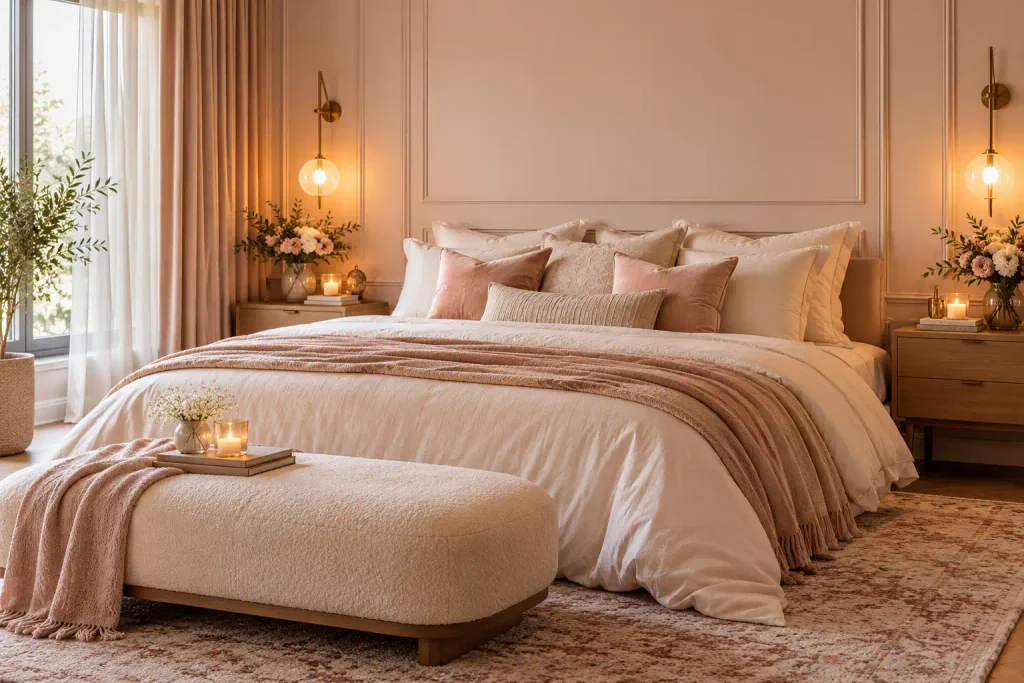
A romantic bedroom can feel soft and elegant without using an upholstered headboard. Start with luxurious layered bedding in ivory, blush, champagne, or warm cream. Add flowing curtains, delicate bedside lighting, and tactile fabrics such as linen and velvet. Instead of placing a heavy piece of furniture behind the mattress, use subtle decorative molding, floral artwork, or a softly painted wall to establish the sleeping area.
The key is to create softness throughout the entire room rather than concentrating it in a single headboard. A plush rug, decorative pillows, fresh or realistic botanical arrangements, and warm lamps can contribute to the atmosphere. Keep the palette refined and avoid excessive ornamental details. A romantic bed without headboard can feel graceful and intimate when fabric, lighting, color, and wall treatments work together cohesively.
32. Kids’ Bed Without Headboard
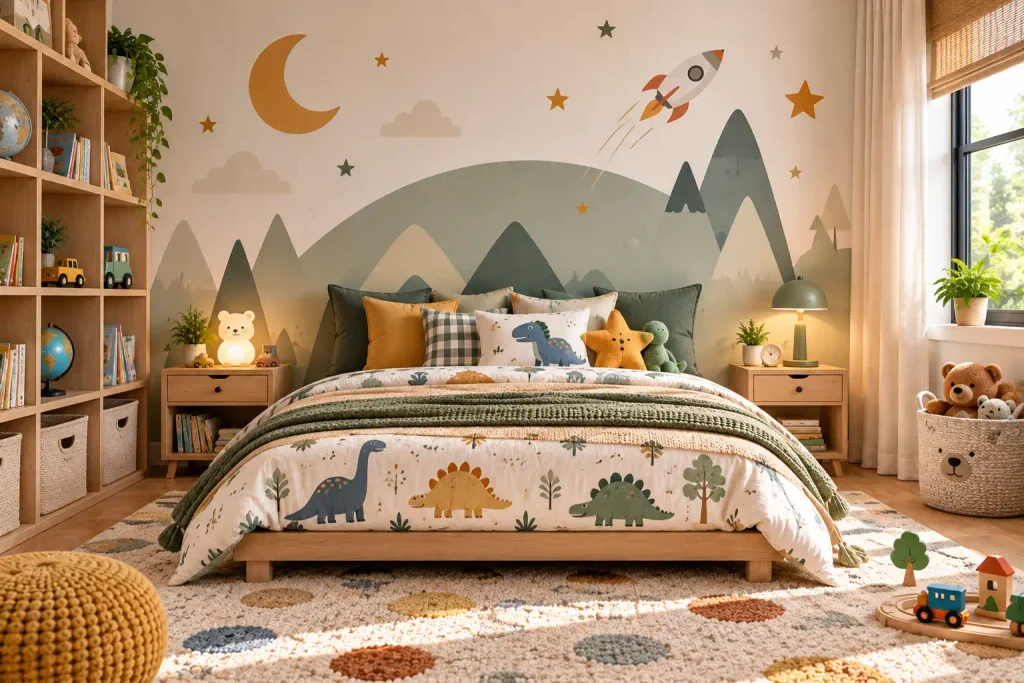
A child’s bedroom can use playful wall decoration instead of a bulky headboard. A painted rainbow, mountain silhouette, stars, clouds, simple mural, or removable wall decals can create a cheerful backdrop behind a basic bed frame. Because children’s preferences change quickly, using wall decor allows the room to evolve without replacing expensive bedroom furniture every few years.
Keep the arrangement practical by combining the bed with washable bedding, accessible storage baskets, and compact bedside furniture. Choose a color palette that feels playful but not visually overwhelming. Soft greens, blues, warm yellows, blush, and natural wood can create a comfortable environment. A kids’ bed without headboard can therefore provide more flexibility for changing themes while keeping the bedroom functional and easy to update.
33. Guest Bedroom Without Headboard
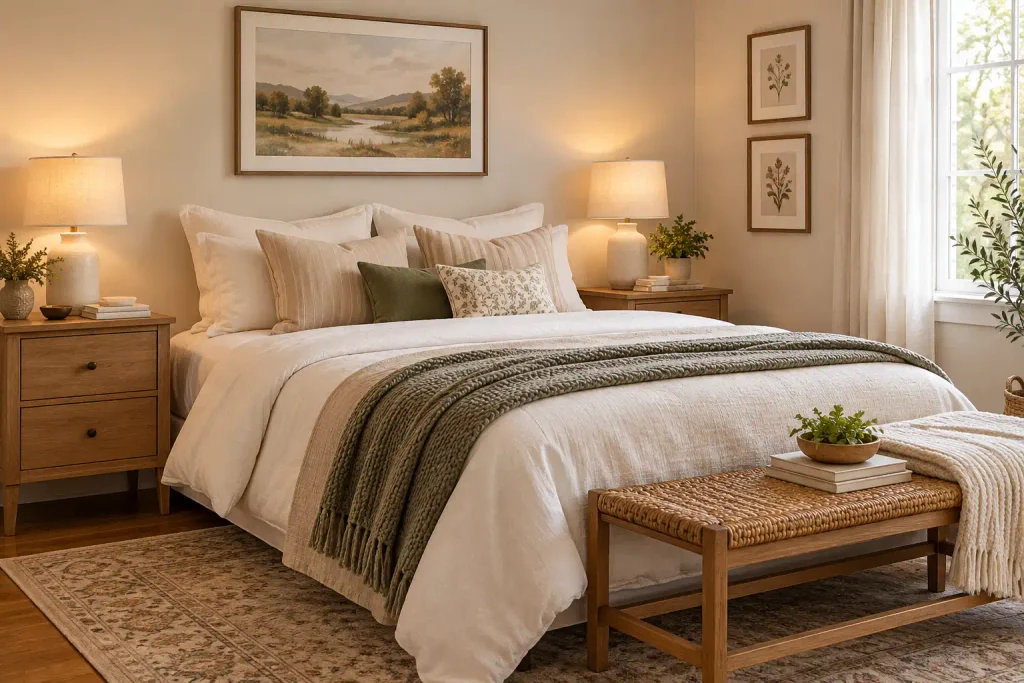
A guest bedroom does not require elaborate furniture to feel welcoming. A comfortable bed without headboard can look polished when paired with fresh neutral bedding, supportive pillows, bedside lighting, and convenient nightstands. Instead of purchasing a large decorative headboard, use framed artwork or a subtle accent wall to establish a focal point. This can also make a smaller guest room feel less crowded.
Focus on details that improve comfort for visitors, including an accessible charging point, reading lamp, spare blanket, and uncluttered surfaces for personal belongings. Warm white, beige, sage, and muted blue are versatile colors that appeal to a broad range of tastes. By emphasizing comfort and practical design, a guest room with no headboard can feel thoughtful and finished without unnecessary furniture.
34. Floating Platform Bed Without Headboard
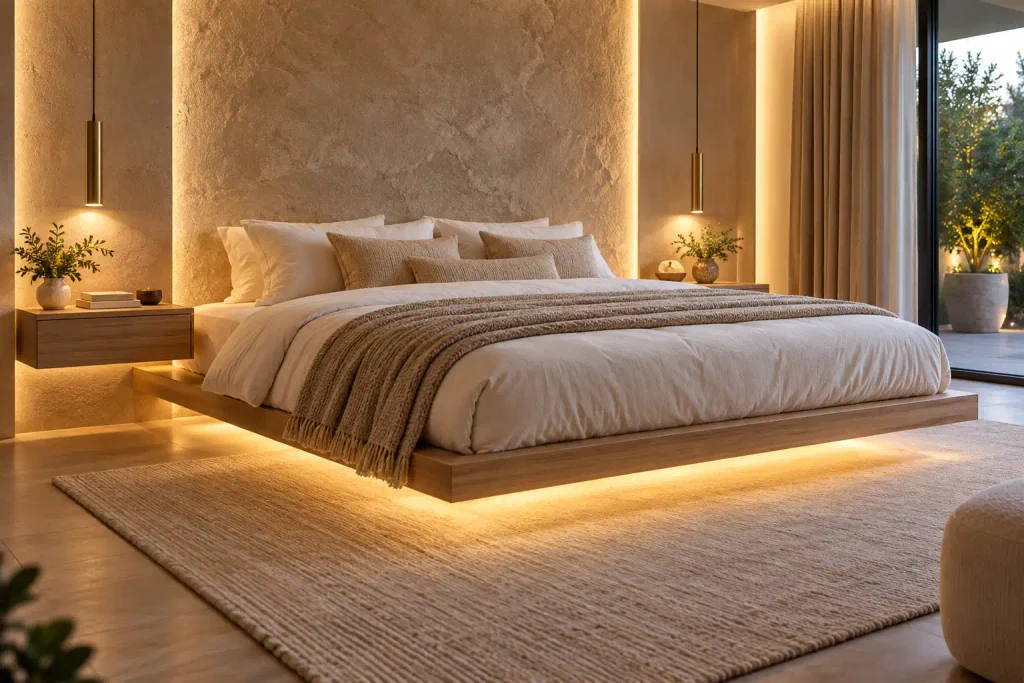
A floating platform bed creates such a distinctive visual effect that a headboard is often unnecessary. The concealed base makes the mattress appear suspended above the floor, giving the room a futuristic and uncluttered character. Integrated LED lighting beneath the platform can enhance the floating illusion during the evening. Keep the wall behind the bed relatively simple so attention remains on the unusual bed construction.
Combine the floating frame with streamlined nightstands, neutral bedding, and subtle architectural lighting. Textured plaster, microcement, or wood panels can provide enough background detail without competing with the bed. This approach works particularly well in contemporary master bedrooms and modern apartments. A floating bed without headboard emphasizes horizontal lines and open floor space, creating a sophisticated sleeping environment with a strong architectural identity.
35. Hotel-Inspired Bed Without Headboard
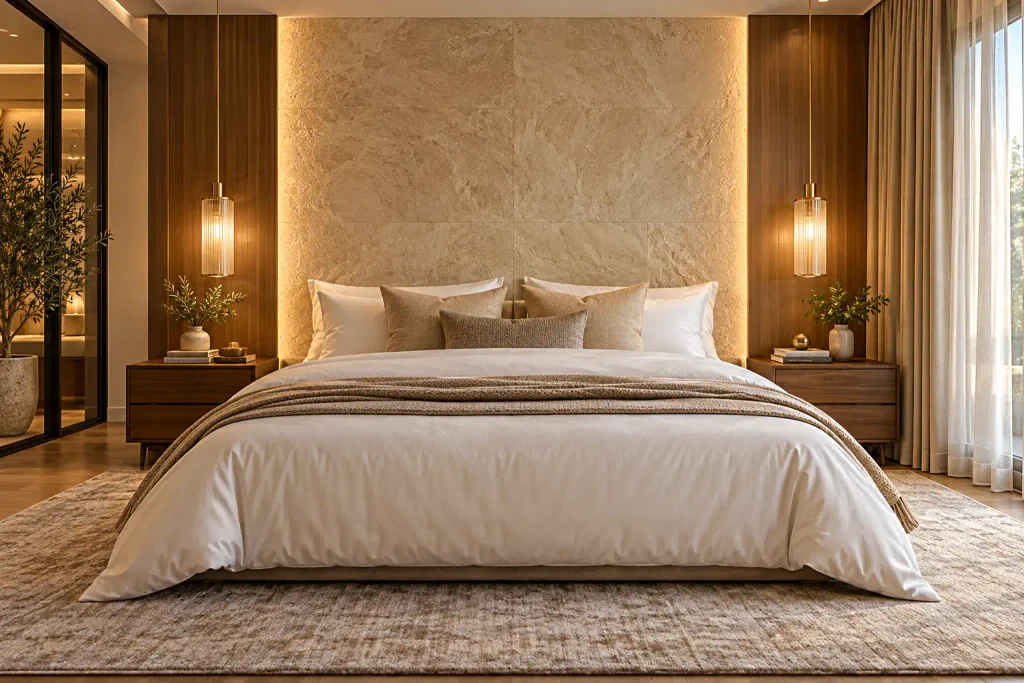
A hotel-inspired bedroom can achieve a luxurious appearance without a conventional upholstered headboard by concentrating on symmetry, bedding, lighting, and wall finishes. Center a king or queen bed against a refined feature wall and place matching nightstands on either side. Layer crisp white sheets with a plush duvet, substantial sleeping pillows, decorative cushions, and a neatly folded throw. The generous textiles give the mattress the visual presence expected from an upscale bedroom.
Add coordinated pendant lights or sconces, full-length curtains, a large area rug, and subtle artwork to complete the composition. A textured wall finish or sophisticated molding can provide architectural depth behind the bed. Maintain a controlled palette of ivory, beige, taupe, walnut, and warm metallic details. A hotel-style bed without headboard proves that luxury comes from proportion, materials, lighting, and careful styling rather than from one particular piece of bedroom furniture.
Final Thoughts on Decorating a Bed Without a Headboard
A bed without headboard does not have to look incomplete. In many contemporary bedrooms, removing the conventional headboard actually creates more opportunities to experiment with wall treatments, oversized artwork, paint, molding, wallpaper, textiles, lighting, wood panels, and architectural materials. The best solution depends on the size of the room, the style of the bed, the available wall space, and the overall atmosphere you want to create.
Whether you prefer a minimalist platform bed, cozy bohemian bedroom, luxurious master suite, Scandinavian interior, rustic retreat, or modern hotel-inspired space, there are plenty of attractive headboard alternatives available. Focus on creating visual balance behind the mattress and coordinate your wall treatment with bedding, nightstands, lighting, rugs, and other bedroom decor. With thoughtful styling, a bed with no headboard can become one of the most distinctive features of the entire room.
Leave a Reply