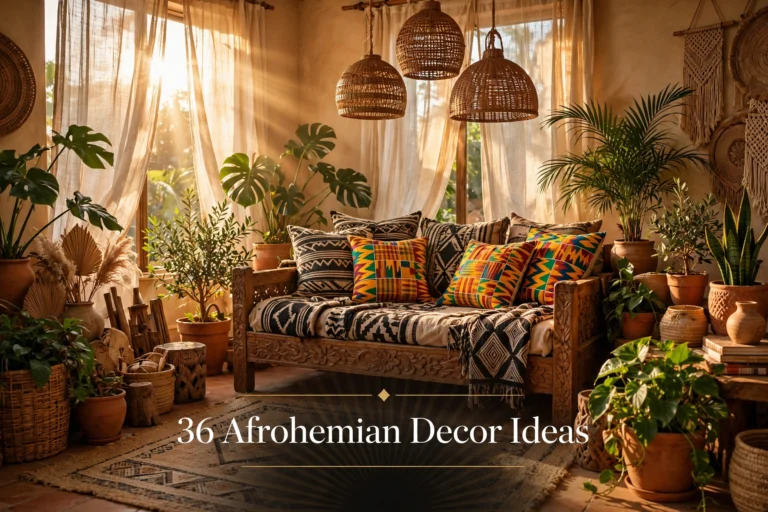
Front Porch Decor Ideas: 36 Welcoming Designs
Your front porch is the first hello your home says to the world. It sets the tone before a…

Your front porch is the first hello your home says to the world. It sets the tone before a guest ever reaches the doorbell, and it is the space you come home to every single day. The good news is that a welcoming porch does not require a big renovation or a big budget — it takes a few well-chosen layers: comfortable seating, healthy greenery, warm lighting, and details that reflect the season and your style.
The 36 front porch decor ideas below cover every kind of home, from a tiny apartment stoop to a wide wraparound farmhouse porch. You will find year-round foundations like rocking chairs, urn planters, and layered rugs, plus seasonal rotations for spring blooms, summer evenings, fall harvest displays, and winter evergreens. Mix and match the ideas that fit your space, and your porch will feel like a true outdoor room twelve months a year.
1. Classic Rocking Chairs

A pair of classic rocking chairs is the most timeless front porch decor choice there is. Choose wooden rockers in white, black, or a natural finish to suit your home’s style, and angle them slightly toward each other so the setup invites conversation. A small side table between them holds drinks, a book, or a small potted plant and makes the arrangement feel complete rather than staged.
Make the chairs comfortable enough to actually sit in by adding outdoor cushions and a lumbar pillow in a weather-resistant fabric. In cooler months, drape a plaid throw over one arm. Rocking chairs work in every season and pair beautifully with almost any other porch decor, which makes them the perfect foundation to build the rest of your porch around.
2. Hanging Porch Swing

A hanging porch swing instantly turns a front porch into the neighborhood’s favorite gathering spot. A traditional wooden slat swing hung from sturdy chains suits farmhouse and cottage homes, while a sleek painted swing in black or navy gives a more tailored look. Before you hang one, confirm your porch ceiling joists can carry the weight, and leave at least a foot of clearance on all sides so the swing can move freely.
Style the swing like an outdoor sofa: a long seat cushion, two or three throw pillows in coordinating patterns, and a light blanket for evening sits. Keep the palette tied to your front door color so the whole porch reads as one designed space. A swing also photographs beautifully, which makes it a strong focal point for curb appeal.
3. Layered Rug and Doormat

Layering a larger outdoor rug under a smaller doormat is a designer trick that makes any entry look instantly more finished. Start with a flat-weave outdoor rug in a pattern — stripes, a vintage medallion, or a simple border — then center a coir or rubber doormat on top in front of the door. The rug should extend at least a few inches beyond the mat on every side so the layers read clearly.
This combination is practical as well as pretty: the rug catches the eye from the street while the mat does the hard work of trapping dirt before it enters the house. Choose colors that echo your door and planters, and shake or hose both layers off regularly. Swap the top mat seasonally for an easy, inexpensive refresh.
4. Seasonal Wreath Rotation

A wreath is the fastest way to update your front porch for the season, and building a small rotation means your door always looks current. Start with a versatile grapevine or eucalyptus base for spring and summer, then switch to a fall wreath of dried leaves, wheat, and mini pumpkins when the weather turns. Winter calls for evergreen, pinecones, and berries, while a simple boxwood wreath works almost all year.
Hang your wreath at eye level, centered on the door, using an over-the-door hanger or a ribbon looped over the top for a softer look. Store off-season wreaths in wreath boxes or on hooks in a closet so they keep their shape. If you love a fuller door, add a matching garland around the door frame during the holidays to frame the wreath.
5. Matching Urn Planters

Symmetry is the secret weapon of classic porch decor, and a pair of matching urn planters flanking the front door delivers it instantly. Traditional cast-iron or fiberglass urns in black, bronze, or aged white suit nearly every home style. Fill them using the thriller, filler, spiller formula: something tall in the center, mounding flowers or foliage around it, and a trailing plant spilling over the edge.
Urns are easy to rotate through the year — spring bulbs and pansies, summer geraniums and petunias, fall mums and ornamental kale, and winter evergreen branches with berries. Use good potting mix with drainage, and consider faux greenery in the off-season if your porch gets little light. The height of an urn lifts plants to door level, which makes the whole entry feel grander.
6. Lantern Cluster Lighting

Clusters of lanterns bring warmth and glow to a porch at dusk, when curb appeal matters most. Group three lanterns of different heights beside the door, on the steps, or next to a bench. Black metal lanterns with glass panels suit most styles; copper and wood versions lean rustic or coastal. Fill them with flameless LED candles on timers so they switch on automatically every evening without any fire risk.
Lanterns also solve the awkward empty corner problem on many porches — a tall lantern beside a planter fills vertical space beautifully. During holidays, tuck a few ornaments, pinecones, or fairy lights inside the lanterns alongside the candle. Keep the glass clean so the light stays bright, and bring delicate lanterns under cover during severe storms.
7. Hanging Fern Baskets

Lush hanging fern baskets are a Southern porch classic that works anywhere with a shaded or partly shaded porch. Boston ferns are the traditional choice, cascading over the edges of wire or coco-lined baskets hung from the porch ceiling beams. Hang them evenly spaced along the front edge of the porch so they frame the view from the street like green curtains.
Ferns love consistent moisture, so water them deeply several times a week in hot weather and mist the fronds on dry days. If real ferns are too high-maintenance for your climate, high-quality faux ferns have become remarkably realistic and need only an occasional rinse. Either way, the soft movement of hanging greenery adds life that no other porch decor can match.
8. Farmhouse Bench Styling

A simple wooden bench gives a farmhouse porch both seating and a styling surface. Choose a slatted or solid bench in weathered wood, white, or black, and place it against the wall beside the door or under a window. Style it with two throw pillows, a folded quilt or grain-stripe blanket, and a galvanized bucket of flowers at one end.
The bench is also the perfect drop zone for seasonal vignettes: pumpkins and a plaid throw in fall, a small evergreen and lanterns in winter, a basket of tulips in spring. Keep one element — the bench itself and its basic pillow arrangement — constant, and rotate only the accents so the look stays cohesive and changes stay affordable.
9. Modern Minimalist Porch
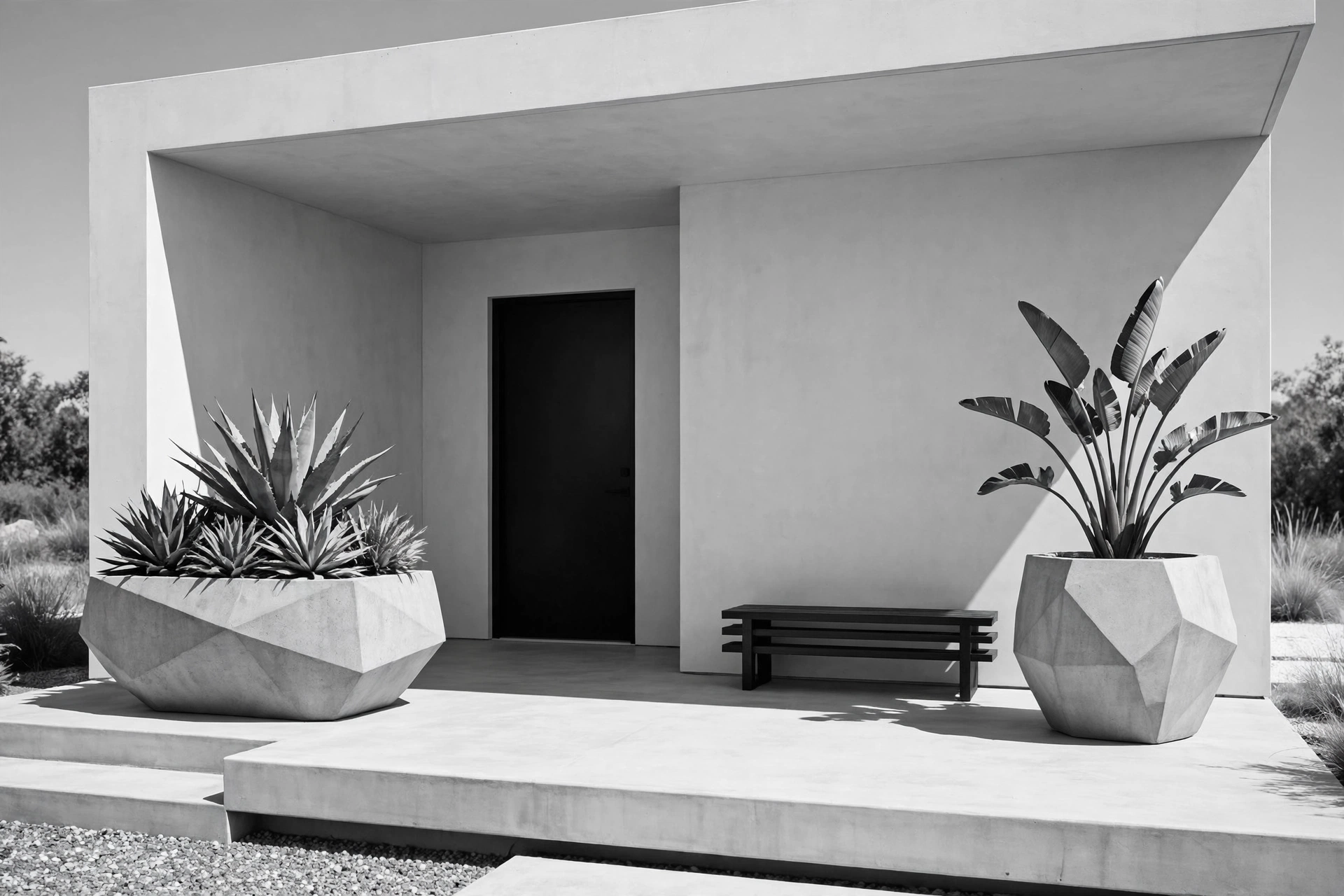
A modern minimalist porch proves that less really can be more. Limit the palette to two or three colors — black, white, and one metal or wood tone — and choose pieces with clean lines: a pair of sculptural planters, a simple bench or two low chairs, and a single statement light fixture. Every item should earn its place, and negative space is part of the design.
Architectural plants like snake plants, ornamental grasses, or a single olive tree in a concrete planter complete the look without fuss. Keep surfaces clear, hide clutter in a storage box that matches the palette, and let the geometry of the house shine. This style is also wonderfully low-maintenance, which makes it ideal for busy homeowners and rental properties alike.
10. Window Box Flowers
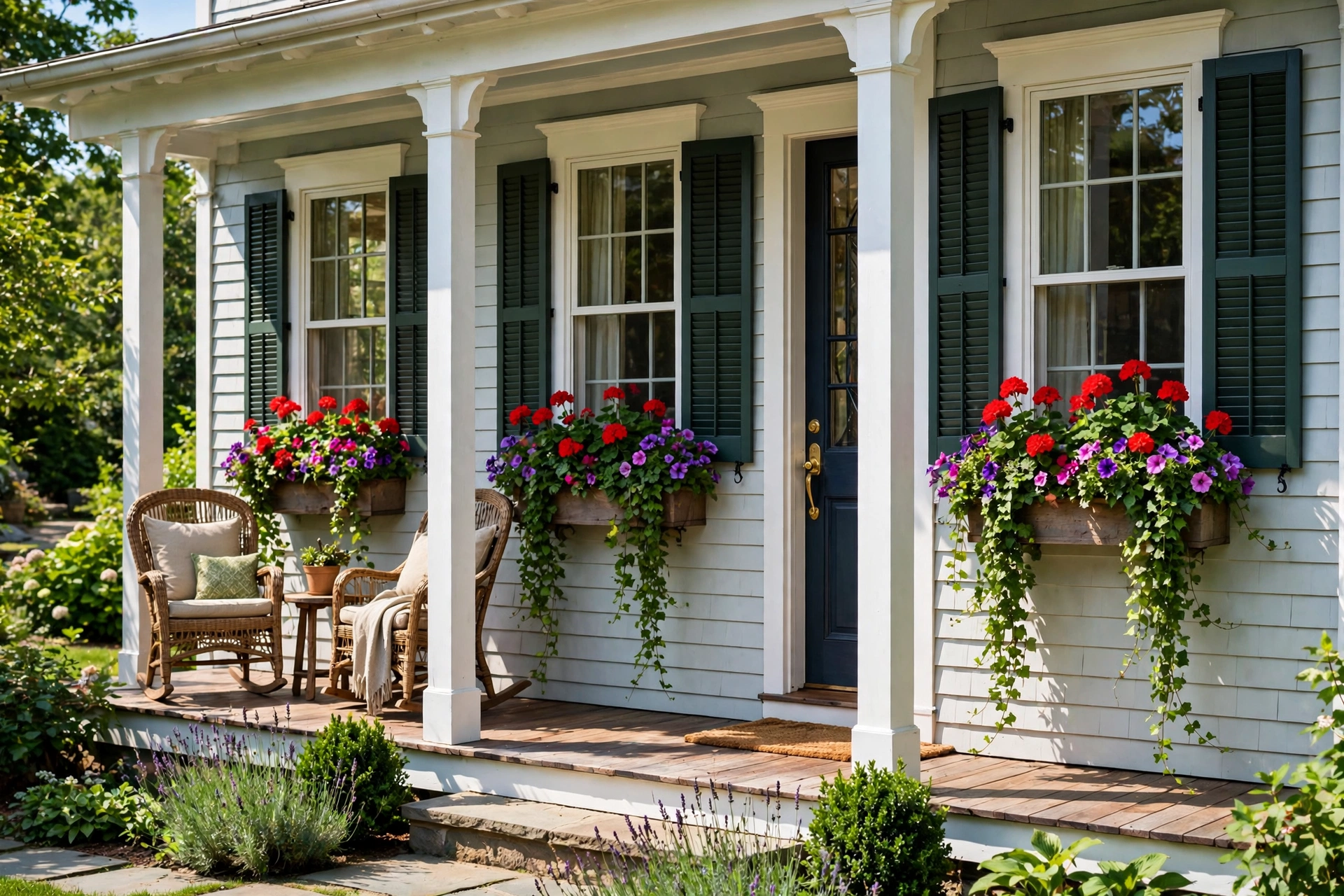
Window boxes turn plain porch-facing windows into ribbons of color visible from the whole street. Mount boxes just below the windows that face the porch or flank the entry, and fill them generously — overflowing boxes look far better than sparse ones. Geraniums, petunias, lobelia, and trailing ivy are classic, forgiving combinations for sunny spots, while impatiens and coleus thrive in shade.
Use a coco liner or a plastic insert to hold moisture, and water frequently since window boxes dry out faster than ground beds. Coordinate the flower colors with your door wreath and planters so the porch reads as one composition. In winter, swap blooms for evergreen cuttings, red berries, and pinecones so the boxes never sit empty.
11. Daybed Porch Swing

For a wide porch, a hanging daybed swing is the ultimate luxury. Essentially a twin-size bed suspended from the ceiling, it invites afternoon naps, lazy reading sessions, and slow weekend mornings outside. Build or buy a sturdy frame, hang it with heavy-duty rope or chain from properly reinforced joists, and dress it with an outdoor mattress and a pile of pillows along the back.
Keep bedding in outdoor fabrics so it can handle humidity and pollen, and choose a washable cover for the mattress. A daybed swing works best on deeper porches where it will not block the walkway to the door. Add a small side table or a tray for drinks, and you have created the single most coveted seat in the house.
12. String Light Canopy

String lights transform a porch after dark, casting the warm, festive glow that makes people linger. Run commercial-grade outdoor string lights along the front edge of the porch ceiling, drape them in gentle swags between posts, or zigzag them across a wide porch for a canopy effect. Warm-white bulbs are the most flattering and timeless choice.
Use only lights rated for outdoor use, secure them with cup hooks or cable clips rather than staples, and put them on a timer or smart plug so they come on at dusk automatically. Solar versions work for porches without a nearby outlet. Combined with lanterns and a lit wreath, string lights make your home look welcoming from the street every evening of the year.
13. Topiary Trees in Planters

Topiary trees bring formal structure to a porch and look elegant in every season. A pair of spiral, ball, or cone-shaped topiaries in substantial planters flanking the door creates a tailored, high-end entry. Real boxwood, juniper, or rosemary topiaries reward you with fragrance and slow growth, but quality faux topiaries now look convincingly real and need no pruning or watering.
Choose planters with enough weight to keep tall topiaries upright in wind, and underplant with a ring of small flowers or trailing greenery to soften the base. Keep real topiaries trimmed two or three times a year to hold their shape. Topiaries pair especially well with traditional, colonial, and modern homes where clean geometry is part of the architecture.
14. Wicker Seating Set

A wicker seating set gives a porch the relaxed feel of a garden room. Two wicker armchairs and a small table — or a wicker loveseat — fit most porches and create a genuine conversation area rather than just a pass-through. All-weather resin wicker stands up to sun and rain far better than natural wicker, which belongs only on fully covered porches.
Add thick seat cushions in a cheerful floral, stripe, or solid that coordinates with your door color, and keep a woven throw handy for cool evenings. A jute or patterned outdoor rug under the set defines the seating zone. Wicker’s texture warms up brick, stone, and siding alike, and it blends effortlessly with planters and greenery.
15. Bold Front Door Color Story

The boldest porch decor move is also one of the cheapest: paint the front door a confident color and build the rest of the porch palette around it. A red, teal, sunny yellow, or deep navy door becomes the focal point of the whole facade. Then repeat that color in small doses — pillow fabrics, flower choices, a painted planter — so the porch feels intentionally designed.
Test your color on a poster board taped to the door before committing, since light changes everything. Use a durable exterior paint in a satin or semi-gloss finish, and consider painting the storm door or just the interior frame if a full color change feels too brave. A bold door photographs beautifully and makes your home easy for guests to spot.
16. Vintage Crate and Milk Can Decor

Vintage finds give a porch character that new decor cannot imitate. A galvanized milk can beside the door makes a perfect stand for a bundle of branches, pampas grass, or seasonal flowers. Wooden crates stack into rustic shelving for small plants, lanterns, and garden tools, and an old watering can or a weathered ladder adds instant farmhouse charm.
Hunt flea markets, estate sales, and antique shops for pieces with genuine patina, and seal rusty metal with a clear coat if you want to stop further corrosion. Group vintage items in odd numbers and vary their heights for a collected-over-time look. This style is forgiving and personal — every piece tells a story, and nothing needs to match perfectly.
17. Fall Pumpkin and Mum Display

Autumn is the front porch’s biggest season, and a generous pumpkin and mum display is its signature look. Line the steps with pumpkins in mixed sizes and colors — classic orange, white, sage green, and heirloom Cinderella varieties — and tuck pots of mums in burgundy, gold, rust, and purple between them. Add a bale of hay or a bundle of corn stalks tied to a post for height.
Keep mums blooming longer by watering them from the bottom and deadheading spent flowers, and set pumpkins on a small piece of wood or cardboard to slow rot from damp steps. A plaid throw on the bench, a fall wreath on the door, and lanterns with amber candles complete the scene. This display carries beautifully from September through Thanksgiving with only minor refreshes.
18. Winter Evergreen Porch

When flowers fade, evergreens keep a winter porch alive. Fill your urns and planters with cut fir, cedar, and pine branches, then add red winterberries, pinecones, and a few ornaments for sparkle. A fresh or faux evergreen wreath and a garland draped around the door frame carry the theme to the entry, while a small potted spruce or two can flank the steps all season.
Cut branches stay fresh for weeks outdoors in cold weather, especially if you mist them occasionally. Layer in lantern light, a plaid blanket on the bench, and a winter doormat, and the porch feels festive long after the holidays end. The evergreen base also transitions gracefully — simply remove ornaments in January and the porch still looks intentional through February.
19. Spring Bloom Planters

After a long winter, nothing lifts a home’s face like spring planters overflowing with early blooms. Fill pots and urns with tulips, daffodils, hyacinths, and pansies in pastel or cheerful mixed colors. Force bulbs in pots in late winter for the earliest display, or buy pre-planted bulb pots from the garden center and drop them straight into your decorative planters.
Pair the flowers with a spring wreath of faux tulips or forsythia on the door and a fresh doormat to complete the seasonal changeover. As spring bulbs fade, replace them with summer annuals in the same containers so the porch never has an empty week. Spring is also the moment for a deep clean — sweep the ceiling corners, wash the light fixtures, and hose down the floor before styling.
20. Summer Patriotic Porch

From Memorial Day through the Fourth of July and Labor Day, a red, white, and blue porch celebrates summer in classic American style. Hang a flag from a porch post or mount one beside the door, add bunting swags along the railing, and choose red geraniums, white petunias, and blue lobelia in your planters to echo the palette with flowers.
Keep the look tasteful by mixing patriotic pieces with your everyday porch furniture — striped navy cushions, a red throw, and white lanterns work all summer, not just on the holiday. Treat a real flag with care: bring it in during storms and replace it when it fades. After the season, the navy and white base remains, ready to carry the porch into fall.
21. Coastal Porch Style

You do not need to live near the water to enjoy coastal porch style. Start with a palette of white, sand, driftwood gray, and sea-glass blues. Choose white or light-washed seating, striped cushions in navy or aqua, and natural textures like rope, jute rugs, and weathered wood. A pair of white lanterns and planters of blue hydrangeas or ornamental grasses complete the breezy feel.
Use nautical accents sparingly — a rope-wrapped planter, a piece of driftwood, or a striped throw is enough to suggest the shore without turning the porch into a theme park. Coastal style is really about light colors and relaxed texture, which is why it suits hot climates so well: everything looks cool, clean, and easy to maintain through the summer.
22. Boho Rattan Porch

A boho porch layers natural materials, global patterns, and lots of plants into a relaxed, collected look. Anchor the space with a rattan or peacock chair if you have room, or a simple bench covered in patterned cushions and a fringed throw. Add a woven rug, macrame wall hanging on the wall beside the door, and planters in terracotta, seagrass, and ceramic at several heights.
Plants are the soul of boho style, so mix leafy varieties — palms, trailing pothos, and herbs — wherever they fit. Warm metallic lanterns and string lights add evening glow. The boho approach welcomes imperfection and mixing, which makes it budget-friendly: thrifted pieces and handmade textiles often look better here than anything bought as a matched set.
23. Small Porch Bistro Set

A small porch or stoop can still hold a real seat. A folding bistro set — two slim chairs and a round table — fits porches as narrow as four feet and gives you a spot for morning coffee or evening tea. Metal sets in black, white, or a cheerful color are inexpensive and store flat in winter, while wooden sets fold just as easily.
Build the rest of the small-porch look vertically: a wreath on the door, a hanging basket, tall narrow planters in the corners, and a layered doormat underfoot. Avoid anything that blocks the walking path to the door. Proof that size does not limit charm, a well-dressed tiny porch often draws more compliments than a large empty one.
24. Painted Ceiling and Ceiling Fan

Look up: the porch ceiling is an overlooked design surface. In the South, porch ceilings are traditionally painted “haint blue,” a soft blue-green said to bring good luck and visually extend the sky — and it genuinely makes a porch feel airier. White beadboard, natural stained wood, or even a bold color on the ceiling can transform the space without touching a single piece of furniture.
An outdoor ceiling fan is the functional partner to a pretty ceiling, making a summer porch comfortable enough to use at midday and keeping bugs at bay with moving air. Choose a damp- or wet-rated fan with a light kit to double as your main porch lighting. Together, a painted ceiling and a fan make the porch feel like a true room rather than an afterthought.
25. Symmetrical Colonial Entry

Colonial and traditional homes shine with a strictly symmetrical porch: everything on one side of the door mirrored on the other. Think two identical urns, two matching lanterns or sconces, two topiaries, and a centered wreath. This formality suits brick facades, paneled doors, and homes with classical proportions, and it is the easiest style to execute well because the rule is simple — buy everything in pairs.
Keep the color palette restrained: black, white, brass, and green carry the look, with seasonal flowers providing the only color shifts. A pair of black benches or rocking chairs can extend the symmetry to a wider porch. The result reads as orderly and gracious from the street, and it never goes out of style.
26. Railing Planter Boxes

If your porch has railings, planter boxes mounted along them add flowers at eye level without using any floor space. Choose boxes with brackets sized for your railing width, or deck-rail planters that simply sit astride the rail. Fill them with trailing plants — wave petunias, bacopa, sweet potato vine — that spill over both sides and soften the railing lines.
Railing boxes need frequent watering since they are exposed to wind and sun on all sides, so consider a drip irrigation line or self-watering inserts in hot climates. Mix in a few upright plants for height contrast. In fall, swap in mums and ornamental cabbage; in winter, lay evergreen cuttings and berries so the boxes stay handsome in the off-season.
27. Porch Curtains for Shade and Privacy

Outdoor curtains turn an exposed porch into a private retreat. Hang weather-resistant panels from a rod or tension cable mounted just inside the porch posts, and draw them closed against harsh afternoon sun, street views, or a neighbor’s window. Sheer white panels filter light dreamily, while heavier canvas panels in a stripe or solid offer real shade and weather protection.
Use tiebacks to hold panels open in sculptural swags when you want the view, and choose grommet-top styles rated for outdoor use so hardware does not rust. Curtains also add movement and softness that contrast beautifully with hard porch architecture. On windy days, weight the hems or tie panels securely so they do not whip against planters.
28. Tiered Plant Stand Display

A tiered plant stand lets you display a whole garden’s worth of pots in a couple of square feet. Wooden ladder shelves, metal étagères, and stepped crates all work — arrange one beside the door or in a porch corner and fill the shelves with plants of descending size, tallest at the back and top, trailing plants at the edges. Mixing pot materials — terracotta, ceramic, galvanized metal — adds collected charm.
Tiered stands are perfect for herb collections near the door, a rotating show of whatever is blooming, or a succulent collection in a sunny spot. Group plants with similar water needs on each shelf to simplify care, and put saucers under pots to protect wooden floors. Restyle the stand each season so the porch always has one corner that feels brand new.
29. Succulent and Drought-Friendly Planters

For sun-baked porches and forgetful waterers, succulent planters are both stylish and nearly indestructible. Fill wide, shallow bowls and concrete planters with a mix of echeveria rosettes, sedum, jade, and a few spiky agaves or aloes for structure. Top the soil with gravel or crushed stone for a clean, finished look that also slows evaporation.
Use gritty, fast-draining soil and pots with drainage holes, and water deeply but rarely. Succulents suit modern, southwestern, and coastal porches especially well, and their sculptural forms look good even in winter in mild climates. In cold regions, choose hardy hens-and-chicks and sedums, or move tender pots indoors when frost threatens.
30. Candlelit Evening Porch

Design one version of your porch specifically for after dark. Layer light sources at different heights: string lights or a ceiling fixture above, lanterns on the steps and floor, and candles or flameless pillars on the table and bench. The goal is a warm pool of light that makes the seating area glow while the rest of the yard fades into darkness.
Flameless candles on timers make this effortless and safe, and citronella versions help keep mosquitoes away during summer evenings. Add a cozy throw and cushions so the porch invites a last drink or quiet conversation outside. An evening-ready porch effectively adds hours of daily use to the space and makes your home the prettiest one on the street at night.
31. Morning Coffee Nook

Claim one corner of the porch as a dedicated morning coffee nook. All it takes is a comfortable chair — a cushioned rocker or a small armchair — a side table at elbow height, and a view. Face the chair toward the garden or street so you can watch the neighborhood wake up, and keep a small tray on the table for your mug and a book.
Surround the nook with things that please the senses early in the day: a fragrant potted herb like lavender or mint, a wind chime with a soft tone, and a planter of whatever is blooming. A nook costs almost nothing to create from pieces you already own, yet it changes how you use the porch — from decoration you pass through to a ritual you look forward to daily.
32. Black-and-White Monochrome Porch

A strict black-and-white palette gives any porch a crisp, graphic look that suits both modern and traditional homes. Black furniture and planters against a white house — or the reverse — create strong contrast, while black-and-white striped cushions, a checked rug, or a buffalo plaid throw add pattern without adding color. Greenery becomes the only accent, and it pops vividly against the monochrome scheme.
The discipline of two colors makes shopping and seasonal updates simple: anything black, white, or green automatically fits. Swap in a single seasonal color through flowers only — red in winter, orange in fall — if you want a temporary twist. This palette photographs exceptionally well and always looks tidy, even when the styling is minimal.
33. Cottage Porch with Climbing Roses

Nothing is more romantic than a porch framed by climbing roses. Train a climbing or rambling rose up one porch post or a trellis beside the door, tying the canes loosely as they grow, and let blooms cascade over the entry in late spring. Pair the roses with a white picket-style railing detail, pastel cushions, and planters of lavender, geraniums, and cottage perennials.
Choose disease-resistant climbing varieties suited to your climate, and give them full sun and good air circulation to keep foliage healthy. Even out of bloom, the green canes and classic structure keep the porch pretty, and a light pruning after the first flush encourages repeat flowers. The cottage look welcomes slightly imperfect, overflowing styling — abundance is the point.
34. Rustic Lodge Porch with Stone and Iron

Mountain, cabin, and craftsman homes call for a sturdier porch vocabulary: rough wood, stone, and black iron. Choose heavy timber-style benches or log rockers, iron lanterns with seeded glass, and planters in aged stone or dark bronze. A woven wool-look throw in earth tones and a stack of firewood beside the door complete the lodge mood.
Plant with rugged, textural greenery — juniper, ornamental grasses, and ferns in warm climates — rather than delicate flowers. This style weathers beautifully and asks little maintenance, which suits vacation homes and wooded lots. Warm amber lighting is essential to keep the darker palette feeling inviting rather than heavy after sunset.
35. Trellis Panels with Climbing Vines

Freestanding trellis panels at the open sides of a porch add privacy, shade, and vertical garden space in one move. Set a panel in a heavy planter box or anchor it between posts, then plant a climbing vine at its base — clematis, jasmine, ivy, or annual morning glory for fast coverage. The living screen filters views from the street while still letting breezes through.
Wood lattice suits cottage and farmhouse porches; black metal grid panels fit modern ones. Keep vines trimmed away from the roofline and siding, and choose non-invasive varieties for your region. A trellis also gives hanging planters and string lights something to attach to, multiplying your decorating options on a porch short on walls.
36. A Four-Season Neutral Base

The smartest porch strategy is to build one strong neutral base that never changes, then rotate only the accents. Invest in the permanent layer first: durable seating in a neutral finish, classic black or white planters, a quality doormat-and-rug combination, and good lighting. With that foundation in place, seasonal updates become a fifteen-minute swap instead of a full redecoration.
Keep one storage bin per season holding its wreath, throw, pillow covers, and small accents, and label them so changeovers are painless. Flowers and a few themed pieces do the rest. This system keeps the porch looking fresh all year on a small budget, prevents the cluttered look that comes from layering season over season, and makes every one of the ideas in this list easier to try.
More Home Decor Ideas
- Wall Decor Ideas: 36 Stylish Designs for Every Room
- Gallery Wall Ideas: 36 Layouts and Designs
- Coffee Table Decor Ideas: 36 Stylish Arrangements
- Laundry Room Decor Ideas: 36 Fresh Designs
- Mudroom Decor Ideas: 36 Organized Entry Designs
- Home Coffee Bar Ideas: 36 Cozy Station Designs
- Bookshelf Decor Ideas: 36 Stylish Styling Designs
Final Thoughts
A welcoming front porch is built in layers, not in a single shopping trip. Start with the foundations — a place to sit, planters with healthy greenery, a layered mat at the door, and warm light for the evening — then add the seasonal touches that make the space feel alive through the year. Whether your style runs farmhouse, coastal, modern, or classic colonial, the right combination from these 36 ideas will turn your porch into the hardest-working and best-loved space in your home.