
Mudroom Decor Ideas: 36 Organized Entry Designs
The mudroom is the hardest-working space in the house — it’s where muddy boots, wet coats, backpacks, dog leashes,…

The mudroom is the hardest-working space in the house — it’s where muddy boots, wet coats, backpacks, dog leashes, and grocery bags all land the second you walk in. When it’s designed well, that daily chaos disappears behind built-in benches, cubbies, hooks, and smart storage, and the entry actually becomes a room you’re proud to show guests. These 36 mudroom decor ideas cover every size and style, from a full wall of lockers in a busy family home to a single clever corner in a small entry.
As you browse, think in zones: a place to sit and pull off shoes, a hook or cubby for every person, a tray or mat that catches water and dirt, and closed storage for the things you don’t want to see. Match the finishes to the rest of your home — shiplap and warm wood for farmhouse, flat-panel cabinets and matte hardware for modern, brick or patterned tile floors where durability matters most — and even the most practical mudroom can look like it was designed, not just installed.
1. Classic Built-In Bench with Cubbies

The built-in bench with cubbies above and below is the mudroom layout that never goes out of style, because it solves every problem at once. A sturdy bench gives everyone a seat for pulling boots on and off, open cubbies underneath corral shoes, and a row of divided compartments above — fitted with hooks and baskets — keeps coats, hats, and bags in their own lanes. Painted in a crisp white or soft greige with a warm wood bench top, it reads clean and custom in almost any home.
To make it work for a real family, size the cubbies to your actual gear: allow at least 12 to 15 inches of width per person, mount hooks at two heights so kids can reach theirs, and choose a bench top material that shrugs off wet boots — sealed hardwood, butcher block, or a durable quartz offcut. Add a washable cushion or a couple of outdoor-fabric pillows if you want the bench to double as a welcoming seat rather than purely a work surface.
2. Wall-to-Wall Locker Storage
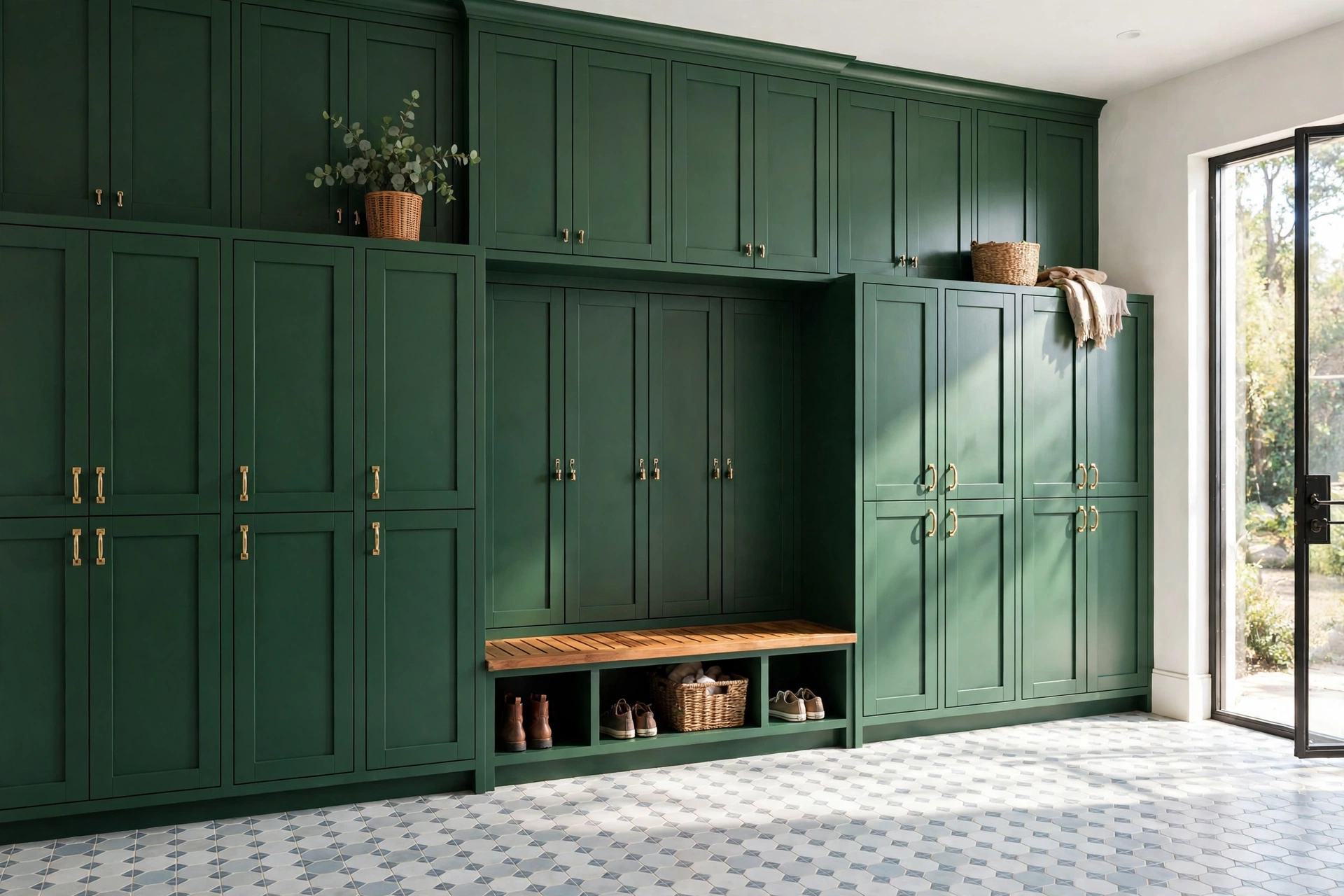
Lockers are the answer when open cubbies still look messy: each family member gets a tall, closed cabinet with a door, so coats, sports gear, and backpacks vanish completely. Run them wall to wall and floor to ceiling to use every inch, and mix in a short section of open bench seating in the middle so there’s still a place to sit. Ventilation slots or a louvered door style keep damp gear from smelling musty inside.
Inside each locker, fit a double hook for coats, a shelf above for hats and gloves, and a small basket or bin at the bottom for shoes. Painted in a deep color — forest green, navy, charcoal, or even black — lockers look like expensive custom cabinetry, while white or wood-tone lockers keep a small mudroom feeling bright. Number the doors or add simple brass pulls for a tailored finish.
3. Shiplap Accent Wall with Hooks

Shiplap instantly gives a mudroom that relaxed farmhouse character, and it’s practical too: the horizontal boards hide scuffs and dings far better than flat drywall, and hooks can be screwed straight into the boards anywhere along the wall. Install it vertically if your ceiling is low and you want the room to feel taller, or horizontally for the classic look. A soft white or pale gray paint keeps it fresh, while a natural wood stain leans rustic.
Pair the shiplap with a simple wood bench, a row of matte black or aged brass hooks, and a woven runner on the floor for a layered, collected feel. Because shiplap is inexpensive and DIY-friendly, it’s one of the fastest ways to transform a plain back entry. Seal the paint with a scrubbable satin or semi-gloss finish so mud splashes wipe off without leaving marks.
4. Farmhouse Bench and Coat Hooks
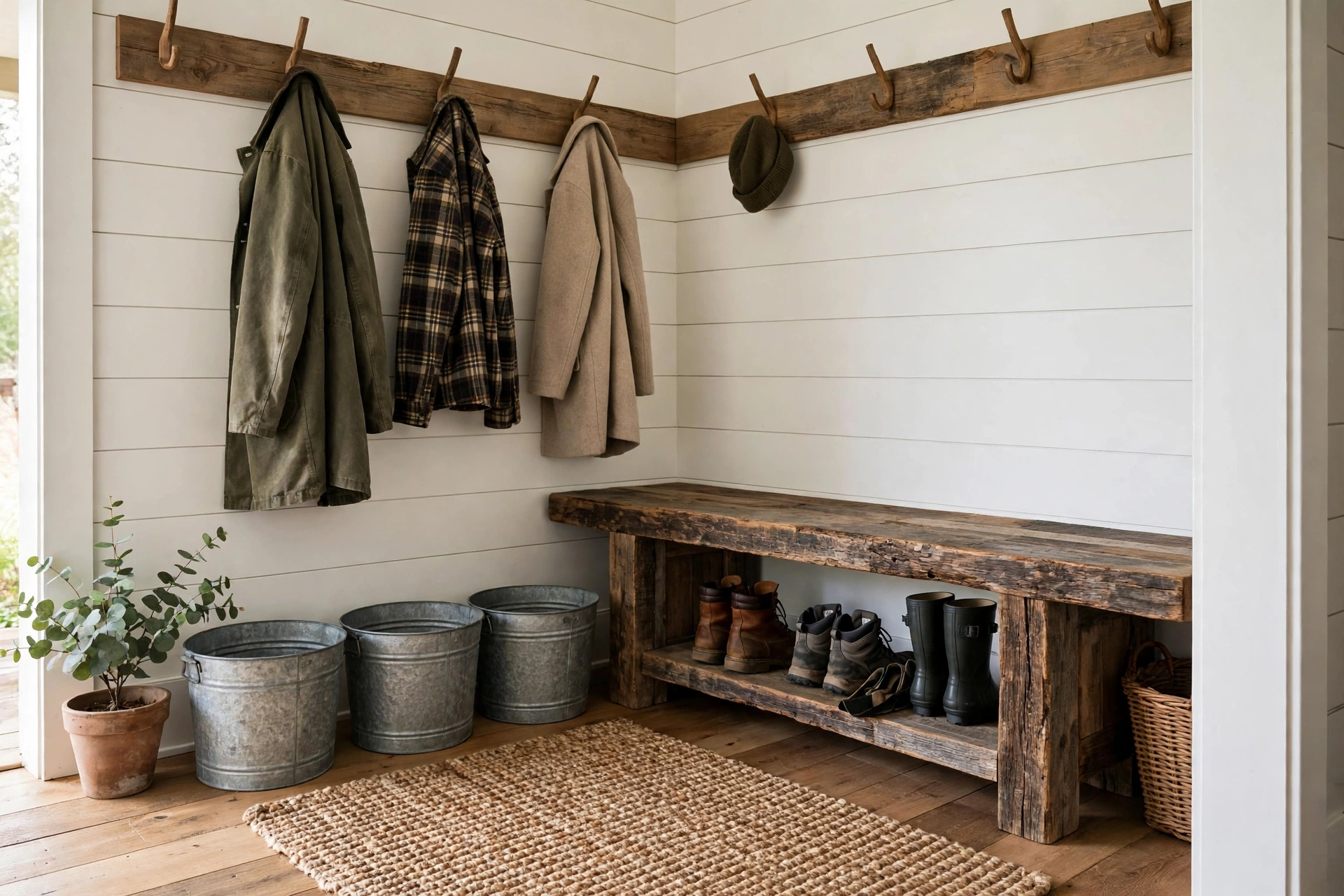
You don’t need built-ins to get a hardworking farmhouse mudroom. A chunky freestanding bench — ideally reclaimed wood or a heavy pine piece with a lower shelf for shoes — plus a wall-mounted hook rail delivers the same function for a fraction of the cost. Add galvanized bins, a wire basket or two, and a vintage-style rug, and the corner reads charming rather than cluttered.
The key to making freestanding pieces look intentional is consistency: keep the wood tones in the same family, repeat the same metal finish on hooks and bins, and give every category of item a defined home. A boot tray under the bench, a basket for gloves, and one hook per person turns a loose collection of furniture into a system the whole household can maintain without thinking.
5. Modern Minimalist Mudroom

A modern mudroom trades open cubbies and rustic wood for flat-panel cabinets, integrated handles, and a restrained palette of white, warm gray, black, or pale oak. Everything hides behind doors, benches appear to float, and the few visible elements — a slim metal hook strip, a sculptural stool, a large-format tile floor — are chosen like furniture. The result feels calm and architectural, which matters when the mudroom opens directly into a kitchen or living space.
Minimalism only works if the storage is genuinely sufficient, so plan deep cabinets for coats, a ventilated shoe drawer or pull-out rack, and one tall unit for brooms, vacuums, and cleaning supplies. Choose large tiles or polished concrete underfoot to keep grout lines (and dirt traps) to a minimum, and use push-to-open hardware or recessed pulls so nothing snags passing bags and coats.
6. Small Corner Mudroom Nook
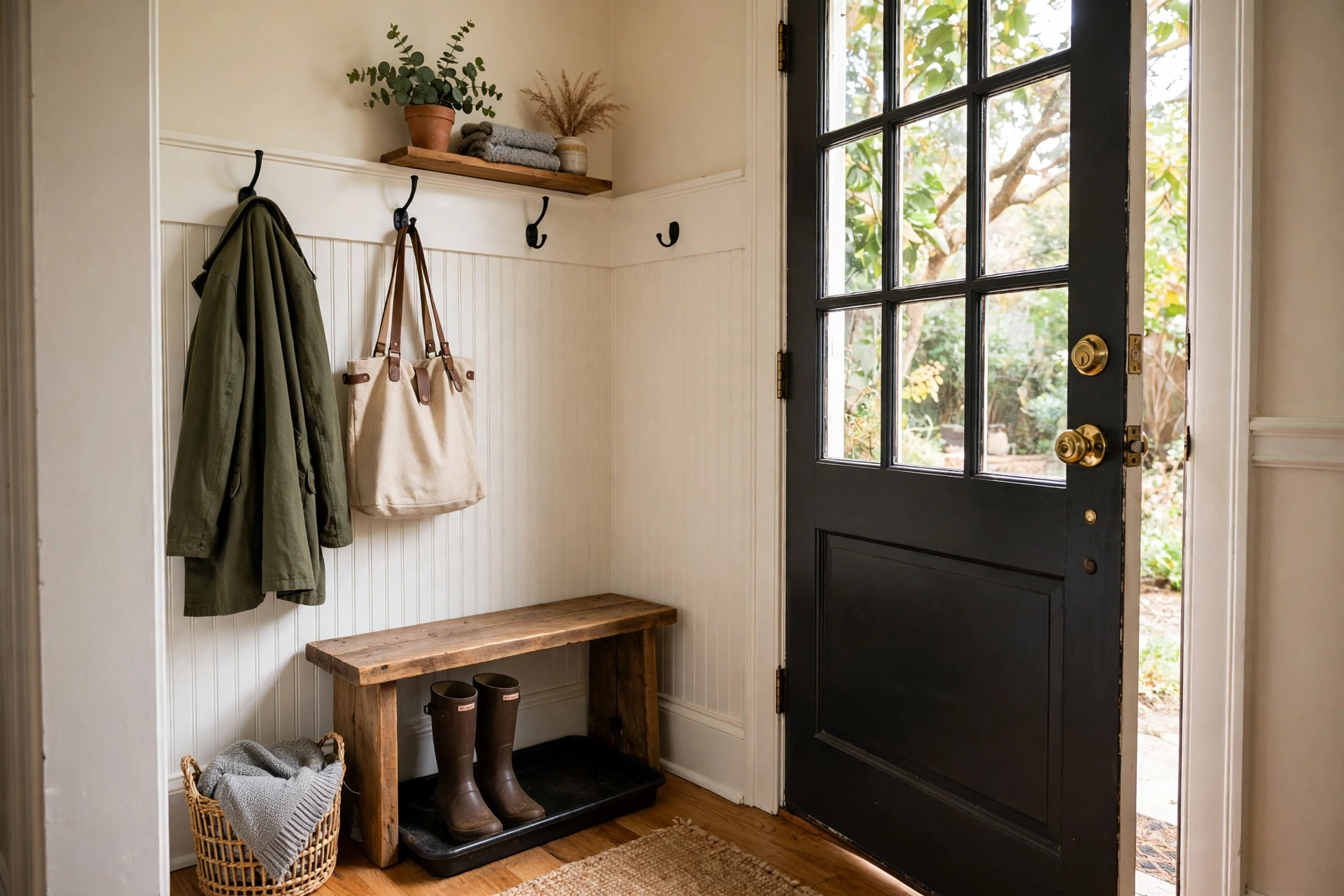
No spare room? A single corner — even 4 feet of wall beside the back door — can hold a complete mini mudroom. A narrow bench or sturdy wall-mounted seat, three or four hooks above it, a small shelf for keys and mail, and a boot tray below cover the essentials. Painting the nook a different color from the surrounding room, or wallpapering just that section, makes the tiny zone feel deliberate and finished.
In tight spaces, think vertically and choose pieces that multitask: a bench with cubbies inside, hooks that fold flat when not in use, and slim baskets that hang from the hooks themselves. Mirrors are a small-space trick that works here too — one above the shelf bounces light and gives you a last check before leaving. Keep the floor covering small and washable so the nook is easy to reset in seconds.
7. Garage Entry Mudroom

For many families the real front door is the one from the garage, and it deserves the same treatment. Carve the mudroom into the wall just inside that door with lockers or cubbies, a bench, and a heavy-duty mat well that traps grit before it reaches the house. Because garage entries often lack natural light, bright paint, good overhead lighting, and a light-colored floor make the transition feel welcoming instead of cave-like.
This is also the spot for overflow systems: a charging shelf for phones and tablets as you come in, hooks for reusable shopping bags, and a bin for returns and donations headed back out to the car. If space allows, a mini fridge or a tall cabinet for bulk supplies turns the garage entry into a genuine staging area that keeps the kitchen counters clear.
8. Boot Tray and Drip Zone

Every mudroom needs a defined wet zone, and the humble boot tray is its foundation. A galvanized metal, rubber, or stone-filled tray under the bench catches snowmelt and mud before it spreads across the floor. Fill the tray with a layer of smooth river rocks and water drains below the soles, so boots actually dry instead of sitting in a puddle — and the tray looks like a design feature rather than a plastic afterthought.
Scale the drip zone to your climate: in snowy regions, a full recessed mat well or a section of waterproof flooring with a floor drain is worth the investment; in milder areas, one large tray plus a washable runner may be enough. Place the zone immediately inside the door — the first step in — because a wet zone you have to walk across the room to reach will simply never be used.
9. Dog Washing and Paw Station
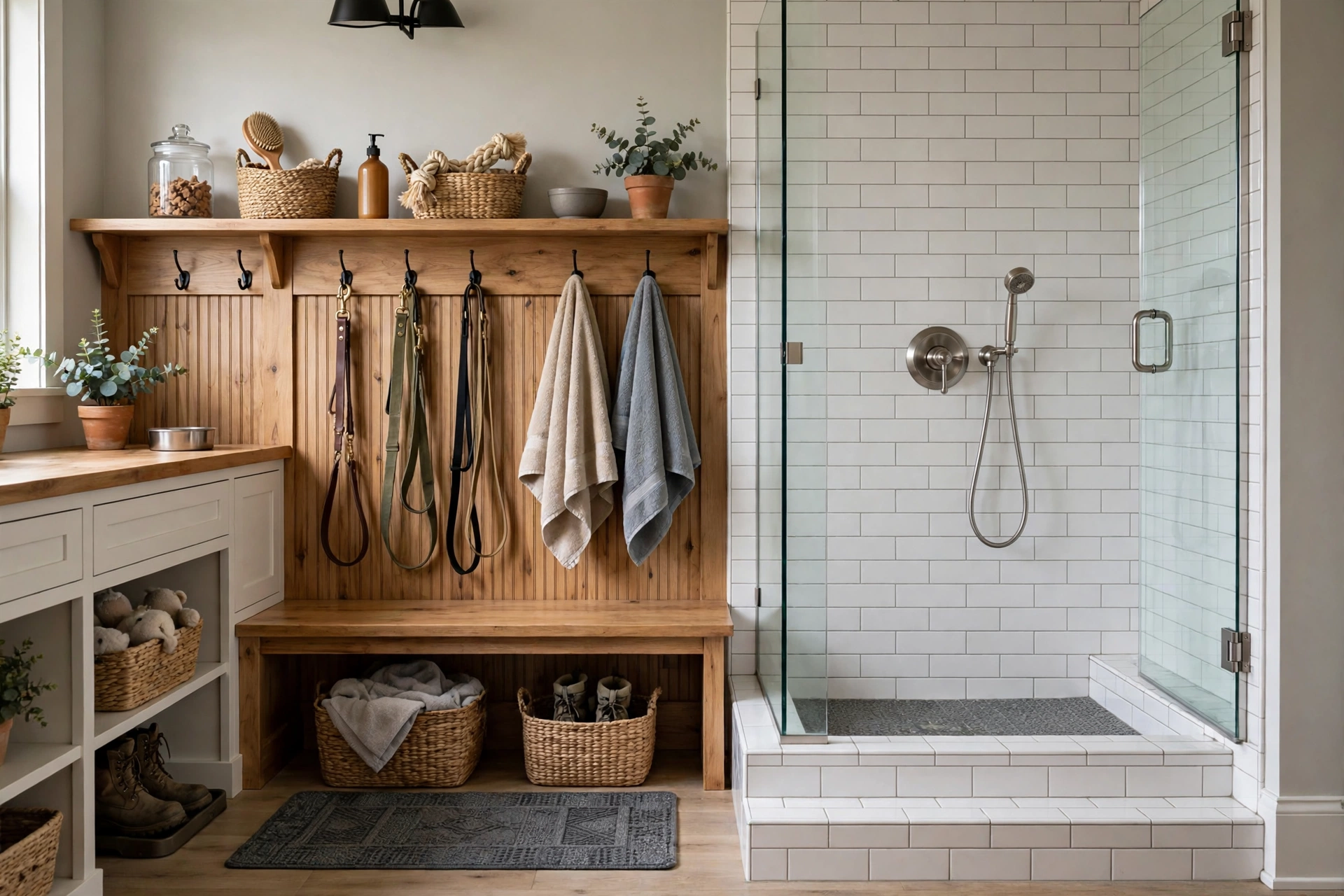
Dog owners know the mudroom’s hardest job happens at paw height. A dedicated dog station — a raised tiled shower or a low utility tub with a handheld sprayer — turns post-walk cleanup from a fight into a routine. Surround it with hooks for leashes and towels, a bin for treats, and storage for food and grooming supplies, and everything pet-related lives in one washable corner.
If a plumbed wash station isn’t in the budget, a paw-plunger cup, a stack of dark towels on a low hook, and a washable mat at the door handle 90 percent of the mess. Raised dog showers should sit about knee height with a nonslip floor and a niche for shampoo; tile the surrounding walls generously, because a shaking wet dog has a longer range than you expect.
10. Open Cubbies with Woven Baskets

Open cubbies stay tidy when every compartment holds a basket. Woven seagrass, rattan, or water-hyacinth baskets warm up painted woodwork, hide visual clutter completely, and pull out like drawers when you need what’s inside. Assign one basket per person for hats, gloves, and scarves, and keep a shared basket for sunscreen, bug spray, and other seasonal grab-and-go items.
Measure your cubbies before buying baskets — a snug fit looks custom and wastes no space — and stick to one basket style throughout for a calm, uniform wall. Baskets on the lowest row take the most abuse from wet mittens and muddy gloves, so line those with a washable fabric liner or choose a plastic-core weave that can be hosed off in spring.
11. Floating Bench with Shoe Storage Below
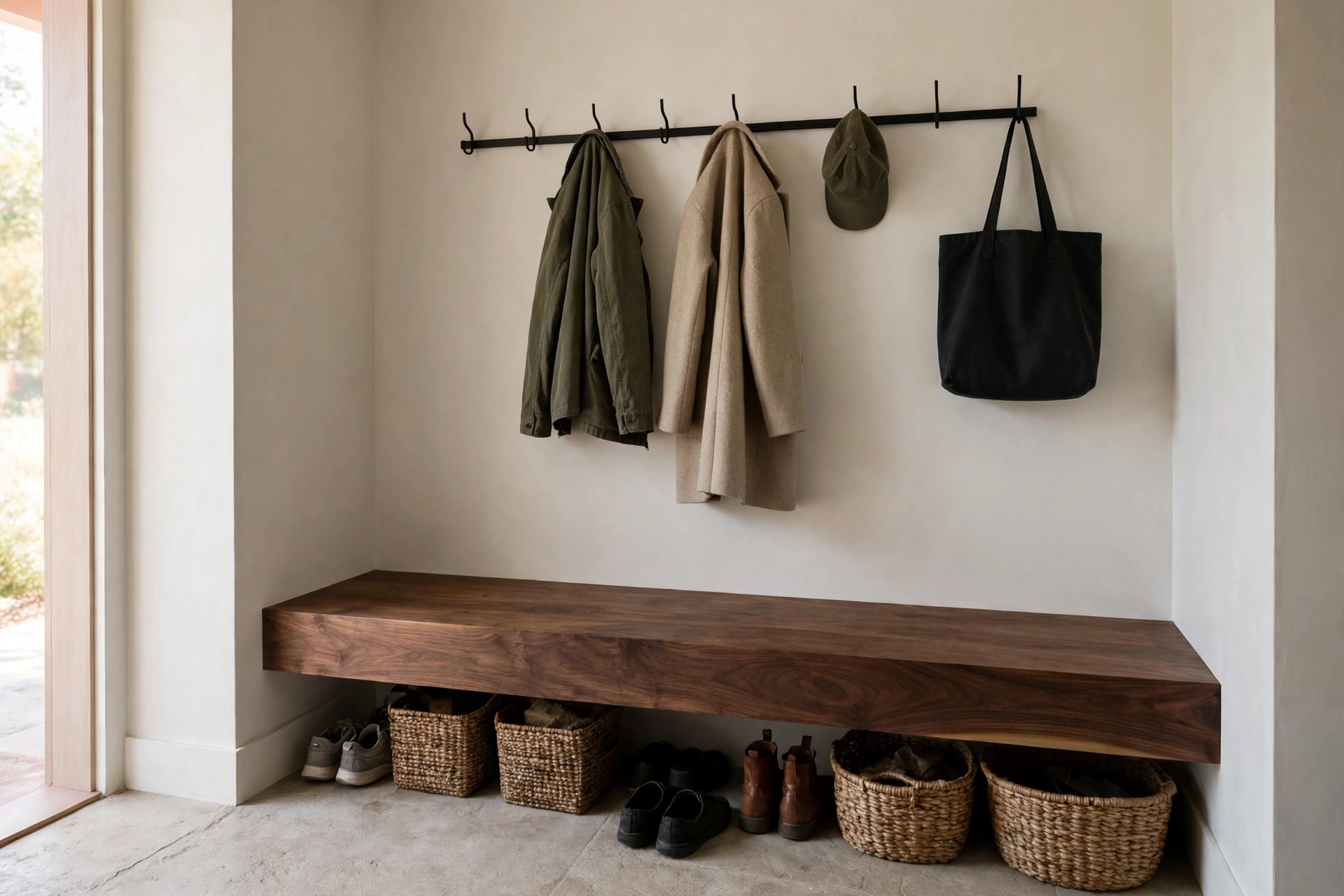
A floating bench — mounted to the wall with hidden brackets and no legs — makes a small mudroom feel significantly bigger because the floor stays visible underneath. Slide shoes, boot trays, or low baskets into the open space below, and cleaning the floor becomes a one-minute sweep instead of a furniture-moving project. A thick slab of walnut, white oak, or butcher block gives the simple form its presence.
Floating benches must be anchored into studs or fitted with proper heavy-duty brackets rated for seated weight — this is a structural detail, not a decorative one. Keep the depth around 12 to 14 inches so it seats comfortably without eating the walkway, and pair it with a hook rail or cubby shelf above to complete the station.
12. Board and Batten Hook Wall

Board and batten paneling gives a mudroom wall architectural weight and a practical bonus: the horizontal top rail is a natural, sturdy mounting line for a full row of coat hooks. The vertical battens divide the wall into bays that visually organize hanging gear, one bay per person, so the wall reads as a designed system even when it’s covered in coats and backpacks.
This is one of the most achievable DIY mudroom upgrades — the trim is inexpensive, cuts are simple, and paint hides every imperfection. Take the paneling two-thirds up the wall and finish with a small ledge shelf for keys, sunglasses, and a plant. A deep green, navy, or charcoal on the paneling with a lighter wall above is the current designer favorite and hides scuffs beautifully.
13. Brick Paver Floor Mudroom

Few floors suit a mudroom better than brick pavers. They’re nearly indestructible, hide dirt within their natural color variation, provide grip when wet, and bring an old-world warmth that suits farmhouse, cottage, and traditional homes alike. Laid in a herringbone or running-bond pattern and sealed properly, a brick floor can take decades of boots, paws, and dragged-in gravel without showing it.
Thin brick pavers install over most existing subfloors like tile, which keeps the project manageable. Choose a grout color close to the brick tone so the floor reads as one textured surface, and seal it annually in high-traffic entries. If real brick is beyond the budget, brick-look porcelain tile delivers the same character with easier maintenance.
14. Patterned Tile Floor Statement

A mudroom is a small room, which makes it the perfect place to splurge on a patterned tile floor you’d never commit to across a whole house. Cement-look encaustic patterns, black-and-white geometrics, or a classic hexagon mosaic give the entry instant personality, and a busy pattern is the best camouflage there is for tracked-in dirt between cleanings.
Porcelain versions of patterned tile are the practical choice here — waterproof, stain-proof, and far cheaper than true cement tile. Keep the walls and cabinetry simple and let the floor be the star, or pull one color from the pattern into the cabinet paint for a pulled-together scheme. A dark grout is essential; white grout in a mudroom is a battle you will lose.
15. Beadboard Wall Charm

Beadboard brings cottage softness to a mudroom and, like shiplap, it’s functional: the grooved panels disguise wear, protect drywall from swinging bags and boots, and cost very little. Run it to chair-rail height with a cap shelf, or take it full height behind hooks for a fully wrapped, cozy feel. Painted in cream, sage, or powder blue, it suits lake houses, cottages, and traditional homes.
Modern beadboard sheets and PVC versions install quickly and hold up to moisture better than old-fashioned pine. Pair it with a simple bench, woven baskets, and brushed-nickel or oil-rubbed bronze hooks. Because beadboard’s grooves collect dust, a quick pass with a vacuum brush during weekly cleaning keeps it looking fresh.
16. Industrial Pipe Hooks and Metal Accents
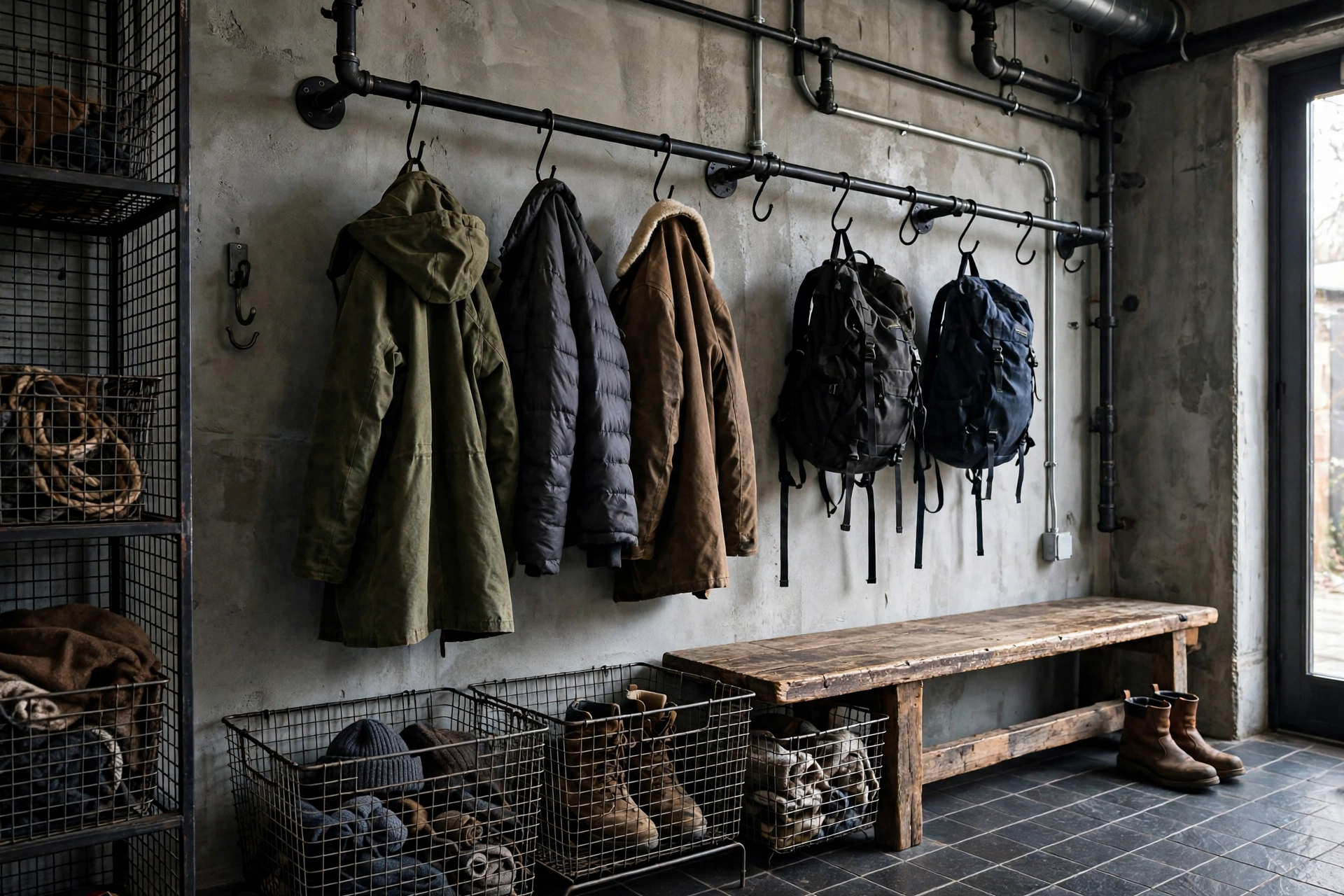
For a mudroom with edge, borrow from industrial style: black iron pipe rails fitted with S-hooks, wire mesh locker baskets, galvanized trays, and a concrete or dark tile floor. Pipe rails are extraordinarily strong — they’ll hold the heaviest winter coats and fully loaded backpacks without flexing — and hooks can slide and re-space along the rail as needs change.
Warm the look up with a worn wood bench and a vintage-style runner so the room feels collected rather than cold. Industrial style is also forgiving: scuffs, scratches, and patina are part of the aesthetic, which makes it a smart choice for households with teenagers, big dogs, and heavy sports gear rotating through daily.
17. Window Seat Mudroom Bench

If your mudroom has a window, build the bench beneath it. A window seat floods the drop zone with natural light, gives you a pleasant place to sit while tying shoes, and the bench box below hides a surprising amount of storage — lift-up lids or deep drawers can swallow off-season gear, blankets, or the dog’s towel collection. Flank the window with cubbies or hooks on both sides to complete the bay.
Top the bench with a cushion in a performance fabric and a couple of pillows, and the mudroom gains a genuinely inviting moment — a spot where kids wait for the bus and the cat claims the sunny corner. Keep the window treatment simple: a relaxed Roman shade or nothing at all, so it never interferes with hanging coats.
18. Laundry and Mudroom Combination
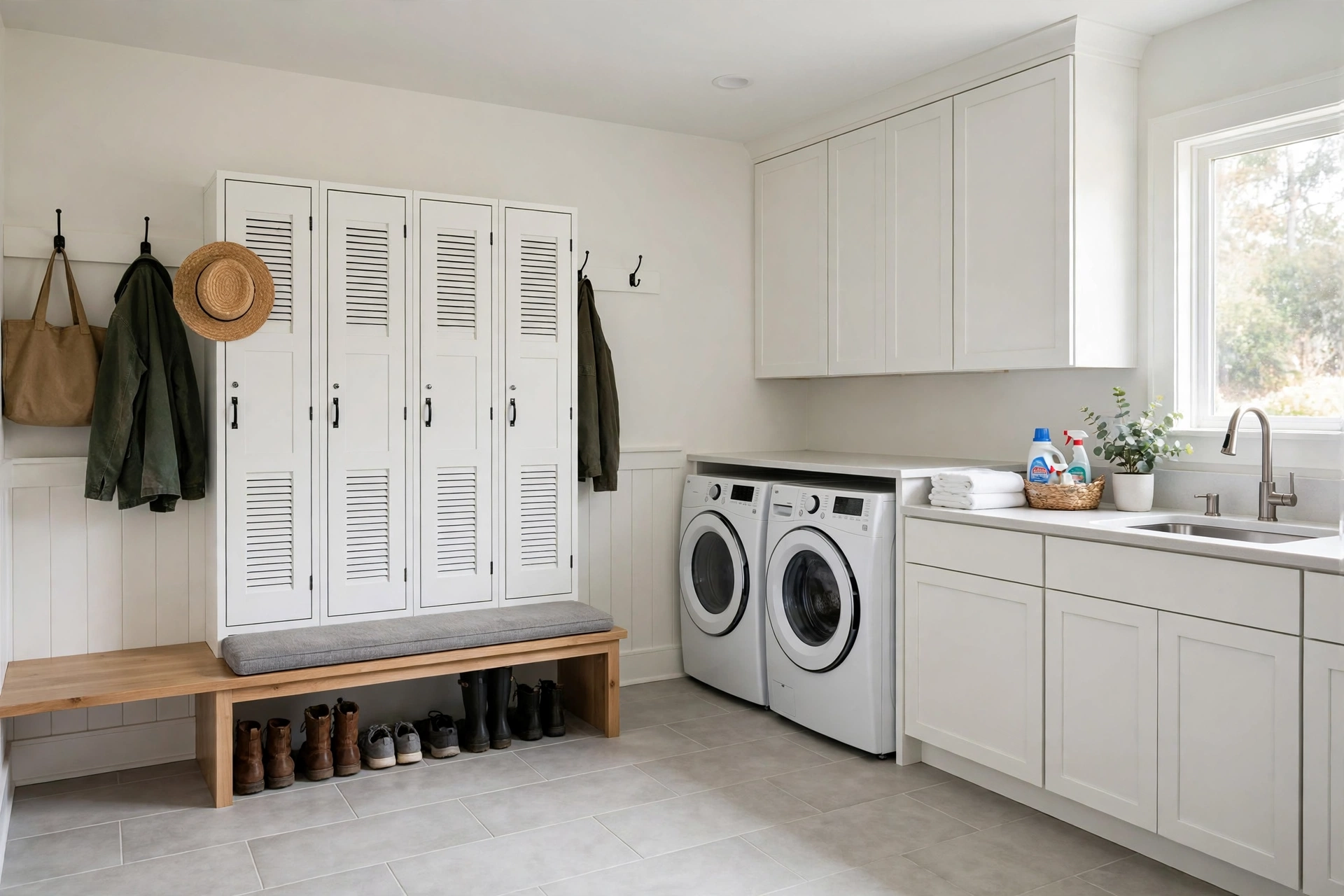
Combining the laundry room and mudroom is one of the smartest floor-plan moves in a family home: dirty sports uniforms and muddy clothes travel three feet to the washer instead of across the house. Line one wall with lockers, cubbies, and a bench, and the opposite wall with machines, a folding counter, and a utility sink that serves both laundry and muddy-boot duty.
Unify the two zones with one floor — waterproof tile or sheet vinyl throughout — and one cabinet style and color, so the room reads as a single designed space rather than a compromise. A pocket or barn door helps contain laundry noise, and a hanging rod above the counter handles both drip-dry laundry and wet coats and snow pants in winter.
19. Two-Tone Painted Cabinets
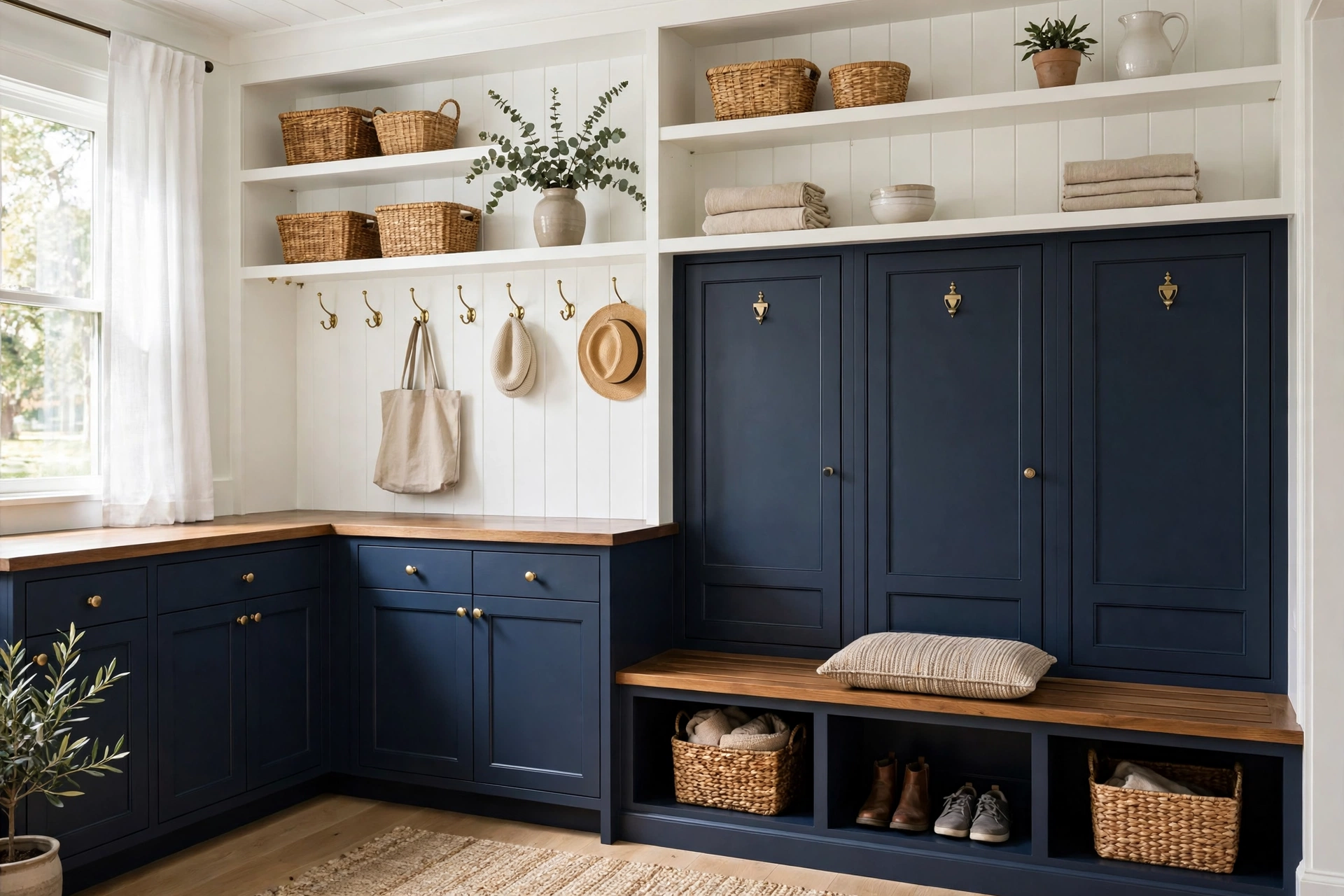
Two-tone cabinetry keeps a big mudroom wall from feeling like a flat expanse of one color. The classic formula: deep, dirt-hiding color on the lower cabinets, lockers, and bench base — navy, green, charcoal, or black — with white or pale uppers and open shelving above. The dark base takes the scuffs and kicks where they actually happen, while the light upper half keeps the room feeling airy.
You can also flip the scheme by material instead of color: painted cabinets below and natural wood — white oak or walnut — for the bench top, shelves, and hook rail. Repeating the wood tone in baskets and a floor runner ties the two halves together. Two-tone is also a forgiving refresh strategy: repainting only the lowers transforms the room in a weekend.
20. Arched Nook Built-Ins
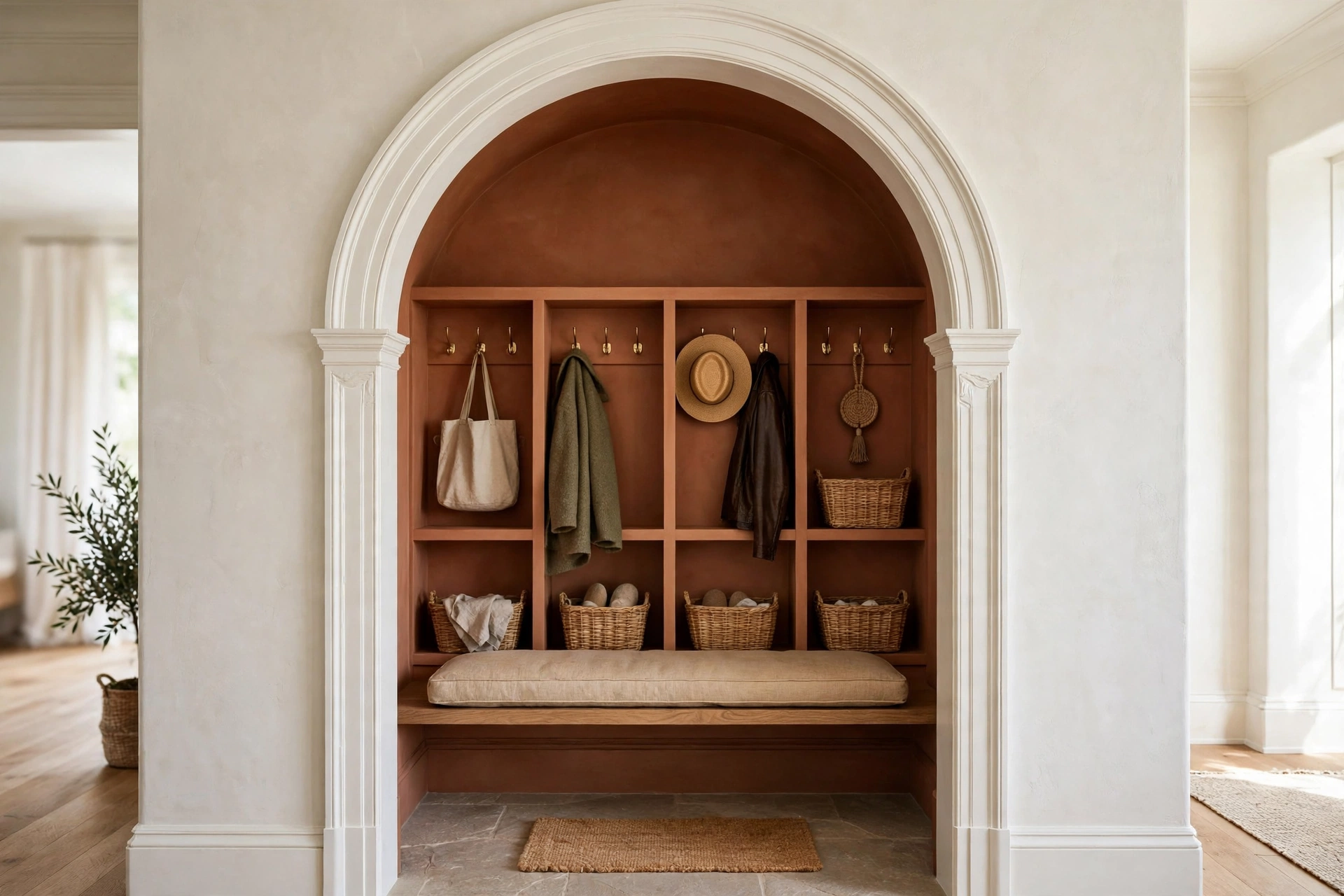
An arched opening turns a mudroom alcove into architecture. Frame the bench and cubbies inside a soft arch — built from drywall and trim, or added as an applied arch detail over an existing nook — and the drop zone becomes the kind of feature you’d expect in a custom home. Paint the inside of the arch a contrasting color or line it with wallpaper to deepen the effect.
Arches suit Mediterranean, Spanish, and transitional homes especially well, but a simple shallow arch softens modern farmhouse spaces too. Inside the nook, keep the fittings straightforward — bench, hooks, a shelf — and let the shape do the talking. A small pendant or sconce centered on the arch completes the picture after dark.
21. Vertical Storage for Narrow Spaces
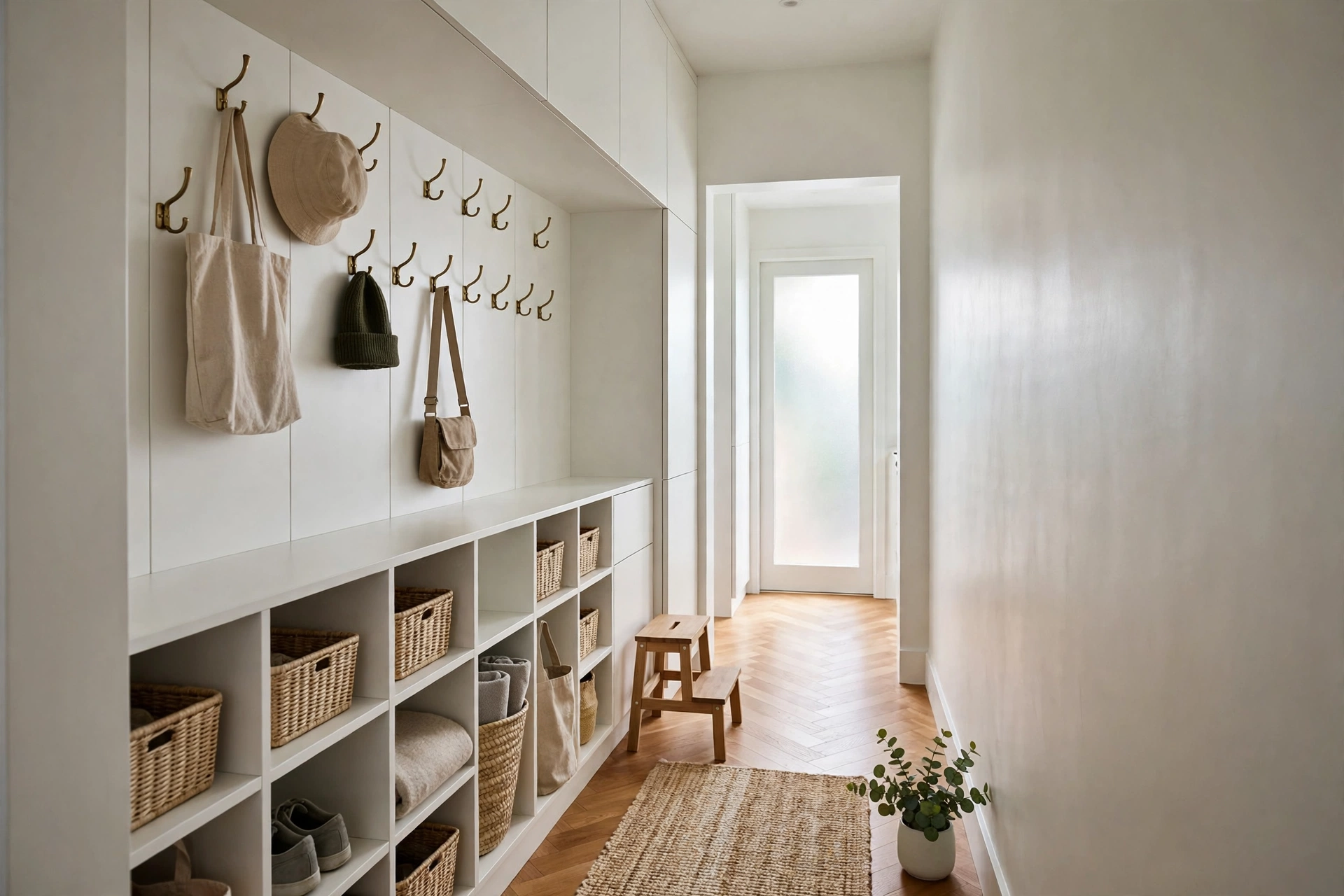
A hallway-style mudroom with only a few feet of depth can’t fit deep lockers, but it can go tall. Floor-to-ceiling shallow cabinets (12 inches deep is enough for shoes, bags, and folded gear), stacked cubbies, and high shelves with a rolling library ladder or step stool use the wall’s full height. Hooks mounted in two staggered rows double the hanging space without doubling the width.
Keep the lower zone as clear as possible in a narrow passage: a slim fold-down seat or a small stool that tucks under a shelf replaces a full bench, and shoes slide into vertical cubbies or a tilt-out shoe cabinet rather than piling on the floor. Light colors and a mirror keep the corridor feeling open rather than tunnel-like.
22. Rustic Reclaimed Wood Mudroom
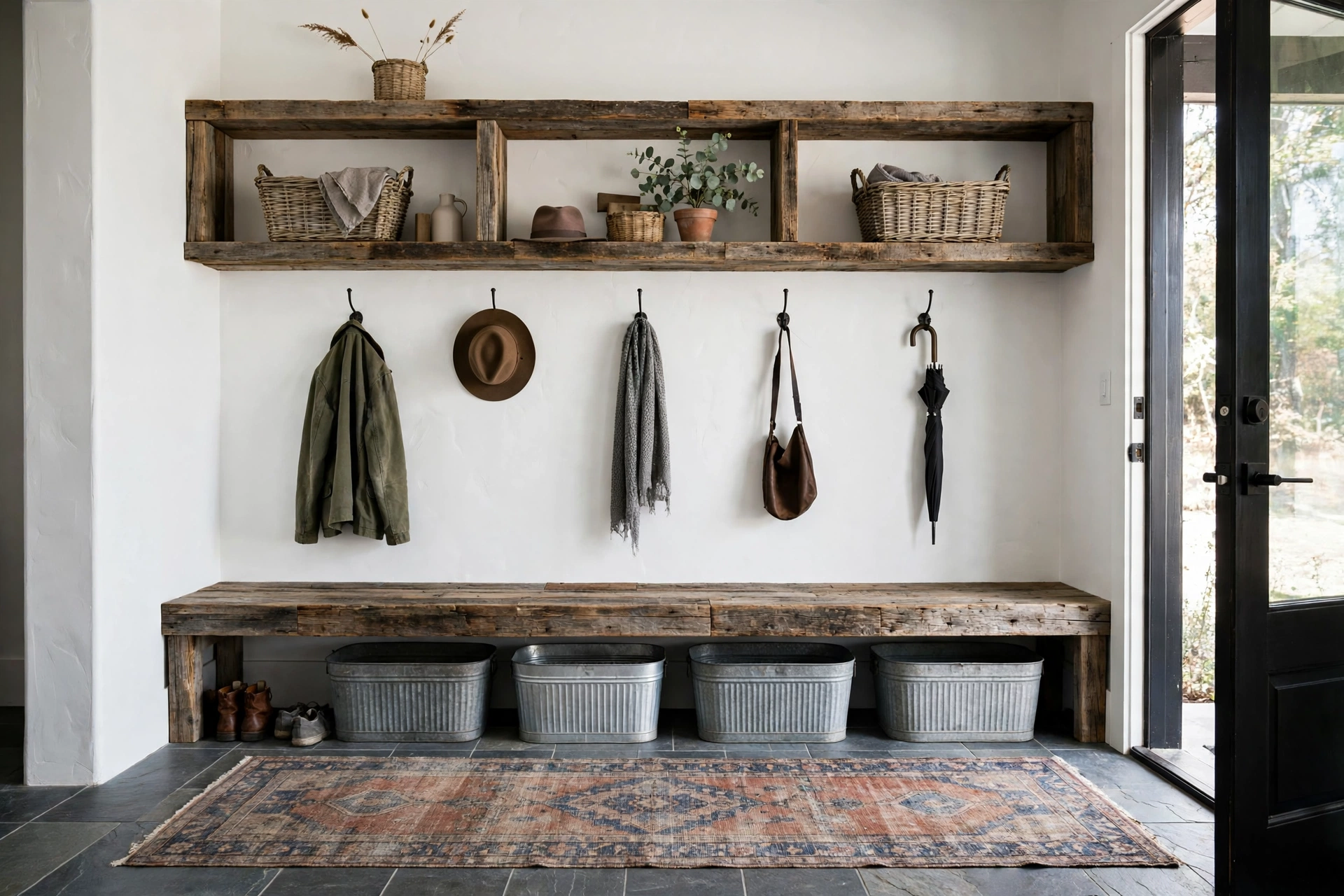
Reclaimed barn wood, rough-sawn beams, and worn leather and iron details give a mudroom a story. Use salvaged wood for the bench top, hook boards, and open shelves; its dents and patina mean new scratches simply blend in. Pair with a slate or stone-look floor, galvanized bins, and a vintage wool runner for a room that can take hard use and look better for it.
Source reclaimed pieces with care — check for nails, seal splintery surfaces that hands and coats will touch, and balance the rustic elements with clean white or cream walls so the room feels fresh rather than dark. One or two genuine vintage finds, like an old schoolhouse hook rack or a worn locker basket, anchor the style better than a room full of reproductions.
23. Coastal Mudroom with Rope and Rattan
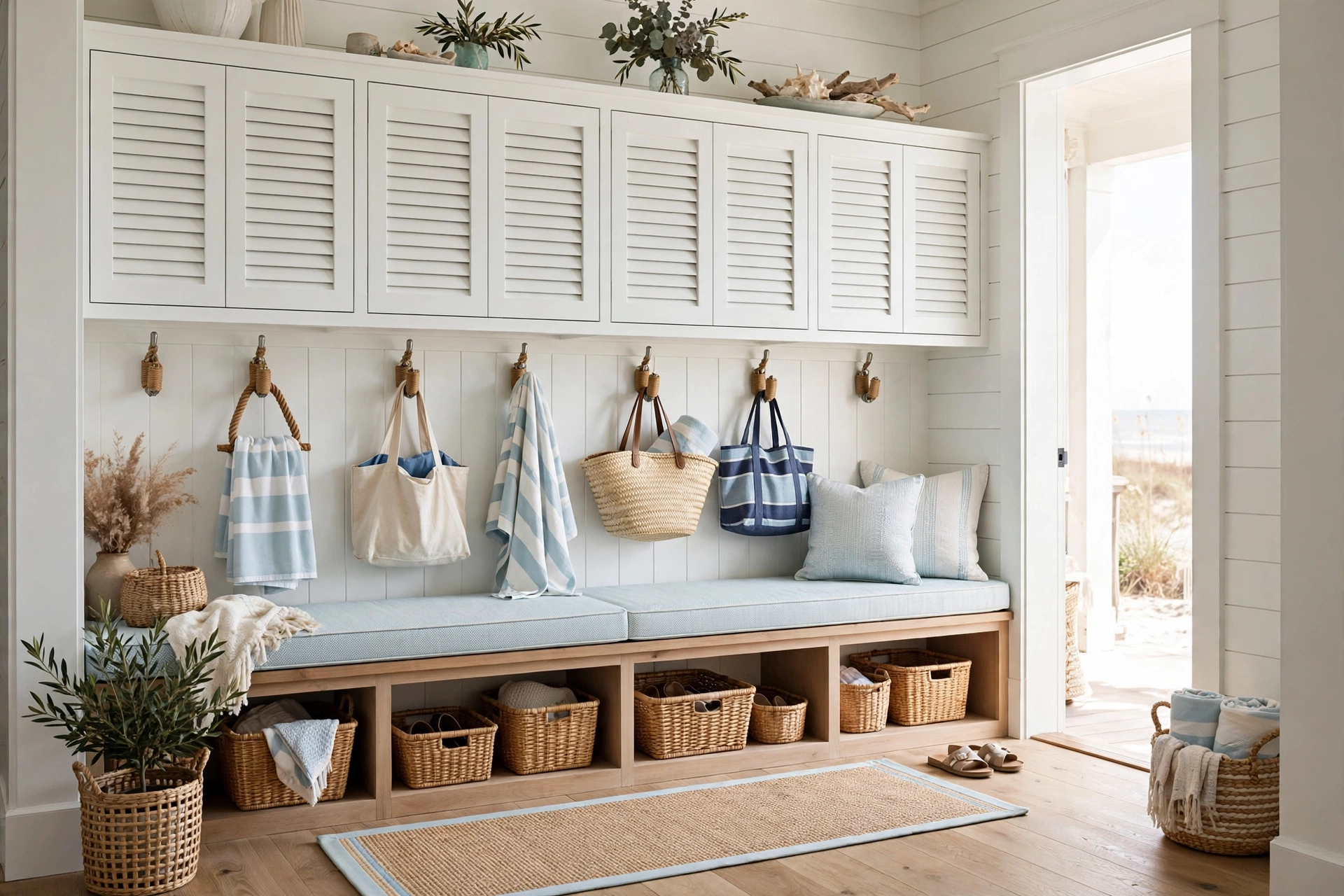
A coastal mudroom is built for sandy feet and wet swimsuits: white or pale blue cabinetry, rattan and seagrass baskets, rope details on hooks or drawer pulls, and a floor that laughs at water — porcelain tile, painted wood, or outdoor-grade decking stain. Add hooks sized for beach towels and bags, and a bench with an outdoor cushion that can handle damp swimwear.
Louvered cabinet doors and open slatted benches borrow from boat and beach-house design while serving a purpose: airflow that dries gear fast in humid climates. Keep the palette to whites, sand, and watery blues with driftwood tones, and the room will feel like a continuation of the shore. An outdoor shower just beyond the door is the dream finishing touch where the layout allows it.
24. Black and White Contrast Mudroom
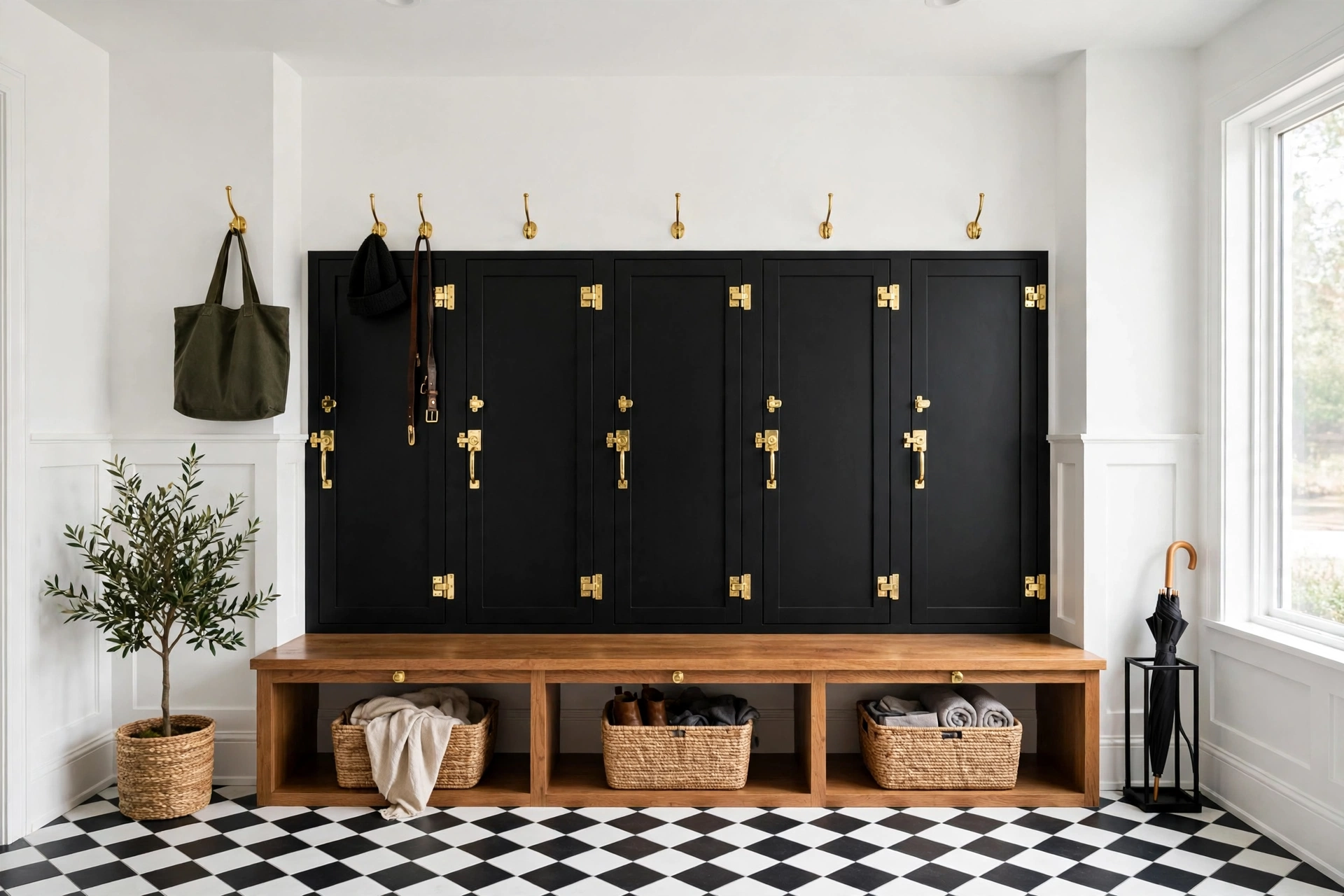
High-contrast black and white is the boldest classic in mudroom design: black lockers or cabinets against white walls (or the reverse), a black-and-white patterned or checkerboard floor, and brass or chrome hardware for shine. The scheme is timeless, photographs beautifully, and — a genuine bonus — both black and patterned floors are excellent at hiding dirt.
Keep the contrast balanced so the room doesn’t go stark: warm the black with a wood bench top, soften the white with woven baskets and a textured runner, and repeat each color at least three times. Checkerboard floors in large-format porcelain tile are the budget-friendly showstopper here, especially laid on the diagonal in a small entry.
25. Deep Green Cabinetry
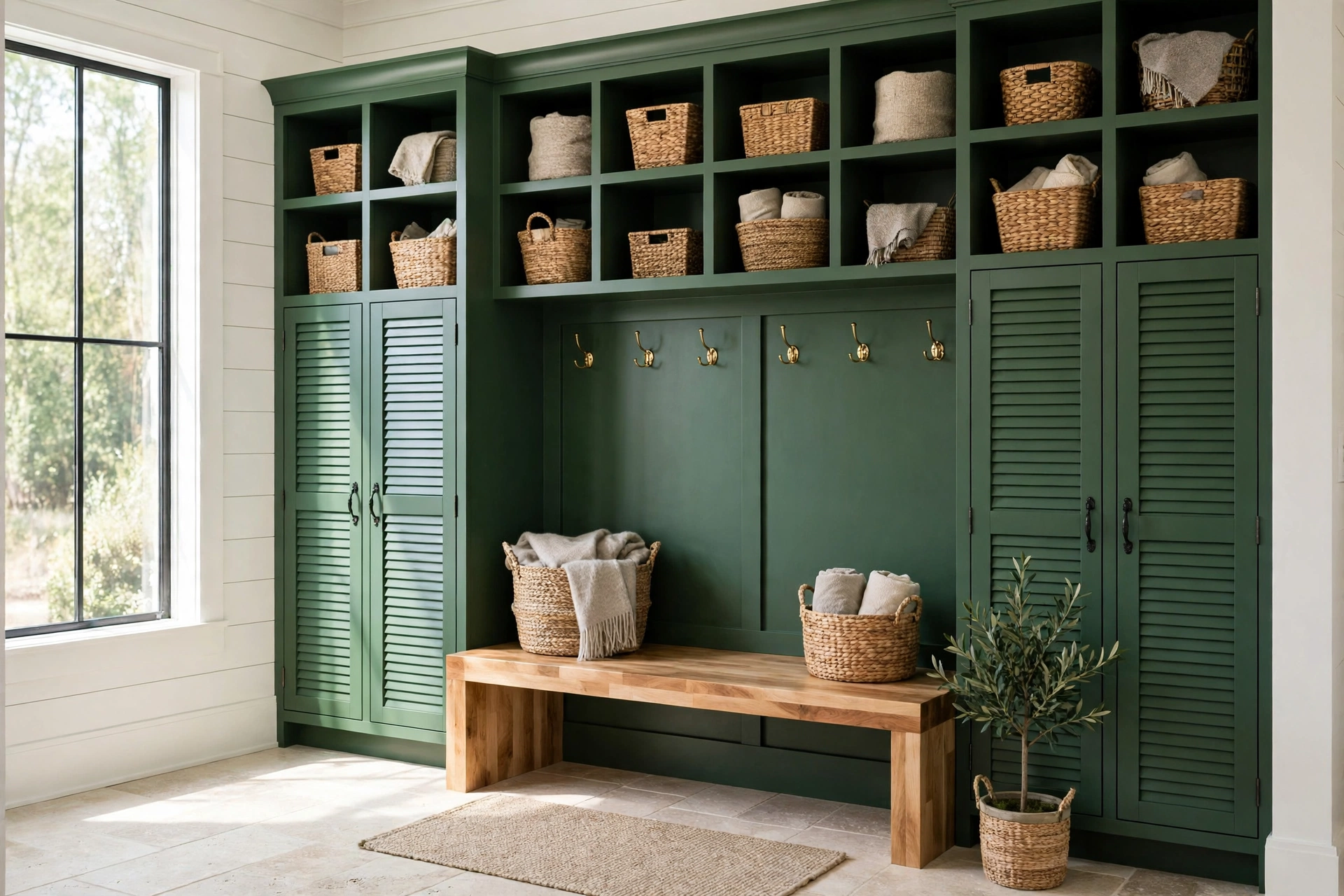
Deep green — forest, evergreen, or a moody olive — has become the signature mudroom color, and it’s easy to see why: it hides scuffs and mud splashes, pairs beautifully with brass hooks and warm wood benches, and feels both classic and current. Carry it across lockers, cubbies, and the bench base for a cocooning, furniture-like wall of storage.
Balance the depth with a light floor or a pale stone-look tile, white or cream walls above the cabinetry line, and plenty of light — green goes muddy in a dark room but glows in a bright one. Natural textures are green’s best friends: jute runners, woven baskets, and a butcher-block bench top keep the scheme grounded and welcoming.
26. Navy Blue Lockers

Navy is the other great mudroom cabinet color: deeper and more forgiving than white, friendlier than black, and endlessly compatible with the brass, chrome, and wood finishes found elsewhere in the house. A wall of navy lockers with brass cup pulls and a white oak bench reads tailored and coastal at once, and navy hides the dust and scuffs that show relentlessly on pale paint.
Try navy on the cabinetry with a classic white shiplap or beadboard wall behind the bench for a crisp New England feel, or go tonal with a slightly lighter blue-gray floor tile. Navy also transitions gracefully between styles — swap the hardware from brass to matte black and the same lockers move from traditional to modern without repainting.
27. Floor-to-Ceiling Shoe Storage Wall
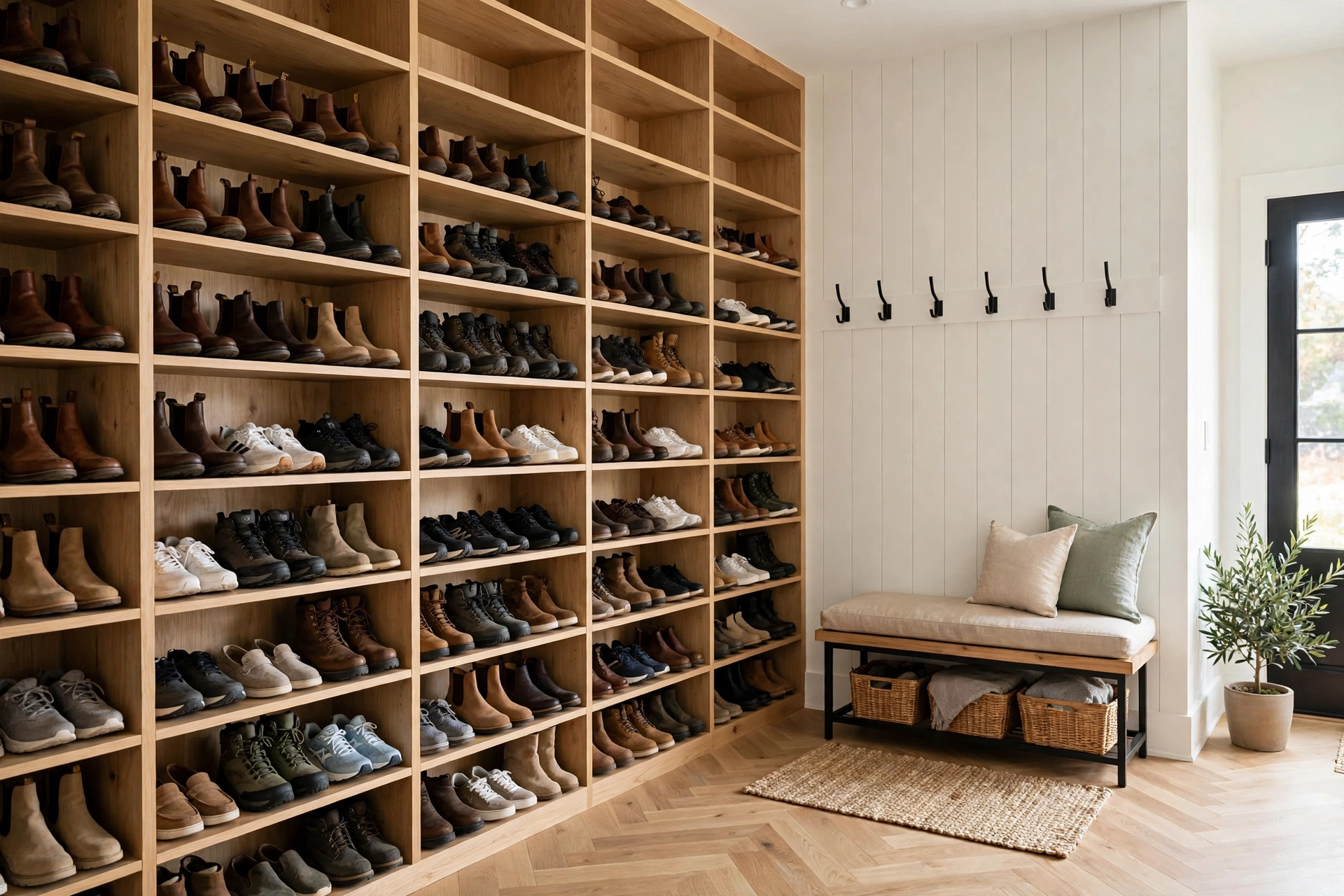
If shoes are your household’s main clutter, dedicate a whole wall to them: floor-to-ceiling open shelves, angled shoe racks, or a grid of cubbies sized for pairs. Open storage works because grabbing and returning shoes takes two seconds; add a lower section of deeper cubbies for boots and a top row, reached by step stool, for off-season footwear.
Ventilation matters in a shoe wall — open shelves beat closed boxes for drying and odor. Keep everyday pairs at the bottom within easy reach and set a household limit per person so the wall doesn’t creep. A slim bench or ottoman opposite the shelves completes the shoe-changing station, and a small mat at the base catches the dirt that falls from soles.
28. Family Command Center Wall

The mudroom is where the family passes through together, which makes it the natural home for a command center: a calendar board, a mail and paperwork sorter, a key rail, a charging shelf, and a spot for permission slips and invitations. Mount it on the wall opposite the lockers or beside the door, at adult eye level, so information lands where everyone actually sees it.
Keep the command center edited or it becomes the clutter it was meant to cure: one board for the current month, one tray for incoming paper, one for outgoing, and a weekly five-minute reset. A framed chalkboard, cork board, or magnetic whiteboard inside a wood frame keeps the station looking like decor rather than office equipment, and small labeled baskets below catch the odds and ends.
29. Bench with Deep Storage Drawers
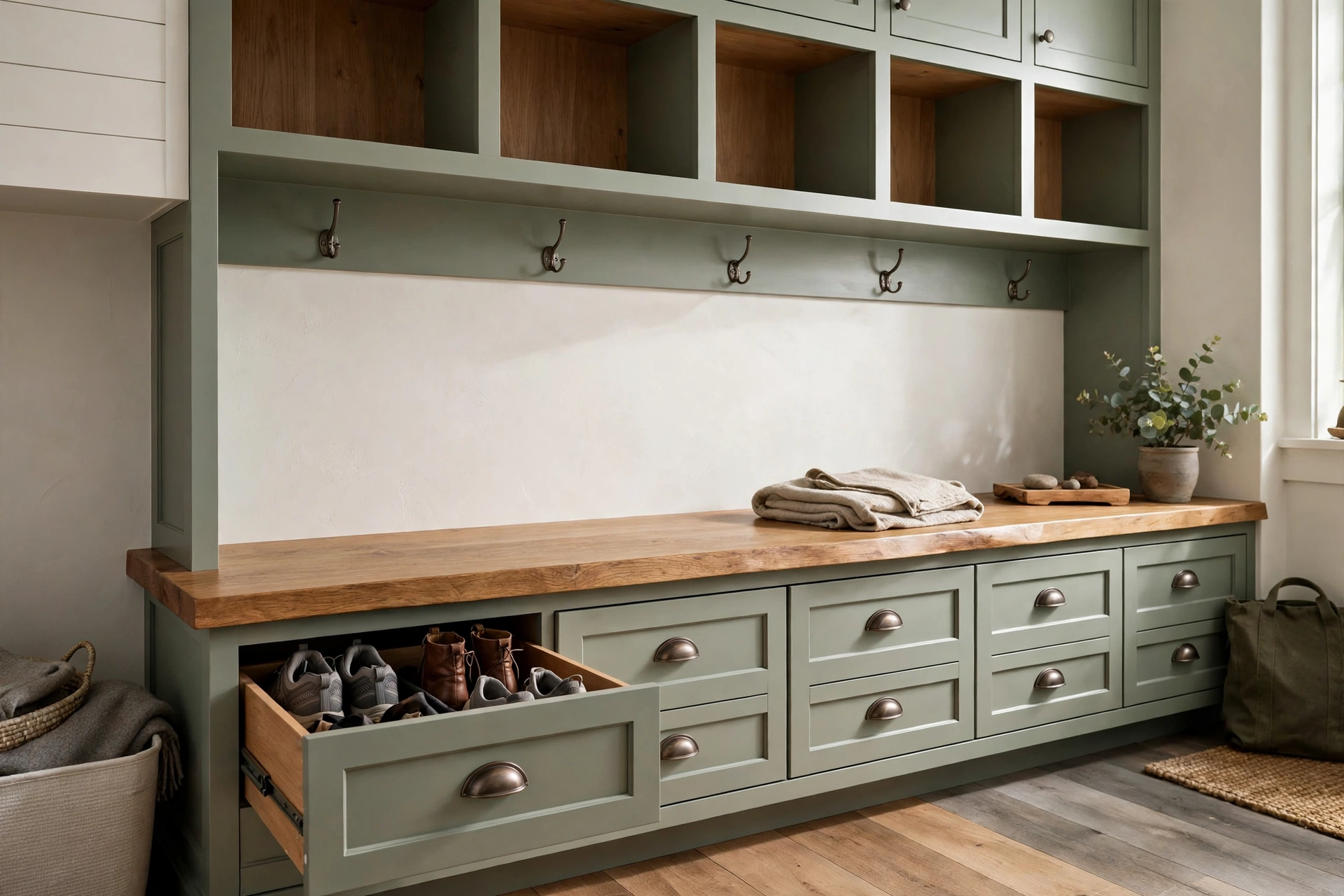
A bench built on deep drawers instead of open cubbies hides the entire shoe collection behind clean fronts. Drawers pull toward you, so nothing gets lost at the back the way it does in a deep cubby, and each drawer can be assigned — one per person, or one for shoes and one for gloves and hats. Full-extension slides and sturdy drawer boxes are worth the money in a piece that gets yanked open twenty times a day.
Line drawer bottoms with washable mats or removable trays so wet shoes don’t soak the wood, and ventilate with a few discreet holes or a louvered front if damp gear will live there. Top the bench with a thick wood slab or a cushion; add cup pulls or leather tab handles that won’t catch coat hems and bags as people pass.
30. Open Shelving with Decorative Styling

Not every mudroom shelf has to be pure utility. Reserving the top run of open shelving for styling — a stack of baskets, a small plant, a framed print, folded blankets, a ceramic vase — gives the entry a designed moment and a view that makes you happy to come home. It also signals to the household that this room is cared for, which quietly encourages everyone to keep it tidy.
The trick is ratio: keep styled elements to the highest shelves and the corners, out of the daily grab zone, and repeat a tight palette so decor and storage read as one composition. Baskets do double duty here — they’re the prettiest storage there is. Rotate a few seasonal touches (a pumpkin in fall, greenery in winter) and the mudroom stays feeling fresh year-round.
31. Dutch Door Mudroom Entry

A Dutch door — split horizontally so the top opens independently — is a mudroom feature with real function: it lets in light and fresh air while keeping dogs and toddlers contained in the mudroom zone, and it contains tracked-in dirt to the entry while the rest of the house stays open. Painted in a bold color with black hardware, it’s also pure charm.
Dutch doors suit farmhouse, cottage, and country styles best, and work beautifully between a mudroom and kitchen or as the exterior back door itself. Fit a shelf or ledge on the lower half’s top edge for setting down packages, and choose a sturdy latch that’s easy to work with full hands. If a true Dutch door isn’t feasible, a half-height gate in matching trim delivers part of the benefit.
32. Herringbone Wood Floor

Herringbone brings instant elegance, and in a mudroom the surprise is how practical it can be: use luxury vinyl plank or porcelain wood-look tile in a herringbone pattern and you get the tailored look with full waterproof durability. The zigzag pattern also disguises dirt and wear remarkably well, and it makes a small entry feel larger and more deliberate.
Real hardwood herringbone in a wet entry needs rigorous sealing and diligent mat use, so most households are better served by the look-alikes. Keep plank size proportional — smaller pieces in a small room — and run the pattern toward the main sightline from the door. Pair with simple cabinetry so the floor’s geometry stays the focal point.
33. Wainscoting with Wallpaper Above
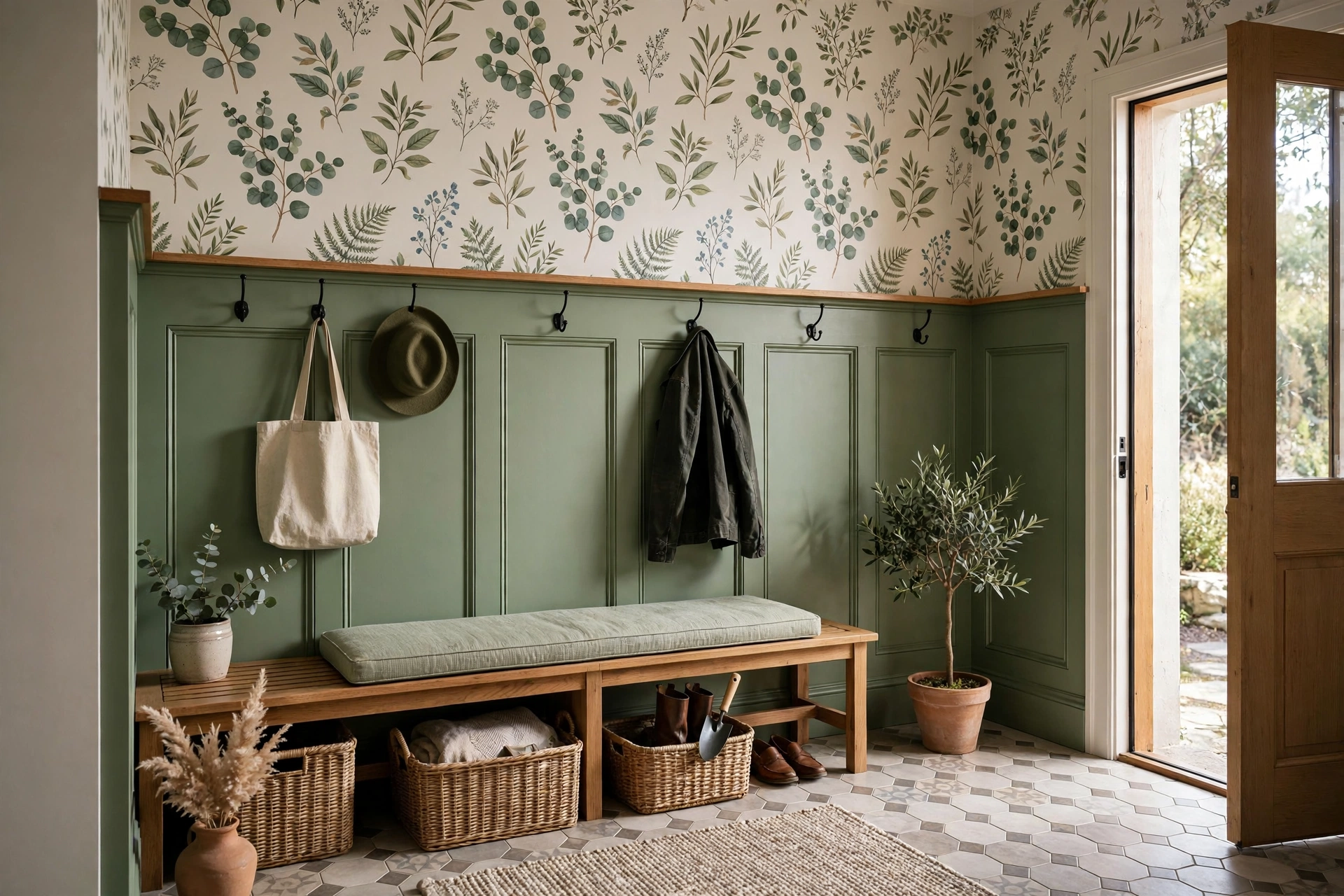
Protect the lower wall with wainscoting — beadboard, board and batten, or flat Shaker panels — then let the upper wall have fun with wallpaper. This split gives you durability where bags and boots hit, and pattern where nothing touches. A botanical, ticking stripe, or small-scale geometric paper above painted paneling turns a workhorse room into one of the prettiest in the house.
Choose a washable or vinyl wallpaper if the mudroom sees heavy weather traffic, and pull one of its colors down into the wainscot paint for a designed match. Finish the wainscot cap with a narrow shelf ledge — it becomes a drop spot for keys and mail and a display line for small decor that stays safely out of the swing of backpacks.
34. Kid-Friendly Low Hooks and Cubbies

Children will use a mudroom system only if they can reach it. Mount a dedicated run of hooks at kid height — roughly 36 to 42 inches for young children — with a low bench and open cubbies beneath for their shoes and bags. When hanging up a coat is physically easy and always in the same spot, it becomes a habit instead of a daily negotiation.
Make the kids’ zone identifiable and fun: a different paint color inside their cubbies, a hook shape they like, or their own basket color. As they grow, the low hook rail converts gracefully to a spot for dog leashes, tote bags, and guest coats, so the investment isn’t outgrown. Keep adult storage higher and separate to stop the two systems from merging into one pile.
35. Seasonal Rotation Storage System
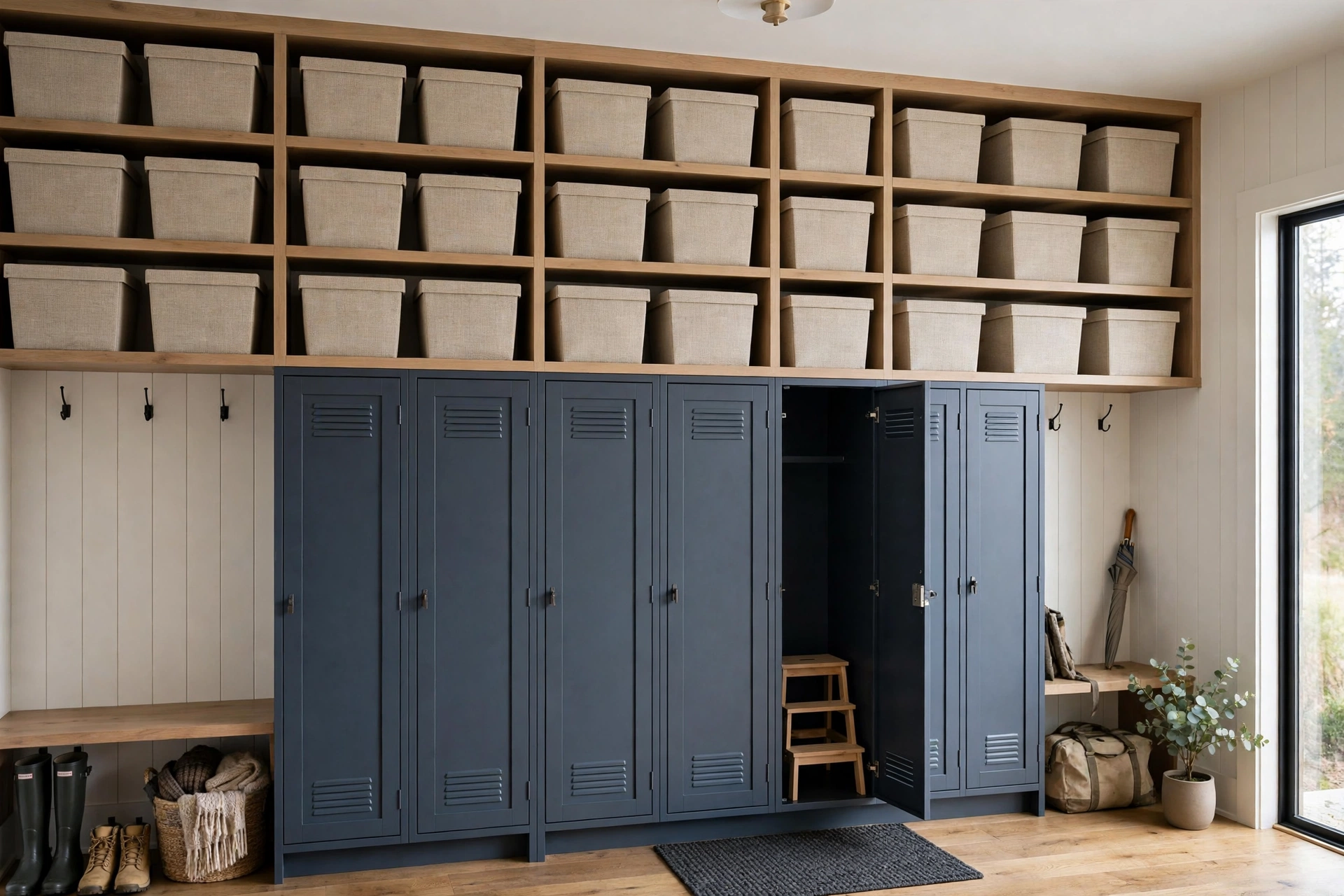
The mudroom holds a fraction of what families try to store in it because off-season gear never leaves. Build in a rotation system: high shelves and the tallest lockers hold labeled bins for the opposite season — swim gear in January, ski and snow gear in July — while the prime hooks and cubbies carry only what this month actually requires. Swap the bins twice a year, timed with the clock changes.
Uniform bins with clear fronts or large labels keep the high storage looking tidy, and a small step stool stored flat in a locker makes the top shelves genuinely accessible rather than theoretical. The payoff is daily: hooks that aren’t crowded, cubbies with room to breathe, and a mudroom that feels twice its size without moving a single wall.
36. Mudroom with Utility Sink and Counter
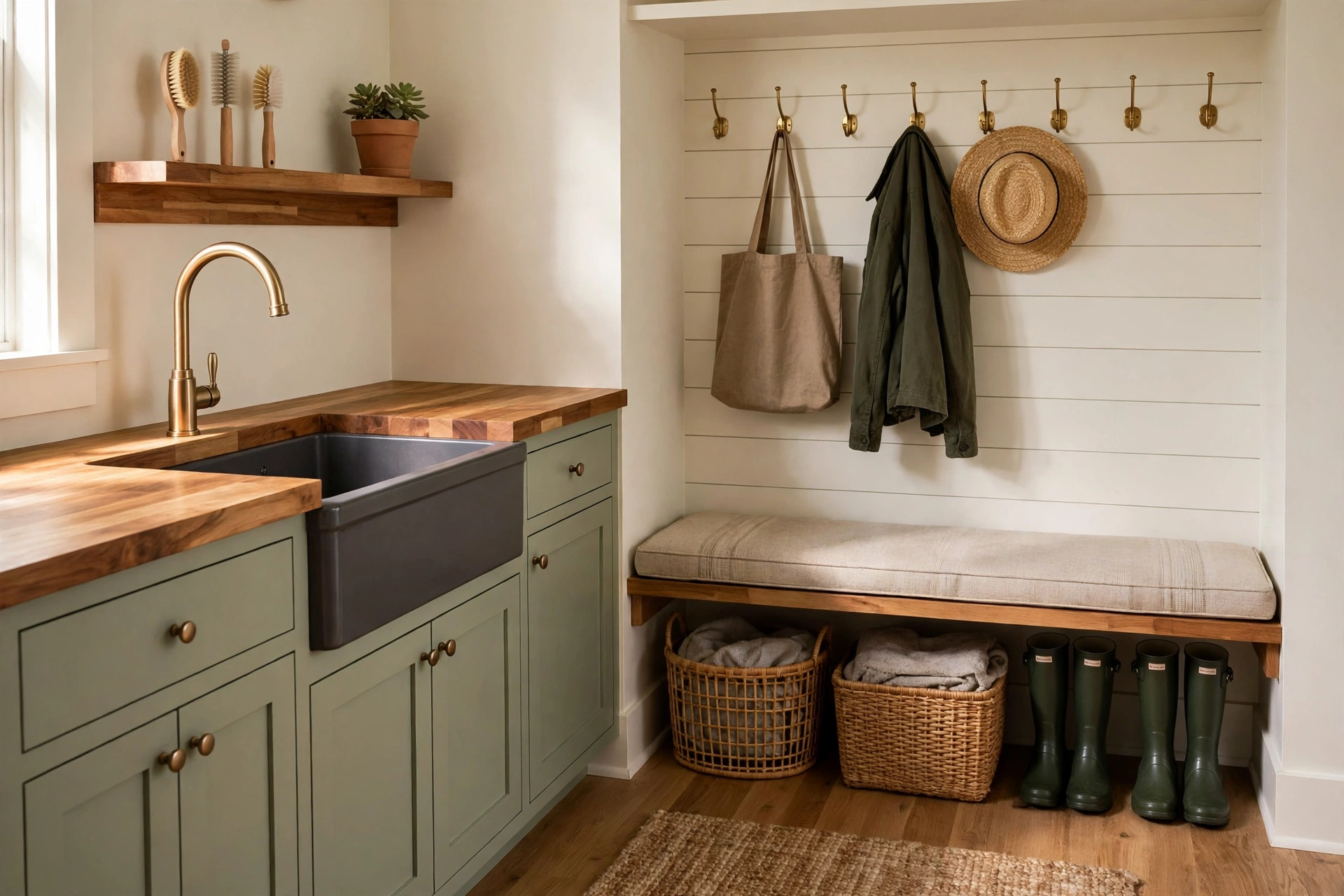
A utility sink and a stretch of counter turn a mudroom into a true work room: rinse muddy boots and cleats, soak stained sports gear, wash hands the moment you come in from the garden, fill watering cans, and arrange flowers without touching the kitchen sink. A deep sink with a gooseneck or pull-down faucet, set into a durable counter — butcher block, stainless, or quartz — handles all of it.
Plan the sink near the door so dirty items travel the shortest path, and use the counter as the landing strip for groceries and packages coming in. Cabinets below hide cleaning supplies; a rail or open shelf above holds soap, brushes, and a plant that enjoys the humidity. If plumbing a full sink isn’t possible, even a counter with a large basin and a nearby laundry tub captures much of the benefit.
More Home Decor Ideas
- Wall Decor Ideas: 36 Stylish Designs for Every Room
- Gallery Wall Ideas: 36 Layouts and Designs
- Front Porch Decor Ideas: 36 Welcoming Designs
- Coffee Table Decor Ideas: 36 Stylish Arrangements
- Laundry Room Decor Ideas: 36 Fresh Designs
- Home Coffee Bar Ideas: 36 Cozy Station Designs
- Bookshelf Decor Ideas: 36 Stylish Styling Designs
Final Thoughts
A great mudroom isn’t about size — it’s about giving every coat, boot, bag, and leash a planned home within arm’s reach of the door. Start with the essentials (a seat, hooks for everyone, a tray for wet footwear, and a floor that can take a beating), then layer in the style moves that suit your home, from shiplap and deep green lockers to brick floors and a styled shelf or two. Use these 36 ideas as a menu, build the system your household will actually use, and the busiest threshold in your home will start every day calm and organized.