
36 Japandi Dining Room Ideas
If you’re dreaming of a calm, clutter-free space to gather around the table, a japandi dining room might be…

If you’re dreaming of a calm, clutter-free space to gather around the table, a japandi dining room might be exactly what you need. Blending the warm minimalism of Scandinavian design with the quiet elegance of Japanese interiors, this style is all about natural materials, honest craftsmanship, and breathing room. We’ve gathered 36 japandi dining room ideas to help you create a serene dining space that feels both modern and timeless, one thoughtful detail at a time.
1. Low Oak Dining Table
A low-profile solid oak dining table is the heart of many japandi dining rooms. Its sturdy, simple silhouette keeps the eye at rest while the visible wood grain adds warmth and character to the space. Choose a table with soft, rounded edges rather than sharp corners to echo the organic feel that defines the style. The honey-toned oak pairs beautifully with both light and dark surrounding elements.
Keep the tabletop styling minimal so the craftsmanship can speak for itself. A single low ceramic bowl or a folded linen runner is all you need. Because the table sits slightly lower than a conventional dining table, it creates a grounded, intimate atmosphere that encourages long, unhurried meals. It is a quiet anchor that makes the whole room feel settled.

2. Paper Pendant Lantern
Nothing says japandi quite like a soft-glowing paper pendant lantern floating above the dining table. Inspired by classic Noguchi designs, these sculptural shades diffuse light gently, casting a warm, shadowless glow that flatters both the food and the faces around the table. The crinkled rice-paper texture adds visual interest without adding visual noise.
Hang the lantern low enough to feel intimate, roughly 28 to 32 inches above the tabletop, so it becomes part of the tablescape rather than a distant ceiling fixture. For larger tables, a cluster of two or three smaller lanterns at staggered heights works beautifully. Their feather-light presence keeps the room feeling airy while grounding the dining zone.

3. Boucle Dining Chairs
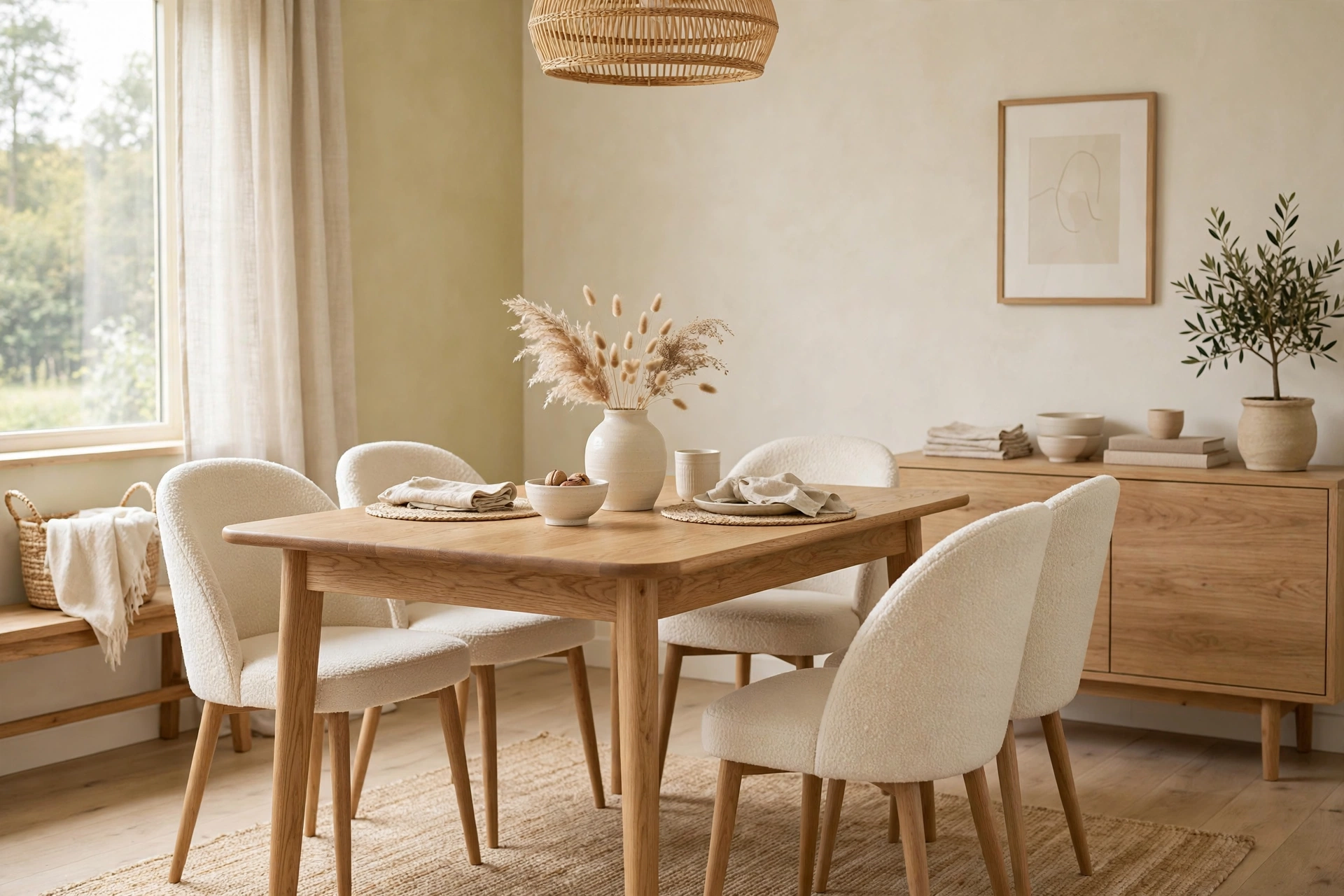
Boucle dining chairs bring a soft, tactile contrast to the smooth wood surfaces typical of a japandi dining room. The nubby, looped fabric catches the light in a way that makes neutral upholstery feel rich and layered. Opt for chairs with gently curved backs and tapered wooden legs to keep the silhouette calm and sculptural.
Stick to warm whites, oatmeal, or soft greige tones so the chairs blend into the room’s quiet palette. Boucle is surprisingly practical too, as the textured weave hides everyday wear better than flat fabrics. Pair them with an oak or ash table and you get that perfect japandi balance: cozy enough to linger in, minimal enough to breathe in.
4. Natural Linen Table Runner
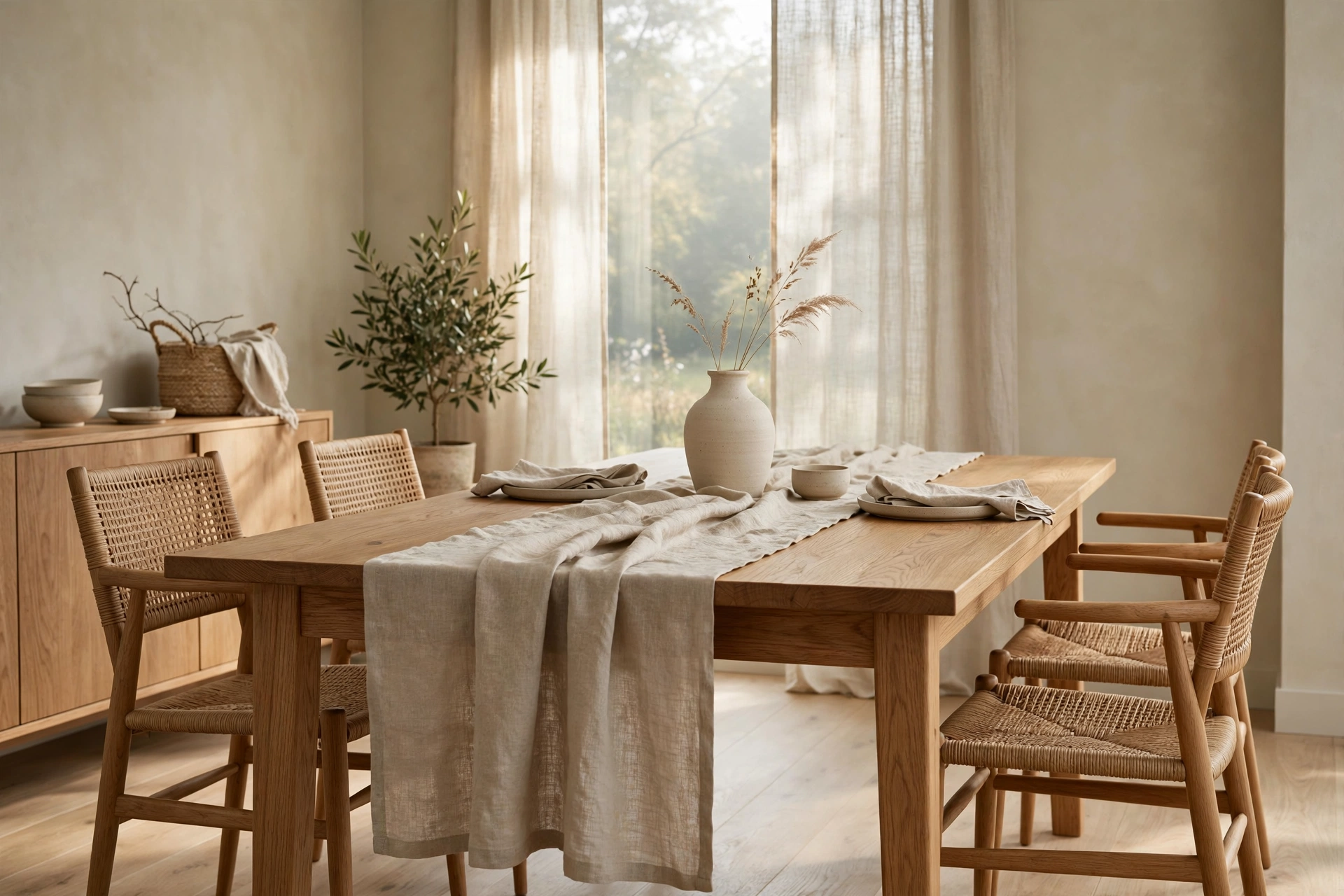
A natural linen table runner is the simplest way to dress a japandi dining table without cluttering it. The loosely woven fabric adds texture and a soft, imperfect edge that feels handmade and honest. Choose undyed flax or a muted oatmeal tone and let the runner drape slightly over the table ends for a relaxed, lived-in look.
Linen’s beauty deepens with use, as gentle creases and softening fibers tell the story of shared meals. Layer it under a low ceramic centerpiece or a few taper candles for an effortlessly styled surface. Because it is so understated, you can leave it in place every day and the table still feels ready for an impromptu dinner.
5. Handmade Ceramic Tableware
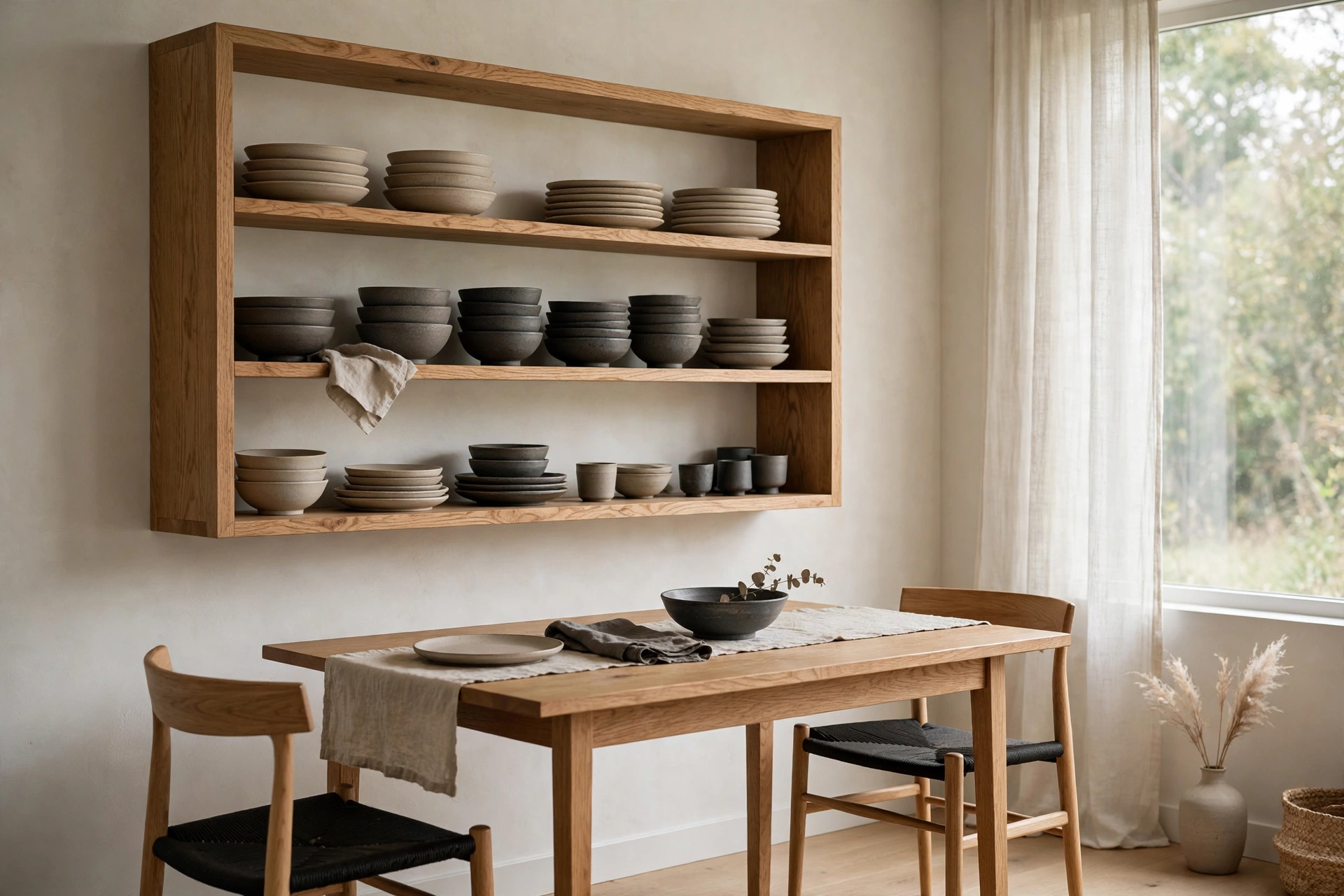
Handmade ceramic tableware turns everyday dining into a small ritual. In a japandi dining room, look for pieces with matte glazes, irregular rims, and earthy tones like sand, stone, and soft charcoal. Each slightly imperfect plate or bowl celebrates the wabi-sabi appreciation of beauty in imperfection.
Display a curated stack of bowls or a row of cups on an open shelf so they double as decor when not in use. Mixing two or three complementary glaze colors keeps the collection feeling collected rather than matched. These tactile, weighty pieces make even a simple weeknight meal feel intentional and calm.

6. Bamboo Accent Details
Bamboo accents introduce a subtle nod to Japanese craft without tipping the room into theme territory. Think bamboo placemats, a woven serving basket, or slender bamboo chopsticks resting on ceramic holders. The pale golden tone of bamboo brightens the typical japandi palette of oak and linen.
Because bamboo grows quickly and renewably, it also aligns with the style’s respect for nature and sustainability. Use it sparingly, perhaps one woven tray on the sideboard and a set of placemats, so it reads as a thoughtful detail rather than a motif. Its fine linear texture contrasts beautifully with the softness of upholstery nearby.

7. Minimalist Oak Sideboard
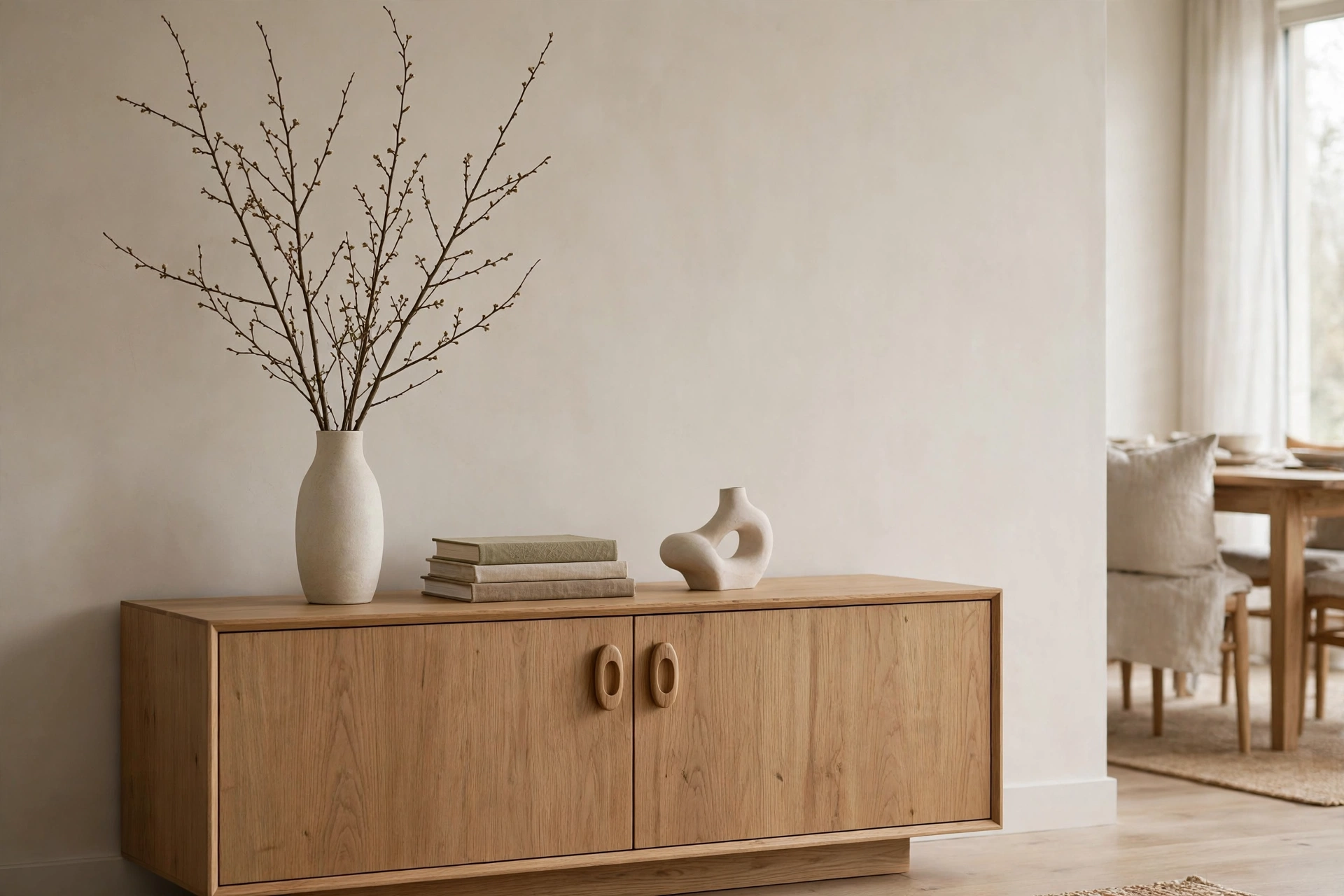
A minimalist oak sideboard gives your japandi dining room essential storage while keeping surfaces calm. Look for clean lines, discreet handles or push-to-open doors, and legs that lift the piece slightly off the floor for an airy feel. Inside, it hides table linens, serving pieces, and everything that would otherwise clutter the room.
Style the top with restraint: a single sculptural vase, a small stack of art books, or a low bowl. The sideboard also doubles as a serving station during dinner parties, which keeps the dining table itself uncluttered. In warm oak, it echoes the dining table and ties the whole room together.

8. Tatami-Inspired Floor Seating
For a truly Japanese-inflected dining corner, try tatami-inspired floor seating around a low table. Woven rush mats or low zabuton cushions create a relaxed zone that feels meditative and grounded. This setup works wonderfully in smaller spaces, where skipping bulky chairs opens up the floor.
Layer a flat-weave rug beneath the mats to define the area and add softness underfoot. Keep cushions in natural fabrics like cotton canvas or linen in muted tones. While it may not suit every dinner party, floor seating brings an unmistakable sense of ritual and calm that is pure japandi spirit.

9. Shoji Screen Room Divider
A shoji screen room divider adds architectural interest and soft, filtered light to a japandi dining room. The classic grid of wood and translucent paper breaks up an open-plan space without blocking light or airflow. It creates a sense of separation that still feels open and serene.
Use a freestanding two- or three-panel screen to tuck away a cluttered corner or to frame the dining area within a larger living space. The warm glow of light through the paper panels at dusk is quietly magical. Choose a natural wood frame that matches your table or sideboard for a cohesive look.

10. Warm White Oak Bench
Swapping some dining chairs for a warm white oak bench instantly makes a japandi dining room feel more relaxed and communal. A simple backless bench slides neatly under the table when not in use, saving precious floor space in smaller rooms. Its clean plank construction shows off the wood grain and keeps the look honest and unpretentious.
Pair the bench with two or three upholstered chairs on the opposite side for a collected, unfussy mix. A bench also invites casual perching, kids climbing up, and guests squeezing in, which suits the welcoming spirit of the style. Keep the oak tone consistent with the table for a seamless, built-in feel.

11. Wabi-Sabi Centerpiece
A wabi-sabi centerpiece celebrates the beauty of imperfection at the center of your table. Think a weathered wooden bowl, a cracked-glaze vase holding a single branch, or a cluster of stones gathered on a walk. These humble objects bring a sense of calm and authenticity that polished decor simply cannot match.
The key is restraint: choose one or two meaningful pieces and give them space. A low arrangement keeps sightlines open across the table so conversation flows easily. Rotate the objects with the seasons, a bare branch in winter, a sprig of eucalyptus in spring, to keep the table feeling alive and connected to nature.

12. Stoneware Dinner Set Display
Openly displaying your stoneware dinner set turns everyday dishes into part of the room’s decor. In a japandi dining room, a simple oak shelf or the top of a sideboard can hold neat stacks of matte-glazed plates and bowls in sand, clay, and charcoal tones. The repetition of round, earthy forms is quietly beautiful.
Keep the display edited, grouping pieces by shape and leaving breathing room between stacks. This approach also makes setting the table effortless, since everything is within reach. When the dishes themselves are beautiful, you need far less decorative clutter elsewhere in the room.
13. Flax Linen Seat Cushions
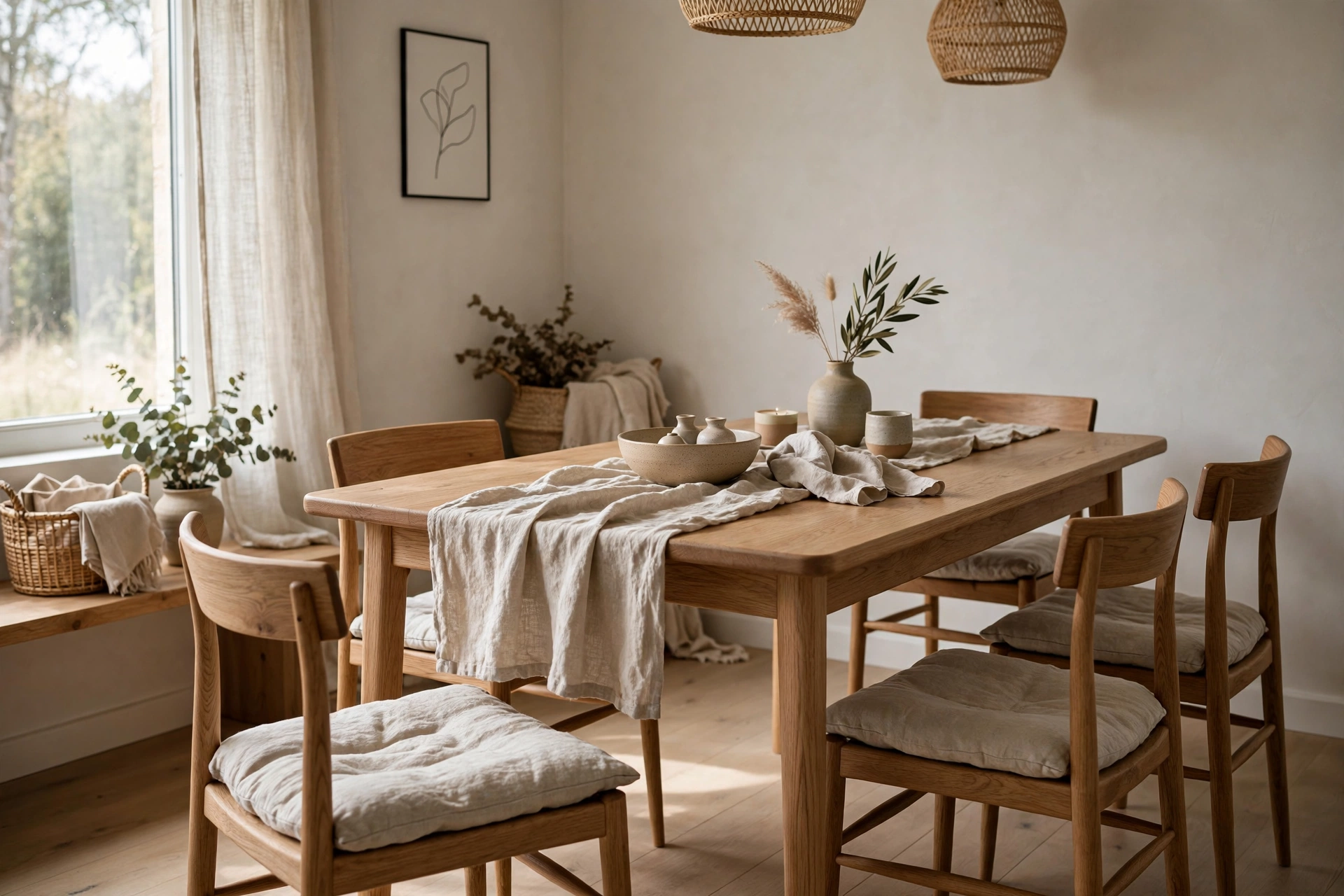
Flax linen seat cushions soften wooden dining chairs while staying true to the japandi palette. Their natural slubby texture and muted tones, flax, oat, and soft stone, add comfort without visual noise. Ties or simple envelope closures keep them easy to remove and wash.
Because linen breathes, these cushions stay comfortable through long dinners in any season. They also introduce a gentle, rumpled softness that balances the harder lines of wood and ceramic. Choose a slightly oversized cut so the cushion drapes casually rather than sitting stiffly on the seat.
14. Matte Black Taper Candles
Matte black taper candles add a graphic, modern note to the soft neutrality of a japandi dining room. Set in simple stone or ceramic holders, they create striking vertical lines that draw the eye upward and add drama to the tablescape. Their dark tone echoes the charred-wood accents found in Japanese design.
Light them for evening meals to transform the room’s mood instantly, the flickering flames soften the black finish into something warm and inviting. An odd-numbered cluster of varying heights looks most natural. Even unlit, they read as quiet sculpture on the table or sideboard.

15. Rattan Pendant Light
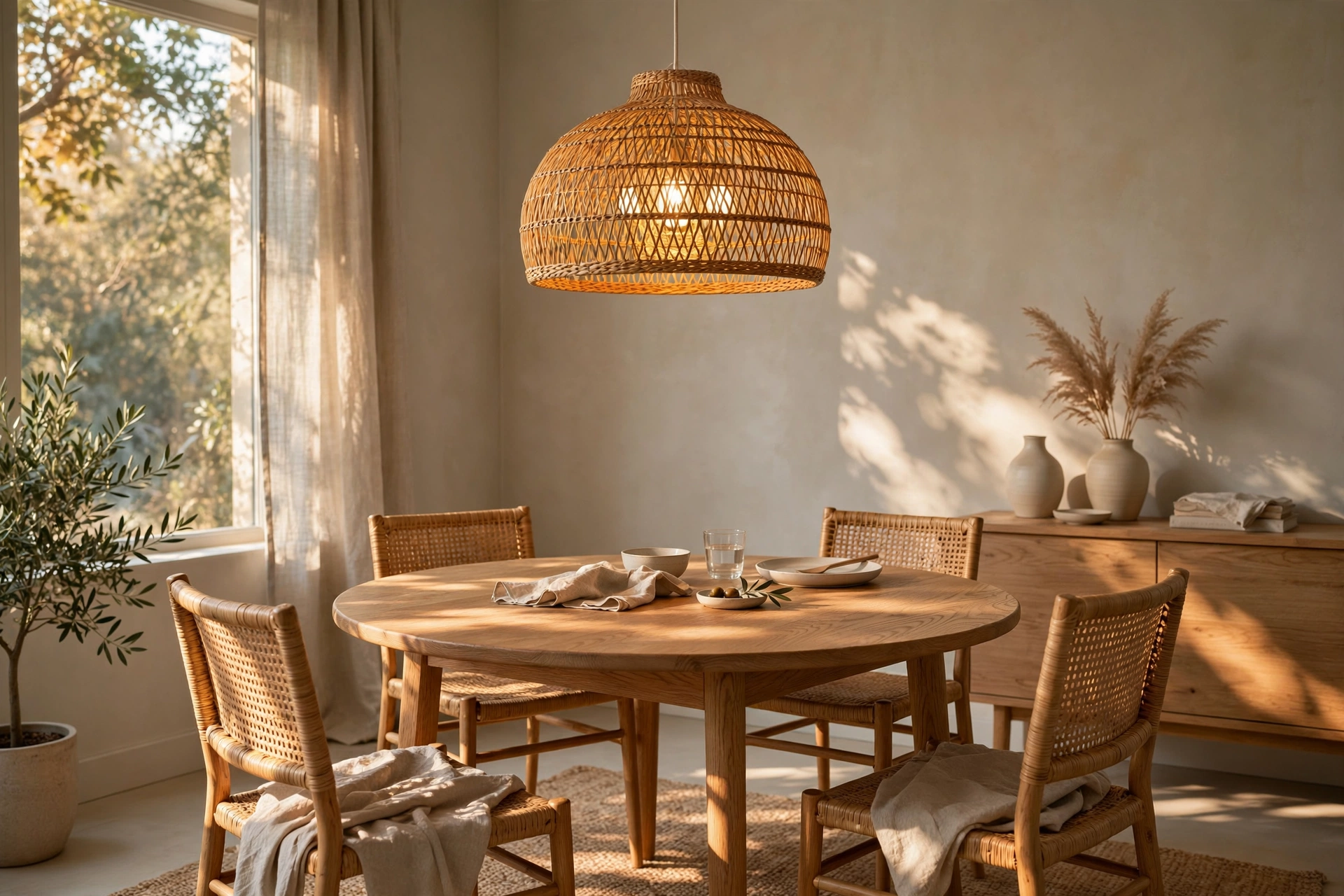
A rattan pendant light brings organic texture and a soft, dappled glow to the dining area. The woven shade casts beautiful patterned light across the table while its honeyed tone warms up the room’s neutral palette. It is a natural alternative to paper lanterns with a slightly more coastal, relaxed feel.
Choose a dome or bell shape in a tight weave so the light feels diffused rather than spotty. Hung over a round oak table, a single generous rattan pendant creates a cozy pool of light that defines the dining zone. The handcrafted weave adds artisanal character that is central to japandi style.
16. Ash Wood Dining Set
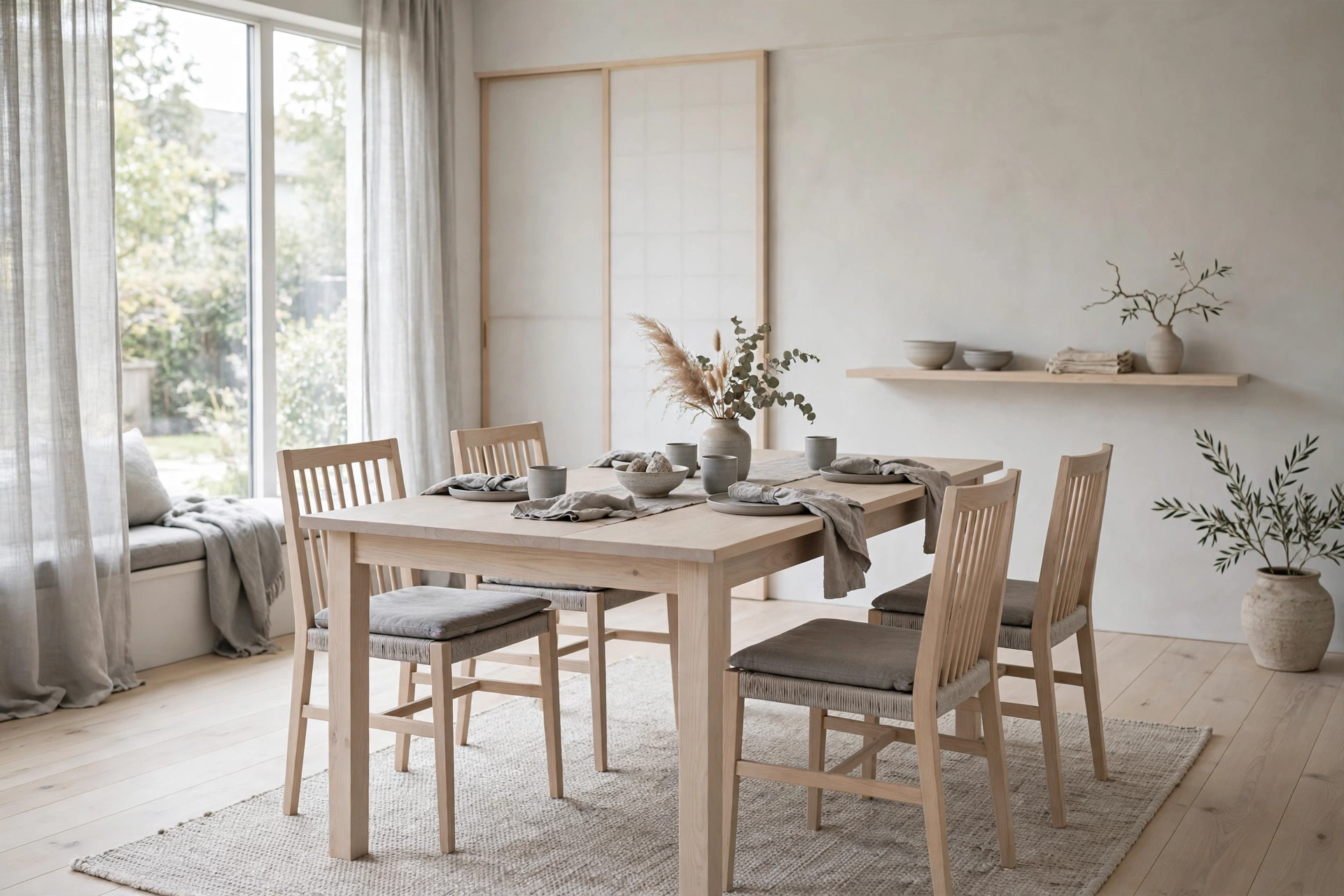
While oak gets most of the attention, pale ash wood offers a lighter, more Scandinavian take on the japandi dining set. Its subtle grain and almost-white tone keep small or north-facing rooms feeling bright and open. A matching ash table and chairs create a seamless, sculptural grouping.
Ash pairs especially well with soft grey textiles and matte white ceramics for an ultra-calm palette. The wood is hard-wearing enough for daily family use while looking refined. If your room lacks natural light, ash is the wood choice that will keep the space feeling airy rather than heavy.
17. Zen Corner Tea Nook
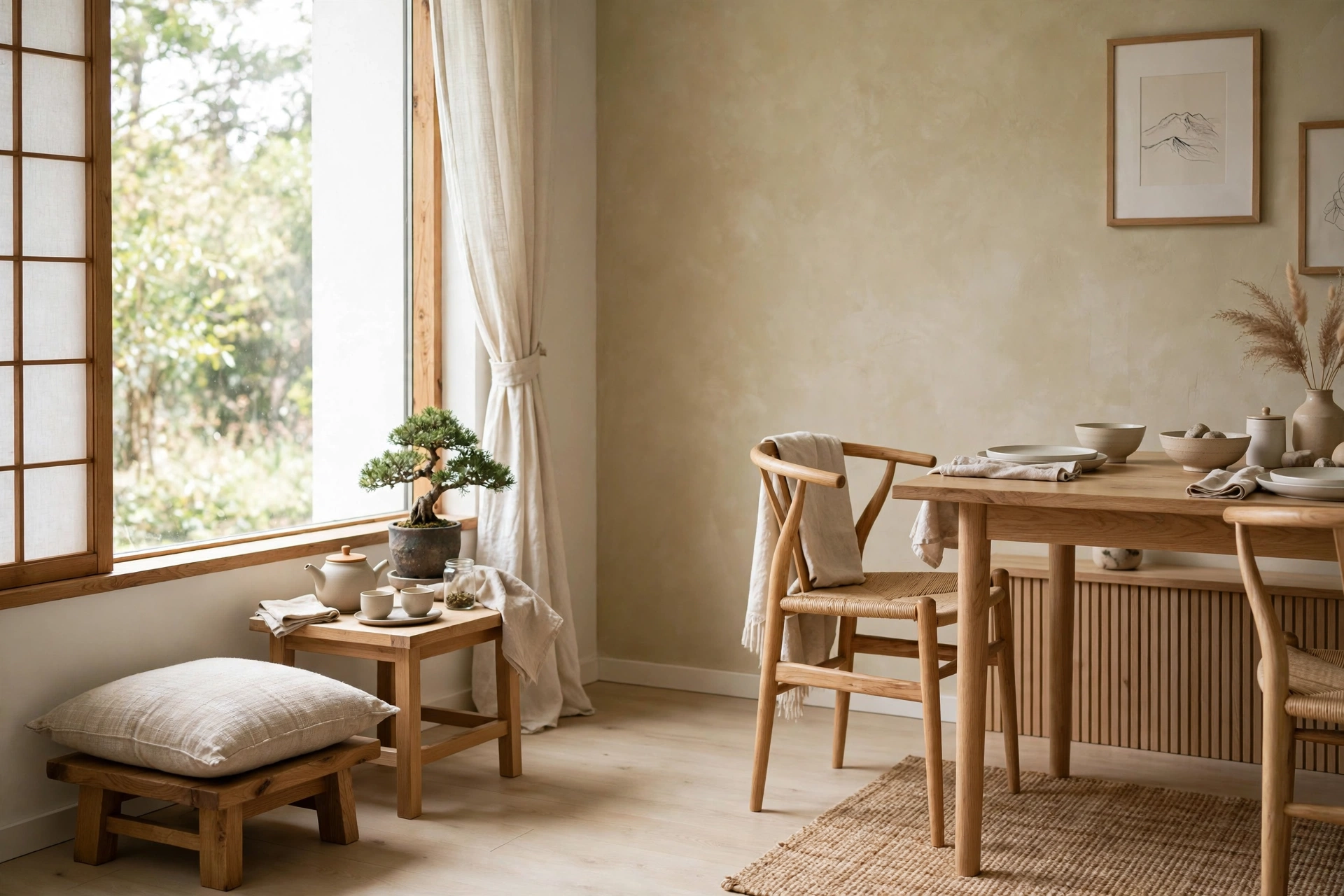
Carve out a zen corner tea nook beside your dining area for slow mornings and quiet conversation. A low wooden stool or floor cushion, a small side table, and a simple teapot set are all it takes. This little ritual corner extends the dining room’s purpose beyond meals into moments of stillness.
Position the nook near a window to borrow natural light and a view of greenery. A single piece of calligraphy art or a small bonsai completes the scene without clutter. It is a deeply personal touch that makes the dining space feel like a sanctuary rather than just a room with a table.
18. Birch Serving Tray Styling
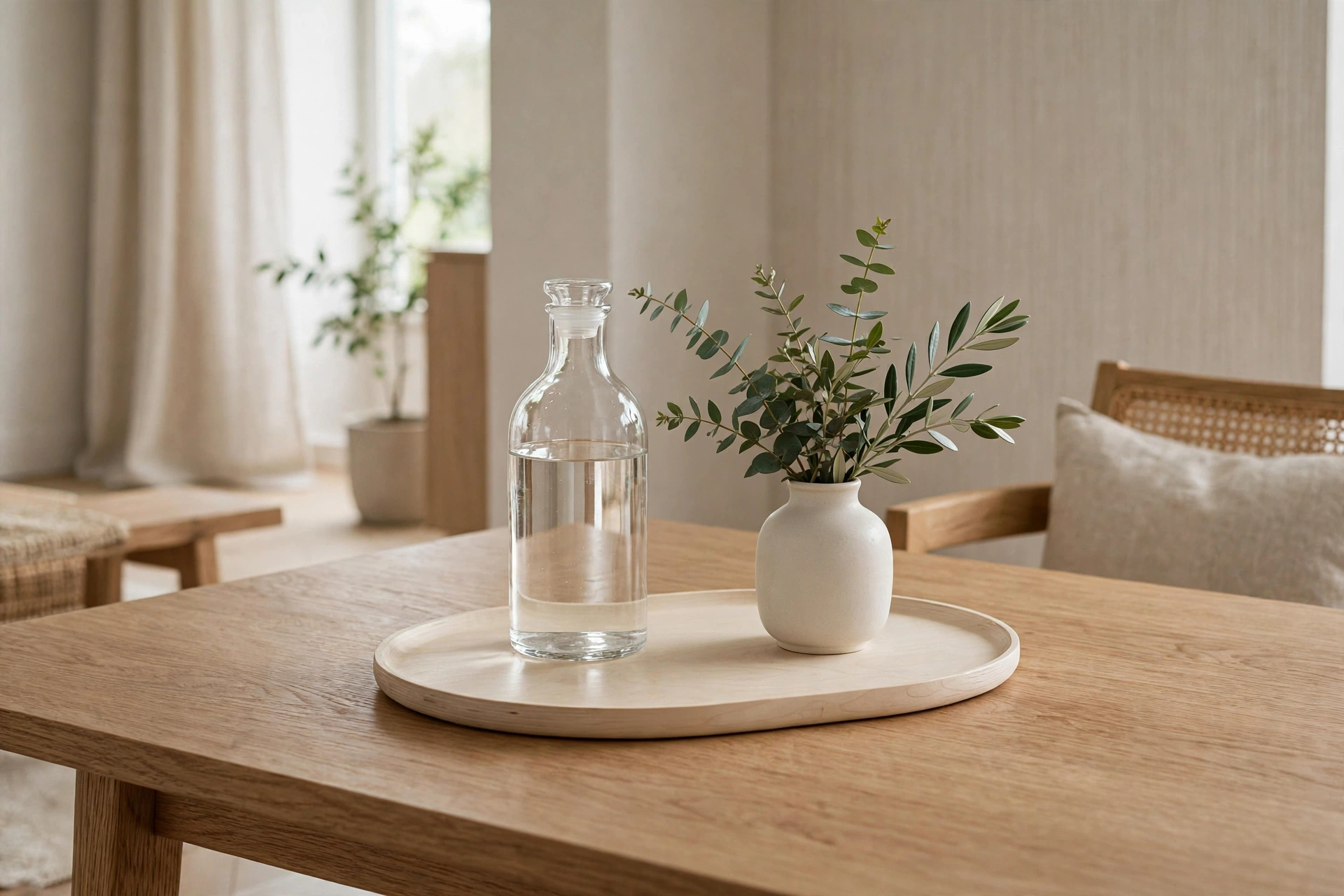
A birch serving tray is both practical and beautiful in a japandi dining room. Use it to corral condiments, a carafe of water, or the evening’s candles into one tidy composition on the table or sideboard. The pale birch with its fine grain keeps the arrangement feeling light and cohesive.
When guests arrive, the whole tray lifts away to clear the table in one motion, then returns just as easily. Style it with a small vase of greenery and two or three essential items, never more. This kind of contained styling is the secret to a dining room that always looks effortlessly composed.
19. Muted Sage Green Accent Wall
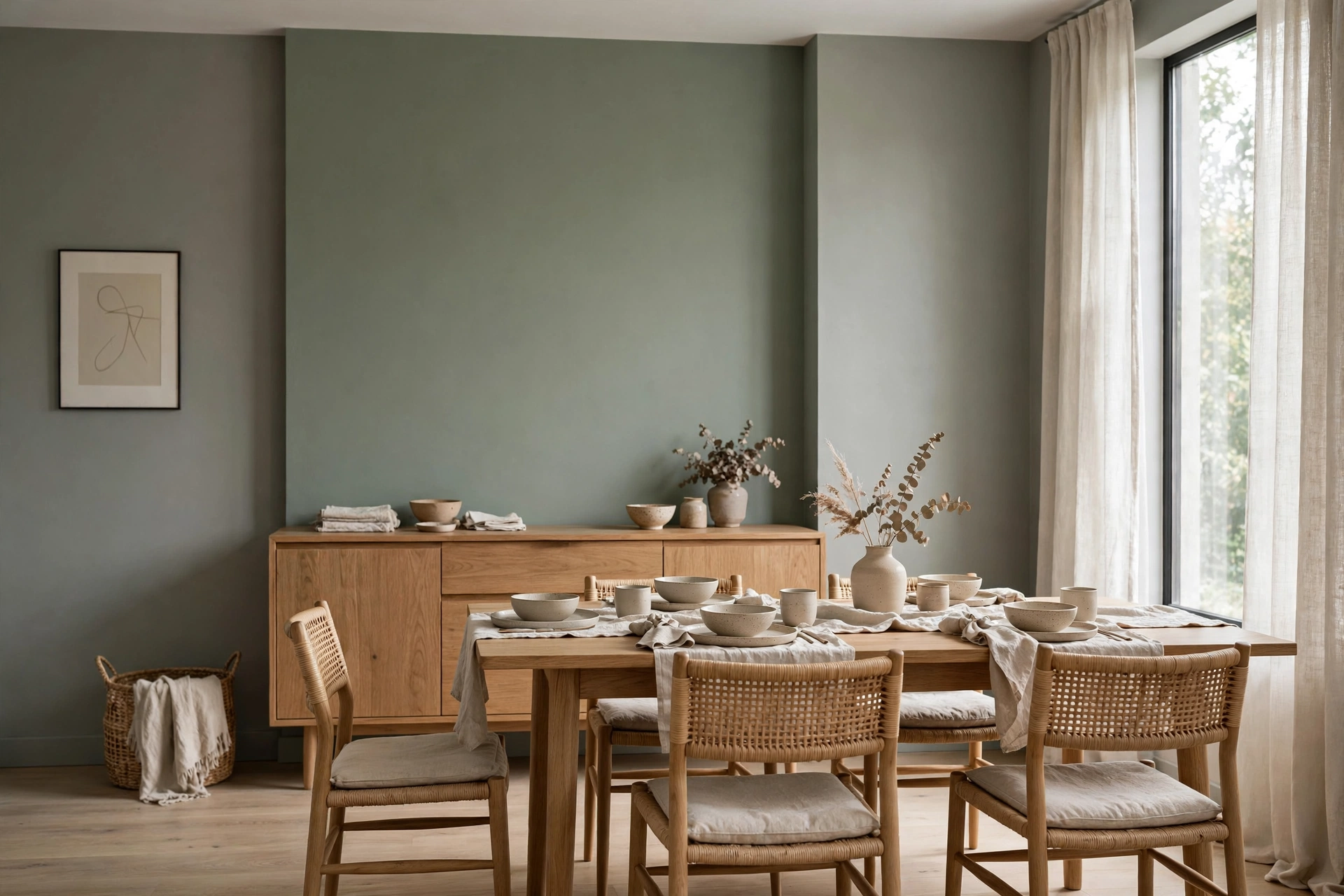
A muted sage green accent wall adds gentle color to a japandi dining room without disturbing its calm. This greyed-down green echoes moss, eucalyptus, and other natural tones, sitting comfortably alongside oak and linen. Paint just one wall, ideally the one behind the sideboard or the table, so the color feels like a backdrop rather than a statement.
Sage green deepens the room’s connection to nature and makes wood tones appear richer by contrast. Keep everything else in the space neutral so the wall can do the quiet work of adding depth. In the evening, it takes on a cozy, cocooning quality under warm lamplight.
20. Round Oak Pedestal Table
A round oak pedestal table is ideal for smaller japandi dining rooms, as its single central base frees up legroom and improves flow around the table. The circular top softens the room’s geometry and encourages inclusive conversation, since everyone faces each other equally. Solid oak keeps it warm and grounded.
Round tables also pair beautifully with a single pendant light centered above, creating a natural focal point. Style with a low, round centerpiece that mirrors the table’s shape, such as a shallow ceramic bowl. For daily use, the absence of corners makes the room feel more open and easier to move through.

21. Woven Jute Area Rug
A woven jute area rug grounds the dining set and adds natural texture underfoot. Its golden, fibrous weave complements oak floors or pale wood beautifully, layering tone on tone for a warm, cohesive base. Choose a rug large enough that chairs stay on it even when pulled out.
Jute is durable and forgiving, hiding crumbs and wear far better than a pale flatweave. The organic texture contrasts nicely with smooth table surfaces and soft upholstery above it. Keep the rug’s edges simple and unbound for the most relaxed, natural look.

22. Minimalist Floating Shelves
Minimalist floating shelves in oak or ash offer display space without the bulk of a cabinet. In a japandi dining room, use them to show off a few beautiful objects: handmade ceramics, a small plant, a stack of linen napkins. The key is leaving most of each shelf empty so every piece can breathe.
Mount one long shelf above the sideboard or two short shelves flanking a window for symmetry. Because they have no visible brackets, floating shelves keep the wall feeling light and uncluttered. Rotate the display seasonally to keep the room feeling fresh without buying anything new.

23. Ikebana Flower Arrangement
An ikebana-inspired flower arrangement brings the Japanese art of minimal floral design to your dining table. Unlike lush Western bouquets, ikebana emphasizes line, space, and asymmetry, often using just three stems in a low vessel. The result is sculptural and meditative rather than decorative.
You do not need formal training to try it: a shallow bowl, a flower frog, and a few branches from the garden are enough. The arrangement becomes a living centerpiece that changes as stems open and fade. It embodies the japandi love of nature, simplicity, and quiet beauty.

24. Travertine Serving Board
A travertine serving board adds cool, stony contrast to the warm woods of a japandi dining room. Its pitted, natural surface and soft beige tones feel ancient and grounding. Use it for cheese, bread, or sushi presentations, or simply leave it on the sideboard as a sculptural object.
Stone elements balance the softness of textiles and the warmth of wood, giving the room textural depth. Each travertine piece is unique, with veining and voids that celebrate natural imperfection. Pair it with wooden serving utensils to keep the material story cohesive.
25. Frosted Glass Sliding Door
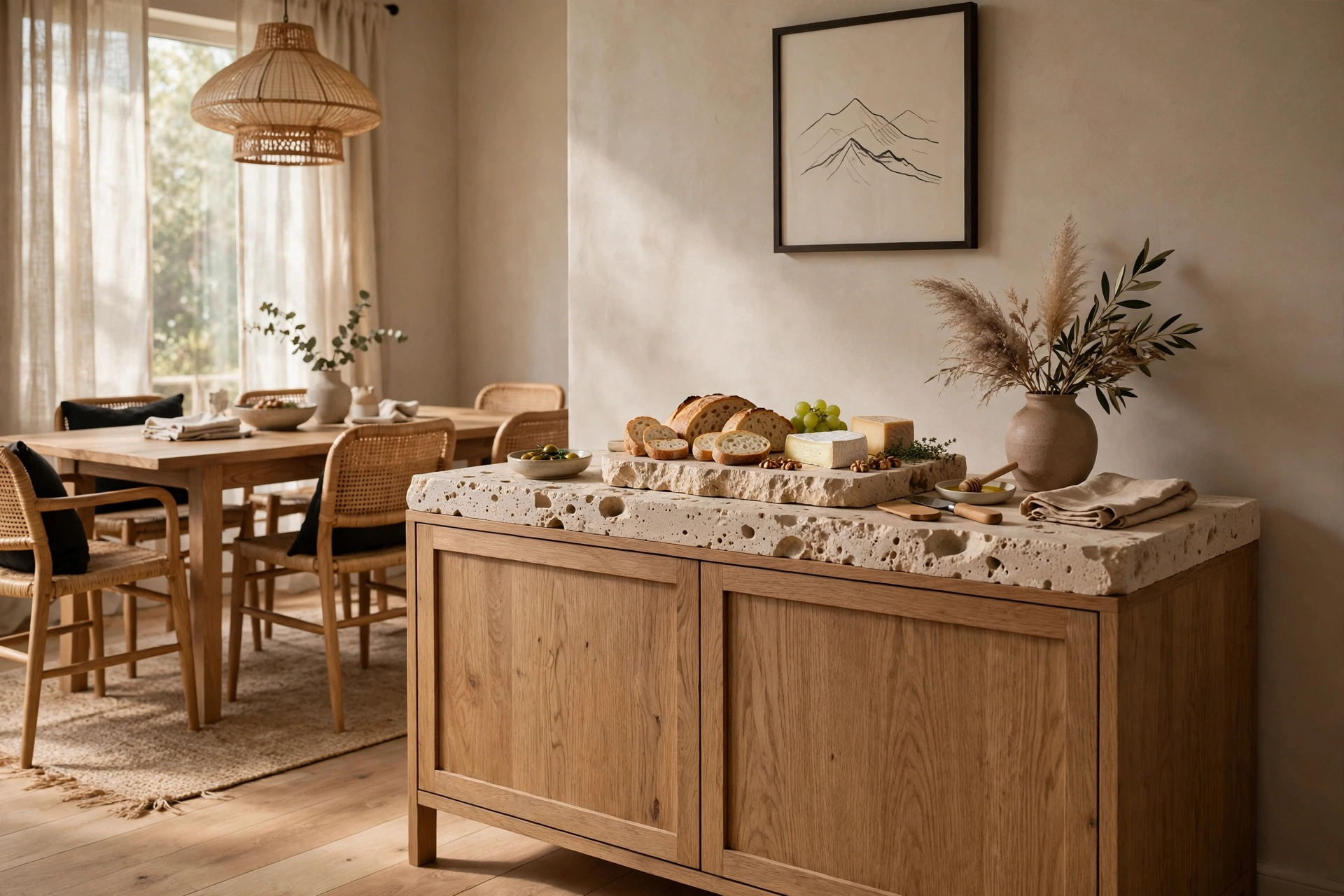
A frosted glass sliding door is a beautiful architectural nod to Japanese interiors. It separates the dining room from a kitchen or hallway while allowing soft, diffused light to pass through. The gentle glow it creates keeps the space feeling open even when closed.
Choose a slim timber frame in oak or black-stained ash to match your furniture. Unlike a swinging door, the sliding mechanism saves floor space and adds a satisfying, quiet ritual to entering the room. It is a bigger commitment than decor, but it transforms how the whole space feels.
26. Earthy Clay Vase Collection
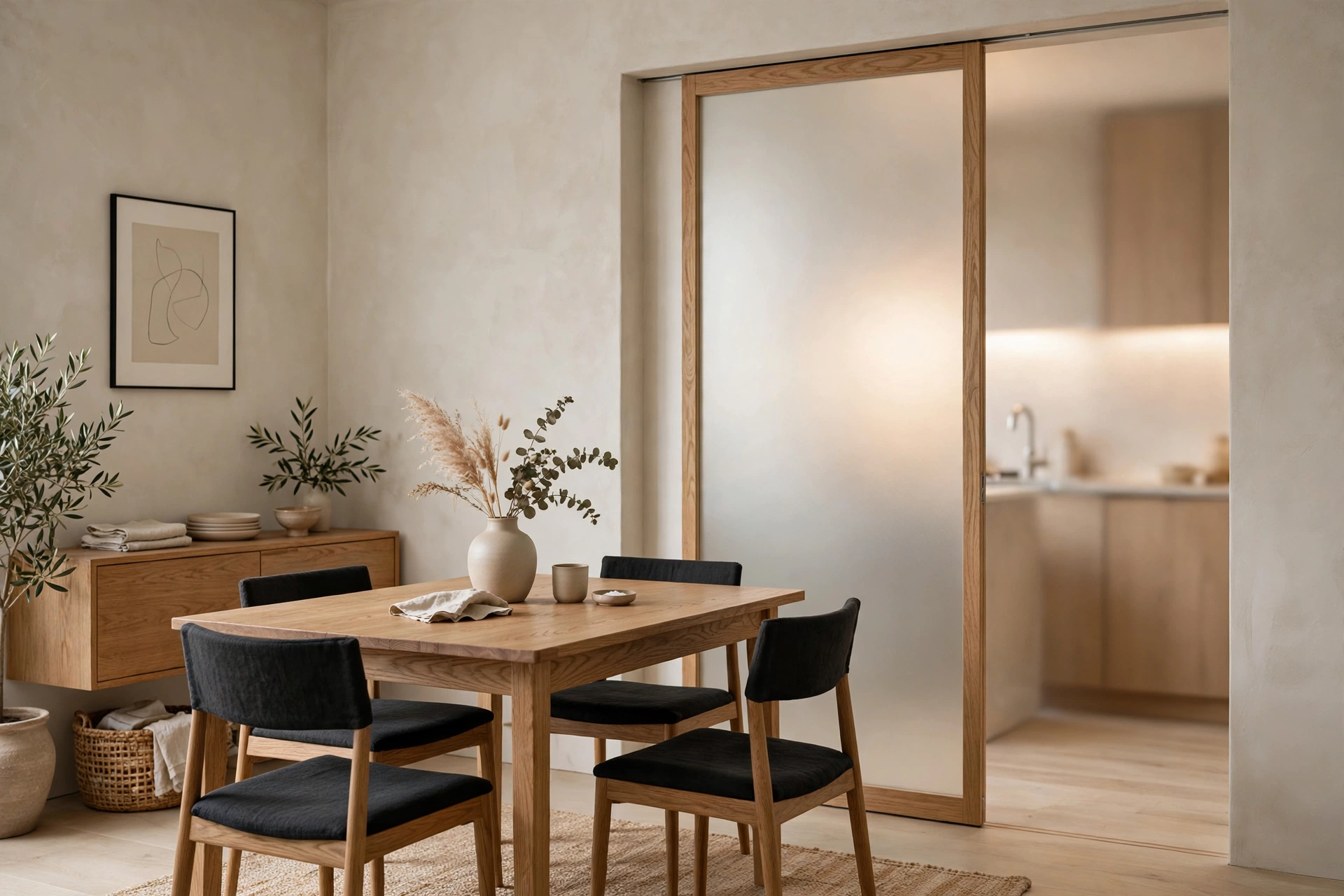
A small collection of earthy clay vases brings handmade warmth to shelves and sideboards. Look for terracotta, sand, and rust tones with matte, tactile finishes. Grouping three vases of different heights creates a pleasing rhythm, while leaving most of them empty keeps the look minimal.
These humble vessels celebrate the material honesty at the heart of japandi style. Fill just one with a single stem or dried grasses and let the others stand as sculpture. Their warm earthen tones bridge the gap between pale woods and deeper accents like black candle holders.
27. Walnut and Oak Mixed Woods
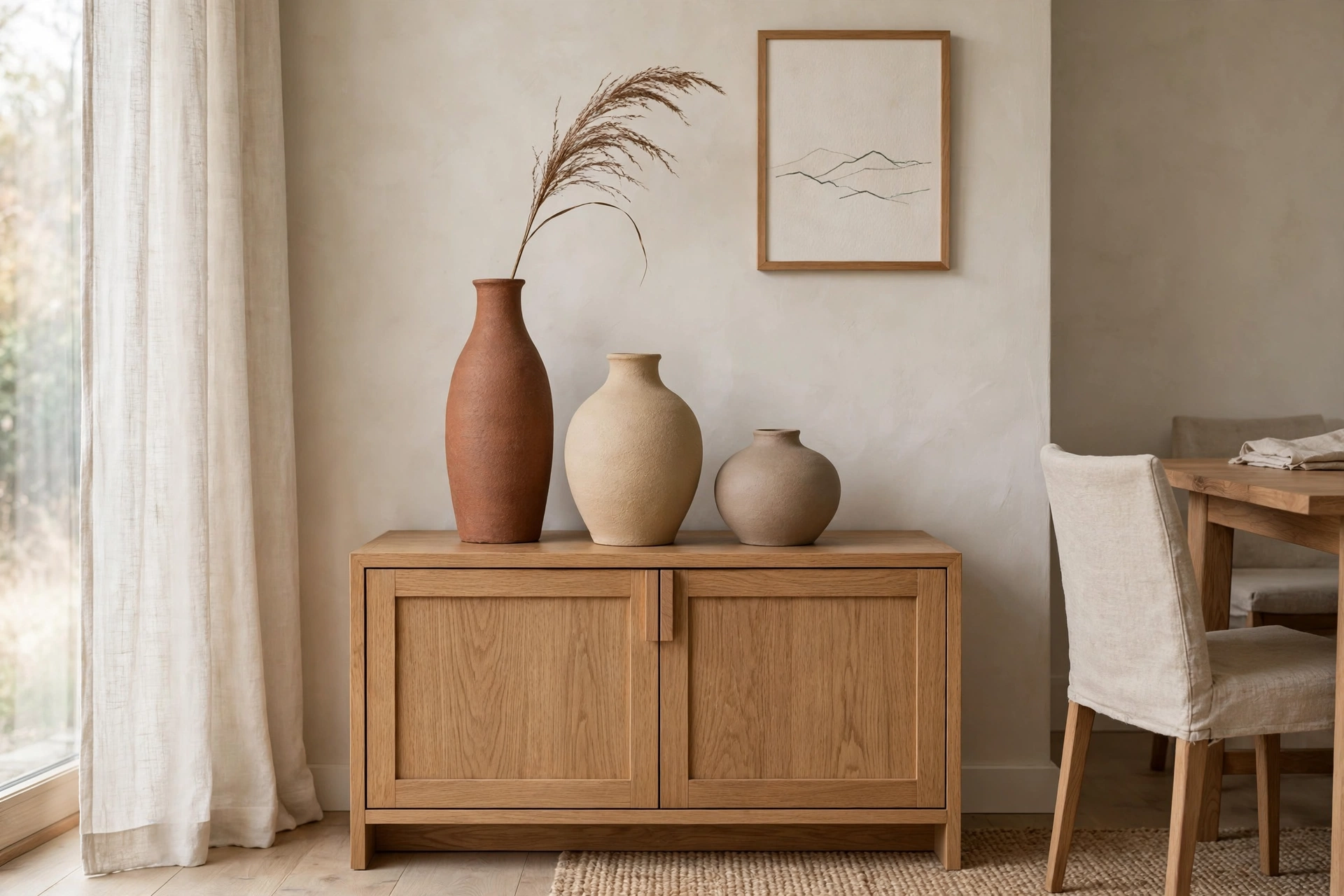
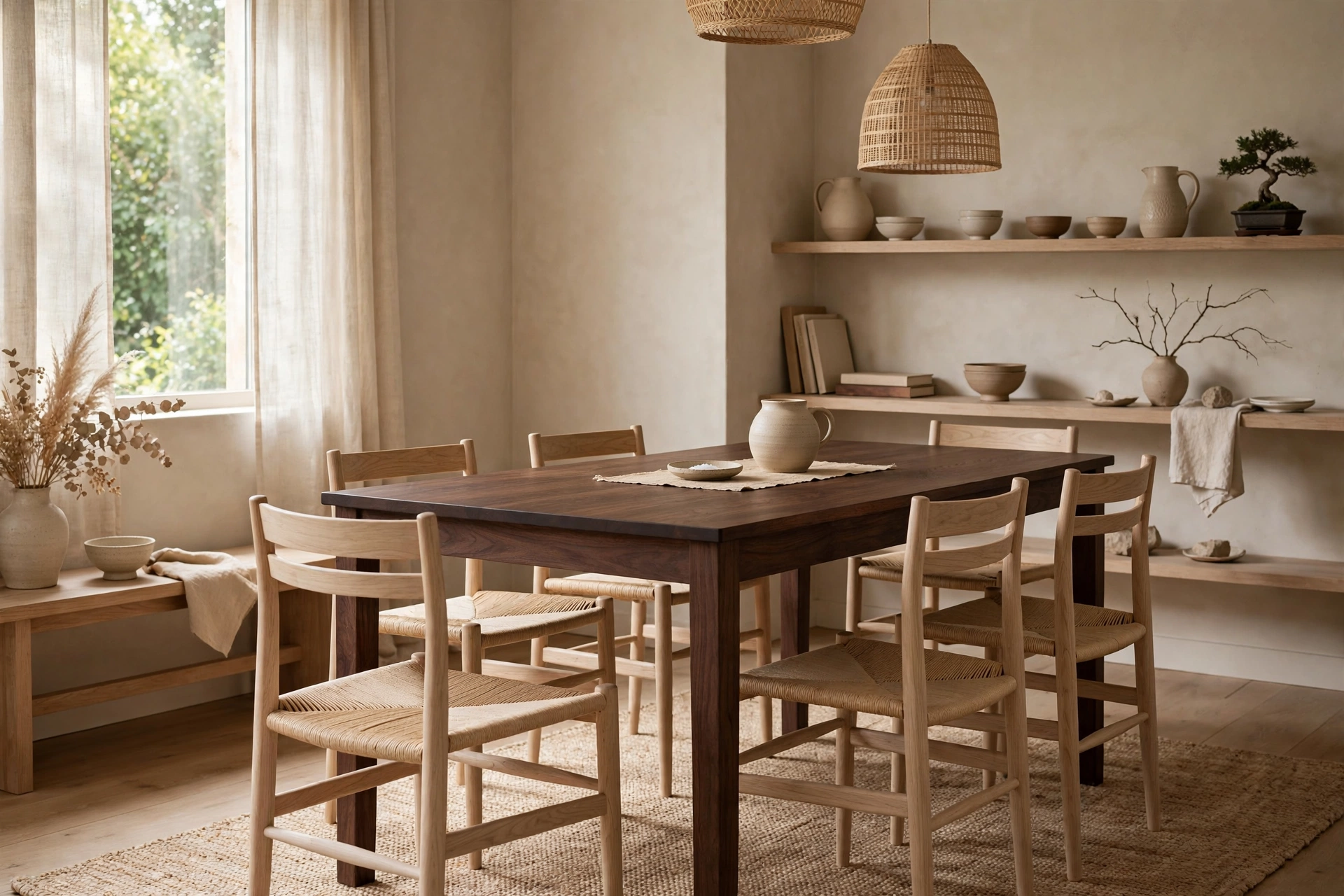
Mixing walnut and oak in one dining room adds depth while staying within a natural palette. Try a walnut table with oak chairs, or an oak table with a walnut sideboard. The contrast between pale and dark wood creates visual interest without introducing any color beyond nature’s own.
The trick is to repeat each wood at least twice so the mix looks intentional rather than accidental. This layered approach feels collected over time, which is very much in the japandi spirit. Both woods share warm undertones, so they harmonize far more easily than you might expect.
28. Low-Profile Banquette Seating
A low-profile banquette along one wall turns a corner of the dining room into an inviting nook. Built from oak with a simple linen-covered cushion, it offers generous seating without the visual weight of multiple chairs. Tucked against the wall, it keeps the center of the room feeling open.
Banquettes are wonderfully practical for families, as kids can slide in easily and the base can hide storage inside. Keep the cushion in a washable natural fabric and add one or two lumbar pillows in muted tones. Paired with a rectangular table and a bench or chairs opposite, it creates a relaxed, cafe-like corner.

29. Warm Wall Sconces
Warm wall sconces add layered, flattering light that overhead fixtures alone cannot achieve. In a japandi dining room, choose simple forms: a paper globe, a small oak arm with a linen shade, or an unglazed ceramic half-dome. Mounted at eye level, they wash the walls in a soft golden glow.
Sconces are perfect for flanking a sideboard or framing a piece of art, adding symmetry and warmth. Put them on a dimmer so you can lower the light for intimate dinners. Their gentle pools of light make the room feel cozy and considered long after the sun goes down.

30. Neutral Limewash Walls
Neutral limewash walls give a japandi dining room its signature soft, chalky backdrop. The natural movement in the finish adds subtle texture and depth that flat paint cannot replicate. Warm whites, bone, and pale greige keep the room light while feeling richer than plain white.
Limewash plays beautifully with both oak and darker woods, letting furniture stand out gently against the walls. Its matte, cloud-like surface diffuses light softly around the room. Because the finish is naturally varied, small marks and touch-ups blend in, which suits the style’s easy, imperfect elegance.

31. Oak Credenza Styling
Styling an oak credenza with intention turns storage into a design moment. Start with a clear surface, then add three elements at varying heights: a tall vase with branches, a low stack of books, and a small sculptural object. This simple formula looks composed without feeling staged.
Leave generous negative space around each piece so the oak top itself remains visible. The credenza can also hold table linens and serving ware inside, keeping the dining table clear. In the evening, a small lamp or candle on the credenza adds a warm secondary glow to the room.
32. Soft Wool Throw on Bench
Draping a soft wool throw over the dining bench adds a layer of comfort and texture. Choose an undyed or naturally mottled wool in cream or light grey, folded loosely rather than arranged perfectly. The casual drape invites people to wrap up and linger after the meal.
Wool brings welcome warmth to the harder surfaces of wood and stone, balancing the room’s material palette. It also introduces a subtle pattern through its weave without adding any print or color. In cooler months, it is as practical as it is beautiful.

33. Minimalist Ink Wall Art
A single piece of minimalist ink wall art brings Japanese artistic tradition into the dining room. Abstract brushstrokes in black sumi ink on warm white paper create a striking yet quiet focal point. The gestural marks add energy to the room’s calm without introducing busy color.
Hang one generous piece above the sideboard or credenza, framed simply in thin oak or black wood. The negative space in the artwork echoes the breathing room of the interior itself. It is a powerful reminder that in japandi design, what is left out matters as much as what is included.

34. Wooden Chopstick Rests
Wooden chopstick rests are a small detail that speaks volumes about intention. These tiny sculptural pieces, often shaped like pebbles, leaves, or simple bars, elevate the table setting and honor Japanese dining rituals. In oak, walnut, or bamboo, they blend seamlessly with the room’s materials.
Present them as part of a considered place setting alongside handmade ceramics and linen napkins. Guests notice these thoughtful touches, and they turn an ordinary meal into something a little more ceremonial. Collect a matching set over time rather than buying all at once.

35. Paper Floor Lantern
A paper floor lantern in the corner of the dining room adds sculptural presence and a second source of soft light. Like its pendant cousins, it glows warmly through rice paper, but at floor level it creates an intimate, grounded pool of light. It is especially lovely in the evening when the overhead lights are dimmed.
Choose an organic, rounded form that contrasts with the straight lines of the table and sideboard. The lantern also fills an empty corner beautifully without adding visual clutter. Its lightweight, airy construction keeps the room feeling open even as it adds warmth.

36. Serene Window-Side Dining Nook
Positioning your dining table beside a window creates a serene nook bathed in natural light. In a japandi dining room, sheer linen curtains soften the daylight while preserving the view of sky and greenery. Meals feel calmer and more connected to the rhythms of the day when eaten in natural light.
Keep the windowsill styled simply, perhaps with a small potted plant or a single ceramic vessel, so the view remains the star. A window-side table also makes the room feel larger, as the eye travels outward. It is the simplest luxury: good light, a simple table, and time to enjoy both.

Final Thoughts
A japandi dining room is less about following rules and more about embracing a feeling: calm, natural, and quietly welcoming. Whether you start with a low oak table, a paper lantern, or simply a linen runner and handmade ceramics, each small choice moves your space toward serenity. Pick the ideas that speak to you, leave plenty of breathing room, and enjoy the slow, beautiful ritual of gathering around the table.