
32 Wildflower Tablescape Ideas
There is something effortlessly charming about a wildflower tablescape. Unlike formal florals, wildflowers feel gathered rather than arranged —…
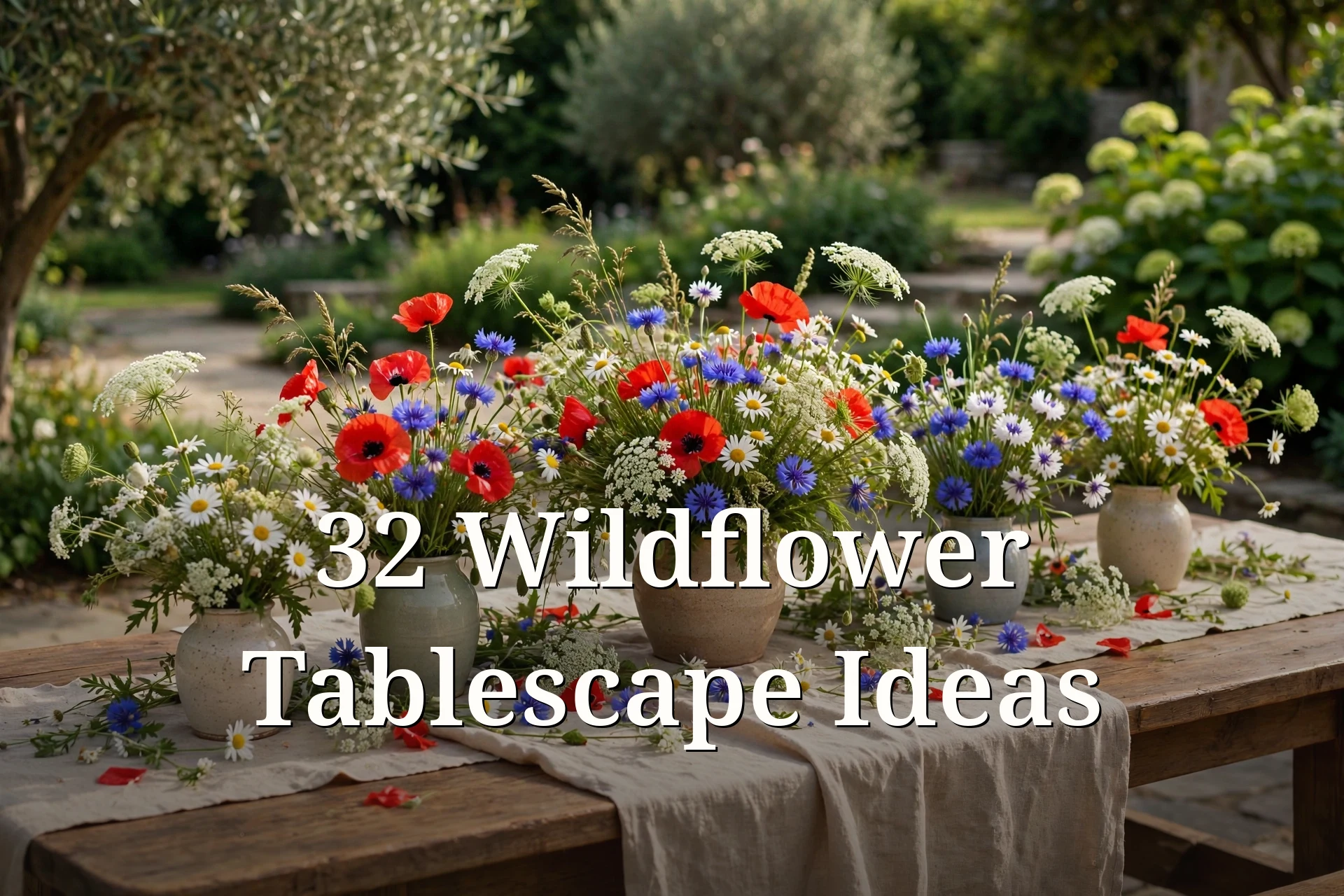
There is something effortlessly charming about a wildflower tablescape. Unlike formal florals, wildflowers feel gathered rather than arranged — a little loose, a little spontaneous, and full of the kind of natural beauty that instantly relaxes a table. Whether you have picked them from a meadow or a farmers market, these 32 wildflower tablescape ideas will help you style a setting that feels fresh, welcoming, and beautifully unpretentious.
From mason jars and bud vases to candlelit dinners and golden-hour garden parties, each idea pairs wild blooms with natural textures like linen, ceramic, and wood. Pick your favorite, or mix and match elements across ideas to create a table that feels completely your own.
01. Mason Jar Wildflower Centerpieces
Mason jars are the classic vessel for wildflower centerpieces, and for good reason — their clear glass shows off every stem while keeping the look casual and unfussy. Gather jars in a few different heights, wrap a length of twine or linen ribbon around each neck, and fill them with a generous handful of mixed wildflowers. Place them in a loose cluster down the center of a linen runner rather than spacing them evenly; the relaxed grouping is what gives this look its charm.
For the longest-lasting display, fill each jar two-thirds full with fresh water and strip any leaves that would sit below the waterline. Mix tall stems like cornflowers and Queen Anne’s lace with shorter poppies and daisies so the arrangement has natural height variation. If your table is wide, add a couple of votive candles between the jars to fill the gaps and carry the eye along the runner.

02. Wildflower Garland Runner
A garland of fresh wildflowers laid straight down the center of the table is one of the most breathtaking — and surprisingly simple — tablescape ideas you can try. Instead of a traditional fabric runner, the flowers themselves become the runner. Weave stems of daisies, cornflowers, and Queen Anne’s lace together loosely, tucking in greenery for fullness, and let the garland spill slightly over the table ends for an organic feel.
Build the garland on a base of damp floral foam wrapped in twine if you need it to stay fresh through a long dinner, or lay it directly on the linen for a shorter gathering and mist it lightly with water before guests arrive. Keep the garland low — no more than four or five inches high — so conversation flows easily across the table. A few scattered petals around the place settings tie the whole look together.

03. Mismatched Bud Vases
A row of mismatched bud vases, each holding a single wildflower stem, brings a collected-over-time feel to the table that is hard to replicate any other way. Hunt through thrift stores and your own cabinets for small bottles, apothecary jars, and tiny vases in different shapes — the variety is the point. One perfect poppy in a cobalt bottle next to a sprig of Queen Anne’s lace in a vintage medicine vial looks effortlessly curated.
Space the bud vases along the center of the table at irregular intervals rather than in a straight parade line; a little zigzag keeps the arrangement feeling natural. This is also the most practical wildflower tablescape for conversation, since single stems never block anyone’s view. After the party, guests love taking a bud vase home as a favor.

04. Floral Napkin Rings
Sometimes the smallest detail makes the biggest impression, and wildflower napkin rings prove it. Fold a natural linen napkin into a simple rectangle or loose knot, then tuck two or three small wildflower stems — a daisy, a cornflower, a wisp of Queen Anne’s lace — through the fold or tie them on with a short piece of twine. Every place setting gets its own tiny bouquet.
Choose sturdy, short-stemmed blooms that can handle being handled, and add the flowers at the last minute so they look fresh when guests sit down. Pair the floral napkins with simple ceramic plates so the wildflowers are the star of each setting. This detail works beautifully alongside a larger wildflower centerpiece, echoing the same blooms at every seat.

05. Linen Runner with Scattered Petals
For a look that feels like a meadow wandered onto your table, start with a rumpled natural linen runner and scatter loose petals and small flower heads across it. Daisy petals, poppy petals, and the odd cornflower head look gorgeous against the texture of undyed linen. Anchor the runner with a few low ceramic vases of wildflower sprigs at intervals so the table still feels styled rather than sprinkled.
The key to scattered petals is restraint — think “breeze blew them there,” not “someone emptied a bag.” Concentrate the petals along the runner’s center and thin them out toward the place settings so plates sit on clean linen. Refresh any petals that wilt during the evening, and keep the palette to two or three flower colors so the table reads as intentional.

06. Ceramic Pitcher of Wildflowers
A large handmade ceramic pitcher overflowing with wildflowers is the kind of centerpiece that looks like it came straight from a French farmhouse. The matte texture of stoneware or earthenware plays beautifully against the softness of Queen Anne’s lace and the bright faces of daisies and poppies. Choose a pitcher with a wide mouth so you can arrange a generous, billowing bunch rather than a tight bouquet.
Fill the pitcher first with water, then add your tallest stems — cornflowers and Queen Anne’s lace — before filling in around them with shorter daisies and poppies. Turn the pitcher as you work so it looks full from every side. Set it slightly off-center on the table and flank it with smaller ceramic bud vases of single stems to balance the composition.

07. Candlelit Wildflower Dinner
Wildflowers by candlelight take on a whole new romance — petals glow, shadows dance, and the table feels intimate and magical. Keep the wildflower arrangements low in ceramic vases so they nestle among the candles rather than competing with them. A mix of taper candles in brass holders and short votives gives you height variation that flatters the flowers.
Use unscented candles so their fragrance does not clash with the natural scent of the blooms, and keep flames a safe distance from any wispy stems like Queen Anne’s lace. This is a wonderful look for evening garden parties and summer dinners; the warm light makes even simple daisies look luxurious. Dim any overhead lights and let the candles do the work.

08. Outdoor Garden Table
When the table itself sits in a garden, a wildflower tablescape feels like a natural extension of the surroundings rather than decoration. Style an al fresco table with ceramic vases of wildflowers picked in the same palette as the garden beds around you — it creates a seamless, immersive effect. A simple linen cloth, unfussy dinnerware, and dappled sunlight do the rest.
For outdoor settings, choose heavy ceramic vases over lightweight glass so a breeze does not topple your centerpieces. Tuck a few citronella candles among the flowers to keep insects at bay without breaking the look. If the garden is in full bloom, you can keep the table arrangements smaller and let the landscape be the main event.

09. Vintage Watering Can Centerpiece
An antique galvanized watering can spilling over with wildflowers is pure garden-party charm. The worn metal, the rose-shaped spout, the casual abundance of blooms — it tells a story of a morning spent in the garden. Set it on a natural linen cloth and let a few stems trail naturally over the spout as if they just grew there.
Line the can with a glass jar or a plastic insert before adding water to protect any rust-prone seams, and choose a can with a wide opening so you can arrange a full, generous bunch. Pair it with simpler ceramic bud vases on either side so the watering can stays the undisputed star. This centerpiece works especially well on rustic wood tables.

10. Suspended Wildflower Installation
For a truly showstopping tablescape, take the wildflowers overhead with a suspended installation. Hang bunches of daisies, Queen Anne’s lace, and cornflowers from a branch, a wooden frame, or simple twine lines above the table, letting some strands trail down. The effect is like dining beneath a flowering canopy — guests will be talking about it long after dessert.
Keep the tabletop arrangements deliberately low and simple when the ceiling is doing the heavy lifting; a few small bud vases echoing the overhead blooms are plenty. Make sure hanging stems are secure and high enough that no one brushes them with their head — about seven feet of clearance is ideal. This idea suits weddings and milestone celebrations best, where the extra effort pays off.

11. Pressed-Flower Place Cards
Pressed wildflowers turn ordinary place cards into keepsakes. Press daisies, cornflowers, and small ferns between book pages for a week or two, then glue a bloom or two onto simple kraft or cream cards with each guest’s name. Leaned against a glass or laid on a folded napkin, they add a thoughtful, handmade touch to every setting.
Press flowers well ahead of your event since proper drying takes time — a microwave flower press can speed things up if you are in a hurry. Keep the table’s centerpiece in the same palette of pressed blooms so the place cards feel connected to the whole table. Guests almost always take these home, so make a few extras.

12. Tall Wildflowers in Glass Bottles
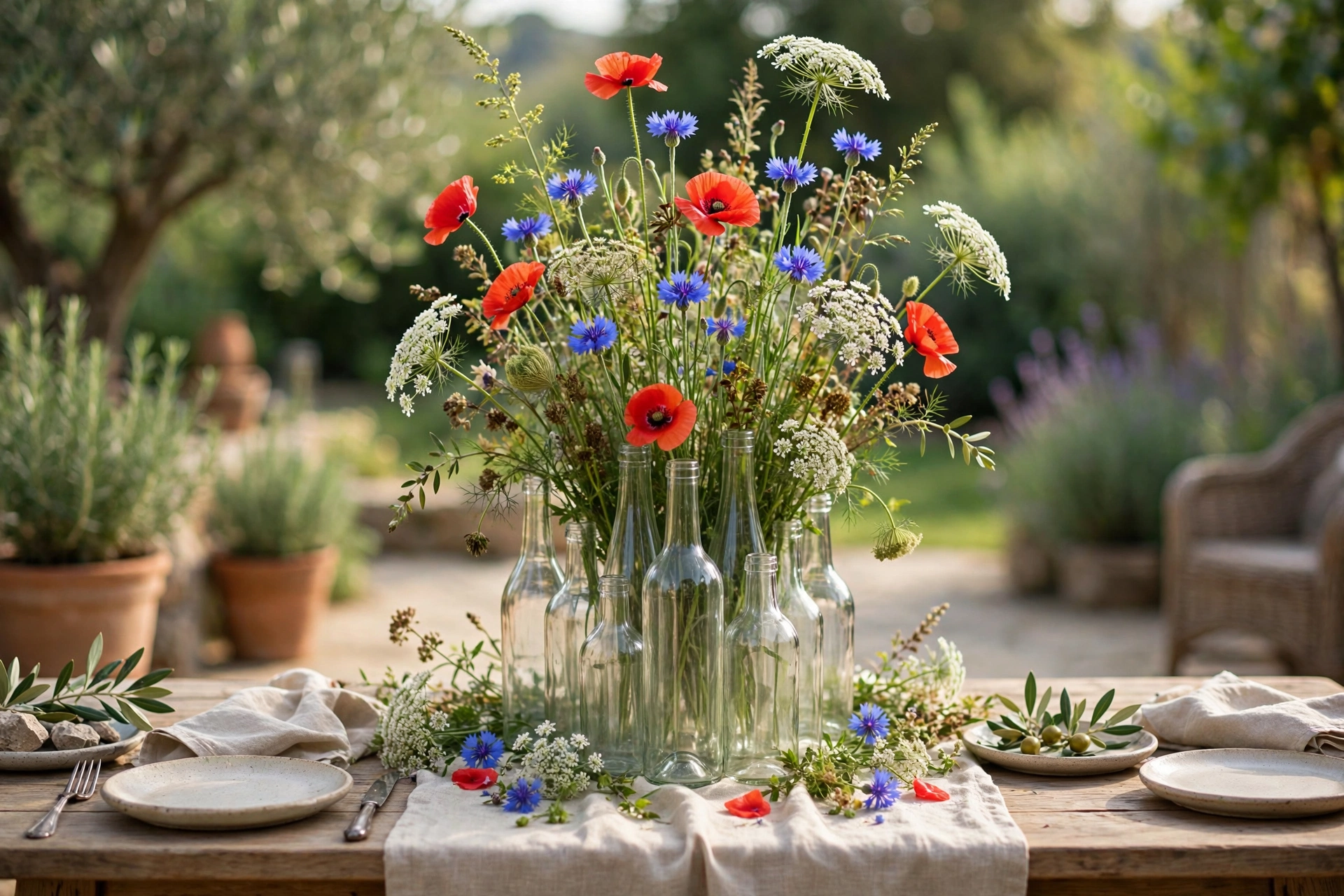
When you want drama at the center of the table, go tall. A cluster of glass bottles — wine bottles, apothecary bottles, tall bud vases — filled with long-stemmed wildflowers like cornflowers, Queen Anne’s lace, and poppies creates a striking vertical moment. Group the bottles in odd numbers at the table’s center and let the stems arch naturally outward.
Tall centerpieces can block conversation, so reserve this look for round tables where everyone sits around the arrangement, or keep the tallest stems at the table ends with lower vases in the middle. Vary the water levels slightly between bottles for a casual feel, and strip lower leaves to keep the glass looking clean and fresh.
13. Wildflower Posies in Jam Jars
On a weathered farmhouse wood table, nothing looks more at home than small posies of wildflowers in jam jars. The humble jars keep the look grounded and honest — this is wildflower styling at its most unpretentious. Scatter five or six jars down the center of the table, each with a small, just-picked bunch of daisies, poppies, and cornflowers.
Because jam jars are small, you can afford to be generous with the number of them, and the low height keeps sightlines open across the table. Tie a short length of twine or a strip of torn linen around a few of the jars for texture. This is an ideal look for casual brunches and family gatherings where elegance should feel effortless.

14. Pastel Wildflowers on Marble
Pairing soft pastel wildflowers with cool white marble creates a tablescape that feels fresh, modern, and quietly luxurious. Blush poppies, pale pink daisies, and white Queen Anne’s lace in simple ceramic vases look stunning against marble’s subtle veining. A cream linen runner softens the stone and keeps the palette warm.
Keep the rest of the table minimal — simple white plates, clear glassware, and understated flatware let the flowers and marble carry the look. Because marble can feel cold, the warmth of pastel blooms is essential; avoid going all-white here and let the blush tones do the warming. This style suits spring brunches and bridal showers beautifully.

15. Wildflowers with Candle Lanterns
Glass candle lanterns nestled among low wildflower arrangements bring a soft, flickering glow to the tablescape as daylight fades. The combination of fresh blooms and warm lantern light feels especially magical for late-summer dinners that stretch into the evening. Choose lanterns in varying heights and tuck wildflower sprigs around their bases.
Use LED candles inside the lanterns if you are styling around a lot of wispy, flammable stems like dried grasses or Queen Anne’s lace — the glow is just as pretty and the evening stays worry-free. Keep the wildflower arrangements low and sprawling so they weave between the lanterns rather than sitting behind them. A linen runner in a natural tone ties the whole scene together.

16. Woven Basket of Wildflowers
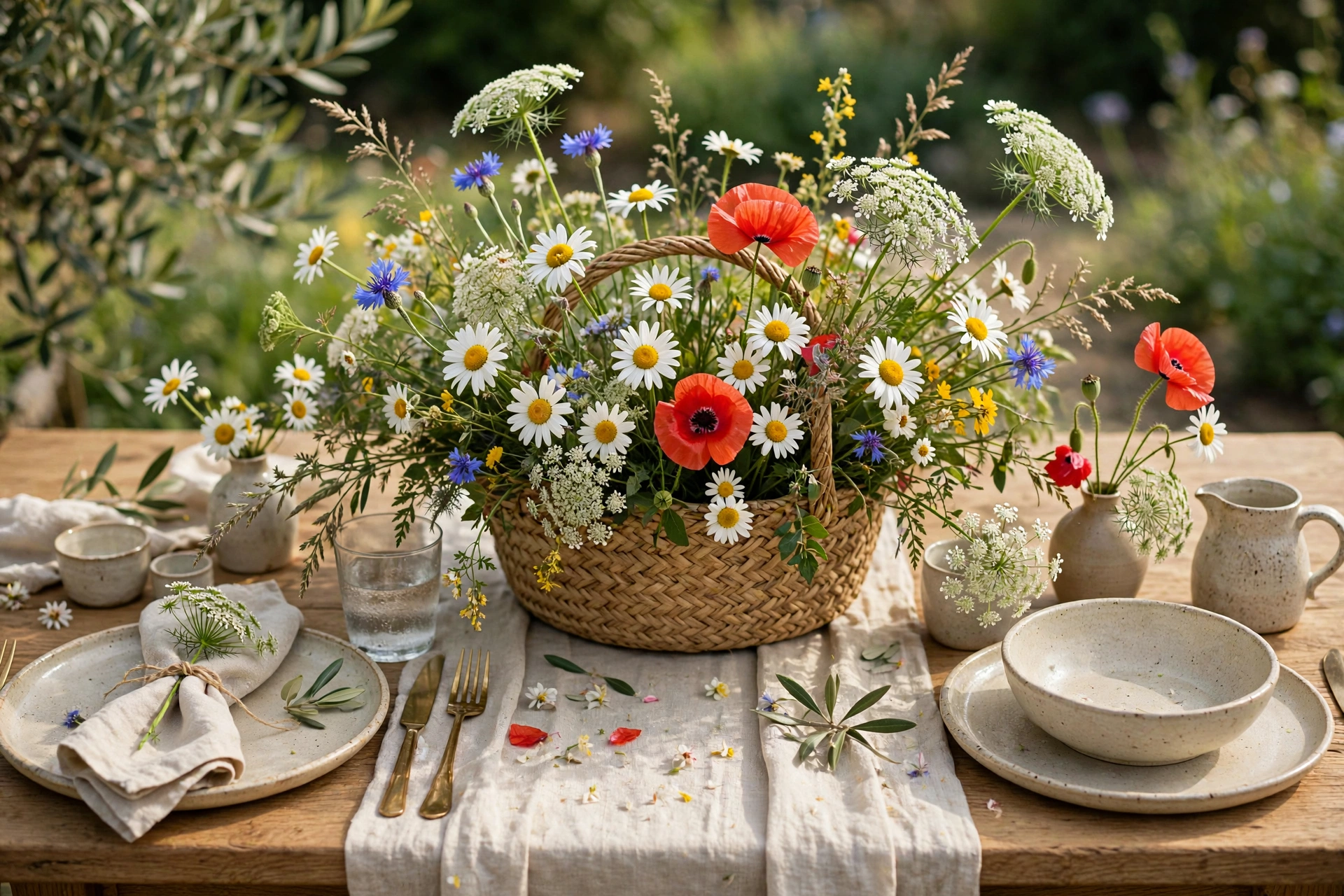
A woven seagrass or willow basket overflowing with wildflowers makes a centerpiece with wonderful texture and a just-gathered feel. The basket’s natural weave echoes the linen on the table and adds a layer of rustic warmth that glass and ceramic cannot. Fill it generously — daisies, poppies, and Queen Anne’s lace spilling over the edges looks abundant and joyful.
Set a waterproof liner or a low bowl inside the basket to hold water, and arrange the flowers as if they were just tipped in from the garden — slightly wild, slightly uneven. A basket centerpiece works best on round or square tables where its fuller shape can be appreciated from all sides. Add a couple of small bud vases nearby to extend the look along the table.
17. Mini Bouquets at Each Place Setting
Give every guest their own tiny wildflower bouquet, and the table instantly feels personal and celebratory. Tie three or four short stems — a daisy, a poppy, a cornflower — with a bit of twine and lay each mini bouquet across a folded linen napkin. It doubles as a place decoration and a take-home favor.
Keep the table’s main centerpiece simple when each setting has its own flowers — a few low bud vases in matching blooms are enough. Choose flowers with sturdy stems that will survive being picked up and carried home. This detail shines at weddings, birthdays, and any gathering where you want guests to feel specially welcomed.

18. Pink and White Wildflowers with Gold Flatware
Blush and white wildflowers paired with gleaming gold flatware strike a beautiful balance between rustic and refined. The soft pink poppies and white daisies keep things romantic and garden-fresh, while the gold adds just enough polish for a special occasion. Set the flowers in simple ceramic vases so the flatware can shine without competition.
Keep the rest of the palette quiet — cream linen, white or ivory plates, clear glassware — so the pink-and-gold combination reads as intentional rather than busy. A few scattered petals in blush tones along the runner echo the centerpiece. This is a lovely look for anniversaries, bridal showers, and Mother’s Day lunches.

19. Cornflowers and Daisies in Enamelware
Speckled white enamelware pitchers and mugs filled with blue cornflowers and white daisies bring instant farmhouse charm to the table. The contrast of vivid blue against the clean white enamel is striking, and the sturdy, casual vessels keep the look feeling honest and unfussy. Group a few pieces of enamelware down the center of a linen runner.
Enamelware is wonderfully practical for outdoor tables — it will not break if knocked and it suits the wildflower aesthetic perfectly. Mix pitchers, mugs, and even a small enamel bowl of floating flower heads for variety. Pair with simple wooden-handled flatware and checked or striped napkins to complete the country feel.

20. Ring of Blooms Around Candles
Encircle a cluster of pillar candles with a loose ring of wildflowers and you have a centerpiece that glows from within. Lay daisies, poppies, cornflowers, and Queen Anne’s lace in a wreath-like ring on the linen, then nestle candles of varying heights in the middle. When lit, the flames illuminate the petals from behind for a truly enchanting effect.
Build the ring directly on the table rather than in a container so it feels organic, and keep the flowers a safe distance from the flames — a ring about eighteen inches across gives candles plenty of breathing room. Refresh any blooms that wilt near the heat during the evening. This centerpiece is especially beautiful for autumn dinners when evenings draw in early.

21. Harvest Table with Trailing Garlands
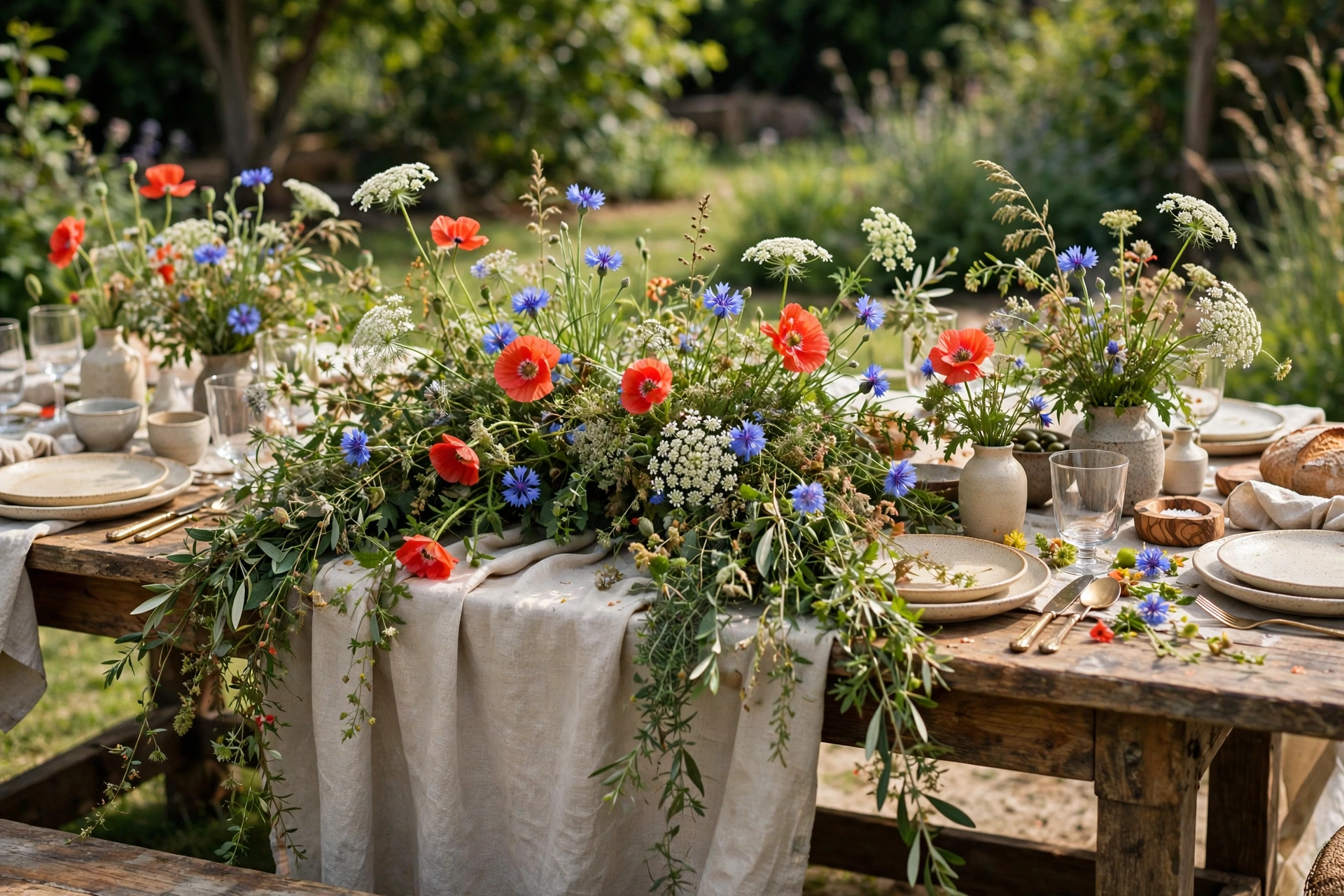
A long harvest table draped with trailing wildflower garlands is made for big, joyful gatherings. Let garlands of poppies, cornflowers, and Queen Anne’s lace — woven with trailing greenery — flow down the full length of the table and spill over the ends. The abundance says celebration before a single dish is served.
On a long table, plan one generous garland per six to eight feet and overlap the sections so the join is invisible. Keep the garlands low and the place settings simple — ceramic plates and linen napkins — so the flowers remain the focus. Tuck a few taper candles into the garland for evening events, making sure flames stay clear of dry stems.
22. Terracotta Pots of Wildflowers
A row of small terracotta pots planted with wildflowers brings an earthy, garden-fresh energy to the table. The warm orange of the clay is a natural complement to the bright faces of daisies and poppies. Line the pots down a linen runner in a loose row, varying their sizes slightly for a collected feel.
Because the flowers are planted rather than cut, this tablescape lasts for days — water the pots lightly and they will stay fresh through a whole weekend of gatherings. After the event, the pots double as favors guests can take home and keep growing. Pair with simple ceramic dinnerware and let the terracotta be the table’s warm accent.

23. Floating Wildflower Heads in Glass Bowls
Shallow glass bowls of water holding floating wildflower heads are unexpectedly elegant — the blooms look like they are suspended in glass. Choose perfect, freshly opened heads of daisies, cornflowers, and poppies, and float them in wide, low bowls down the center of the table. The water magnifies the petals beautifully.
This is a wonderful way to use blooms with broken or very short stems that would not work in a vase. Keep the bowls low and wide so they do not obstruct views, and place a few small bud vases of sprigs between them to add height variation. Refresh the water if it clouds, and keep the bowls away from table edges where they might be knocked.

24. Wildflower Menu Cards in Napkins
Tuck a sprig of wildflowers and a small menu card into each folded napkin for a place setting that feels thoughtful and complete. The menu card builds anticipation for the meal ahead, and the fresh sprig makes even a simple fold look styled. Use sturdy little stems — a cornflower, a daisy, a wisp of Queen Anne’s lace — that will sit neatly in the fold.
Write or print the menus on heavy cardstock in a simple font; kraft or cream stock suits the wildflower aesthetic best. Keep the table’s centerpiece in the same blooms so the napkin sprigs feel like part of a bigger story. This detail elevates dinner parties and holiday meals with very little effort.

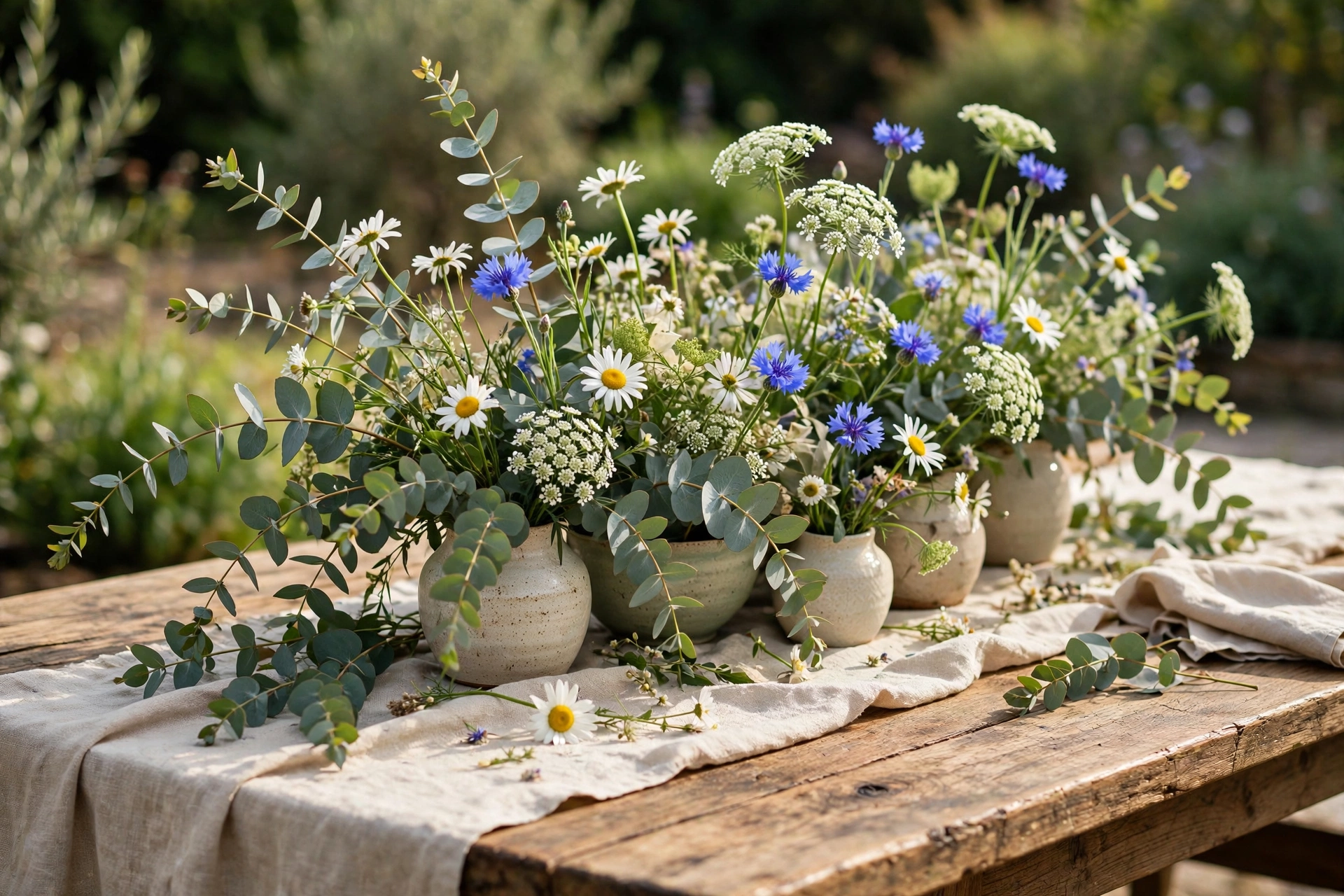
25. Eucalyptus and Wildflower Arrangement
Mixing silvery eucalyptus with wildflowers gives the tablescape a softer, more flowing feel — the eucalyptus trails and drapes while the wildflowers provide pops of color. Arrange them together in low ceramic vases, letting the eucalyptus spill over the edges. The silvery-green tone flatters every wildflower color, from blue cornflowers to coral poppies.
Eucalyptus also lasts well out of water, so it keeps looking fresh even as more delicate blooms fade — a practical bonus for long events. Use seeded eucalyptus for extra texture, and keep the wildflower colors to a tight palette of two or three so the arrangement reads as designed rather than random. A natural linen runner lets the greenery glow.
26. Picnic-Style Low Table
Take the wildflower tablescape down to ground level with a bohemian low picnic table set on the lawn. Floor cushions, a low wooden table or pallet, linen cloths, and ceramic vases of wildflowers create a relaxed, intimate gathering spot. The informality of sitting on cushions pairs perfectly with the carefree spirit of wildflowers.
Keep centerpieces very low — small bud vases and sprawling sprigs rather than tall arrangements — since guests are seated close to the table surface. Anchor the vases well so they are not easily knocked on a low table, and choose a sheltered spot in case of breeze. This setup is magical for summer evenings and sunset gatherings.

27. Wildflowers in a Wooden Dough Bowl
An antique wooden dough bowl filled with loose wildflowers is a centerpiece with real soul. The long, low shape is perfect for a dining table — it runs with the table’s length instead of fighting it — and the aged wood adds warmth that makes every bloom look richer. Fill it with a generous tumble of daisies, poppies, cornflowers, and Queen Anne’s lace.
Line the bowl with a shallow waterproof tray or floral foam before adding water, since old wood is rarely watertight. Arrange the flowers loosely, as if just gathered, and let a few stems drape over the bowl’s edge. Flank the dough bowl with simple ceramic plates and linen napkins for a look that is rustic but polished.

28. Autumn Wildflower Tablescape
Wildflowers are not just for spring — a late-season tablescape of dried grasses, seed heads, russet poppies, and goldenrod brings all the warmth of autumn to the table. The tawny, golden palette feels rich and harvest-like, especially in ceramic vases on a natural linen runner. Mix in a few fresh daisies to keep the arrangement feeling alive.
This is the most long-lasting wildflower look of all, since dried grasses and seed heads barely fade. It suits Thanksgiving-adjacent gatherings and early fall dinners beautifully. Pair with amber glassware or brass candlesticks to deepen the autumnal glow, and keep the linen in warm natural tones rather than crisp white.

29. White-on-White Minimalist Setting
An all-white wildflower tablescape — white daisies, Queen Anne’s lace, ivory linen, white ceramic — is serenity itself. The restraint lets you notice the details: the texture of petals, the weave of linen, the shape of each vase. It is proof that wildflowers do not need bright color to make an impact.
The secret to white-on-white is layering tones rather than matching them exactly — ivory, cream, and soft white together create depth that pure white alone cannot. Add one subtle contrast, like pale wood flatware or a sprig of greenery, so the table does not feel flat. This minimalist look suits modern interiors and elegant brunches.

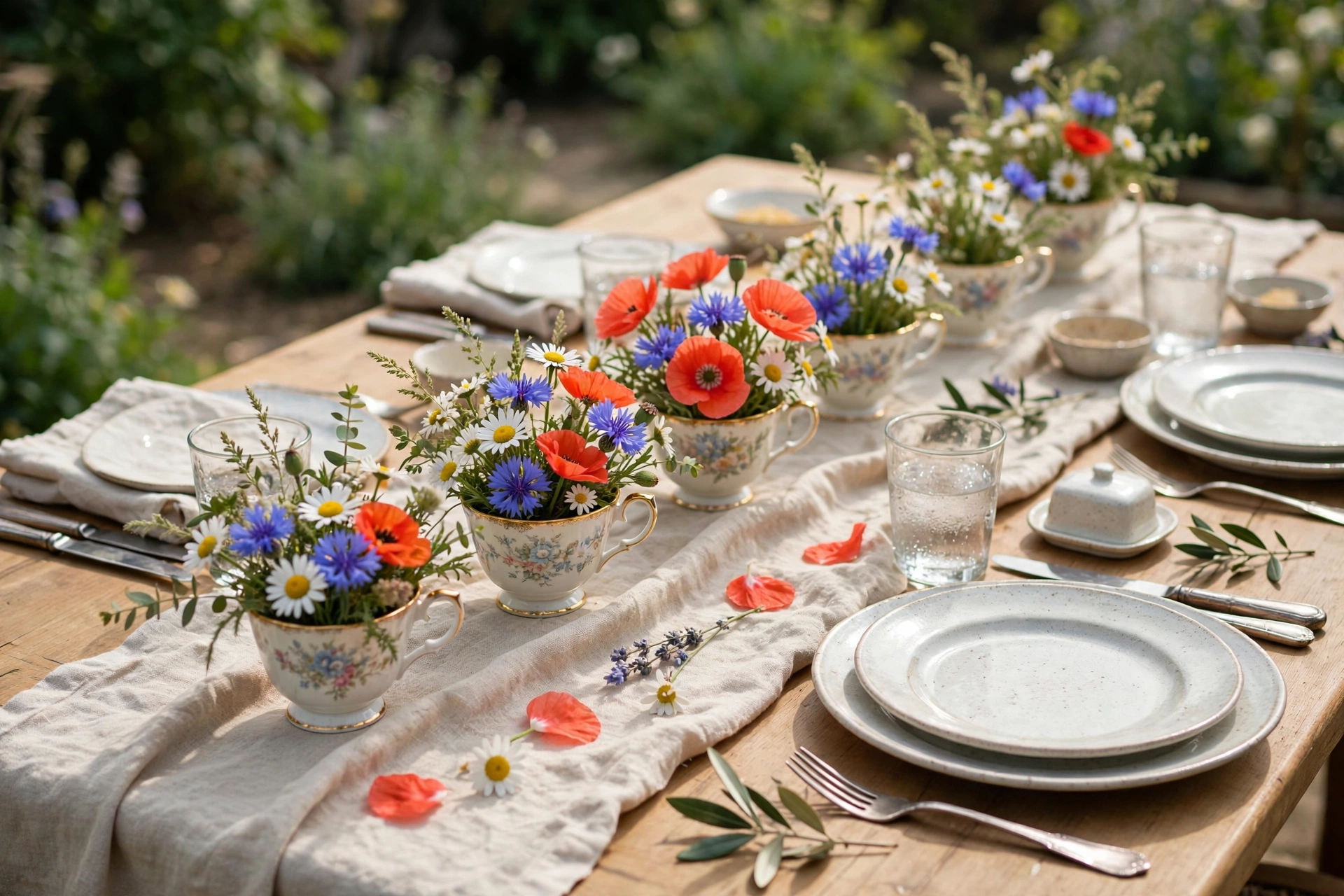
30. Wildflower Teacup Centerpieces
Delicate floral teacups filled with tiny wildflower posies are almost unbearably charming. Hunt down mismatched vintage teacups — the more floral the pattern, the better — and tuck a small bunch of daisies, cornflowers, and poppies into each one. Arrange them down the center of a linen runner like a string of little gardens.
Because teacups are small, this look is wonderfully economical — a single market bunch stretches across a whole table. Put a small pebble or a bit of floral foam in each cup to hold the short stems upright, and add just a splash of water. Pair with a proper tea service and this becomes the perfect centerpiece for afternoon tea or a bridal shower.
31. Tiered Stand with Wildflower Posies
A three-tiered stand holding small wildflower posies turns the centerpiece into a piece of edible-looking theater — like a patisserie display, but with flowers. Place tiny bud vases or jam jars of daisies, poppies, and cornflowers on each tier, graduating the colors from tier to tier. The vertical display draws the eye without blocking conversation, since each level is small.
This works beautifully on round tables where the stand becomes a natural focal point. Keep the surrounding table simple — the stand is doing the decorating — with just a linen cloth and unfussy place settings. After the meal, the stand can be repurposed for desserts, making it one of the hardest-working pieces on the table.

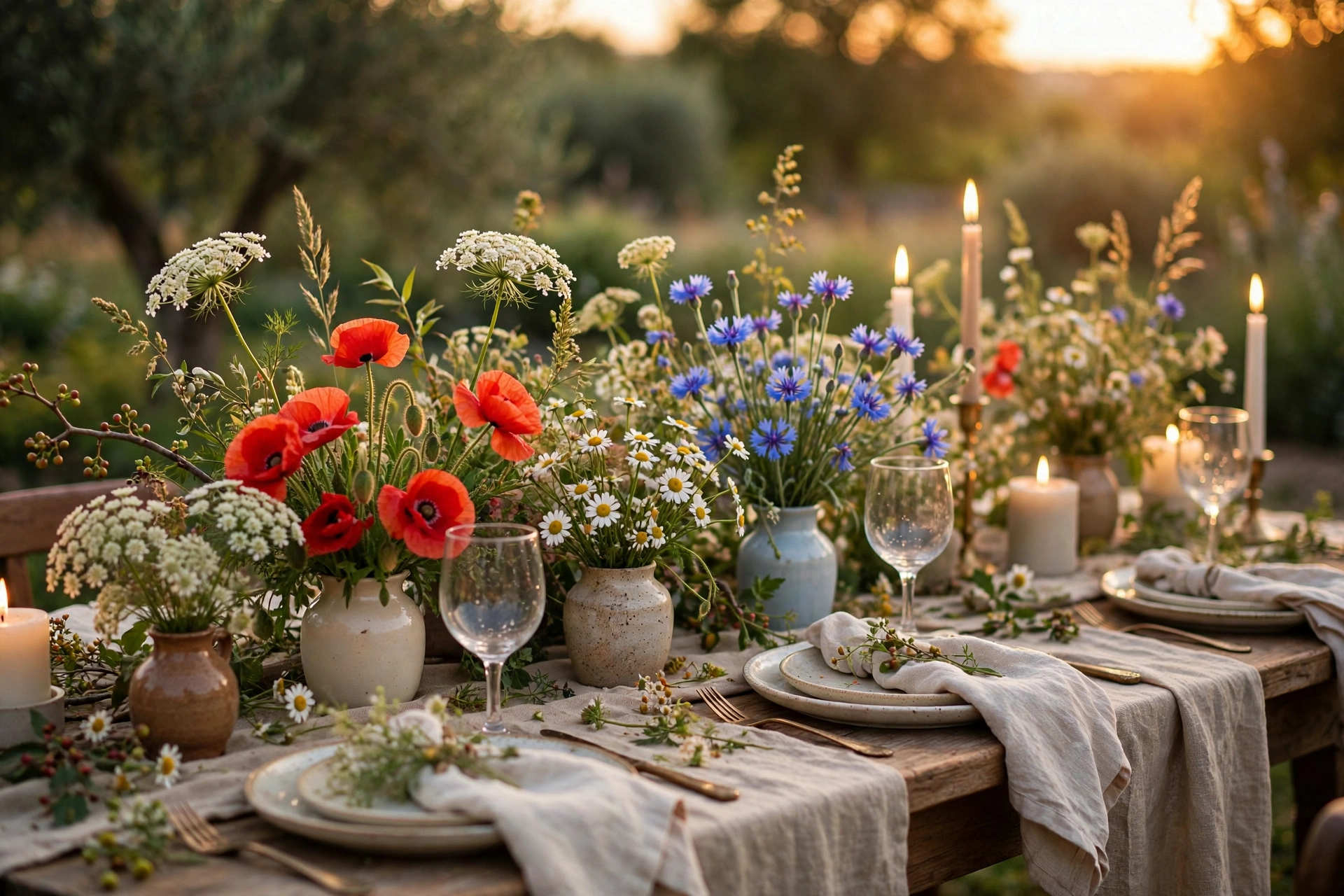
32. Golden-Hour Wildflower Dinner
Time your gathering for golden hour and let nature do the styling — low, warm sunlight turns every petal luminous. A lush wildflower tablescape of poppies, daisies, cornflowers, and Queen Anne’s lace in ceramic vases, set on linen with candles ready to light as the sun dips, is the most romantic way to end the collection.
For a west-facing table, position the tallest arrangements to catch the backlight so blooms glow like stained glass. Have candles and matches ready for the moment the light fades, so the magic continues seamlessly into the evening. This is the tablescape for anniversaries, proposals, and any evening you want to remember.
Final Thoughts
Wildflower tablescapes prove that the most beautiful tables are often the least fussy. A handful of loose blooms, some natural linen, and vessels with character are all you need to create a setting that feels warm, welcoming, and effortlessly elegant. Whether you choose mason jars or a suspended installation, let the flowers look a little wild — that is exactly their charm. Happy styling!


