34 Sage Green Living Room Ideas
Sage green has quietly become one of the most loved colors in interior design, and it is easy to…
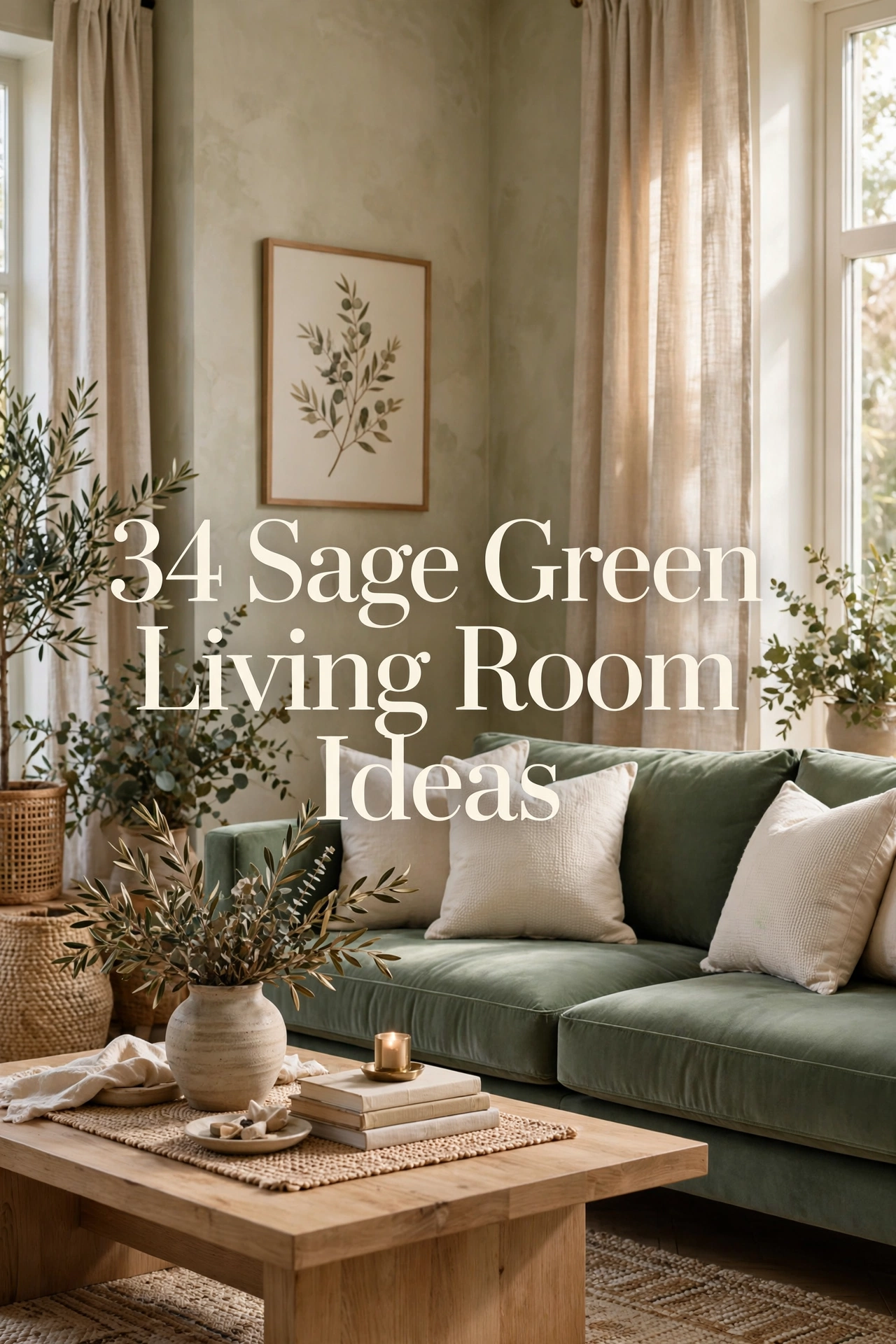
Sage green has quietly become one of the most loved colors in interior design, and it is easy to see why. This soft, grayish green brings the calm of nature indoors without feeling cold or stark, and it pairs beautifully with everything from warm creams to rich woods. Whether you want a full room transformation or just a few thoughtful accents, these 34 sage green living room ideas will help you create a space that feels serene, fresh, and effortlessly elegant.
01. Sage Green Velvet Sofa
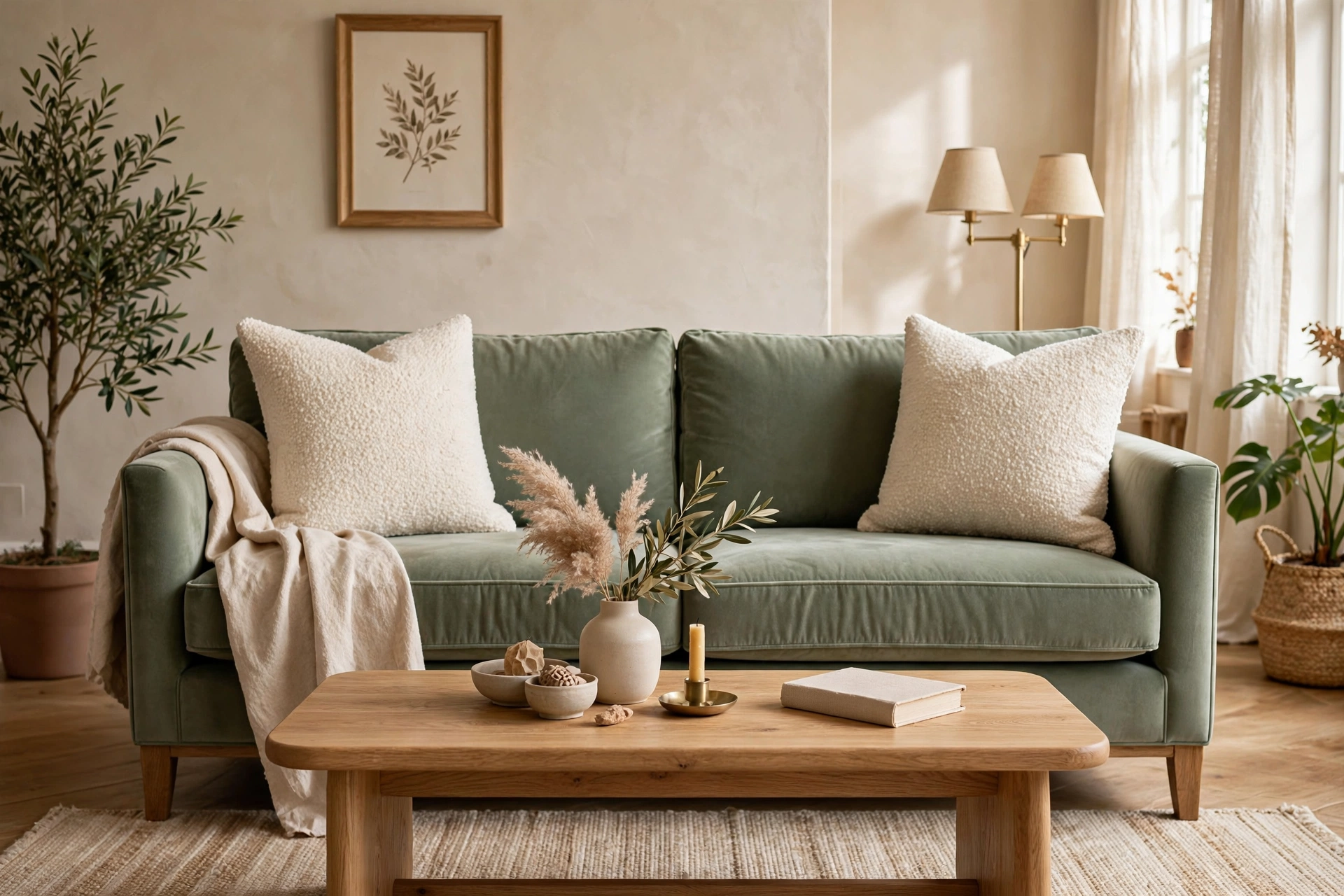
A sage green velvet sofa makes an unforgettable centerpiece in any living room. Velvet catches the light in a way that gives the muted green depth and richness, so the sofa feels luxurious rather than flat. Choose a classic silhouette with clean lines if your style leans modern, or a rolled-arm design for a more traditional feel. Because sage is a neutral-adjacent tone, the sofa will not overwhelm the room the way a bolder color might.
Style it with cream boucle pillows and a soft throw to keep the palette warm and inviting. A natural oak or walnut coffee table grounds the look, while a light area rug keeps the floor feeling airy. If you worry about velvet showing wear, look for performance velvet fabrics, which resist stains and hold up well in busy family rooms.
02. Sage Green Accent Wall
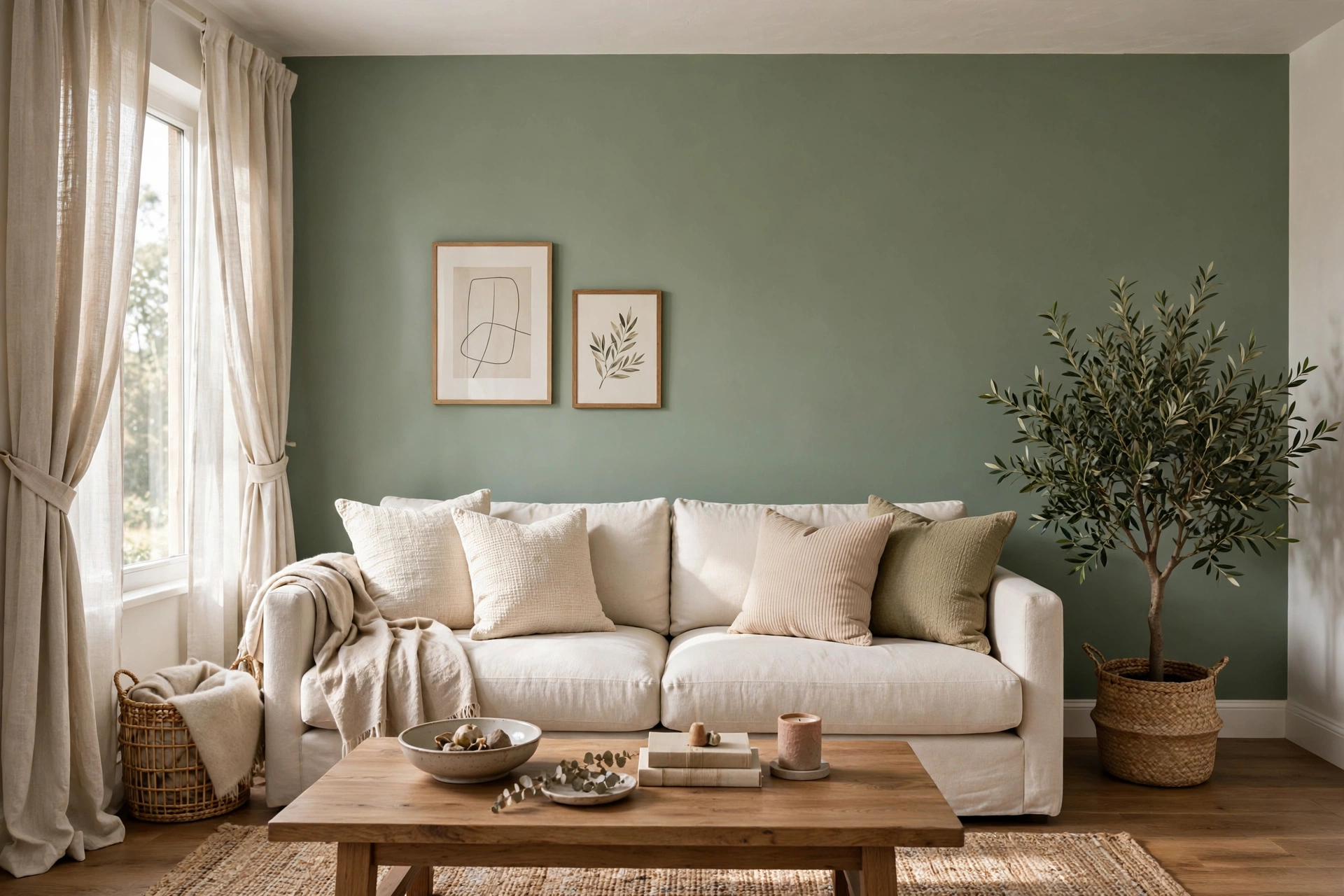
Painting a single wall in sage green is one of the simplest ways to introduce the color without a full-room commitment. An accent wall behind the sofa instantly creates a focal point and adds depth, especially in rooms with white or cream on the remaining walls. Choose a muted, slightly desaturated sage so the wall feels calming rather than energizing.
Before committing, test large swatches on the wall and observe them at different times of day, since sage can shift warmer or cooler with the light. Pair the accent wall with light wood floors, a neutral sofa, and greenery such as an olive tree or eucalyptus stems to echo the botanical undertone of the paint.
03. Sage Green Velvet Accent Chairs
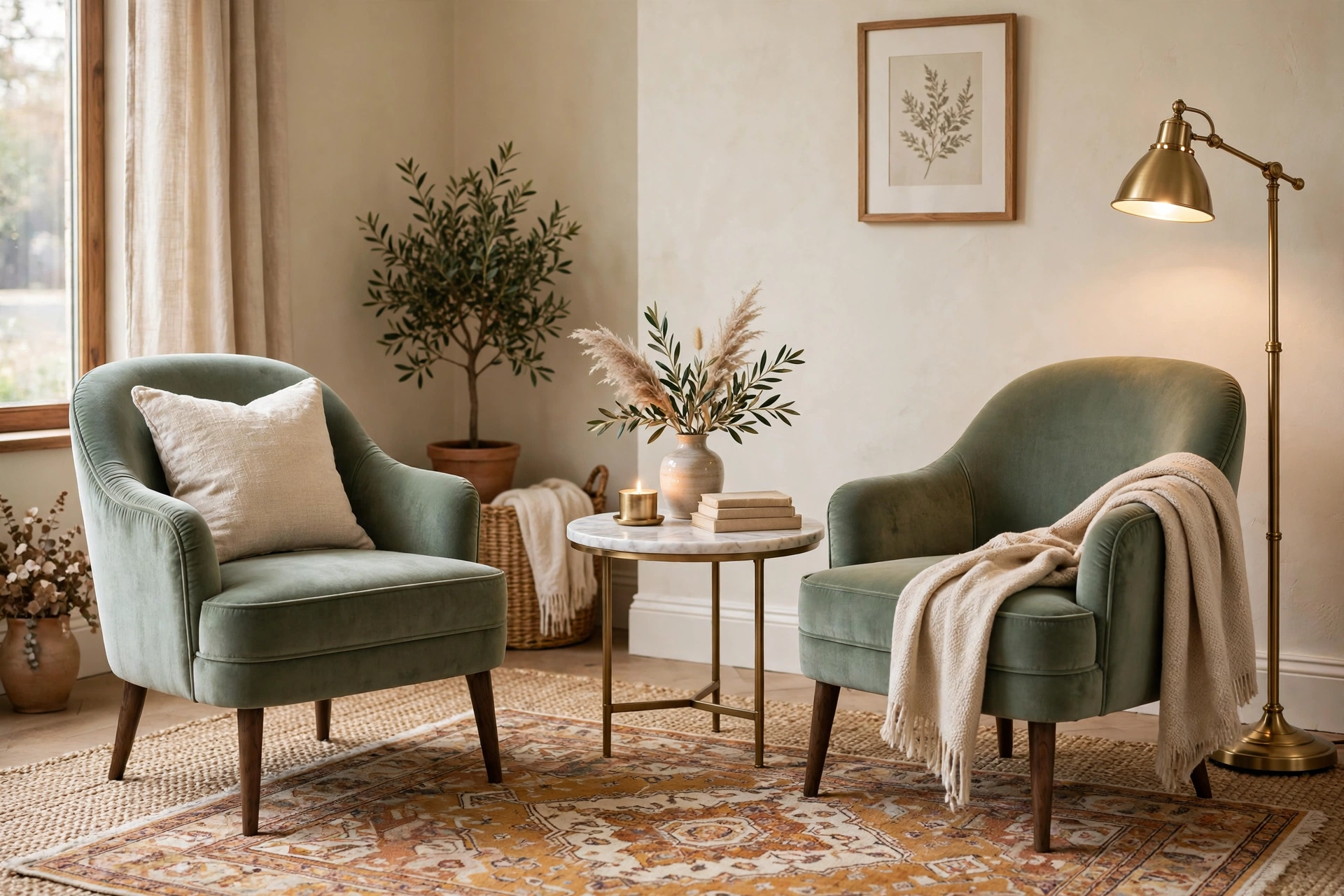
If a full sage sofa feels like too much, a pair of sage green velvet accent chairs offers the same richness on a smaller scale. Place them opposite your sofa or flanking a fireplace to create a balanced, conversational seating arrangement. Two matching chairs add symmetry, which makes a room feel instantly more polished.
Mix the velvet texture with different materials nearby, such as a marble side table or a brass floor lamp, so the vignette feels layered rather than one-note. Keep the surrounding palette neutral with ivory walls and a soft rug so the chairs remain the stars of the arrangement.
04. Sage Green Linen Curtains
Floor-to-ceiling curtains in a soft sage linen bring color into a room gently, through texture and movement rather than solid blocks. Linen filters daylight beautifully, casting a warm, diffused glow that makes the whole space feel calm. This is an ideal approach for renters or anyone who prefers a subtle touch of green.
Hang the curtain rod close to the ceiling and extend it beyond the window frame so the windows look larger and the curtains stack neatly to the sides. Pair sage curtains with an ivory or cream sofa and a natural jute rug for a breezy, layered look that works year-round.
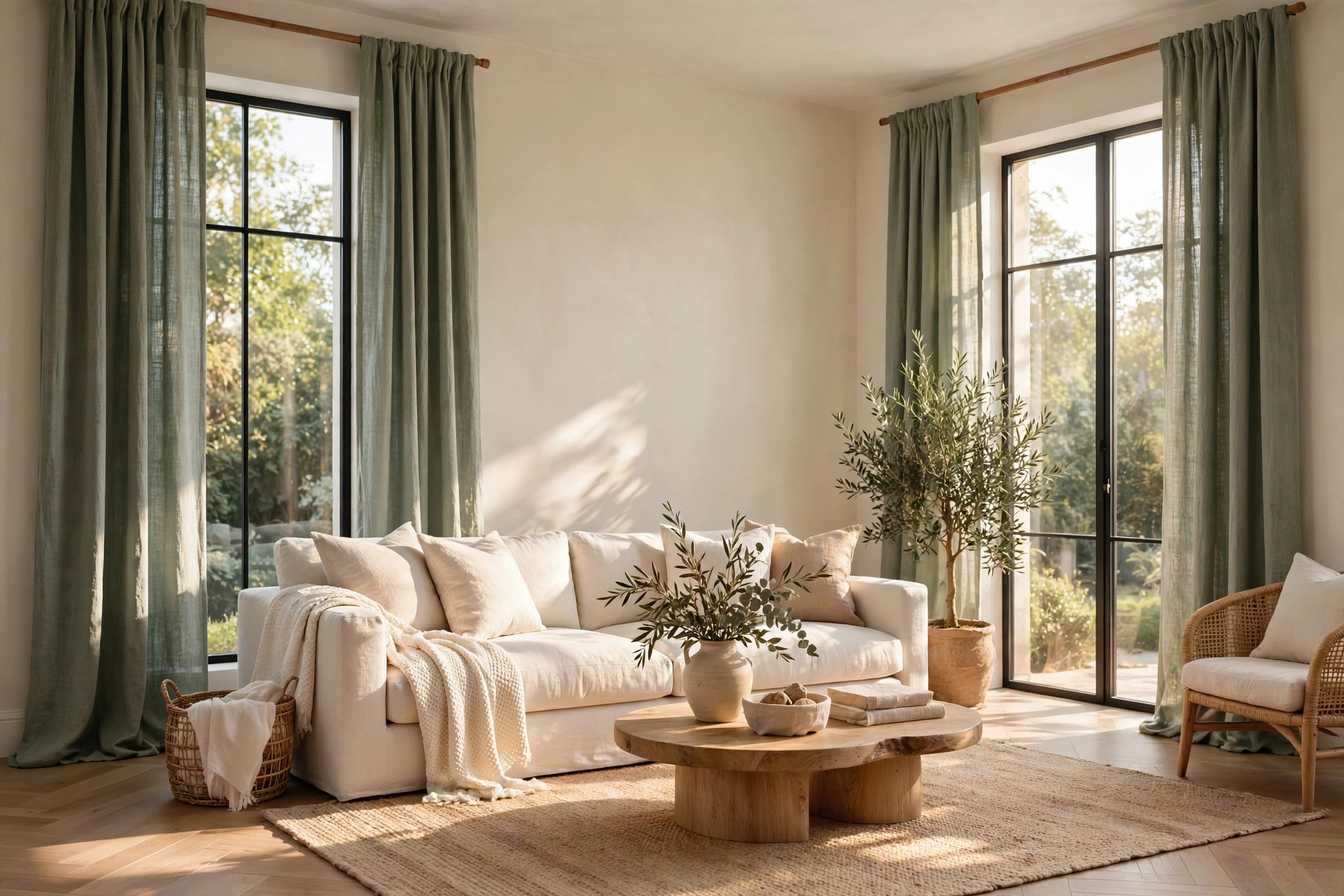
05. Sage Green and Cream Color Palette
A palette of sage green and warm cream is one of the most foolproof combinations in decorating. The cream softens the green and keeps the room feeling light, while the sage adds just enough color to keep cream from looking bland. This pairing works in every style from farmhouse to modern classic.
Build the scheme in layers: sage walls or a sage sofa, cream upholstery and curtains, then natural accents like woven baskets and light wood. Add small touches of greenery, such as eucalyptus sprigs in a ceramic vase, to bridge the two tones and bring a fresh, organic feel to the room.
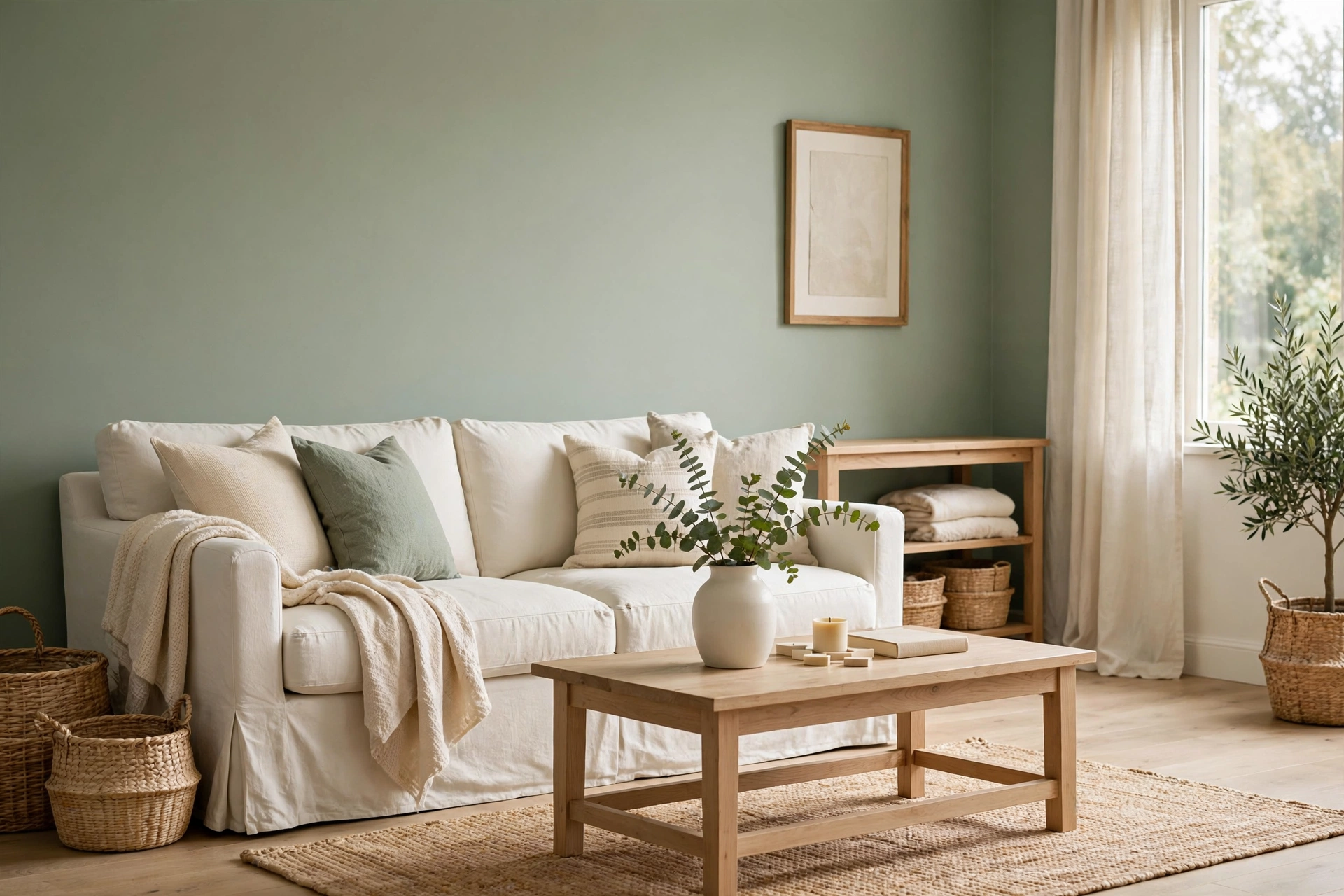
06. Sage Green Shiplap Feature Wall
Sage green shiplap combines the character of cottage style with a fresh, modern color. The horizontal lines of shiplap add subtle texture and rhythm to the wall, which keeps the green from feeling flat. It works especially well behind a sofa or as a backdrop for a reading corner.
Pair the shiplap with a cognac leather chair and a vintage wooden coffee table to lean into a cozy farmhouse feel. Warm lamplight enhances the texture of the boards in the evening, so add a table lamp or wall sconce nearby to show off the feature wall after dark.
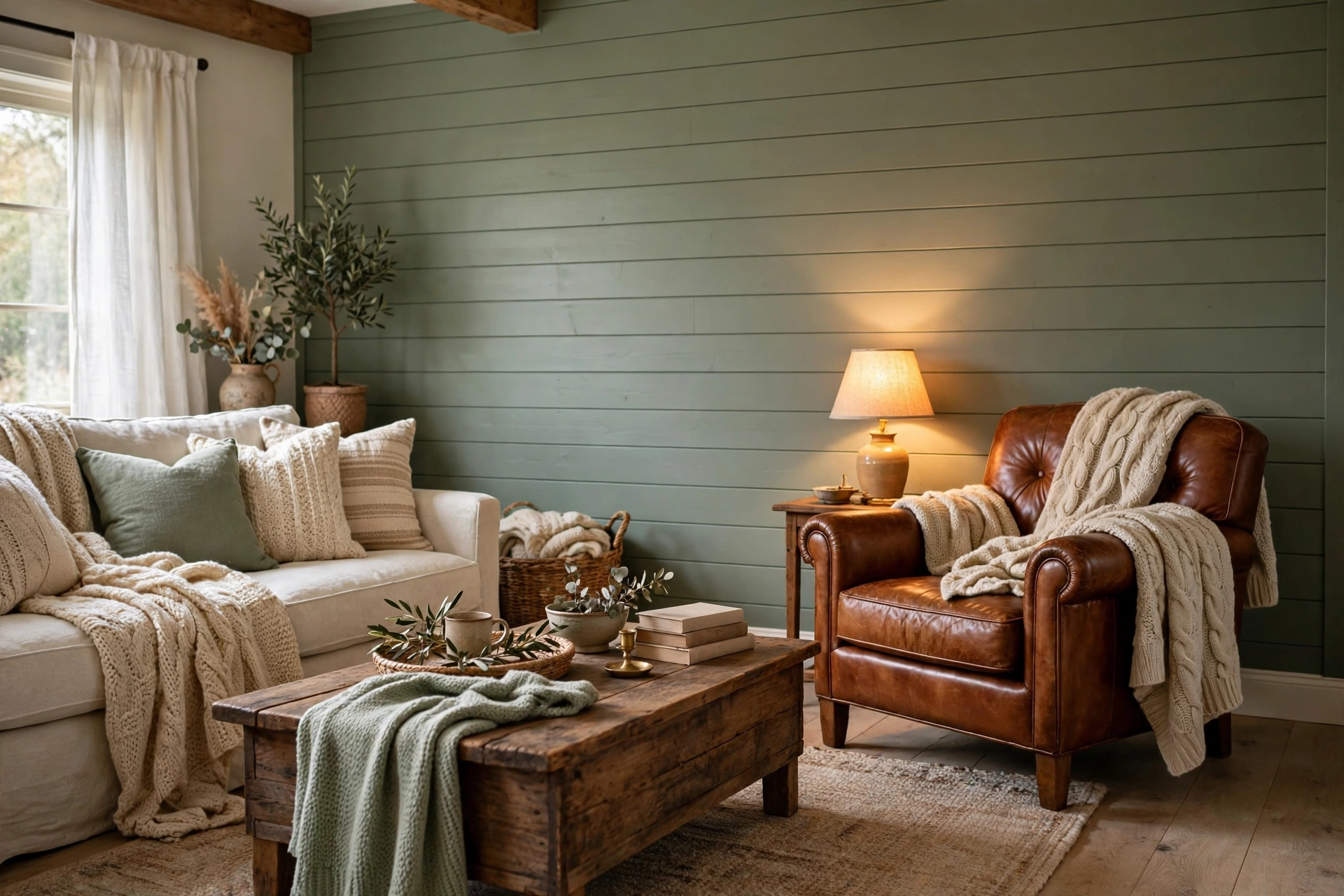
07. Sage Green Boucle Armchair
A sage green boucle armchair is a wonderful way to add both color and coveted texture in one piece. Boucle’s nubby, looped weave feels soft and inviting, and in sage green it reads as sophisticated rather than trendy. Tuck the chair into a corner with a small side table to create an inviting reading spot.
Style it with a travertine or light wood side table and an arc floor lamp for evening reading. A botanical print on the wall nearby ties the green upholstery to the room’s art, making the corner feel intentional rather than like an afterthought.
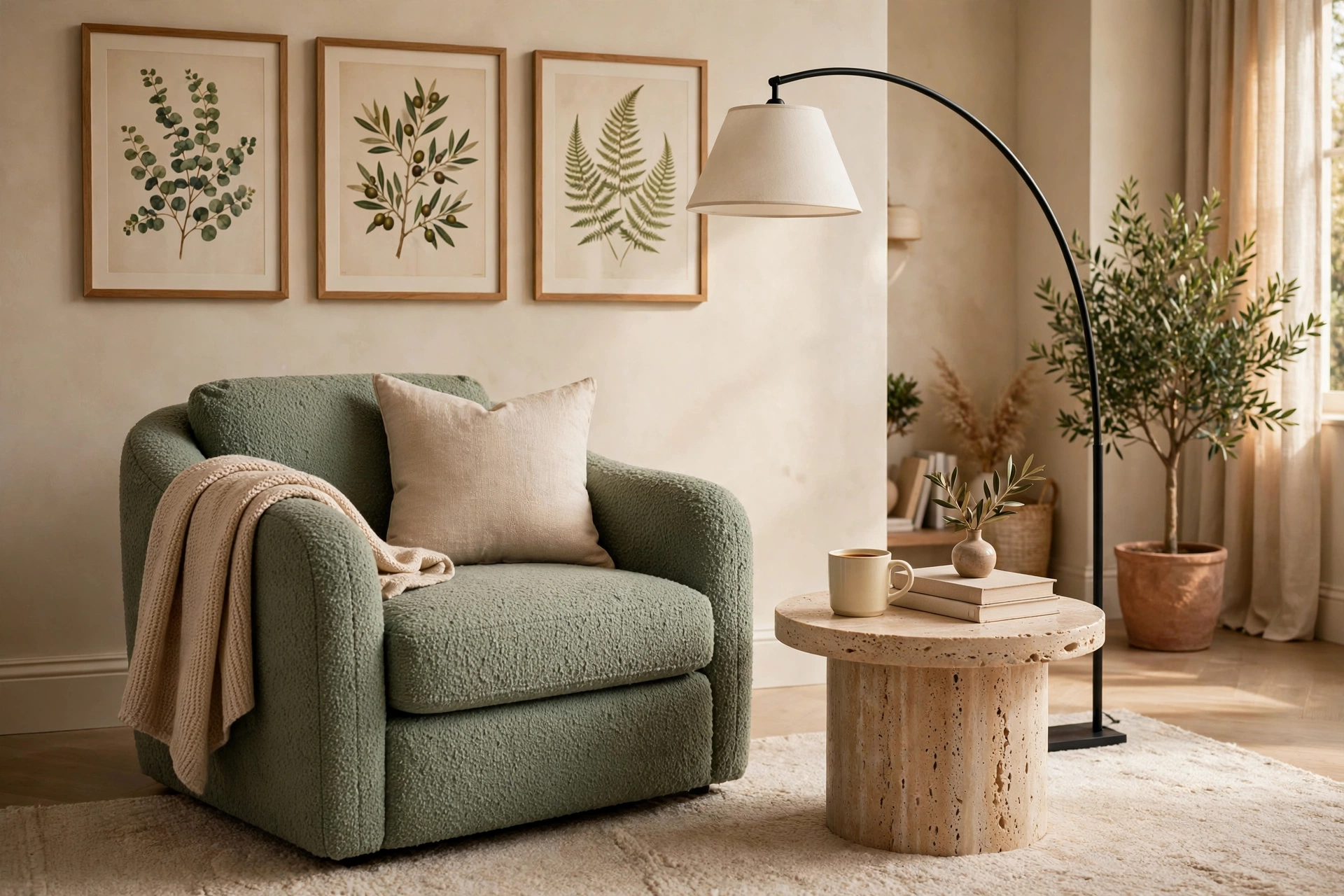
08. Sage Green Gallery Art Wall
Let sage green shine through art with a gallery wall hung against sage-painted walls or above sage upholstery. Gold or brass frames pop beautifully against the muted green, adding warmth and a collected, curated feel. Mix frame sizes and art styles, from abstract prints to botanical sketches, for a personal display.
Keep the layout balanced by planning it on the floor first, then hanging from the center outward. A herringbone wood floor and marble coffee table underneath give the arrangement a refined foundation, while the gallery wall itself becomes the room’s conversation piece.
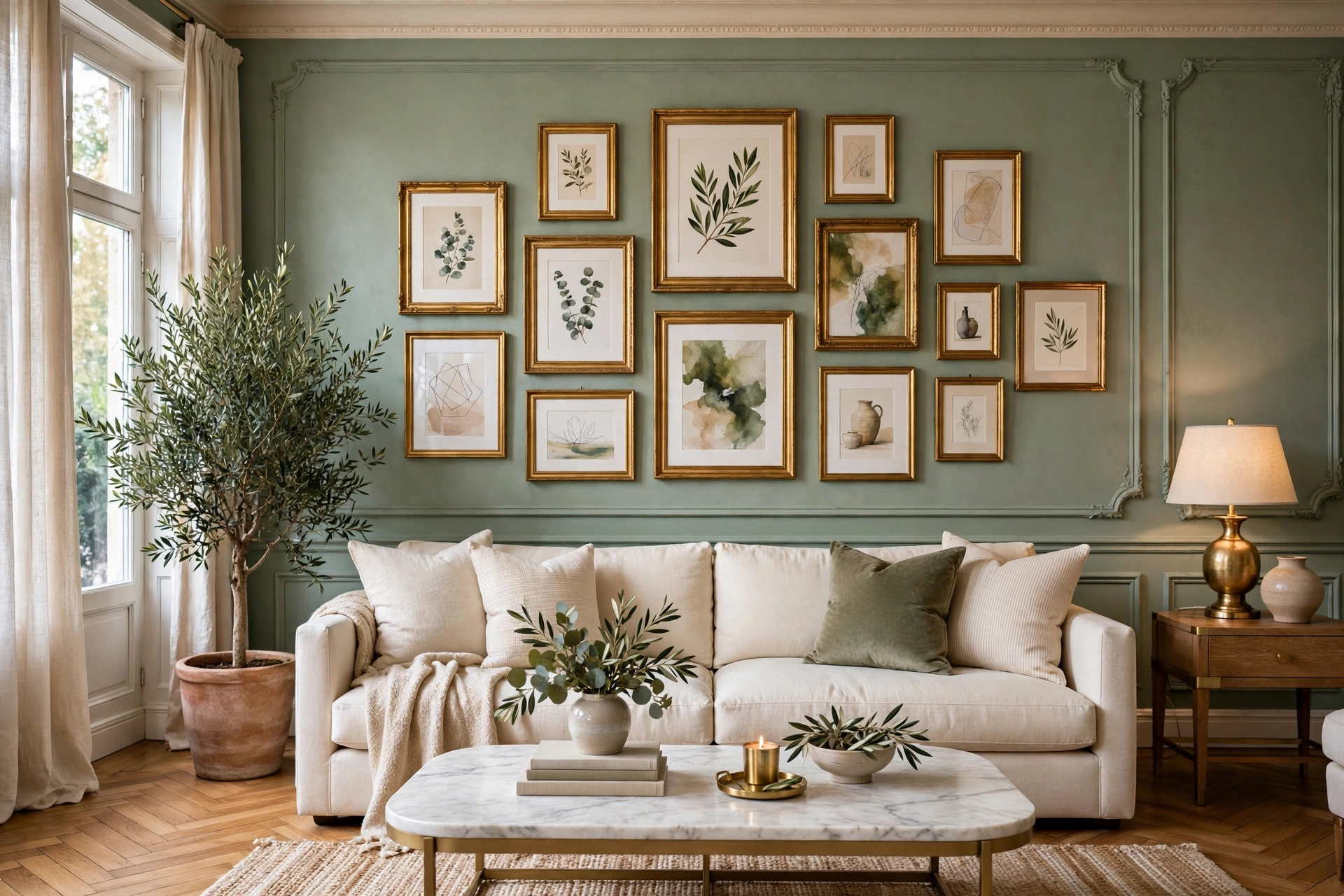
09. Sage Green with Natural Wood
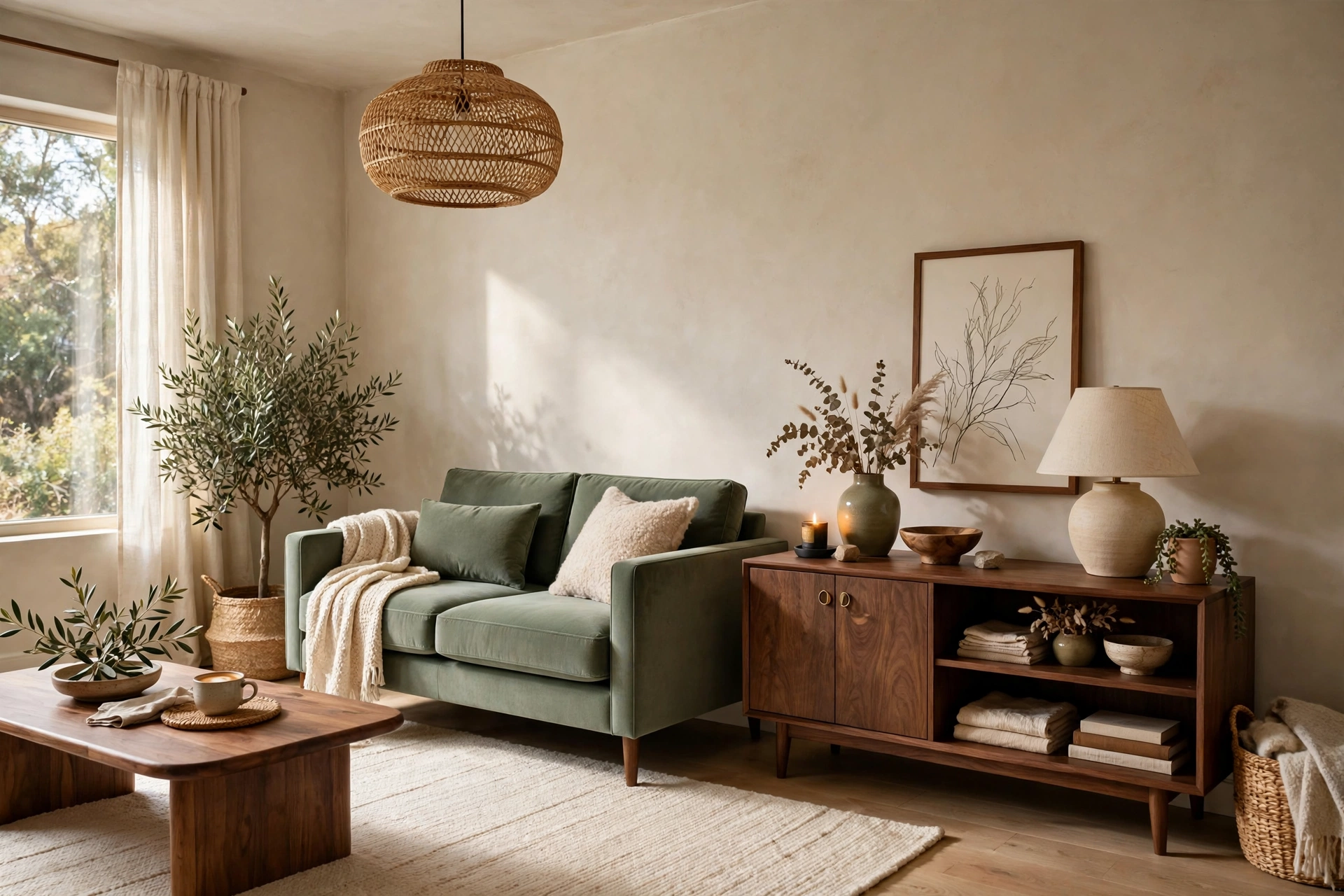
Sage green and natural wood are a match made in design heaven. The organic warmth of walnut, oak, or rattan keeps sage from feeling cool, while the green gives wood tones a fresh, contemporary lift. Try a sage loveseat against a walnut media console, or sage cushions on a wooden bench.
A woven rattan pendant light overhead adds another layer of natural texture and draws the eye upward. Finish with a cream rug and simple ceramics on the wood surfaces to keep the look calm and cohesive rather than busy.
10. Sage Green Sectional Sofa
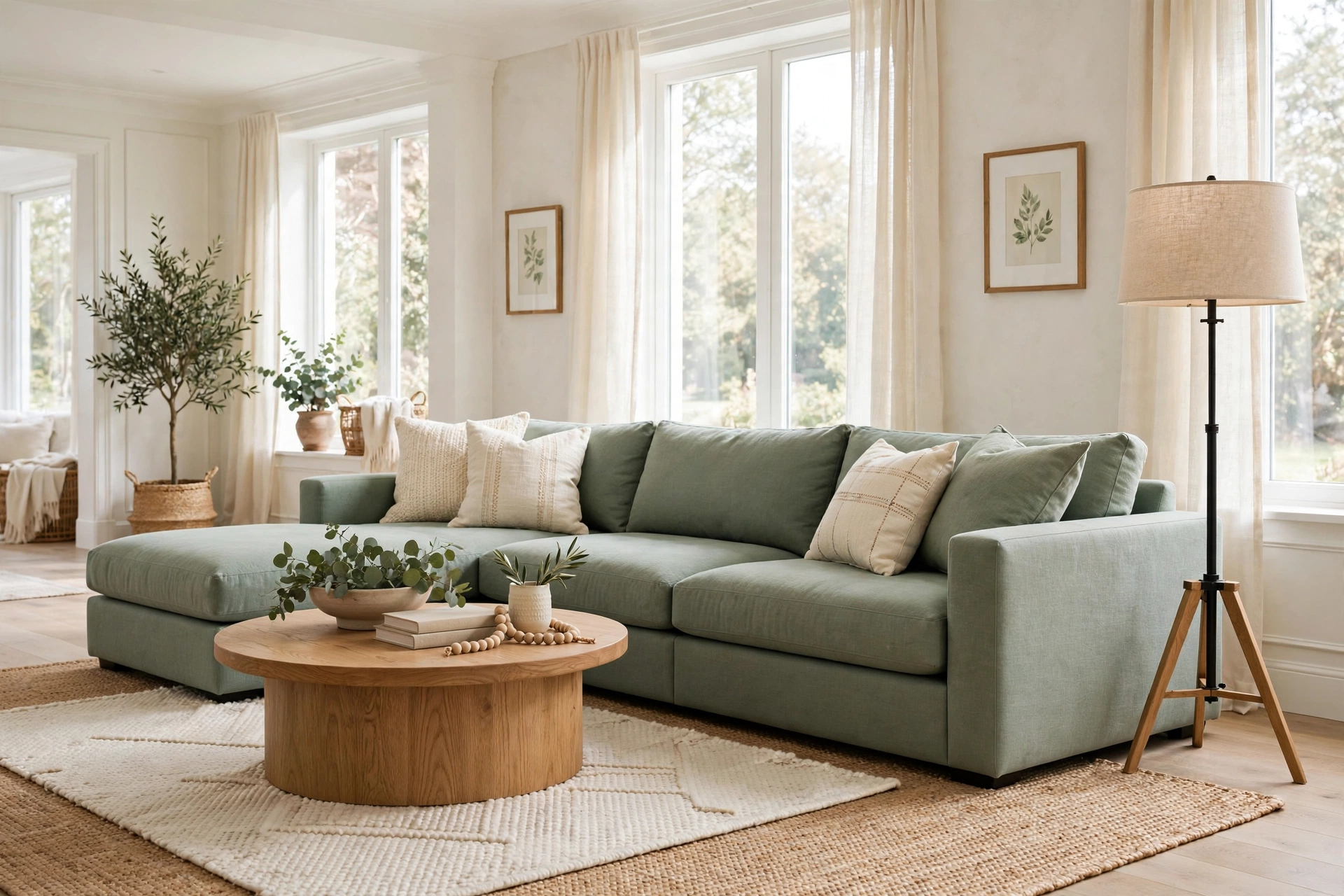
For family living rooms, a large sage green sectional offers generous seating in a color that hides everyday wear better than pale neutrals. The muted tone keeps even an oversized piece from dominating the room, and sectionals naturally create a cozy, gather-round layout.
Layer cream and jute rugs underneath to define the seating zone and add texture underfoot. A round oak coffee table softens the sectional’s long lines, and a floor lamp with a linen shade provides warm light for evening lounging without harsh overheads.
11. Sage Green Botanical Prints
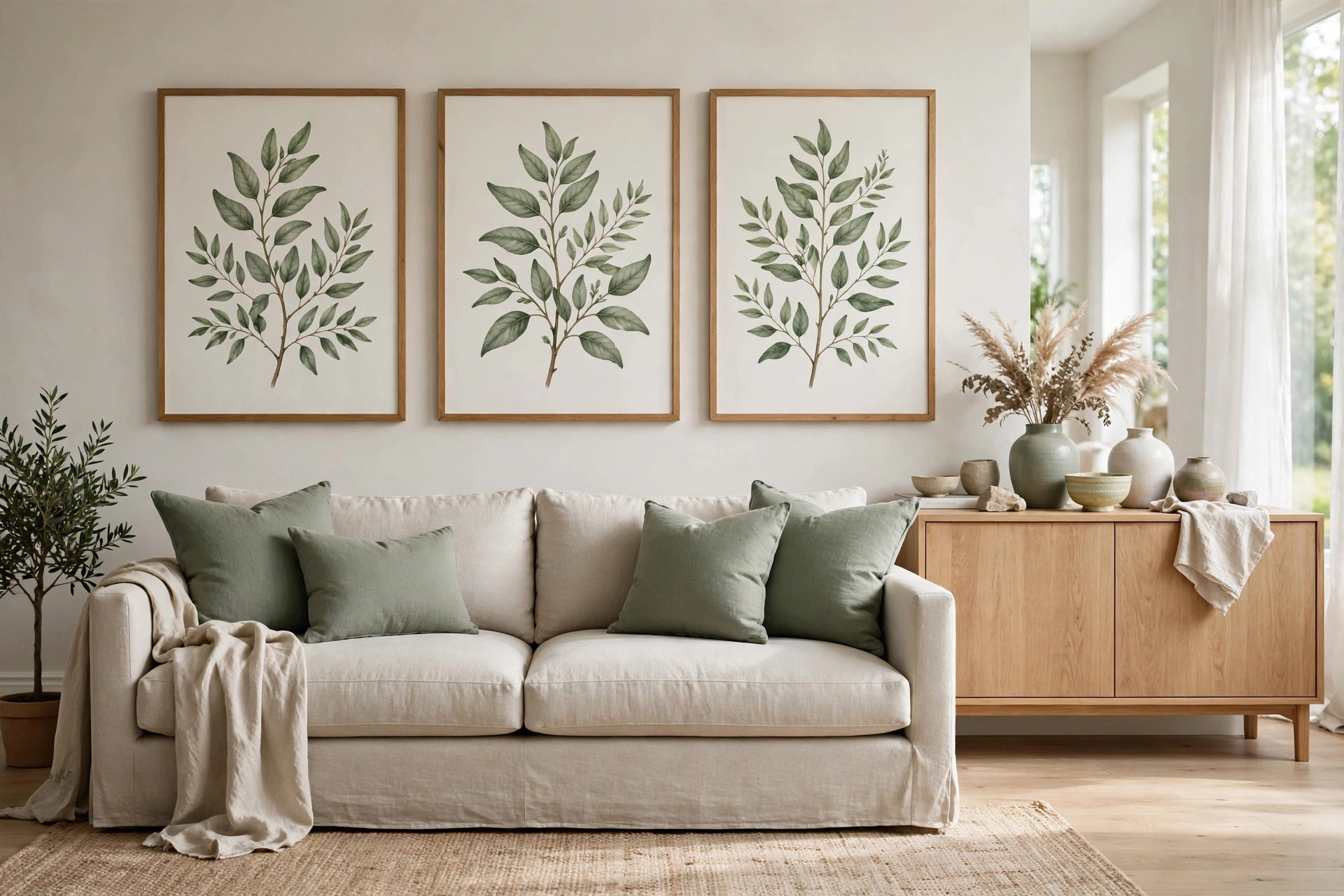
Botanical prints in sage tones are an easy, affordable way to weave the color into your walls. Large framed leaf or fern prints above a linen sofa create a calm, nature-inspired focal point that feels timeless. Choose prints with plenty of negative space so they read as airy rather than heavy.
Echo the artwork with sage cushions on the sofa and a light oak sideboard styled with simple ceramics below. Soft daylight does the rest, making the whole arrangement feel fresh and gallery-like without any paint at all.
12. Sage Green Fireplace Surround
Painting a fireplace surround in sage green turns the hearth into a true statement piece. The color draws the eye to the fireplace as the room’s natural gathering point, and it looks especially striking against cream walls and warm wood floors. A matte or eggshell finish keeps the look soft and sophisticated.
Style the mantel with candlesticks, dried florals, or a simple mirror to reflect light. Place cream armchairs facing the hearth to complete the arrangement, and the fireplace becomes the cozy heart of the room in every season.
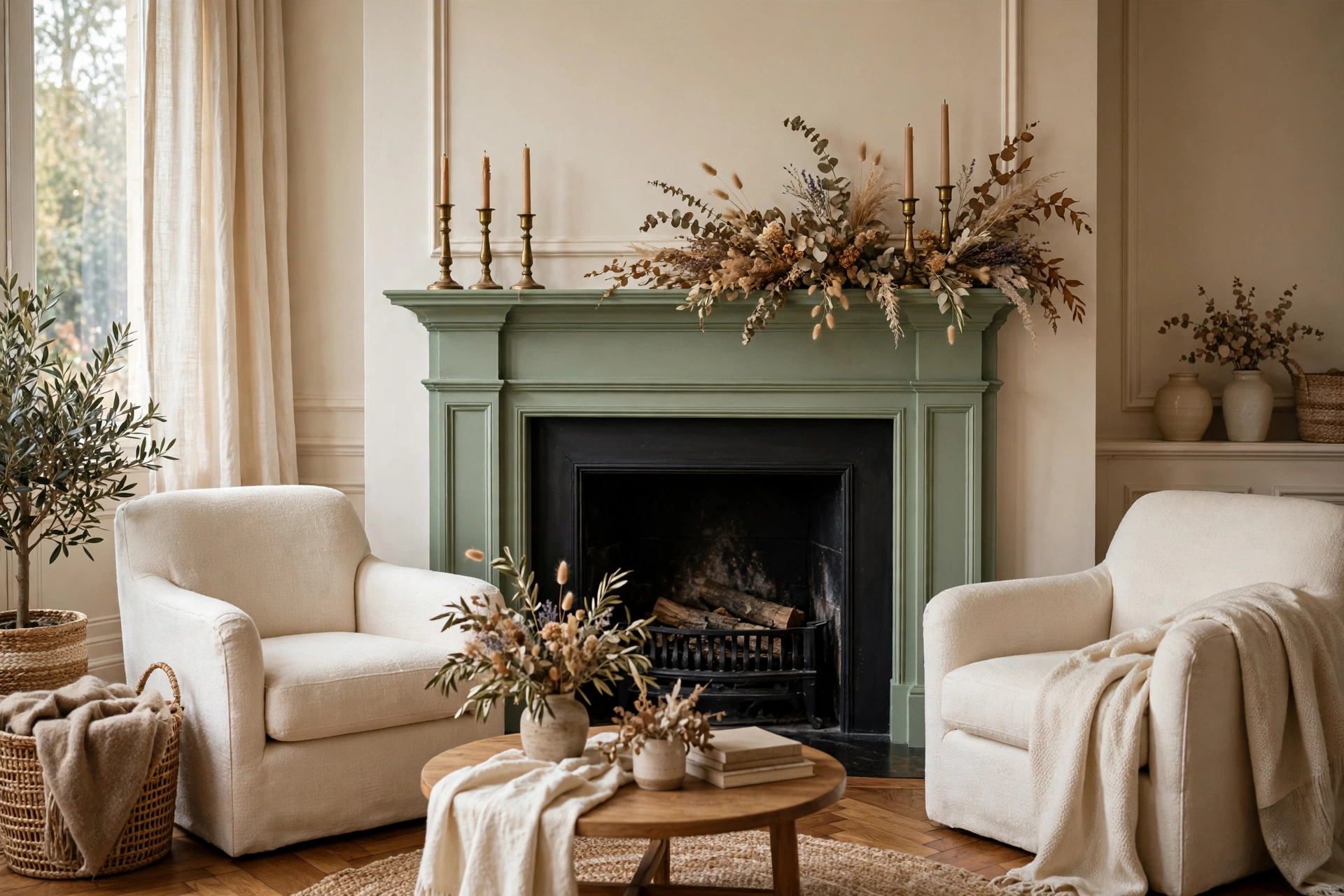
13. Sage Green Rug and Layered Textiles
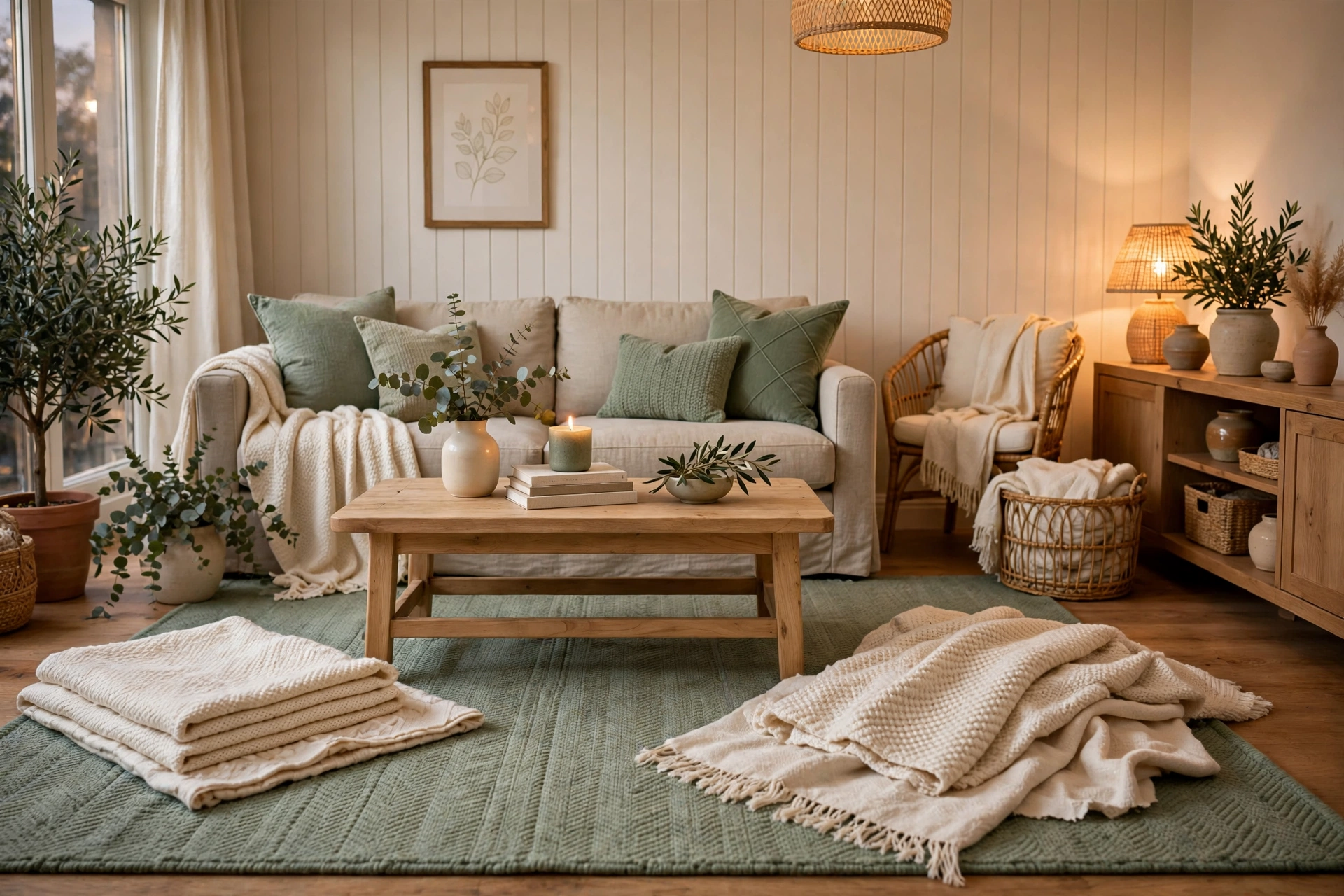
A large sage green area rug anchors a seating arrangement while adding color from the ground up. Because the color sits low in the room’s sightline, it feels grounding rather than overwhelming. Choose a rug big enough that the front legs of your sofa and chairs rest on it for a properly scaled look.
Layer cream and oatmeal textiles on top of the scheme: a knit throw, velvet pillows, and a Persian-style runner for pattern. Warm ambient lighting from table lamps makes the layered textiles glow in the evening and keeps the room feeling cocoon-like.
14. Sage Green with Brass Accents
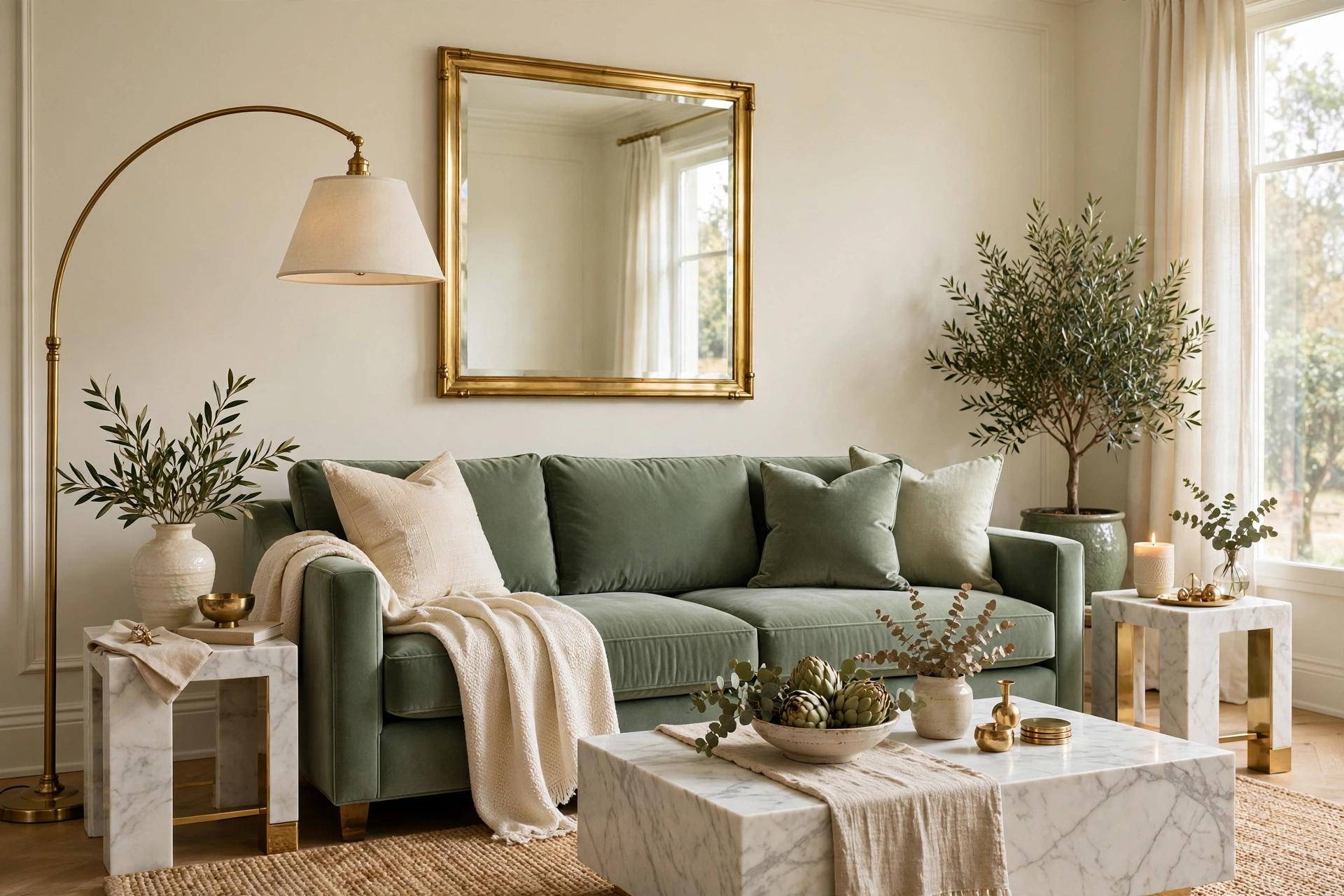
Polished brass is sage green’s most glamorous partner. The warm metallic glow contrasts beautifully with the cool, muted green, creating a look that feels both fresh and luxurious. A brass arc floor lamp, brass-framed mirror, or brass table legs are all you need to lift the scheme.
Keep the base palette simple with a sage velvet sofa, marble side tables, and cream walls so the brass details shine. A little brass goes a long way, so repeat the finish two or three times around the room for a cohesive, intentional feel.
15. Sage Green Built-In Bookshelves
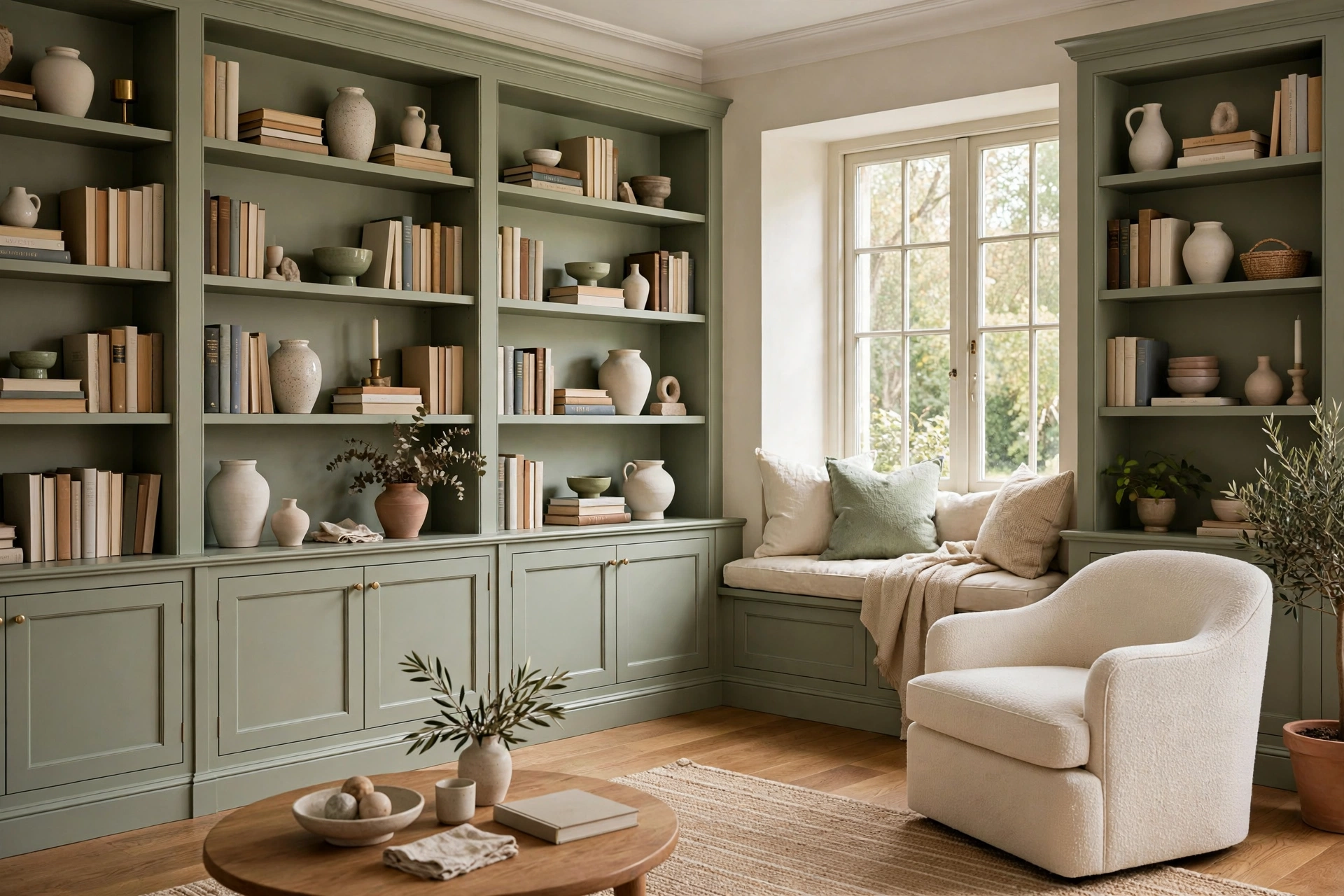
Painting built-in bookshelves sage green adds color and character to a living room without touching the walls. The green frames your books and objects beautifully, making styled shelves look richer and more deliberate. It is also a great way to add color in a room where you want the walls to stay neutral.
Style the shelves with a mix of books, ceramics, and small plants, leaving some breathing room so the green shows through. A cream armchair and a window reading nook nearby complete a space that feels both smart and serene.
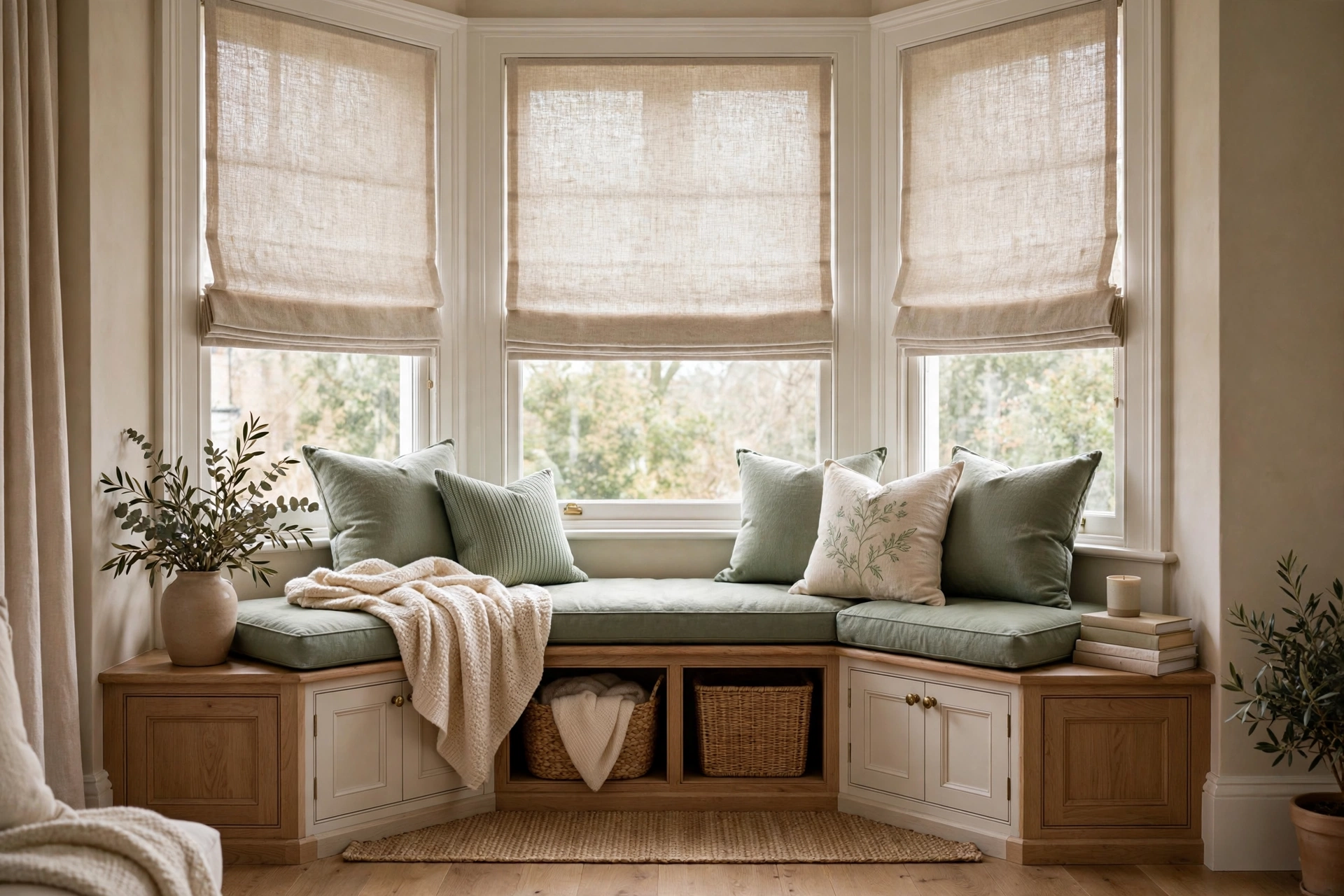
16. Sage Green Window Seat
A window seat dressed in sage green cushions turns an architectural feature into the room’s coziest corner. The green upholstery feels fresh against daylight, and a bay window with linen shades keeps the light soft and flattering. Built-in storage below the seat adds practical value too.
Pile on pillows in complementary tones like cream, oatmeal, and soft terracotta, and drape a knit throw over one end. This small investment creates a reading spot, extra seating, and a charming focal point all at once.
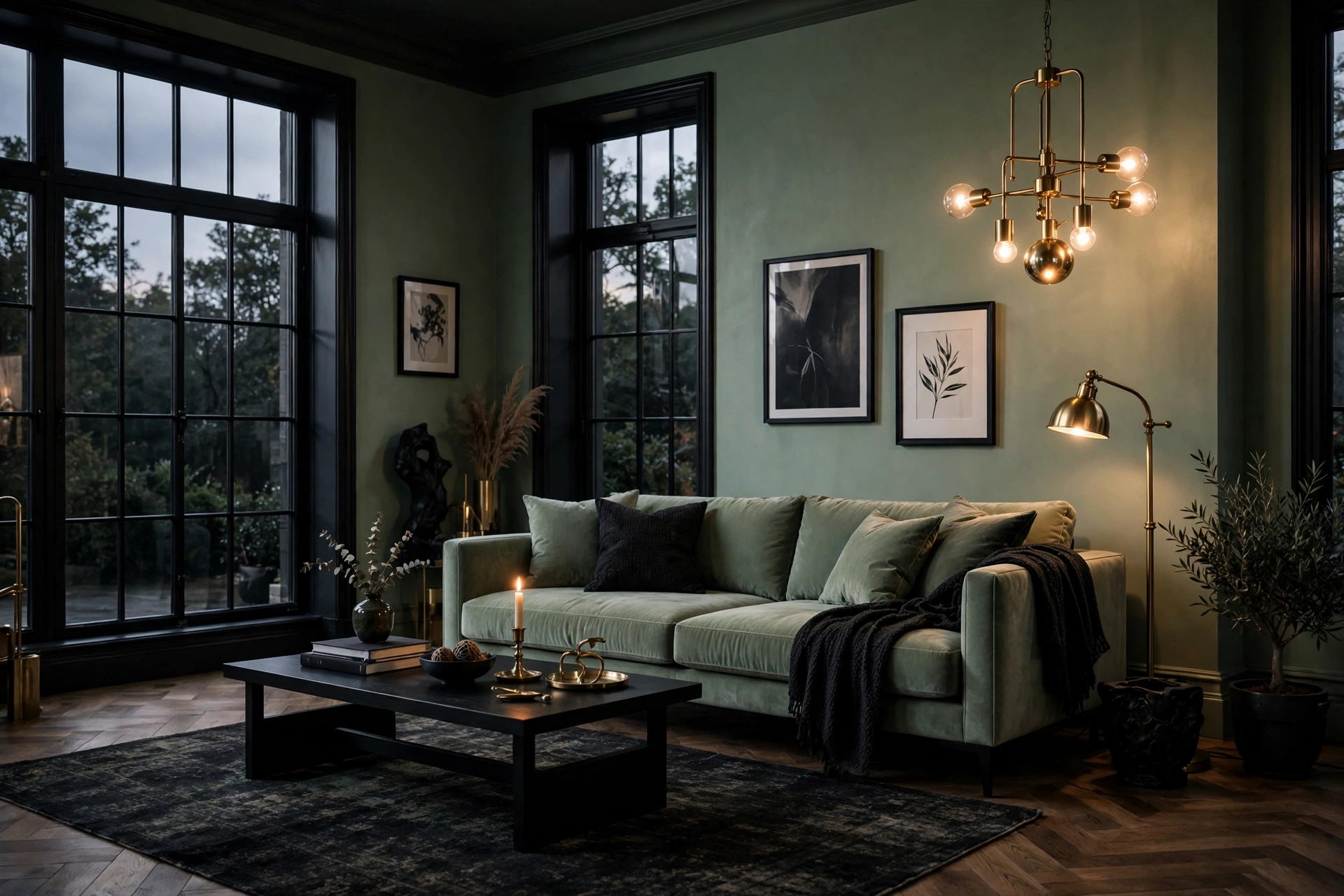
17. Sage Green with Black Contrast
For a moodier take on sage, pair it with black accents. Black-framed windows, a black coffee table, or black lighting fixtures sharpen the soft green and give the room a confident, contemporary edge. The contrast keeps sage from feeling too sweet or traditional.
Balance the drama with warm elements like brass lighting and a plush sage velvet sofa so the room stays inviting. This combination works particularly well in rooms with good natural light, where the black accents read as graphic rather than heavy.
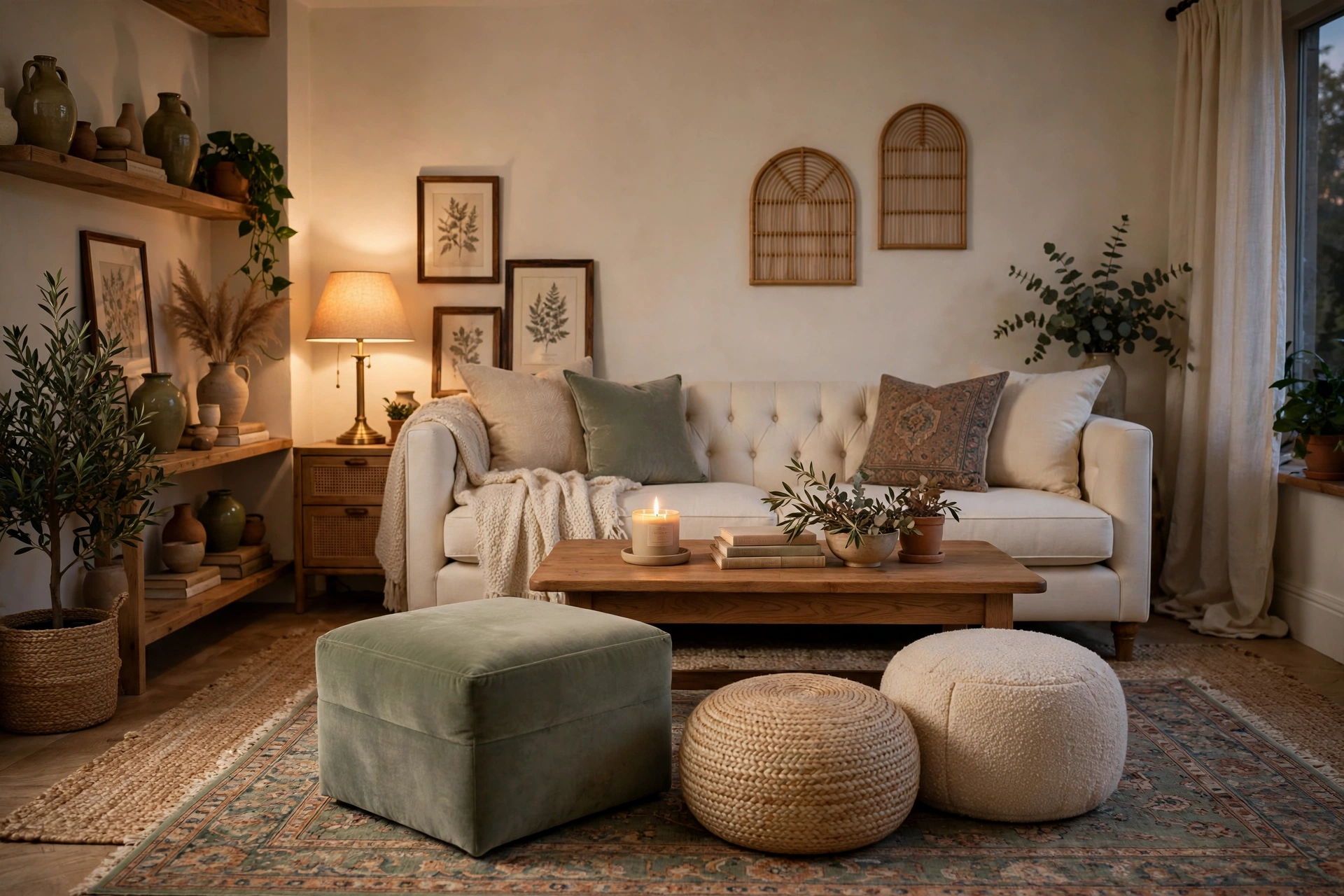
18. Sage Green Ottoman and Poufs
A sage green velvet ottoman or a cluster of round poufs adds flexible seating and a soft color note without committing to large furniture. Ottomans double as footrests, extra seats, and even coffee tables with a tray on top, making them one of the hardest-working pieces in a living room.
Pair them with a cream tufted sofa and a layered rug so the green accents stand out against a neutral base. Choose poufs in slightly varied sage tones for a collected look, or match them exactly for a more tailored feel.
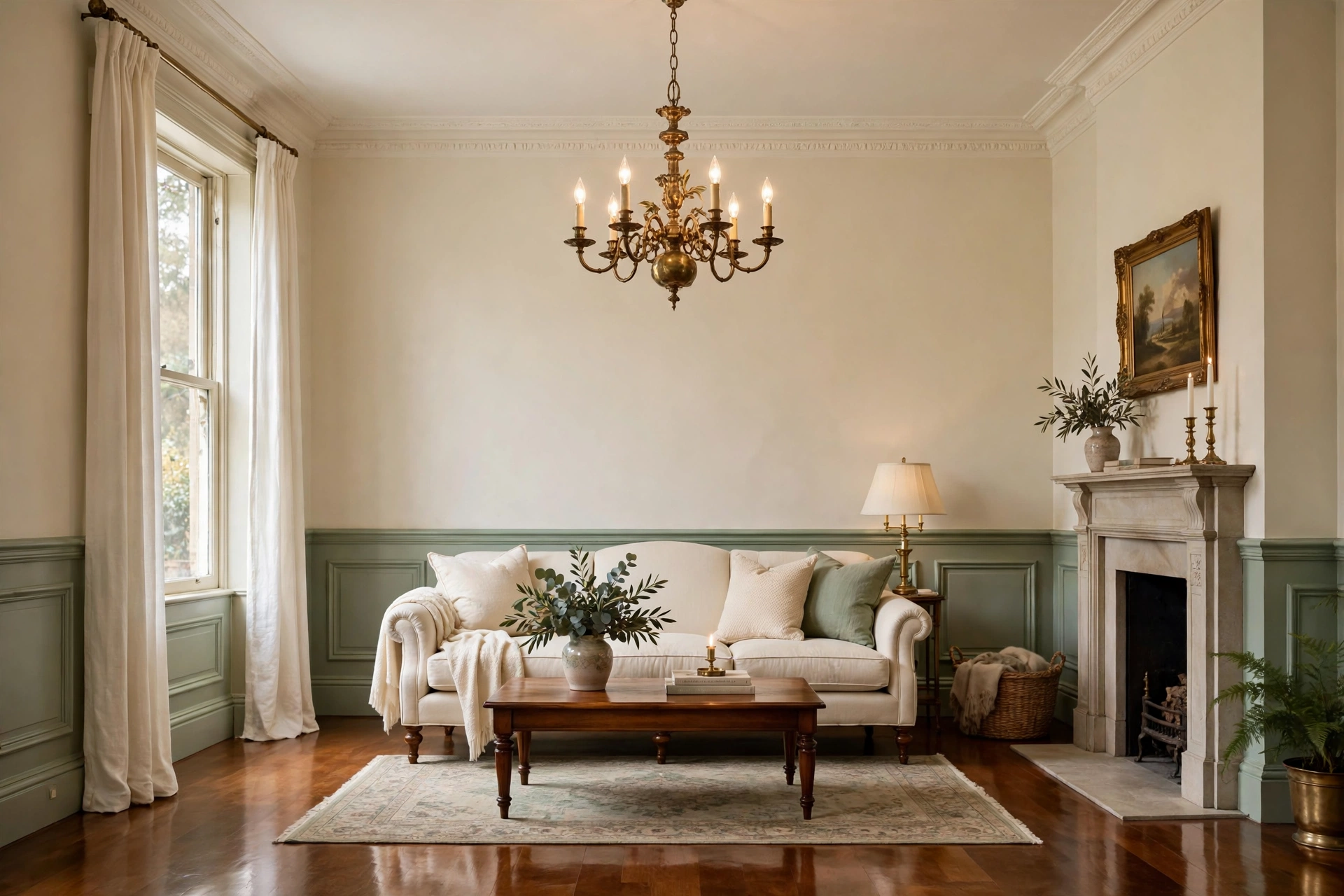
19. Sage Green Wainscoting
Sage green wainscoting on the lower walls with warm ivory above is a classic combination that adds architectural interest and timeless charm. The two-tone treatment gives walls depth and makes even a simple room feel finished and considered. It suits traditional, transitional, and cottage styles alike.
Finish the look with a cream sofa, an antique brass chandelier, and polished wood floors. Keep artwork and decor above the chair rail simple so the wainscoting itself remains the star of the wall treatment.
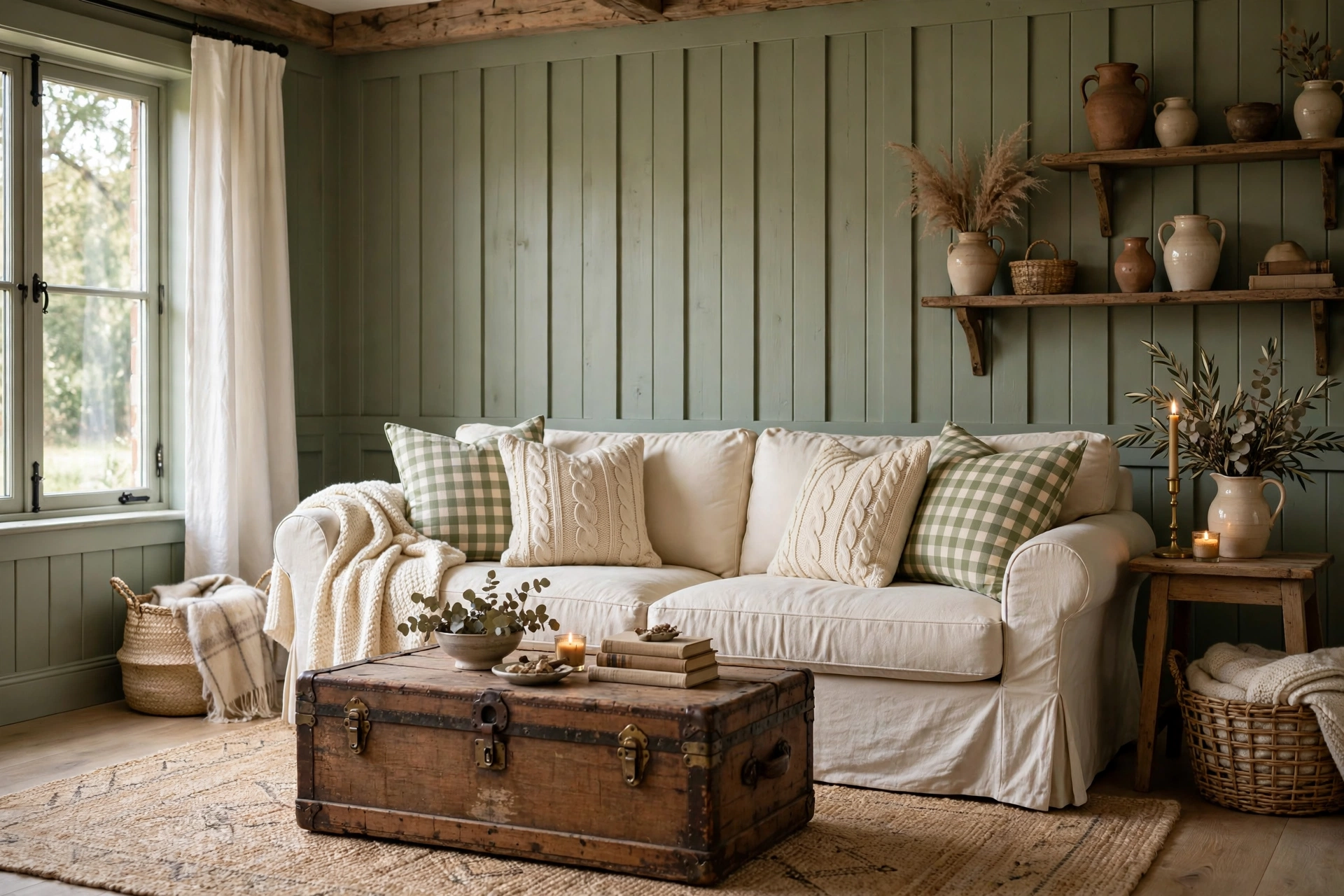
20. Sage Green Farmhouse Living Room
Sage green board-and-batten walls give farmhouse style a fresh update beyond the usual all-white look. The muted green feels right at home with slipcovered sofas, vintage wood furniture, and cozy knit textures. It keeps the farmhouse warmth while adding personality and depth.
Layer in gingham or plaid pillows, a vintage trunk as a coffee table, and plenty of natural textures like jute and linen. The result is a living room that feels collected and comfortable, never staged or stiff.
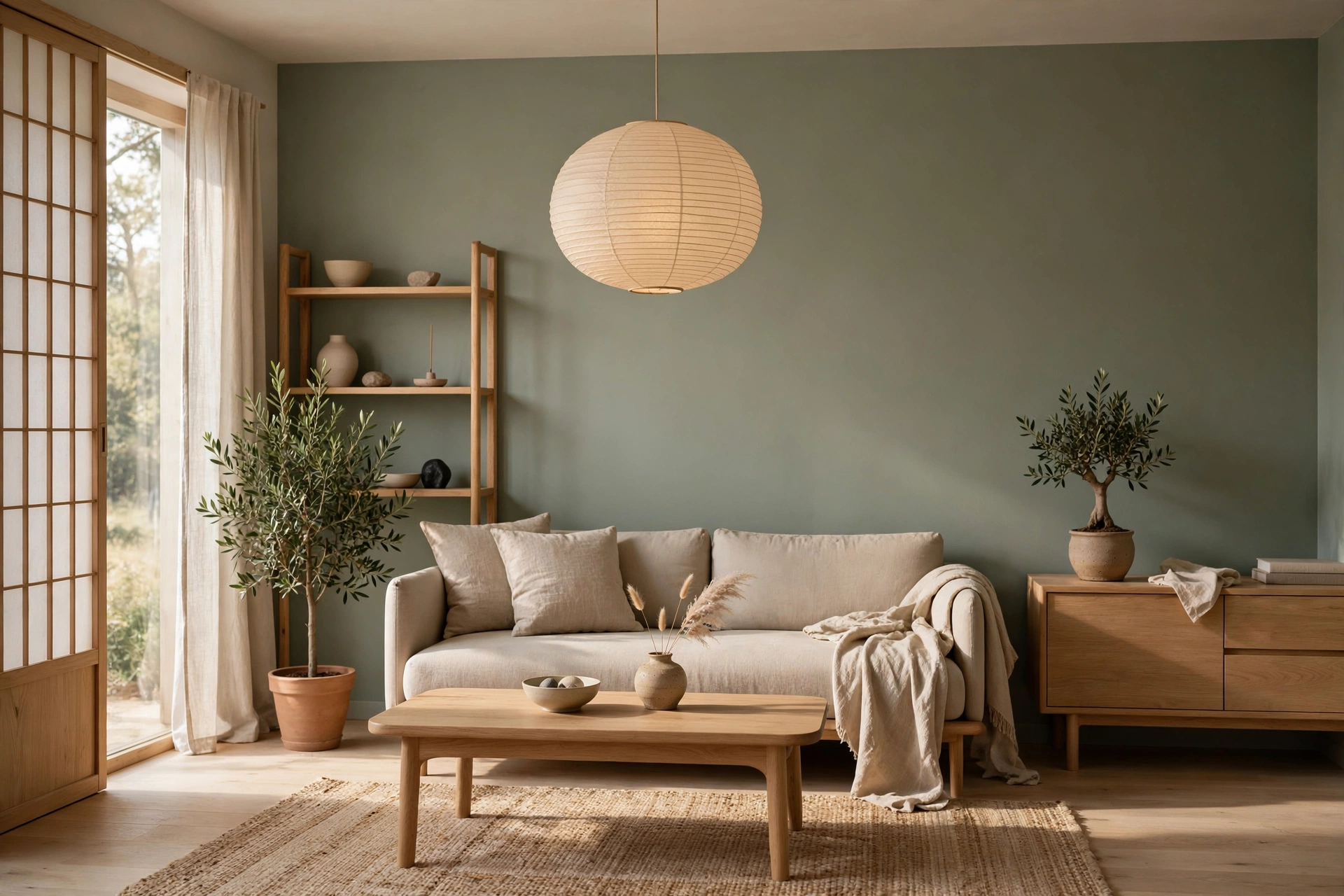
21. Sage Green Japandi Living Room
Sage green fits the Japandi aesthetic perfectly, bringing a whisper of nature into a calm, minimal space. Muted sage walls behind low-profile furniture in light oak and warm beige create a serene, uncluttered room that still feels warm and livable. Less is more here, so let each piece breathe.
A paper lantern pendant, a single sculptural vase, and a low pile rug complete the look. Keep decor minimal and functional, choosing natural materials and soft, organic shapes that echo the tranquility of the sage walls.
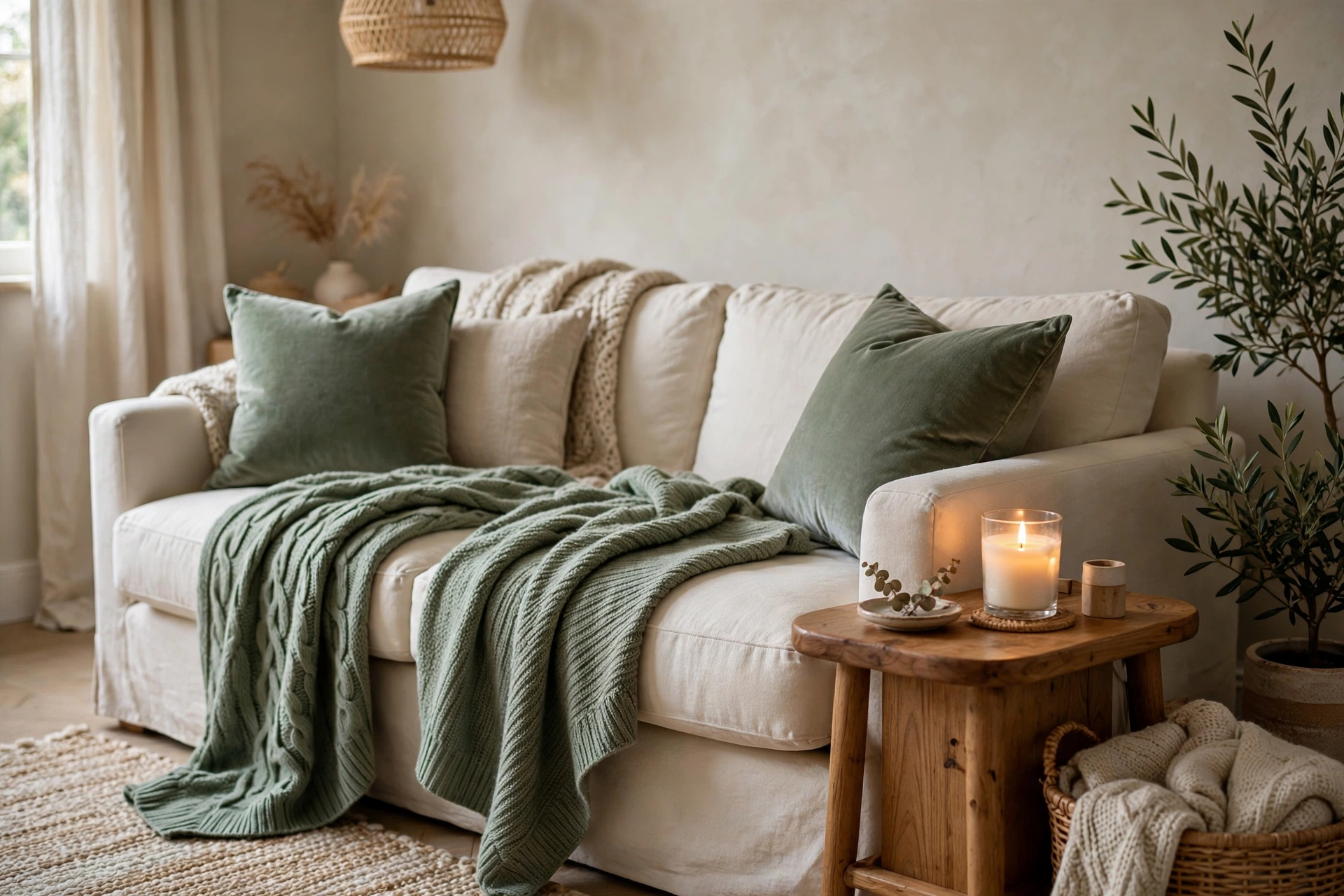
22. Sage Green Throw Blankets and Pillows
The easiest way to try sage green is through throw blankets and pillows. Drape a sage knit throw over an ivory sofa arm and add two or three sage pillows in mixed textures like velvet, linen, and boucle. This low-commitment approach lets you test the color before investing in bigger pieces.
Mixing textures is the key to making simple accessories look designer-level. Pair the sage textiles with a warm wood side table and a candle nearby, and the sofa vignette instantly feels styled and seasonal without any renovation.
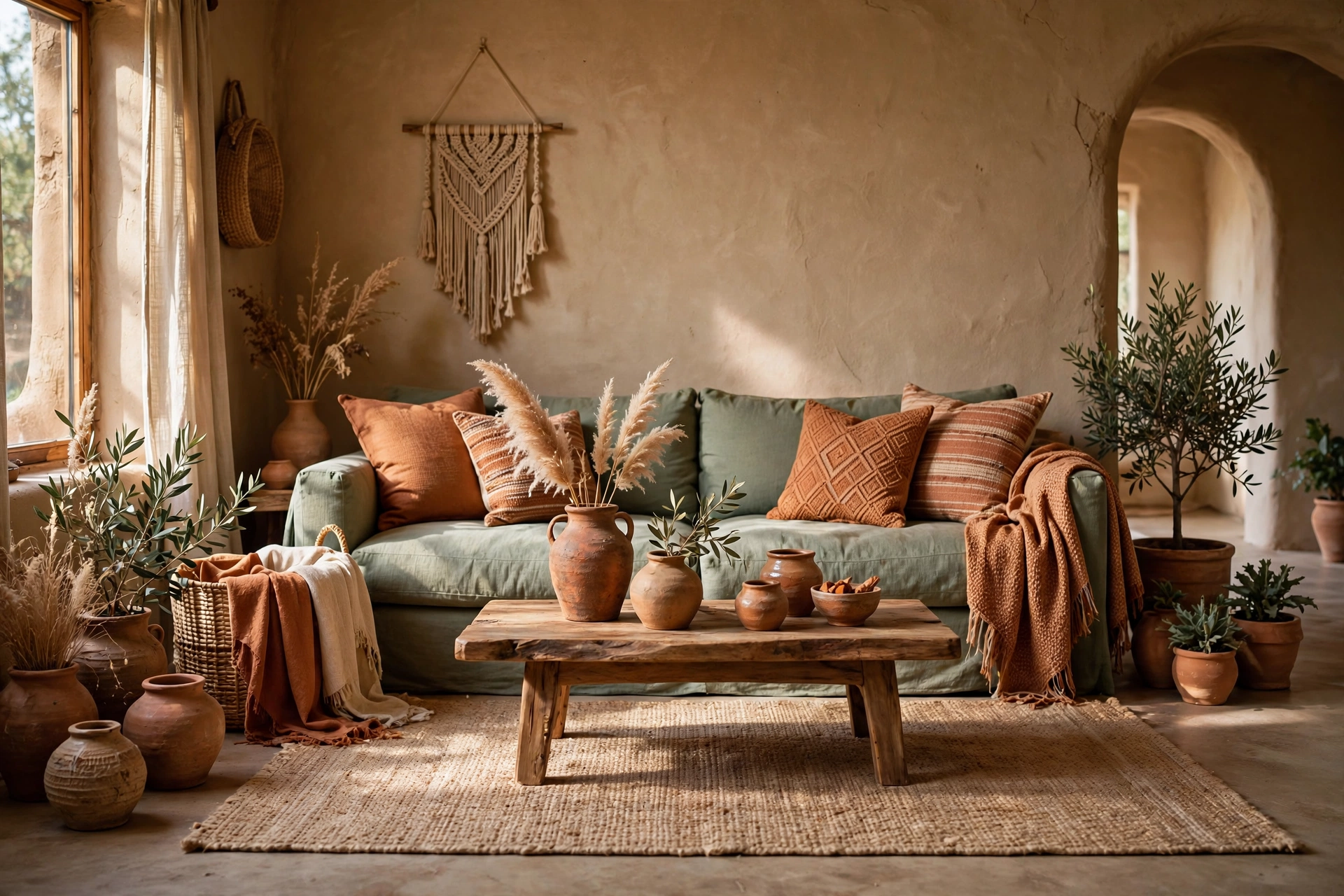
23. Sage Green with Terracotta Accents
Sage green and terracotta are an earthy, sun-warmed pairing inspired by nature itself. The cool, muted green and the warm, clay orange balance each other perfectly, creating a bohemian yet grounded living room. Use sage as the dominant color on the sofa or walls, with terracotta in pillows, pottery, and throws.
A jute rug and sunlit, warm-toned walls enhance the earthy feel. Add clay pottery and woven textures to complete a space that feels organic, relaxed, and full of character.
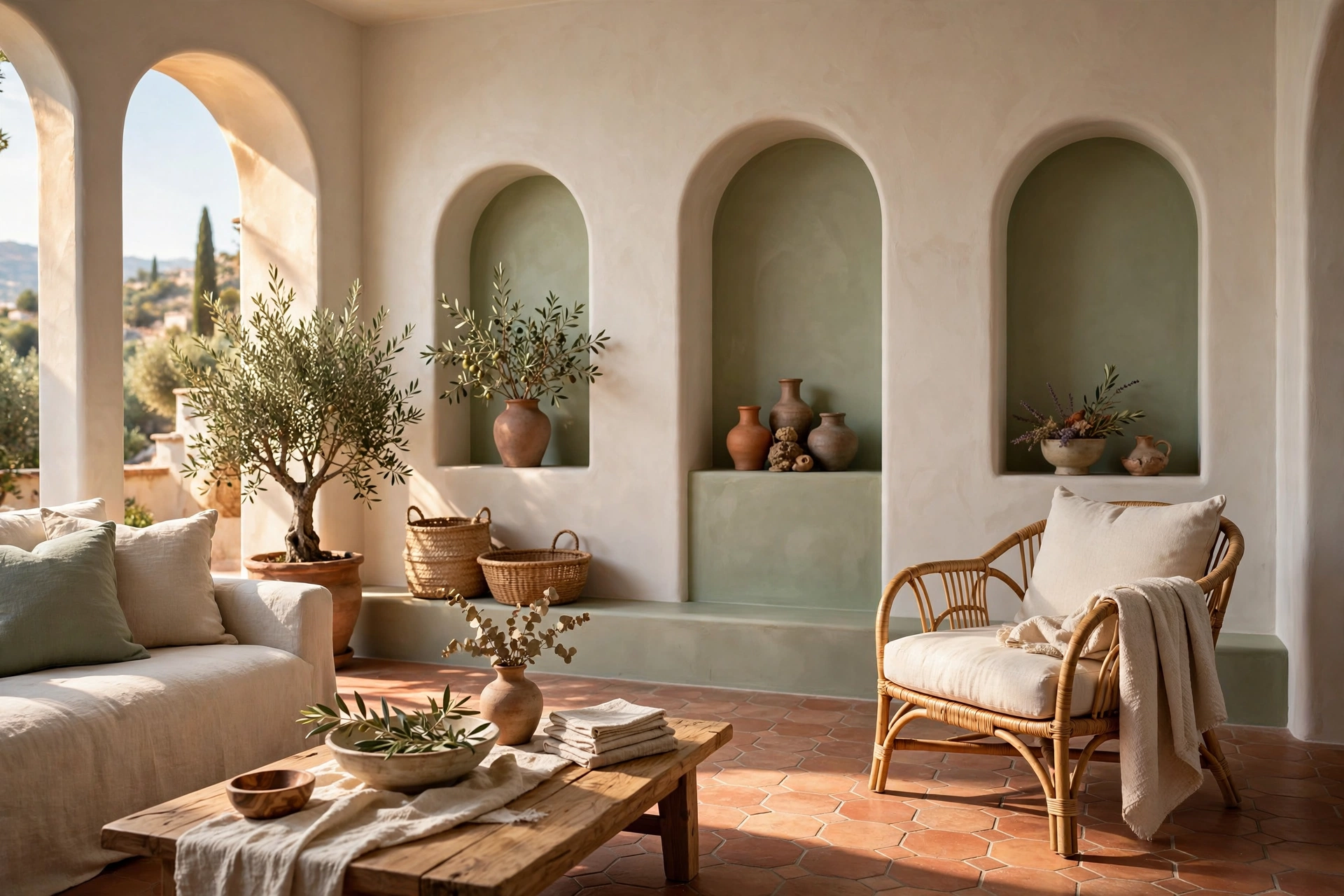
24. Sage Green Arched Alcoves
Arched alcoves painted in sage green bring soft, Mediterranean-inspired architecture into the living room. The curved shapes feel gentle and sculptural, and the green makes the niches feel like intentional design moments rather than just wall recesses. Style them with ceramics, books, or small sculptures.
Pair the arches with terracotta tile floors, a rattan chair, and warm sunlight for a relaxed Mediterranean mood. Keep the surrounding walls a warm plaster tone so the sage niches stand out as elegant focal points.
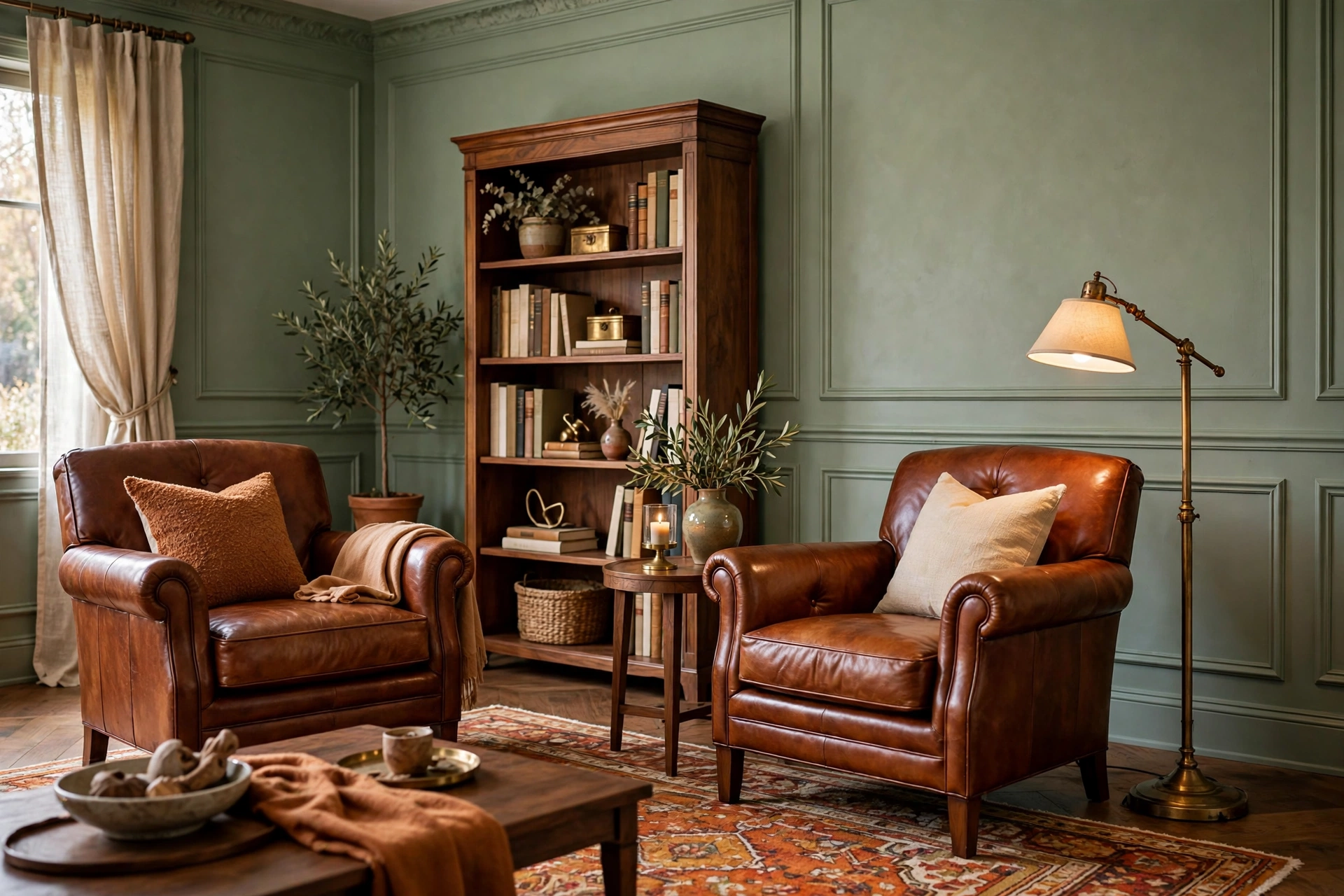
25. Sage Green with Leather Accents
Cognac or caramel leather armchairs look stunning against sage green walls. The rich, warm leather adds depth and a masculine edge that balances sage’s softness, creating a refined, library-like atmosphere. This pairing works beautifully in traditional and transitional living rooms.
Add a walnut bookshelf, a brass reading lamp, and a wool rug in warm tones to complete the look. The combination of green, leather, and wood feels timeless and gets better with age as the leather develops its patina.
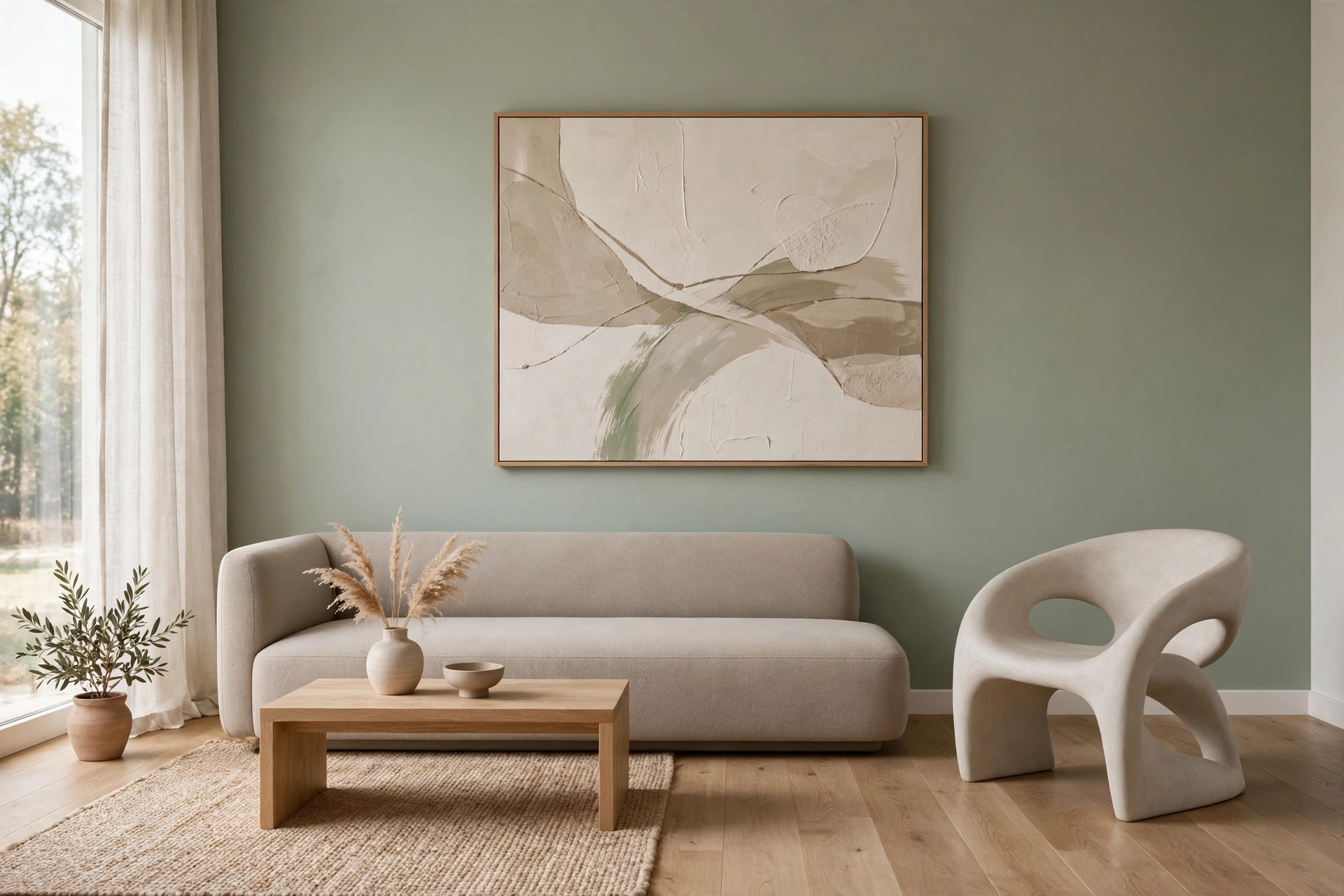
26. Sage Green Minimalist Living Room
Even minimalists can embrace color with a soft sage green accent wall. The muted tone adds warmth and interest without disturbing the calm, uncluttered feel of a minimal space. Keep furniture streamlined and low-profile in warm greige or beige tones.
One large abstract art piece is all the decor this look needs, along with an oak floor and a sculptural chair for visual interest. The restraint is the point: every element earns its place, and the sage wall provides all the color the room requires.
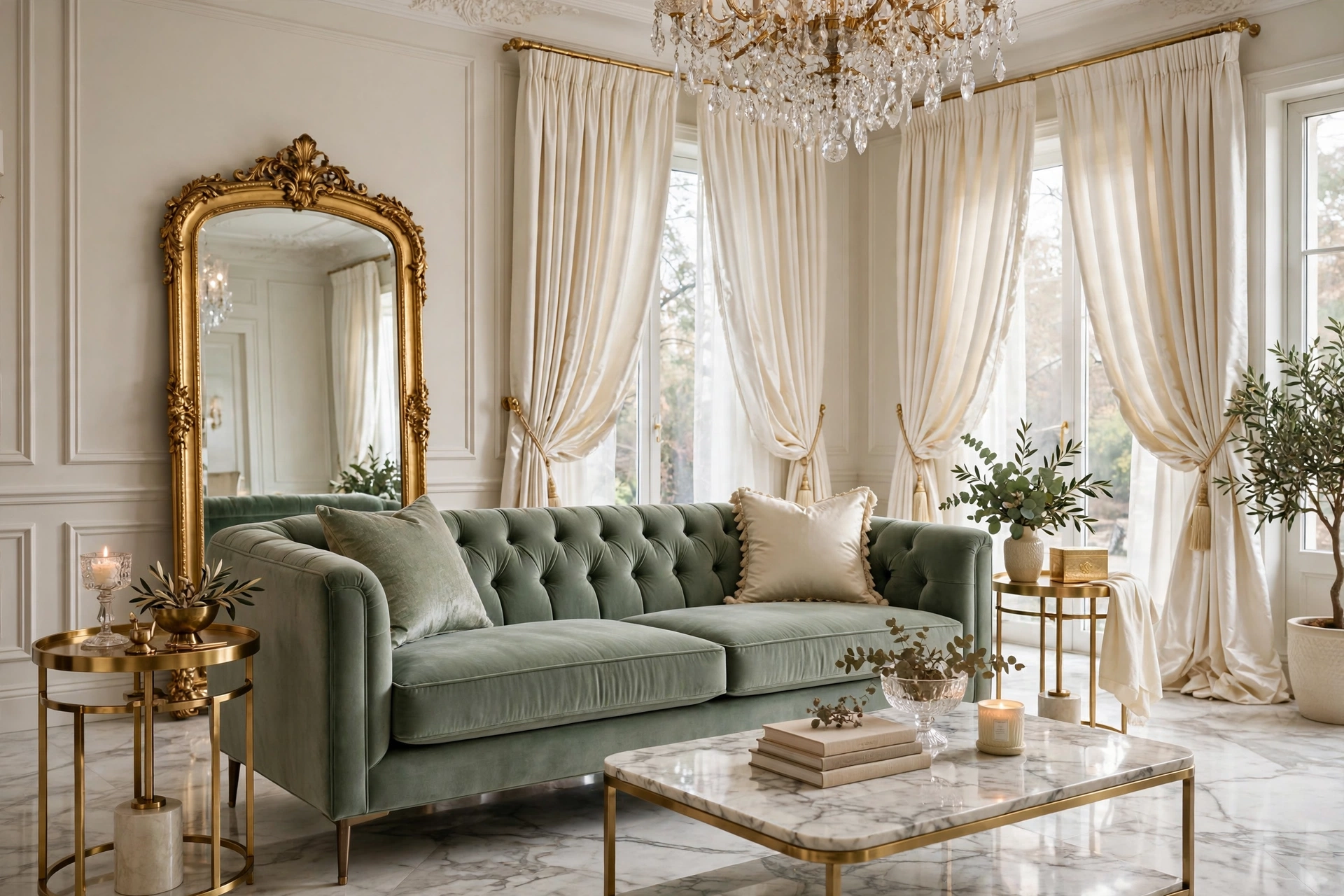
27. Sage Green and Gold Glam
For a touch of Hollywood glamour, pair a sage green velvet tufted sofa with gold accents. Gold side tables, a gold-framed mirror, and a crystal chandelier elevate the muted green into something truly luxurious. Ivory silk curtains add softness and movement.
A marble floor or light rug keeps the look bright so the glamour never feels heavy. This is sage green at its most dressed-up, perfect for formal living rooms or anyone who loves a little sparkle.
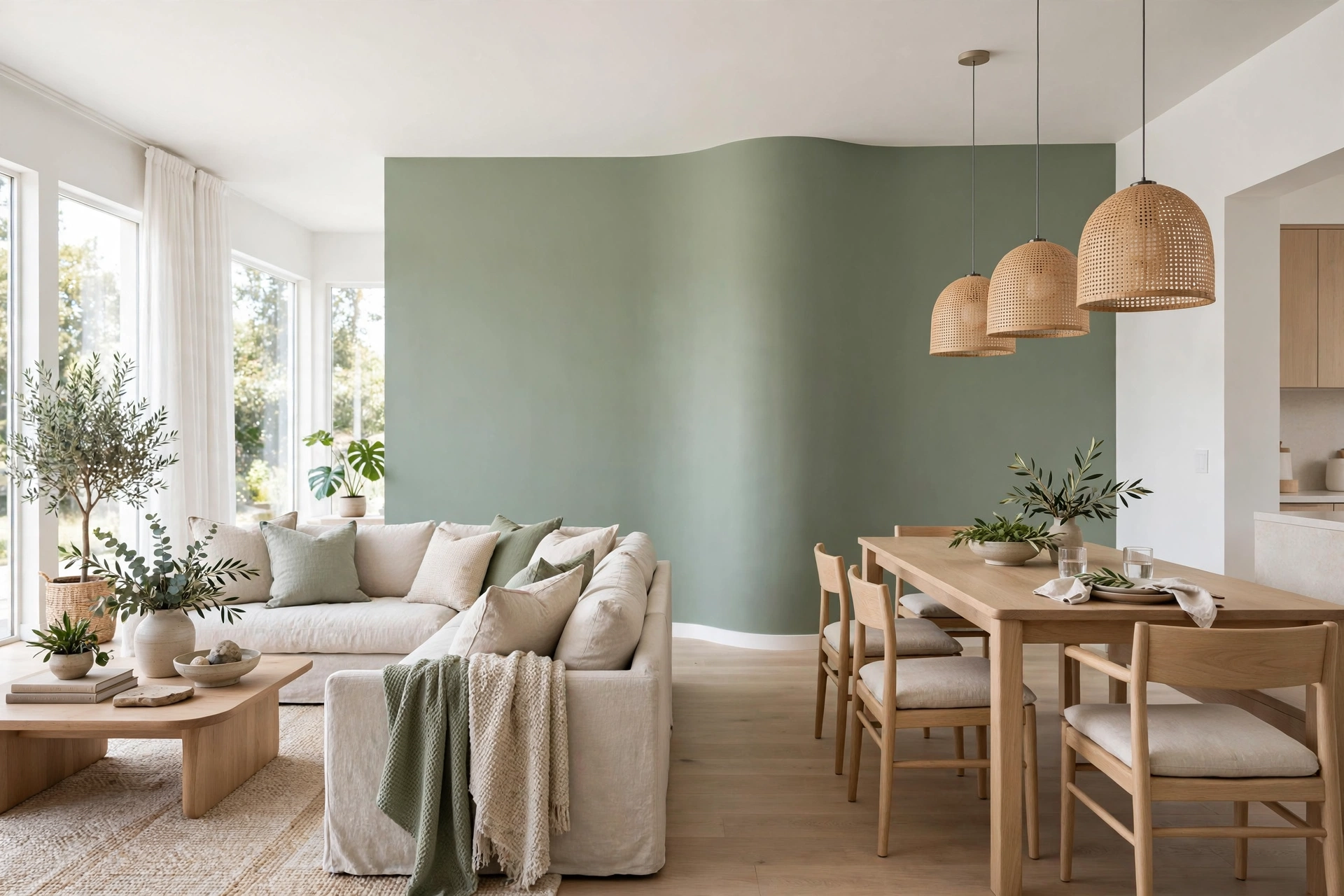
28. Sage Green Open-Plan Living
In open-plan spaces, a sage green accent wall can define the living zone without closing it off. The color creates a visual anchor for the seating area while the rest of the space flows freely into the dining area. It is a smart alternative to room dividers or rugs alone.
Carry small touches of sage into the adjoining dining area, such as chair cushions or a centerpiece, so the two zones feel connected. Light wood furniture and pendant lights keep the whole open space feeling airy and cohesive.
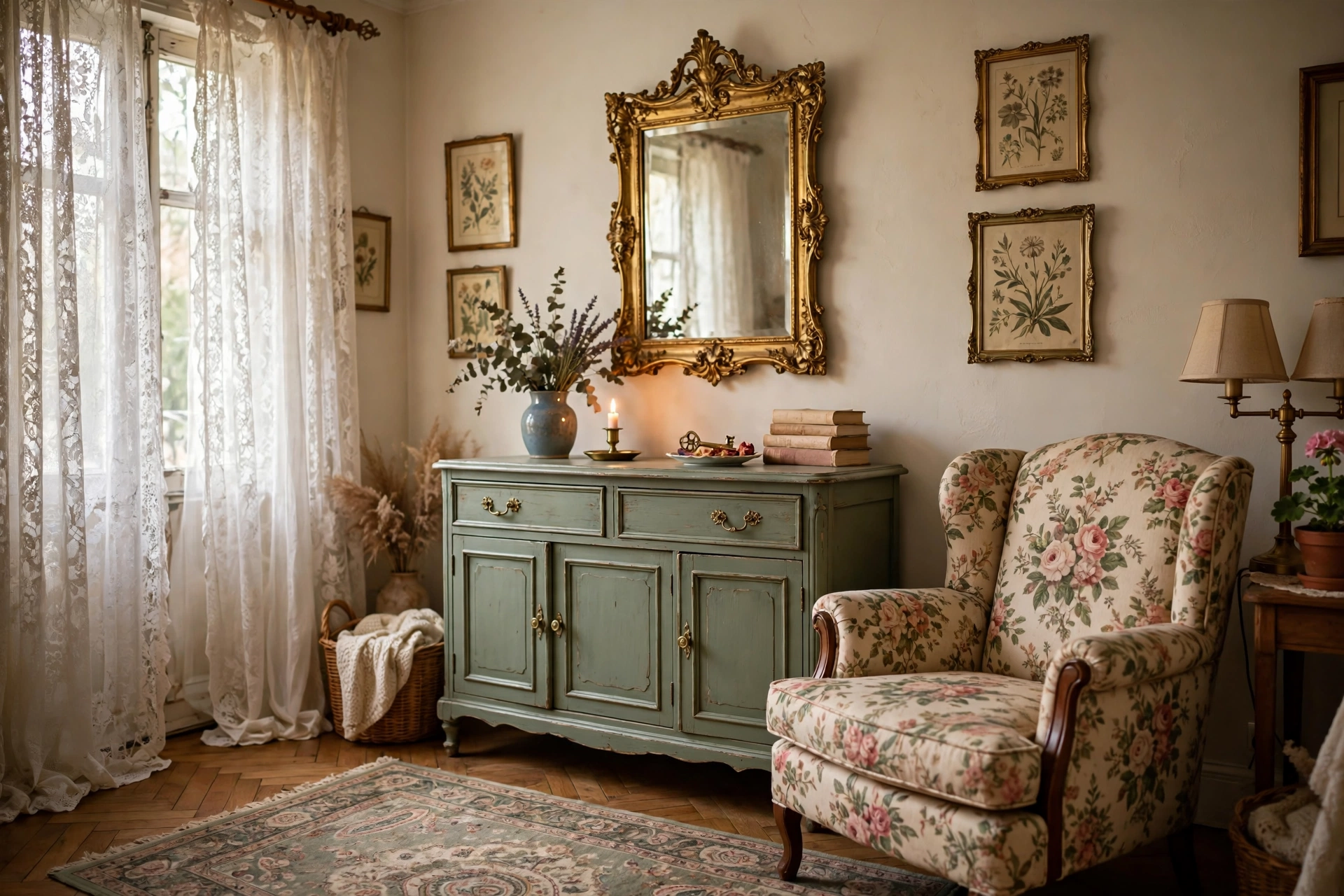
29. Sage Green Vintage Furniture
Repainting a vintage dresser, cabinet, or side table in sage green gives old furniture a fresh, charming second life. The muted color suits antique shapes beautifully, highlighting their curves and details without looking shabby. It is also a budget-friendly way to add sage to your room.
Style the painted piece with a floral chintz chair, an ornate mirror, and lace curtains for a nostalgic, romantic look. The mix of vintage finds and soft green creates a living room full of personality and history.
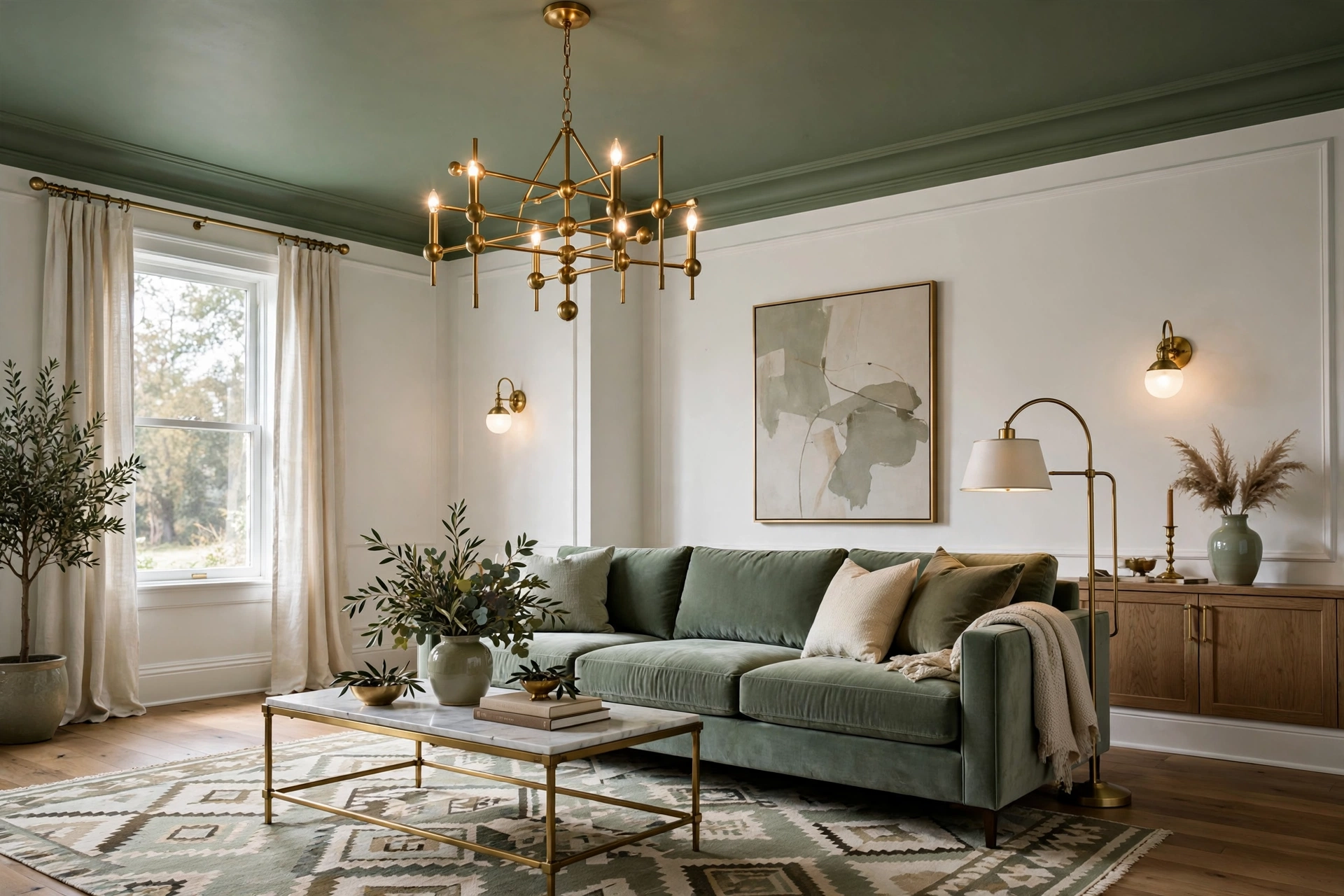
30. Sage Green Ceiling and Trim
For a bold but sophisticated move, paint the ceiling sage green while keeping the walls crisp white. The unexpected color overhead draws the eye up and makes the room feel wrapped in warmth, like the canopy of a garden. It is a designer trick that adds instant character.
Echo the ceiling with a sage velvet sofa and brass fixtures so the color feels intentional from every angle. Because the walls stay white, the room still feels bright and the green ceiling reads as an elegant surprise rather than a heavy choice.
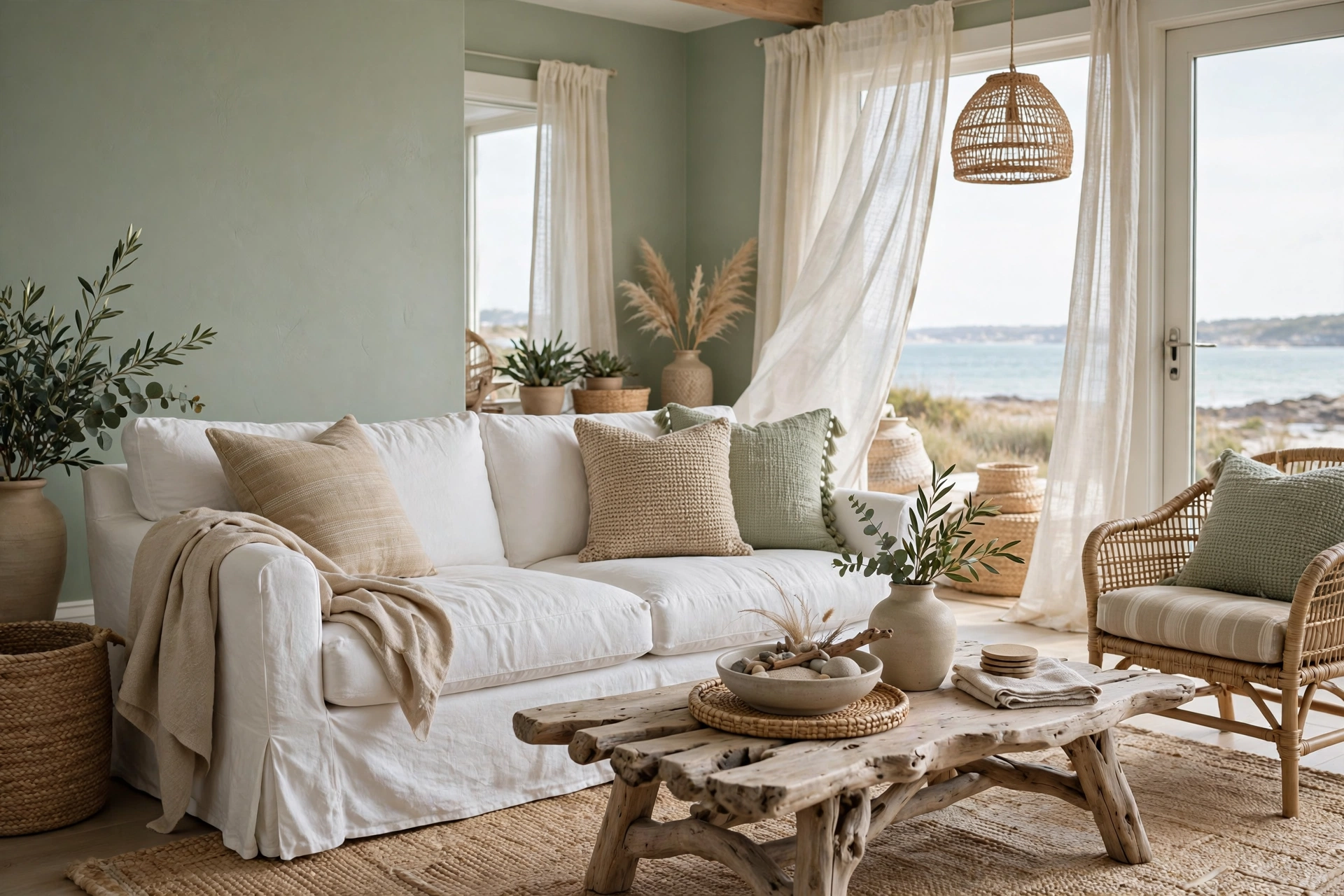
31. Sage Green Coastal Living Room
Sage green brings a soft, sea-glass quality to coastal style without the expected blues. Pair it with sandy neutrals, white slipcovers, and driftwood tones for a breezy living room that feels like a calm shoreline. The green reads as natural and relaxed rather than themed.
Woven textures, linen upholstery, and simple ceramics complete the coastal mood. Keep the palette light and the decor minimal so the room feels like a deep breath of ocean air.
32. Sage Green with Mustard Accents
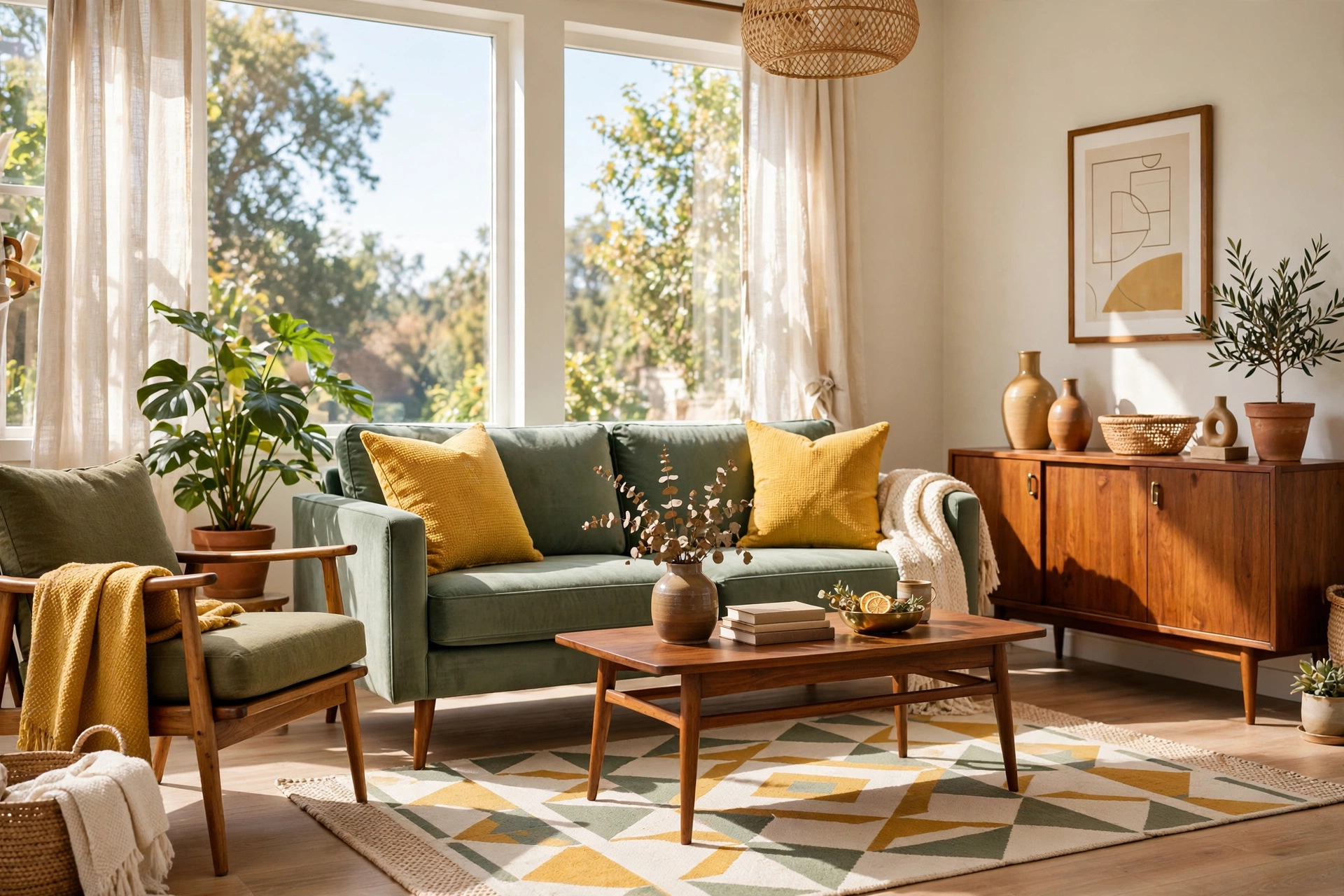
Mustard yellow pillows and accessories add cheerful energy to a sage green living room. The warm golden tone contrasts playfully with the cool green, creating a mid-century-inspired look that feels sunny and optimistic. A little mustard goes a long way, so use it in small, deliberate doses.
Mid-century wood furniture and a geometric rug enhance the retro vibe. Keep the sage as the dominant color on the sofa or walls, and let the mustard accents provide the joyful pop.
33. Sage Green Reading Nook
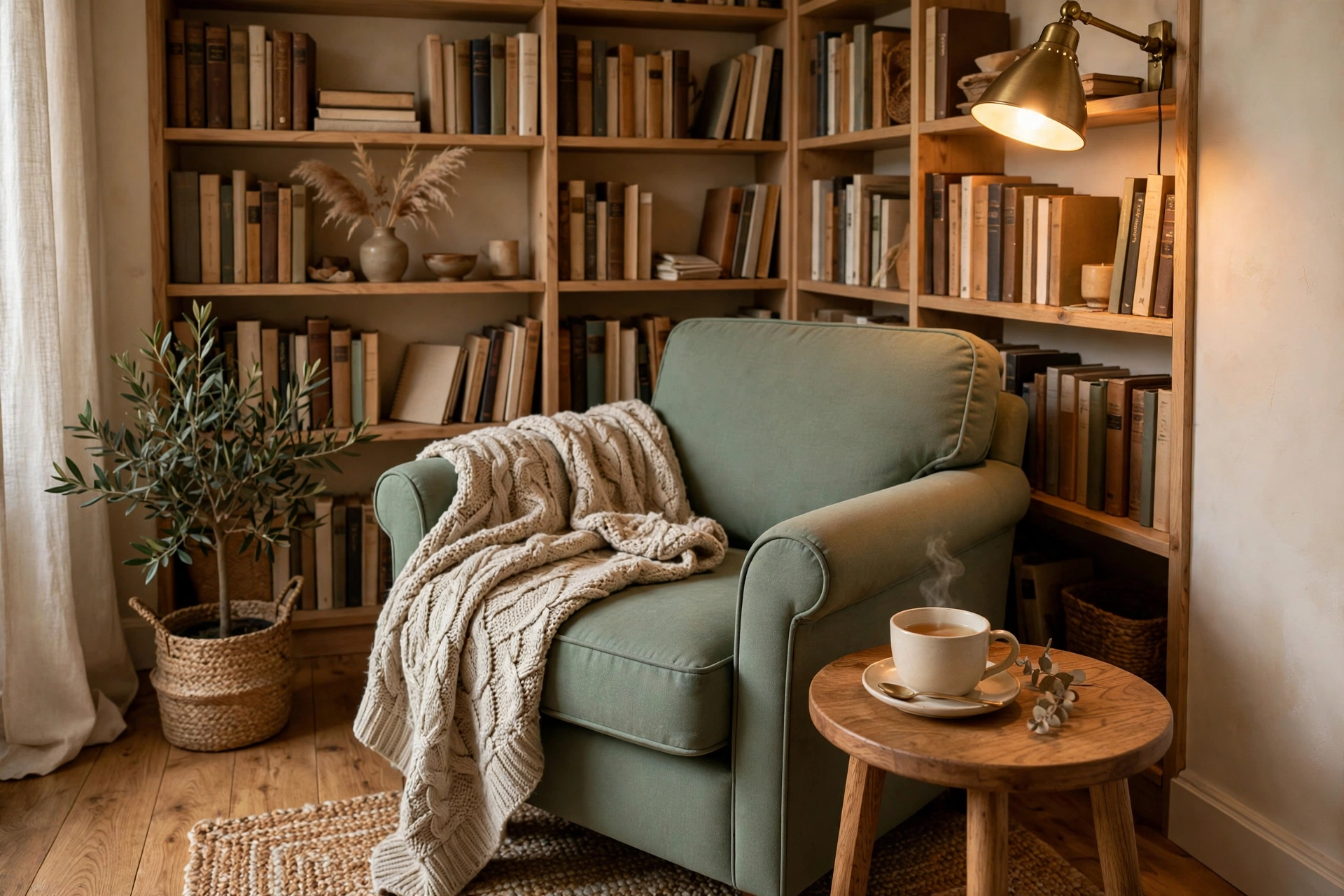
Carve out a reading nook with a sage green upholstered chair tucked beside a bookshelf. The green makes the corner feel like a deliberate retreat rather than leftover space, and the cozy scale invites long, lazy reading sessions. A warm reading lamp is essential for evening chapters.
Add a knit throw, a small side table for tea, and a stack of favorite books within arm’s reach. This little corner may become the most loved spot in the whole house.
34. Sage Green Statement Wall Molding
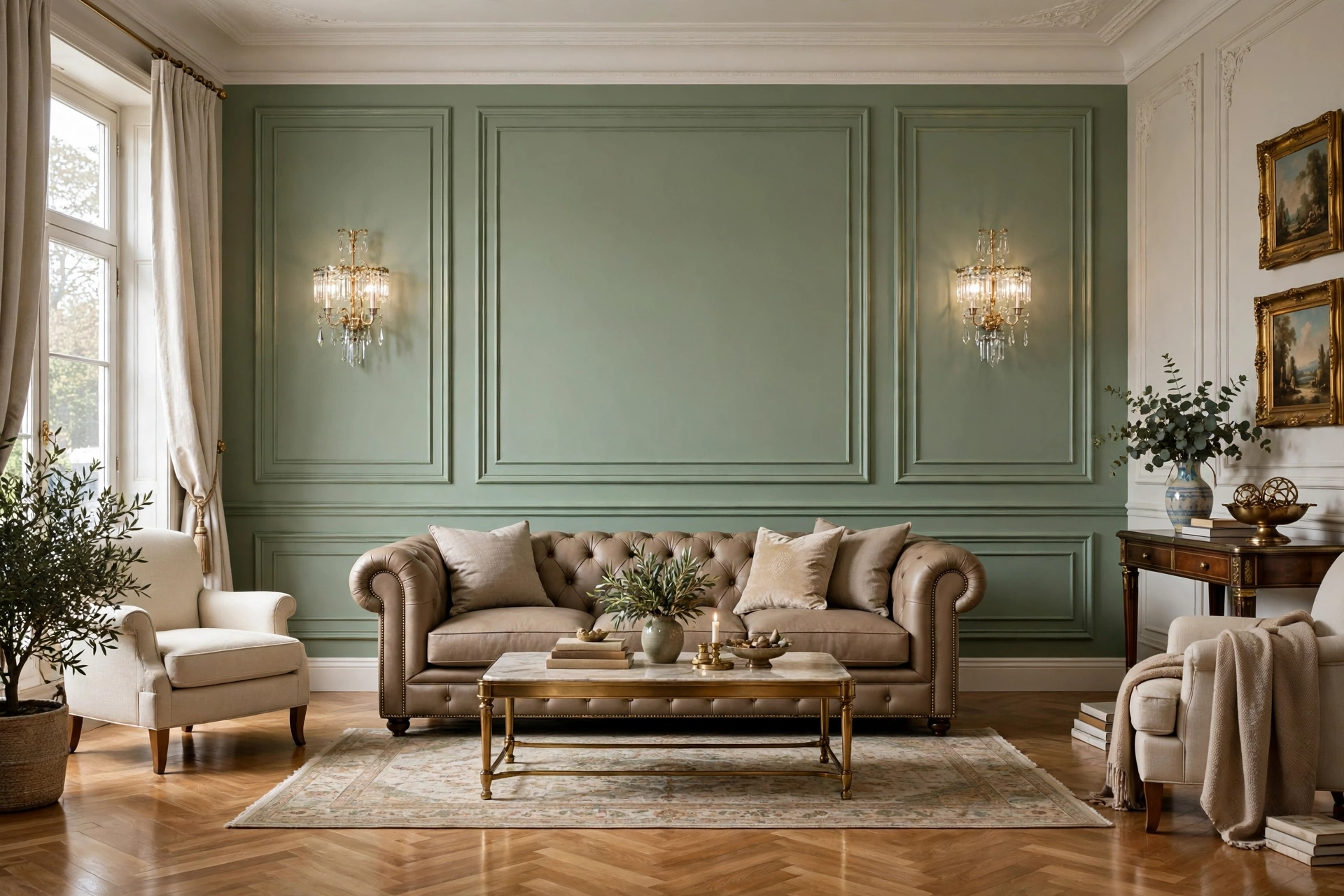
Elegant panel molding painted in sage green turns a plain wall into a stately architectural feature. The molding adds shadow lines and dimension, while the green gives it a fresh, contemporary feel that suits both classic and modern interiors. It is a high-impact upgrade with timeless appeal.
Pair the paneled wall with a chesterfield sofa in warm taupe, crystal sconces, and a polished herringbone floor. The combination feels luxurious and tailored, proving that sage green can be every bit as grand as it is calming.
Final Thoughts
Sage green proves that a little color can go a long way toward making a living room feel calm, fresh, and elegant. Whether you paint an accent wall, invest in a velvet sofa, or simply layer in sage textiles, this versatile shade adapts to every style from farmhouse to glam. Pick the ideas that speak to you, start small if you like, and enjoy watching your living room transform into a serene retreat you will love coming home to.