
Bathroom Organization Ideas: 36 Smart Storage Systems
A cluttered bathroom slows down every morning — bottles topple in the shower, drawers jam with tangled cords, and…

A cluttered bathroom slows down every morning — bottles topple in the shower, drawers jam with tangled cords, and cleaning supplies disappear under the sink. Good bathroom organization is not about decorating; it is about giving every single item a fixed, reachable home so the room works smoothly even on the busiest weekday. With the right storage systems, even the smallest bathroom can hold toiletries, towels, cleaning products, and family essentials without feeling crowded.
In this guide you will find 36 bathroom organization ideas built around real storage systems: under-sink organizers, drawer dividers, over-toilet shelving, shower caddies, baskets, jars, lazy Susans, and towel storage that actually stays tidy. Each idea explains what to buy or build, where it works best, and how to keep it maintained, so you can fix one problem area at a time and end up with a bathroom that is easy to use and easy to clean.
1. Under-Sink Two-Tier Sliding Organizer
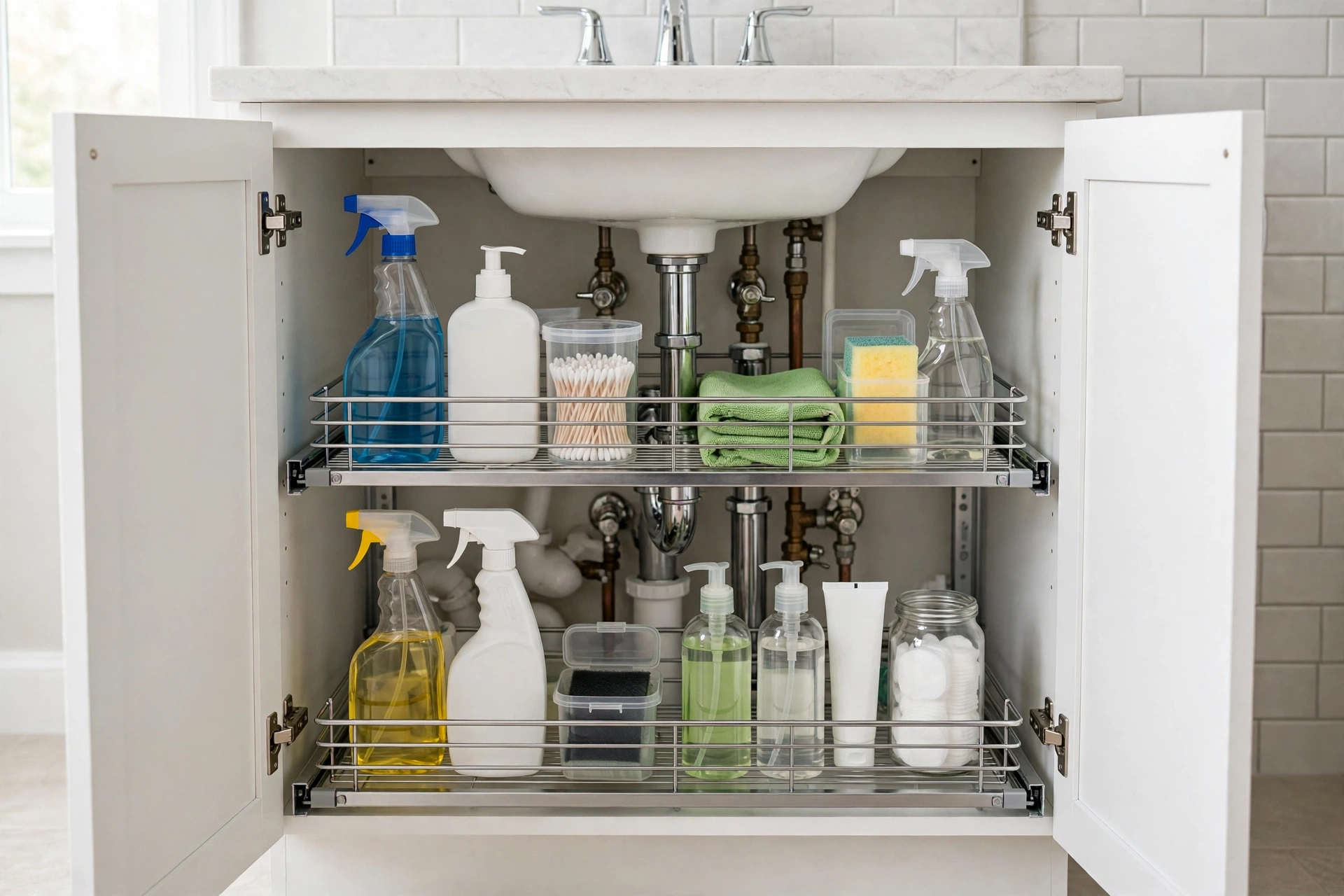
The space under the sink is wasted in most bathrooms because pipes block deep storage and bottles get lost at the back. A two-tier sliding organizer solves both problems: the frame is designed to fit around the plumbing, and each tier pulls out like a drawer so you can see and reach everything. Put everyday cleaners and spare toiletries on the lower tier and taller bottles on the upper tier where there is more clearance.
Measure the cabinet width, depth, and the exact position of your pipes before you buy, and choose a model with adjustable height so the top tier clears the trap. Line each tier with a washable mat to catch drips, and group items by job — daily cleaning, weekly cleaning, and refills — so you never buy a duplicate of something you already own at the back of the cabinet.
2. Drawer Dividers for Vanity Drawers
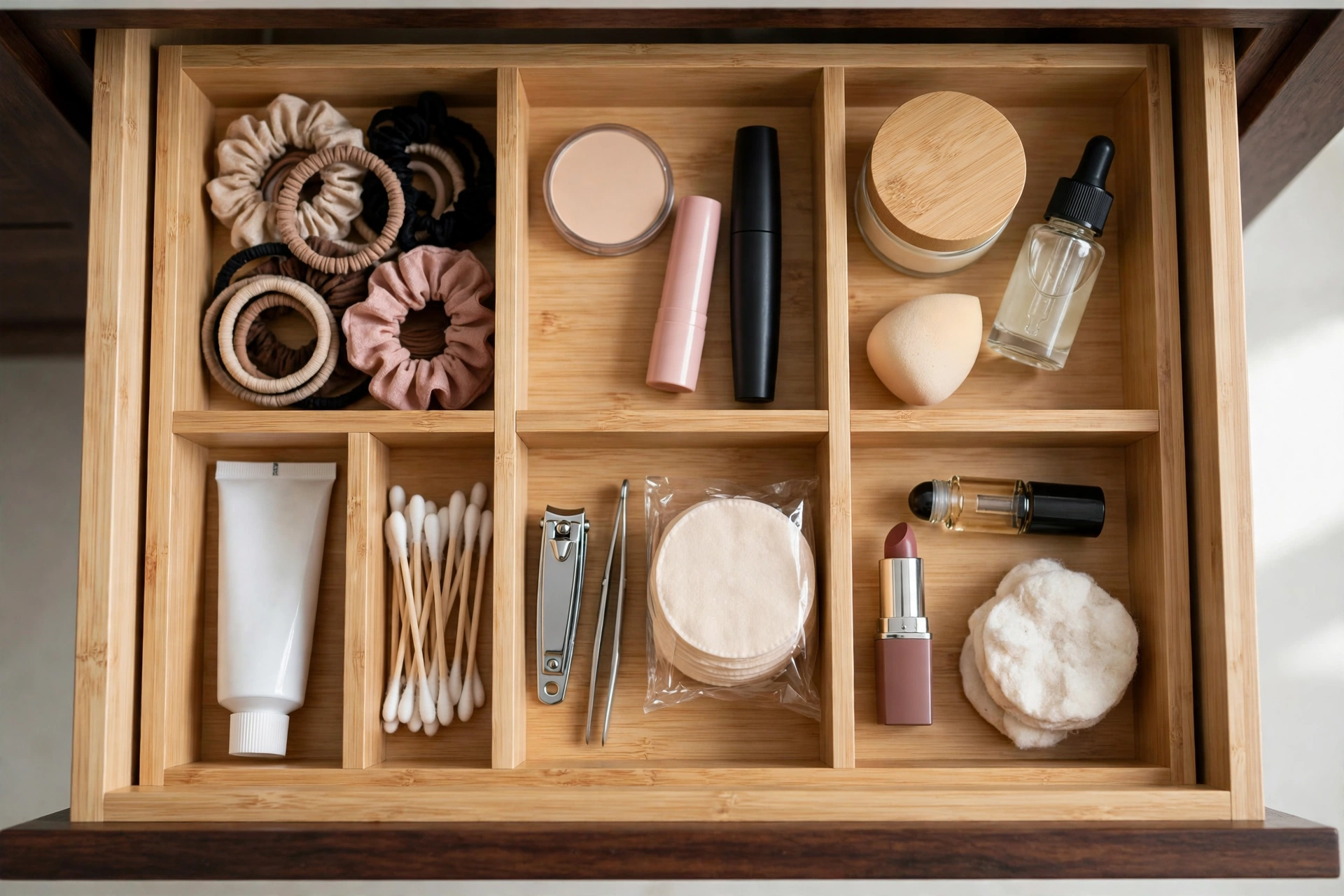
A vanity drawer without dividers quickly becomes a jumble of toothpaste, hair ties, cosmetics, and loose cotton buds. Adjustable drawer dividers — spring-loaded bamboo dividers or interlocking plastic trays — split one deep drawer into clear zones so every category has its own compartment. Shallow trays work best for daily items, while deeper dividers suit a second drawer for backup stock.
Start by emptying the drawer completely and keeping only what you use weekly; everything else moves to a labelled bin elsewhere. Arrange dividers so the items you reach for first sit at the front, and review the layout after two weeks — if a section is always overflowing, it needs more space, and if a section stays empty, shrink it. A five-minute reset each Sunday keeps the system working.
3. Over-the-Toilet Ladder Shelving Unit
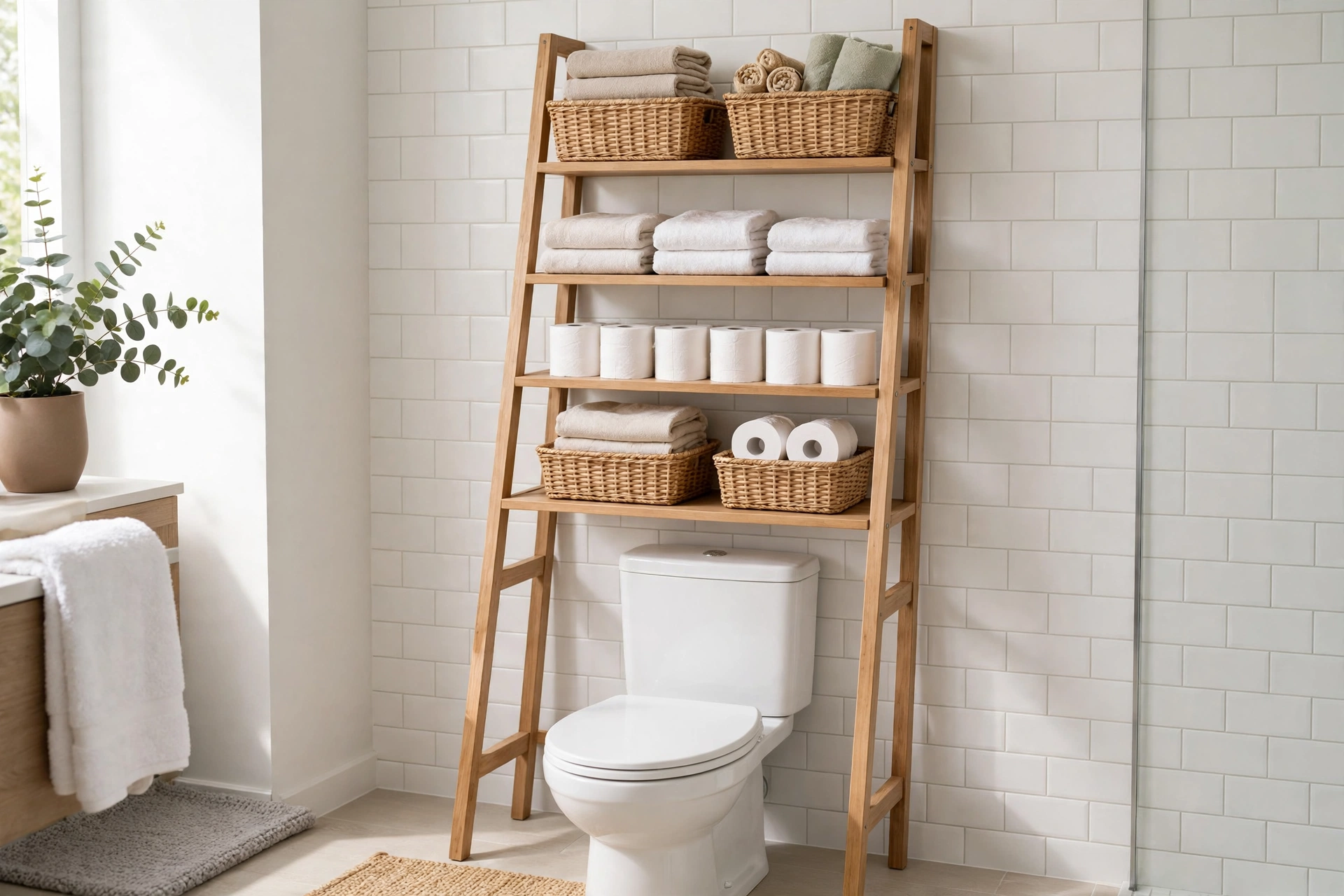
The wall space above the toilet is some of the most underused storage in the bathroom. A freestanding ladder-style shelving unit that straddles the tank adds three or four open shelves without drilling into the wall, giving you room for folded towels, spare toilet rolls, baskets of toiletries, and a small plant-free storage box for guest supplies. Because it leans or stands clear of the plumbing, it suits renters as well as owners.
Anchor the unit to the wall with the supplied anti-tip straps, especially in homes with children, and keep the heaviest items — spare shampoo bottles and cleaning refills — on the lowest shelf. Use matching baskets on the upper shelves to hide visual clutter and to make it easy to lift a whole category down at once. Leave the shelf directly above head height for light items only.
4. Tension-Rod Shower Caddy System
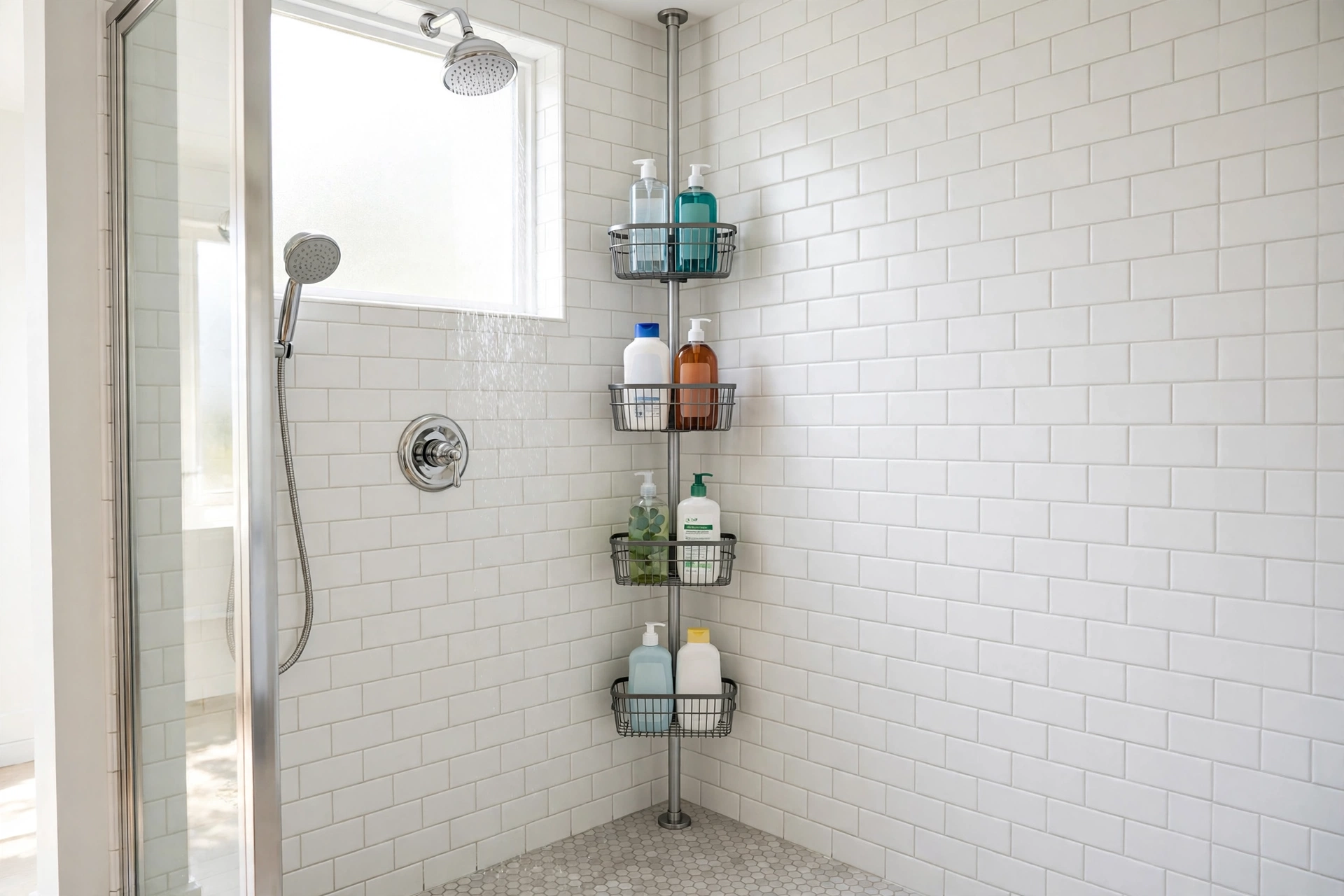
A corner tension-rod caddy runs from the bath edge or shower floor to the ceiling and holds four adjustable baskets at exactly the heights your household needs. Unlike a hanging caddy that swings from the shower head and rusts, a tension system stays stable, spreads weight across several shelves, and gives each person their own basket for shampoo, conditioner, and body wash, which stops bottles lining the bath rim.
Choose stainless steel or rust-proof aluminium and check the rod length against your ceiling height before ordering. Position the lowest basket high enough that it clears the taps, and store loofahs and razors on hooks clipped to the side of the baskets so they dry properly. Once a month, lift the baskets off, rinse away soap residue, and check the tension caps are still tight.
5. Woven Basket Storage for Open Shelves
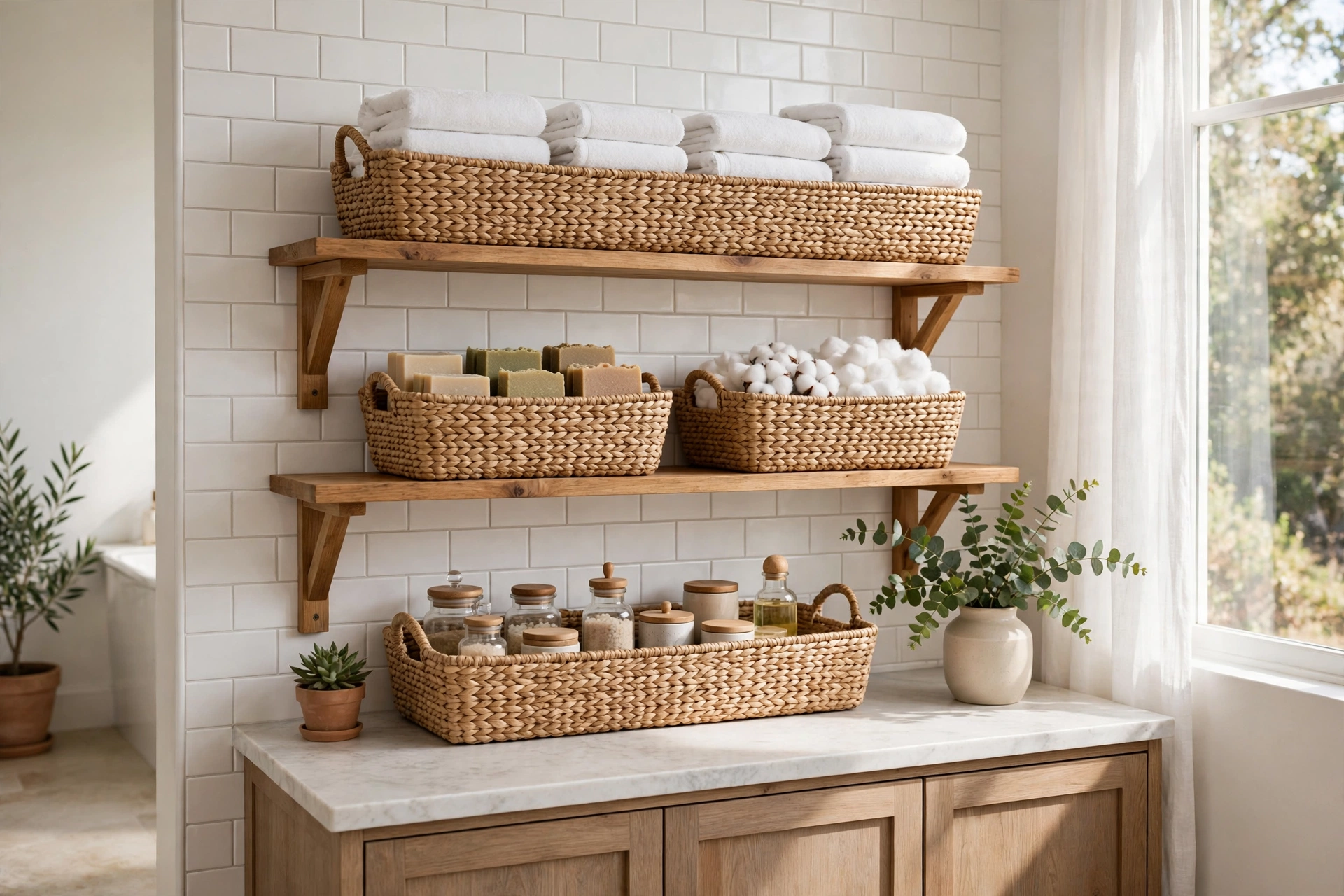
Open shelves only stay tidy when loose items are corralled, and woven baskets are the workhorse for the job. Use one basket per category — one for hair styling, one for bath supplies, one for spare towels — so anyone can pull out a single basket, use what they need, and slide it back without disturbing the rest of the shelf. Natural seagrass, water hyacinth, and lined cotton baskets all handle bathroom humidity when they are allowed to air out.
Measure your shelf depth and buy baskets that fill it front to back, leaving just a finger’s width for easy pulling. Add a small label or tag to the front of each basket so guests and children put things back in the right place without asking. Avoid overfilling: a basket that cannot close or sit flat is a sign to declutter that category, not to buy a bigger basket.
6. Clear Acrylic Jars for Cotton Supplies
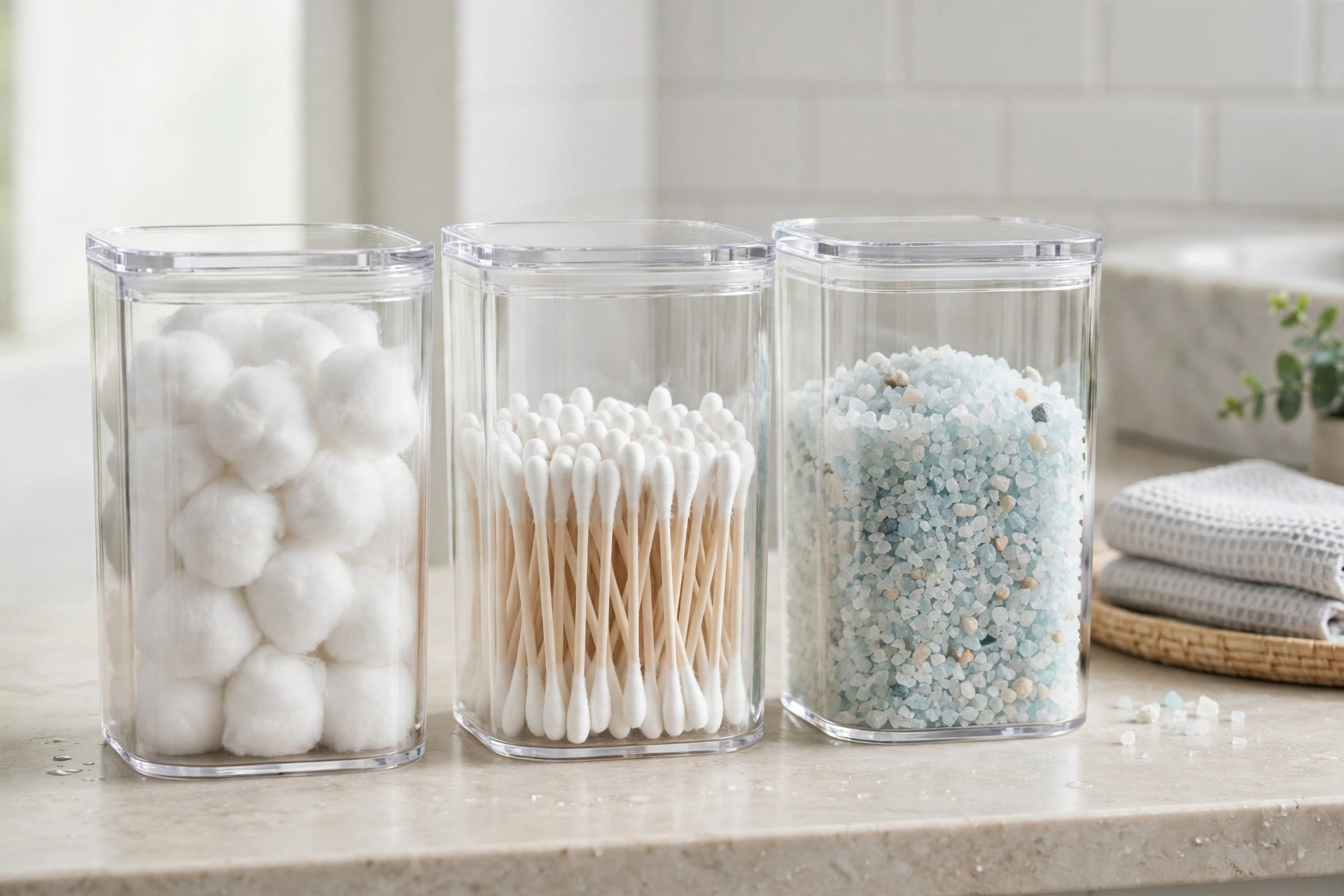
Cotton balls, cotton buds, bath salts, and hair ties disappear into opaque boxes and get bought twice. Clear acrylic or glass jars with lids keep these small supplies visible, dust-free, and easy to grab with one hand. A row of three matching jars on the counter or a shelf replaces a pile of half-open packets and makes it obvious at a glance when you are running low and need to add an item to the shopping list.
Choose jars with wide mouths so you can reach the last cotton ball without tipping the jar, and keep only a week’s supply on the counter — store the bulky refill packs in a labelled bin in the linen cupboard. Wash jars with warm soapy water every few weeks, dry them fully before refilling, and avoid placing glass jars where young children can pull them down from a high shelf.
7. Lazy Susan Turntable Under the Sink
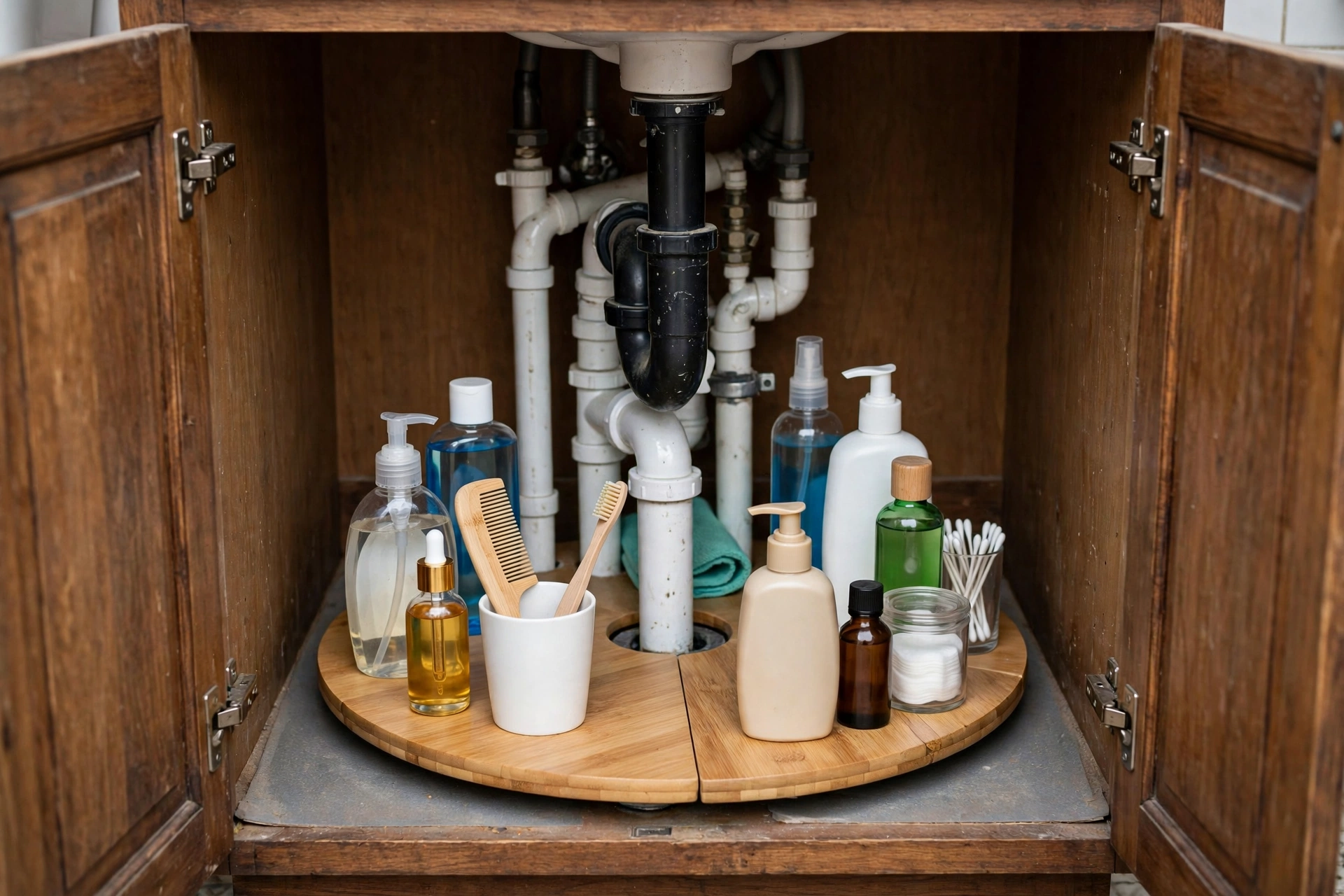
A lazy Susan turntable turns the darkest corner under the sink or inside a deep cabinet into accessible storage. Instead of kneeling and reaching past bottles at the front to find one at the back, you spin the tray and everything comes to you. A single-tier turntable suits tall cleaning bottles, while a two-tier version doubles capacity for medicines, nail supplies, and small toiletries that would otherwise get buried.
Pick a turntable with a raised lip and a non-slip surface so bottles stay upright when it spins, and check the diameter against your cabinet door opening — the tray must fit through the door, not just inside the cabinet. Keep only one category per turntable so spinning does not mix cleaning chemicals with personal care. Wipe the tray monthly, because the under-sink area collects drips and dust faster than any other spot.
8. Wall-Mounted Towel Ladder and Rings
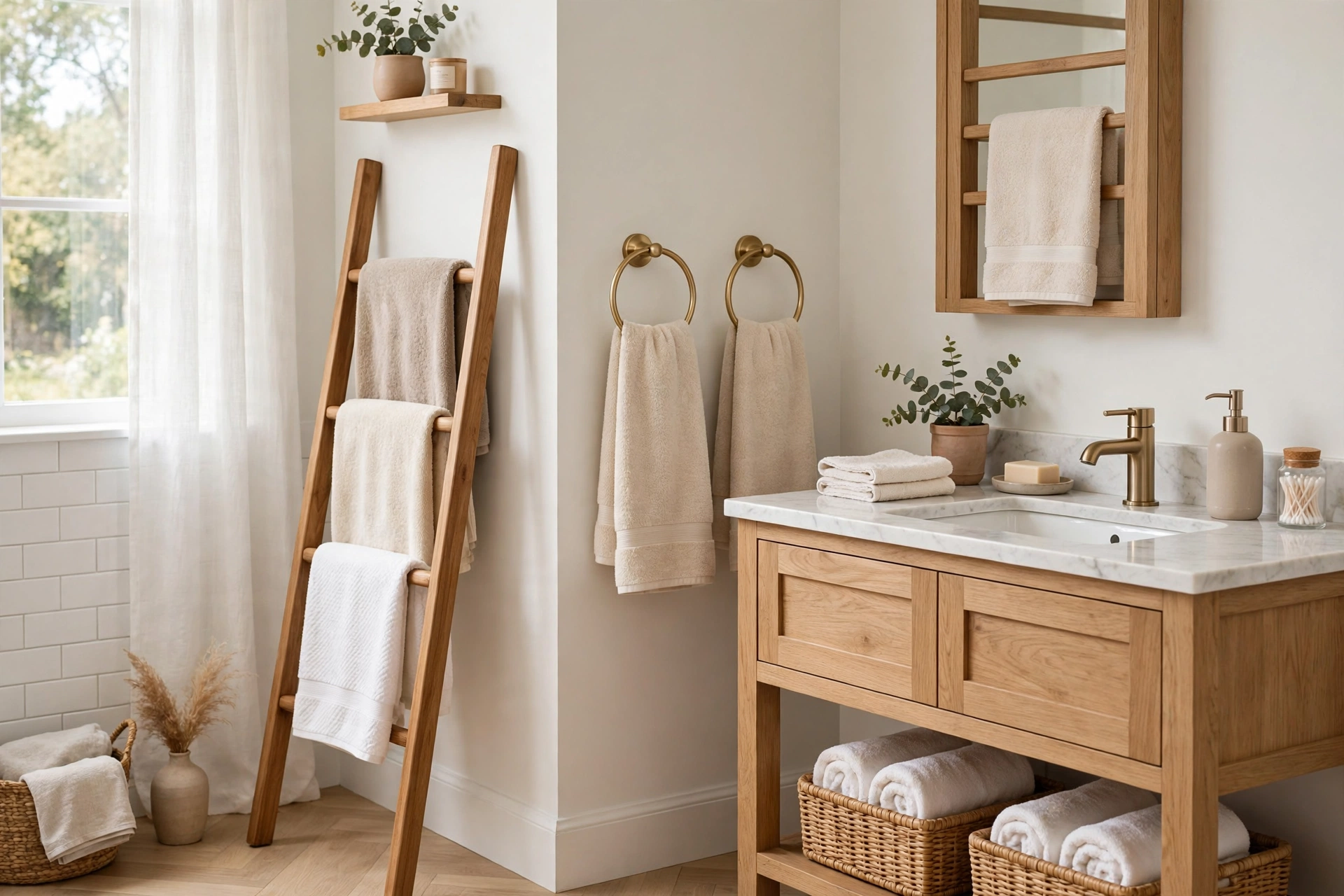
Towels draped over doors and radiators never dry properly and make the bathroom look untidy even when it is clean. A wall-mounted towel ladder gives every towel its own rung with air circulating between layers, while a pair of towel rings beside the sink keeps hand towels exactly where they are needed. Together they replace the single overcrowded towel rail that most bathrooms rely on.
Fix the ladder into studs or use heavy-duty wall anchors rated for damp plasterboard, and hang the largest bath towels on the widest rungs at the top. Assign one rung or ring per person in shared bathrooms — colour-coding the towels makes the system self-enforcing for kids. Wash towels on a regular rotation and return them to the same rung each time so the habit sticks.
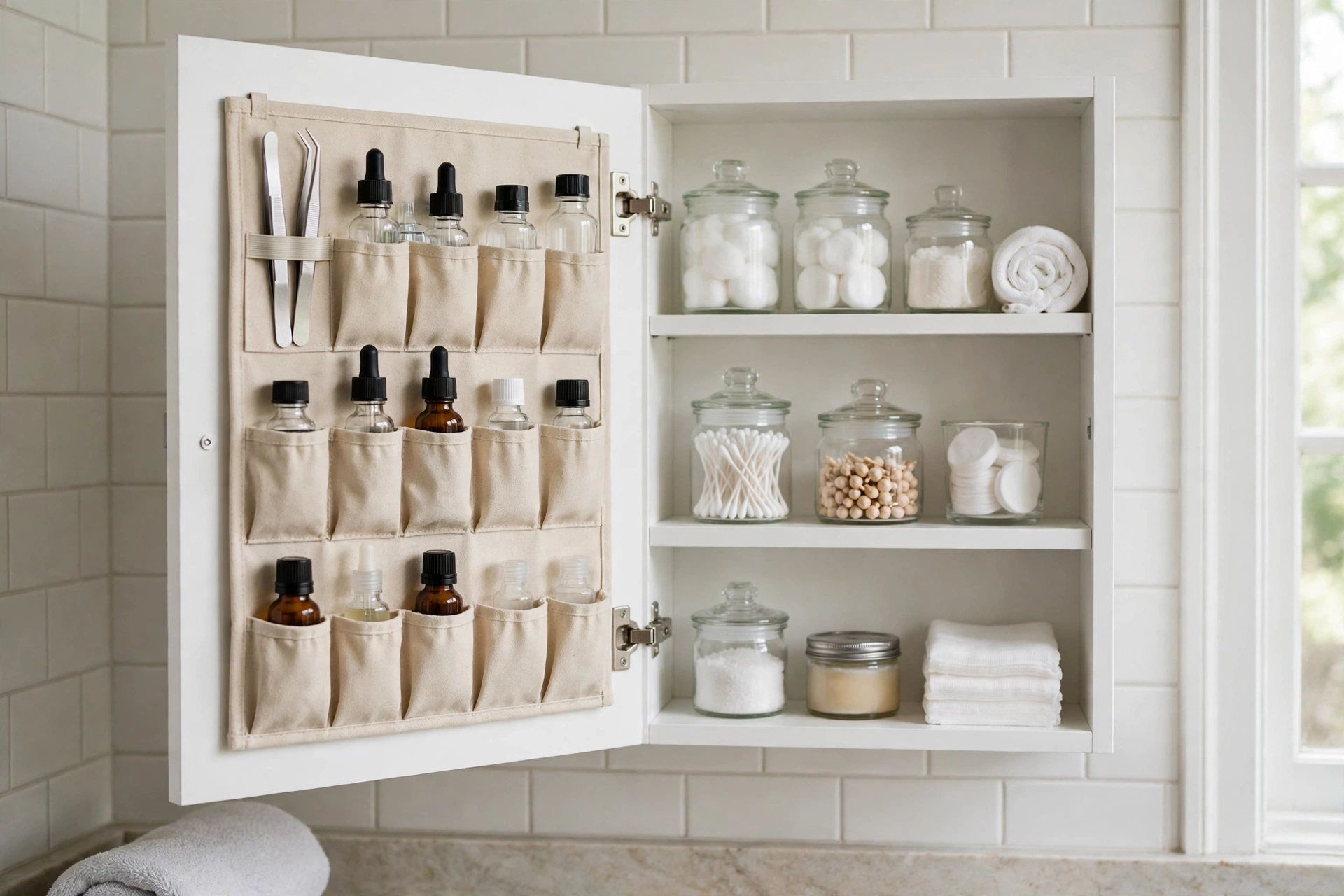
9. Medicine Cabinet Door Organizers
Most medicine cabinets are only half used because the shelves are fixed too far apart for small bottles. Slim organizers that hang on the inside of the cabinet door — clear pockets, magnetic tins, or adhesive mini shelves — reclaim that dead space for plasters, tweezers, nail clippers, and daily medication. The main shelves can then hold taller bottles in a single row where labels stay visible.
Check door clearance before fitting anything: the organizer must not hit the shelves when the door closes, so test with the cabinet fully loaded. Keep medicines that children must not reach on the highest main shelf, never in low door pockets, and store a small torch or spare batteries in one pocket for power cuts. Review expiry dates twice a year and dispose of out-of-date medicines at a pharmacy take-back point.
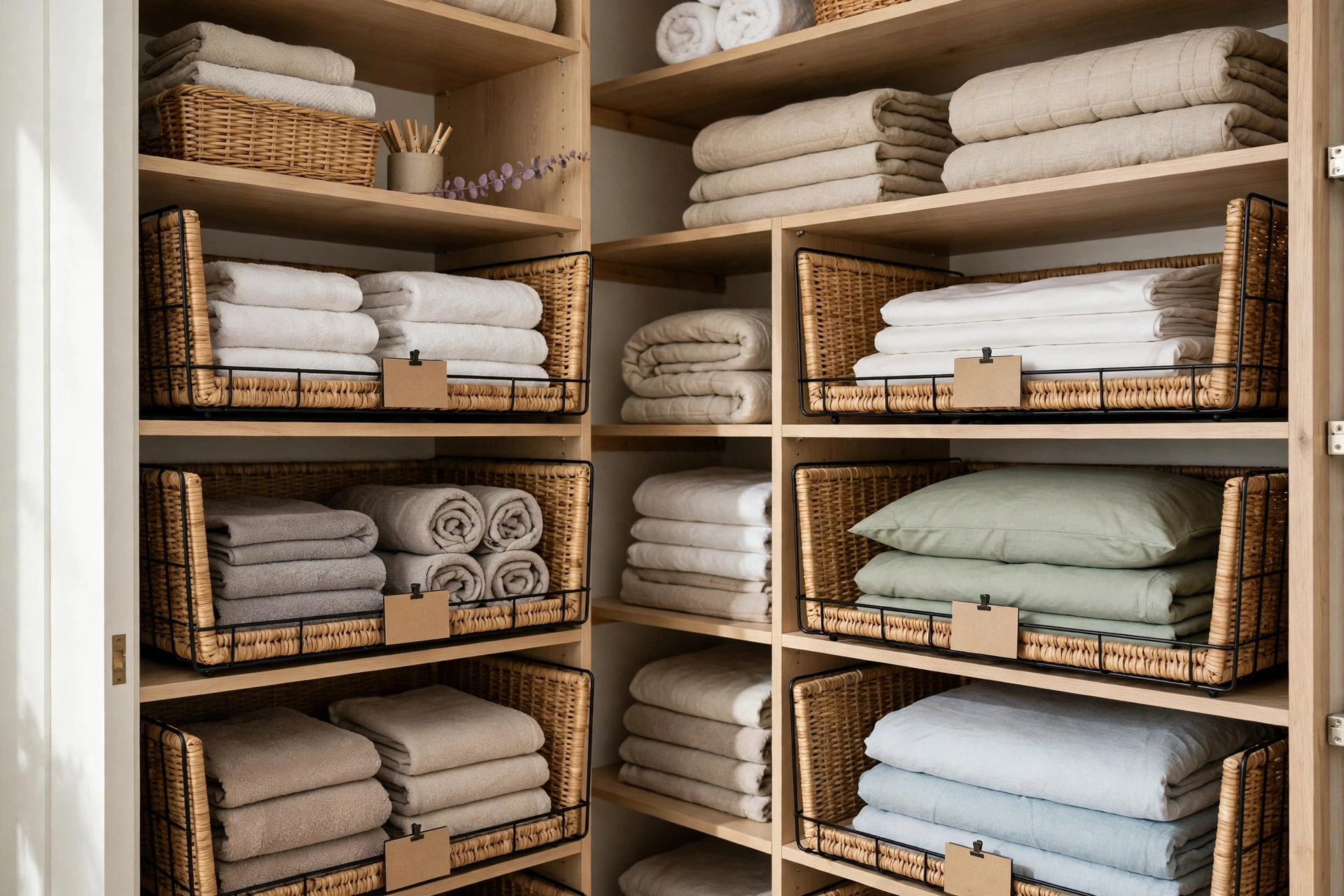
10. Stackable Bins for Linen Closet Overflow
When the linen closet overflows, towels and bedding spill into the bathroom and land on every surface. Stackable open-front bins inside the closet — or on a bathroom shelf if you have no closet — sort linens by type and by person: bath towels, hand towels, face cloths, and spare bedding each get their own bin. The open front lets you pull one item without collapsing a folded pile.
Label each bin clearly and fold towels to the width of the bin so stacks stay neat and you can count at a glance how many clean towels remain. Keep the most-used bin at waist height and seasonal or guest bedding at the top. If a bin is constantly overstuffed, the fix is to reduce the number of spares you keep, not to stack bins higher than you can safely reach.
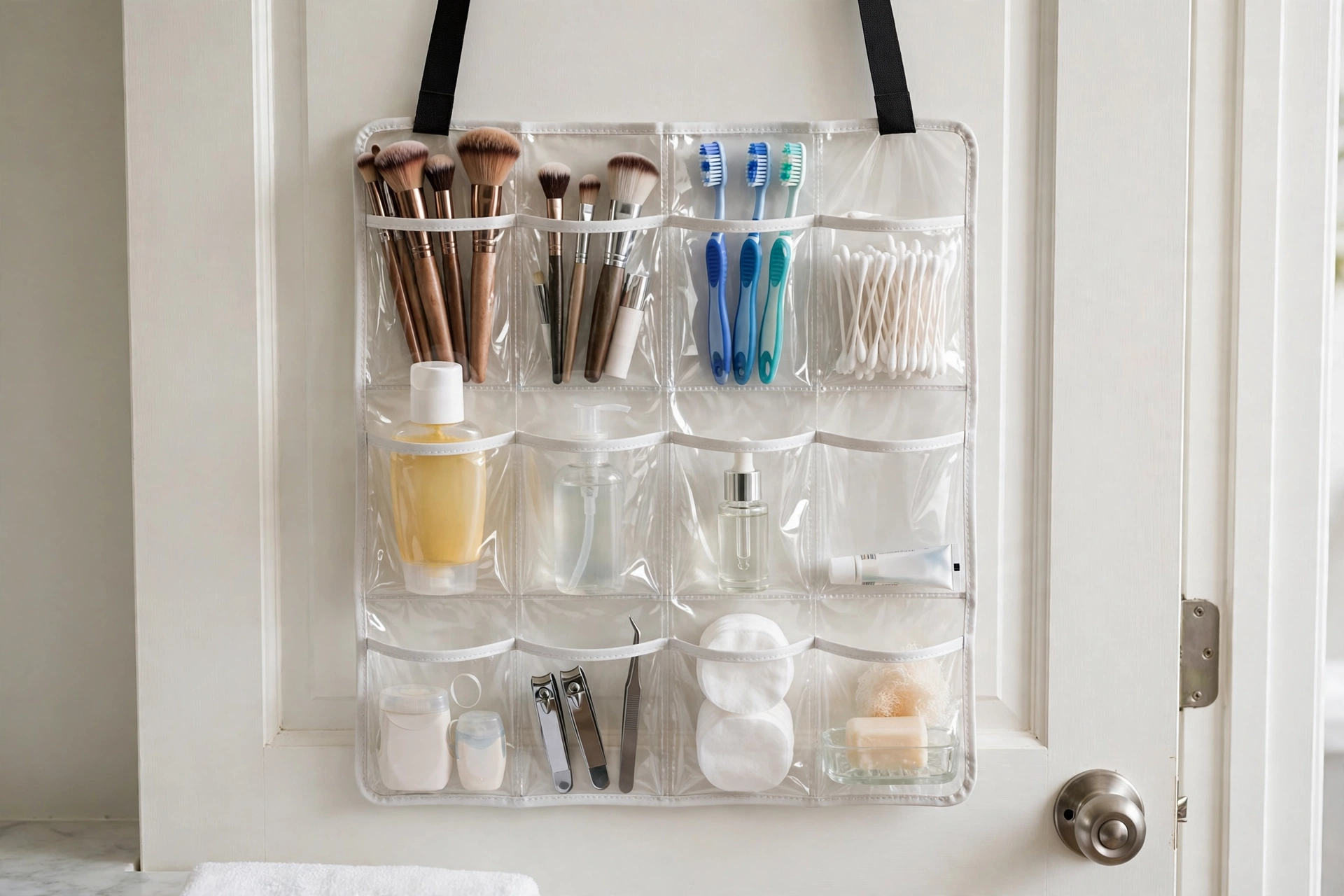
11. Over-the-Door Pocket Organizer
A clear over-the-door pocket organizer adds a whole wall of storage without a single screw, making it ideal for renters and small bathrooms. The transparent pockets hold hair brushes, sunscreen, spare toothbrushes, cleaning cloths, and kids’ bath supplies where you can see everything at once. Hung on the bathroom door or the inside of an airing cupboard door, it uses space that is otherwise completely empty.
Choose a model with reinforced stitching and pockets in mixed sizes — wide pockets at the bottom for bottles, narrow ones at the top for small tools. Hang it with flat hooks that do not prevent the door closing, and avoid overloading the top pockets, which can make the door sag over time. Give each family member a row of pockets in shared bathrooms to stop morning arguments about missing items.
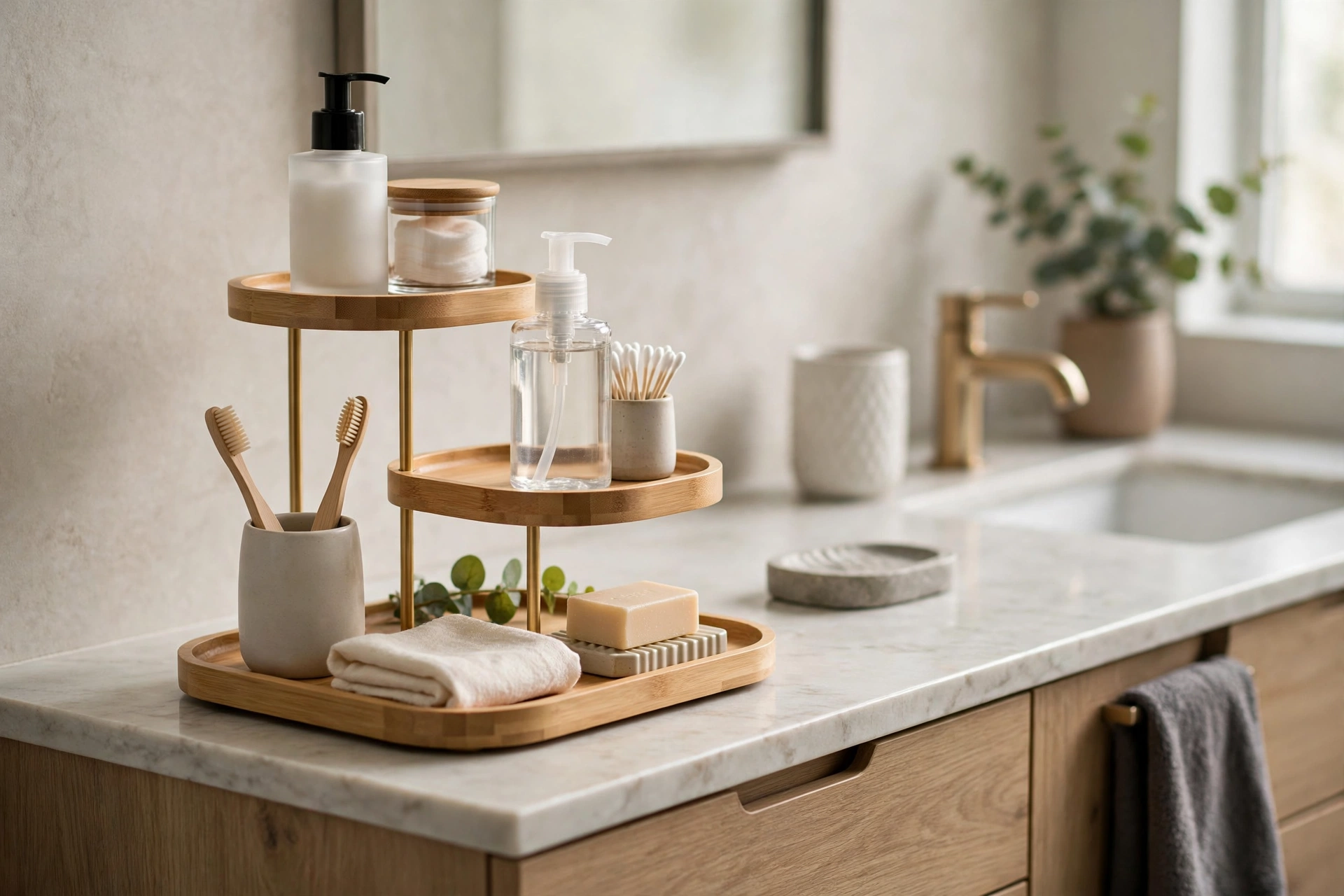
12. Tiered Countertop Tray for Daily Essentials
Counters get cluttered because daily items have nowhere specific to live. A two- or three-tier countertop tray gathers your morning routine — cleanser, moisturizer, deodorant, perfume, and toothbrush holder — onto one small footprint, with the most-used products on the bottom tier and occasional items above. Because the tray has edges, a knocked bottle stays on the tray instead of rolling into the sink.
Keep the rule strict: if it does not fit on the tray, it does not live on the counter. Everything else belongs in a drawer, cabinet, or basket. Wipe the tray weekly, since toothpaste splashes and powder settle quickly, and choose a tray in metal or sealed wood that can handle standing water. In a shared bathroom, one tray per person prevents the counter creeping back to chaos.
13. Pull-Out Cabinet Baskets
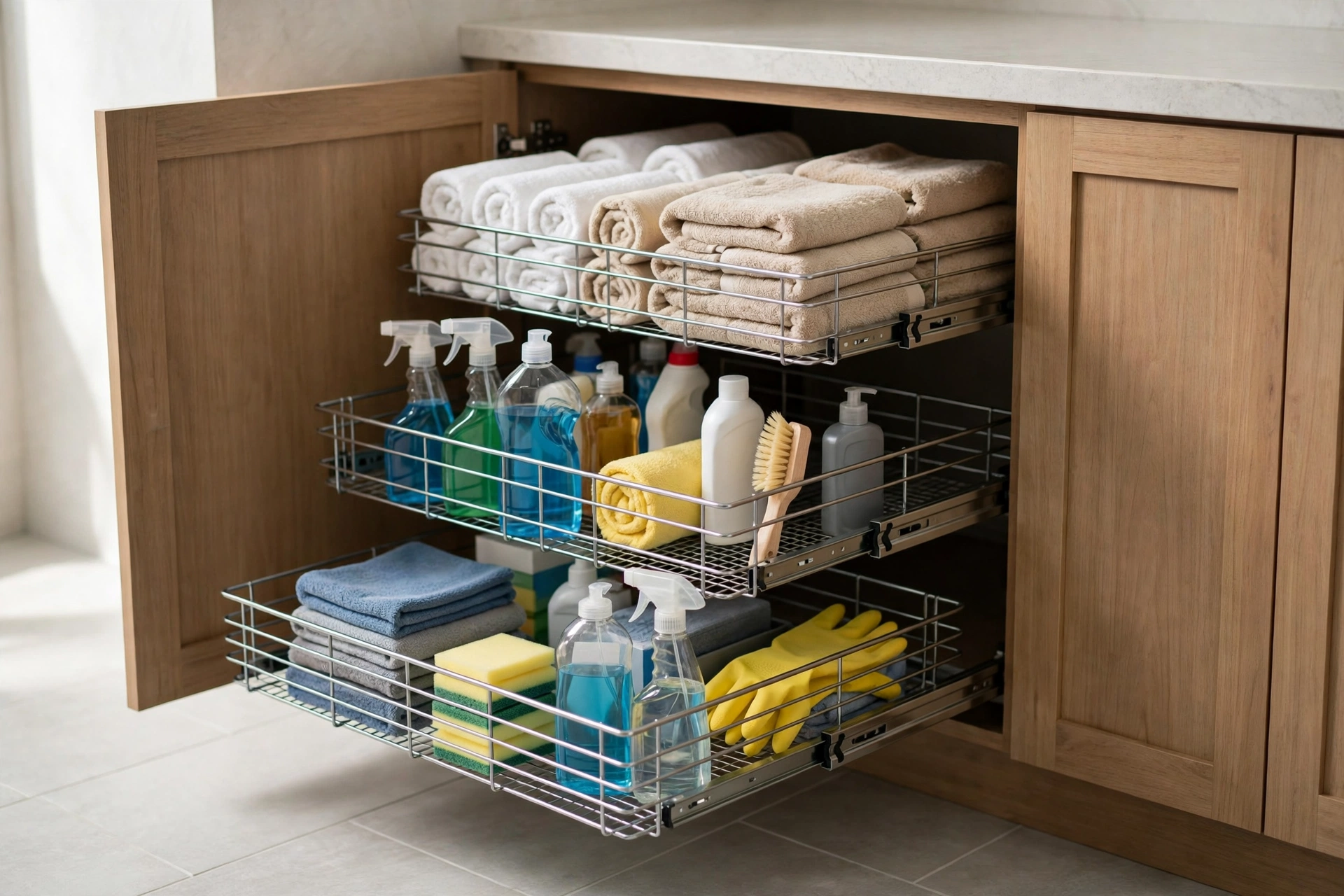
Deep base cabinets under a counter or beside the bath hide everything at the back. Pull-out wire or mesh baskets fitted on runners convert that fixed shelf into drawers you can extend fully, so spare towels, cleaning supplies, and bulk toiletries are visible in one pull. Most systems screw into the cabinet base with four screws and can be fitted in under half an hour with a drill and a level.
Measure the internal cabinet width carefully and allow clearance for door hinges, which often steal a few centimetres on one side. Load heavier items into the lower basket and lighter, taller bottles into the upper one if you stack two levels. Add a liner or small dividers inside the basket if you store small items that could slip through the mesh when it moves.
14. Labelled Glass Bottles for Refillables
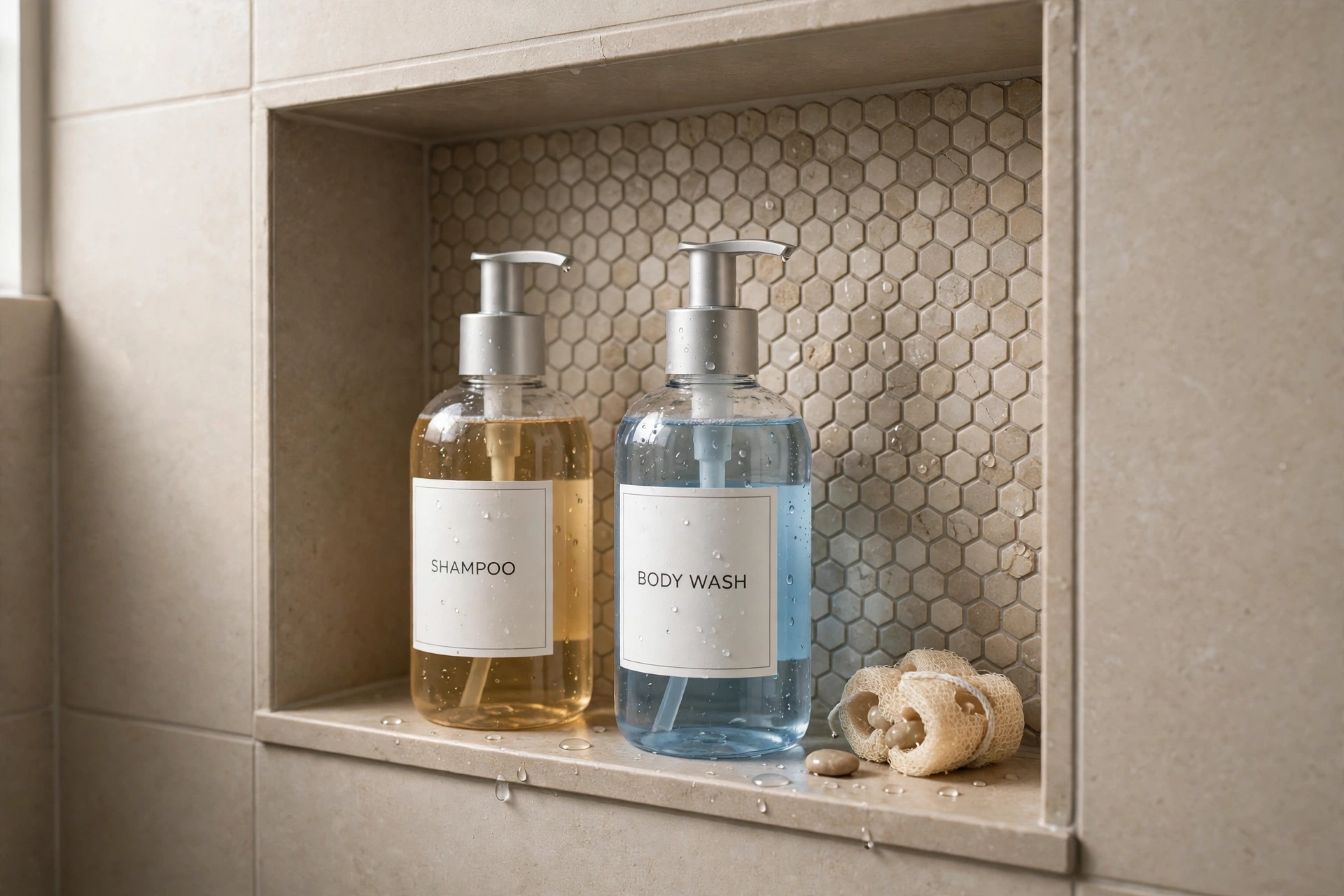
Refillable amber or clear glass bottles with pump tops and printed labels bring order to decanted shampoo, conditioner, body wash, and hand soap. A matching set eliminates the visual chaos of mismatched supermarket packaging in the shower and makes it obvious which bottle is which without picking each one up. Labels should state the product name and, for safety, the date it was decanted.
Use waterproof labels or a label maker with laminated tape, because paper labels peel within a week in a steamy shower. Keep the original bulk containers in a labelled storage bin outside the bathroom and refill on a set day so bottles never run empty mid-shower. Never decant cleaning chemicals into toiletry bottles or vice versa, and keep refillables for children in plastic pump bottles instead of glass.
15. Magnetic Strip for Small Metal Tools
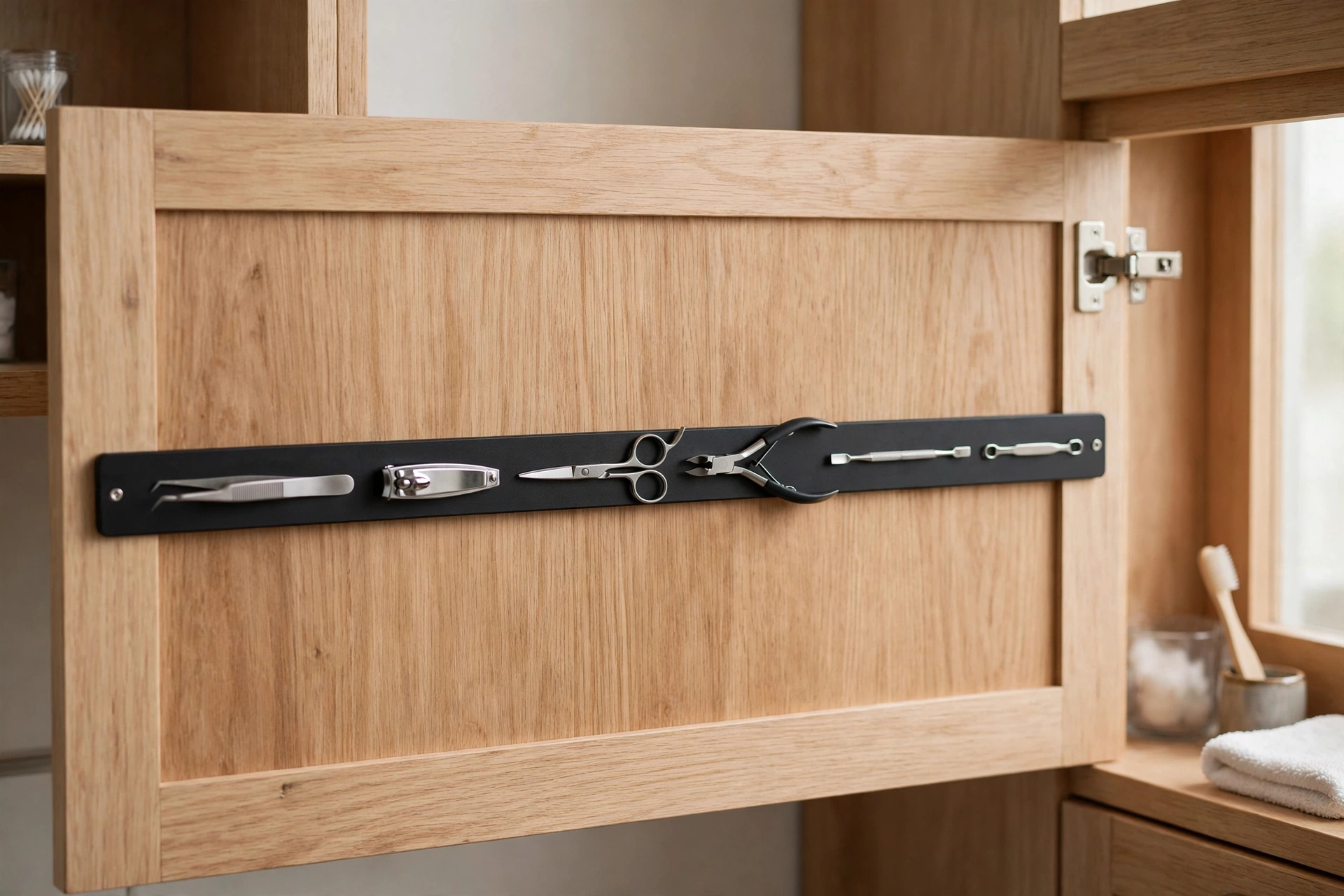
Tweezers, nail clippers, hair grips, and scissors vanish into drawers and reappear months later. A self-adhesive or screw-fixed magnetic strip inside a cabinet door or on the wall beside the mirror holds all of them in a single visible line, off the counter and out of drawers. It works the same way a kitchen knife strip does, and it takes less than ten minutes to install.
Mount the strip at adult eye height inside the medicine cabinet if children use the bathroom, so sharp tools stay out of reach. Check the strip’s strength with your heaviest tool before trusting it — weak craft magnets will not hold nail clippers securely. Wipe the strip occasionally, as bathroom humidity can dull cheaper coatings; a stainless steel strip resists rust best.
16. Corner Shower Shelves with Suction
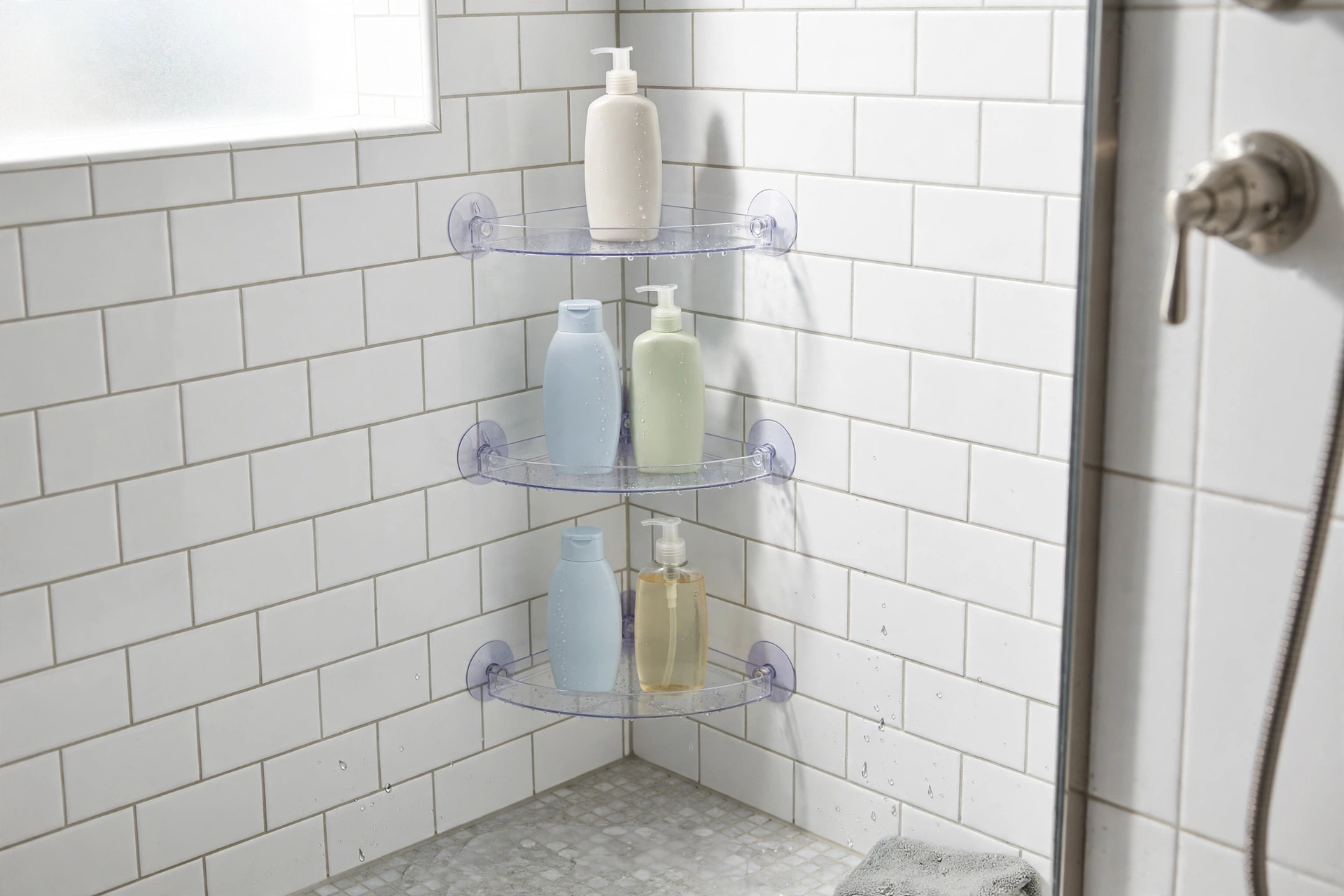
Shower corners are dead space that suction or adhesive corner shelves turn into bottle storage in minutes, with no drilling through tile. Modern vacuum-suction and nano-adhesive shelves hold several full-size bottles when they are fitted to clean, dry, flat tile, and they can be repositioned when your routine changes. Two shelves — one at adult height, one lower for children — end the line of bottles along the bath edge.
Clean the tile with rubbing alcohol and let it dry fully before fitting, because soap film is the main reason suction shelves fall. Press out all air bubbles, wait the full curing time stated by the maker before loading, and test with one bottle overnight. Avoid fitting suction shelves over grout lines or textured tile, where the seal cannot hold; use adhesive corner baskets there instead.
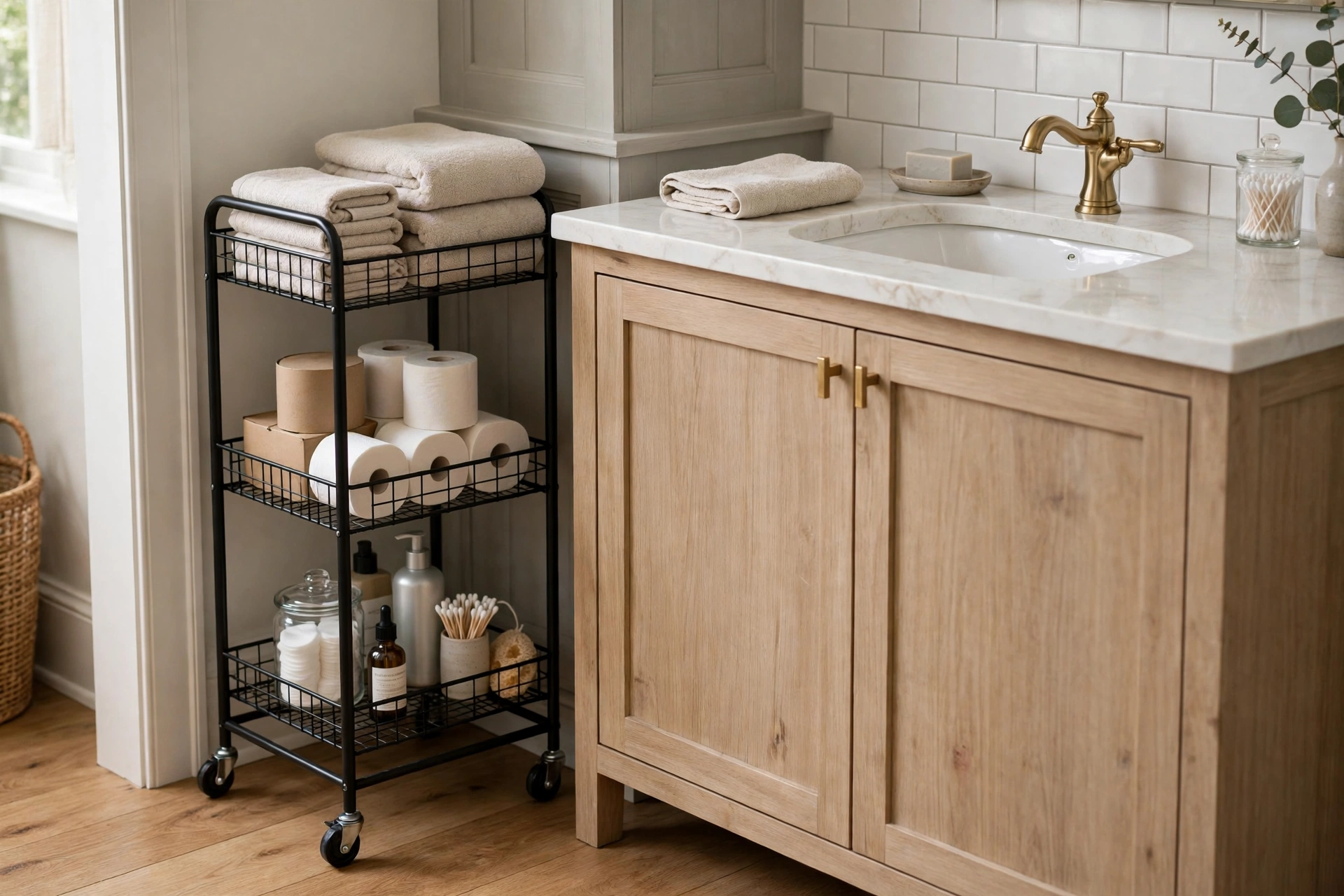
17. Rolling Cart for Extra Storage
A slim three-tier rolling cart is the most flexible bathroom storage you can buy: it slides into the narrow gap beside the toilet or vanity, holds towels, spare rolls, toiletries, and cleaning supplies, and rolls out when you need to clean behind it. In a bathroom with no built-in storage at all, a cart can serve as the entire linen and toiletry station and move with you if you rent.
Measure your gap carefully — most carts need at least 22 centimetres — and choose a metal cart with locking castors if your floor is uneven. Put daily items on the top tier, towels in the middle, and heavier refills at the bottom to keep the cart stable. Add small baskets or dividers on each tier so bottles do not topple when the cart moves.
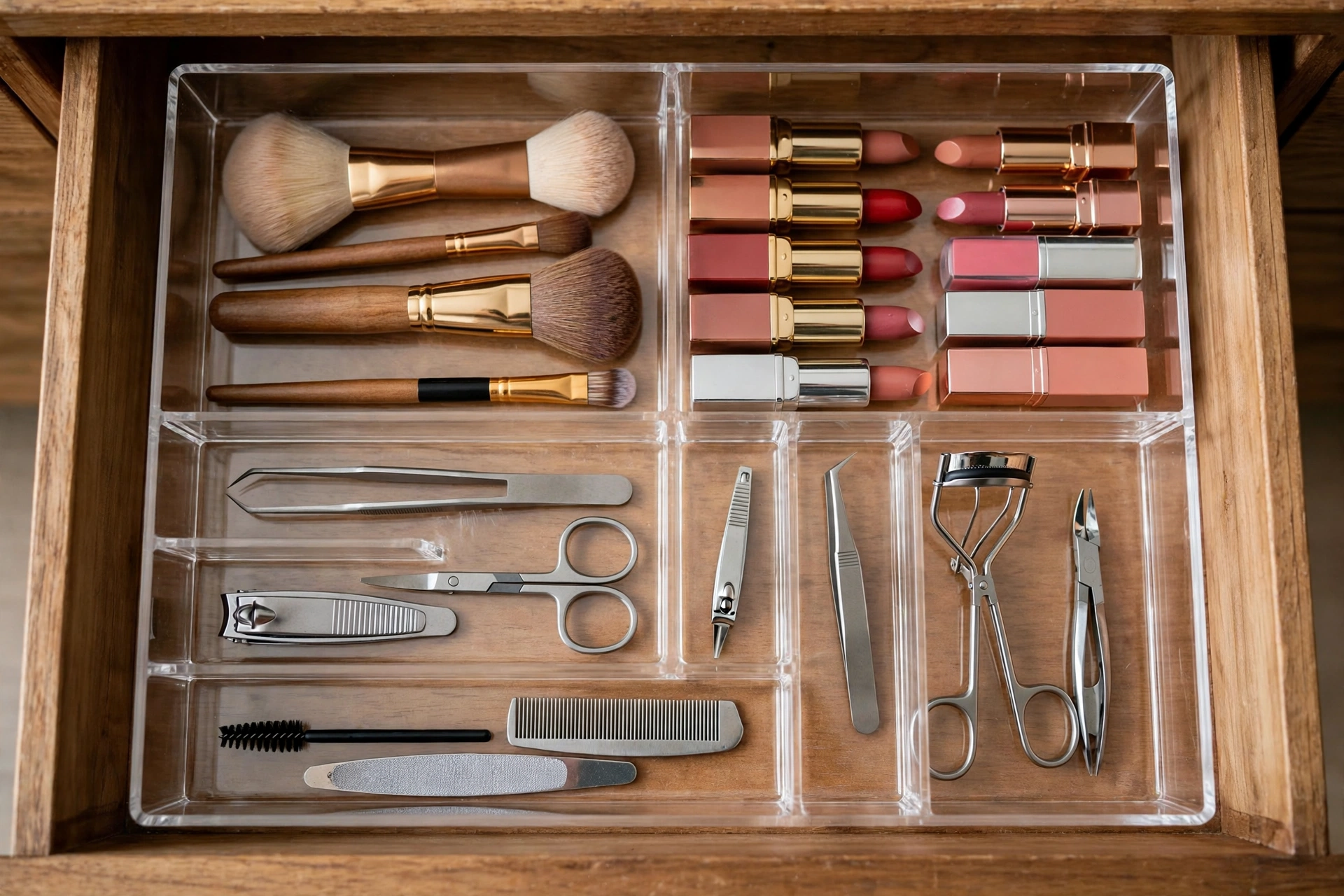
18. Divided Drawer Inserts for Makeup and Grooming
Makeup, brushes, and grooming tools need shallower, more detailed sorting than general drawer dividers provide. A divided insert with compartments sized for lipsticks, compacts, brushes, razors, and cotton pads keeps every tool upright and visible, so you stop digging and stop buying duplicates of products you already own. Clear acrylic inserts are easiest to clean when powder and foundation inevitably spill.
Measure the drawer’s internal length, width, and depth, and buy an insert that fills it fully — a loose insert slides every time the drawer opens. Arrange products by step of your routine from left to right so getting ready becomes automatic. Keep one small empty compartment as a landing zone for new products; when it overflows, something old has to leave the drawer.
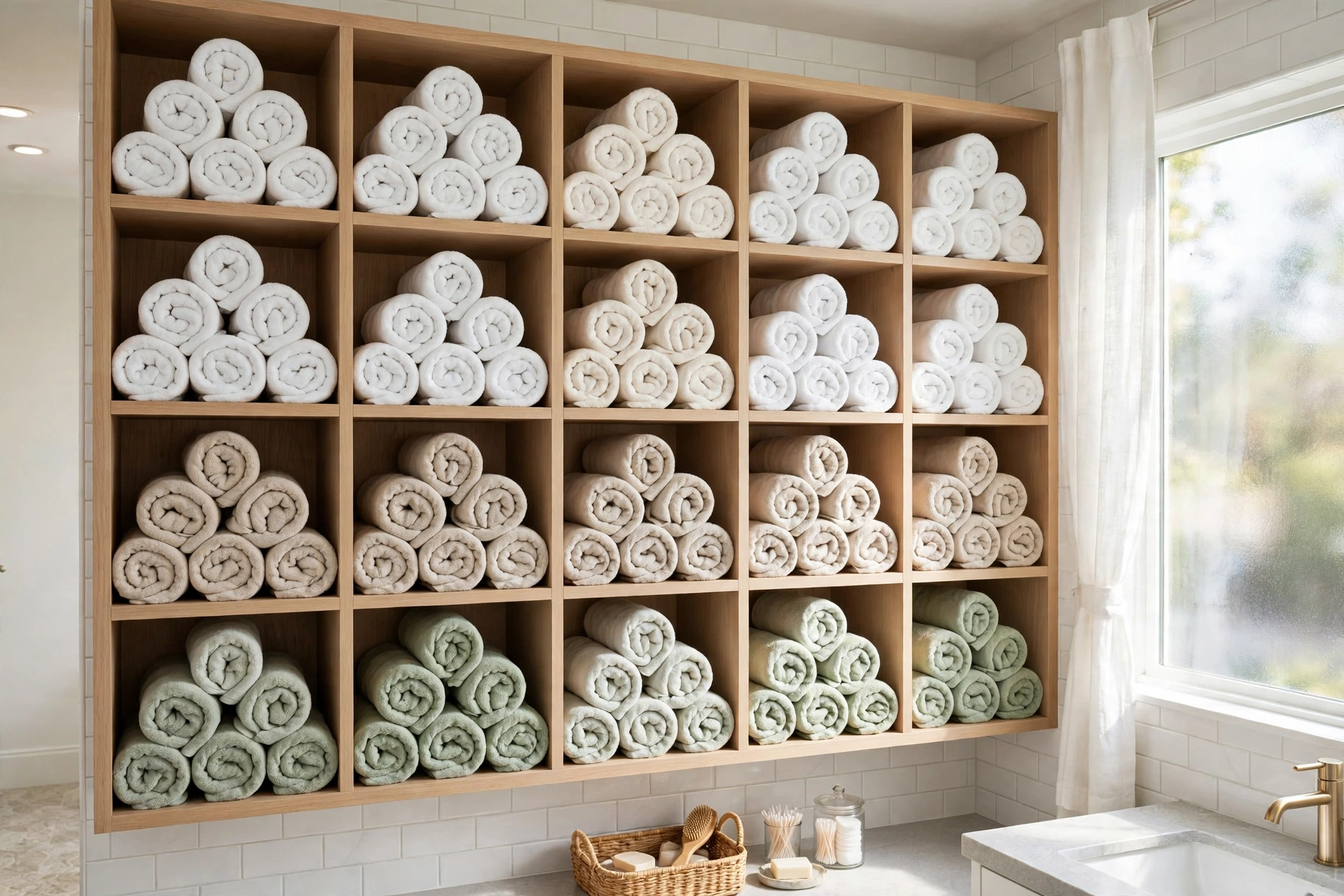
19. Towel Cubbies and Rolled Towel Storage
Rolling towels instead of folding them saves space and looks tidy in open cubbies, baskets, and over-toilet shelves. A rolled bath towel takes up less room than a folded stack, does not topple when you pull one out, and lets you see exactly how many clean towels you have. Cubby units — stacked cubes or a divided shelf — give each roll its own slot, which works especially well for guest towels and face cloths.
Roll towels tightly starting from one short end, and store them with the smooth edge facing out for a uniform look that is easy to maintain. Keep everyday towels in the most reachable cubbies and reserve the top row for guest sets. If humidity is a problem in your bathroom, store the bulk of your towels in a hallway linen cupboard and keep only two or three days’ supply in the bathroom itself.
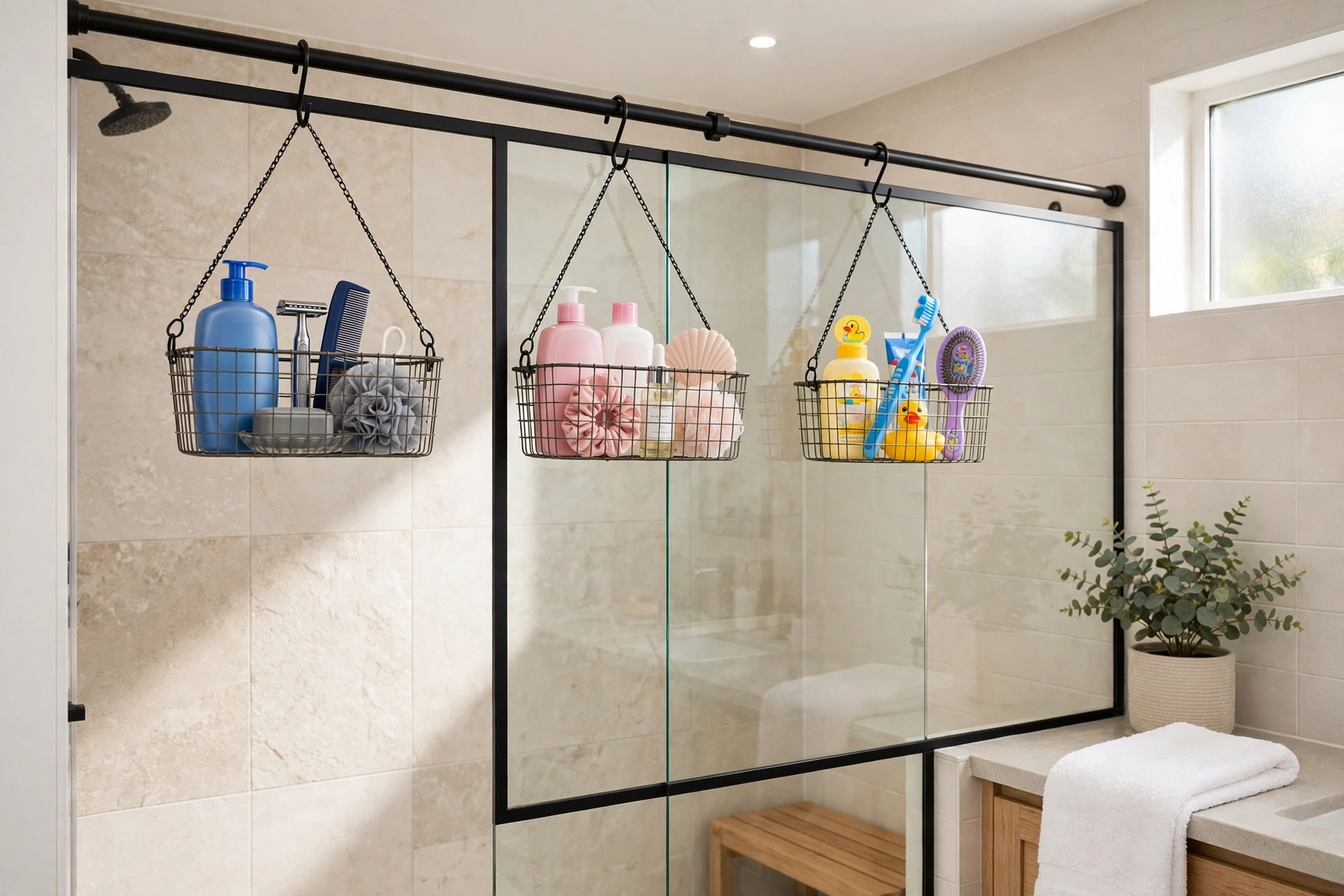
20. Hanging Shower Basket for Family Sharing
In a family shower, one hanging basket per person ends the battle of bottles. A rust-proof hanging caddy or a set of individual hanging baskets on hooks over the glass screen or shower rail gives each person a portable kit they can carry to the shower and back to their bedroom if the bathroom is shared. This system is a lifesaver in student houses and busy family homes with one bathroom.
Choose baskets with drainage holes and handles, and agree a simple rule: your basket holds only what fits — when it overflows, something is finished or moves out. Rinse baskets weekly to prevent soap scum build-up, and hang them to dry after each use rather than leaving them standing in water. Colour-code baskets for younger children so they can manage their own supplies independently.
21. Under-Sink Tension Shelf Expander
A tension shelf expander is a small adjustable shelf that sits inside the under-sink cabinet and creates a second level above the pipes. Cleaning cloths, spare sponges, and short bottles live on the raised shelf while taller spray bottles stand on the cabinet floor in front of the plumbing. It costs very little, needs no tools, and can double usable under-sink space in a cabinet that currently holds a single jumbled layer.
Measure the height between the cabinet floor and the underside of the sink basin, and choose an expander whose legs can straddle the trap. Keep the shelf level light — it is designed for cloths and small bottles, not heavy bulk refills. Combine the expander with a small caddy for daily cleaning products so you can lift the whole cleaning kit out in one hand.
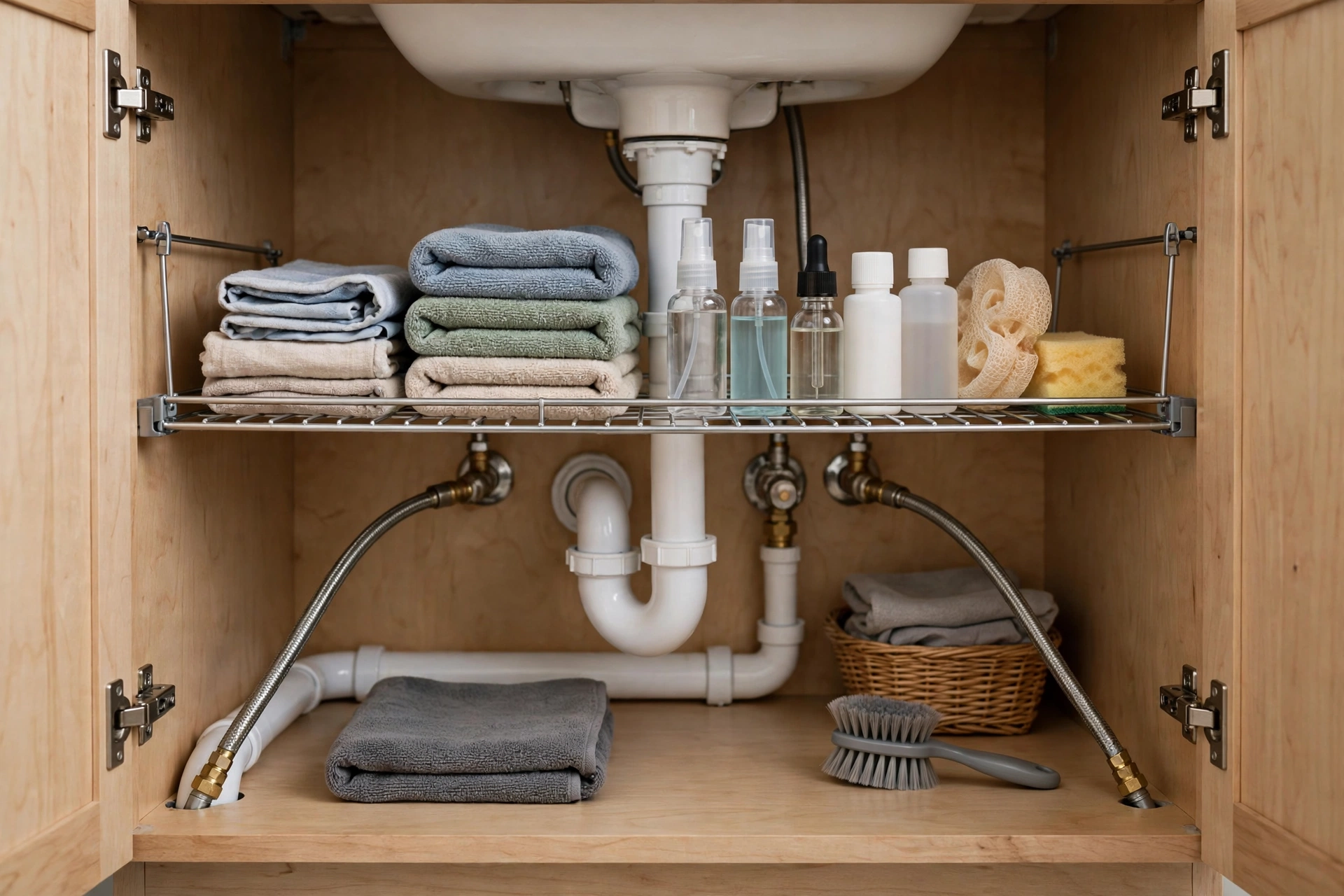
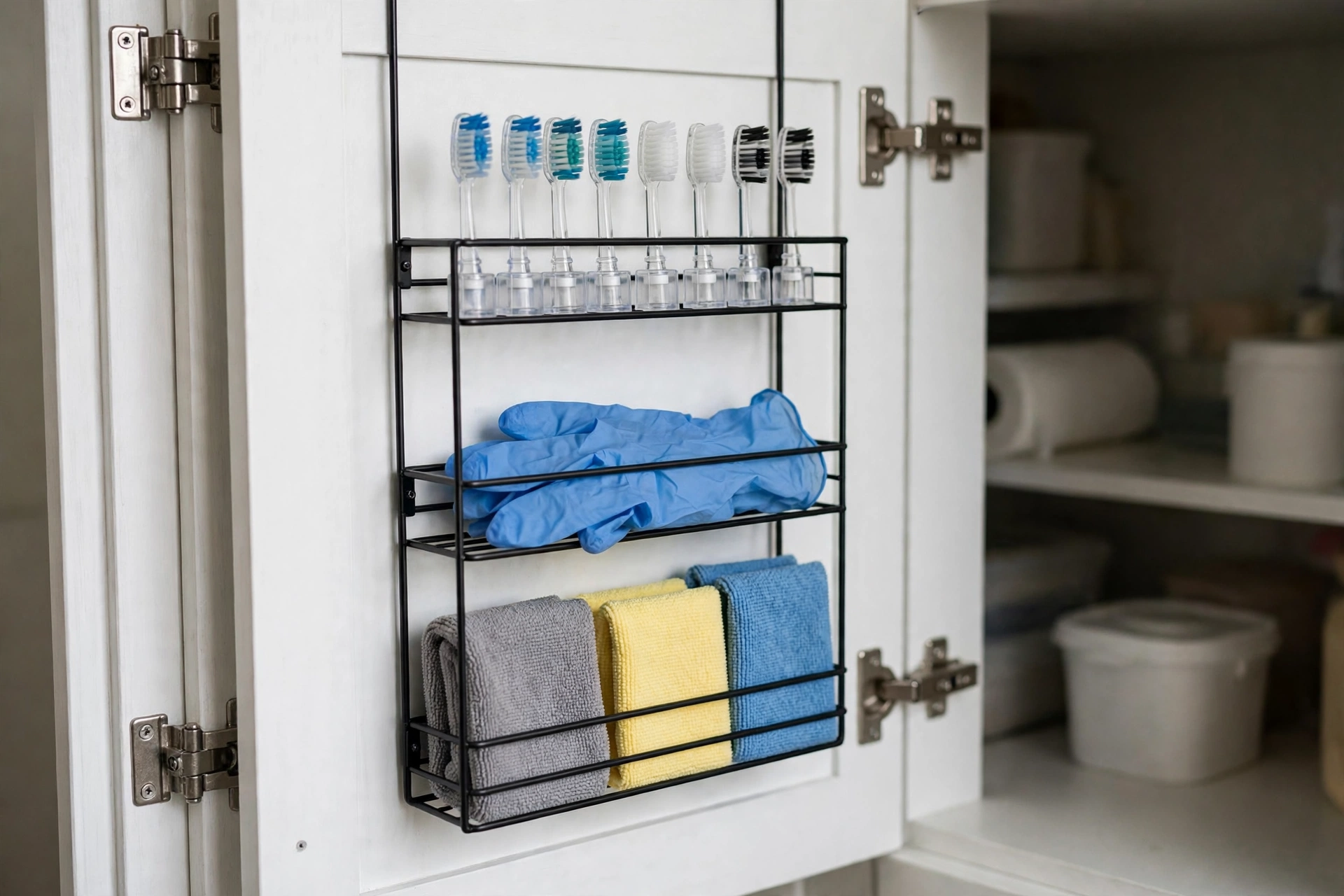
22. Back-of-Cabinet Door Racks
The inside of a cabinet door is flat, empty, and perfect for a slim rack. Adhesive or over-hook door racks hold measuring-free essentials: spare toothbrush heads, hair ties, cleaning cloths, or the instruction-free basics you grab daily. Fitted to the under-sink doors, a rack keeps bin liners, dishwasher-free cleaning tabs, and rubber gloves out of the main cabinet tangle and visible the moment you open the door.
Test the fit by closing the door slowly with the rack loaded — it must clear shelves, baskets, and pipes inside. Use racks with shallow baskets for small items and a towel-bar style rack for cloths and gloves that need to dry. In humid bathrooms choose plastic or coated metal racks, and check adhesive pads every few months, re-sticking any that have started to lift.
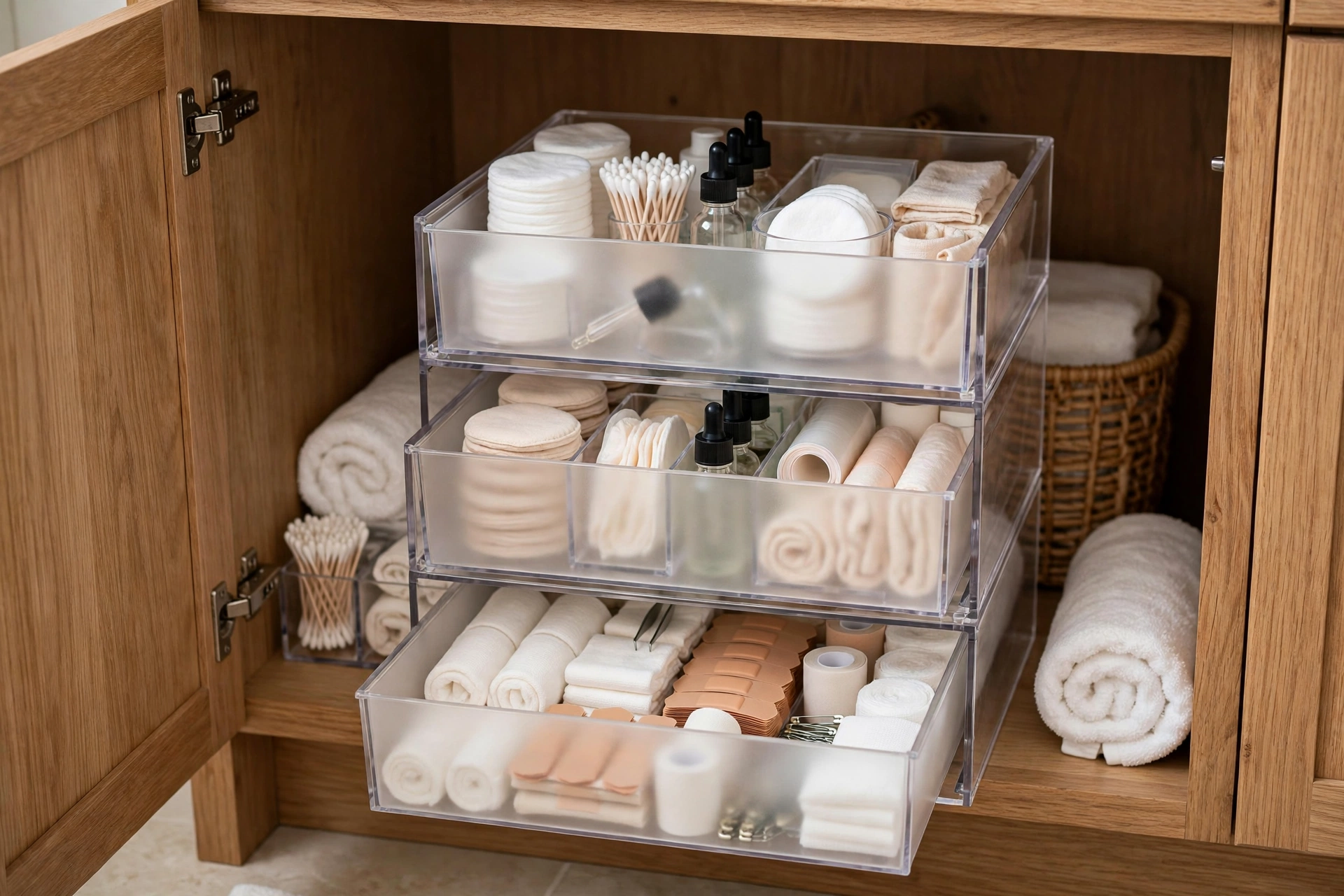
23. Stackable Drawer System Under Vanity
Where a vanity has a large open cupboard instead of drawers, a freestanding stackable drawer unit creates the missing structure. Two or three clear or frosted drawers stacked inside the cupboard sort items by person or by category — skincare, first aid, hair care — and pull out independently, so you no longer unload the whole cupboard to reach the back. Clear fronts mean you can find things without opening every drawer.
Measure the cupboard opening as well as its interior, because drawer units must slide in through the door at an angle. Leave a gap beside the unit for tall bottles that do not fit in drawers, and place a small tray on top of the unit for the items you use twice a day. Label the drawer fronts if more than one person shares the cupboard, and audit each drawer seasonally.
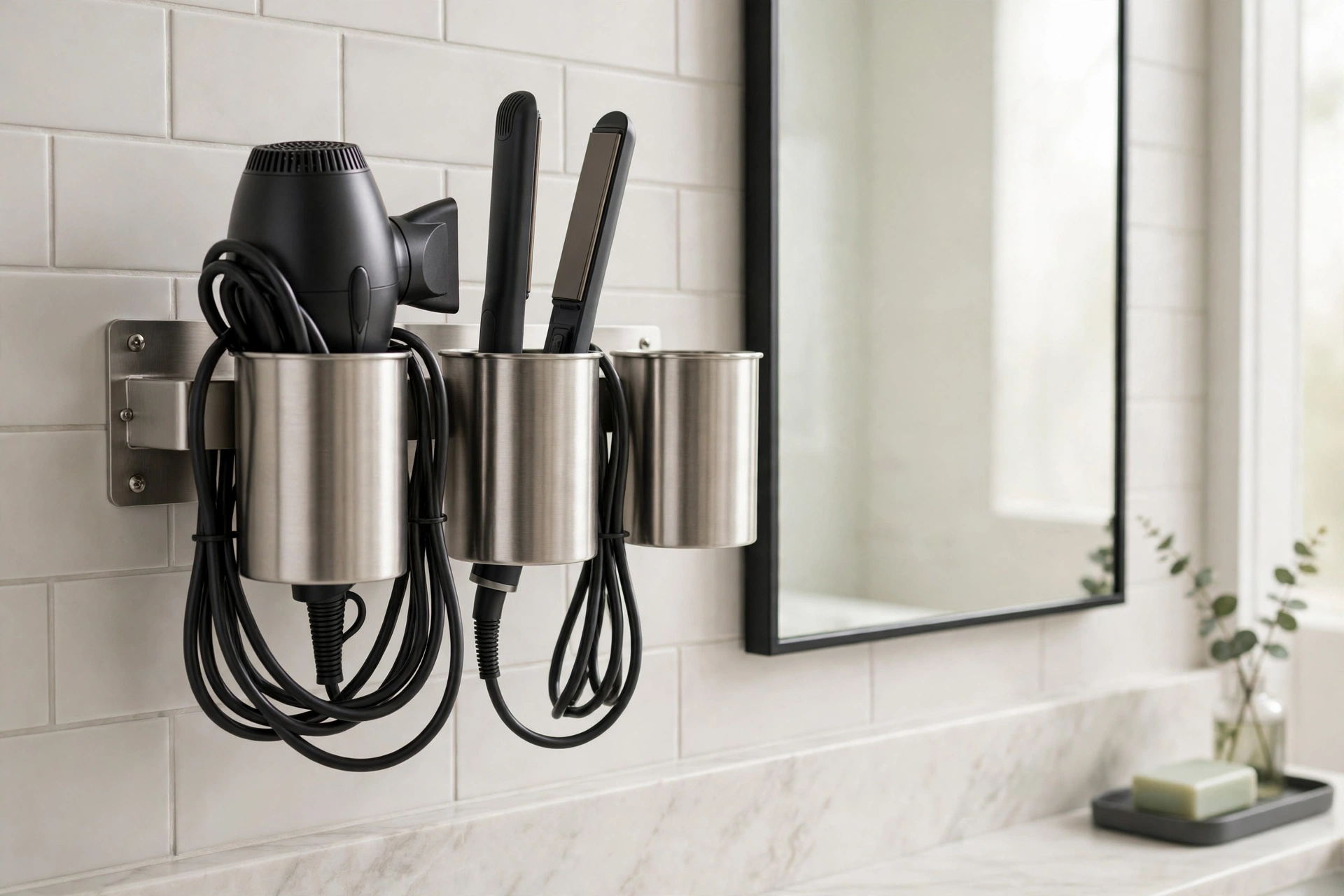
24. Hair Tool Holder with Heat-Resistant Cups
Hair dryers, straighteners, and curling tools tangle in drawers and melt plastic organizers when they are put away warm. A heat-resistant holder — a metal caddy that hangs on a cabinet door, mounts on the wall, or stands on the counter with separate cups for each tool — stores each appliance in its own slot with its cord looped neatly beside it. It also keeps hot tools safely off counters and away from water while they cool.
Choose a holder with a cord slot or wrap post for each tool so cords stop knotting together, and mount it within reach of the mirror and a power socket to avoid trailing cables across the sink. Never store a tool in the holder while it is still plugged in and switched on, and let appliances cool fully before closing a cabinet door on them. A door-hung version saves the most counter space in small bathrooms.
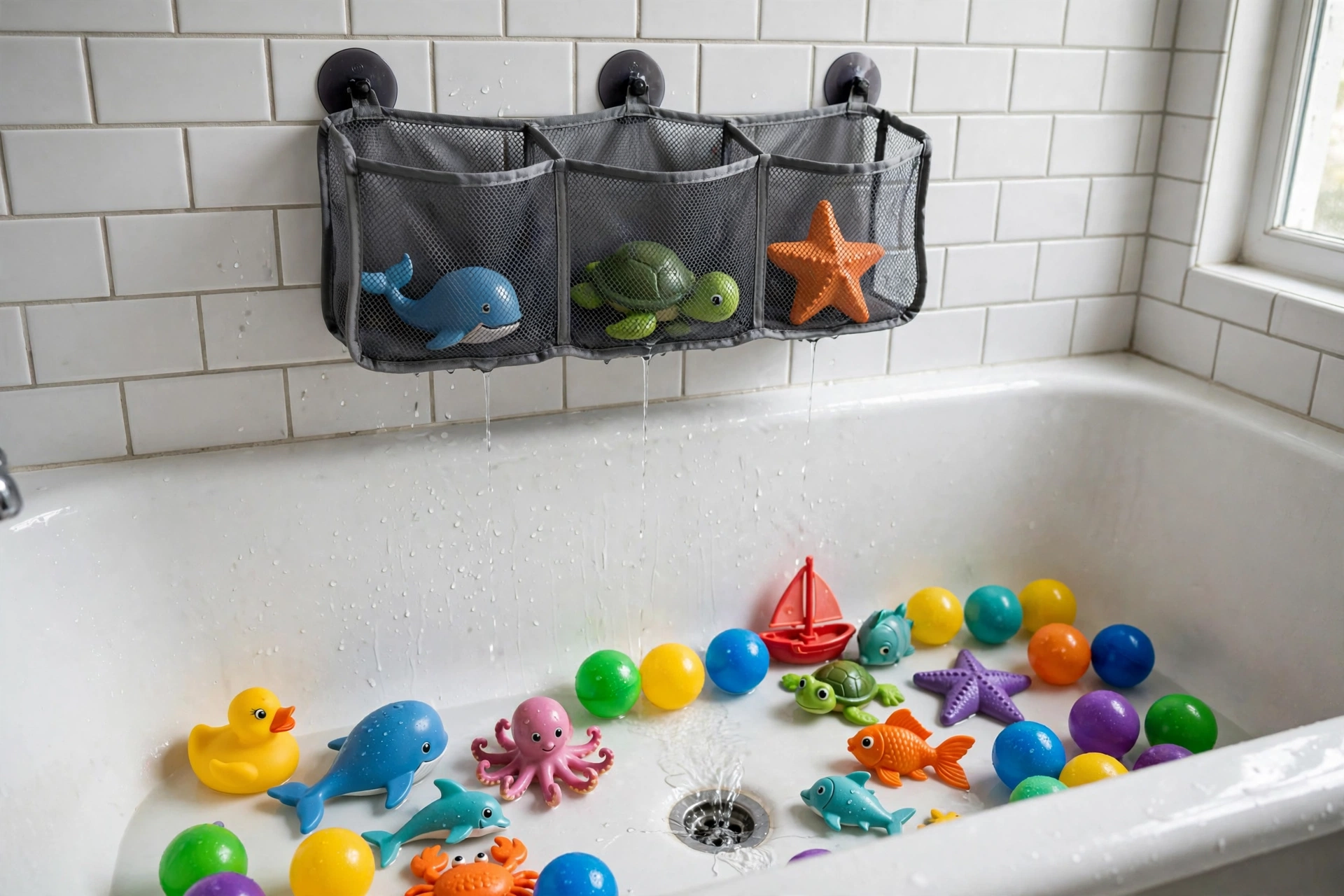
25. Bath Toy Mesh Storage Bag
Bath toys left in the tub grow mould and clutter every bath time. A mesh storage bag or corner mesh basket that suctions to the tiles lets toys drain and dry between baths, and gives children a clear tidy-up target: every toy goes back in the bag before the water drains. Mesh dries fast, can be machine washed, and shows you at a glance when a toy needs replacing.
Fit the bag at child height on a flat tiled section, using all the suction cups provided, and squeeze toys out before they go in so water does not pool in the bag. Wash the bag monthly on a gentle cycle and replace suction cups that no longer hold. Limit the number of toys to what fits comfortably in the bag — a simple rule that keeps bath storage under control without daily negotiation.
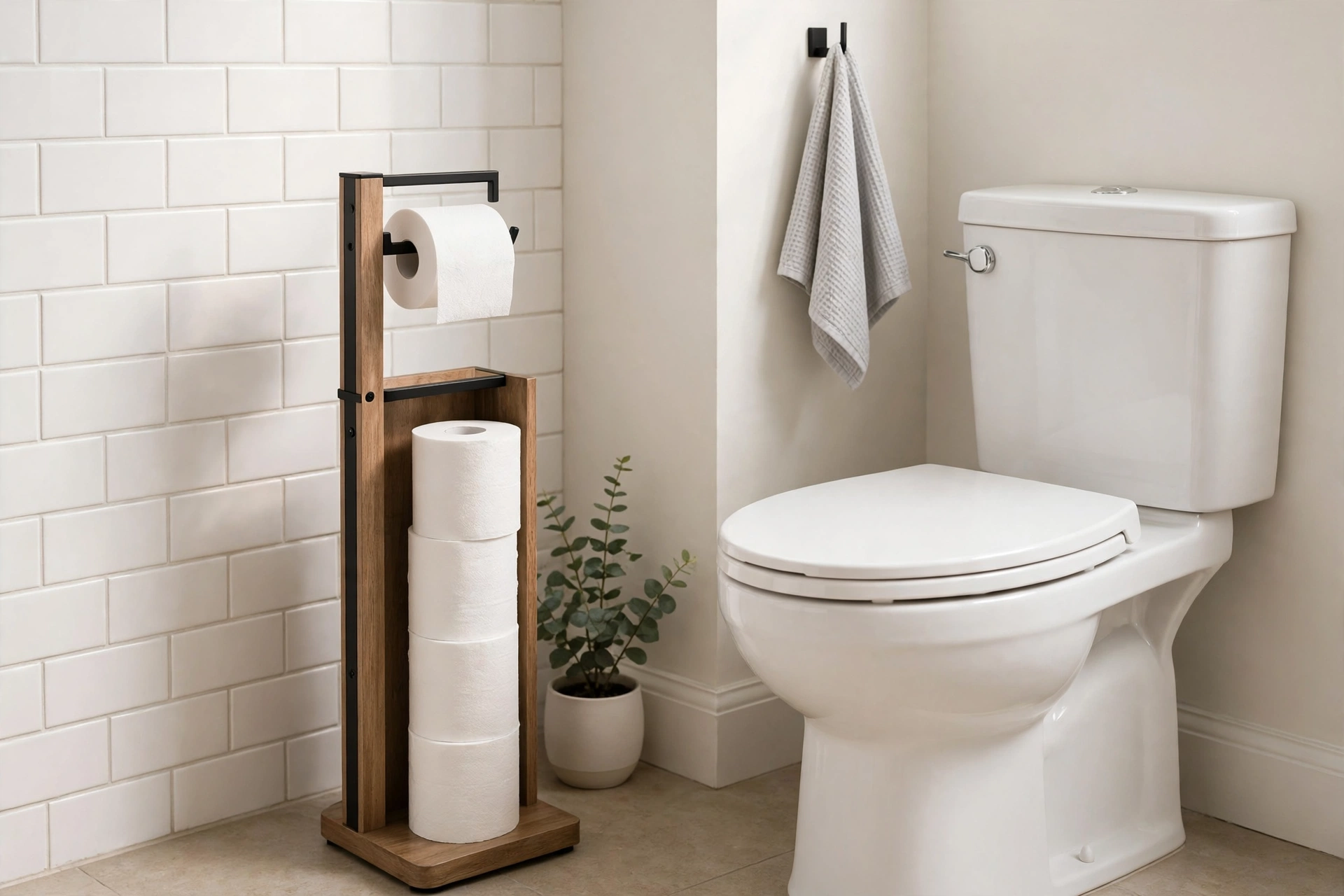
26. Toilet Paper Holder with Reserve Storage
Running out of toilet paper mid-visit is a storage failure, not bad luck. A holder with built-in reserve storage — a stand that stacks three or four spare rolls, a wall unit with a covered reserve compartment, or a slim basket beside the toilet — keeps refills within arm’s reach and off the floor. Freestanding stands suit renters, while a recessed or wall-mounted unit saves floor space in small bathrooms.
Keep the reserve topped up as part of your weekly bathroom clean, and store the bulk pack in a hallway cupboard or linen closet rather than cramming it all beside the toilet. Choose a covered design if your bathroom gets steamy, because exposed spare rolls absorb moisture and dust. In a family bathroom, make refilling the reserve the job of whoever finishes the last spare roll.
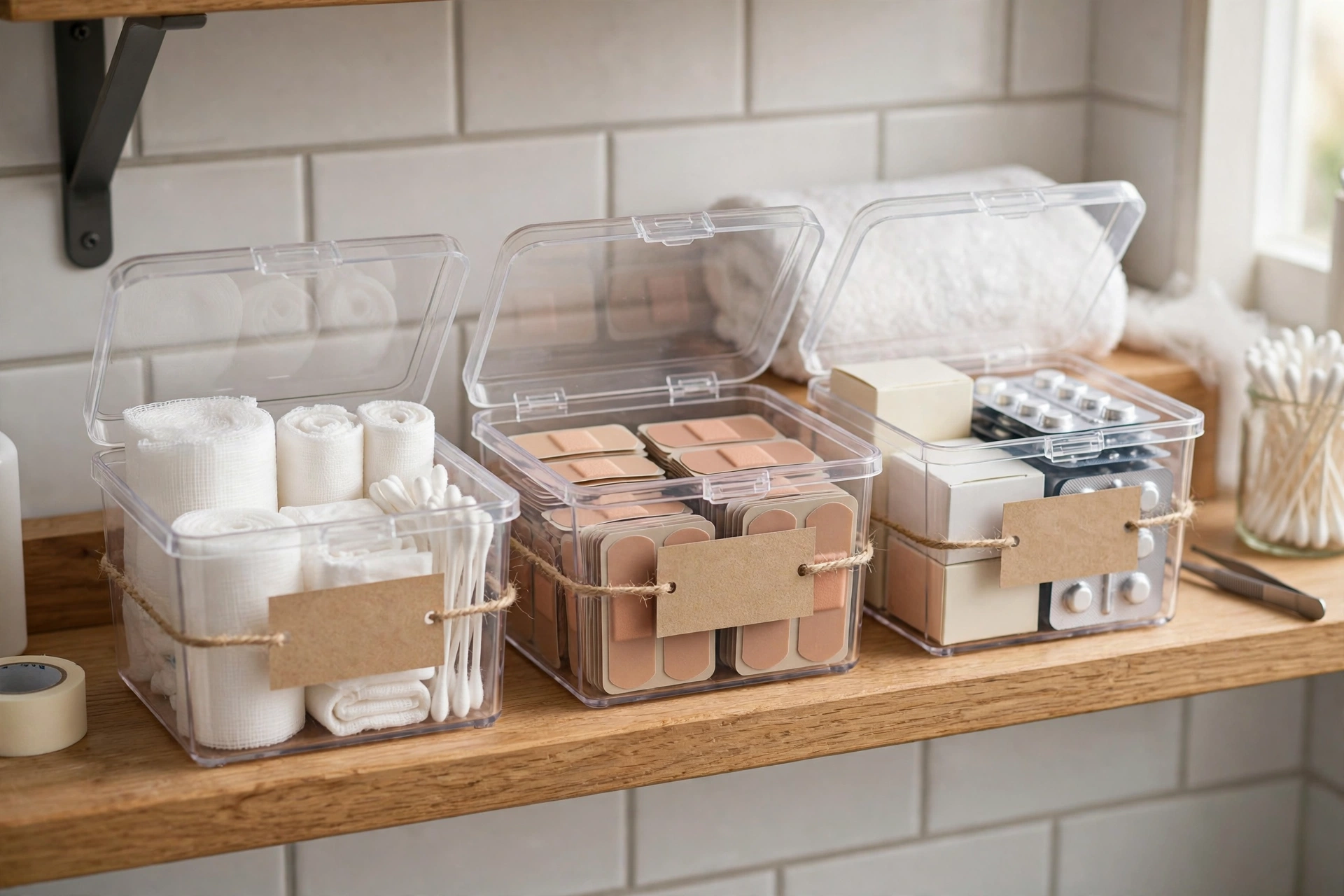
27. Small Bins for First Aid and Medicine Sorting
First aid supplies scattered between drawers and cabinets are impossible to find in an emergency. A set of small lidded bins — one for plasters and wound care, one for pain relief and cold remedies, one for prescriptions — stored together on one shelf creates a grab-and-go first aid station. Clear bins with labels let anyone in the household find the right box quickly, even a guest or babysitter.
Store medicine bins on a high shelf or in a cabinet with a child-resistant latch if young children are in the home, and keep a simple contents list taped inside each lid. Check expiry dates every six months and replace used items straight away rather than adding them to a mental list. Keep a separate small bin for thermometer, tweezers, and antiseptic so the tools are not buried under boxes.
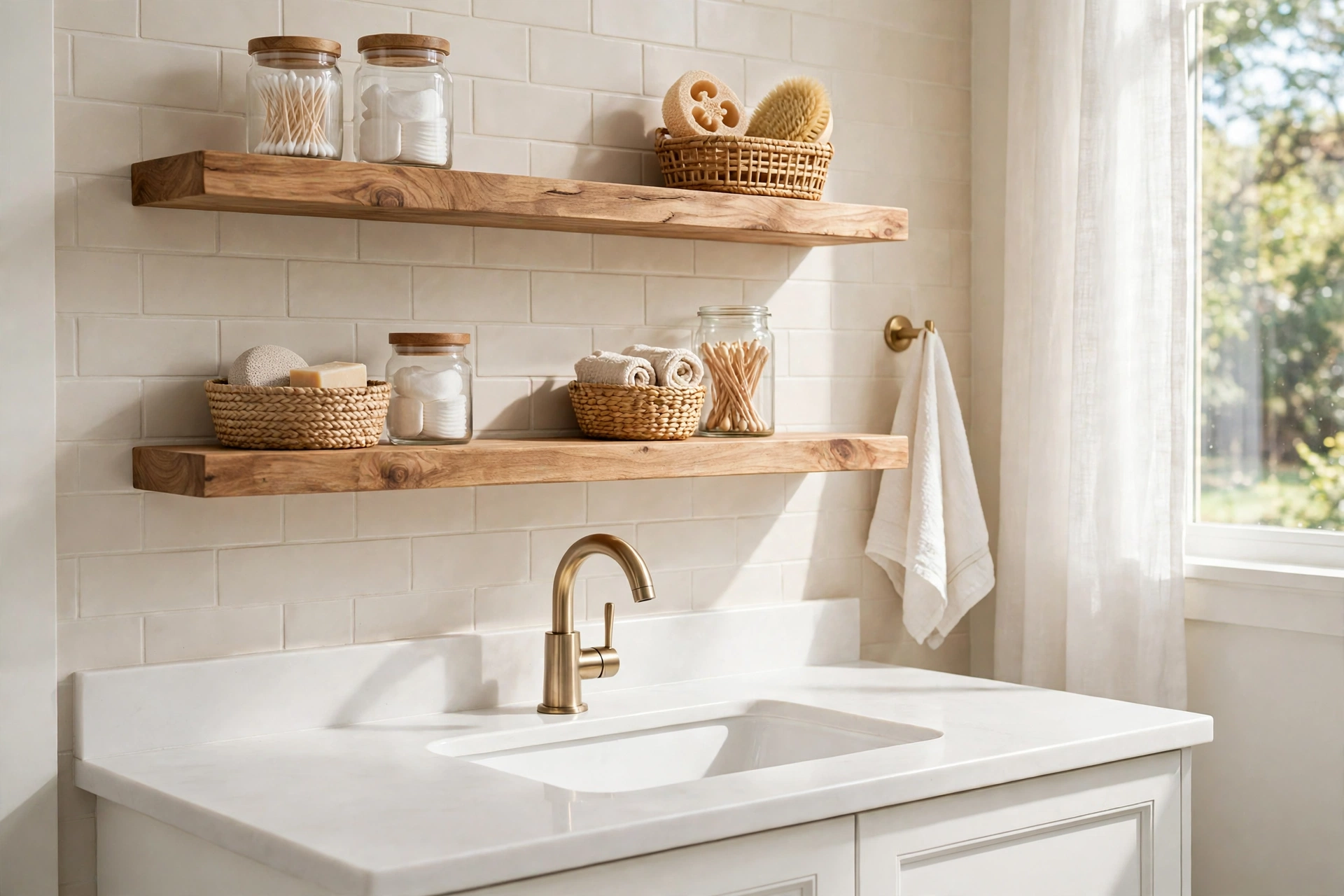
28. Floating Shelves Above the Sink
The wall above the sink and mirror surround is prime storage that often holds nothing but a toothbrush holder on the counter below. One or two floating shelves fitted beside or above the mirror move daily toiletries off the counter into jars and small baskets, freeing the sink area for actual washing. Keep only daily-use items here — shelves above a sink are for function, not for bulk storage.
Fit shelves into studs where possible and respect the weight limit in the instructions, because bottles are heavier than they look. Use a tray or shallow basket on the shelf to catch drips and stop items migrating to the edge, and leave clearance so the shelf does not crowd the mirror or light fitting. Wipe shelves weekly, as they collect toothpaste mist and dust quickly at this height.
29. Cabinet Risers to Double Shelf Space
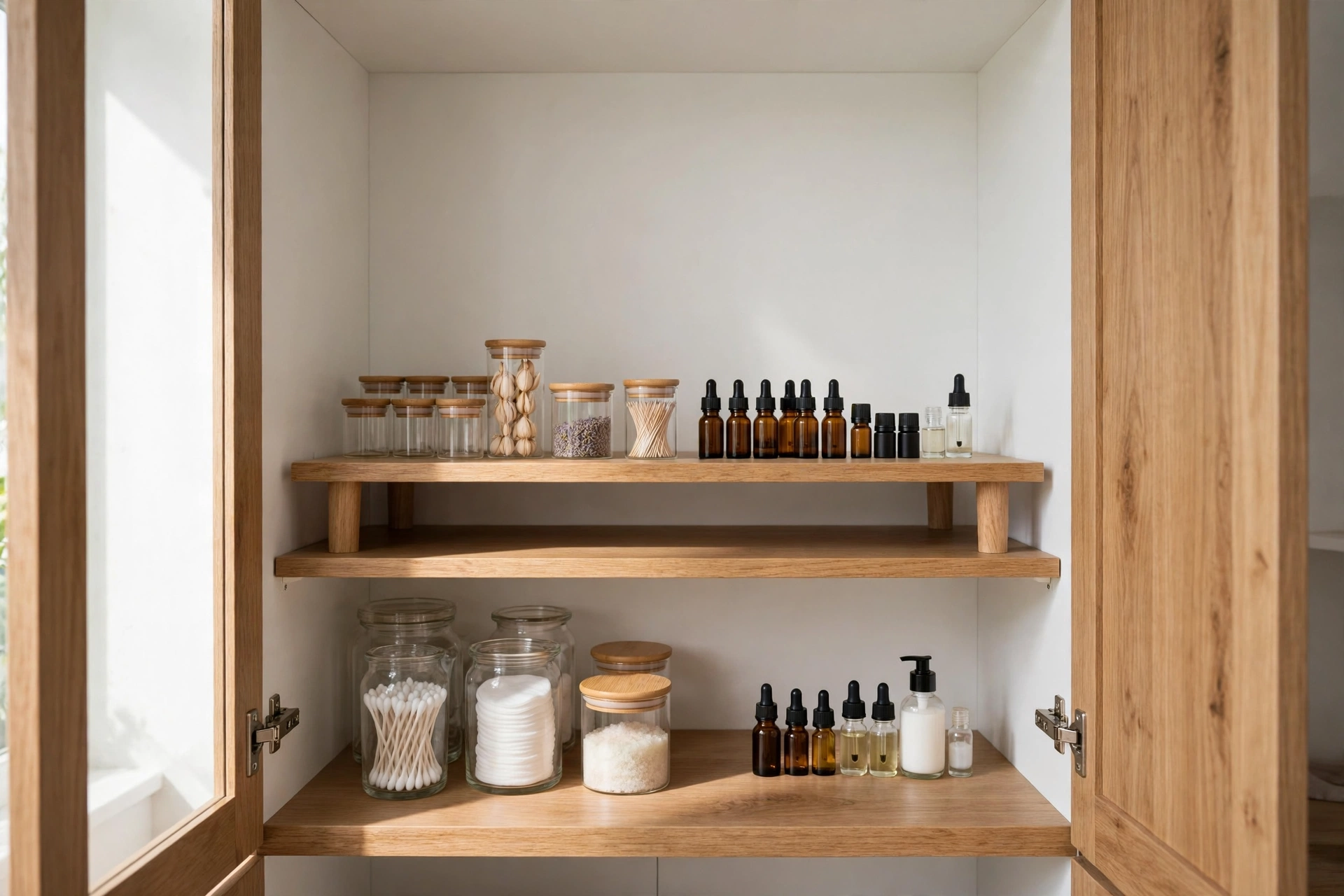
Tall bathroom cabinets waste the vertical space above short bottles. A simple shelf riser — a small raised platform that sits on an existing shelf — creates a second level for jars, medicines, and small toiletries, effectively doubling that shelf without any DIY. Risers work in medicine cabinets, linen cupboards, and under-sink cabinets alike, and they stack or sit side by side to fit odd widths.
Measure the shelf height and choose a riser that leaves enough headroom above it for the tallest item you plan to store there. Put the items you use least on the raised level at the back and daily items in front at the original level. Non-slip feet or a grippy mat under the riser stop it sliding when you pull a bottle from the front row.
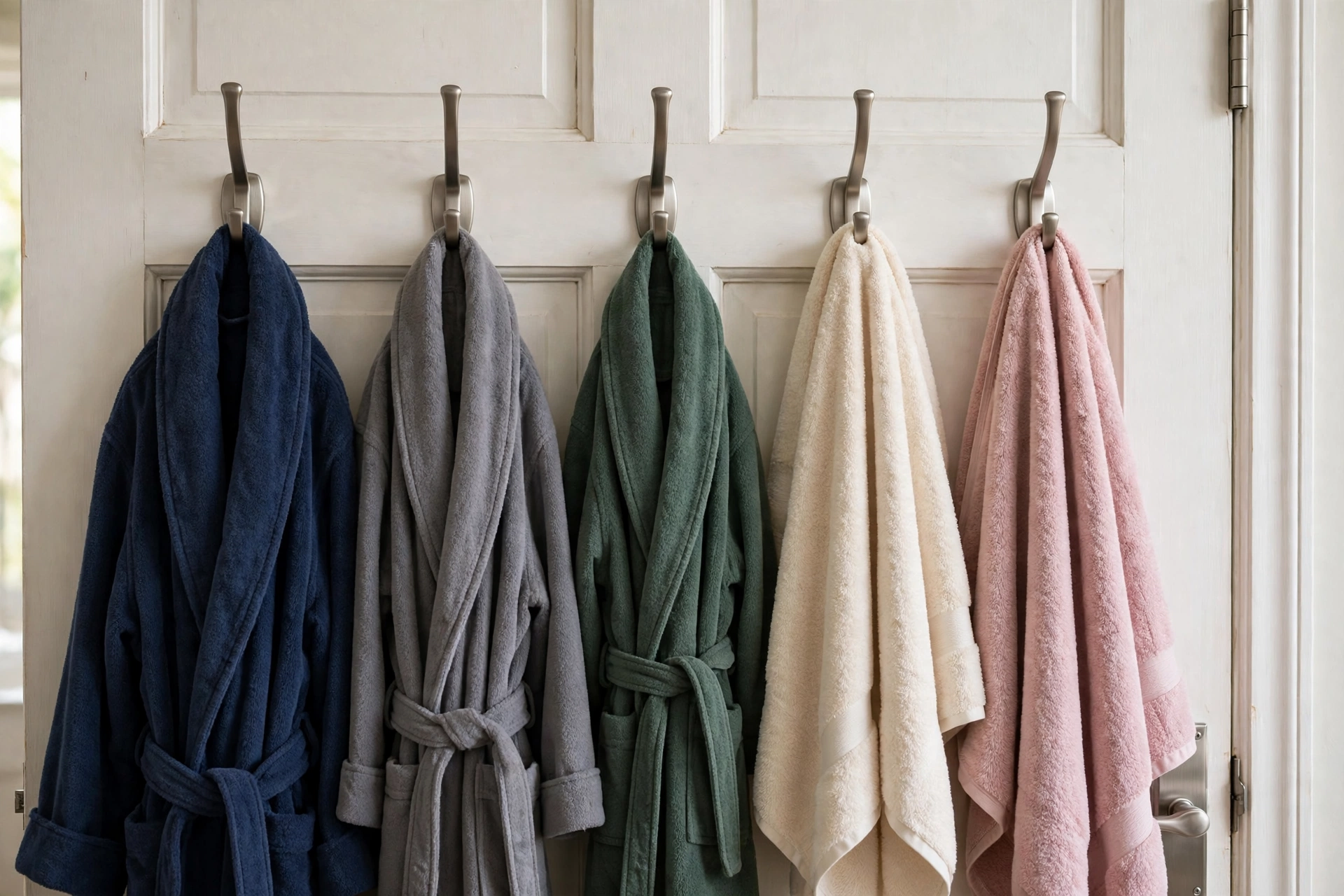
30. Hooks and Rails for Robes and Towels
A single hook behind the door cannot handle robes, towels, and wash bags for a whole household. A row of sturdy hooks or a multi-hook rail on the back of the door or an empty wall gives every person a dedicated spot, keeps robes off the floor, and lets damp towels air instead of souring in a heap. Over-door hook rails need no drilling and move with you between homes.
Space hooks at least 15 centimetres apart so towels and robes are not bunched together, and fit the rail at a height children can reach if they are expected to hang their own towels. Use rust-proof finishes — stainless steel or powder-coated metal — and check that an over-door rail does not stop the door closing fully. Assign hooks by person and keep one spare for guests.
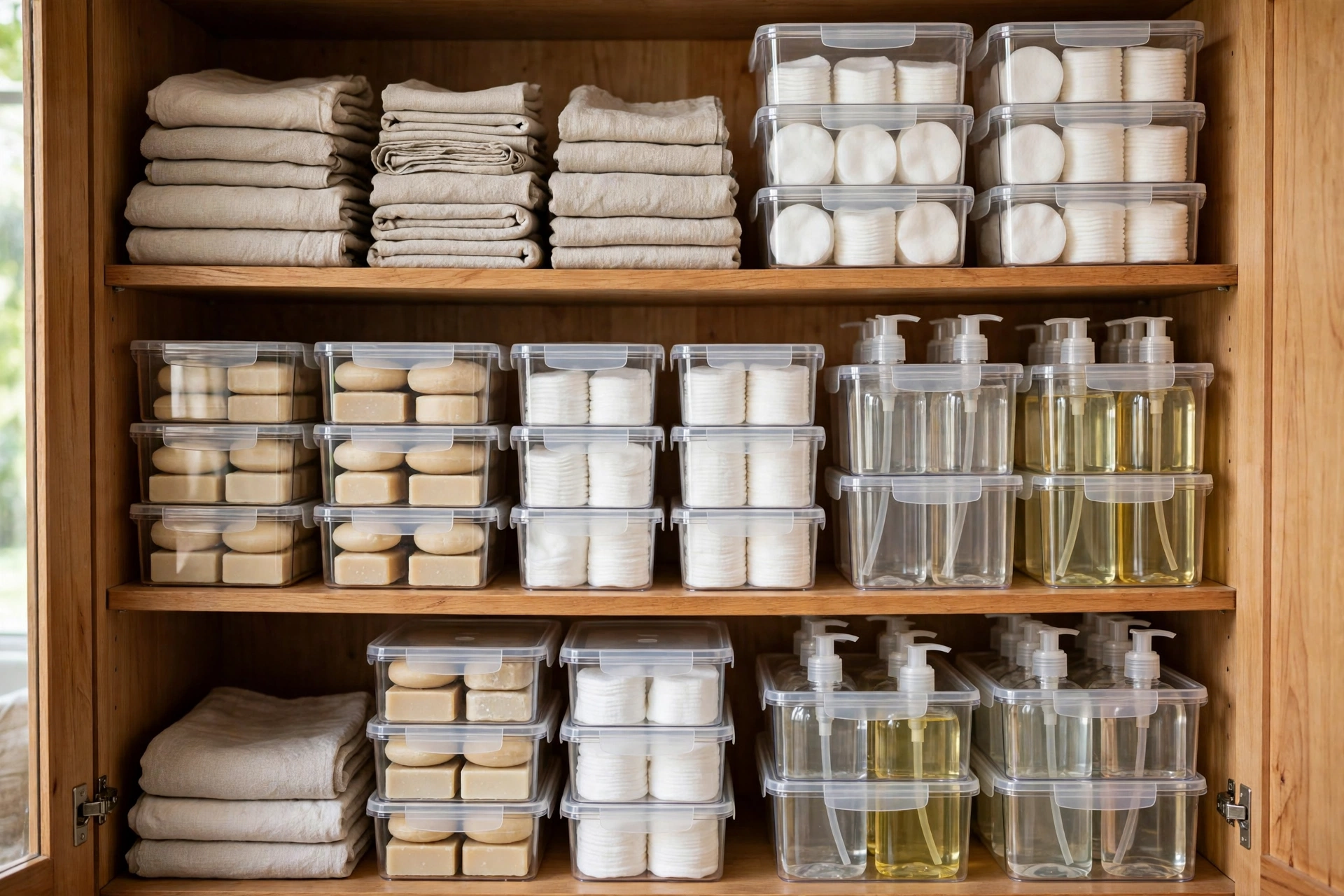
31. Clear Stackable Containers for Bulk Supplies
Bulk packs of cotton pads, spare soaps, toothpaste tubes, and refill bottles need a home that is not the bathroom floor. Clear stackable containers with lids, stored in a linen cupboard, airing cupboard, or the bottom of a wardrobe, create a tidy back-stock system: you shop your own shelves before buying more. Because the containers are clear and stack, you can inventory the whole stock in seconds.
Use one container per category and label the lid as well as the front, so boxes stacked three high are still identifiable. Keep the bathroom itself stocked with only the current item plus one spare, and refill from the back-stock containers on a set day. Choose containers with handles or hand-holds if they will live on a high shelf, and never store heavy containers above head height.
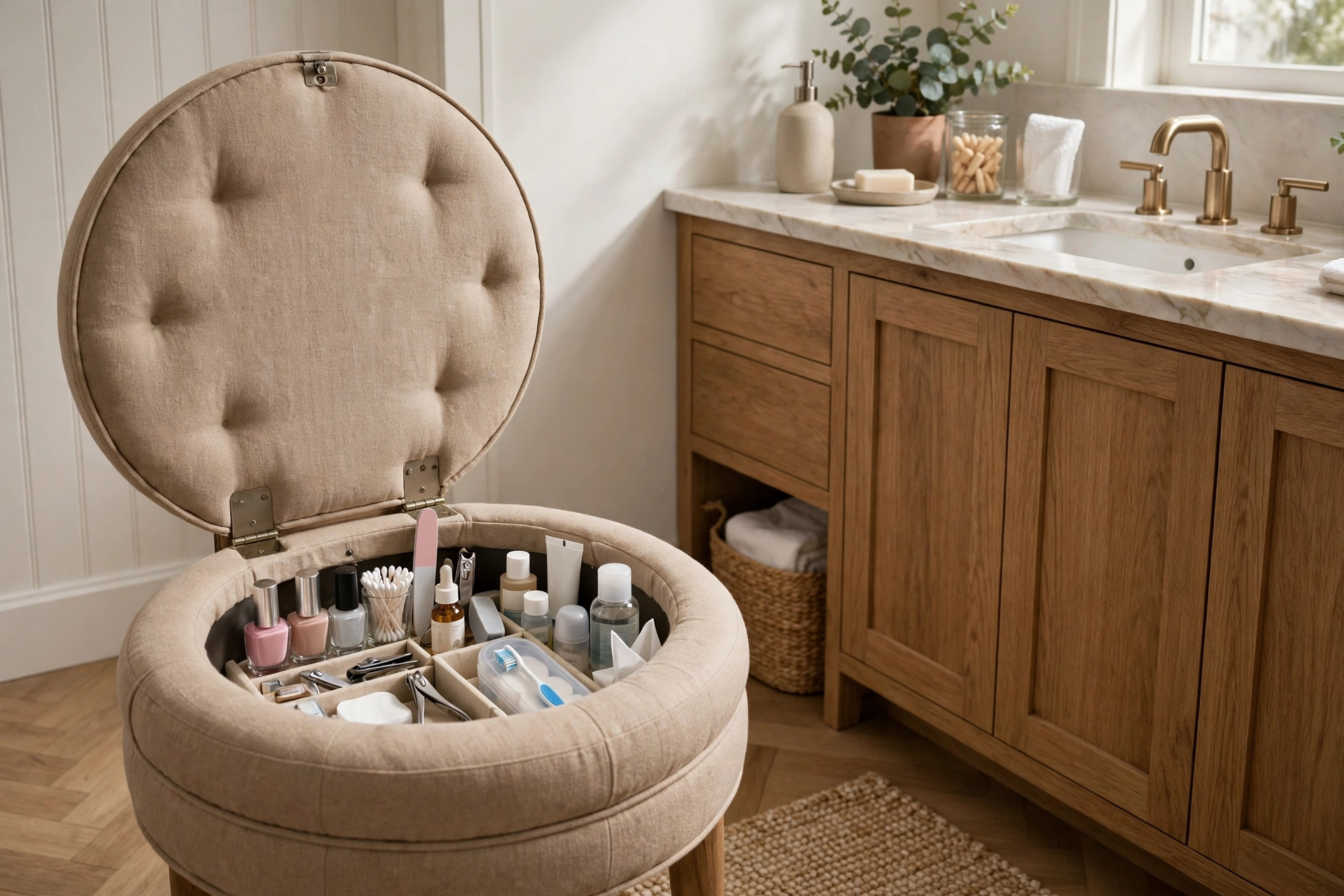
32. Vanity Stool with Hidden Storage
A vanity stool or small ottoman with a lift-up seat adds a hidden compartment exactly where you sit to get ready. Inside, store the items you use at the vanity but do not need on display: backup makeup, nail supplies, a hairbrush set, or a small first aid kit. The stool earns its floor space twice — as seating and as storage — which matters in a compact bathroom or dressing area.
Choose a stool with a washable, water-resistant cover and a hinge that holds the lid open safely. Line the interior with a removable pouch or small boxes so contents do not become a single jumbled layer, and avoid storing anything heavy that would make the stool hard to move for cleaning. Air the compartment occasionally, because enclosed storage in a steamy room can trap moisture.
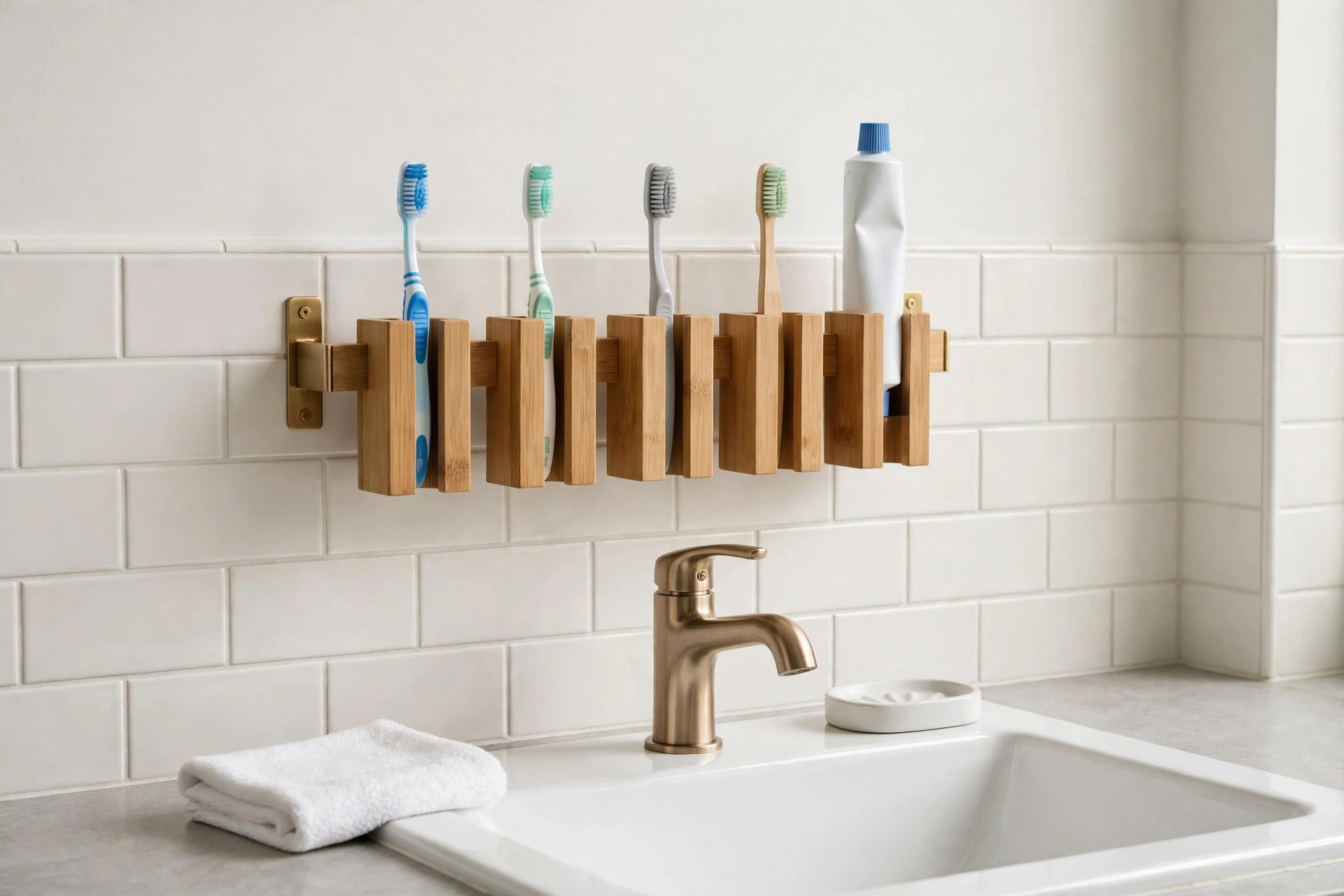
33. Sink Caddy for Toothbrushes and Toothpaste
Toothbrushes standing in a shared cup breed mess and tip over constantly. A sink caddy with individual slots — wall-mounted, suction, or countertop — holds each brush separately, keeps toothpaste upright in its own compartment, and often includes a covered section that shields brushes from spray. Wall-mounted versions free the counter completely and are the easiest to clean around.
Choose a caddy with drainage or ventilation so water does not pool around brush handles, and rinse it weekly under the tap. In family bathrooms, colour-coded slots stop mix-ups, and a caddy with a small shelf underneath catches the toothpaste tube and floss so they stop wandering. Replace or deep-clean the caddy when you replace toothbrushes, roughly every three months.
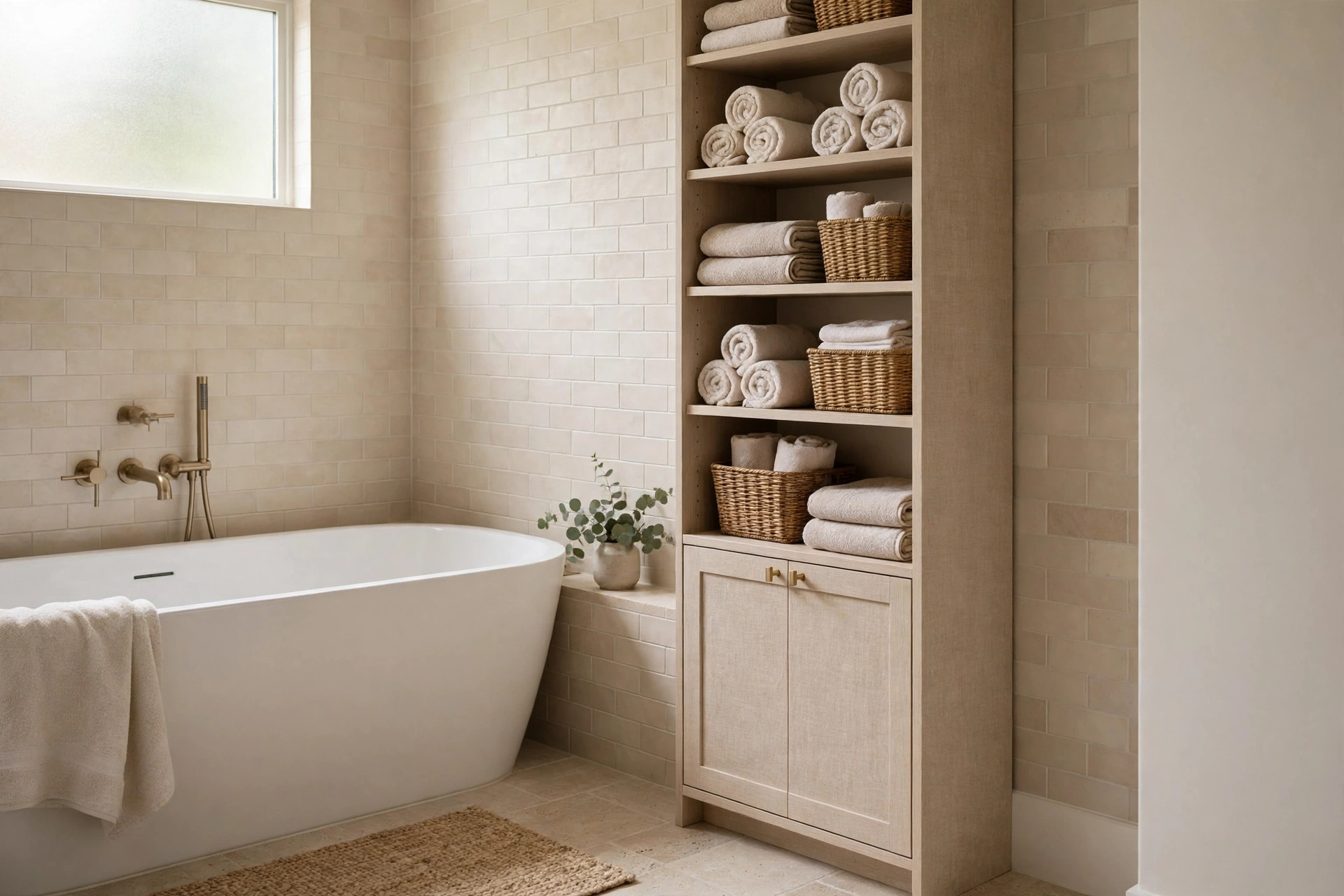
34. Linen Tower with Adjustable Shelves
A narrow linen tower — a tall, slim cabinet that fits beside the bath, vanity, or toilet — adds serious vertical storage to a bathroom with no cupboard. Adjustable shelves let you set tall gaps for towel stacks and short gaps for baskets of toiletries, and a mix of open shelves and a closed lower cabinet hides cleaning supplies while keeping towels accessible. Towers as narrow as 30 centimetres can transform a dead corner.
Anchor a tall tower to the wall to prevent tipping, and store the heaviest items in the lowest section. Use the closed cabinet for chemicals and medicines that need to stay away from children and guests, and the open shelves for towels and clearly labelled baskets. Measure ceiling height and door swing before buying, and leave a small gap behind the tower for airflow in steamy rooms.
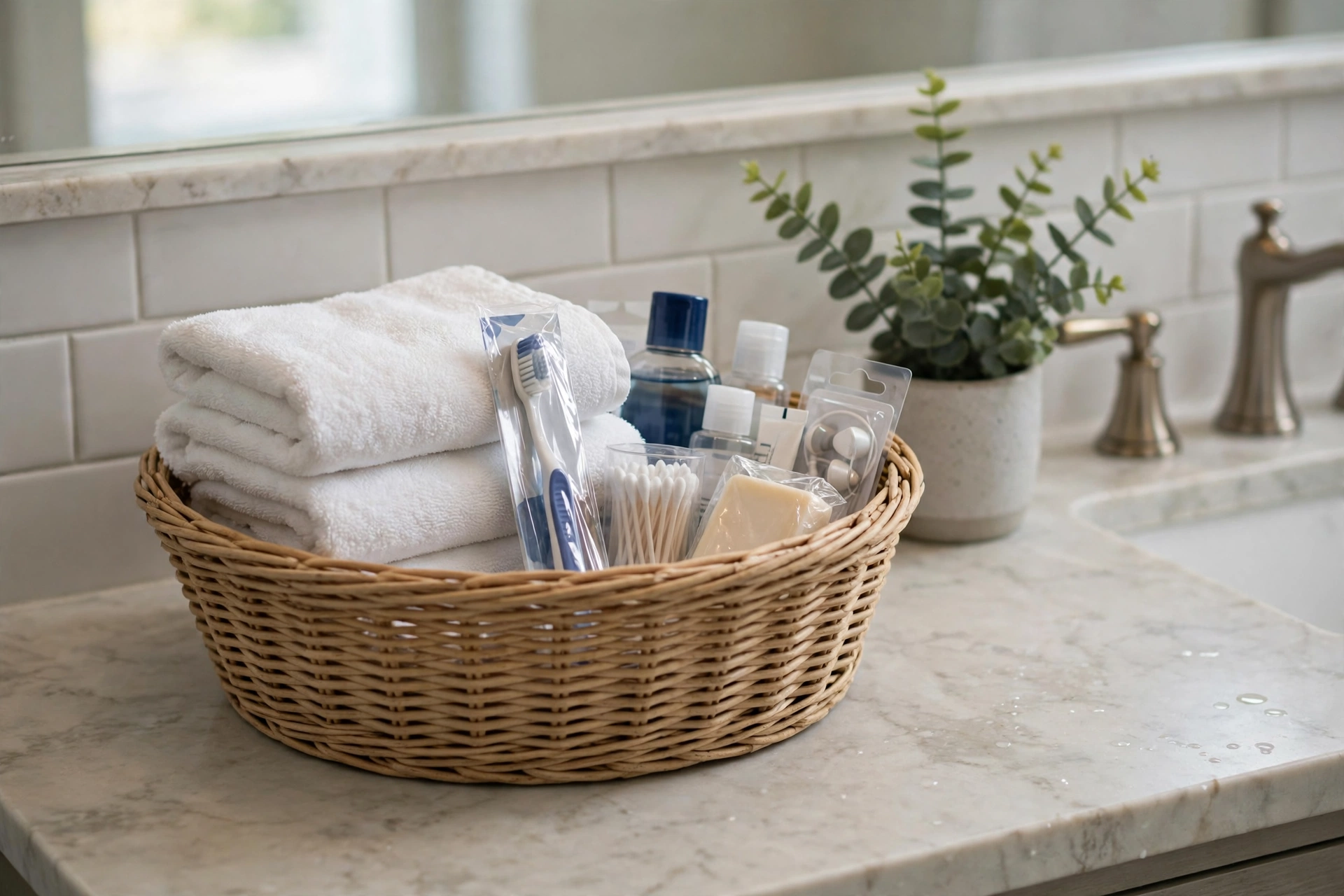
35. Travel and Guest Supply Basket System
Guests should never have to ask for a towel or hunt for spare toiletries. A dedicated guest basket — stocked with a folded towel set, a spare toothbrush in its wrapper, travel-size shampoo and soap, and a washcloth — lives in the linen cupboard or under the sink and comes out whole when someone stays over. The same basket system works for your own travel kit, pre-packed and ready to drop into a suitcase.
Restock the basket as soon as a guest leaves, while you still remember what was used, and check it before the holidays when visitors are most likely. Keep a second smaller basket for children’s sleepovers if you host them often. Store the basket somewhere dry and off the floor, and add a small card listing what the basket contains so anyone setting up the guest room can check it in seconds.
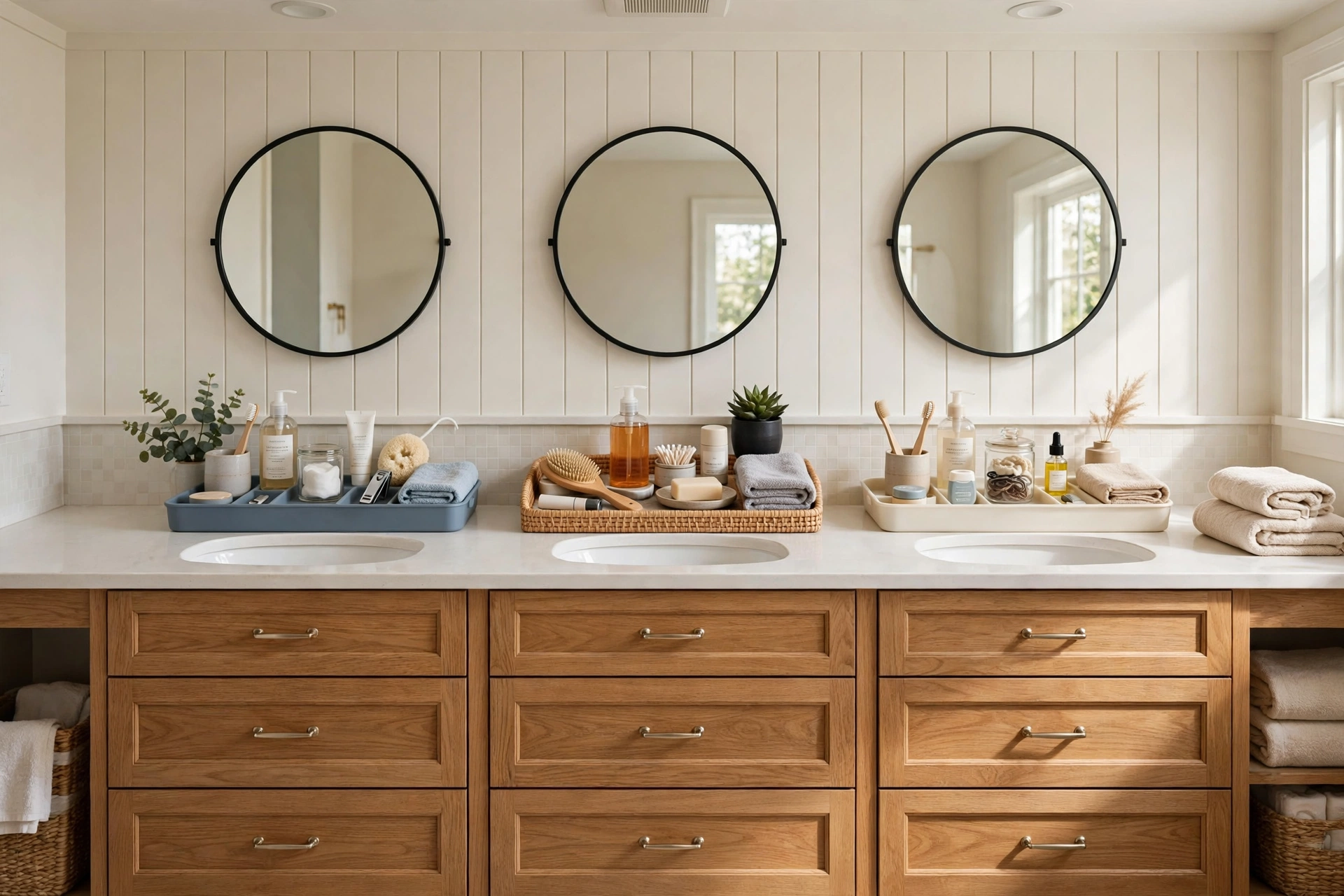
36. Daily Routine Zones — His, Hers, and Kids Stations
The most sustainable bathroom system of all is zoning: give each person a defined station — a drawer, a tray, a basket, or a shelf — that holds their entire daily routine and nothing else. When everyone’s products have a boundary, counters stay clear, mornings stop colliding, and tidying takes two minutes because there is never a question about where something belongs. Zones work in any size bathroom; the containers just get smaller.
Set the zones together so each person agrees what fits in theirs, and enforce a one-in, one-out rule for products. Put shared items — hand soap, towels, cleaning supplies — in a neutral shared zone like the under-sink cabinet or a communal basket. Review the zones every few months as routines and products change, and resize the containers rather than letting overflow creep back onto the counter.
More Home Decor Ideas
- Wall Decor Ideas: 36 Stylish Designs for Every Room
- Gallery Wall Ideas: 36 Layouts and Designs
- Front Porch Decor Ideas: 36 Welcoming Designs
- Coffee Table Decor Ideas: 36 Stylish Arrangements
- Laundry Room Decor Ideas: 36 Fresh Designs
- Mudroom Decor Ideas: 36 Organized Entry Designs
- Home Coffee Bar Ideas: 36 Cozy Station Designs
- Bookshelf Decor Ideas: 36 Stylish Styling Designs
- Reading Nook Ideas: 36 Cozy Corners
- Bathroom Decor Ideas: 36 Fresh Ideas
- Apartment Decor Ideas: 36 Smart Ideas
- Living Room Decor Ideas: 36 Fresh Looks
- Farmhouse Decor Ideas: 36 Cozy Rustic Looks
- Boho Decor Ideas: 36 Relaxed Bohemian Looks
- Minimalist Decor Ideas: 36 Calm Simple Looks
- Home Office Decor Ideas: 36 Productive Workspaces
- Patio Decor Ideas: 36 Outdoor Living Looks
- Backyard Decor Ideas: 36 Outdoor Living Looks
- Outdoor Decor Ideas: 36 Beautiful Spaces
- Hallway Decor Ideas: 36 Beautiful Passages
- Playroom Ideas: 36 Fun, Organized Play Spaces
- Small Bathroom Ideas: 36 Big Ideas for Tiny Spaces
- Japandi Decor Ideas: 36 Calm, Natural Rooms
- Scandinavian Decor Ideas: 36 Light, Hygge Rooms
- Coastal Decor Ideas: 36 Breezy, Beachy Rooms
- Vintage Decor Ideas: 36 Timeless, Collected Rooms
Final Thoughts
A well-organized bathroom is not built in a single weekend — it is built one system at a time. Start with the area that frustrates you most, whether that is the under-sink cabinet, a chaotic drawer, or bottles lining the bath, fit the right organizer for that spot, and live with it for a week before tackling the next. Small, well-chosen storage systems beat a total overhaul every time, because each one solves a real daily problem and is easy to keep up. Pick your first project from the 36 ideas above and enjoy a bathroom that finally works as smoothly as it should.