Playroom Ideas: 36 Fun, Organized Play Spaces
A great playroom is not about having the most toys — it is about having a space where kids…
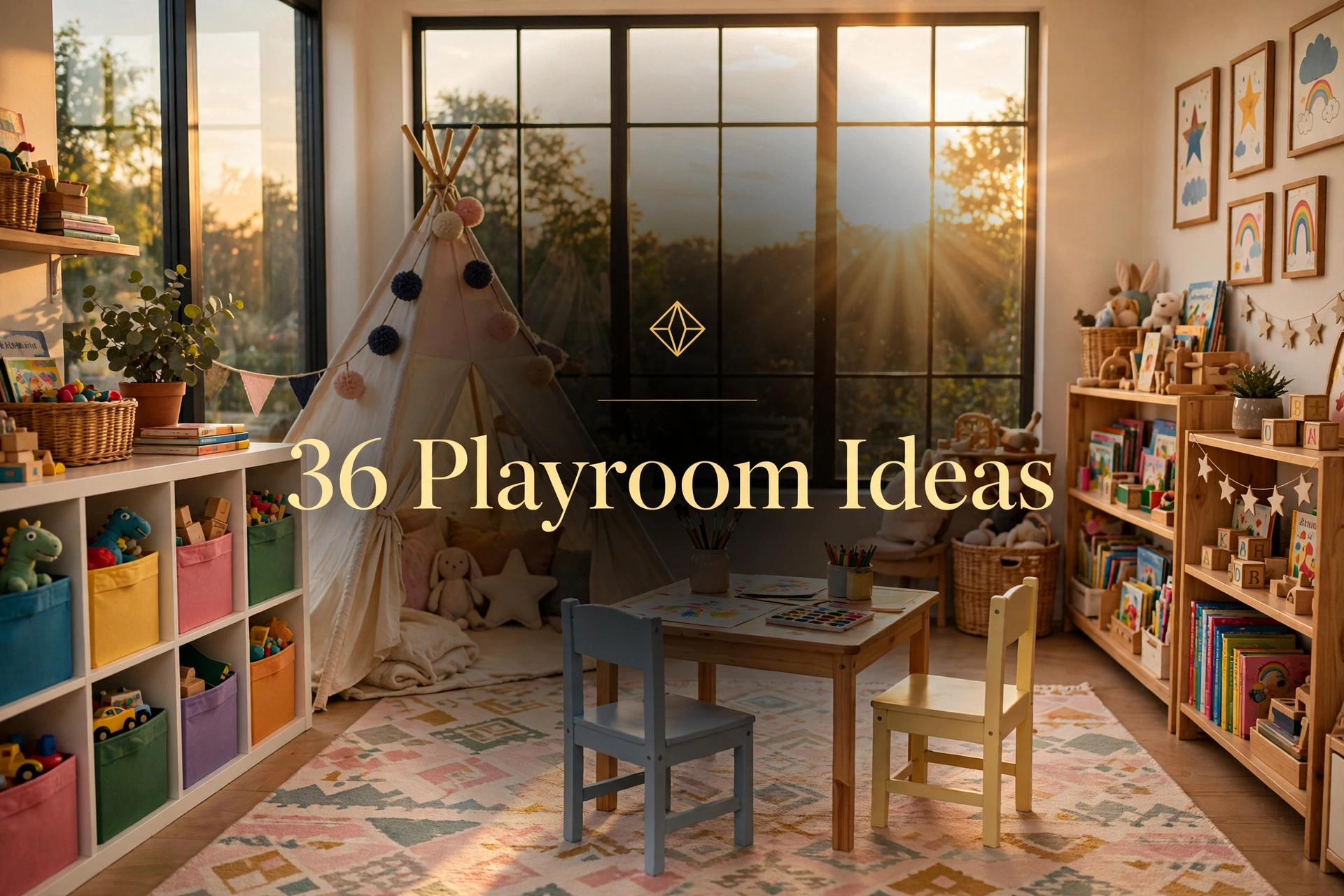
A great playroom is not about having the most toys — it is about having a space where kids can play deeply, make a glorious mess, and actually help tidy it up again. The best playroom ideas give every activity a home: a place to build, a place to make art, a place to dress up and perform, and a quiet corner to read and reset. With thoughtful zones, storage at child height, and furniture that can grow with your children, any spare room, basement corner, or bedroom nook can become the most joyful room in the house.
In this guide you will find 36 playroom ideas for every home, age, and budget, from organized toy storage walls and Montessori low shelves to soft play toddler zones, basement activity rooms, small-space fold-away setups, and playrooms that convert as kids grow. Each idea includes practical tips on layout, storage, safety, and styling, so you can build a play space that is fun for children, calm for adults, and easy to keep organized every single day.
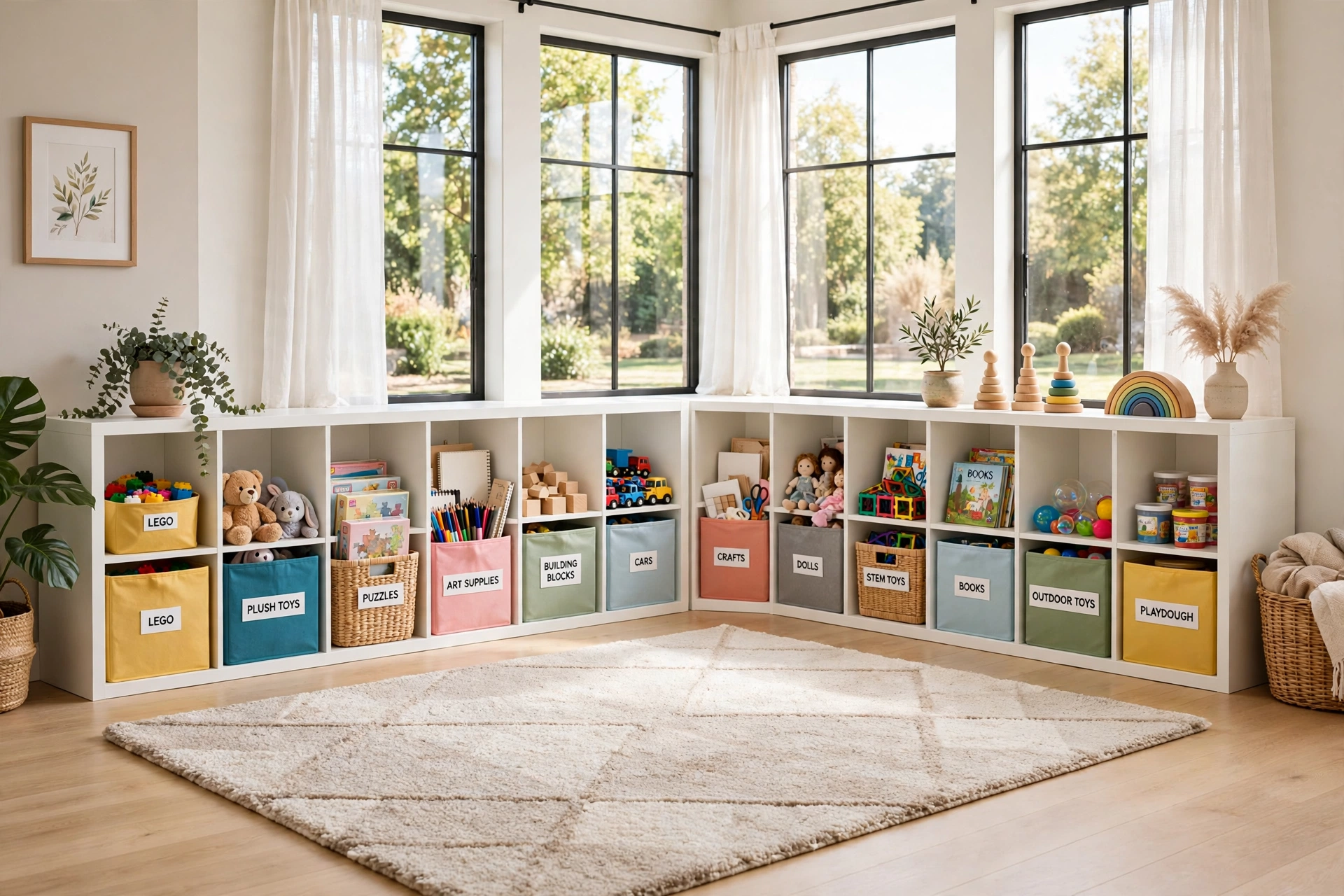
1. Bright Organized Playroom with Wall-to-Wall Toy Storage
A wall of low, open storage is the backbone of a playroom that actually stays tidy. Cubbies, labeled bins, and shallow shelves at child height mean everything has a visible home, so cleanup becomes a quick sorting game instead of a hunt. Choose white or light wood storage to keep the room feeling bright, and leave the center of the floor completely open for building, dancing, and sprawling out with puzzles.
Sort toys by type rather than by child — blocks together, art supplies together, dress-up together — and use picture labels for pre-readers. Keep only one category per bin so nothing gets buried, and rotate a small box of toys out every few weeks to keep the room feeling fresh. A soft, washable rug in the middle defines the main play zone and protects the floor underneath.
2. Art Studio Playroom with Craft Table and Supply Wall
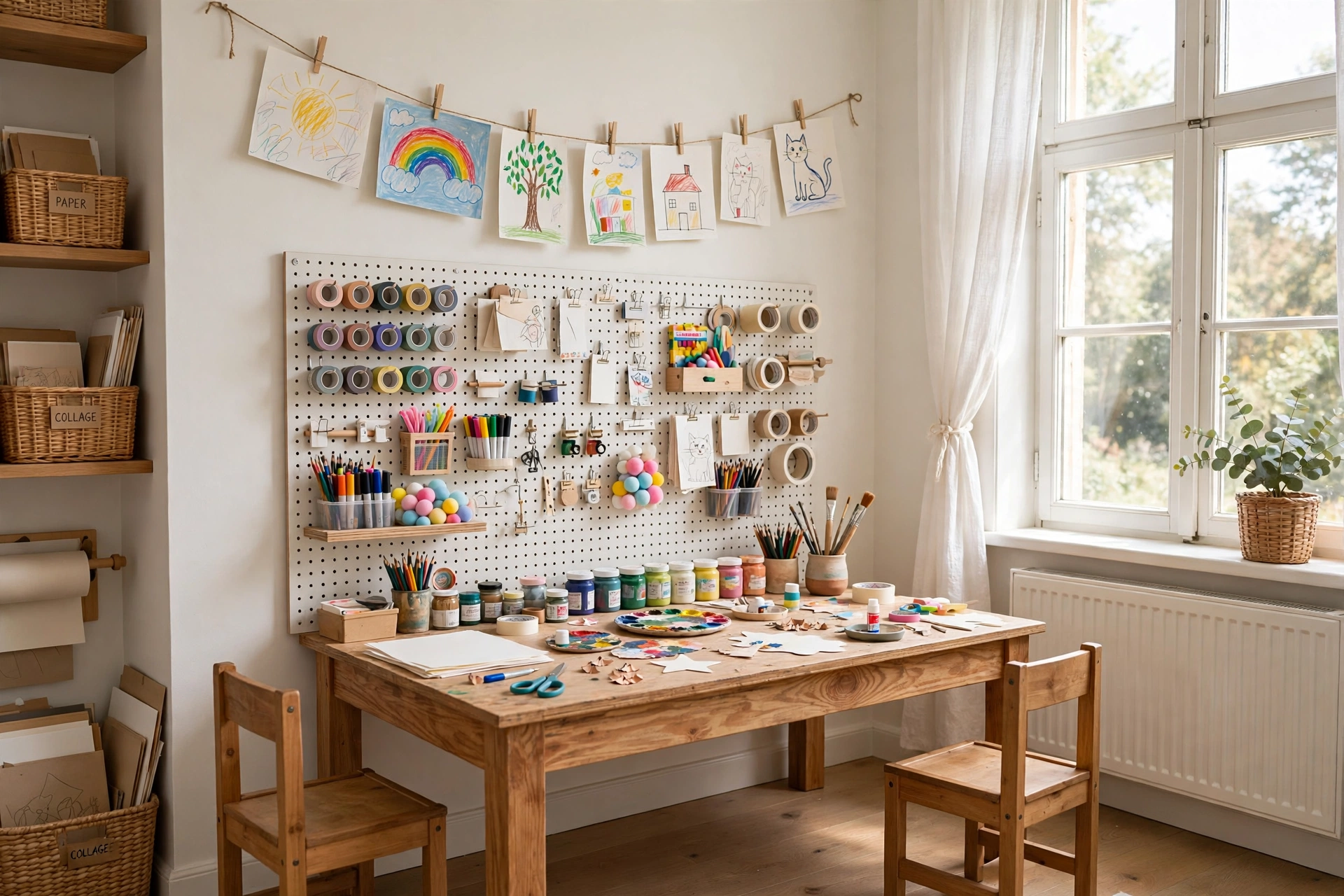
If your kids live for drawing, painting, and making, give art its own dedicated zone. A sturdy craft table with wipe-clean surface, child-sized chairs, and a pegboard or rail system on the wall above keeps paper, markers, glue, and scissors visible and within reach. A low drying rack or a string with clothespins for finished artwork turns the wall into a rotating gallery kids are proud of.
Stock the table with open caddies rather than deep boxes so supplies do not get lost at the bottom, and add a washable mat underneath to catch drips and glitter. Keep a small trash bin and a roll of paper towels right at the table to make cleanup part of the routine. Good light matters here — place the art table near a window or add a bright task lamp for true colors.
3. Cozy Reading Corner Playroom Nook
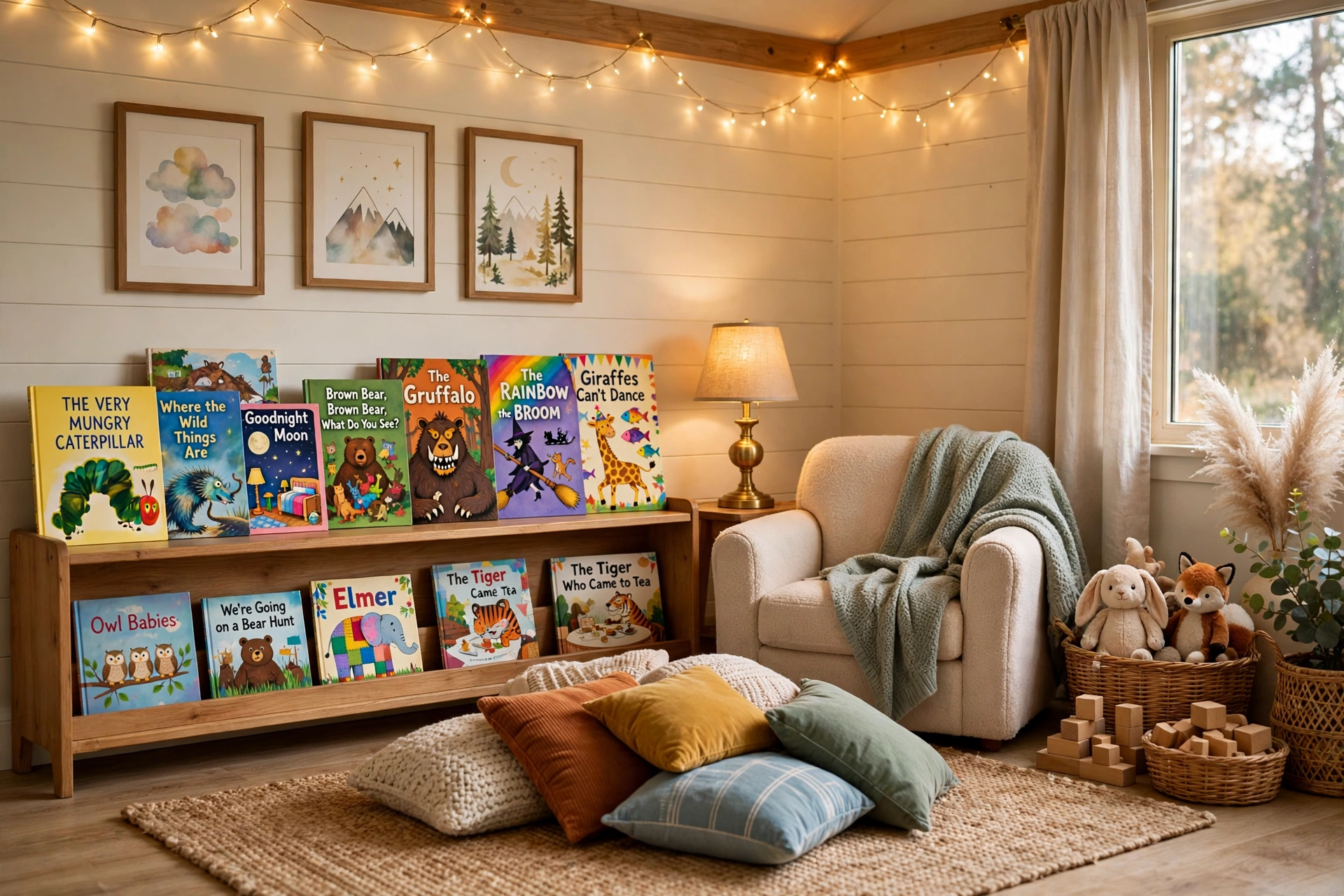
Every playroom needs a quiet corner where the energy can come down. A small bookshelf with forward-facing covers, a pile of floor cushions or a mini armchair, and a soft throw create a reading nook that invites kids to settle in with a story. Forward-facing books are key for young children — when they can see the covers, they choose books far more often.
Add a warm lamp or a string of soft lights to make the corner feel separate from the louder play zones, and keep a basket for library books so they do not mix with owned books. A canopy, a curtain, or even a tall shelf used as a divider gives the nook a sense of enclosure. Rotate the books weekly and include a few cozy stuffed reading buddies to make the spot feel special.
4. Dress-Up and Pretend Play Theater Zone
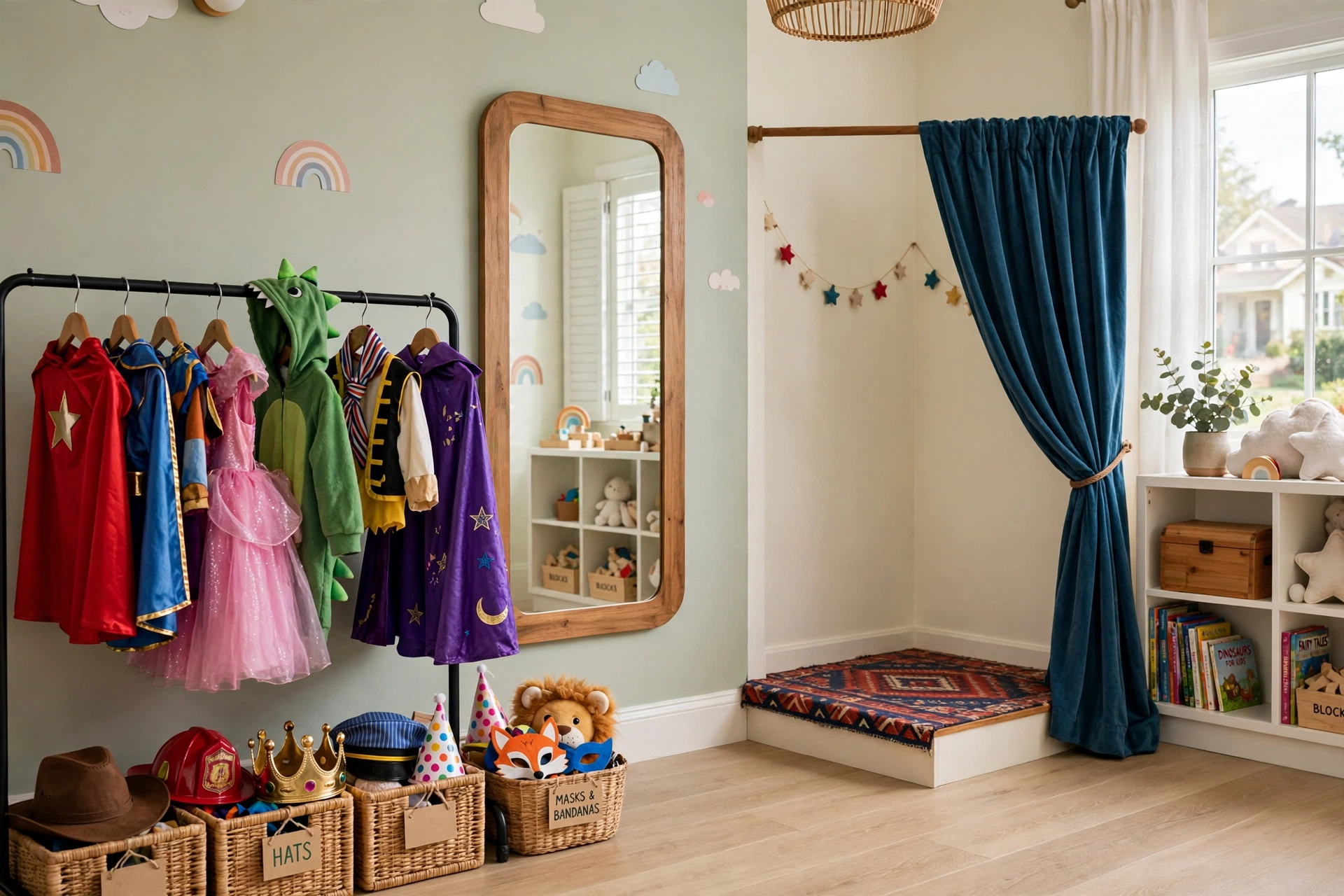
A dress-up zone turns everyday play into full performances. A low garment rack or a row of hooks at child height, a shatterproof mirror, and open bins for hats, capes, and accessories give kids everything they need to become chefs, doctors, superheroes, and shopkeepers. Keep costumes visible — when kids can see them, they play with them ten times more.
Add a small rug to mark the stage area and a basket for props like play phones, bags, and crowns. A simple curtain hung across a corner or a doorway makes entrances dramatic and gives shy performers a place to peek out from. Store off-season costumes in a labeled bin up high and swap them in every few months to renew interest without buying anything new.
5. Building Block and LEGO Construction Zone
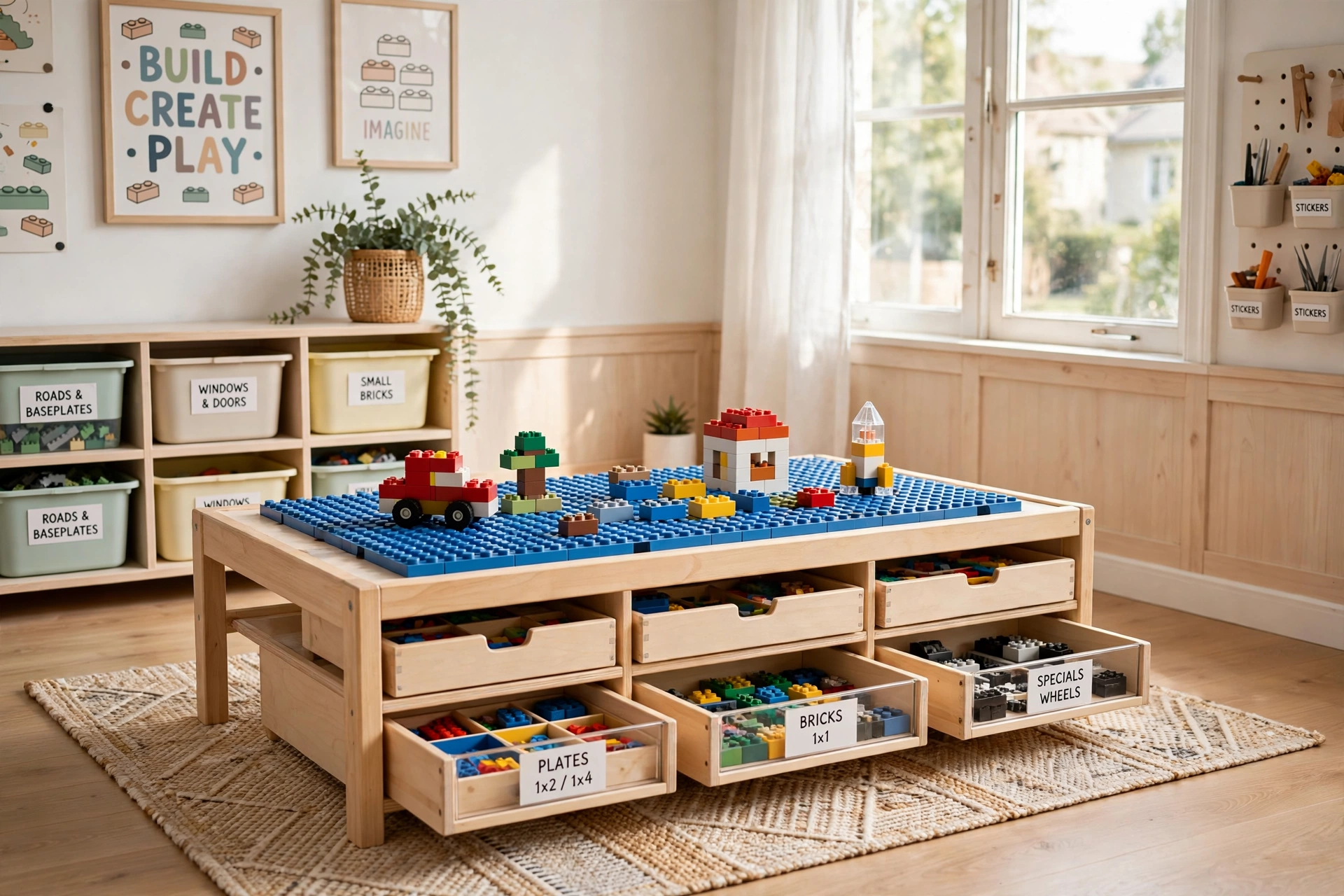
Builders need a flat, stable surface and storage that keeps tiny pieces sorted. A building table with raised edges, a large baseplate top, or a low train-table style surface keeps creations off the floor and safe from being stepped on. Shallow drawers or compartment boxes underneath sort bricks by color or type, which makes both building and cleanup faster.
Leave room beside the table for finished creations to stay on display for a few days — knocking down a masterpiece too soon is the fastest way to cause tears. A small shelf for instruction booklets and a dustpan and brush kept nearby for spills make the zone self-contained. If floor space is tight, a rolling under-bed tray with a baseplate works as a pull-out building station.
6. Soft Play Playroom for Toddlers
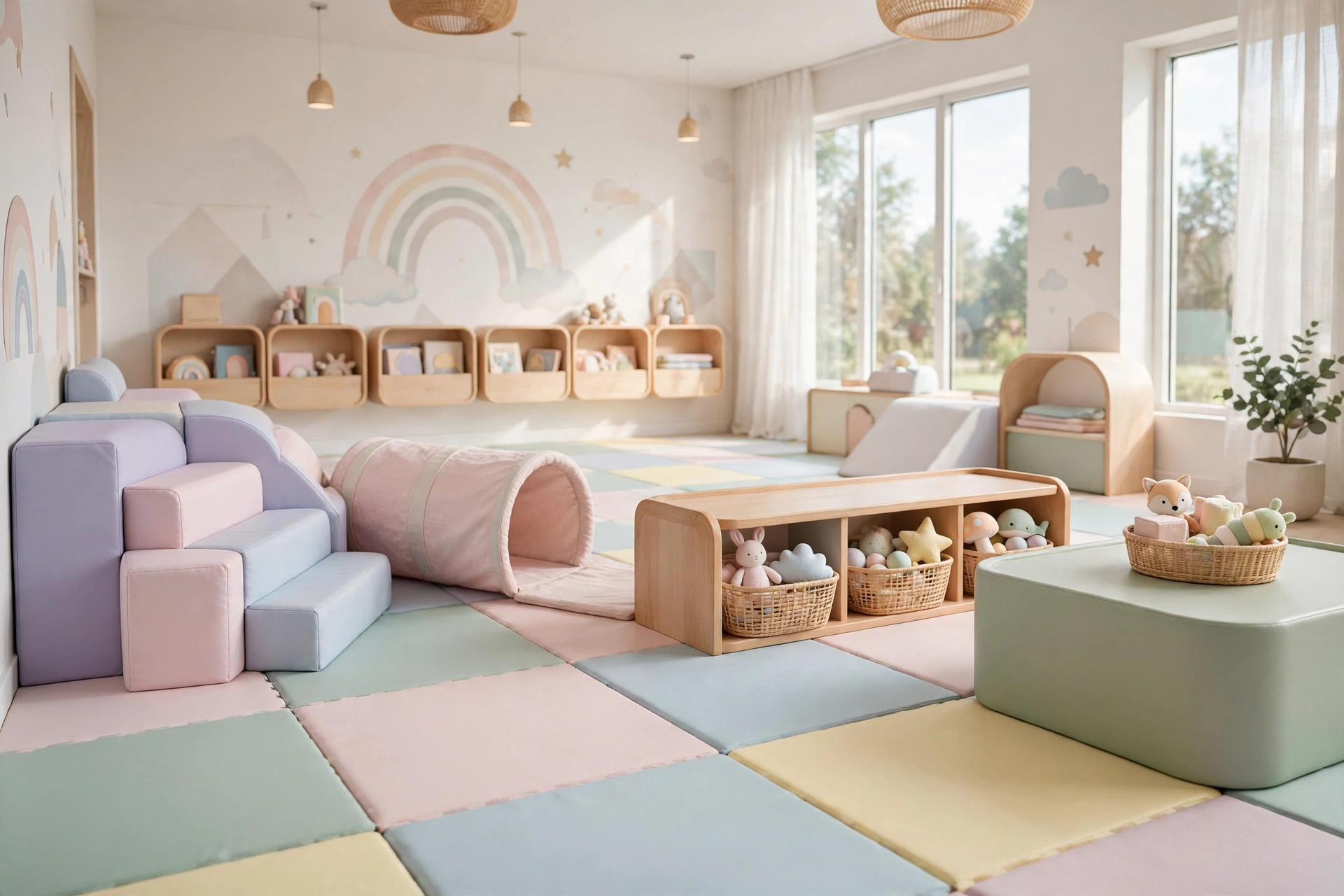
Toddlers need a playroom that is safe to fall in. Thick foam floor tiles or a large padded play mat, soft climbing blocks, a mini ball pit or a fabric tunnel, and low, stable furniture with rounded corners create a space where little ones can pull up, cruise, tumble, and explore without hard edges everywhere. Keep the palette soft and the toy count low — toddlers play better with fewer choices.
Choose toys that support motor development: stacking rings, push toys, soft balls, and simple shape sorters stored in open baskets on the floor. Anchor any shelving to the wall, cover outlets, and keep small pieces from older siblings in a separate closed bin. A low mirror mounted securely at floor level fascinates toddlers and encourages tummy time and early self-recognition.
7. Small-Space Playroom with Fold-Away Furniture
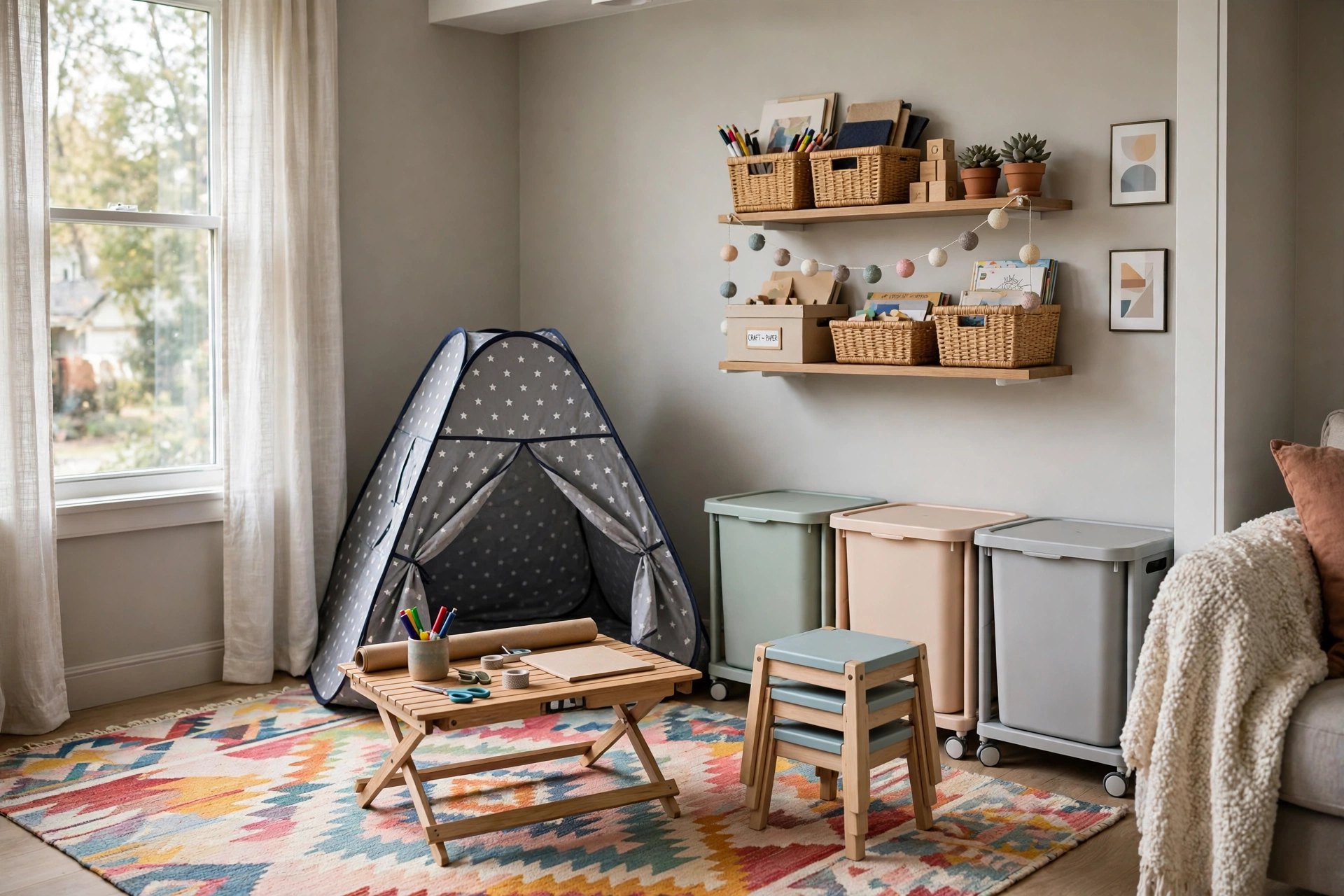
You do not need a spare room for a great playroom — a corner of the living room, a wide hallway, or half of a bedroom can work beautifully with fold-away pieces. A folding craft table, stackable stools, a play tent that collapses flat, and rolling bins that slide under a sofa or bed let the space appear for playtime and disappear for the evening.
Use vertical space with wall-mounted shelves and a hanging organizer for art supplies, and define the zone with a rug that can be rolled up when needed. A consistent color palette that matches the rest of the room keeps a shared-space playroom from feeling chaotic. The golden rule for small playrooms is editing — if it does not fit in the bins, it does not stay in the room.
8. Basement Playroom with Activity Zones
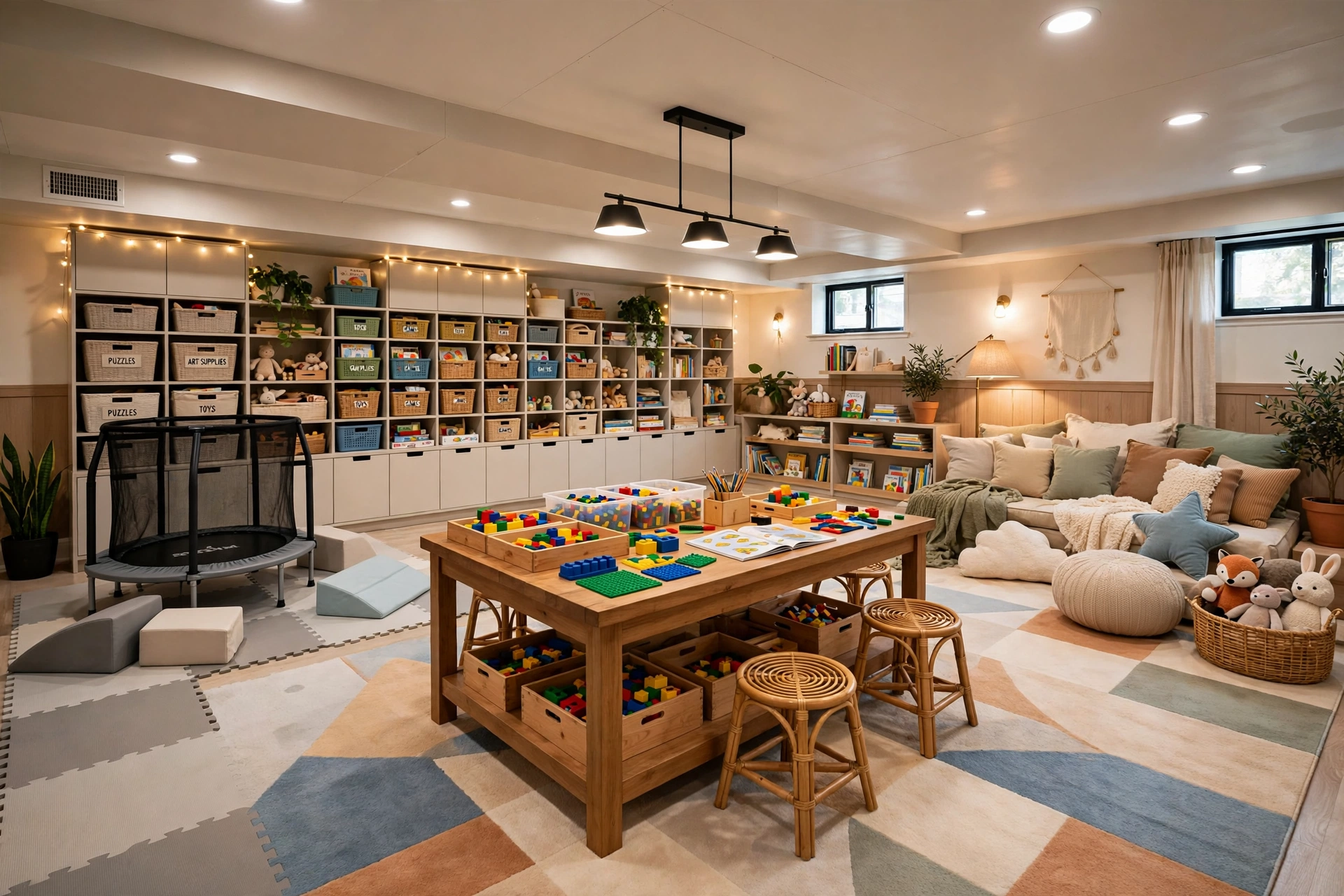
A basement is a gift for families — a whole floor where noise, mess, and big energy are welcome. Divide the space into clear zones: an active zone with a mini trampoline or foam mats, a building zone with a large table, a quiet zone with books and cushions, and a storage wall that holds everything else. Zoning stops the whole basement from becoming one giant toy pile.
Basements need extra attention to light and warmth. Layer bright ceiling lights with lamps in the quiet corner, add a large area rug over hard floors, and use a dehumidifier if the air feels damp. Paint walls a warm, light color to counter the lack of windows, and add framed kids artwork and bunting so the space feels cheerful rather than like a storage room with toys in it.
9. Play Tent and Teepee Hideaway Playroom
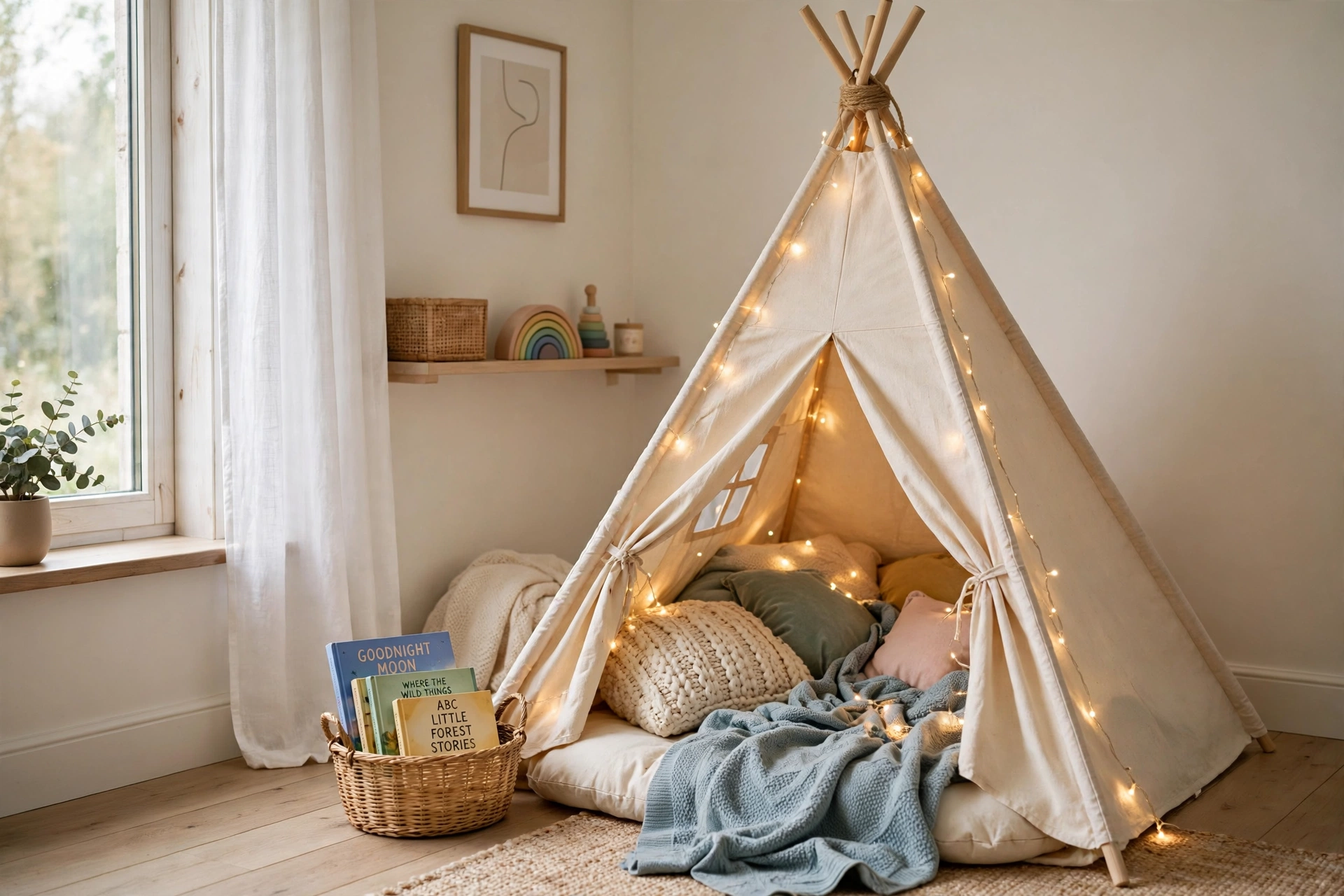
A play tent or teepee gives kids the one thing every playroom needs — a place to hide. Set a canvas teepee, a pop-up tent, or a fabric playhouse in a corner with cushions and a soft blanket inside, and it becomes a reading den, a pretend campsite, a vet office, and a secret clubhouse all in one week. The enclosed feeling helps overstimulated kids reset.
Keep a small basket of quiet toys just for the tent — books, a flashlight, stuffed animals — so the hideaway stays a calm zone rather than filling up with everything. String battery fairy lights inside for a magical glow that is safe and cord-free. When the room needs to change, most play tents fold flat against a wall in under a minute.
10. Scandinavian Minimalist Playroom
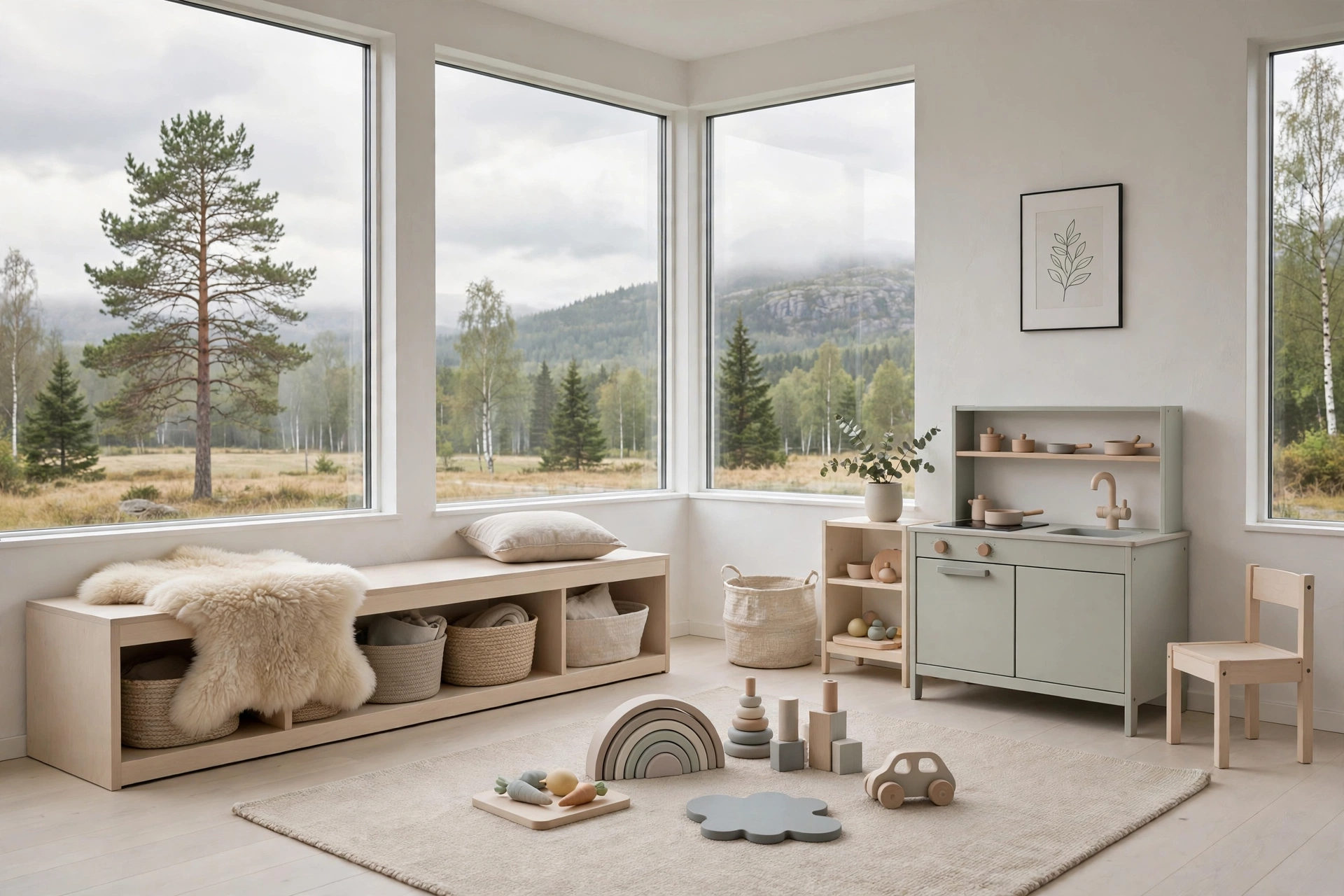
A Scandinavian playroom proves that calm and playful can live together. Pale wood furniture, white walls, a soft neutral rug, and a restrained palette of toys in natural materials create a space that feels light and uncluttered. The secret is not owning less for its own sake — it is displaying less at once, with closed storage hiding the rotation stock.
Choose a few beautiful, open-ended toys — wooden blocks, a play kitchen in muted tones, a simple train set — and let them be the decor. Add warmth with a sheepskin or a chunky knit throw, a potted plant out of reach, and framed simple prints at child height. This style is especially good for shared living spaces, where the playroom has to look calm when the kids are in bed.
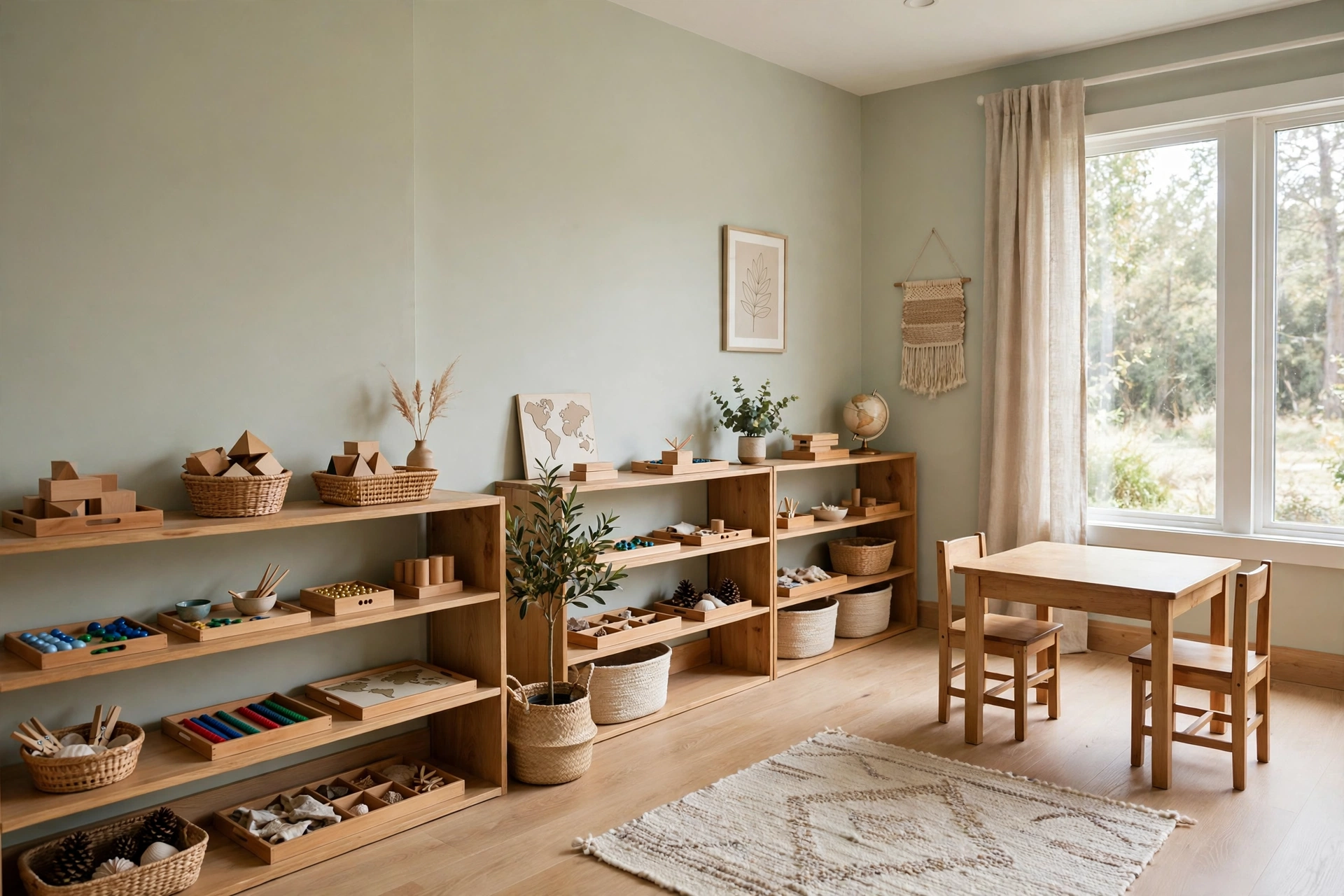
11. Montessori-Inspired Low-Shelf Playroom
A Montessori playroom is built around independence: low open shelves, a small number of activities displayed on trays, and everything sized so a child can choose, carry, use, and put back an activity without adult help. Each toy or puzzle sits on its own tray or in its own basket, which teaches order and makes cleanup a natural part of play.
Rotate activities every week or two based on what your child is drawn to, and remove anything that has not been touched. A low work rug defines where an activity happens, a child-sized table and chair give a place for focused work, and a small plant or a vase the child can care for adds practical life skills. Keep walls simple so the shelves, not the decor, hold the attention.
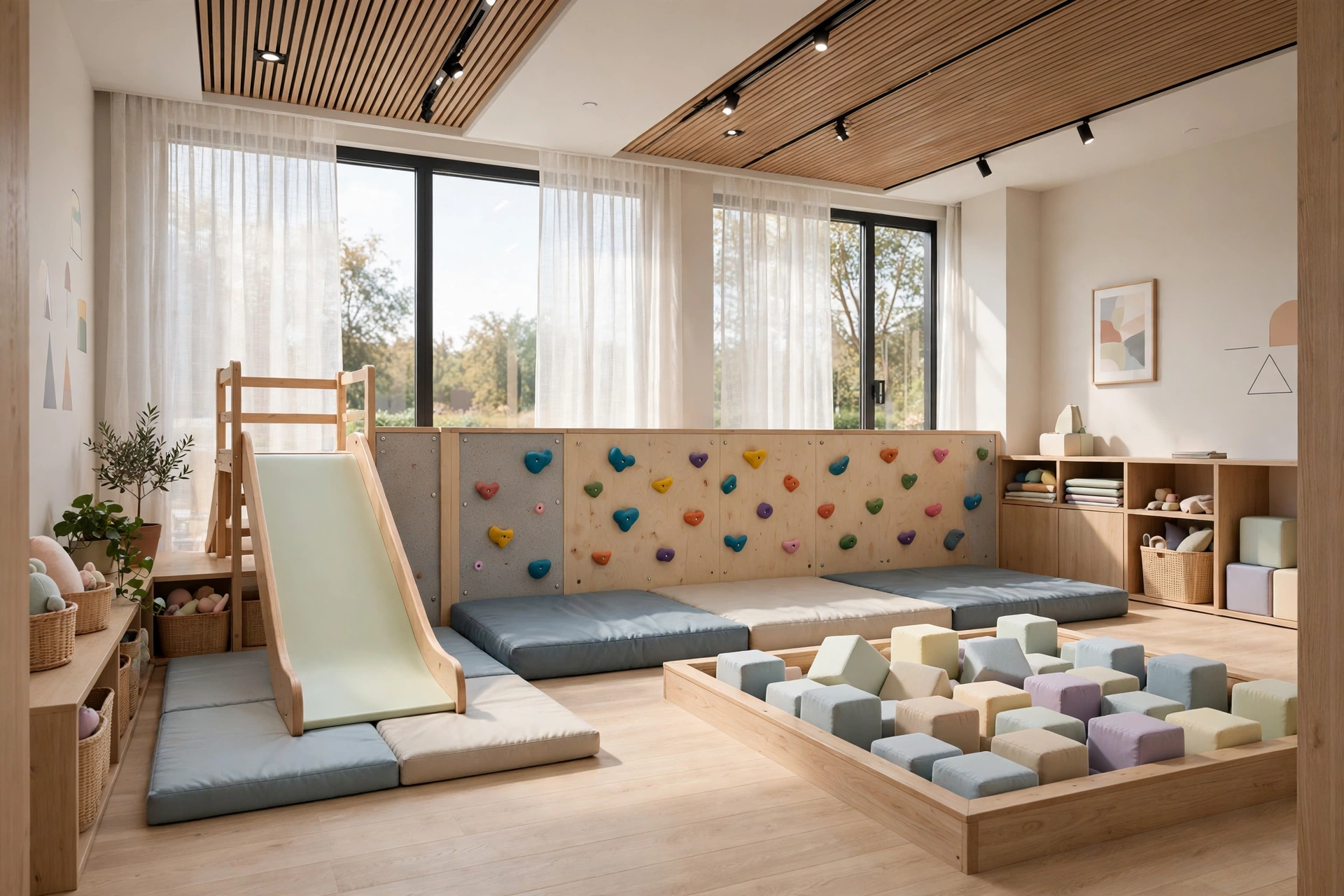
12. Playroom with Indoor Slide and Climbing Wall
For high-energy kids, an active playroom with a small indoor slide, a low climbing wall, or a pikler triangle burns energy in any weather. Mount climbing holds on a reinforced wall section with thick crash mats below, keep the slide on a soft surface, and leave a clear landing zone that never gets used for storage. Active corners work best at the far end of the room, away from quiet zones.
Safety is the design brief here: anchor everything, check holds and screws regularly, and set clear rules about one child at a time on the slide. Balance the active corner with calm options nearby — a cushion pit for landing and resting, and water available without leaving the room. On rainy days, this corner will be the most-used square meters in your home.
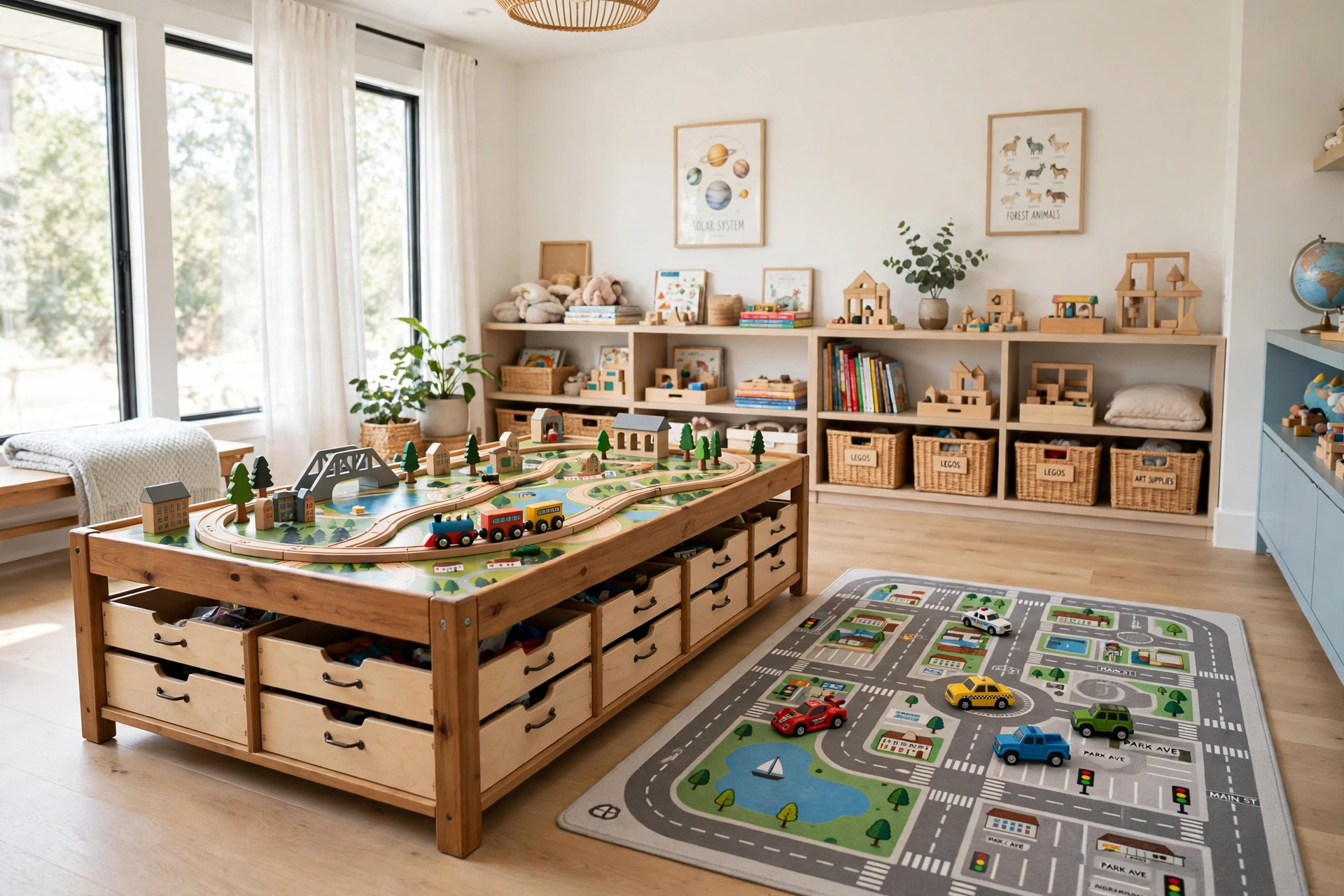
13. Train Table and Car Play Playroom
A train table gives tracks, roads, and little vehicles a permanent home where layouts can stay up for days. The raised edges keep trains and cars contained, the flat surface works for puzzles and building too, and drawers or bins underneath store extra track pieces and vehicles. Painting a simple road and landscape on the tabletop makes even a basic setup feel like a whole world.
Add a few buildings, trees, and figures in an open basket so kids can extend the scene, and keep a second small rug with a printed road map beside the table for floor-based car play. Label vehicle bins by type — trains, cars, emergency vehicles — so cleanup stays quick. This zone suits a wide age range, from toddlers pushing a first train to older kids engineering elaborate layouts.
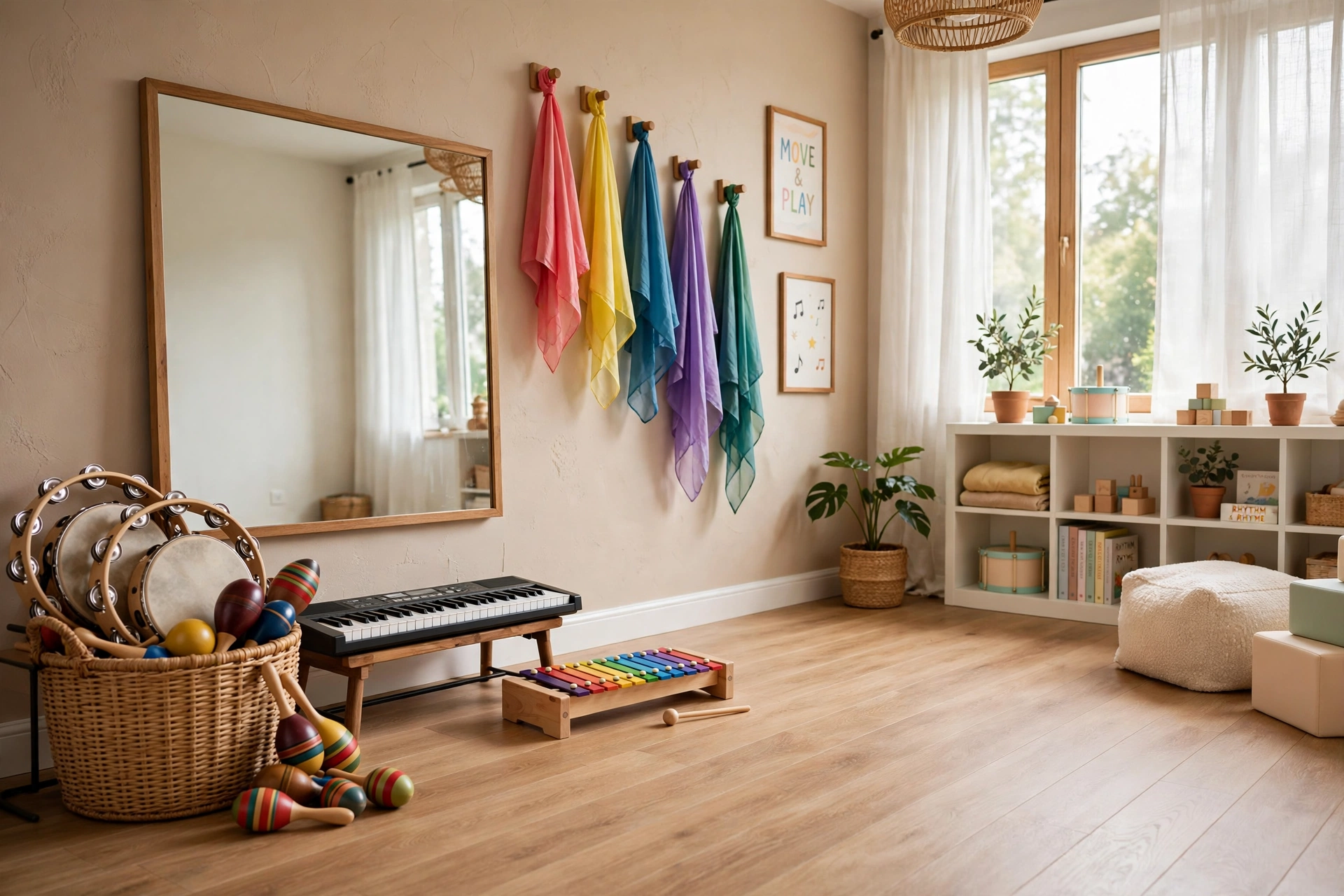
14. Music and Dance Playroom Corner
A music corner invites kids to make noise on purpose — in the right place. A basket of shakers, tambourines, and rhythm sticks, a small keyboard or xylophone on a low stand, and an open patch of floor for dancing create a zone that is joyful and contained. A mirror along one wall, mounted securely, turns the corner into a mini dance studio.
Keep instruments in open storage so they get picked up often, and add a small speaker for dance-along songs with a simple rule about volume and quiet hours. A washable rug softens sound a little and marks the dance floor. Scarves, ribbons, and a dress-up bin nearby extend music play into movement and performance without any extra furniture.
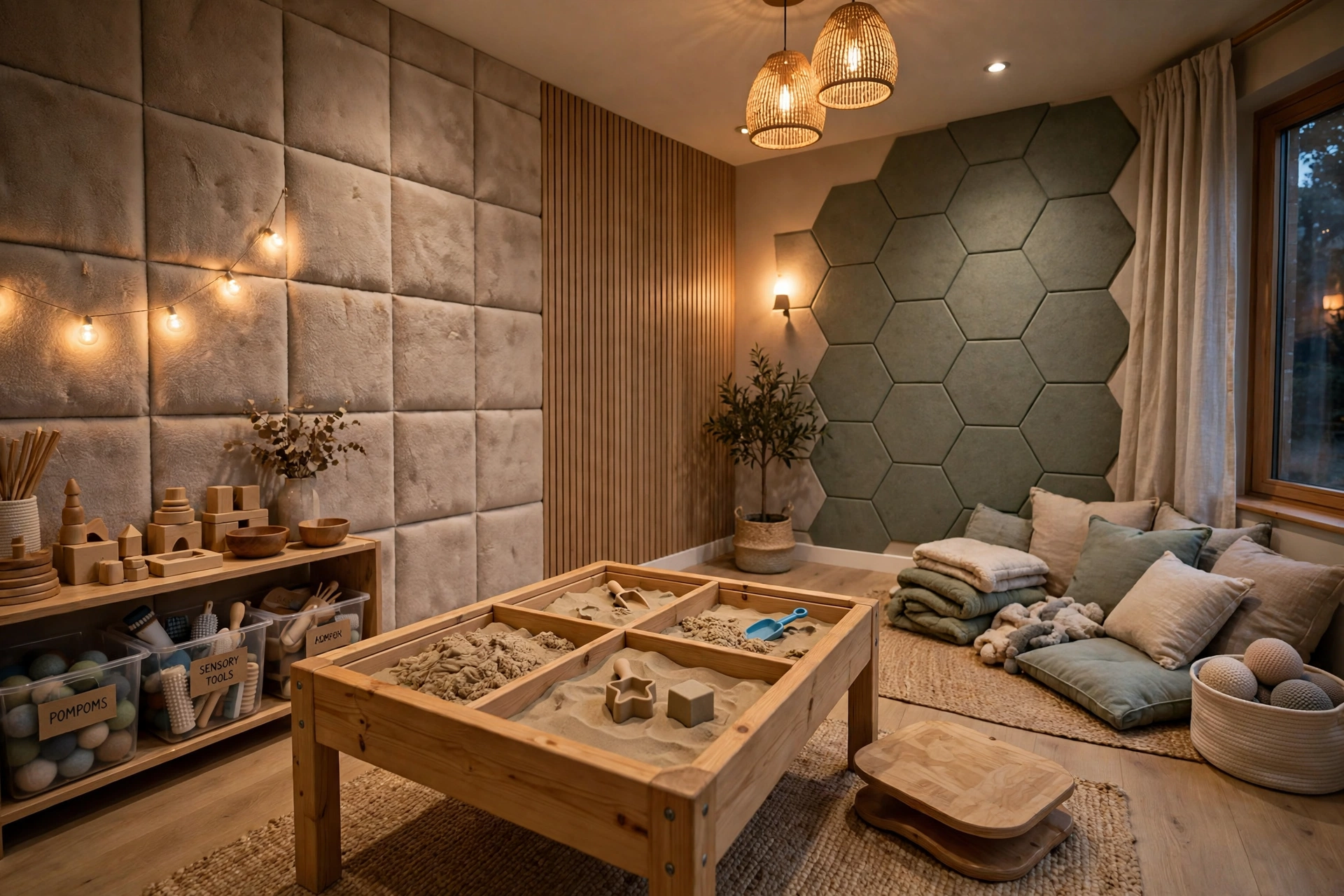
15. Sensory Playroom with Texture Wall
A sensory playroom supports kids who learn and calm themselves through touch, movement, and deep pressure. A texture wall with securely mounted panels — soft fleece, smooth wood, bumpy silicone, a felt board — gives hands plenty to explore, while a sensory bin table for rice, beans, or kinetic sand provides focused, soothing play that can last for half an hour at a stretch.
Add a weighted lap pad or a compression cushion in the quiet corner, a mini trampoline or a wobble board for movement breaks, and dimmable warm lighting instead of harsh overheads. Keep sensory materials in closed containers when not in use and set a simple mat boundary for fillers like rice so cleanup stays manageable. Every child benefits from sensory play, not only those with a diagnosis.
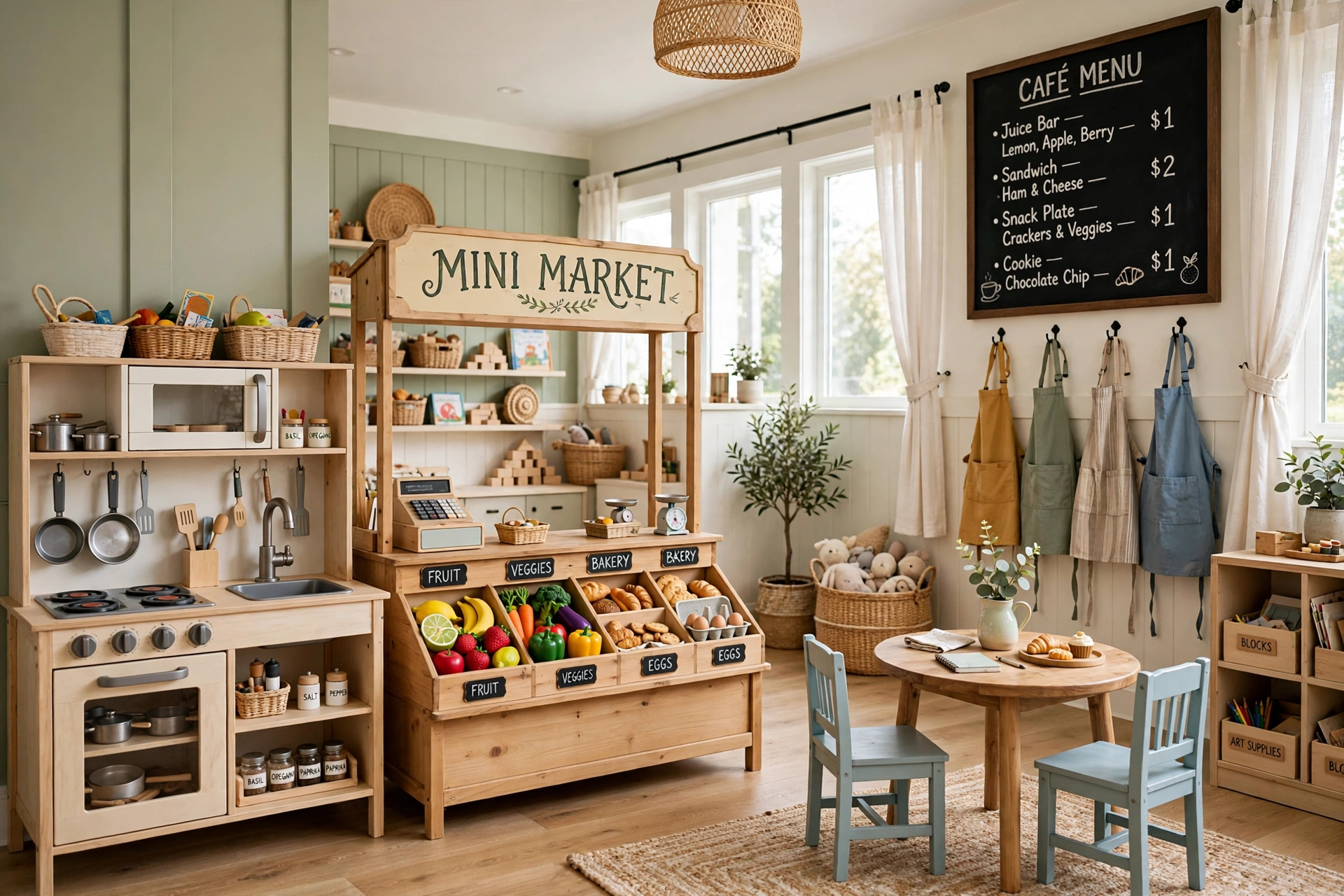
16. Play Kitchen and Market Pretend Play Area
A play kitchen is the hardest-working toy in any playroom, and it deserves a proper setup. Place the kitchen against a wall with a small table and chairs beside it as the cafe, open shelves or a mini market stand for play food, and bins sorted by type — fruits, vegetables, baking — so little chefs can find ingredients fast. A handwritten menu board adds literacy play to the fun.
Stock the area with real-world props: a play shopping basket, empty clean food boxes, a toy cash register, and dress-up aprons on hooks. Rotate a theme every few weeks — bakery, pizza shop, farmers market — using the same core pieces with a few swapped props. Pretend food play builds language, counting, and social skills while feeling like pure fun.
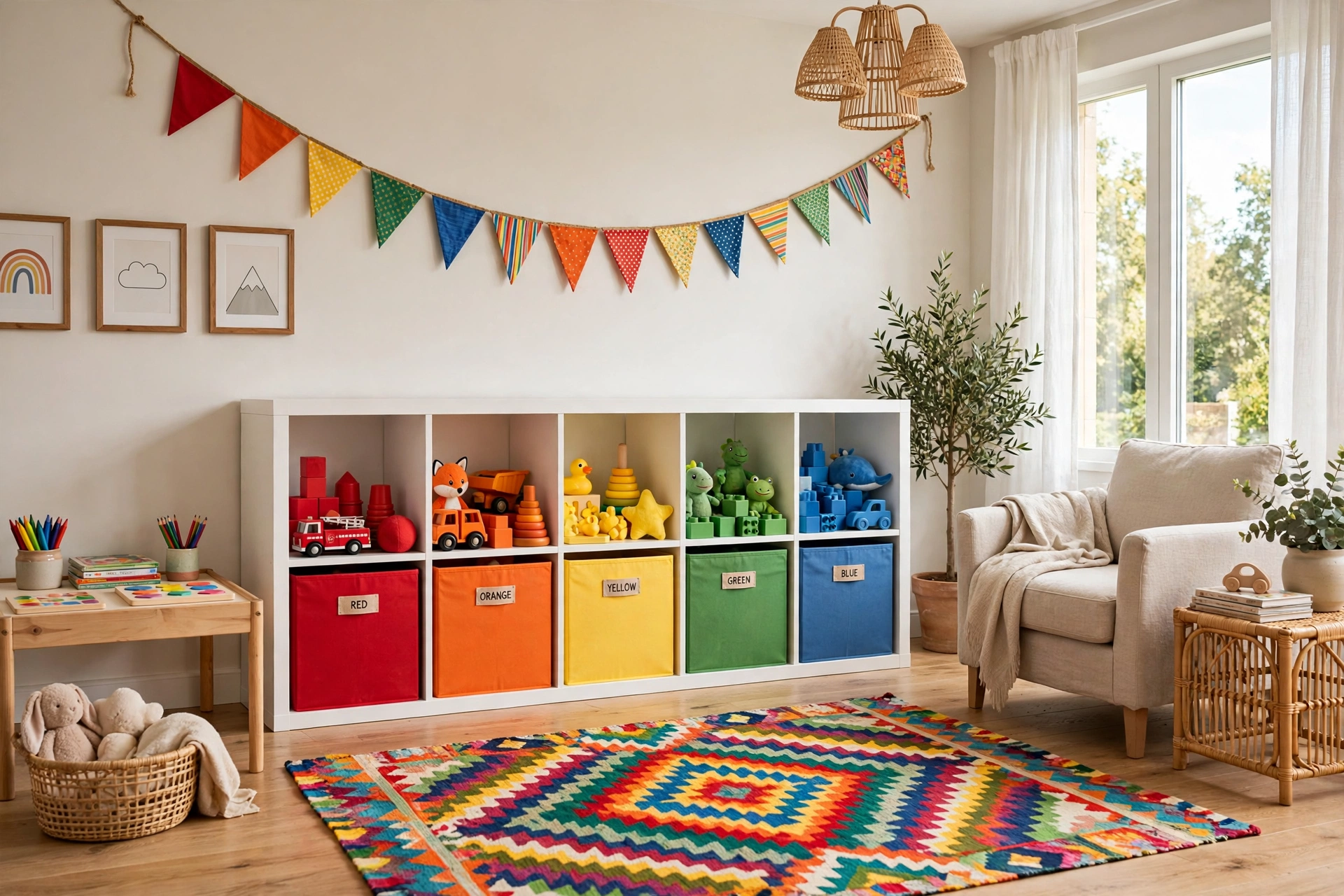
17. Rainbow Color-Coded Toy Storage Playroom
Color-coding turns cleanup into a matching game kids can actually win. Bins, baskets, and shelf labels in rainbow order — red for art, orange for blocks, yellow for cars, and so on — give every toy a home that is easy to find and easy to remember. The system works for pre-readers because the color, not the word, does the directing.
Carry the rainbow gently into the rest of the room with a colorful rug, bunting, or a set of framed prints so the storage looks intentional rather than chaotic. Keep the furniture itself neutral — white shelves and a natural wood table — so the color comes from the bins and toys and can change as tastes change. A quick photo of the tidy shelves, printed and taped inside a cupboard door, shows kids exactly what cleaned up looks like.
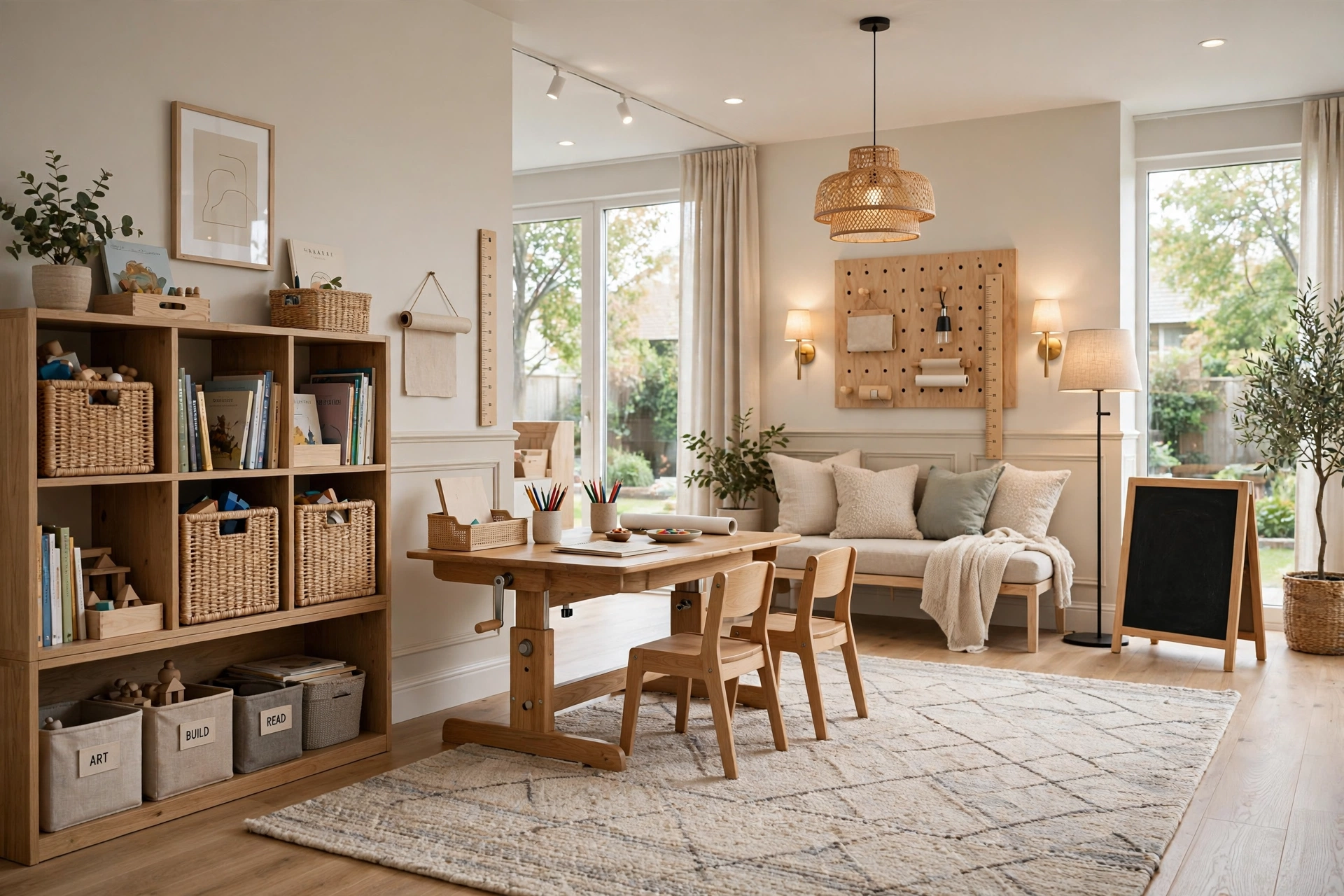
18. Playroom That Grows with Kids — Convertible Layout
The smartest playrooms are designed to change. Start with low open storage and a soft floor for toddlers, then raise shelf heights, swap the play kitchen for a building table, and later trade the tent for a desk and a reading chair — all without replacing the core furniture. Choose storage units that work at every age: cube shelves hold bins now and books and board games later.
Invest in a good rug, good lighting, and neutral walls that suit a two-year-old and a ten-year-old equally, and let the age-specific layer be the cheap, changeable one — bins, cushions, wall art, and toys. A height-adjustable table and chairs that stack or fold extend the life of the room further. Planning for change from day one saves money and keeps the room loved for a decade.
19. Homework and Play Combo Room
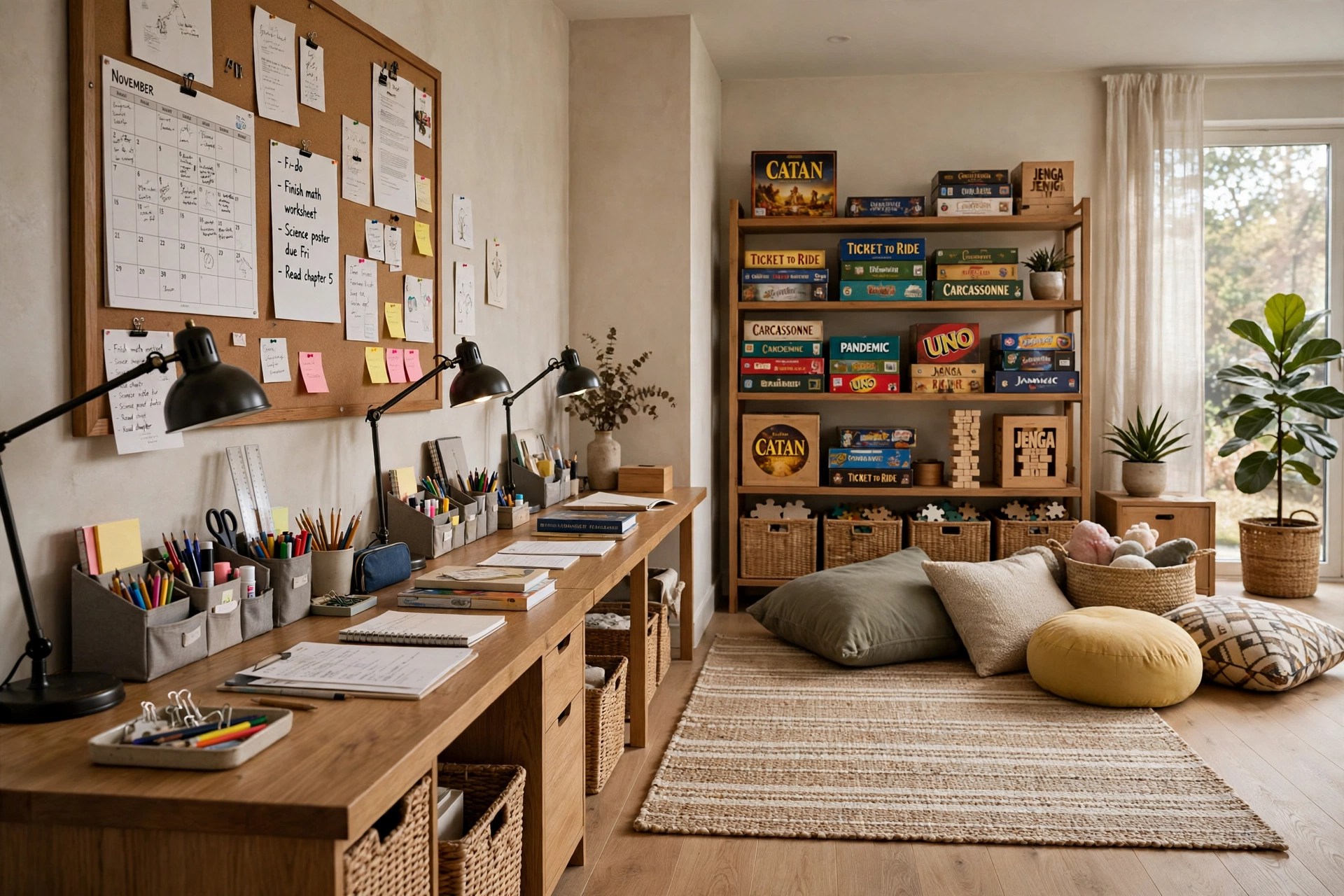
Older kids need a playroom that can switch into study mode. A desk or a long wall-mounted worktop with task lamps and supply caddies handles homework and projects, while the other half of the room keeps board games, building sets, and a comfy seat for downtime. A clear visual divide — a rug under the play zone, a shelf used as a divider — helps the brain switch modes.
Keep school supplies in closed drawers or lidded boxes so the room does not feel like a classroom during playtime, and use a pinboard above the desk for timetables and proud work. Comfortable seating matters for both modes: a supportive desk chair for homework and floor cushions for games. This combo works especially well in a spare bedroom or a finished attic shared by siblings.
20. Chalkboard Wall Playroom for Drawing
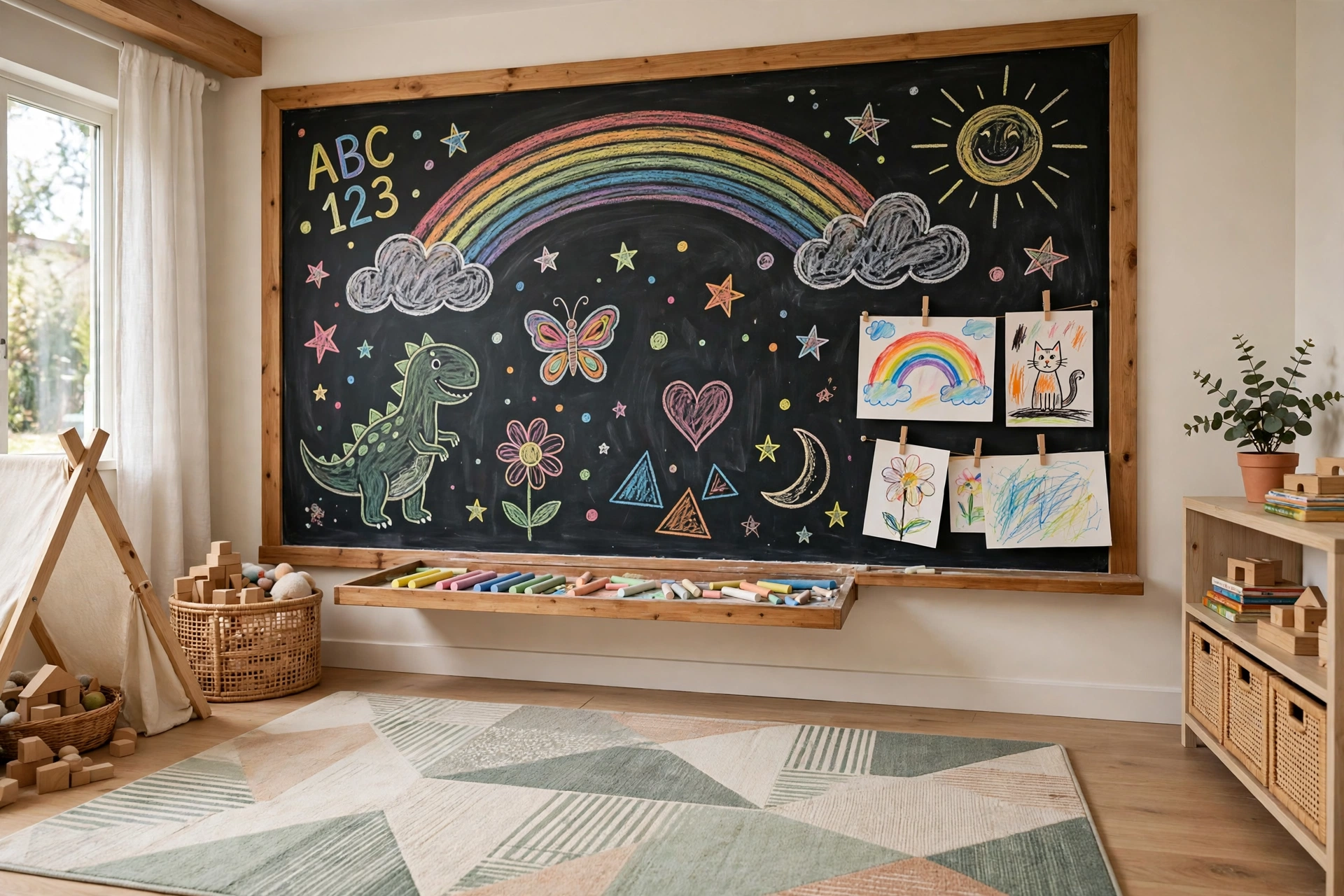
A chalkboard wall gives kids a giant, endlessly reusable canvas — and saves your painted walls everywhere else. One accent wall in chalkboard paint, a tray for chalk and an eraser, and a washable floor mat underneath create an art zone with zero paper waste. Kids draw bigger, bolder, and more collaboratively on a wall than they ever do on a sheet of paper.
Frame the chalkboard area with a painted border or wood trim so it looks like a deliberate feature, and add a small gallery ledge beside it for paper artwork that deserves to stay. Dustless chalk keeps the mess down, and a quick weekly wipe resets the wall. Leave a corner of the board for a family message, a weekly drawing prompt, or a height chart that becomes a keepsake.
21. Ball Pit Playroom for Active Play
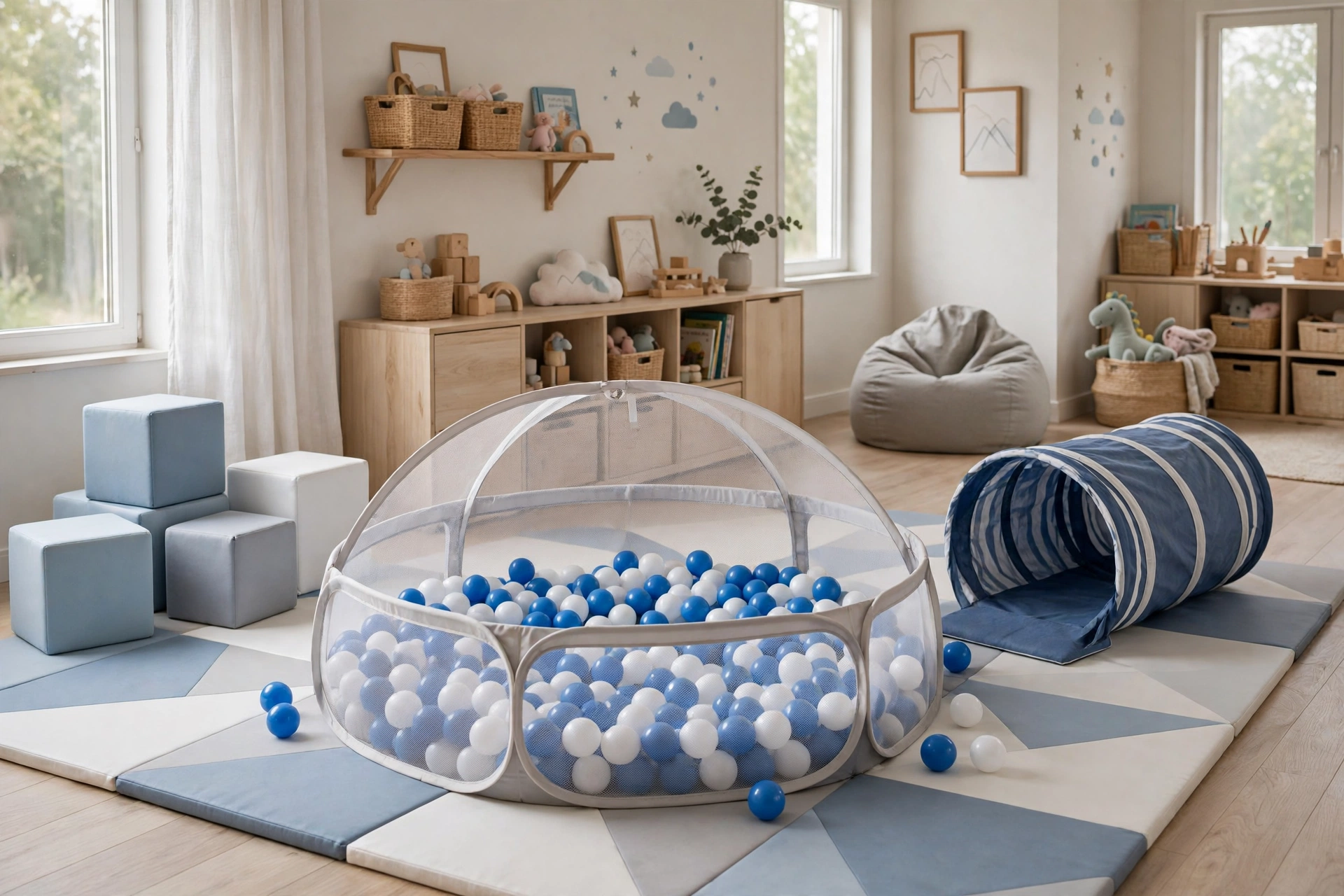
A ball pit brings soft, joyful, full-body play indoors. A pop-up pit, an inflatable pool, or a foam pit filled with crush-proof balls in two or three coordinated colors looks cheerful and keeps the chaos contained. Place the pit on a mat in the active zone, away from shelves and hard furniture edges, and set a clear rule that balls stay in the pit zone.
Choose balls that are large enough not to be a choking hazard for the youngest child in the house, and plan for the reality that balls travel — a low barrier or a playpen-style fence around the zone helps enormously. Wash balls in batches in a mesh laundry bag a few times a year. Pair the pit with soft blocks and a tunnel so the active corner offers more than one way to move.
22. Nature-Inspired Woodland Playroom
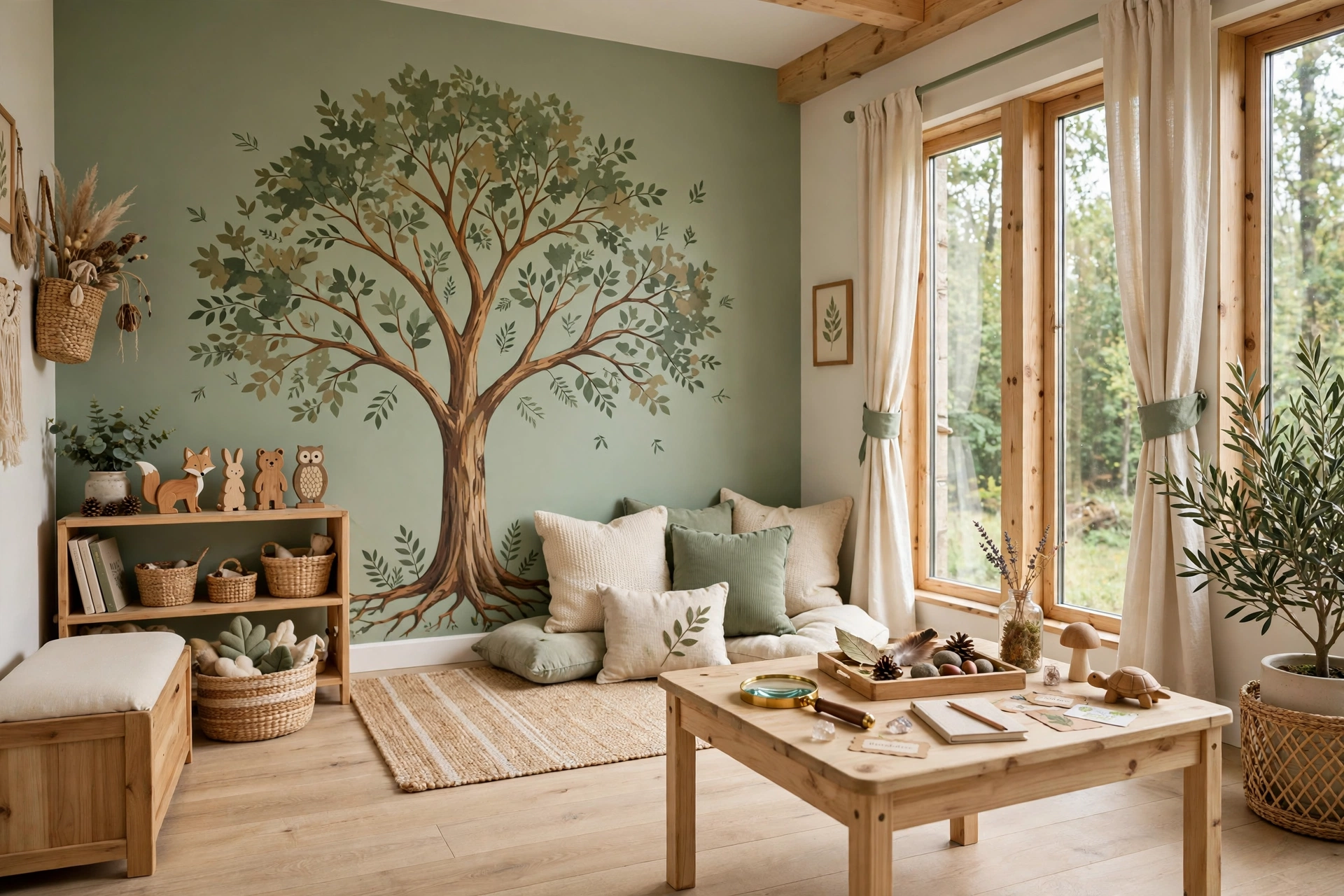
A woodland playroom brings the calm of the forest indoors with natural wood furniture, leafy green accents, and animal touches that spark storytelling. A reading tree — a large tree decal or a bookshelf shaped around a trunk-like column — makes a magical centerpiece, with cushions at its base as the story circle. Wooden animal figures, a nature table, and pinecone and leaf collections extend the theme into play.
Keep the palette grounded: warm wood, sage and forest greens, cream, and touches of rust or mustard. A nature table with a magnifying glass, a small basket for found treasures, and a seasonal display teaches observation and changes with the year. Soft lighting and natural textures — linen, wool, woven baskets — keep the room feeling peaceful even when play gets busy.
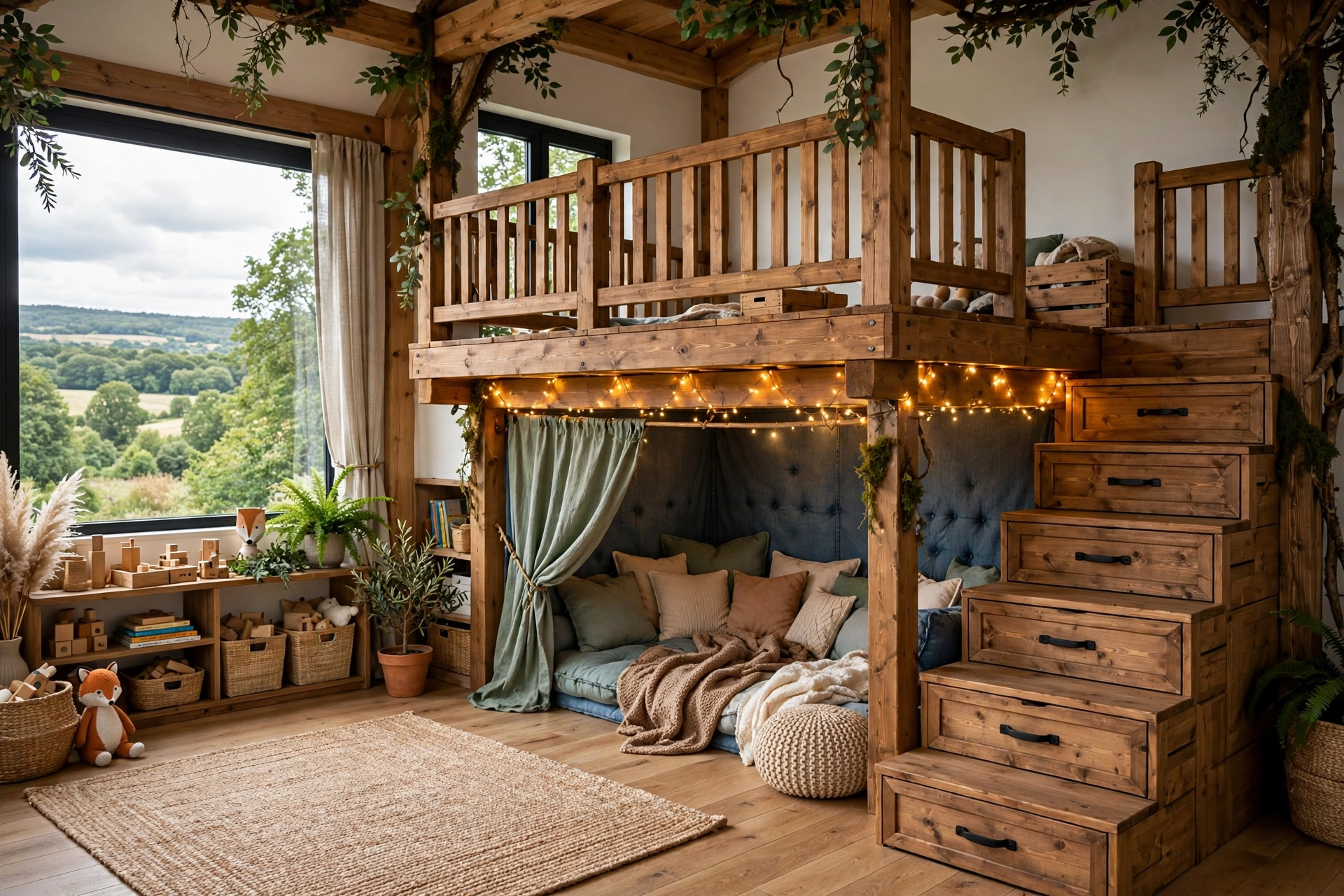
23. Playroom with Loft and Under-Loft Den
A play loft uses vertical space to double a playroom. A sturdy raised platform — reached by steps with storage drawers inside them — becomes an upper play deck for reading, dolls, or quiet games, while the space underneath turns into a cozy den with cushions, a curtain doorway, and fairy lights. Two distinct spaces in one footprint is a win in any home.
Safety comes first: solid guardrails on the loft, a gate if toddlers use the room, non-slip step treads, and a strict rule about what stays up top — soft, quiet toys only. Keep the under-loft den stocked with blankets and books so it serves as the calm zone, and let the main floor hold the active and messy play. A loft playroom feels like a treehouse, and kids never really outgrow loving it.
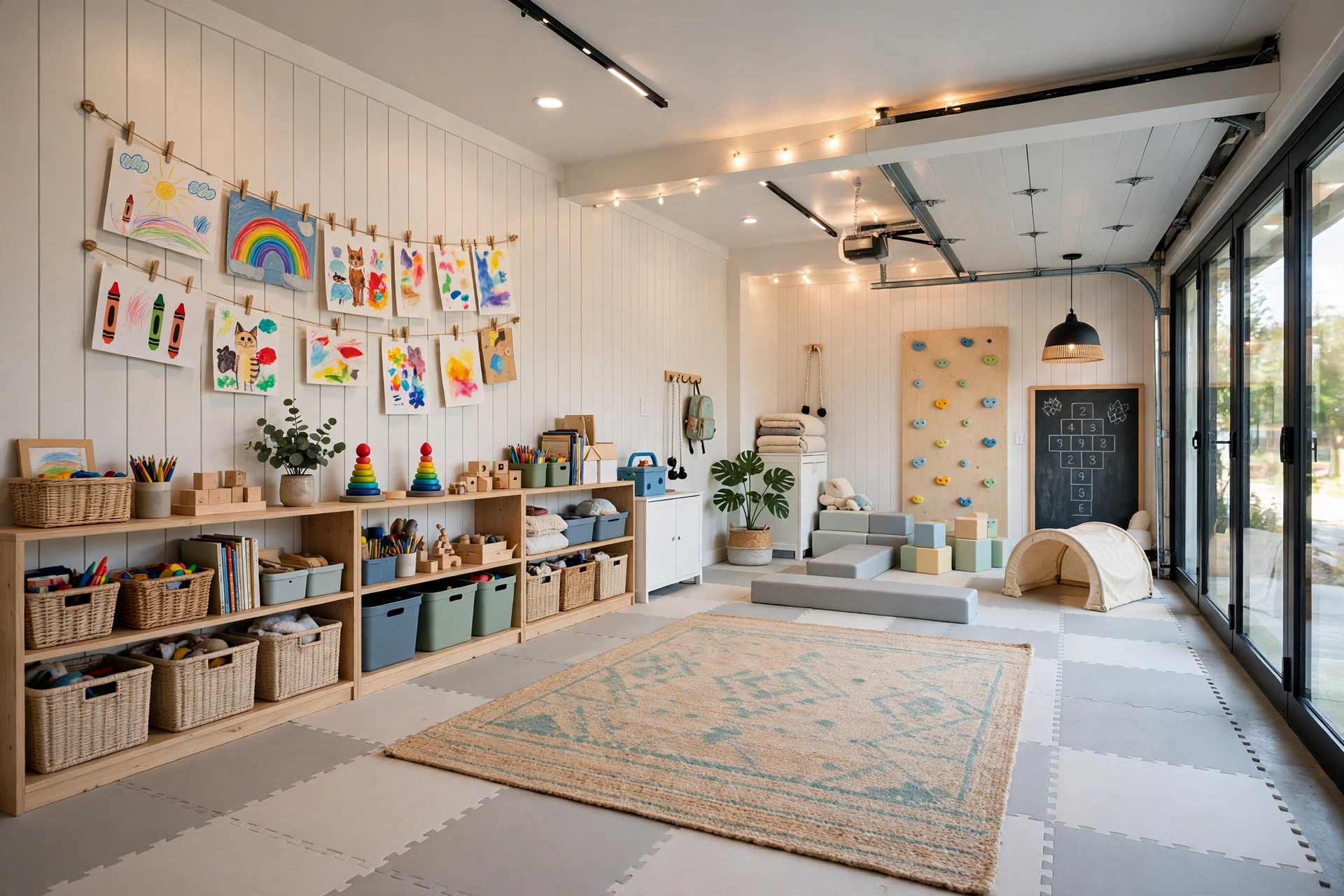
24. Garage-Converted Playroom
A converted garage can become the best playroom in the house — big, separate, and forgiving of noise and mess. Insulate and finish the walls, lay interlocking foam tiles or a large low-pile rug over the slab, and use the generous wall space for storage, a chalkboard or art wall, and a climbing or sports zone that would never fit in a bedroom.
Garage playrooms need deliberate comfort: a space heater or mini-split for temperature, bright layered lighting to replace the missing windows, and a door mat and shoe spot to keep grit off the play floor. Keep one section of shelving for outdoor toys and bikes so the room bridges indoor and outdoor play. Always keep the space fully converted and child-safe — no tools, chemicals, or vehicle access sharing the room.
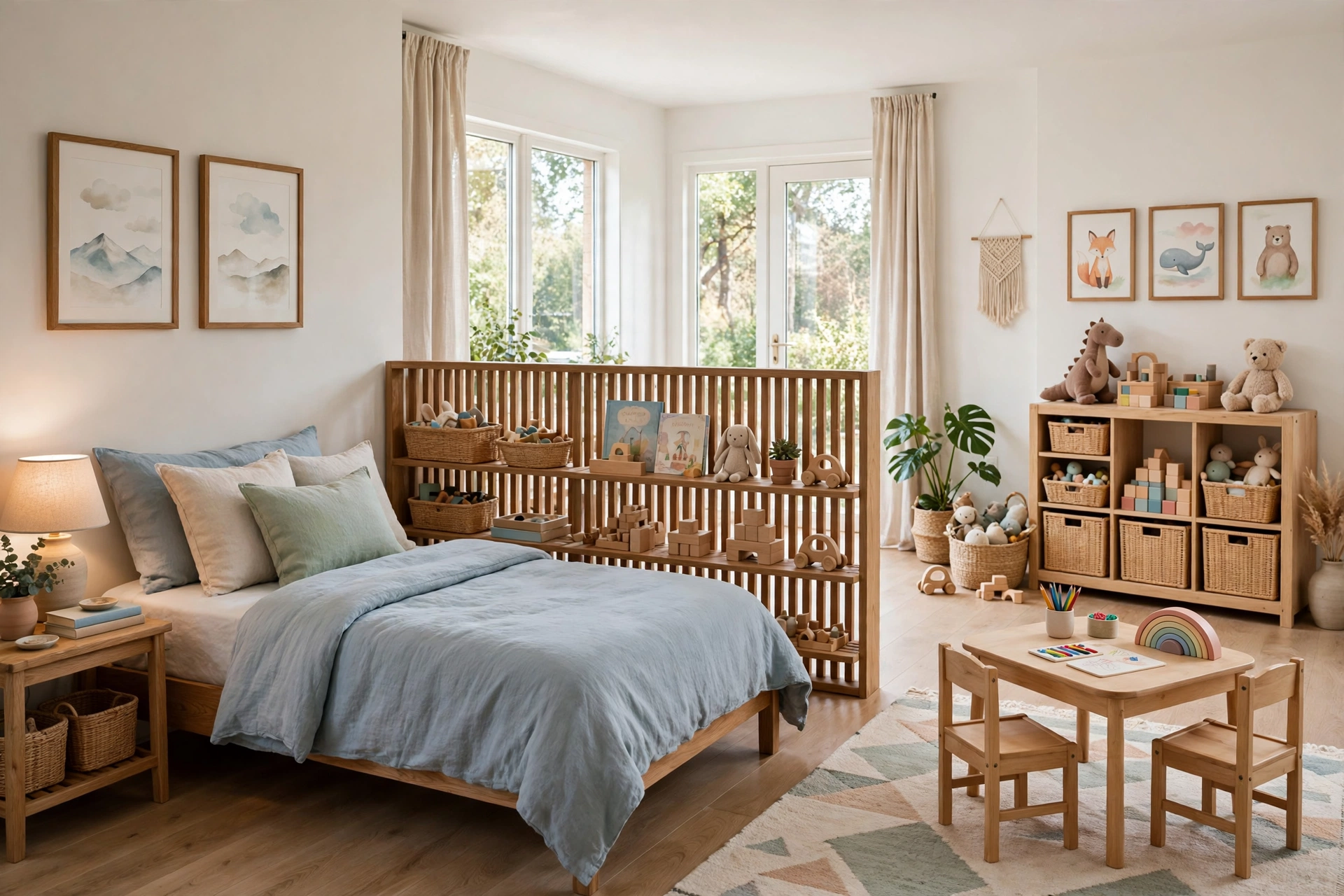
25. Shared Bedroom and Playroom Combo
When a bedroom has to double as the playroom, zoning is everything. Keep sleep and play visually separate: bed and calm colors on one side, a rug, toy storage, and the play table on the other. Closed storage — a dresser, lidded bins, a toy chest — matters more here than anywhere, because a tidy-looking room helps kids wind down at bedtime.
Choose a bedtime routine that includes a five-minute reset of the play zone, with a small basket for the one or two toys that are allowed in bed. A low shelf used as a room divider works wonders in shared sibling rooms, giving each child a side. Soft evening lighting on the sleep side and brighter task light on the play side reinforces the two zones without a single wall.
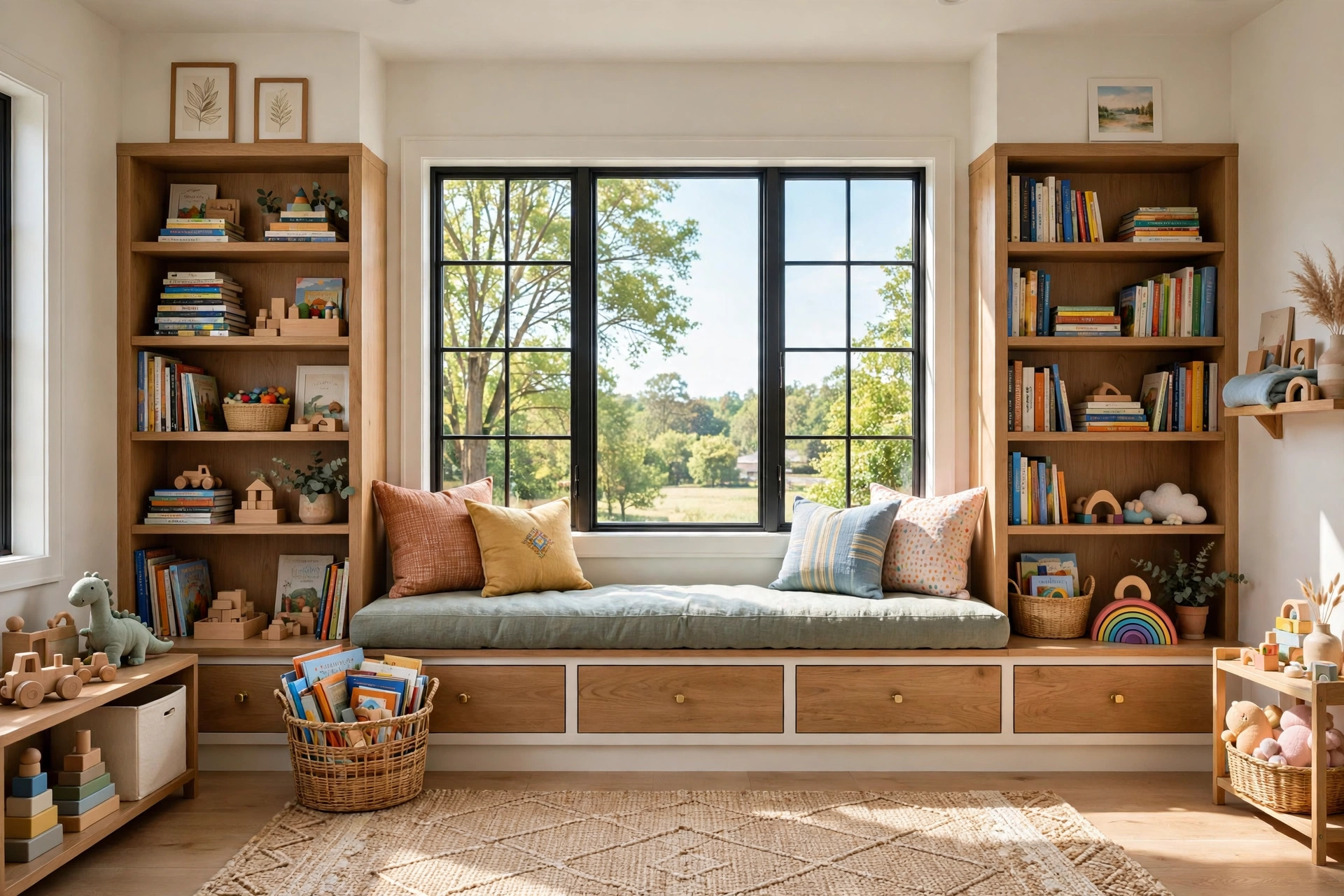
26. Playroom with Built-In Window Seat and Book Storage
A window seat turns the best light in the room into the best seat in the playroom. A built-in bench with a thick cushion, storage drawers or a lift-up lid underneath for games and blankets, and bookshelves flanking the window create a reading and daydreaming spot that kids and adults both claim. It is also the perfect perch for watching weather, birds, and the street outside.
Style the seat with washable cushion covers and a mix of pillows kids can rearrange into forts and nests. Keep a basket of current favorite books at one end and a small tray for a drink and a snack. If a full built-in is not possible, a low storage bench pushed under the window with a cushion on top gives almost the same effect for a fraction of the cost.
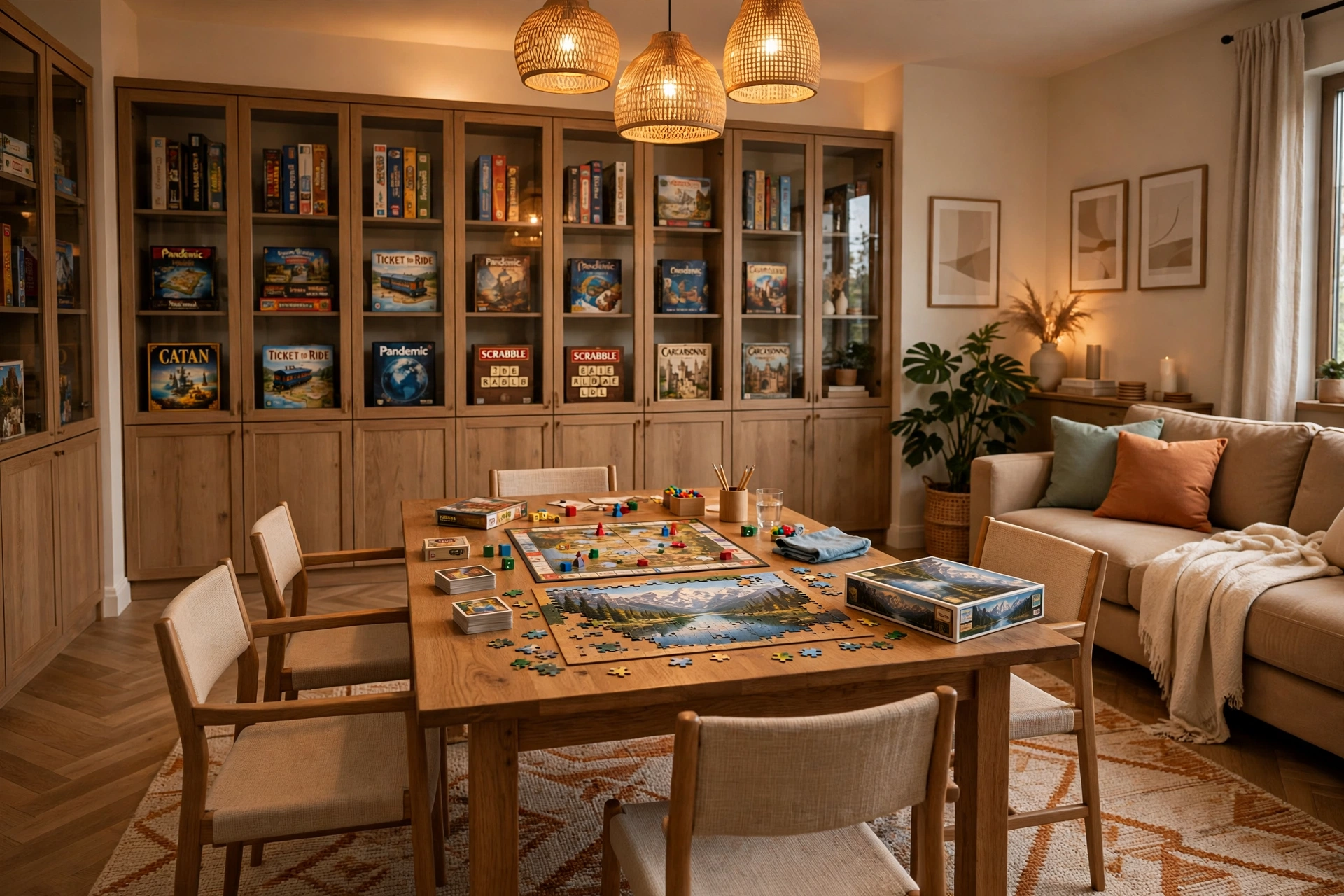
27. Puzzle and Board Game Playroom
A game-focused playroom is a gift for families with older kids. A table big enough for a board game or a thousand-piece puzzle — with chairs for at least four — becomes the heart of the room, and flat, closed shelving keeps game boxes stacked neatly and visible. A puzzle mat that rolls up lets an unfinished puzzle survive until the next session.
Add a small sideboard or cart for drinks and snacks, a good overhead light plus a lamp so game nights are easy on the eyes, and a comfy sofa or a pair of armchairs for card games and conversation. Store games with the box lids facing out like books so titles are readable at a glance. This is the playroom version that teenagers still use — and that is the highest praise a playroom can earn.
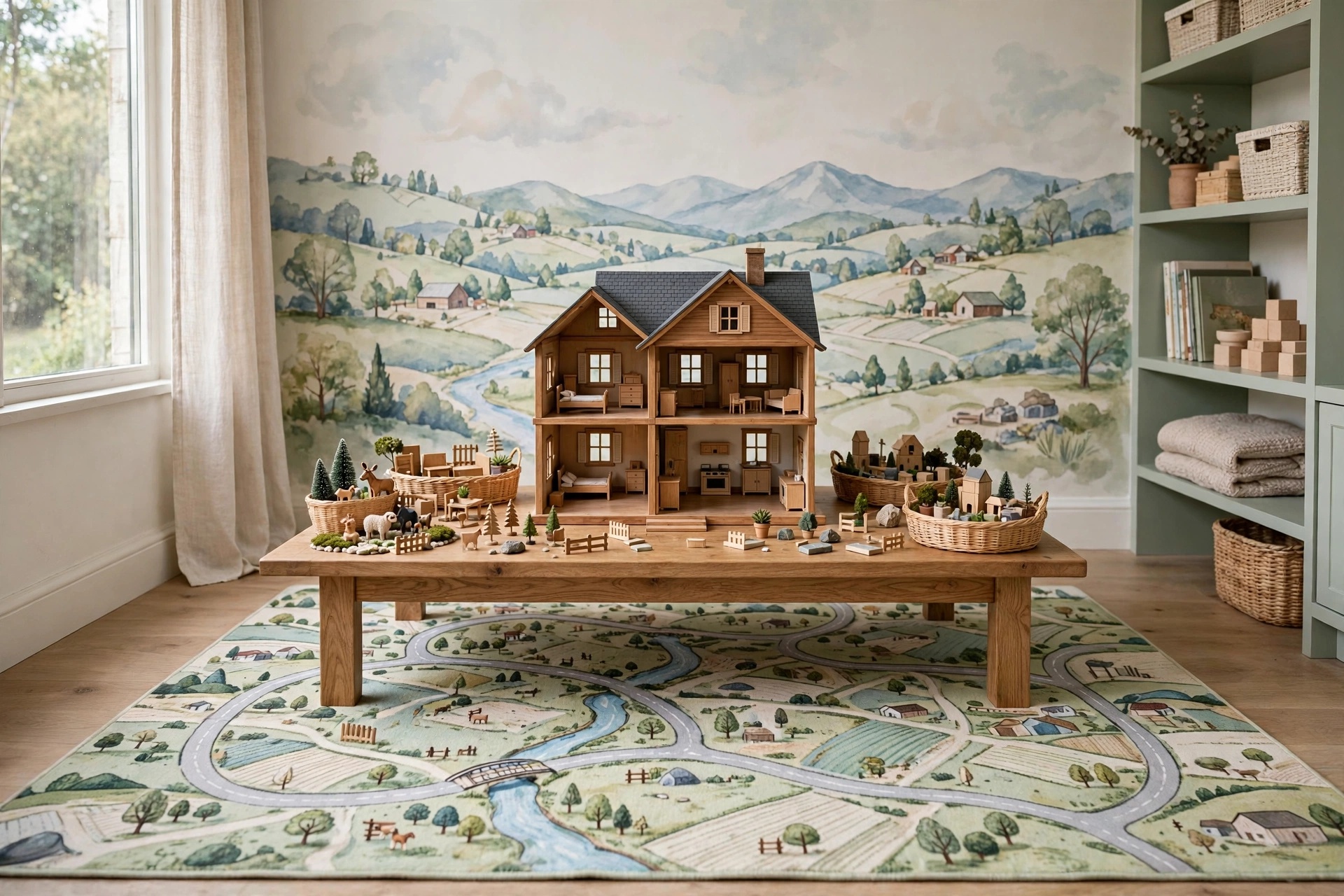
28. Dollhouse and Small-World Play Corner
Small-world play — dollhouses, fairy gardens, miniature shops, tiny animal worlds — needs a dedicated low surface where scenes can stay set up. A low table or a wide shelf at child height, a dollhouse as the anchor, and small baskets of figures, furniture, and vehicles let kids build and rebuild whole worlds. A plain backdrop or a painted scene on the wall behind extends the world for free.
Keep tiny pieces sorted in compartment boxes with lids, especially in homes with toddlers, and add a small rug with simple roads or a landscape print as a second play surface. Rotate the theme — house, farm, zoo, space station — by swapping the figure basket while the furniture stays the same. Small-world play is quiet, absorbing, and wonderful for language development and storytelling.
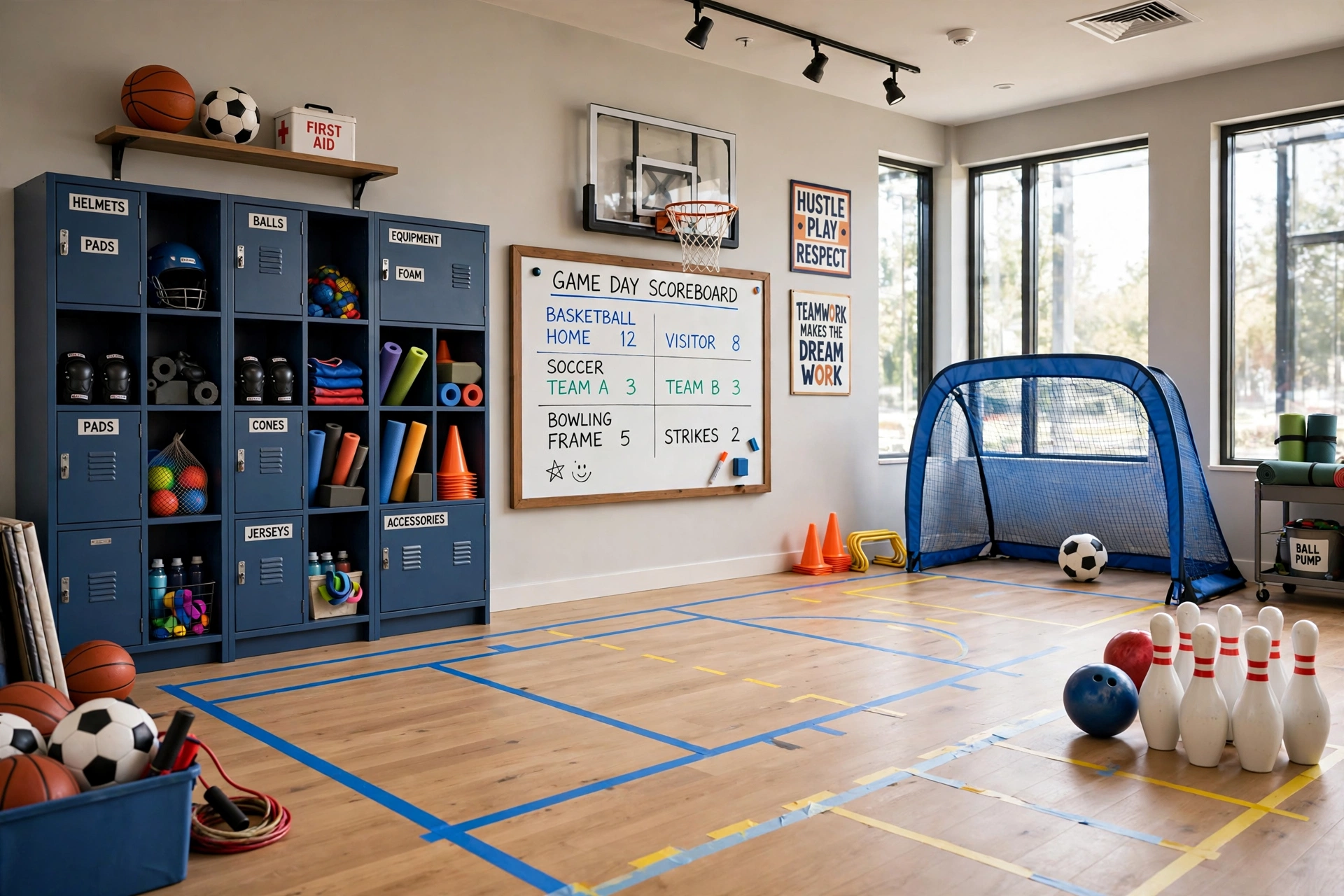
29. Sports-Themed Active Playroom
A sports-themed playroom channels big energy into games with rules. A mini basketball hoop, a soft soccer goal, a bowling set, or a table tennis topper on the play table gives kids active options that build coordination and turn-taking. Keep balls soft indoors, mark a simple court or target zone with removable floor tape, and store equipment in one tall bin so the room resets fast.
Balance the theme with practical touches: a scoreboard whiteboard, a bench or cubbies styled like lockers for shoes and gear, and framed simple prints rather than fragile decor. Set house rules early — soft balls only, no games near the reading corner — and keep a water station nearby. An active room that tires kids out happily is the secret to calmer evenings everywhere else in the house.
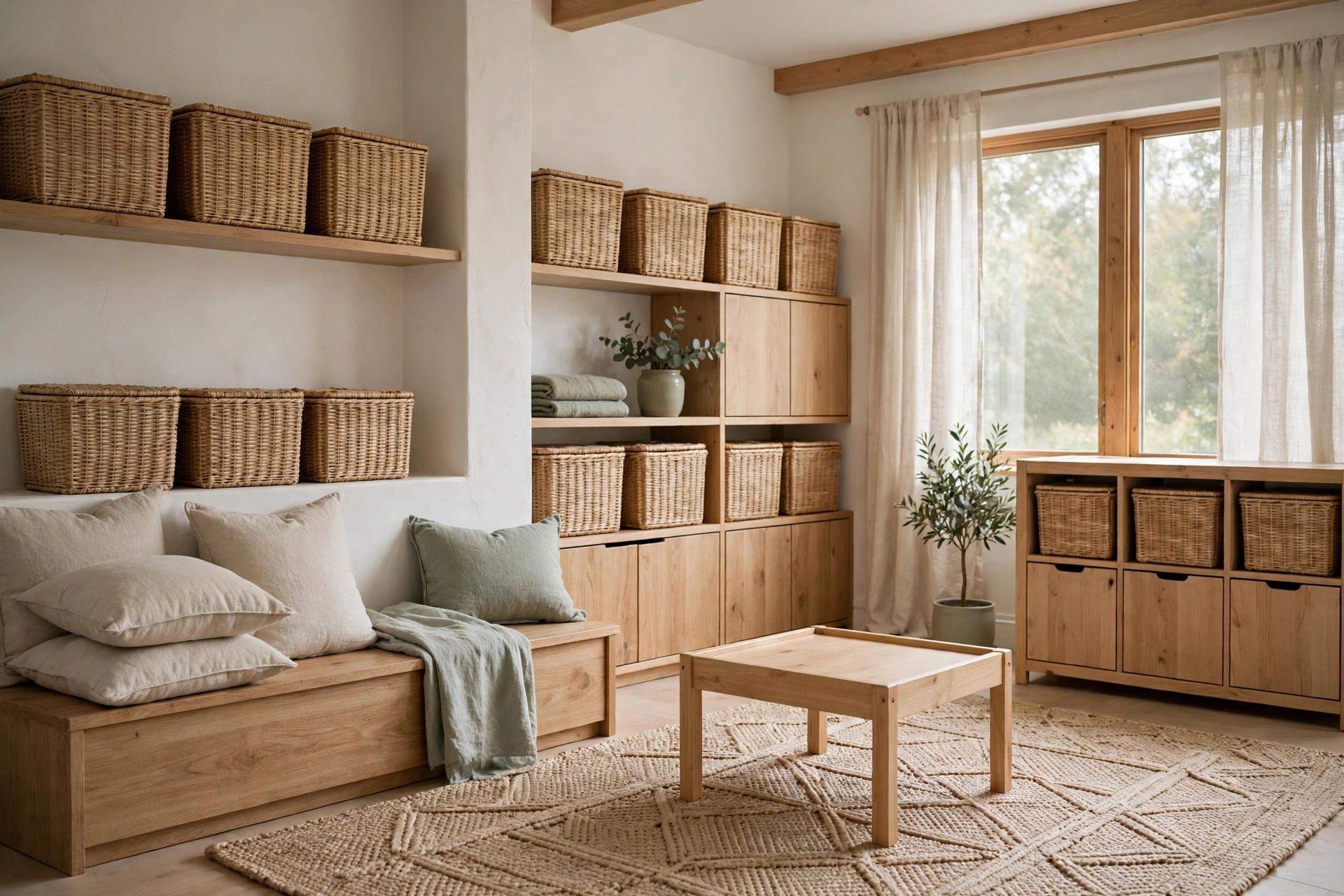
30. Calm Neutral Playroom for Quiet Play
Not every playroom should be a rainbow. A calm, neutral playroom — warm whites, soft beige, natural wood, and muted sage or dusty blue accents — suits children who get overstimulated easily and parents who share the space. With the visual volume turned down, kids often play longer and more imaginatively with the same toys.
Texture does the decorating here: a woven rug, linen cushions, wooden toys, baskets in natural fibers, and a soft throw. Keep toys in closed or matching containers so the shelves look serene, and let one or two colorful favorites provide the pop. Gentle lighting, a quiet corner with a canopy or curtain, and a no-screens rule make this room the home’s reset button.
31. Playroom with Craft Cart and Mobile Storage
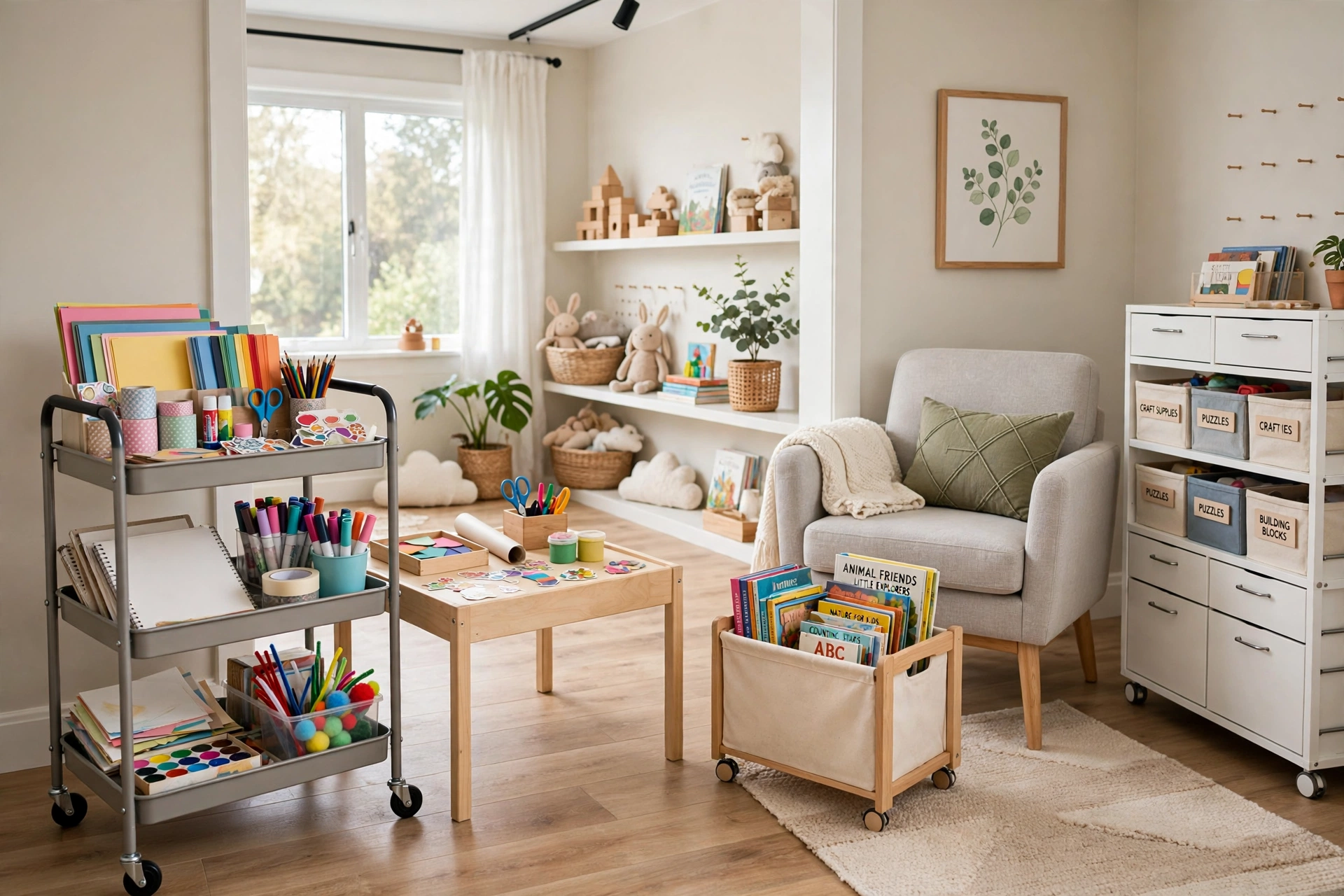
A rolling craft cart is the hardest-working storage in a playroom. Loaded with paper, markers, glue, scissors, and a project tray, it rolls to the table for art time, to the rug for a floor project, and back into its parking spot — a closet, a gap beside a shelf — when play is done. Mobile storage is ideal for playrooms that share space with a living room or dining room.
Give every mobile piece a defined home so the room can reset in minutes: the cart by the desk, the rolling book bin by the reading chair, the under-bed tray under the bed. Choose carts with at least three tiers and a handle kids can push safely, and label each tier so restocking is obvious. When storage moves with the activity, mess stays with it too — and cleanup travels back with the cart.
32. Outdoor-Inspired Indoor Playroom with Rug Zones
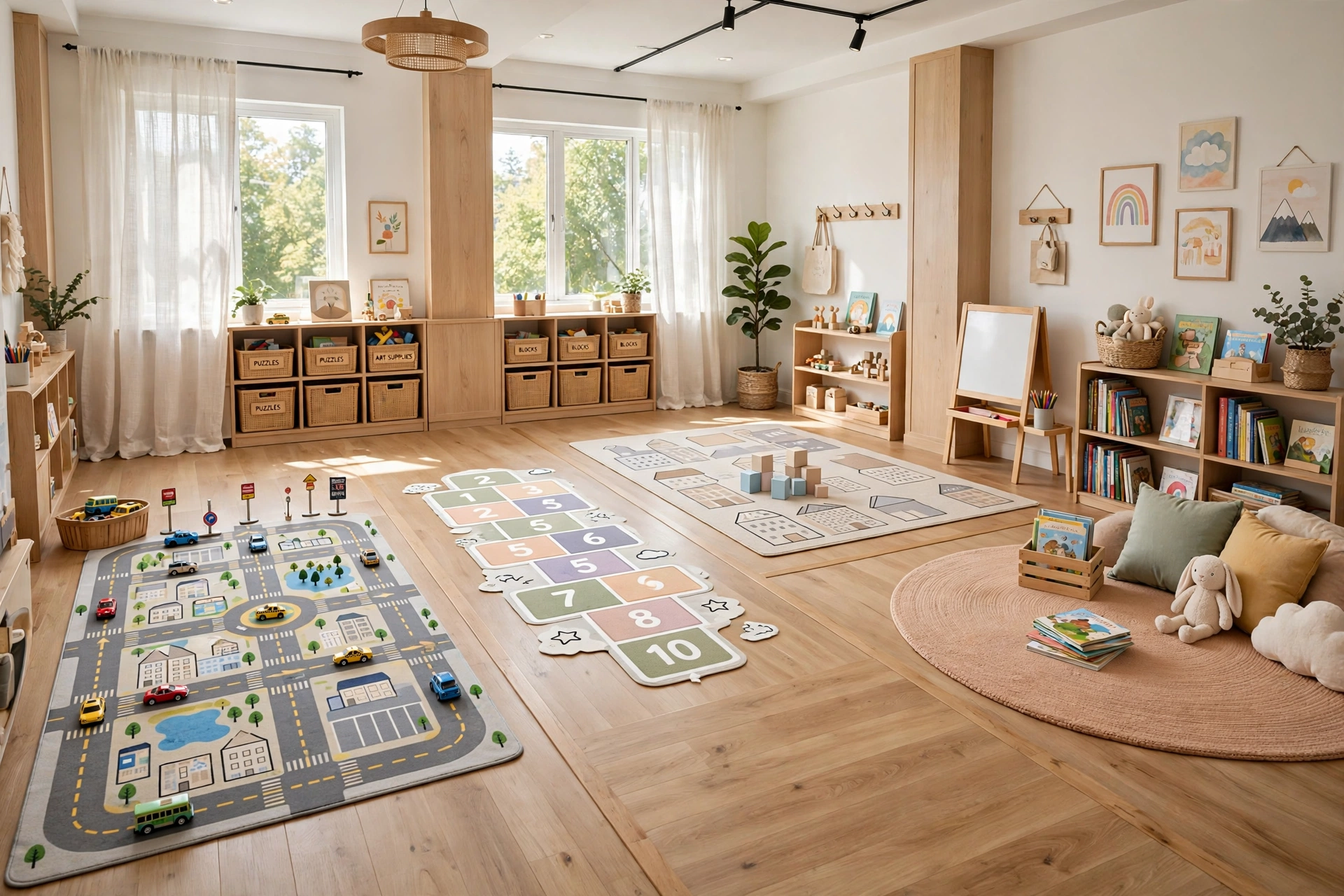
Bring the playground logic indoors by dividing the floor into rug zones, each with its own activity. A road-map rug for cars, a hopscotch rug for movement, a plain soft rug for building, and a small round rug for the reading corner teach kids where each kind of play happens — and the rugs absorb noise and protect the floor at the same time.
This approach works in rooms of any size because the zones scale with the rugs. Choose low-pile, washable rugs that lie flat and do not slip, and leave clear walking paths between zones so the room never feels like an obstacle course. When interests change, roll up one rug and swap the activity — the room evolves without new furniture. A nature touch, like a plant or a window bird feeder, completes the outdoor feeling.
33. Playroom Library Wall with Floor Cushions
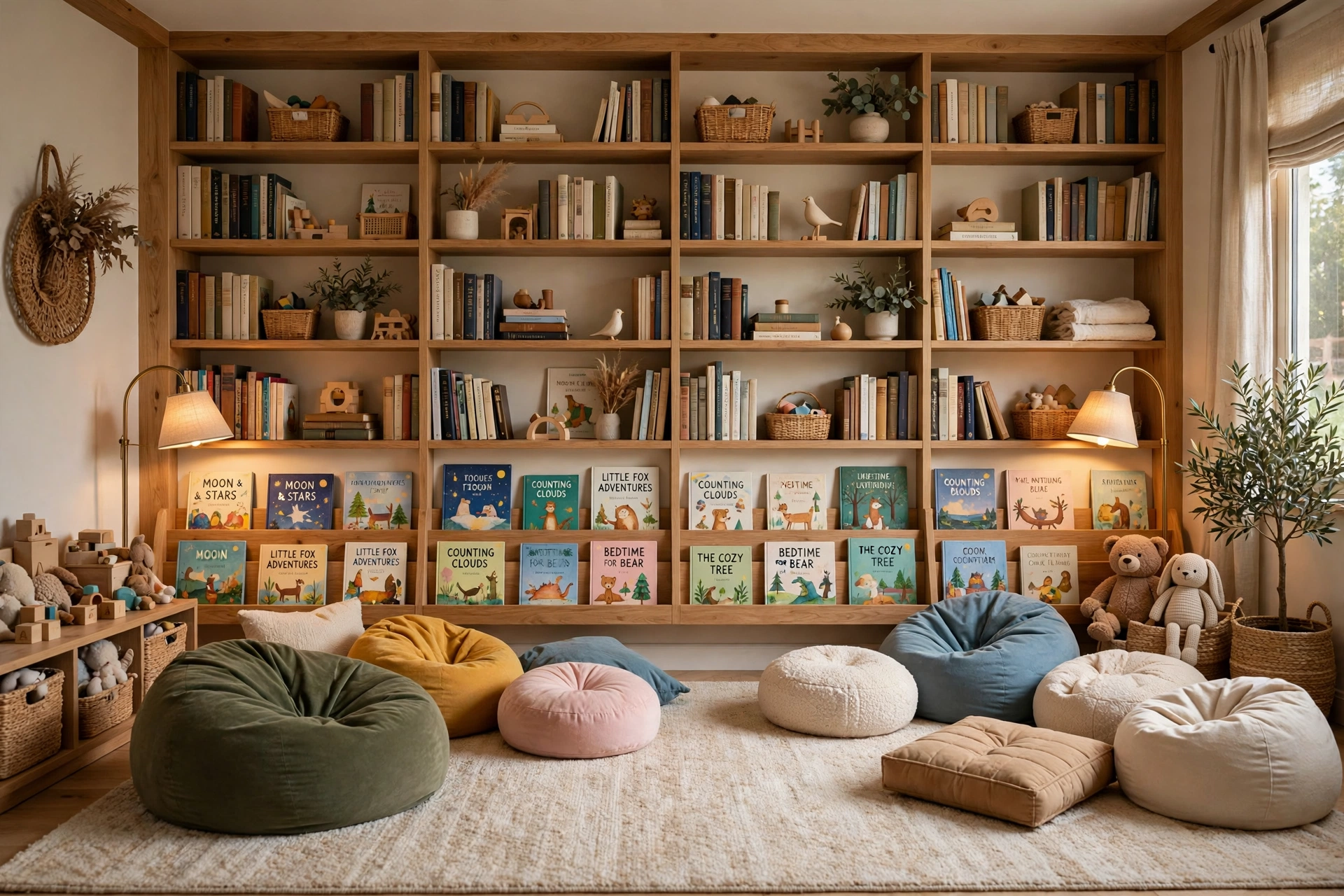
For book-loving families, a library wall can be the playroom’s main event. Low forward-facing shelves for picture books, standard shelves above for chapter books and read-aloud collections, and a sea of floor cushions, a bean bag or two, and a soft rug in front create a children’s library that rivals any bookstore corner. Books displayed cover-out get read — it is as simple as that.
Add a small step stool so kids can reach the higher shelf safely, a basket for returns, and a lamp or two for evening story sessions. Organize loosely by theme — animals, space, funny stories, bedtime — with simple picture labels. A library playroom grows beautifully: the same shelves that hold board books today hold novels in a few years, and the cushions work for every age.
34. Budget-Friendly Playroom with Repurposed Furniture
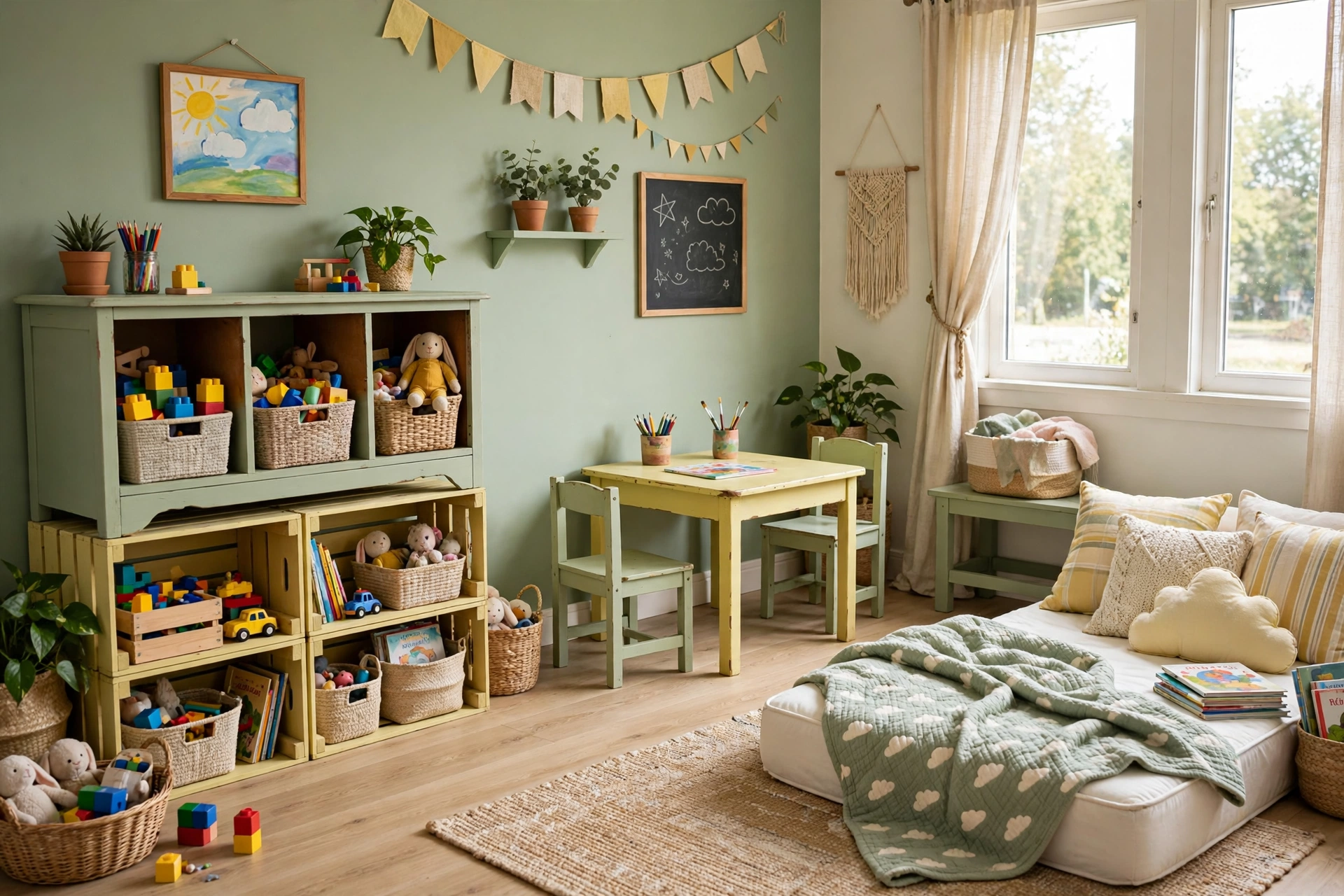
A wonderful playroom does not require a wonderful budget. A secondhand table cut down to child height, a dresser turned into toy storage with the top drawers removed, crates as cubbies, and a spare mattress as a reading and tumbling pad can furnish a whole room for very little. Paint is the great unifier — one color across mismatched pieces makes them look like a set.
Spend the saved money on the things that matter most: a good washable rug, safe storage that will not tip, and a few high-quality open-ended toys rather than many cheap ones. Free and cheap sources — hand-me-downs, community swaps, library sales for books — keep the room fresh. A budget playroom built slowly and edited often usually ends up more loved than an expensive one bought all at once.
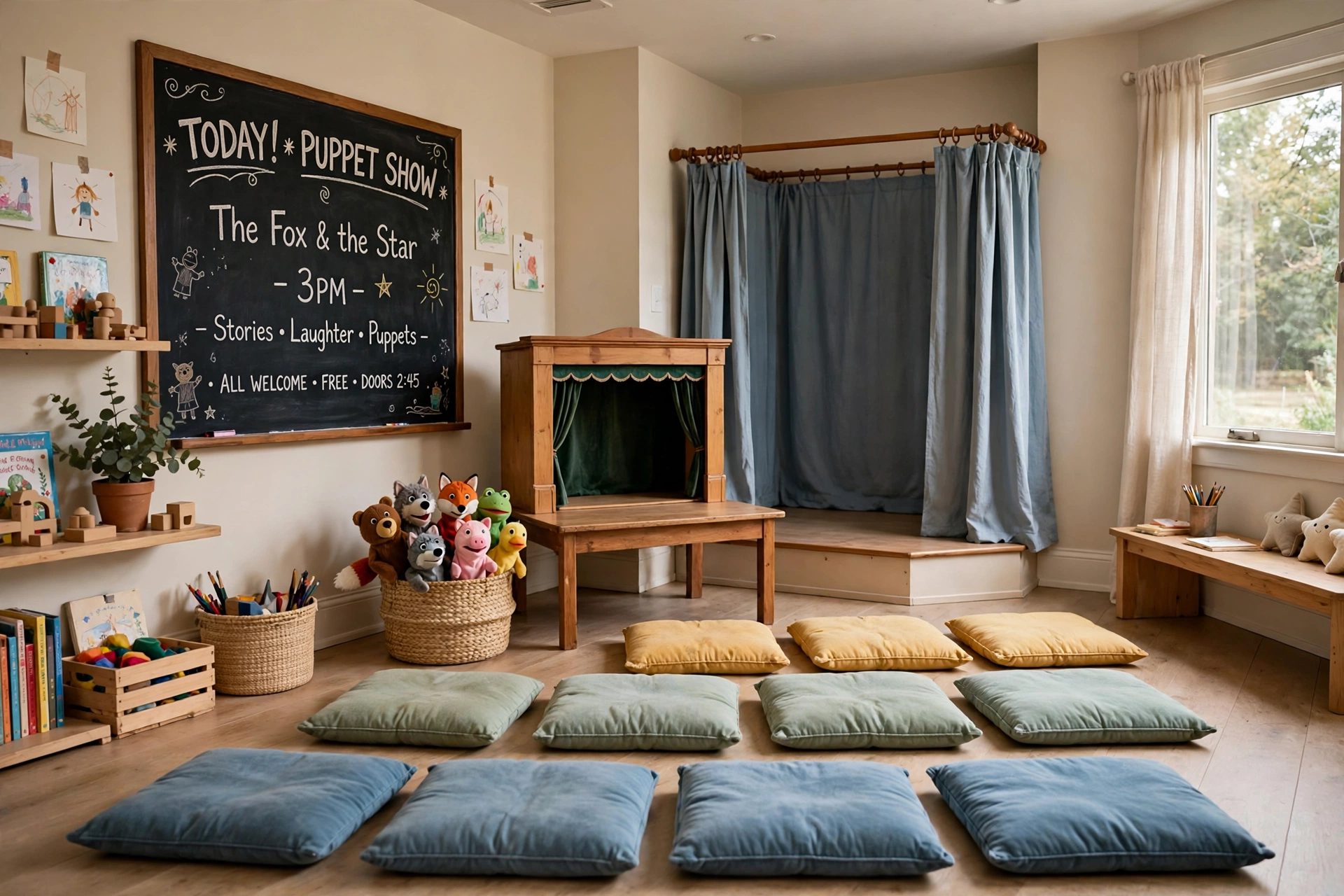
35. Playroom with Stage and Puppet Theater
A small stage turns a playroom into a theater where kids write, perform, and applaud. A low platform or even a defined rug, a curtain on a tension rod across a corner, and a puppet theater — a doorway theater, a tabletop theater, or a big cardboard box transformed — give performers everything they need. A bin of puppets, simple costumes, and props lives right beside the stage.
Add a battery spotlight or a lamp aimed at the stage, a few folding chairs or cushions as the audience, and a chalkboard for show posters and tickets. Performing builds confidence, language, and cooperation like almost nothing else, and family show nights become the memories kids keep. Keep the stage area clear when not in use so it doubles as open floor for other play.
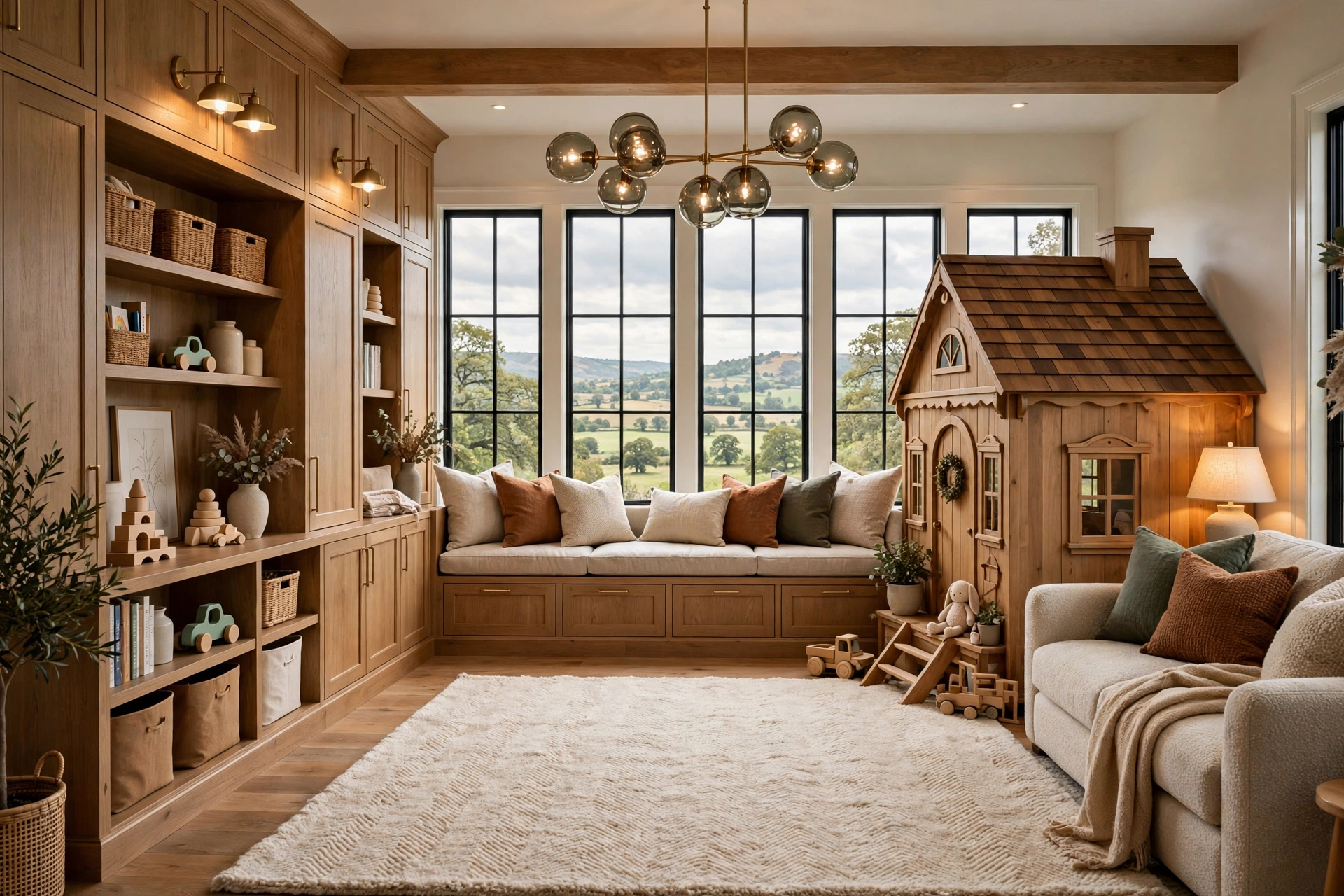
36. Luxury Playroom with Custom Built-Ins
A luxury playroom is defined by craftsmanship and thoughtfulness, not just cost. Custom built-in storage that hides toys behind beautiful doors, a window seat with tailored cushions, a crafted playhouse or reading loft, and quality materials — solid wood, washable performance fabrics, a thick wool rug — create a room that looks stunning and survives childhood.
Plan the luxury version around the same principles as any good playroom: zones for active, creative, and quiet play; storage at child height for the things kids use alone; and lighting layered for bright play and soft evenings. Add a small sink or an art station with durable counters if plumbing allows, and a sofa where adults actually want to sit. Done well, this room becomes a family room everyone loves, long after the toy years.
More Home Decor Ideas
- Wall Decor Ideas: 36 Stylish Designs for Every Room
- Gallery Wall Ideas: 36 Layouts and Designs
- Front Porch Decor Ideas: 36 Welcoming Designs
- Coffee Table Decor Ideas: 36 Stylish Arrangements
- Laundry Room Decor Ideas: 36 Fresh Designs
- Mudroom Decor Ideas: 36 Organized Entry Designs
- Home Coffee Bar Ideas: 36 Cozy Station Designs
- Bookshelf Decor Ideas: 36 Stylish Styling Designs
- Reading Nook Ideas: 36 Cozy Corners
- Bathroom Decor Ideas: 36 Fresh Ideas
- Apartment Decor Ideas: 36 Smart Ideas
- Living Room Decor Ideas: 36 Fresh Looks
- Farmhouse Decor Ideas: 36 Cozy Rustic Looks
- Boho Decor Ideas: 36 Relaxed Bohemian Looks
- Minimalist Decor Ideas: 36 Calm Simple Looks
- Home Office Decor Ideas: 36 Productive Workspaces
- Patio Decor Ideas: 36 Outdoor Living Looks
- Backyard Decor Ideas: 36 Outdoor Living Looks
- Outdoor Decor Ideas: 36 Beautiful Spaces
- Hallway Decor Ideas: 36 Beautiful Passages
- Bathroom Organization Ideas: 36 Smart Storage Systems
- Small Bathroom Ideas: 36 Big Ideas for Tiny Spaces
- Japandi Decor Ideas: 36 Calm, Natural Rooms
- Scandinavian Decor Ideas: 36 Light, Hygge Rooms
- Coastal Decor Ideas: 36 Breezy, Beachy Rooms
- Vintage Decor Ideas: 36 Timeless, Collected Rooms
Final Thoughts
The best playroom is the one that fits your children’s ages, your space, and your real life — not a showroom. Start with clear zones, storage your kids can reach and understand, and one cozy quiet corner, then let the room evolve as interests change. Edit often, rotate toys, and keep cleanup simple enough for little hands to help with. Do that, and your playroom will be loved, used, and remembered long after the toys are outgrown.