Japandi Decor Ideas: 36 Calm, Natural Rooms
Japandi style brings together the best of two beloved design traditions: the clean, functional warmth of Scandinavian interiors and…

Japandi style brings together the best of two beloved design traditions: the clean, functional warmth of Scandinavian interiors and the serene, nature-led simplicity of Japanese homes. The result is a look built on low furniture, light wood, warm neutral colours, and honest natural materials, where every object has space to breathe and every room feels calm the moment you step inside.
In this guide you will find 36 japandi decor ideas for living rooms, bedrooms, kitchens, bathrooms, entryways, and quiet corners in between. Each idea includes practical guidance on furniture, materials, colour, and styling, so you can create uncluttered, welcoming rooms that support slow living, whether you are refreshing one corner or rethinking your whole home.
1. Serene Japandi Living Room with Low Seating
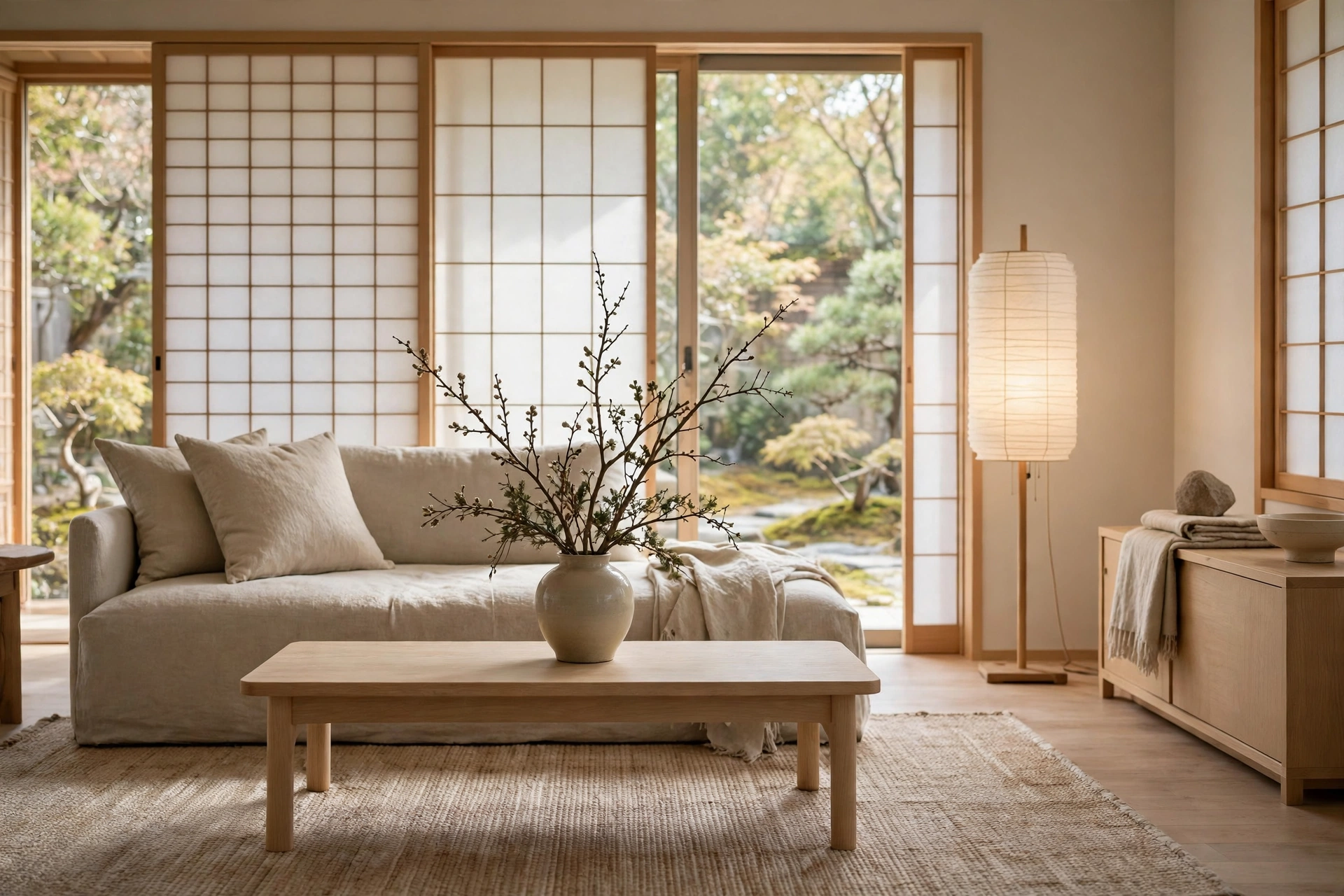
Low furniture is the heart of Japandi style, bringing the eye down and making a room feel grounded and calm. Choose a low-profile sofa in oatmeal linen, a pale oak coffee table close to the floor, and a woven rug that anchors everything without shouting for attention. Keep the palette warm and neutral so light moves softly across natural textures throughout the day.
Leave generous empty space around each piece instead of filling every corner. A single branch arrangement in a ceramic vase, a paper floor lamp, and one or two cushions in undyed wool are enough decoration. This restraint is what makes the room feel serene rather than sparse, and it works in living rooms of almost any size.
2. Light Wood and Linen Sofa Corner
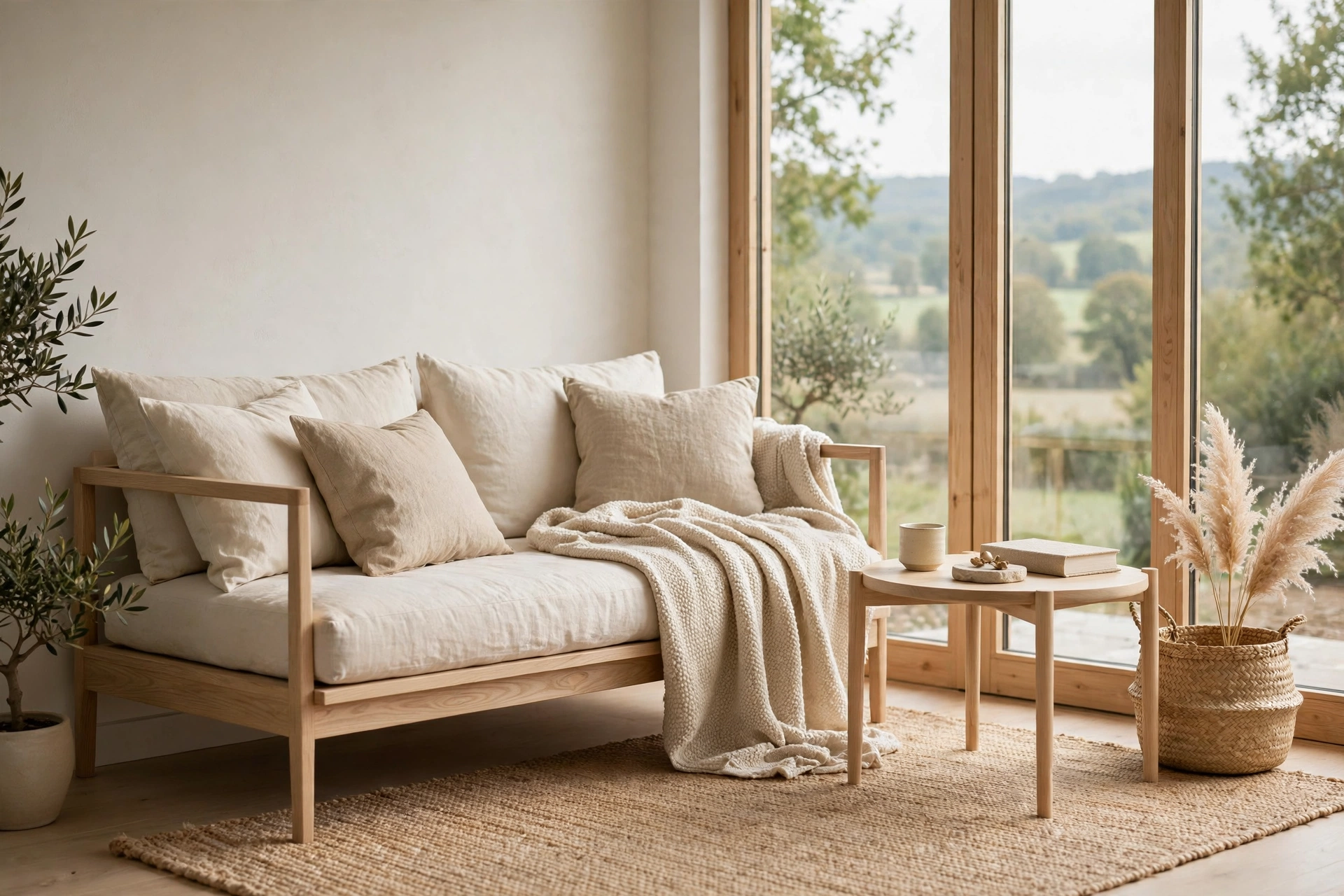
A corner built around light wood and natural linen instantly softens a room. Pair a bleached oak frame sofa or daybed with loose linen cushions in cream and sand, then add a small side table in the same pale timber. The materials share a quiet warmth, so the corner feels cohesive even though nothing matches perfectly.
Layer texture rather than colour: a nubby throw, a woven basket for blankets, and a jute rug underfoot. Keep metal and glossy finishes to a minimum, and let daylight do the styling. This corner is ideal for reading, morning tea, and slow weekends, and it pairs beautifully with white or warm plaster walls.
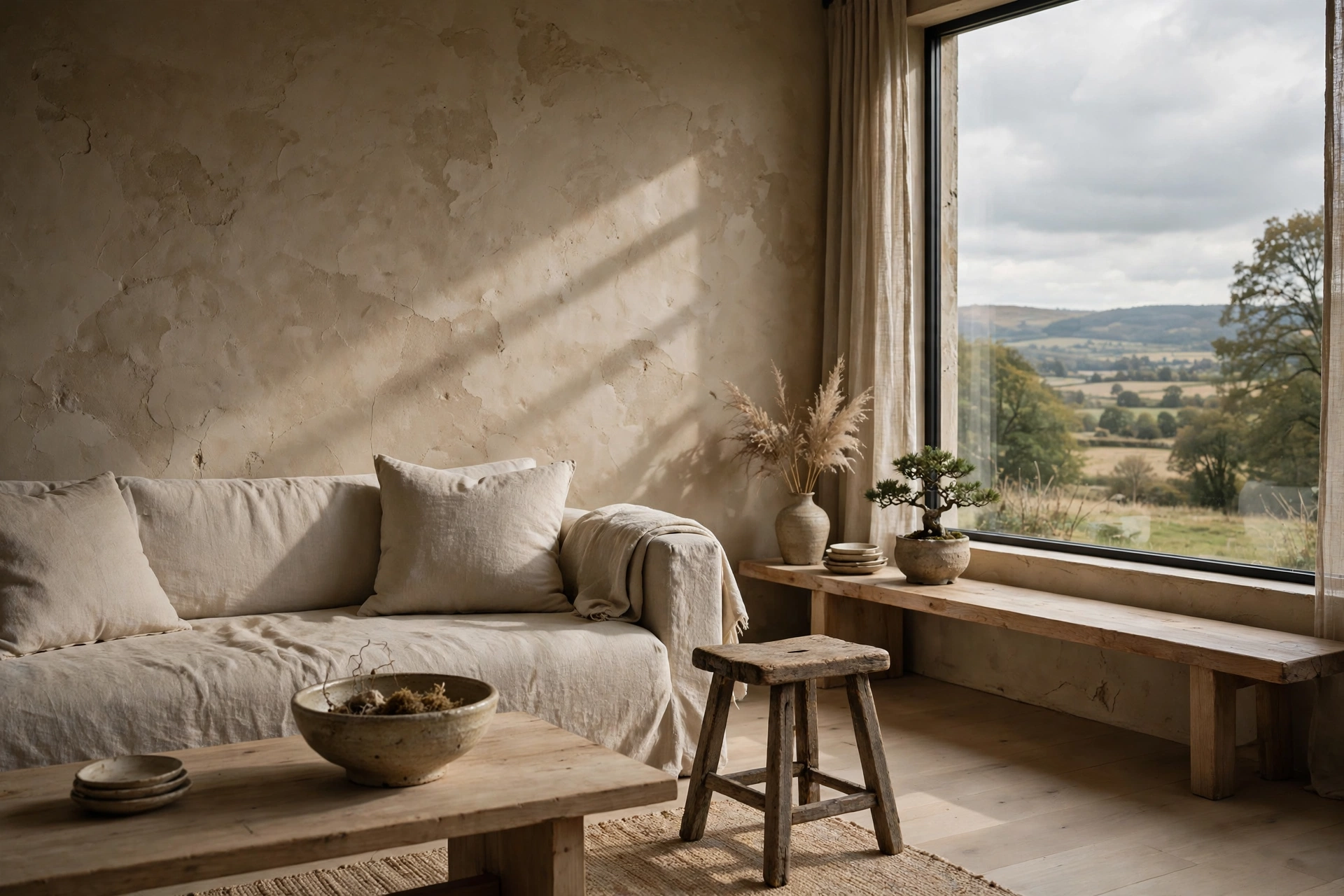
3. Wabi-Sabi Plaster Wall Living Space
Wabi-sabi celebrates imperfection, and a hand-troweled plaster wall brings that philosophy into the living room. The subtle movement, soft shadows, and slightly uneven surface make a plain wall feel alive, especially in warm beige, clay, or stone tones. Against it, simple low furniture looks intentional and sculptural.
Balance the textured wall with smooth natural elements: a light wood bench, a linen sofa, and a handmade ceramic bowl on the table. Avoid perfect symmetry and overly polished decor. A slightly irregular vase, a weathered stool, or a cracked-glaze pot adds the honest character that defines this look.
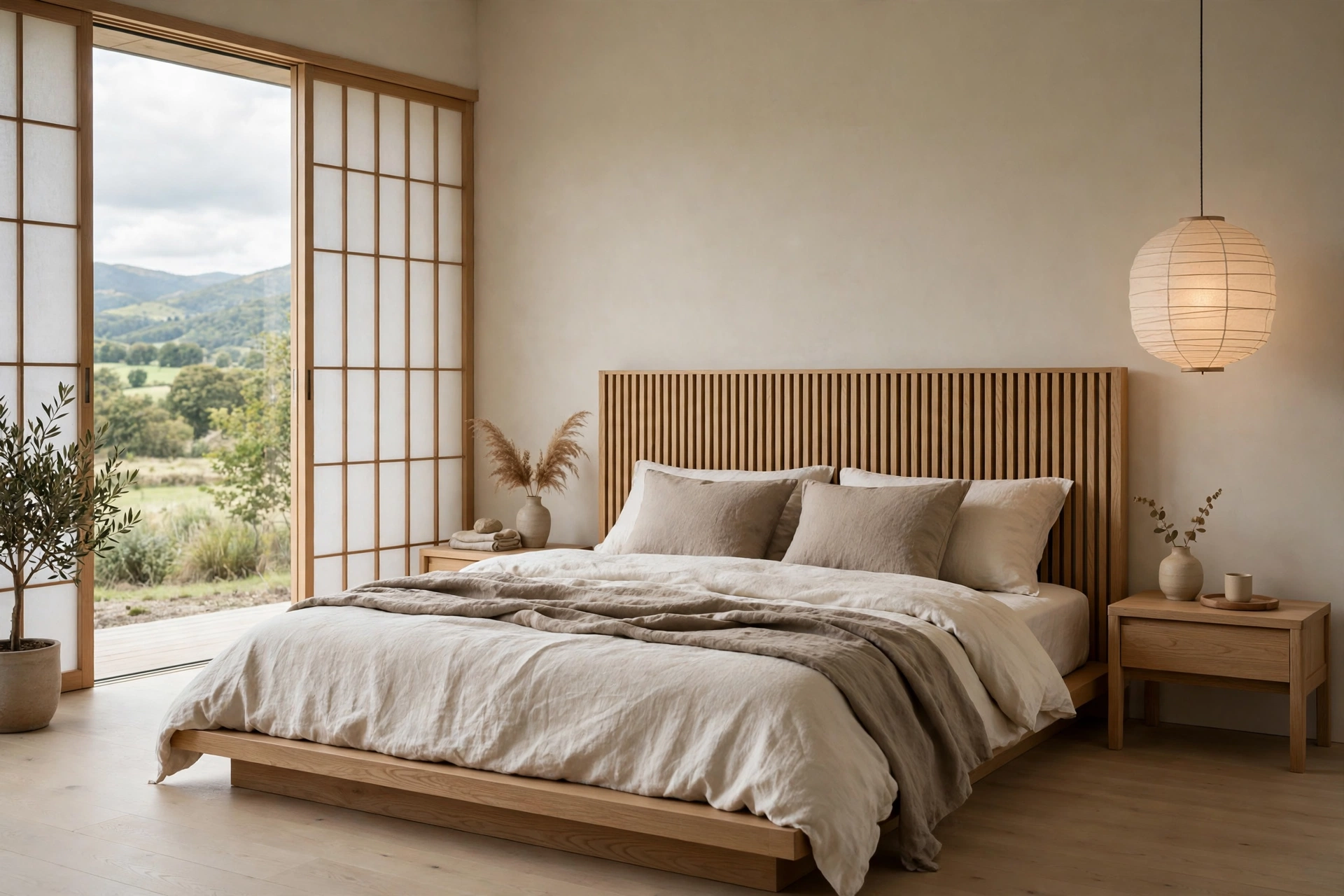
4. Japandi Bedroom with Low Platform Bed
A low platform bed in light oak or ash is the defining piece of a Japandi bedroom. Its clean lines and close-to-the-floor profile create a sense of calm and spaciousness, while crisp bedding in white, cream, and soft taupe keeps the palette restful. Add a simple headboard in slatted wood for warmth without bulk.
Keep bedside tables low and uncluttered, with a paper lamp, a small ceramic dish, and nothing else competing for attention. Choose natural bedding fibres such as linen and organic cotton that soften with washing. The result is a bedroom that feels like a quiet retreat designed purely for sleep and restoration.
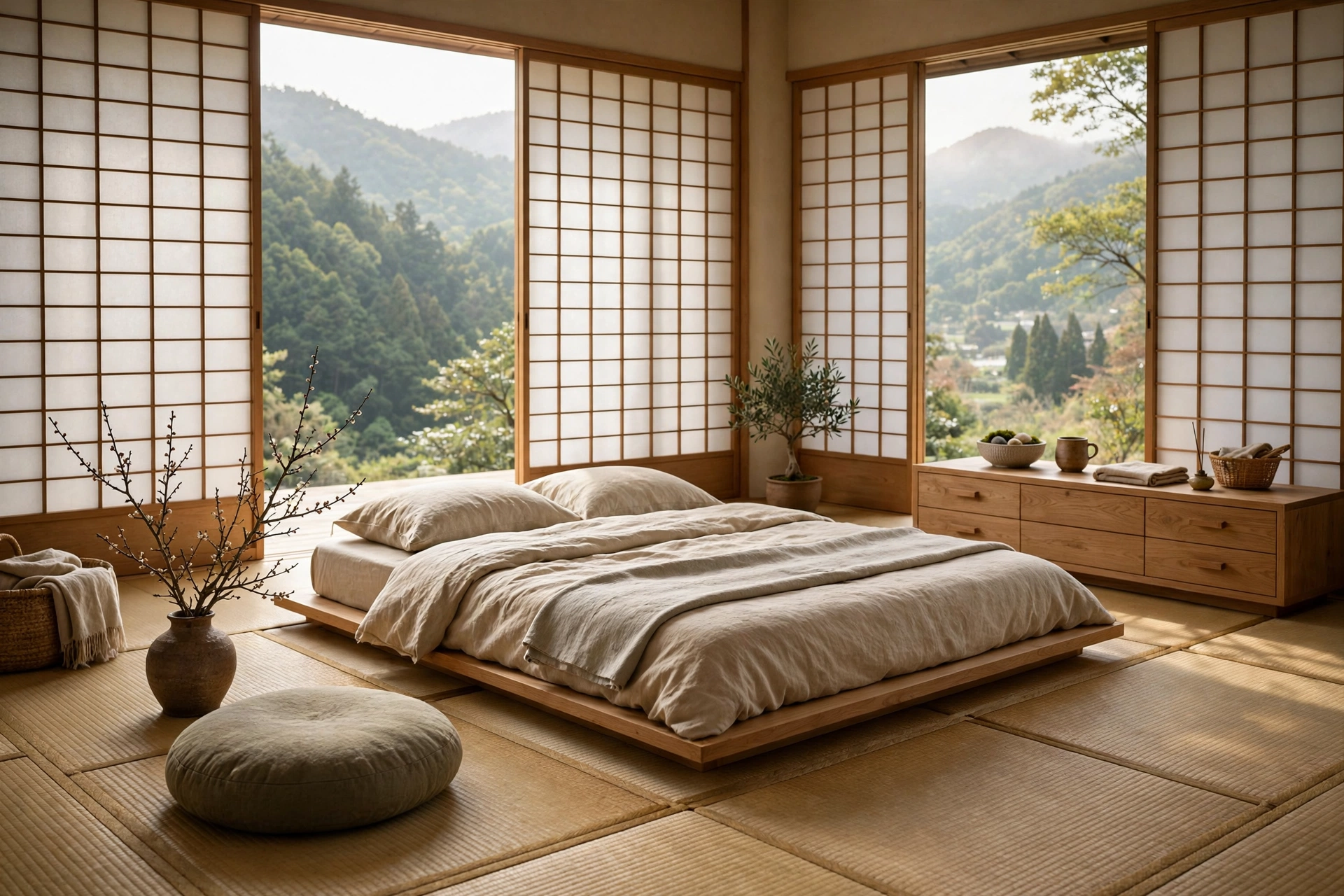
5. Tatami-Inspired Bedroom Retreat
Tatami-inspired flooring brings Japanese tradition into a modern bedroom through woven texture and a low sleeping arrangement. Use tatami-style mats or a large woven rug under a low futon or platform bed to define the sleep zone. Shoji-inspired panels or light curtains diffuse daylight into a soft glow.
Keep furniture minimal: a low dresser, a floor cushion, and a single plant or ikebana-style branch. Natural fibres, muted greens, and warm wood tones keep the room harmonious. This retreat works especially well for small bedrooms, where low pieces make ceilings feel higher and the floor plan feel more open.
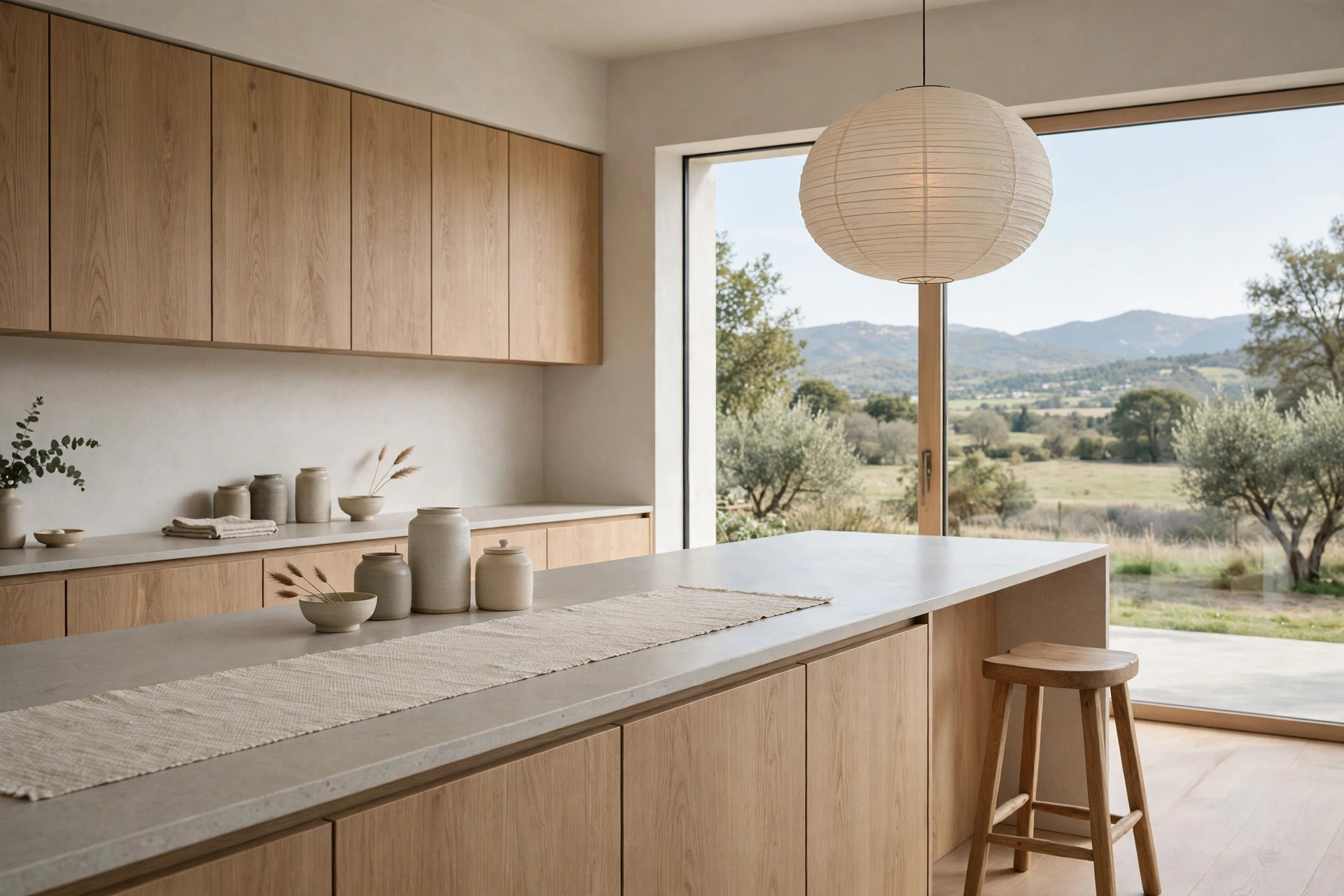
6. Japandi Kitchen with Light Oak Cabinets
A Japandi kitchen pairs Scandinavian practicality with Japanese simplicity: flat-front light oak cabinets, open breathing space, and worktops kept almost completely clear. Choose integrated handles or simple cut-out pulls, matte stone or pale composite counters, and a single statement pendant in paper or opal glass.
Store everyday items in matching ceramic and wood containers so anything left visible still looks calm. Add warmth with a linen runner, a wooden stool, and a small potted herb on the sill. The kitchen stays highly functional, but its visual quiet makes cooking feel slower and more mindful.
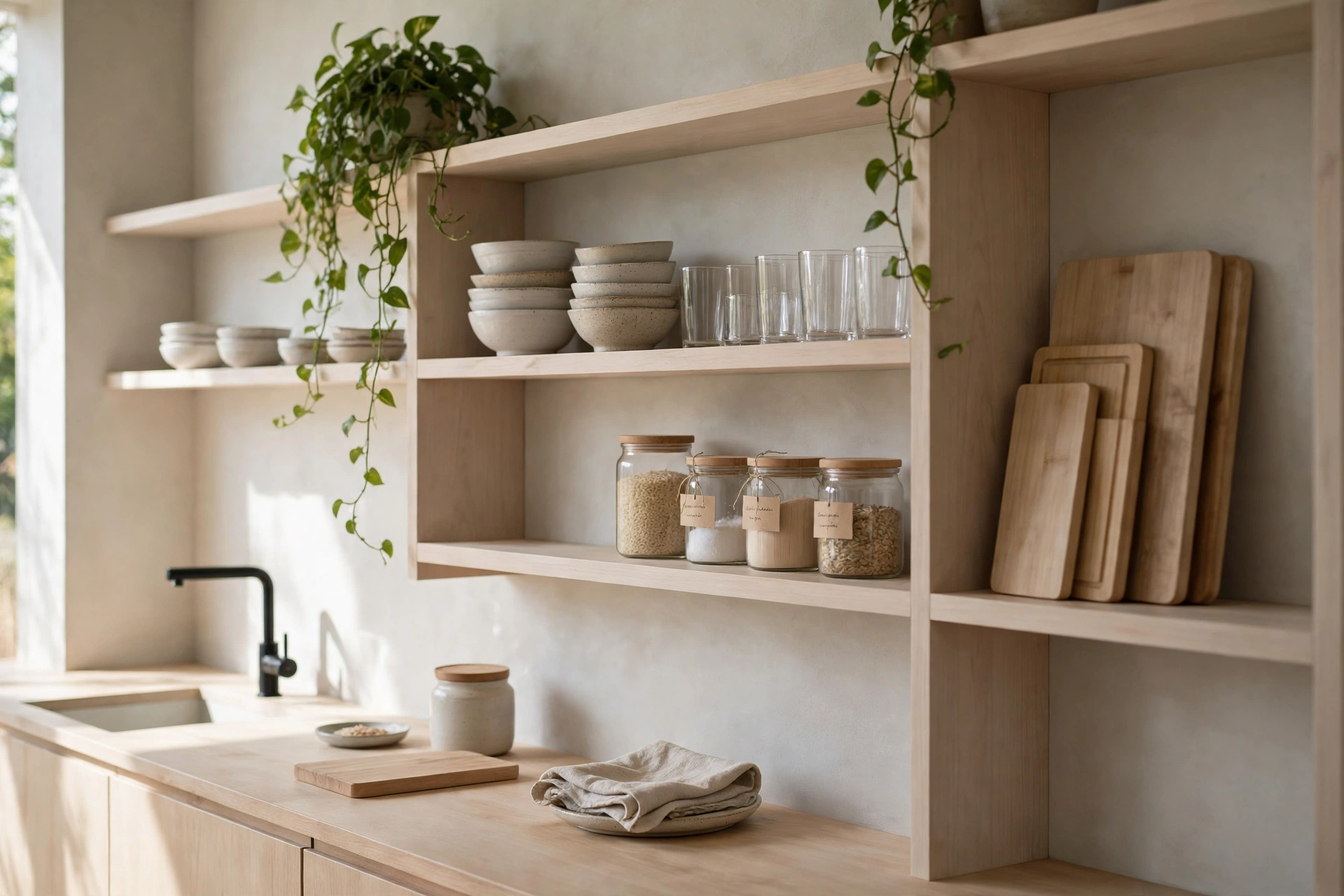
7. Open Shelving Japandi Kitchen
Open shelving suits Japandi kitchens when it is edited with discipline. Two pale wood shelves holding stacked ceramic bowls, plain glasses, and a few wooden boards create storage that doubles as display. Group items by material and leave gaps between groups so the shelves breathe.
Avoid colourful packaging and excess gadgets; decant staples into simple jars and keep only what you use daily within reach. A trailing plant or a small vase softens the lines of the shelves. This approach makes a small kitchen feel larger and encourages keeping only beautiful, useful things.
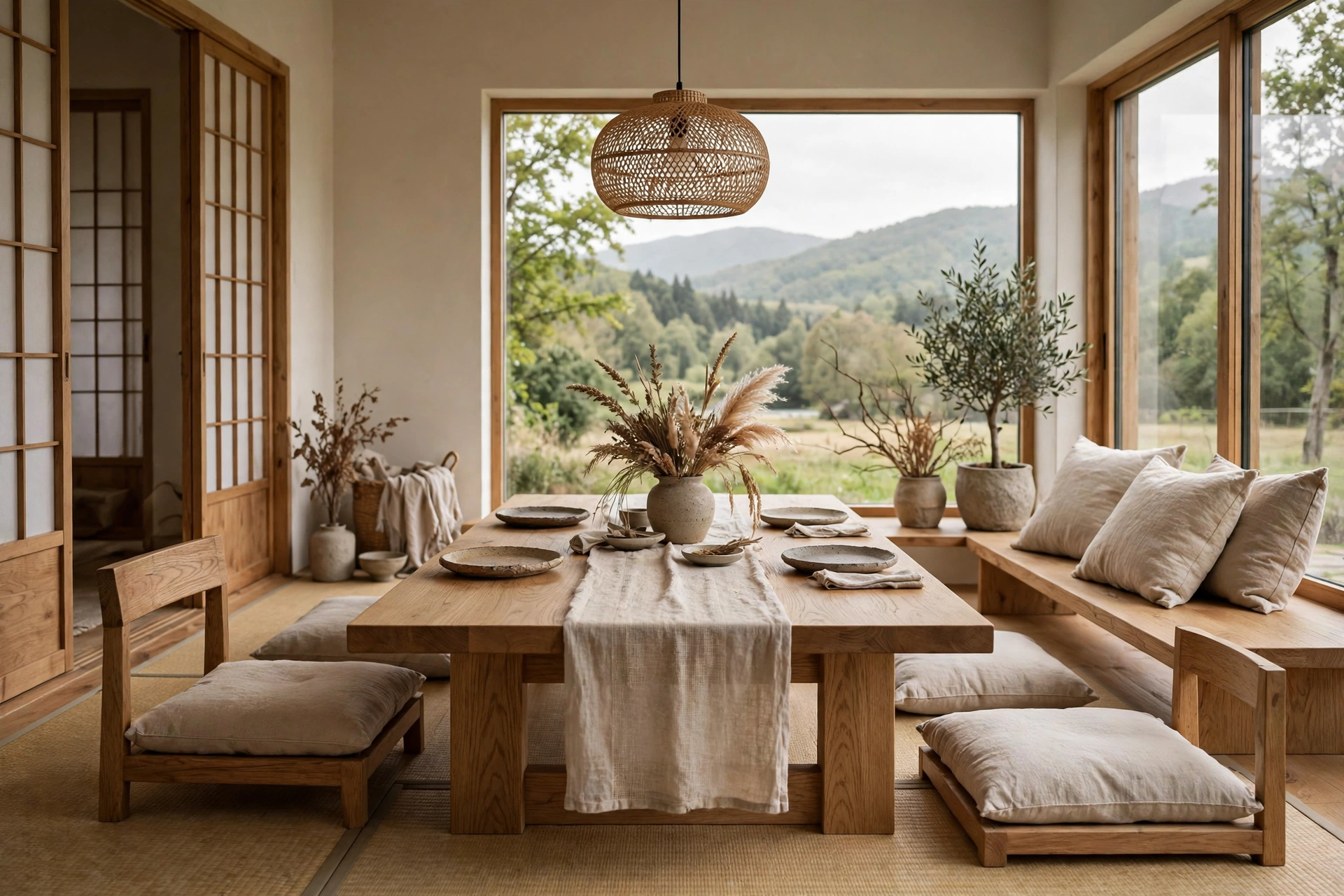
8. Japandi Dining Room with Low Table
A low dining table in natural oak brings a relaxed, grounded feeling to meals. Pair it with low chairs, a bench on one side, or floor cushions for a flexible arrangement that suits both everyday dinners and long gatherings. A simple pendant hung low over the table creates an intimate pool of light.
Dress the table sparingly: a linen runner, handmade stoneware plates, and a single vase with dried grasses or a seasonal branch. Keep centrepieces low so conversation flows easily across the table. Neutral tones let the food and the company provide the colour, which is exactly the Japandi intention.
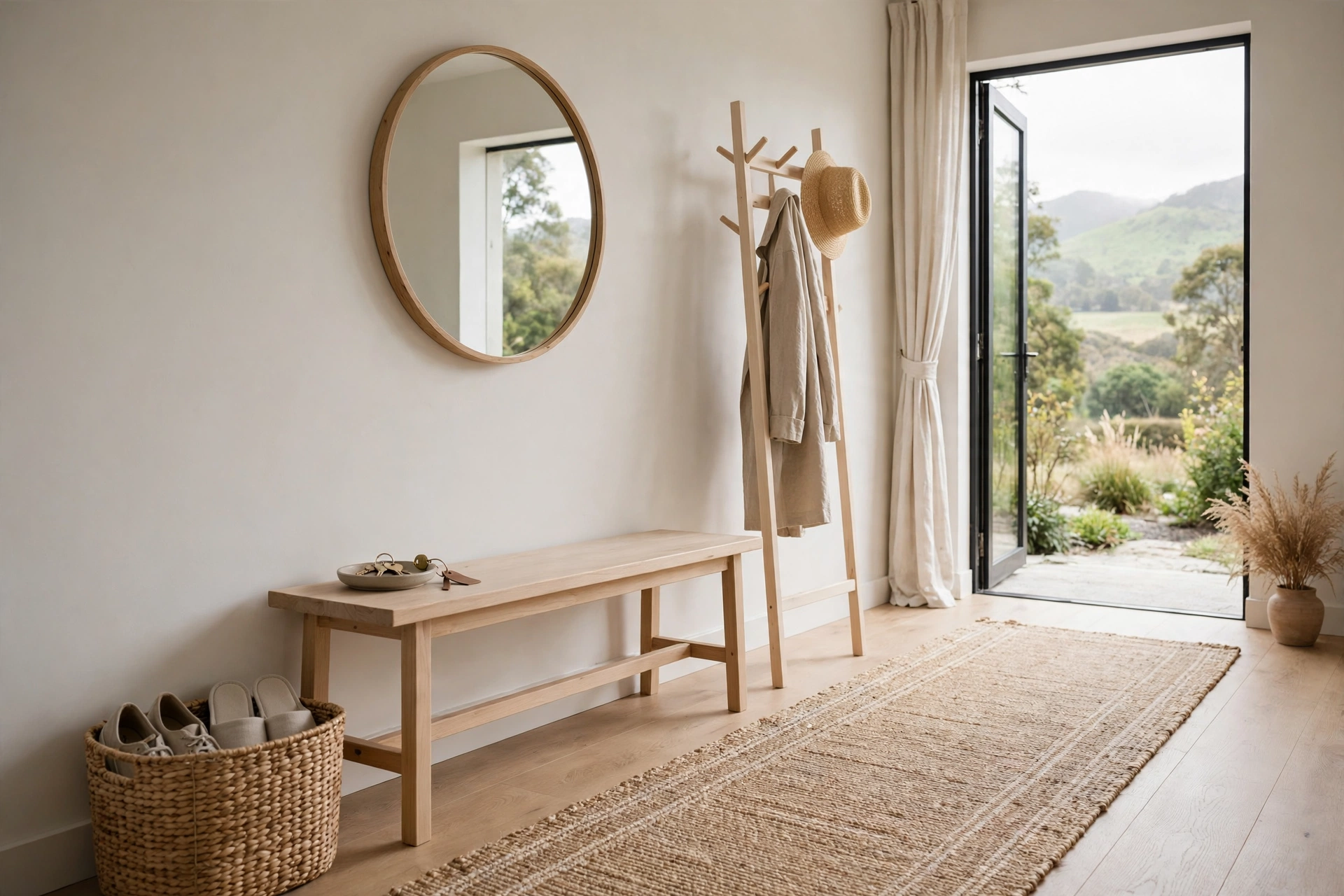
9. Japandi Entryway with Wooden Bench
The entryway sets the tone for the whole home, and a Japandi entry is calm from the first step inside. A simple light-wood bench, a woven basket for shoes, and a round mirror create a practical landing spot without clutter. A small ceramic tray holds keys in one defined place.
Add a coat rack in pale timber, a textured runner in natural fibres, and soft light from a paper or linen shade. Keep only daily essentials visible and give everything else a closed home nearby. Even a narrow hallway feels welcoming and ordered with this pared-back arrangement.
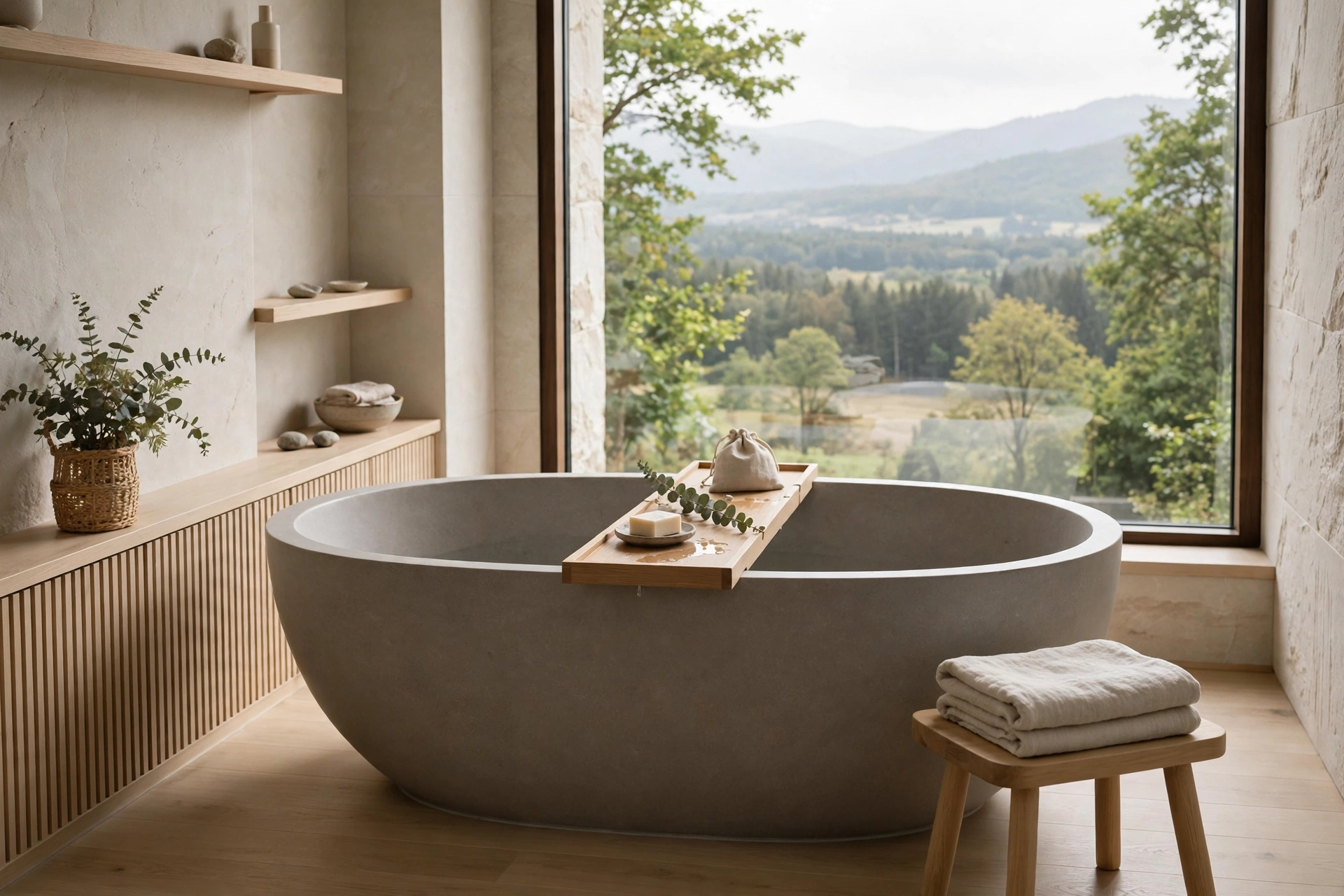
10. Japandi Bathroom with Soaking Tub
A deep soaking tub is the centrepiece of a Japandi bathroom, echoing the Japanese ritual of bathing for relaxation rather than speed. Choose a freestanding oval tub, pale stone or microcement walls, and light wood accents for warmth. A wooden bath caddy and a folded linen towel complete the spa-like scene.
Keep fittings simple in brushed metal or matte black, and hide toiletries in a low wooden cabinet. A small stool, a eucalyptus branch in a vase, and soft indirect lighting turn a daily routine into a restorative ritual. This design suits both compact bathrooms and generous primary suites.
11. Stone and Wood Japandi Bathroom
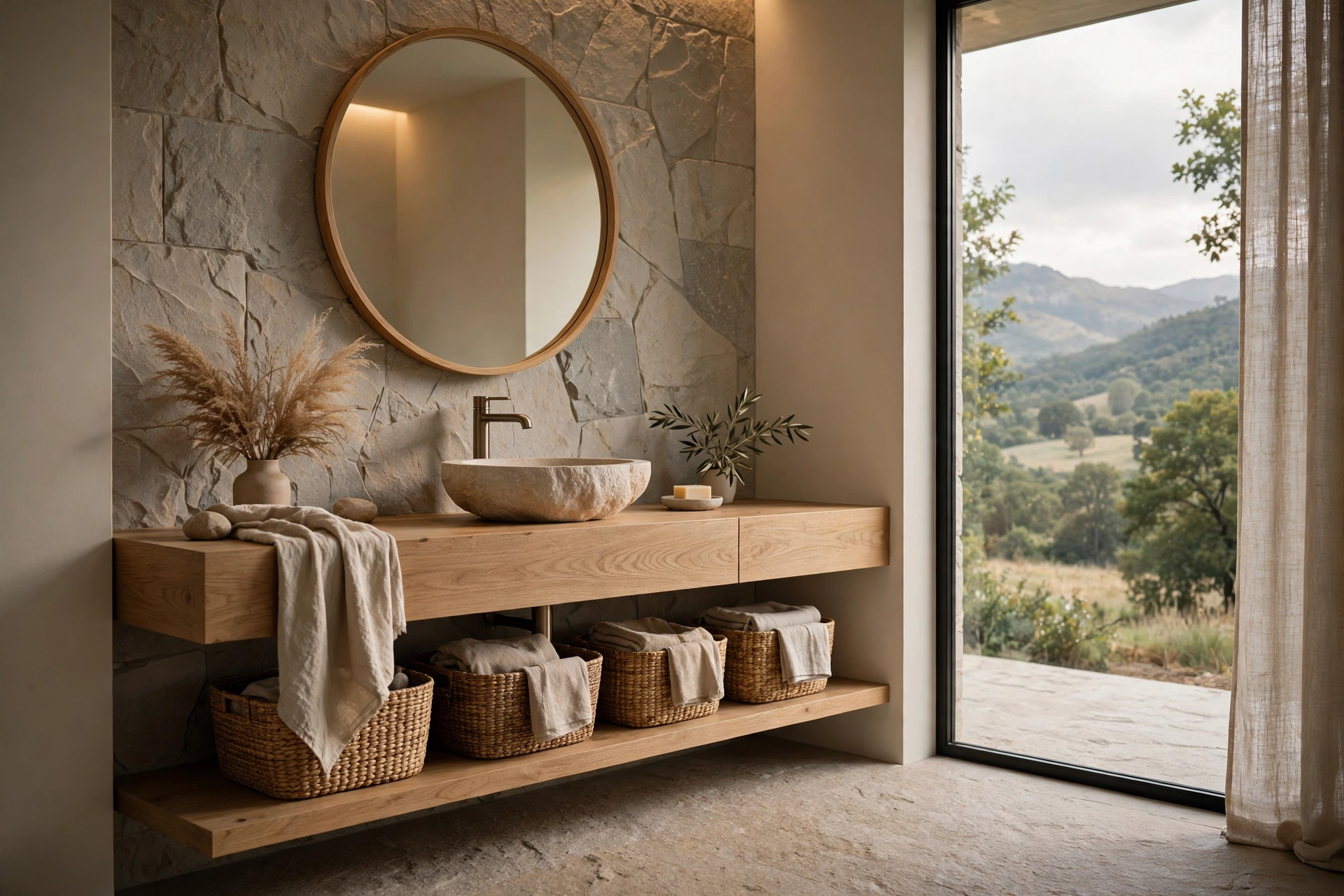
Natural stone and warm wood are a timeless Japandi bathroom pairing. Large-format stone tiles in soft grey or travertine tones bring quiet texture, while a floating oak vanity keeps the floor clear and the room feeling spacious. A round mirror softens all the straight lines.
Choose a stone or matte ceramic basin, simple taps, and woven baskets for towels. Avoid busy patterns and bright colours; let the grain of the wood and the veining of the stone provide the interest. With warm lighting, this bathroom feels like a calm mountain retreat every single morning.
12. Japandi Reading Corner by the Window
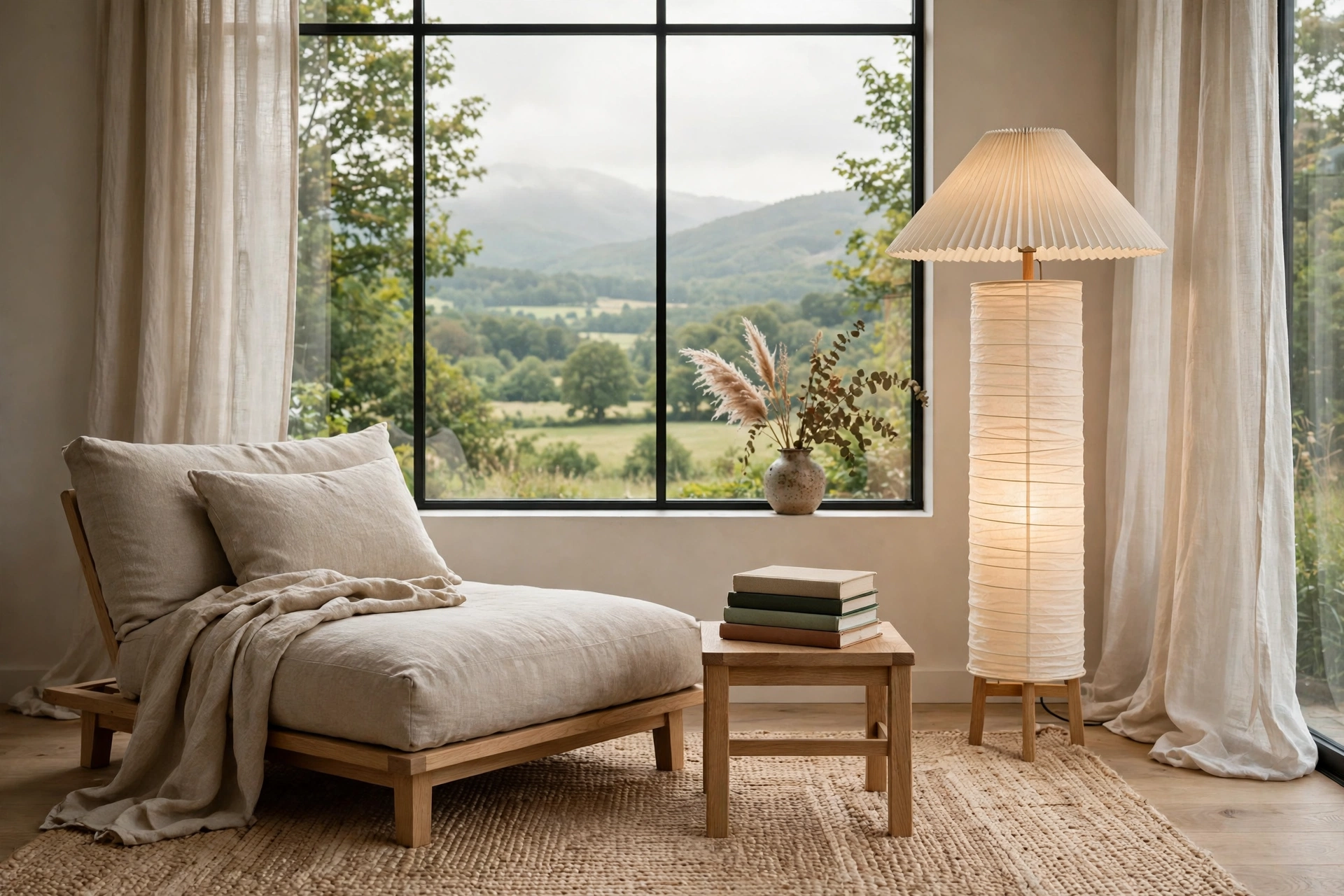
A Japandi reading corner needs little more than a low lounge chair, natural light, and quiet surroundings. Place a linen or cane chair beside a window, add a small oak side table, and keep a short stack of books within reach. A paper floor lamp provides gentle light for evening reading.
Use a woven rug to define the corner and a single cushion in undyed wool for comfort. Sheer linen curtains filter glare without darkening the space. Because there is so little in the corner, every item should be beautiful and useful, turning a spare patch of floor into the calmest seat in the house.
13. Shoji Screen Room Divider Idea
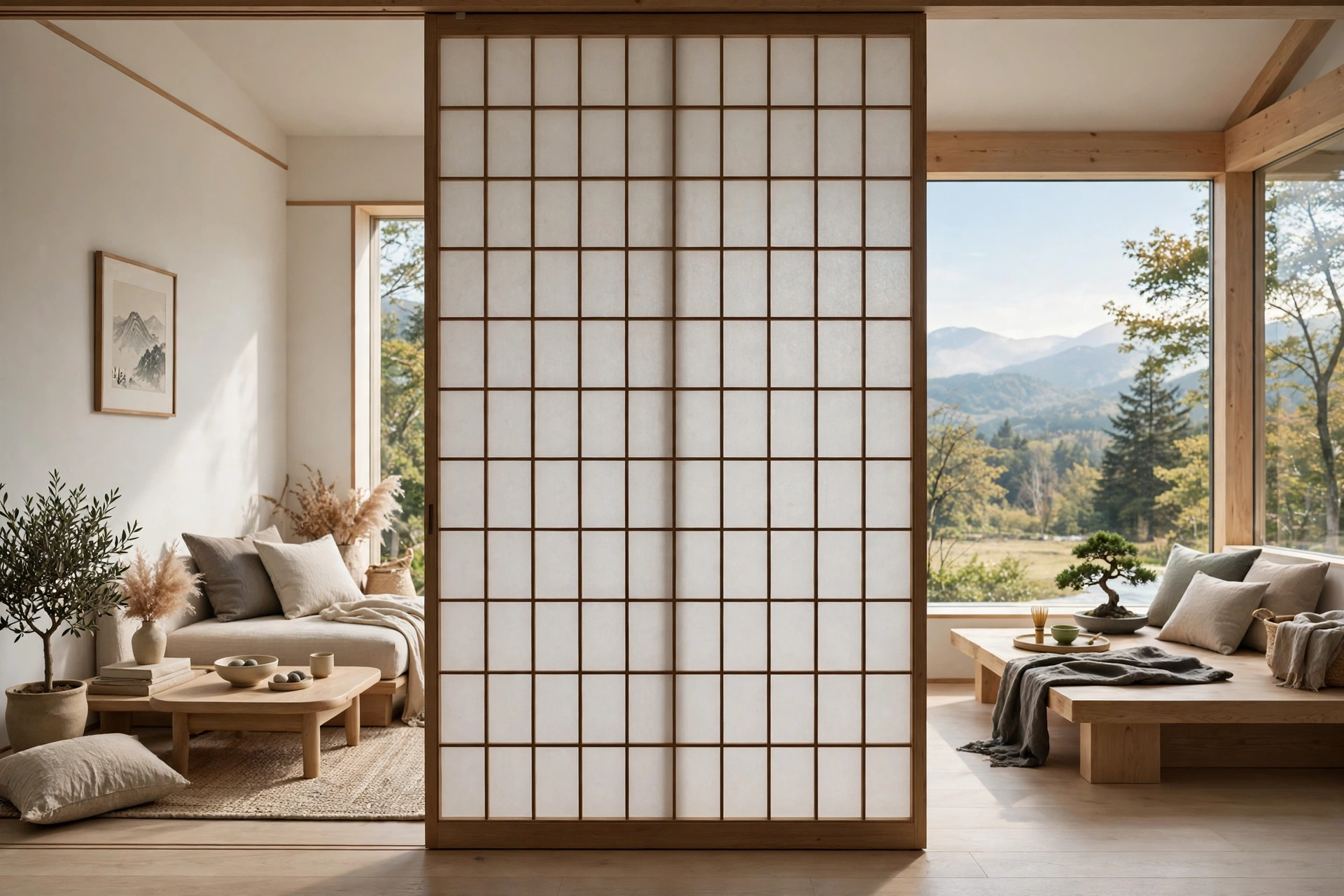
A shoji-style screen divides space without blocking light, making it perfect for open-plan Japandi homes. The translucent panels and slim wood frame create privacy for a sleeping area, desk, or reading corner while keeping the room bright and airy. It also adds a strong architectural rhythm to plain walls.
Choose a folding screen for flexibility or a fixed sliding panel for a more built-in feel. Keep the area on both sides uncluttered so the screen remains the focal point. This is one of the most practical Japandi ideas for studio apartments and shared living spaces.
14. Japandi Home Office with Clean Desk
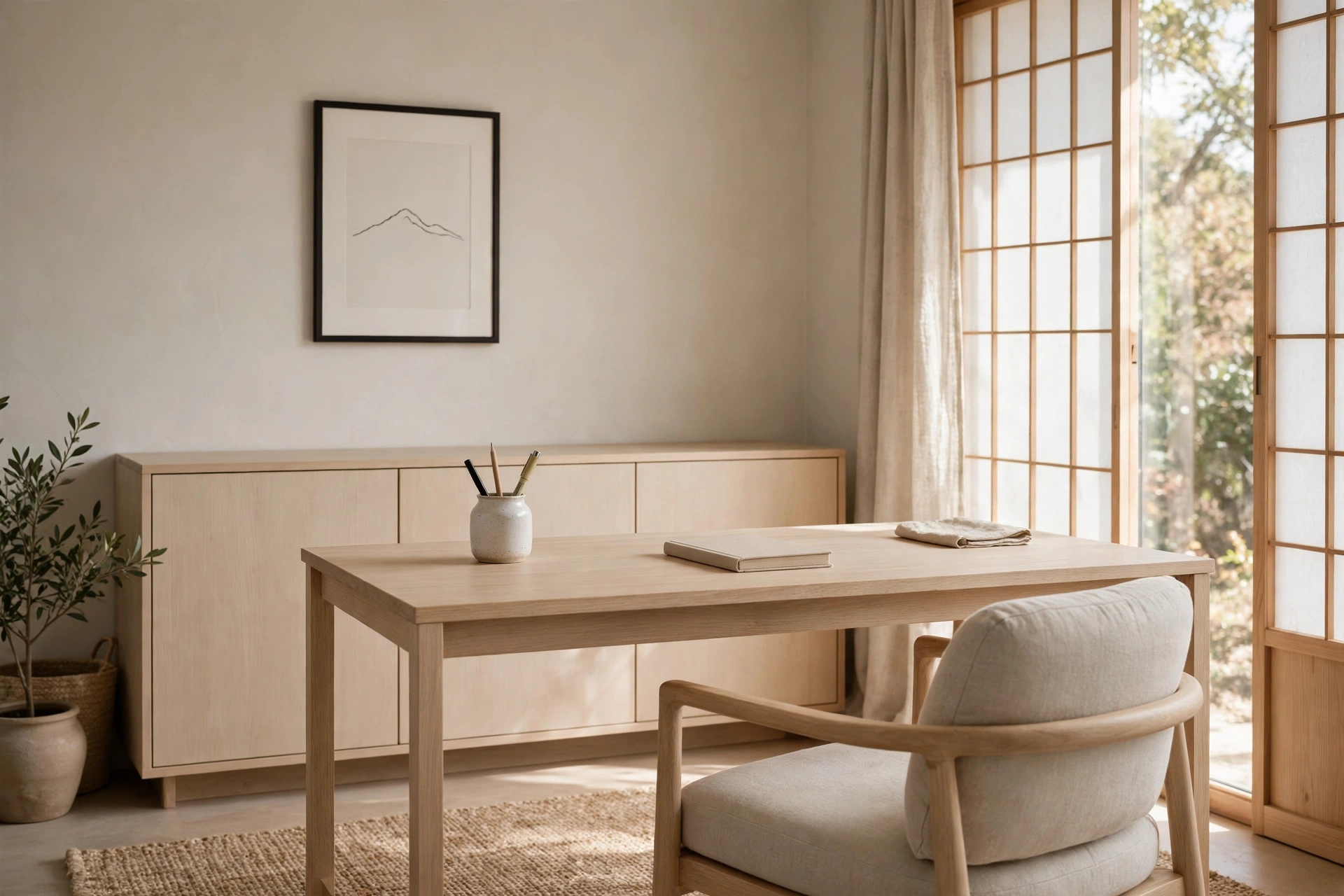
A Japandi home office supports focus by removing visual noise. A simple light-wood desk with clean lines, a comfortable low chair, and closed storage for papers and cables create a workspace that feels calm rather than corporate. Position the desk near natural light, ideally facing a wall with a single framed print.
Keep the desktop almost empty: laptop, lamp, and one ceramic pot for pens. Use boxes and baskets in natural materials to hide supplies, and choose a muted palette that matches the rest of the home. The office blends into the living space while still feeling like a dedicated place to think.
15. Neutral Warm Palette Whole Room
A warm neutral palette is the foundation of Japandi interiors: cream, sand, oatmeal, soft taupe, and gentle greige layered across walls, furniture, and textiles. Unlike cold minimalism, these tones feel inviting, especially when combined with light wood and varied natural textures.
Build the palette in layers, starting with the largest surfaces and adding slightly deeper tones in cushions, rugs, and ceramics. Avoid stark white and pure black in large areas; softer contrasts keep the room harmonious. This palette works across every room and makes a whole home feel connected and calm.
16. Japandi Small Apartment Living
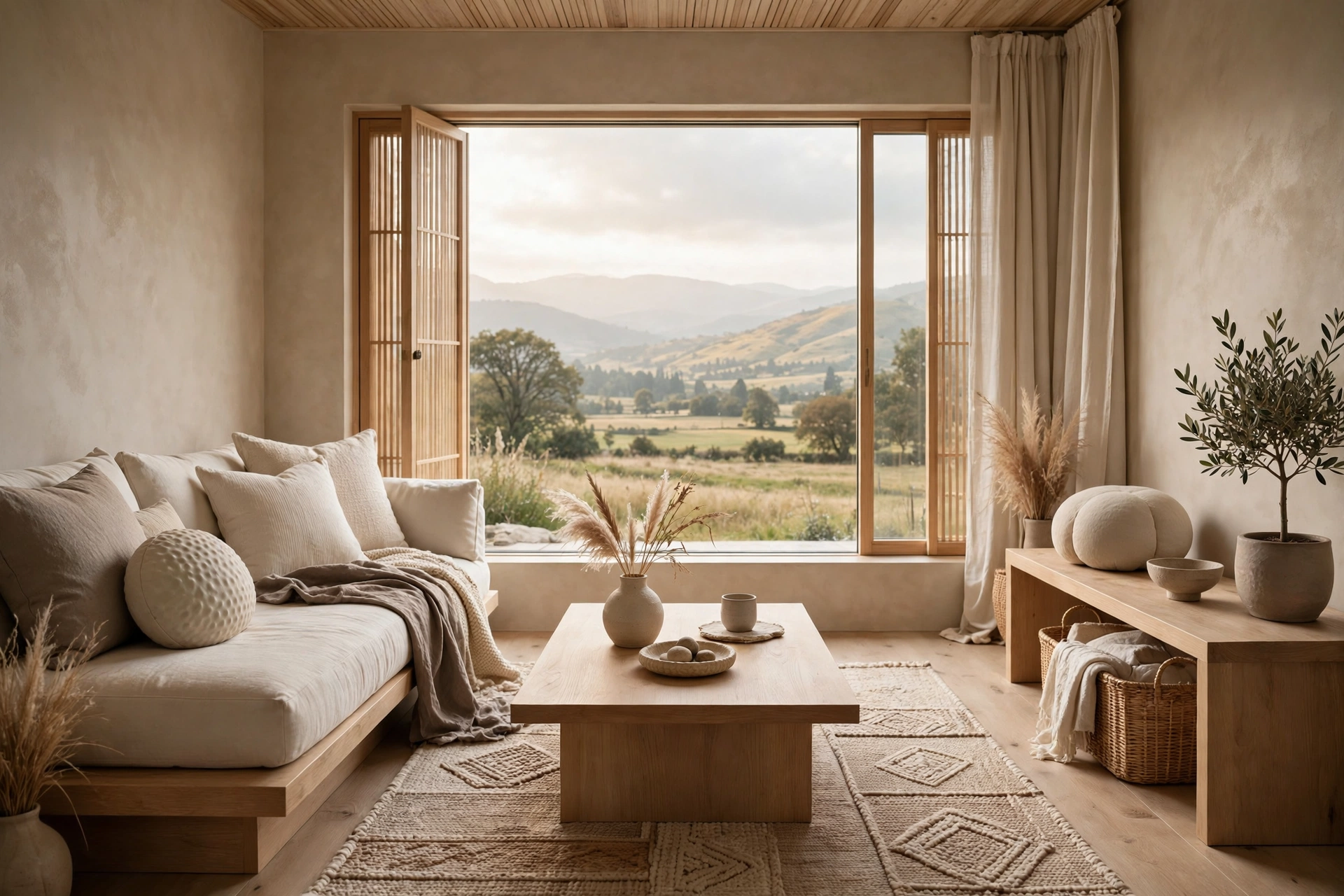
Japandi style is ideal for small apartments because it values space, light, and multifunctional pieces. Choose a low sofa that does not block windows, a foldable oak table, and storage benches that double as seating. Every piece should earn its footprint.
Use a consistent palette of pale wood and warm neutrals to make separate zones feel like one calm whole. Mirrors, sheer curtains, and open shelving keep light moving through the space. With careful editing, even a studio can feel spacious, serene, and deeply comfortable.
17. Paper Lantern Lighting Japandi Style
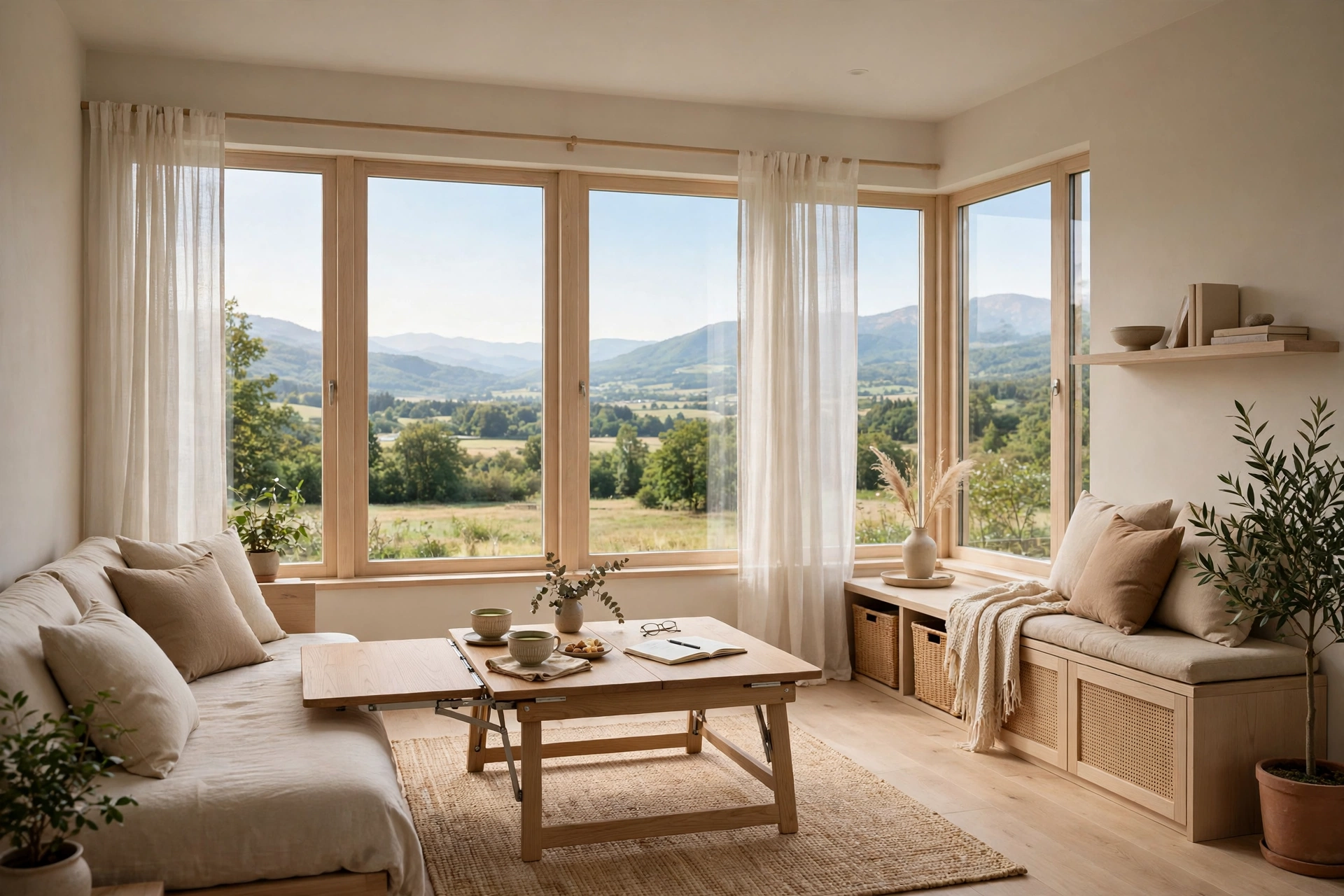
Paper lantern pendants bring soft, diffused light and a sculptural presence to Japandi rooms. A large round lantern over a dining table or in a living room corner glows like a moon in the evening, flattering every natural material around it. During the day its simple form adds interest without weight.
Pair lanterns with warm bulbs and dimmers so light can shift from bright to restful. Keep other lighting simple: a small paper table lamp or a linen-shaded sconce is enough. This affordable lighting choice instantly softens modern rooms that feel too sharp or clinical.
18. Japandi Floor Seating with Zabuton Cushions
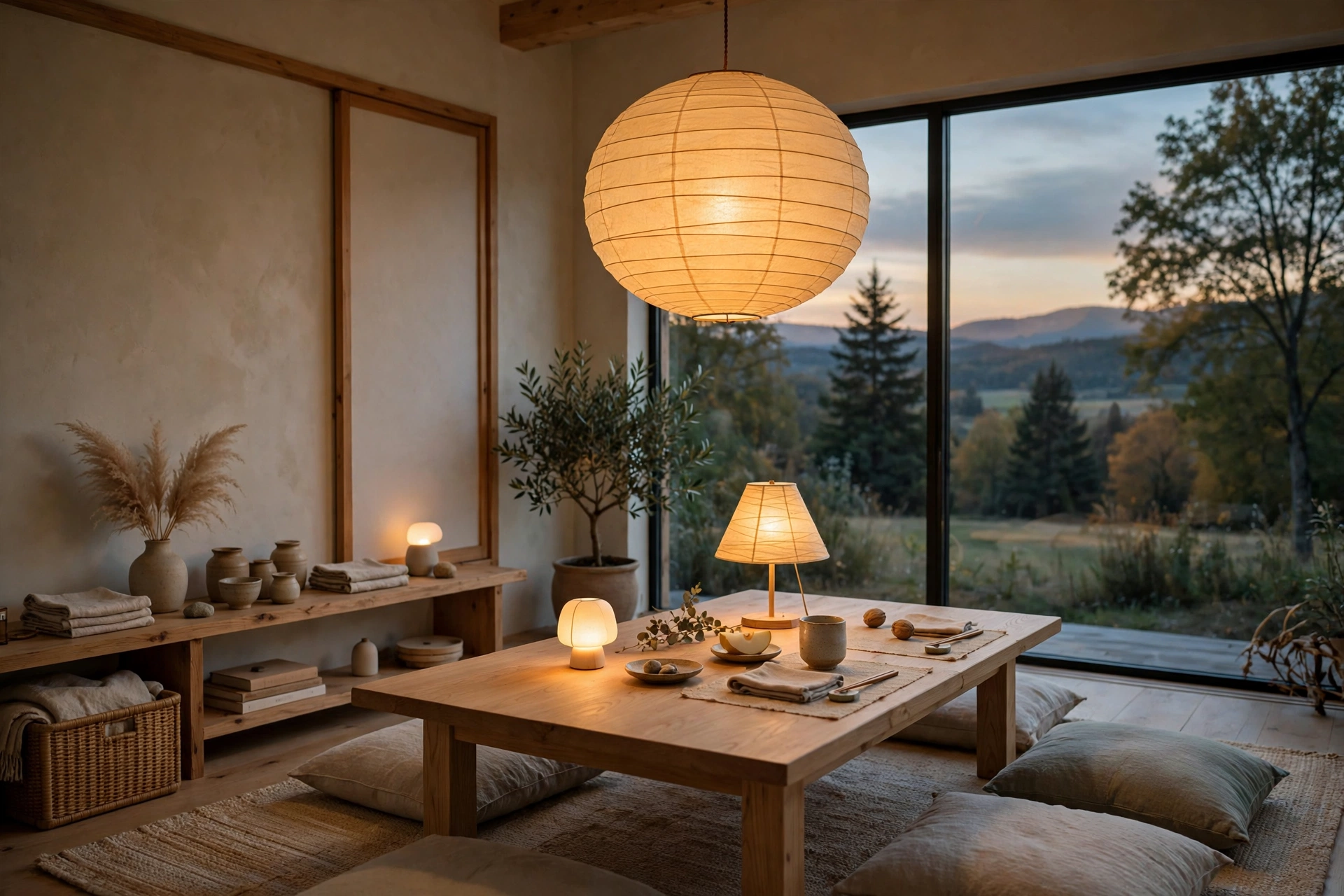
Floor seating with zabuton cushions and a low table brings authentic Japanese ease into everyday living. Arrange thick cushions in natural cotton or linen around a pale wood table for meals, games, tea, and conversation. The low perspective makes rooms feel larger and gatherings feel more relaxed.
Add a tatami-style mat or a flatweave rug beneath to define the area and protect the floor. Store cushions stacked neatly in a corner or a low cabinet when not in use. This flexible setup is perfect for small homes, casual entertaining, and families who love sitting close to the ground.
19. Bonsai and Branch Arrangement Accent
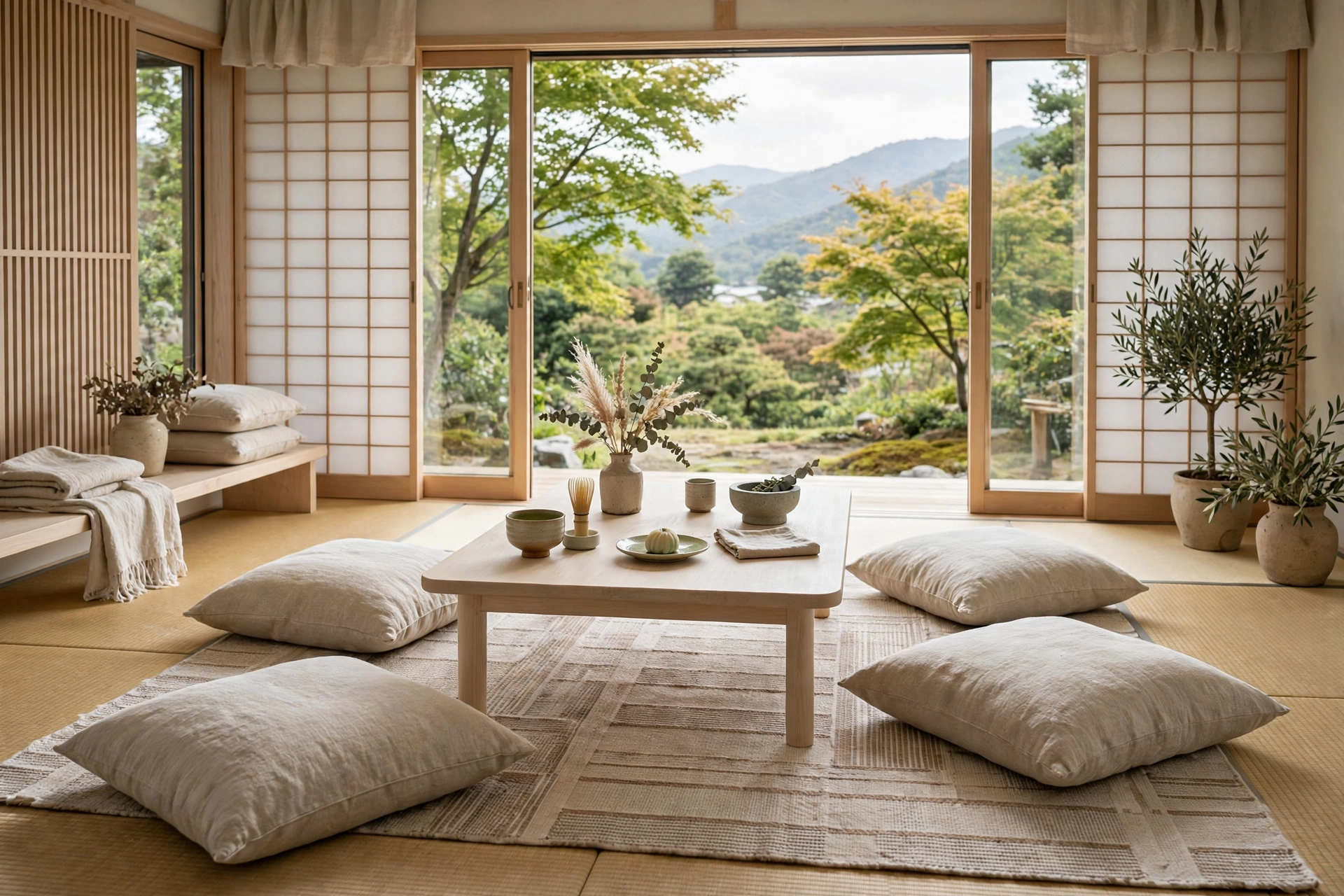
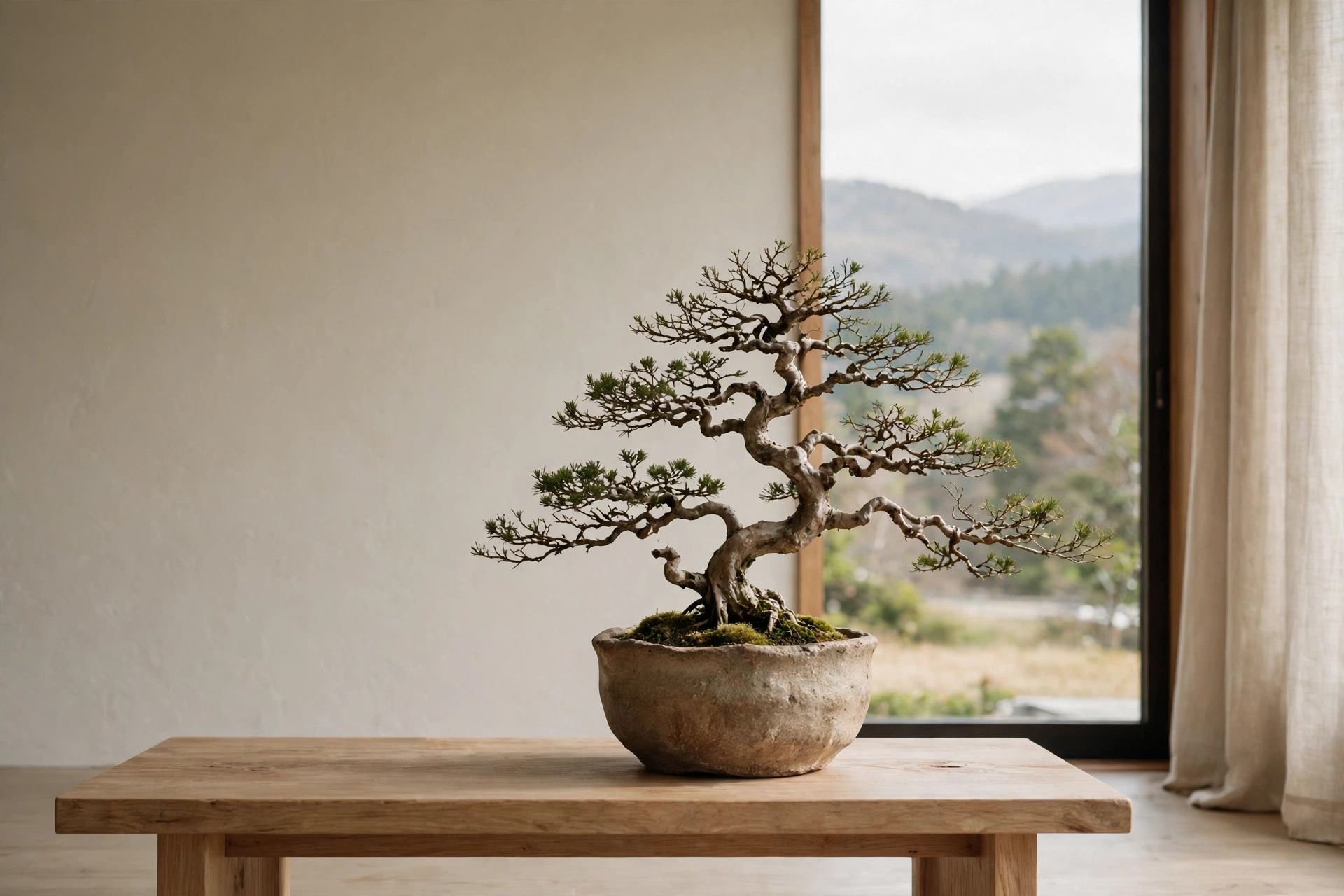
A single bonsai or a sculptural branch arrangement gives a Japandi room its living focal point. Placed on a low table, a shelf, or a window sill, the plant brings nature indoors in a controlled, artistic form. The negative space around it is part of the design, so resist adding other objects nearby.
Choose a handmade ceramic pot in a muted tone and keep the styling sparse. Dried branches, pine, or seasonal blossom can rotate through the year for a fresh feel without buying new decor. This small accent teaches the core Japandi lesson: one beautiful thing, given room to breathe.
20. Japandi Storage with Hidden Cabinets
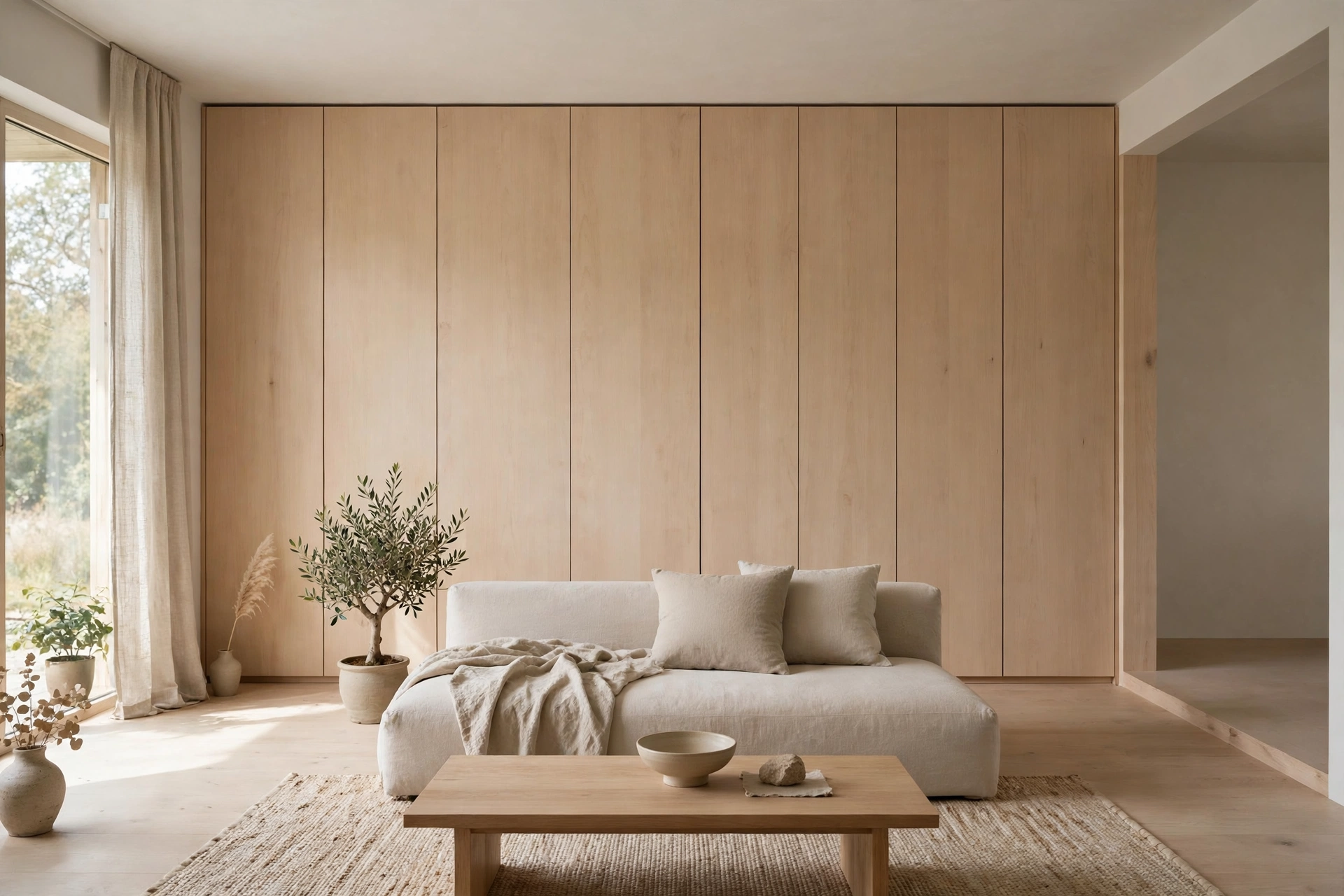
Hidden storage is what keeps Japandi rooms looking calm day after day. Floor-to-ceiling cabinets in light wood with flat, handleless fronts hide everything from books to board games behind a quiet wall of timber. Open space stays open because clutter has a proper home.
Plan storage around real habits: low drawers for daily items, baskets inside cabinets for small things, and a regular edit to remove what is no longer used. Label nothing visually and let the cabinet fronts remain uninterrupted. Good hidden storage makes minimal living practical for busy households.
21. Linen Curtains and Sheer Light Japandi Room
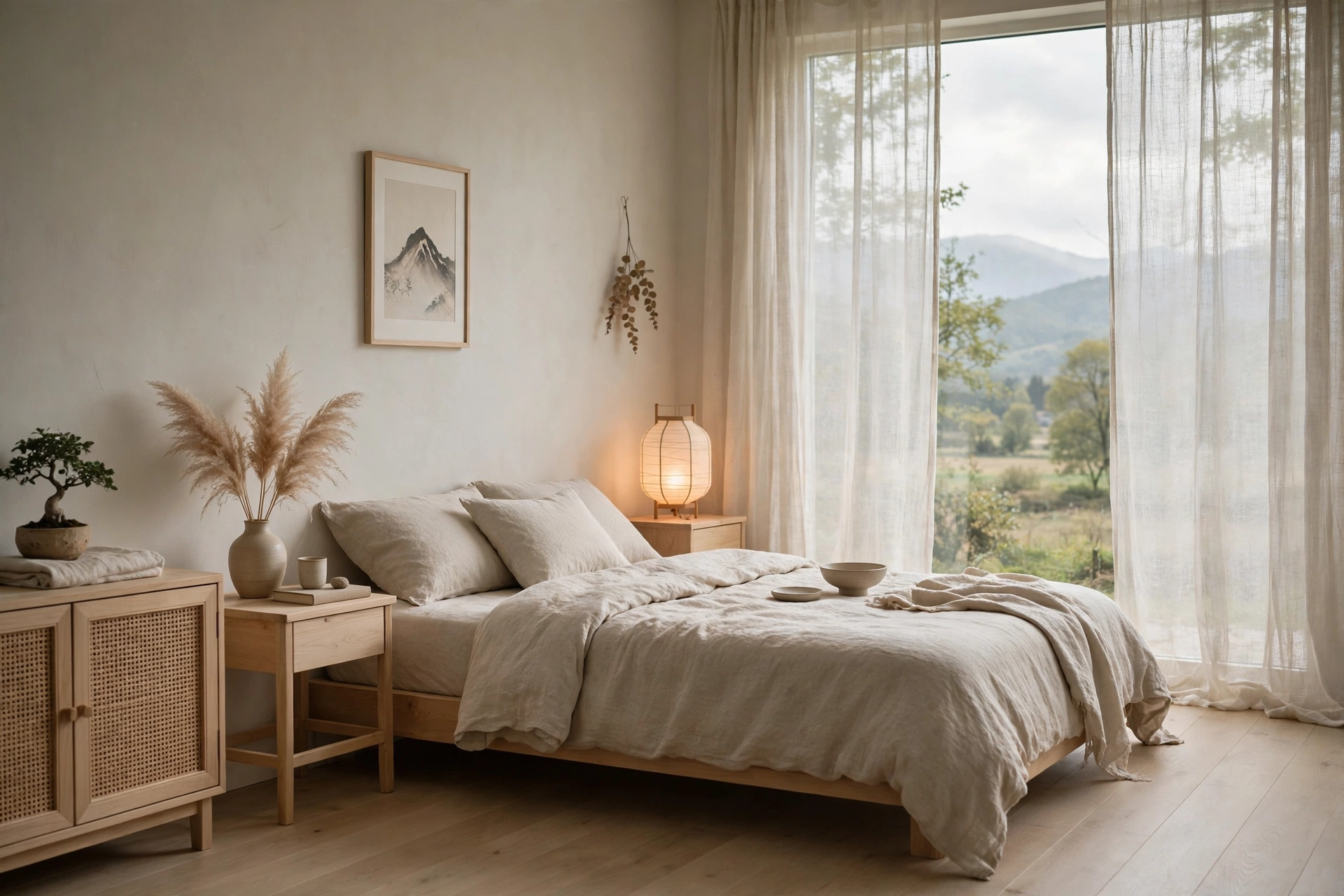
Linen curtains in natural, undyed tones soften Japandi rooms while filtering light into a gentle wash. Hung high and wide, they make windows feel taller and allow daylight to glow rather than glare. Their slight texture and relaxed drape suit the wabi-sabi love of natural imperfection.
Pair sheers with simple wood or matte metal rods and let hems pool just slightly or kiss the floor. In bedrooms, layer linen over a blackout blind for sleep without losing the soft look. This window treatment works in every room and instantly lowers the visual temperature of a space.
22. Japandi Hallway with Minimal Art
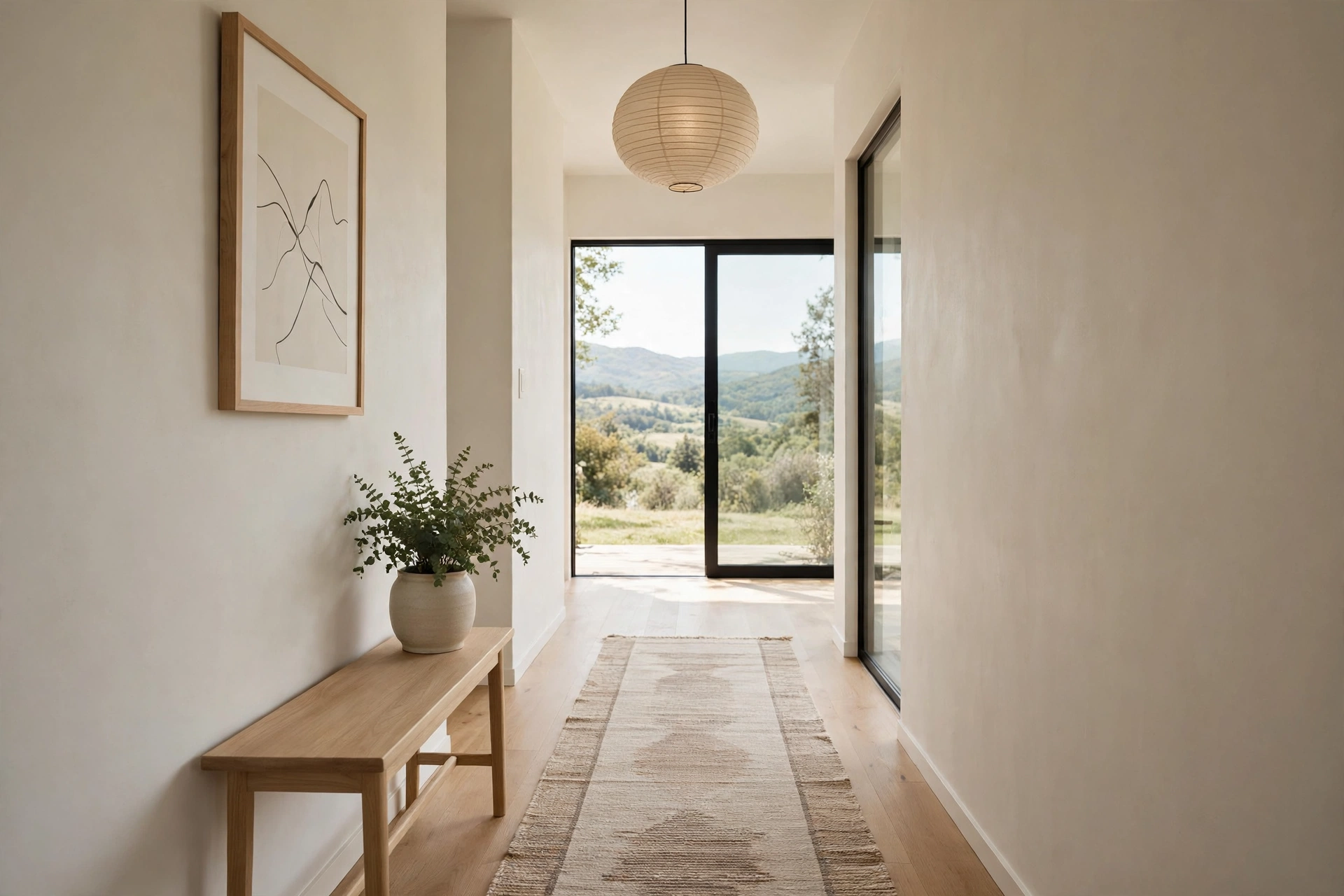
A Japandi hallway proves that even a pass-through space deserves calm design. Pale walls, a light wood console or bench, and a single piece of minimal art create a gallery-like pause between rooms. Choose abstract line art, a textile hanging, or a framed print in muted tones.
Keep the floor clear with a flatweave runner in natural fibres and add soft light from a ceiling paper pendant or a wall sconce. One plant in a ceramic pot is enough decoration. Visitors feel the calm of the home the moment they walk through this quiet, considered space.
23. Clay and Ceramic Vase Styling
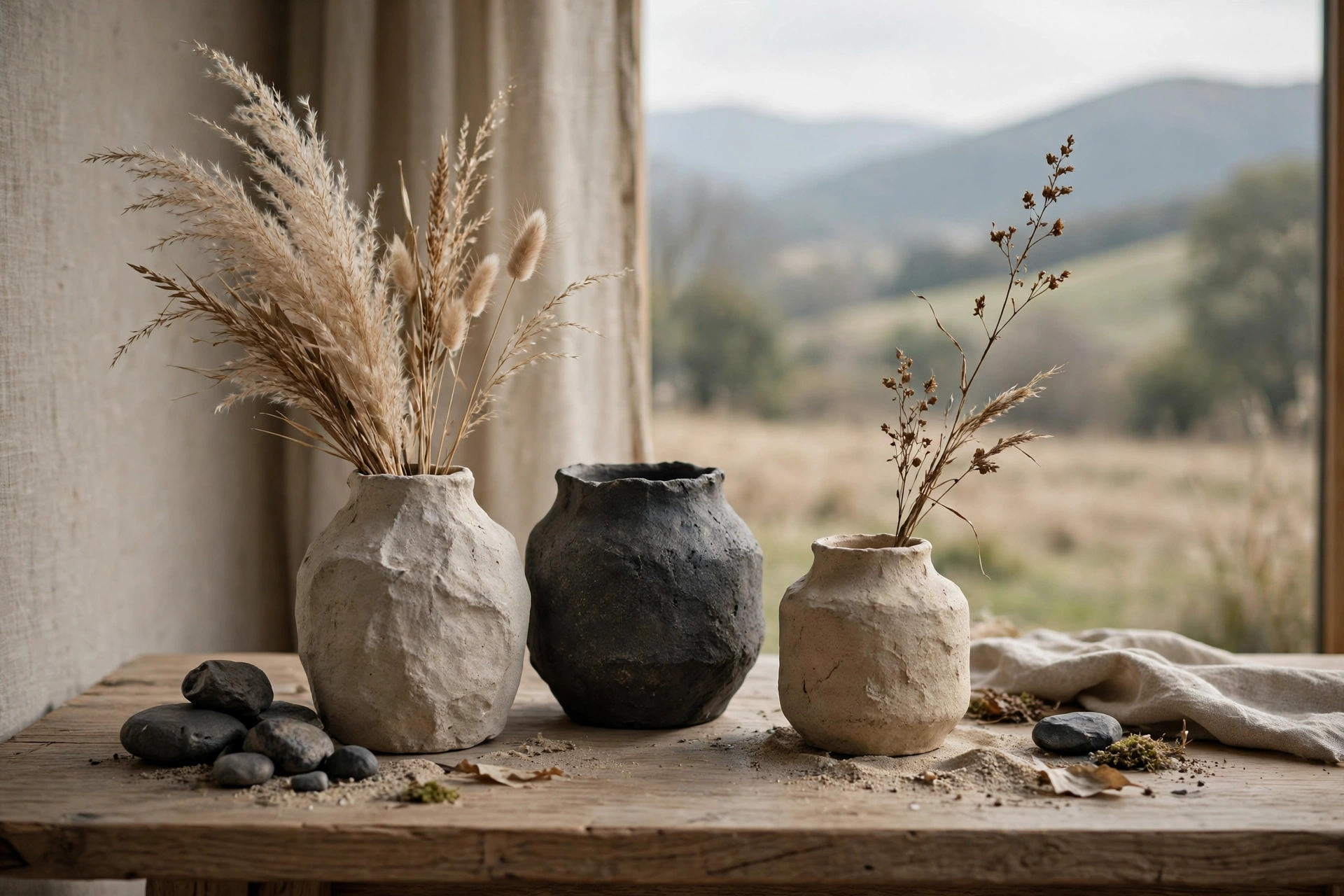
Handmade clay and ceramic vases bring soul to Japandi styling because no two are exactly alike. Group one large vase with a smaller vessel on a low table or shelf, keeping shapes simple and glazes matte in stone, sand, or charcoal tones. Fill them sparingly with dried grasses or a single stem.
Shop from local makers where possible, and mix new pieces with vintage finds for honest character. Leave some vases empty; their sculptural form is decoration enough. This styling approach adds warmth and craft to minimalist rooms without introducing colour or clutter.
24. Japandi Coffee Table with Natural Texture
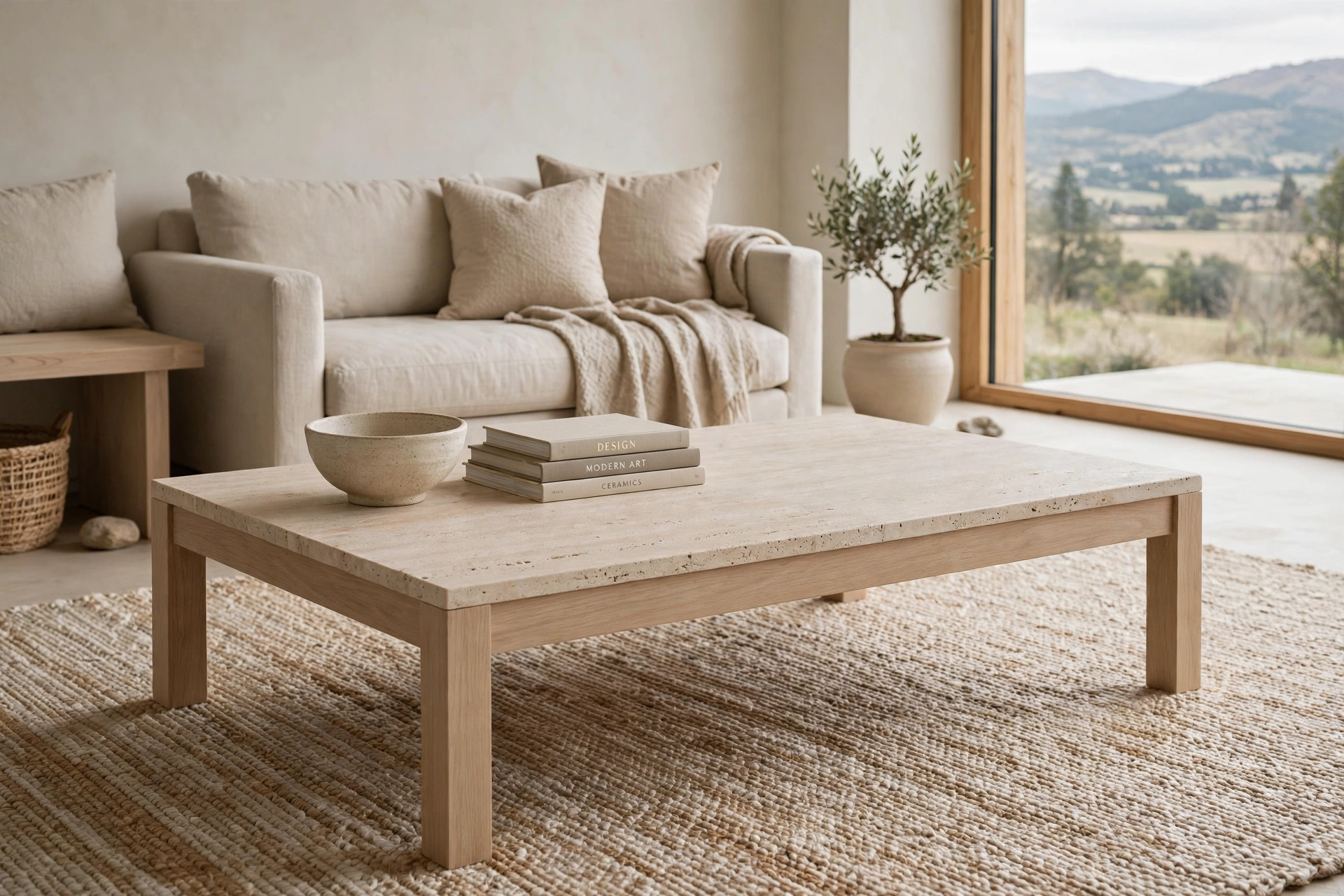
The coffee table anchors a Japandi living room, so choose natural texture over shine: pale oak, travertine, rattan, or woven cane. A low, simple shape keeps sightlines open, while the material grain provides all the visual interest needed. Round or softened edges feel especially harmonious.
Style the surface with restraint: a stack of two art books, a ceramic bowl, and perhaps a small tray for a cup of tea. Leave at least half the table empty so the room keeps its sense of calm. A textured rug beneath ties the table to the seating in one quiet composition.
25. Scandinavian Hygge Meets Japandi Living Room
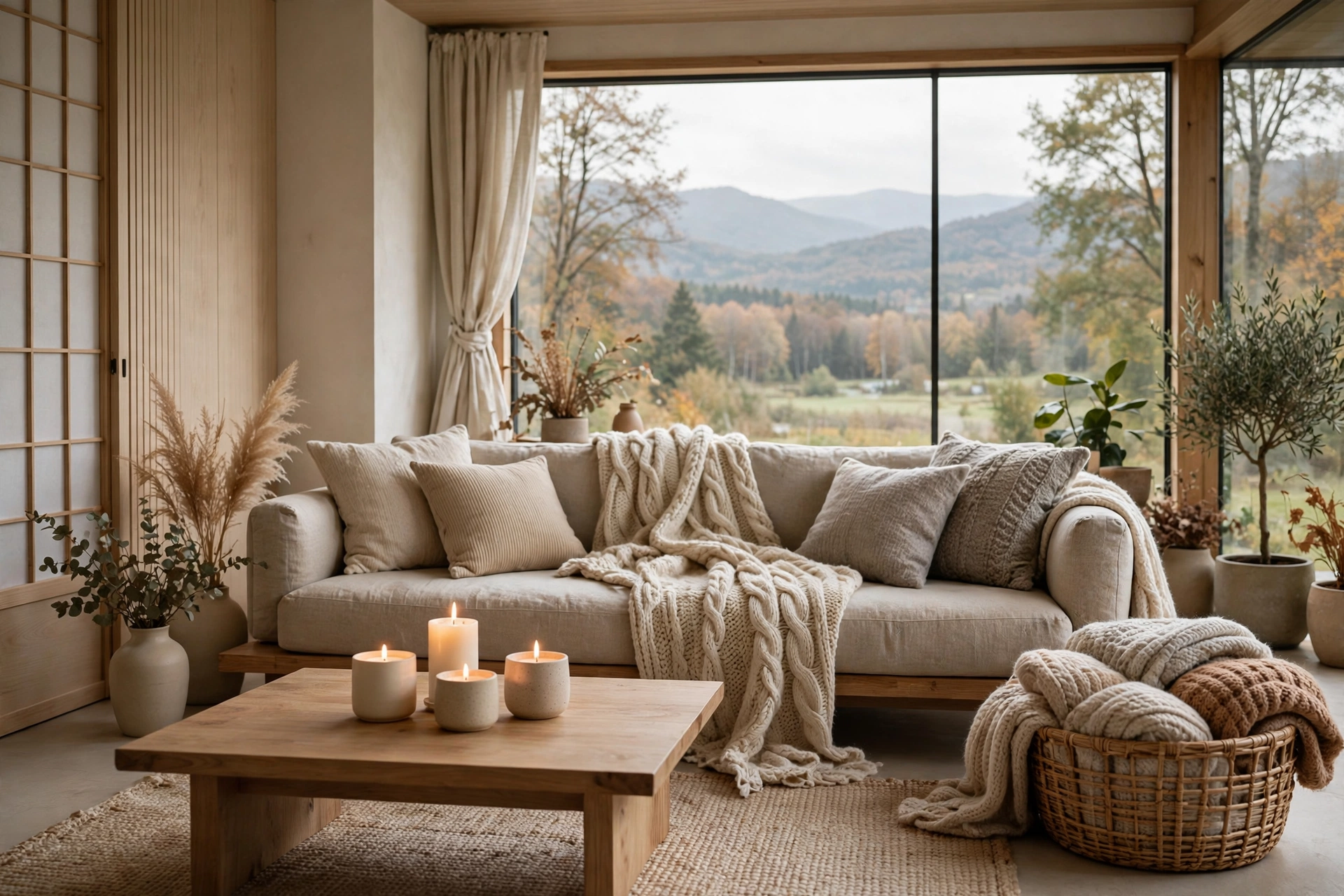
Where Japandi meets hygge, minimalism gains a layer of cosiness. Keep the low Japandi furniture and neutral palette, then add Scandinavian warmth: chunky knit throws, wool cushions, candlelight, and a soft rug underfoot. The room stays uncluttered but never feels cold.
Use candles in ceramic holders, a basket of blankets beside the sofa, and warm lamplight in every corner. This blend is perfect for northern climates and long winters, proving that calm design and comfort are not opposites. Edit regularly so cosy layers do not drift into clutter.
26. Japandi Guest Bedroom Calm Retreat
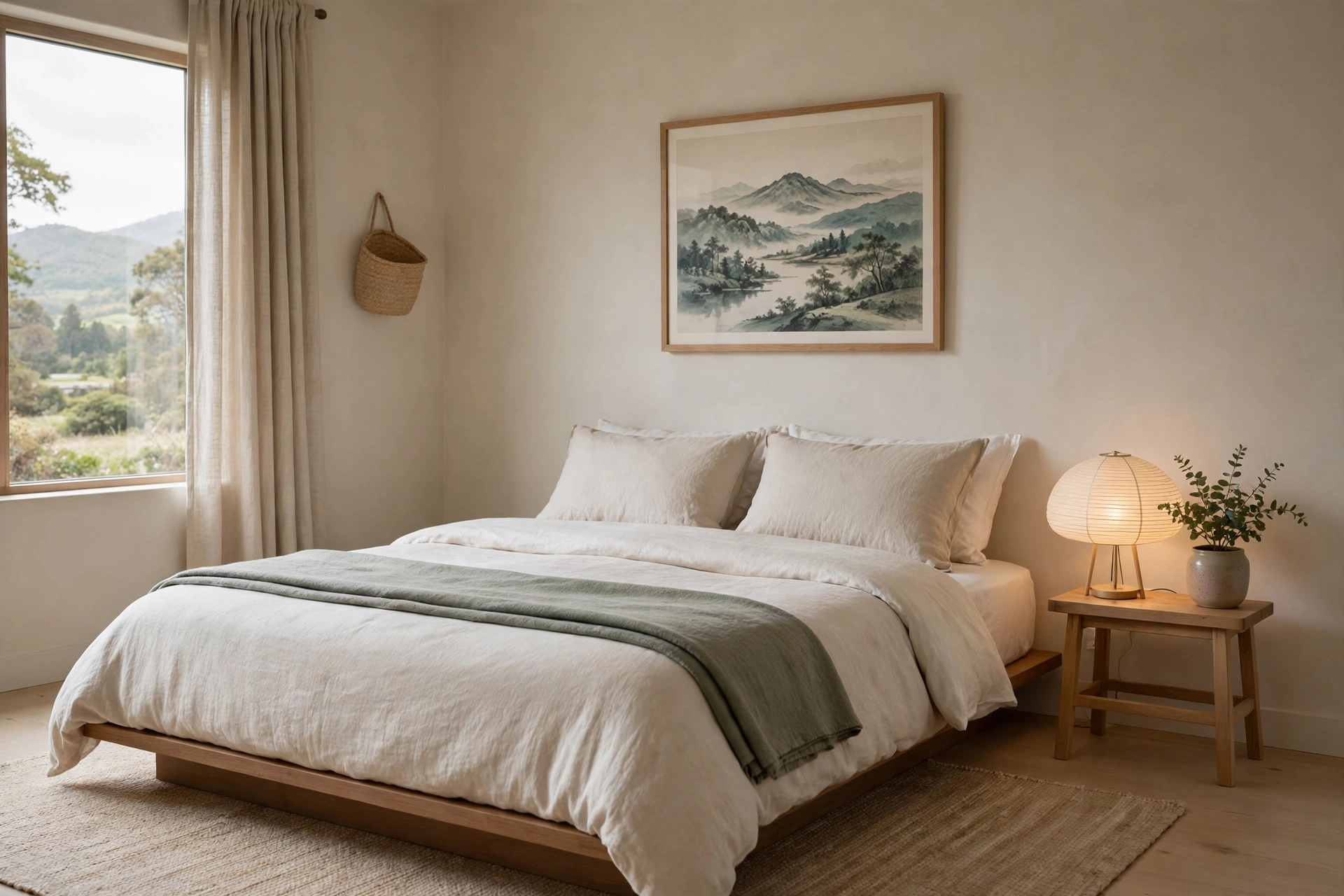
A Japandi guest bedroom helps visitors truly rest. A low bed with crisp natural bedding, a small wooden stool as a nightstand, and a paper lamp create a simple, hotel-like welcome. Leave surfaces clear and provide a basket for guests’ belongings.
Add thoughtful touches: a carafe of water, a folded throw, a small plant, and a few books on a tray. Keep colours warm and neutral so any guest feels comfortable. Because the room is simple, it is easy to refresh between visits and doubles calmly as a reading or meditation space.
27. Japandi Kids Room Soft and Simple
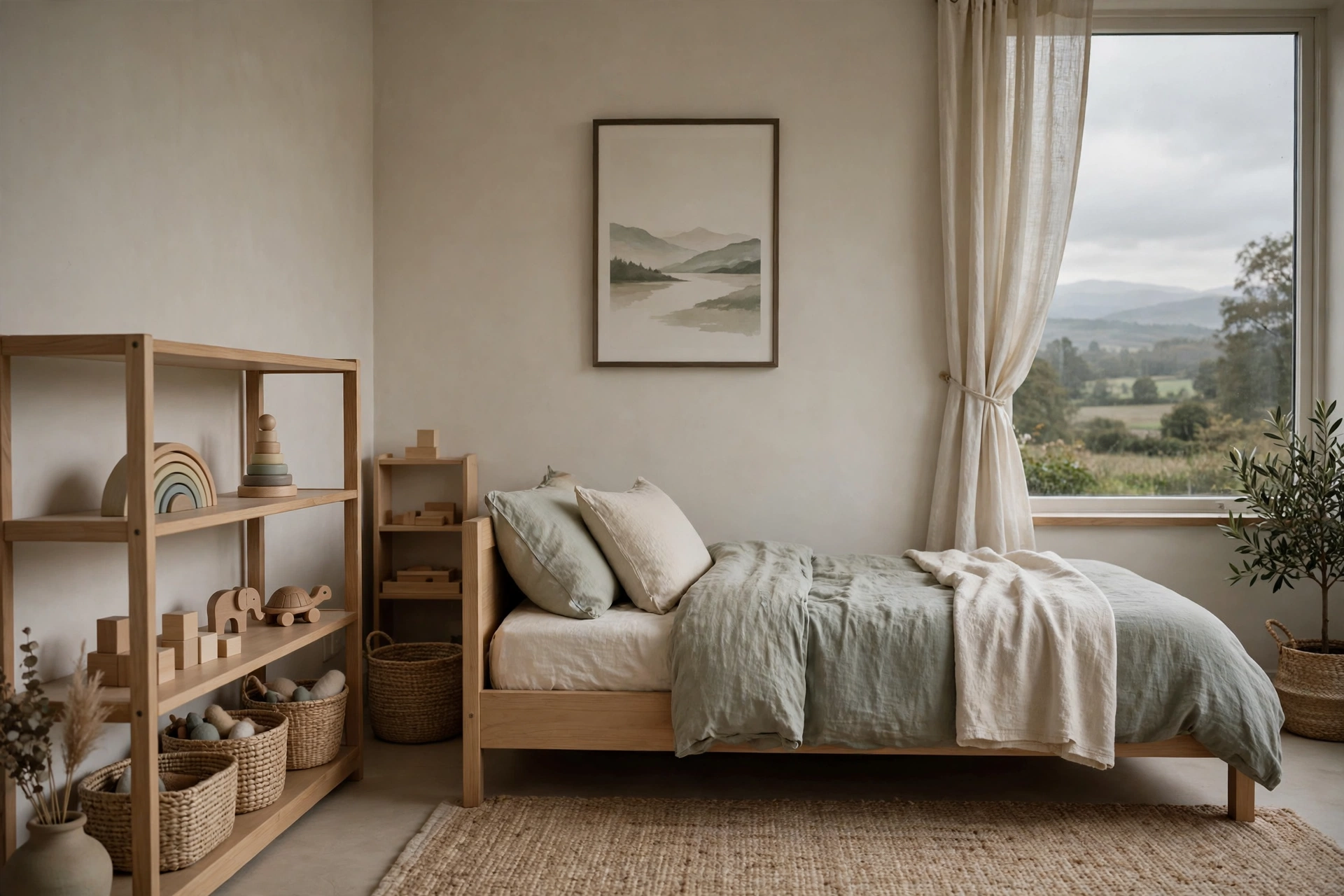
A Japandi kids room replaces plastic brightness with soft, natural calm. Low furniture children can reach themselves, light wood storage, and bedding in cream, sage, and clay tones create a space that supports both play and sleep. Montessori-style open shelves hold a few toys at a time.
Choose natural materials: cotton, wool, wood, and woven baskets for tidying. Keep walls pale with one gentle artwork or a textile hanging, and rotate toys to maintain interest without excess. Children thrive in this ordered, peaceful environment, and tidy-up time becomes far simpler for parents.
28. Japandi Balcony Garden Retreat
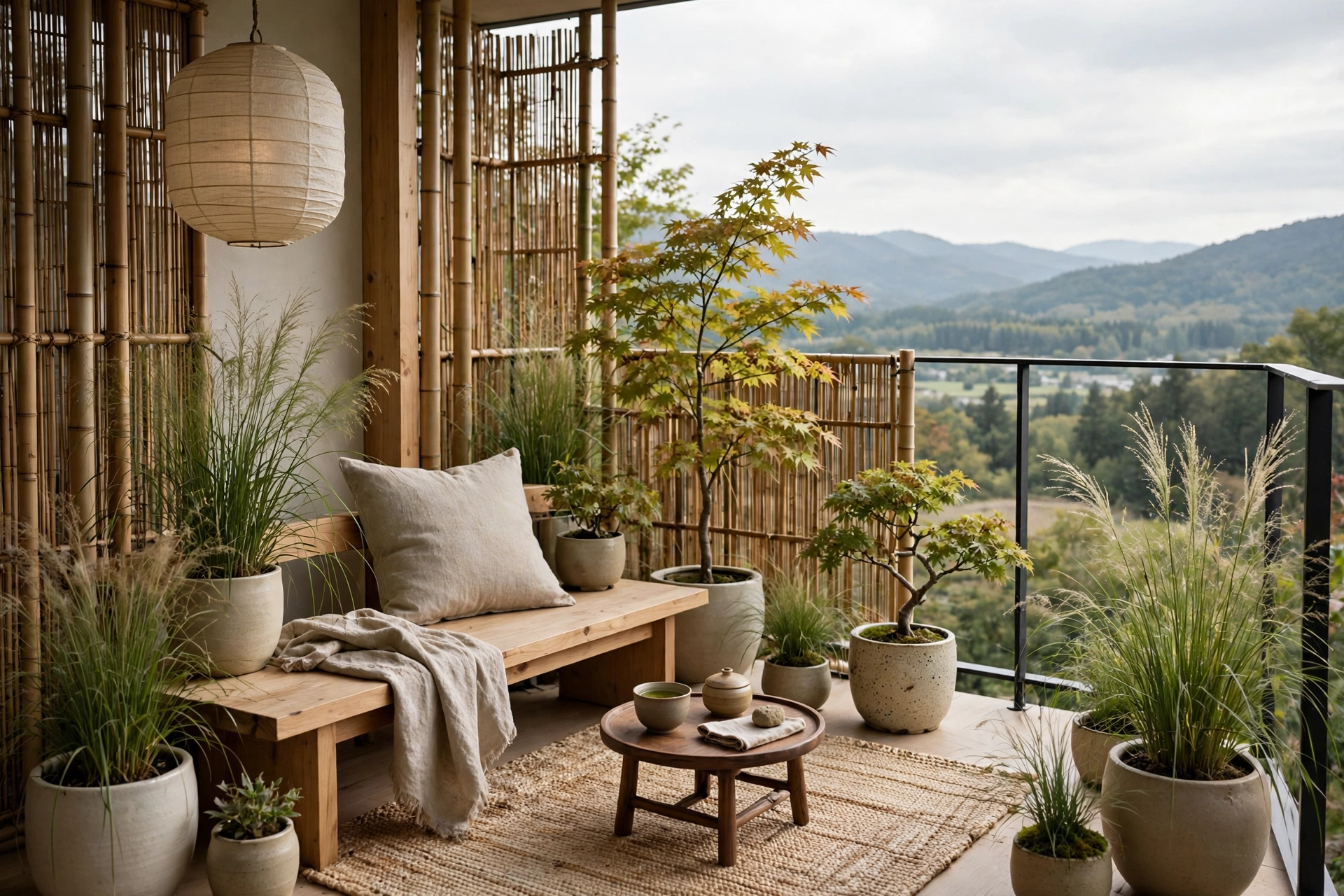
A small balcony becomes a Japandi garden retreat with a low wooden bench, a few ceramic planters, and a gravel or bamboo detail. Choose plants with sculptural forms: grasses, a small maple, herbs, or trailing greenery. A paper-style outdoor lantern adds evening glow.
Keep furniture foldable or compact, and use a natural fibre outdoor rug to soften the floor. One comfortable cushion and a small side table for tea are all you need. This retreat brings the Japandi connection to nature into even the smallest city apartment.
29. Rattan and Cane Japandi Accents
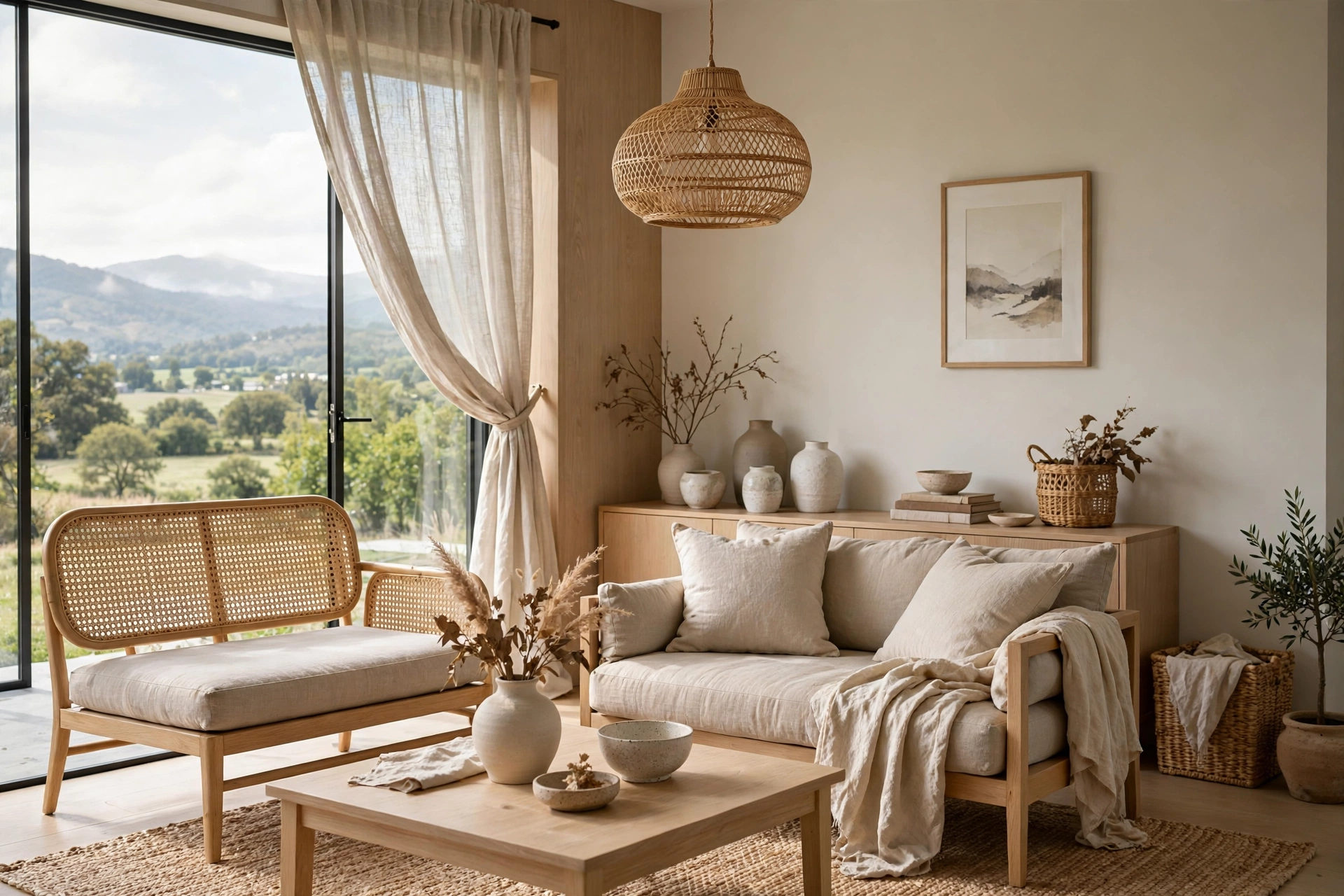
Rattan and cane add airy texture that suits Japandi rooms perfectly. A cane-webbed chair, a rattan pendant, or cabinet fronts in woven cane bring warmth and pattern without colour. Their handcrafted feel balances clean-lined wood furniture beautifully.
Use these accents in one or two places per room so they feel special rather than themed. Pair them with linen upholstery, pale timber, and ceramic pieces for a layered natural palette. Rattan and cane also keep small rooms feeling light because you can see through their woven surfaces.
30. Japandi Wardrobe and Dressing Corner
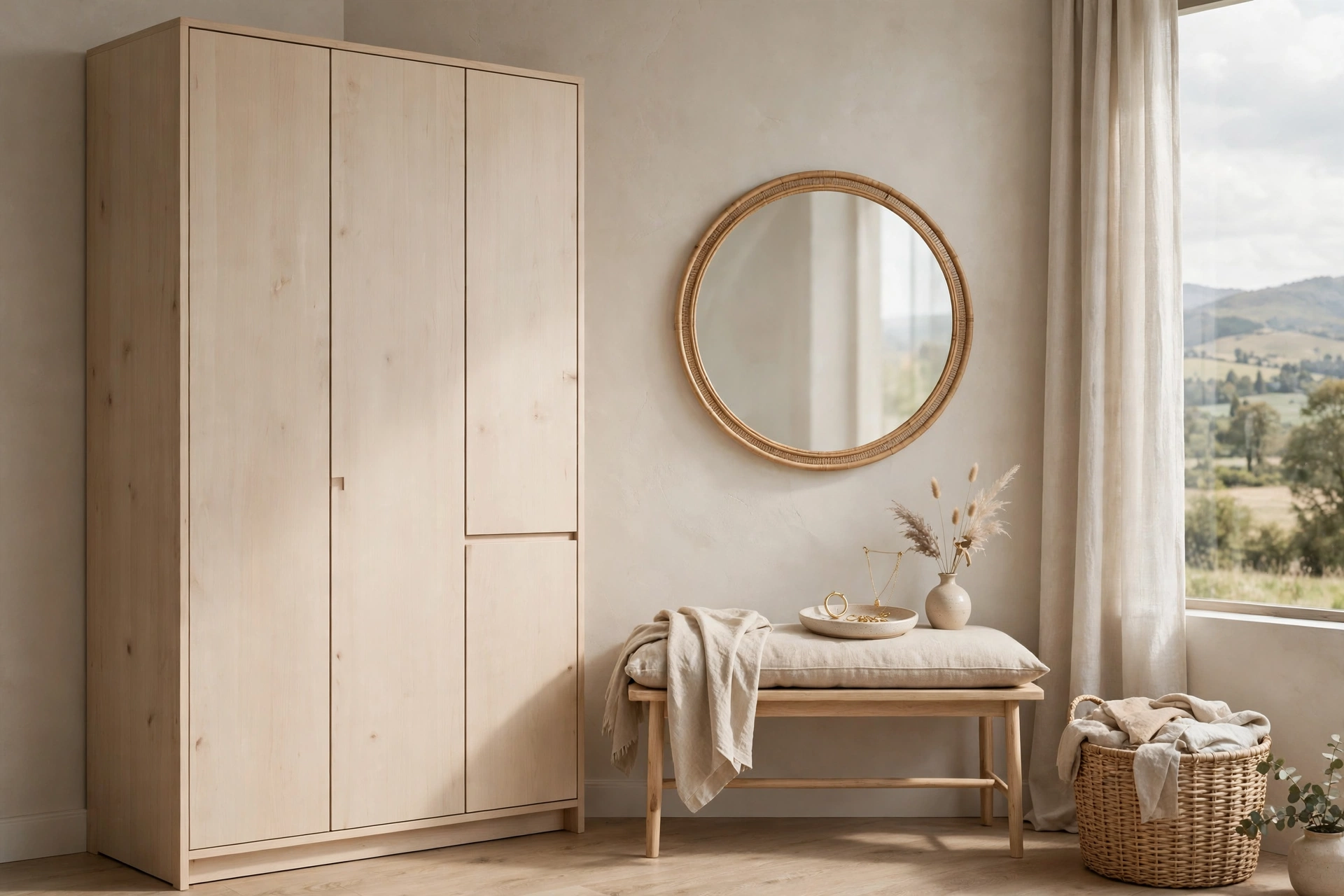
A Japandi dressing corner turns getting ready into a calm ritual. A light-wood wardrobe with flat fronts, a simple bench, and a round mirror create an ordered space where clothes are stored visibly but peacefully. Open rails work if garments are edited to a cohesive, neutral wardrobe.
Add a woven basket for laundry, a ceramic dish for jewellery, and soft light that flatters without harshness. Keep shoes in closed boxes or a low cabinet to preserve the calm. This corner suits bedrooms and dressing rooms alike, and it encourages owning fewer, better clothes.
31. Black Accent Japandi Contrast Room
Small touches of black give Japandi rooms definition and modern edge. A black metal floor lamp, a charcoal-framed print, or dark stained wood stools create gentle contrast against pale oak and cream textiles. The key is restraint: black as punctuation, never as the whole sentence.
Repeat the black accent two or three times in a room so it feels intentional, and keep everything else warm and natural. This contrast works especially well in living rooms and kitchens with lots of daylight. The result is still serene, but with a sharper, more contemporary character.
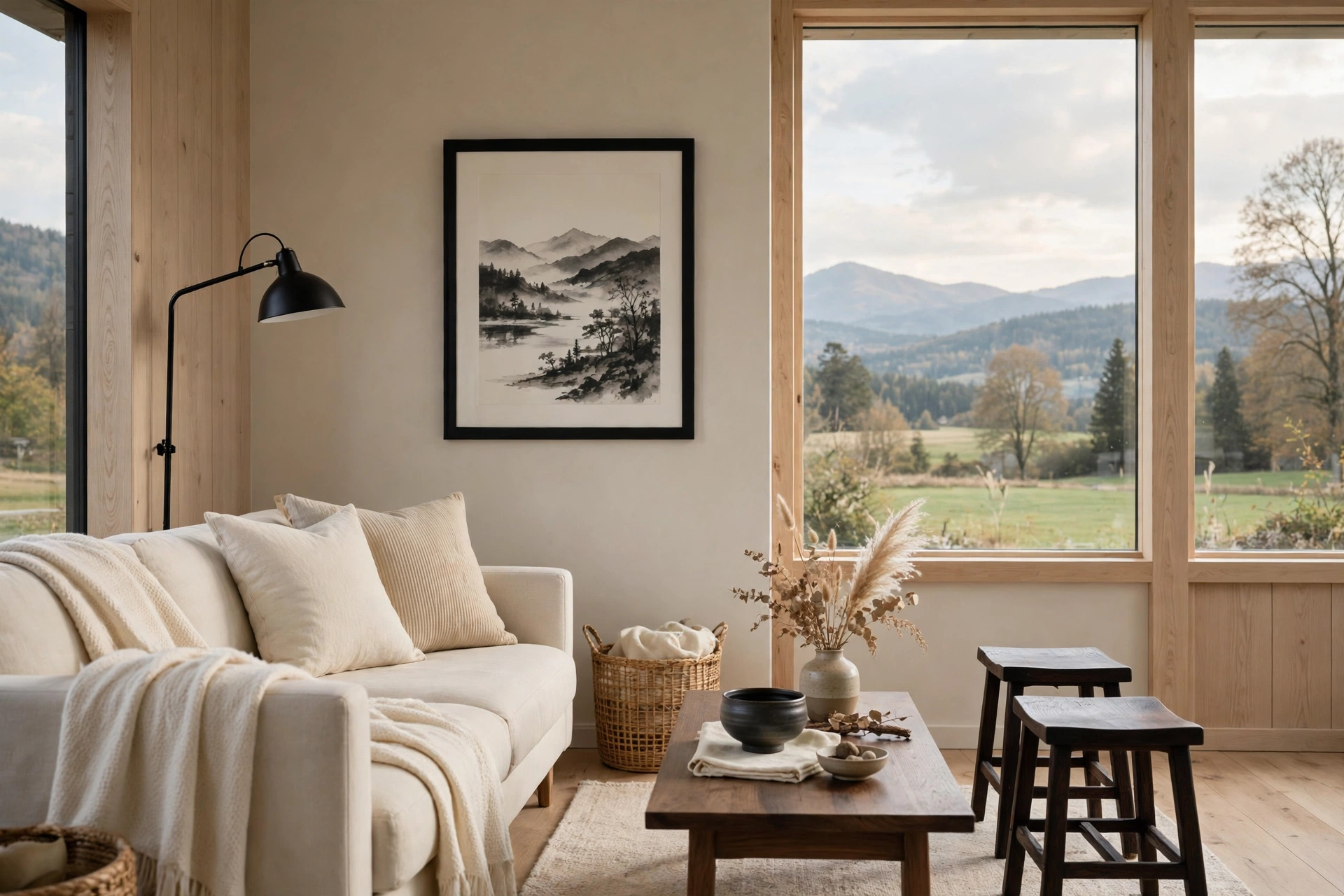
32. Japandi Kitchen Island Breakfast Nook
A Japandi kitchen island doubles as a calm breakfast nook when styled with restraint. Choose a pale stone or wood island, low stools in light oak with woven seats, and a pair of paper pendants above. Keep the surface clear except for a ceramic fruit bowl or a small vase.
Morning light, simple stoneware, and a linen cloth make everyday breakfasts feel like a quiet ritual. Hide small appliances in cabinets so the island stays a place to gather, not a storage spillover. This design suits open-plan homes where the kitchen is also the social heart of the house.
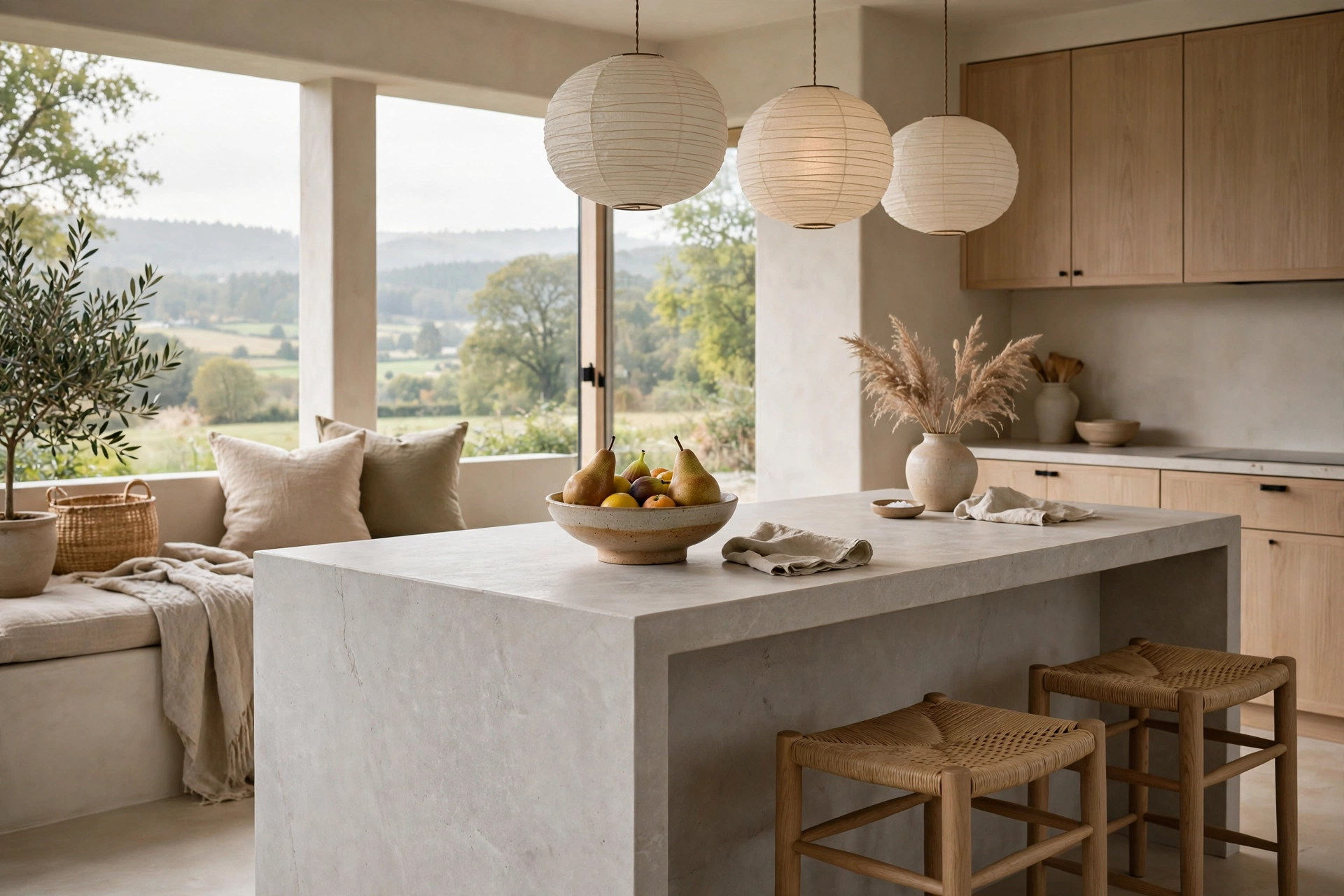
33. Japandi Meditation and Yoga Corner
A dedicated meditation corner embodies the Japandi values of calm and intention. A tatami-style mat or woven rug, a floor cushion, and a low shelf with a candle and a small plant are all the furniture needed. Place it near a window for natural light and fresh air.
Keep the corner permanently set up so the habit stays easy, and store props in a woven basket. A shoji-style screen can separate the corner in a shared room. Even ten quiet minutes here each morning changes the feel of the whole home.
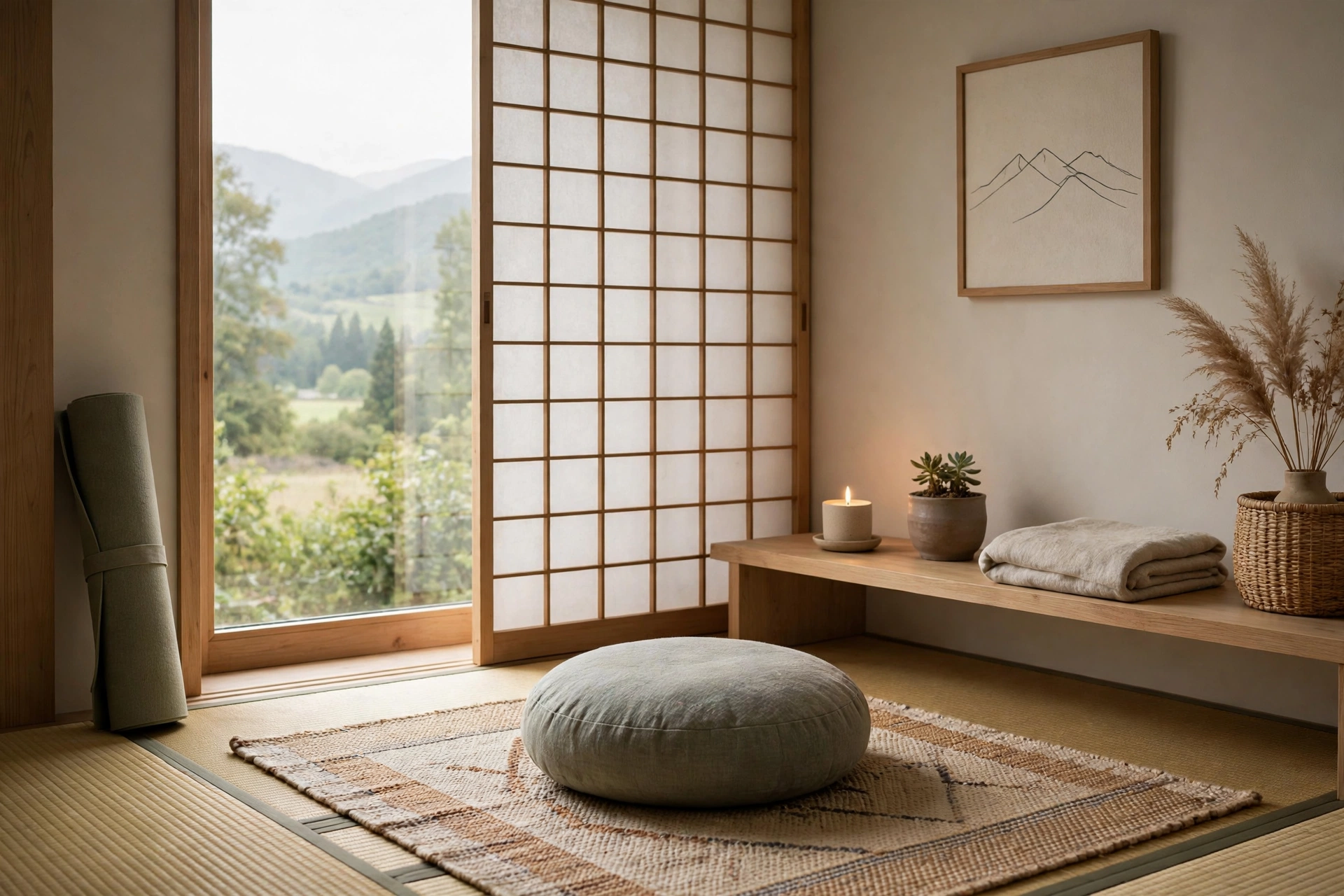
34. Japandi Fireplace Surround Minimalist
A minimalist fireplace surround in plaster, stone, or microcement gives a Japandi living room a sculptural focal point. Keep the mantel almost bare: one ceramic vase, a branch arrangement, or a single piece of art. Low seating arranged around the fire reinforces the grounded feeling.
Choose a simple firebox with clean lines and store firewood in a neat woven basket or a recessed niche. Warm firelight flatters natural materials and makes neutral palettes glow in the evening. In homes without a real fire, a simple plaster surround with candles creates the same calm focus.
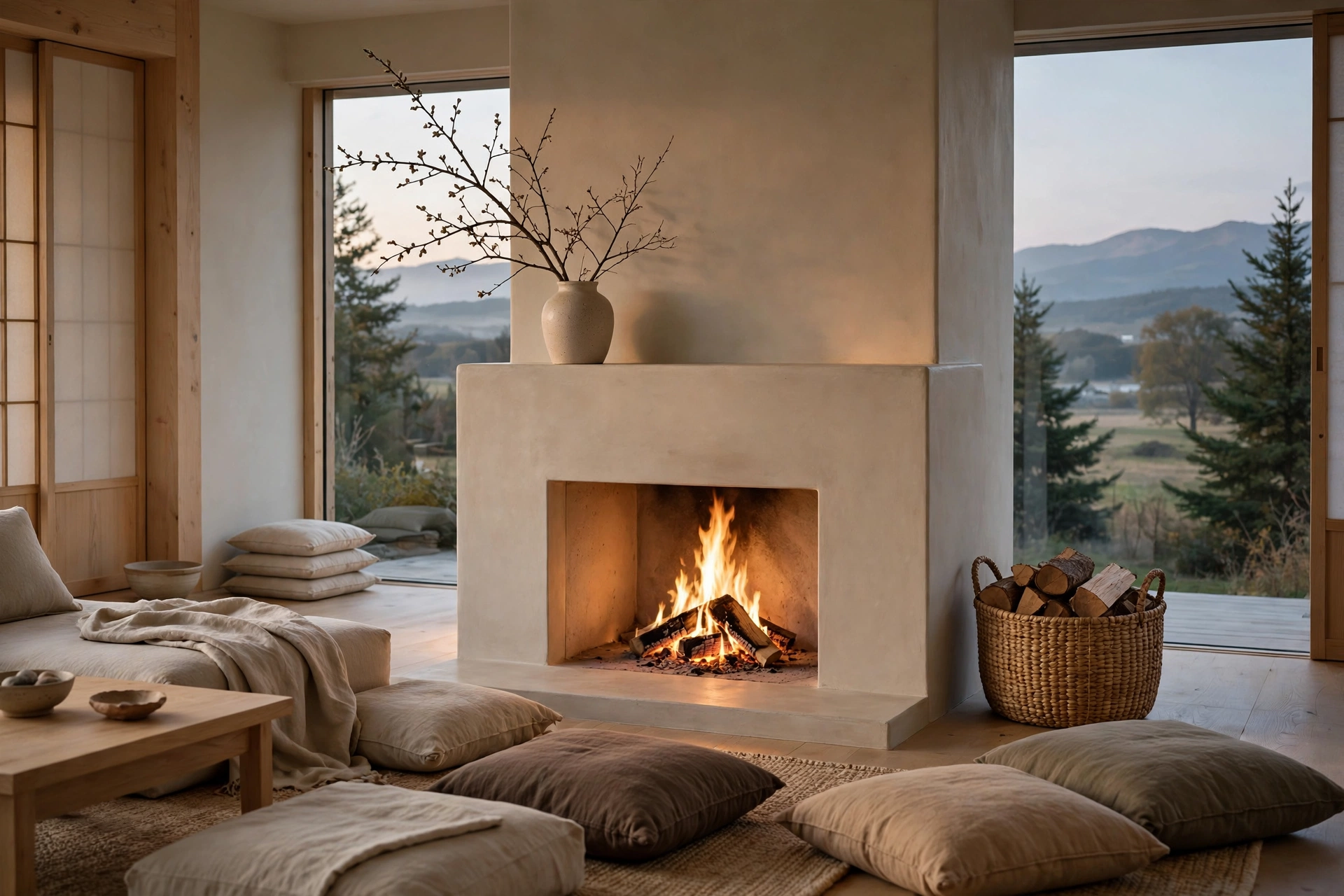
35. Japandi Laundry and Utility Calm Space
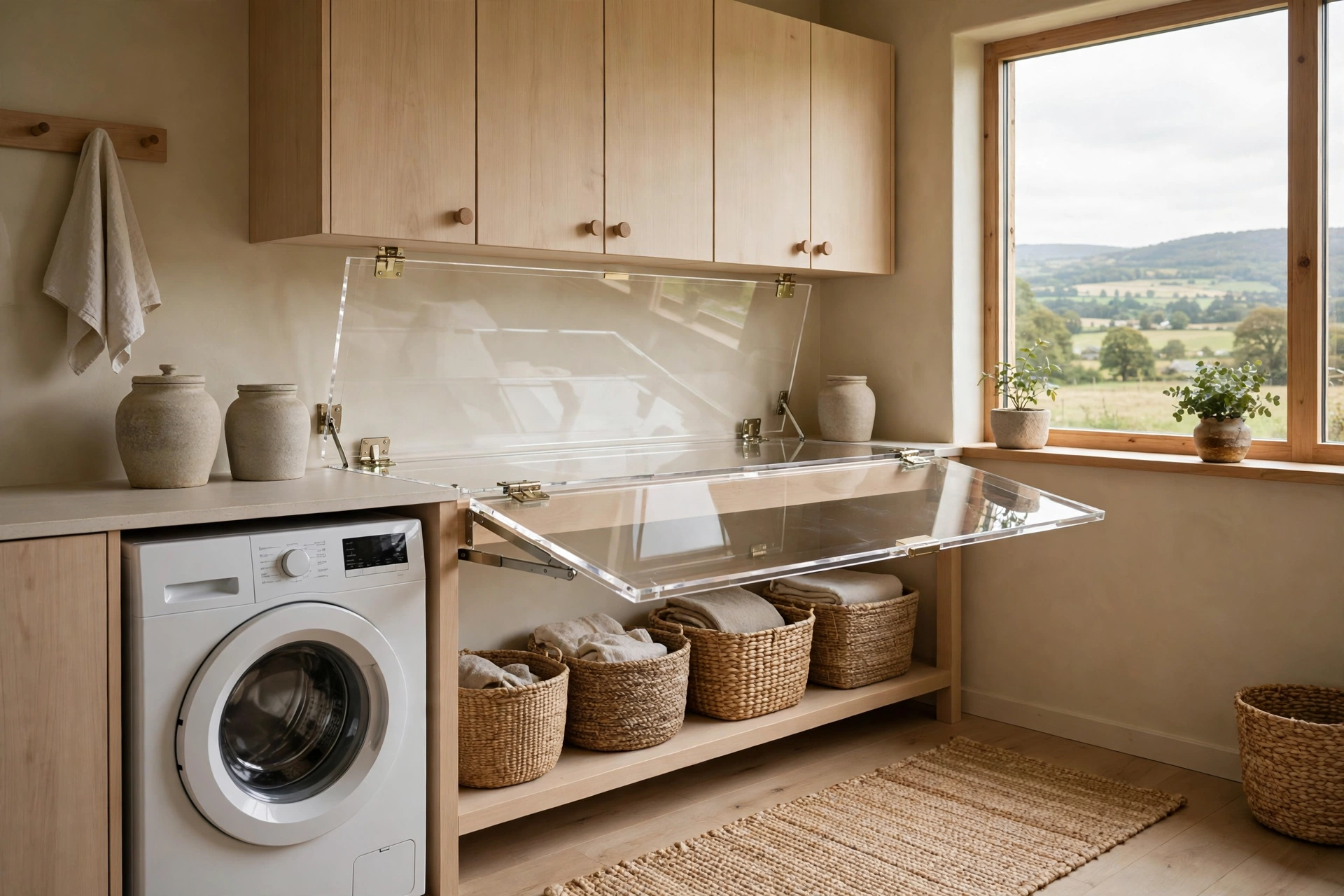
Even a laundry room can follow Japandi principles: light wood cabinets, simple stoneware jars for supplies, and a clear worktop for folding. A woven basket for each family member keeps sorting calm and organised. Pale walls and good light make the chore feel lighter.
Hide detergents in matching containers, add a small plant on the sill, and choose a natural fibre runner for comfort underfoot. A low bench or stool gives you a place to sit while sorting. This overlooked room becomes proof that calm design improves everyday tasks, not just showcase spaces.
36. Japandi Open-Plan Living and Dining
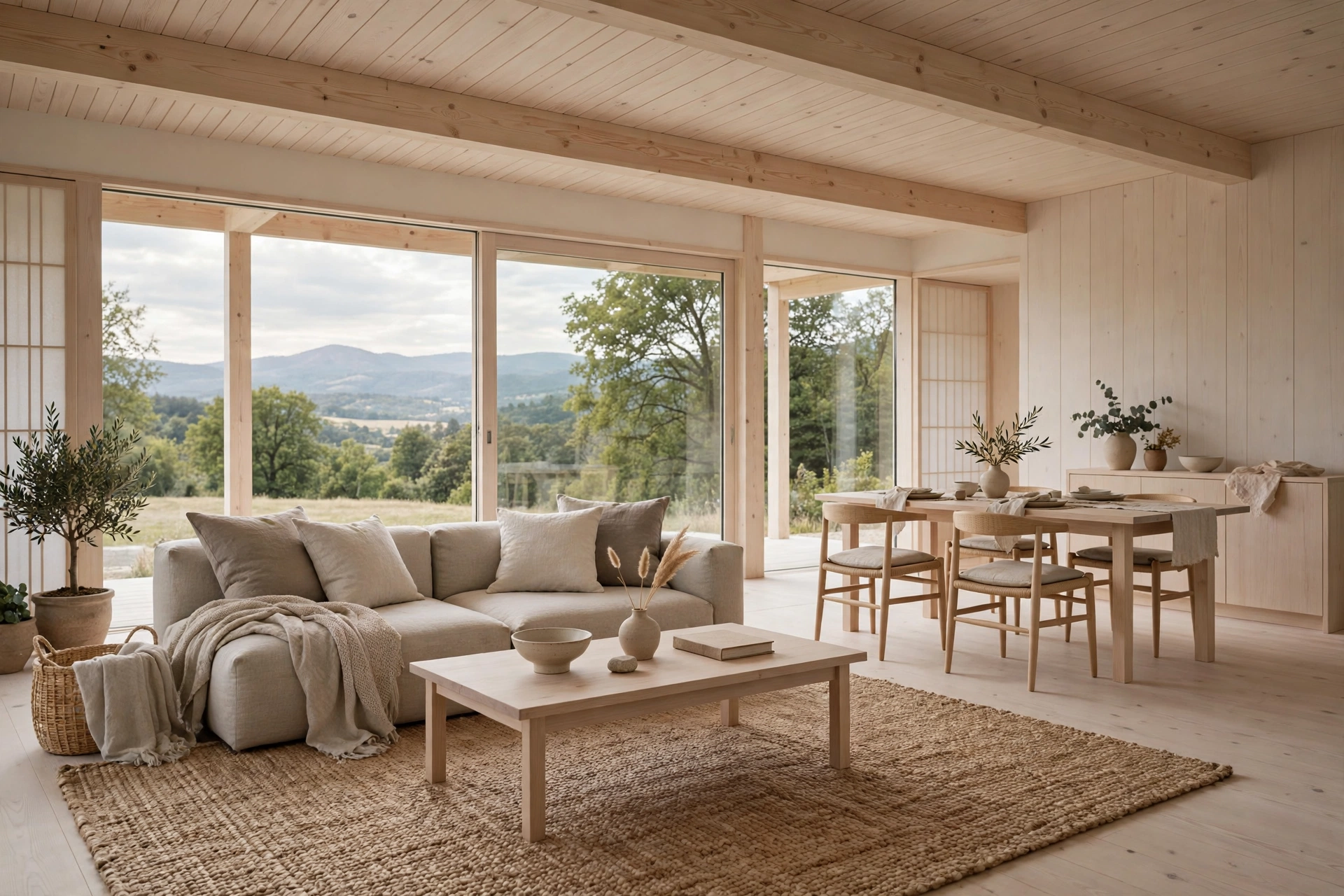
Open-plan spaces suit Japandi design when zones are defined by rugs, low furniture, and light rather than walls. Use a large woven rug under the living area, a low dining table nearby, and consistent pale wood throughout so the whole space reads as one calm composition.
Keep sightlines low and uncluttered, repeat the same neutral textiles in both zones, and use a shoji screen or open shelving if a gentle division is needed. Shared materials and colours make even a large open plan feel intimate and harmonious, with each activity flowing naturally into the next.
More Home Decor Ideas
- Wall Decor Ideas: 36 Stylish Designs for Every Room
- Gallery Wall Ideas: 36 Layouts and Designs
- Front Porch Decor Ideas: 36 Welcoming Designs
- Coffee Table Decor Ideas: 36 Stylish Arrangements
- Laundry Room Decor Ideas: 36 Fresh Designs
- Mudroom Decor Ideas: 36 Organized Entry Designs
- Home Coffee Bar Ideas: 36 Cozy Station Designs
- Bookshelf Decor Ideas: 36 Stylish Styling Designs
- Reading Nook Ideas: 36 Cozy Corners
- Bathroom Decor Ideas: 36 Fresh Ideas
- Apartment Decor Ideas: 36 Smart Ideas
- Living Room Decor Ideas: 36 Fresh Looks
- Farmhouse Decor Ideas: 36 Cozy Rustic Looks
- Boho Decor Ideas: 36 Relaxed Bohemian Looks
- Minimalist Decor Ideas: 36 Calm Simple Looks
- Home Office Decor Ideas: 36 Productive Workspaces
- Patio Decor Ideas: 36 Outdoor Living Looks
- Backyard Decor Ideas: 36 Outdoor Living Looks
- Outdoor Decor Ideas: 36 Beautiful Spaces
- Hallway Decor Ideas: 36 Beautiful Passages
- Bathroom Organization Ideas: 36 Smart Storage Systems
- Playroom Ideas: 36 Fun, Organized Play Spaces
- Small Bathroom Ideas: 36 Big Ideas for Tiny Spaces
- Scandinavian Decor Ideas: 36 Light, Hygge Rooms
- Coastal Decor Ideas: 36 Breezy, Beachy Rooms
- Vintage Decor Ideas: 36 Timeless, Collected Rooms
Final Thoughts
Japandi decor is less about buying a look and more about choosing calm, one honest material and one uncluttered corner at a time. Start with the idea that fits your home best, favour light wood, natural textiles, and warm neutrals, and give every piece room to breathe. Done slowly and intentionally, your home will become the serene, welcoming retreat this style promises.